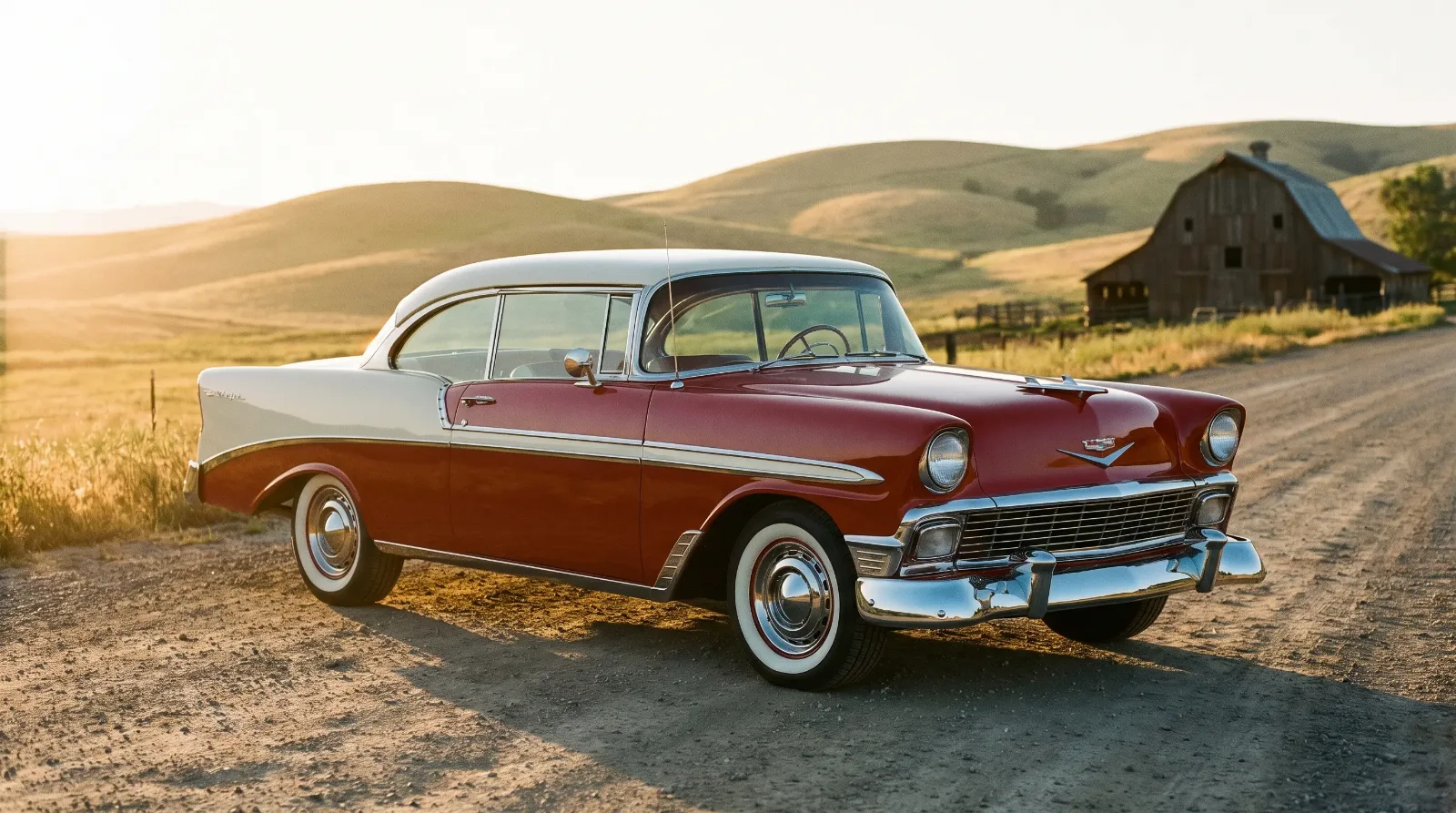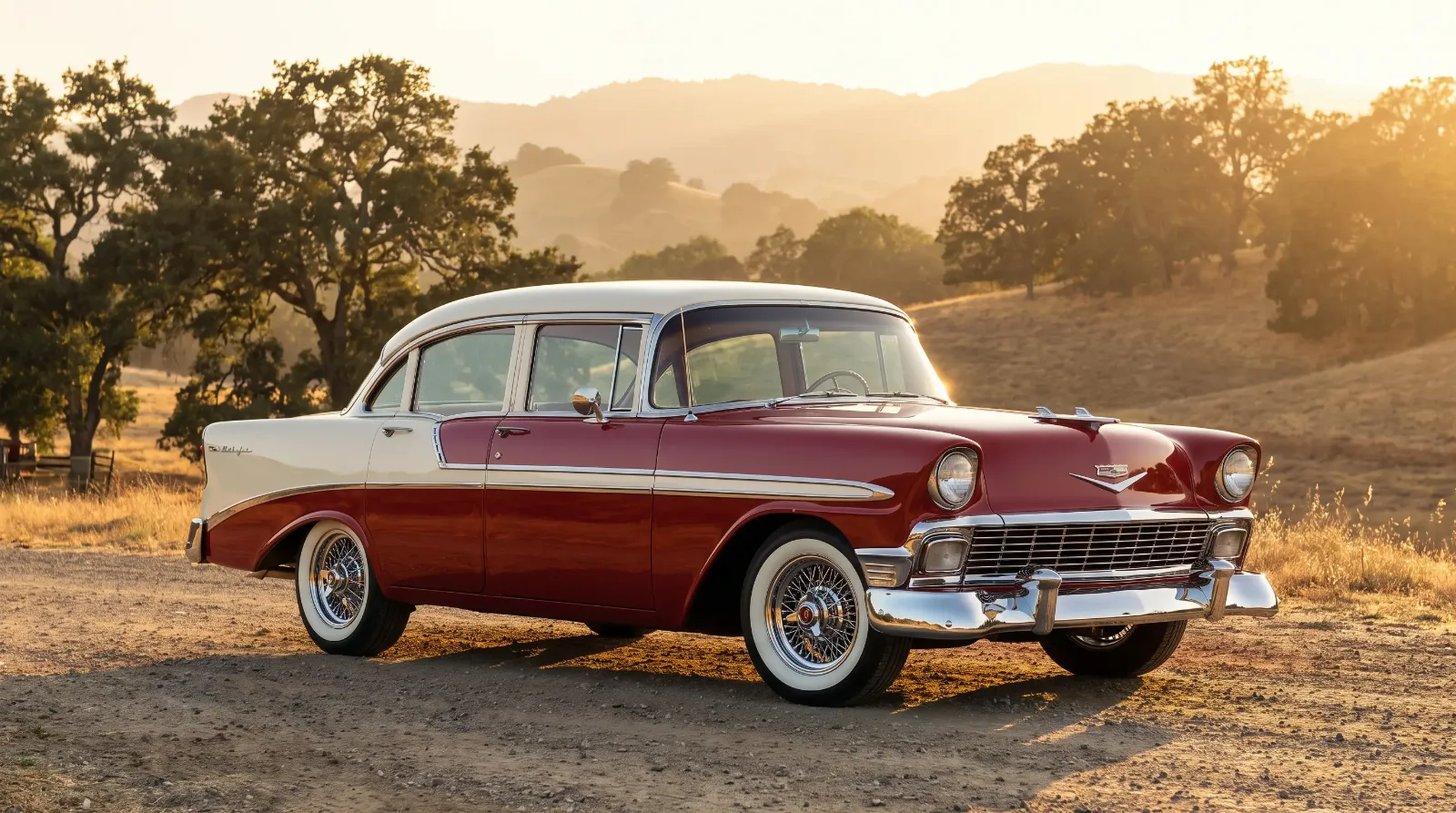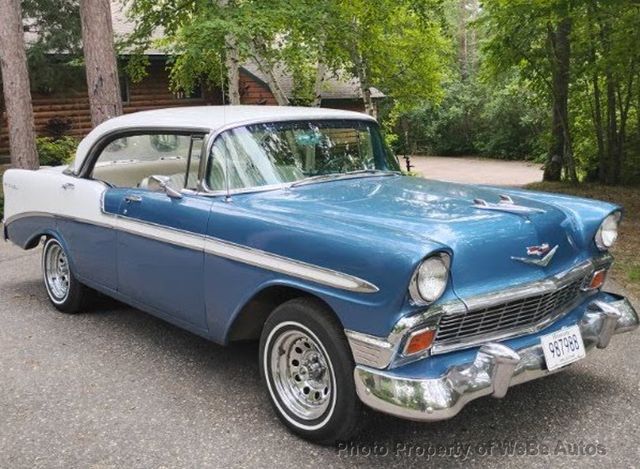
The factory records for 1956 list a body style that had not existed in the Bel Air lineup the year before: the 1956 bel air sport sedan, a four-door pillarless hardtop that gave family buyers the open-window look of a coupe without asking them to give up rear doors. Chevrolet had offered a two-door hardtop since the Tri-Five debut, but the four-door version was new, and the decision to add it says as much about who was actually buying these cars as any brochure copy from the period.
What made a hardtop a hardtop
The pillarless hardtop body style did away with the fixed center post between the front and rear side windows, so with all the glass rolled down a hardtop presented one continuous opening along its side, the same visual trick that made the two-door Sport Coupe look sportier than an ordinary sedan. Extending that idea to a four-door body was mechanically harder than it sounds. The B-pillar does real structural work in a conventional sedan, and removing it for the Sport Sedan required Chevrolet's engineers to reinforce the body elsewhere to keep the car rigid without the post there to help.
The result, once the engineering was sorted, gave buyers something genuinely new for the low-price field: a family car with four full doors that still carried the open, airy look previously reserved for two-door coupes and convertibles. That combination had obvious appeal to a buyer who wanted the Bel Air's image without asking a spouse or children to climb through a two-door car every day.
Why Chevrolet added it to the range
The decision reflects a broader trend across the industry in the mid-1950s, as automakers noticed that hardtop styling had moved from a niche two-door novelty to something buyers wanted across more of the lineup. Chevrolet was not first to market with a four-door hardtop concept, but the Sport Sedan arrived at a moment when the format was proving its commercial value, and Chevrolet's version benefited from the Bel Air name's own momentum coming out of a strong 1955. Readers wanting the fuller context of that 1955 launch and the mechanical story behind it can find it in read the background covering the full 1956 model year.
Positioning the Sport Sedan within the Bel Air trim level rather than a lesser series was also a deliberate choice. It kept the new body style associated with Chevrolet's premium passenger car identity rather than diluting the brand by offering it lower in the range, a decision consistent with how Chevrolet had been building the Bel Air name since it first became a distinct series rather than just a trim option.
Production and market reception
The Sport Sedan found a real audience, selling well enough within the 1956 range to validate the engineering investment Chevrolet had made in bringing it to market. It did not outsell the conventional four-door sedan, which remained the volume workhorse of the lineup for buyers prioritizing price over style, but it carved out a durable niche among buyers who wanted the visual statement of a hardtop without sacrificing rear-door practicality. That balance, style without compromise, is exactly the pitch Chevrolet's marketing made for the body style, and the sales figures suggest enough buyers found it convincing.
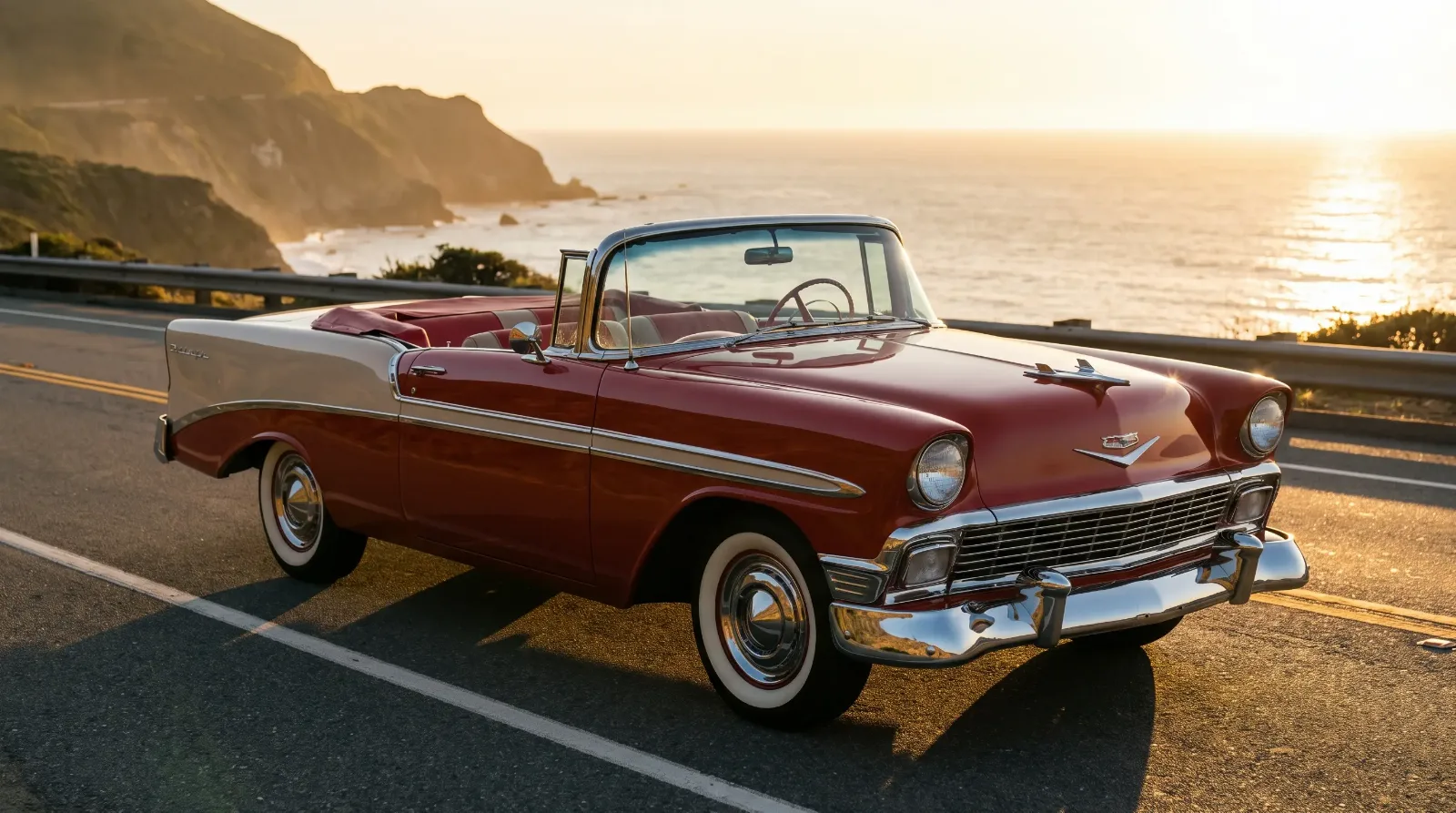
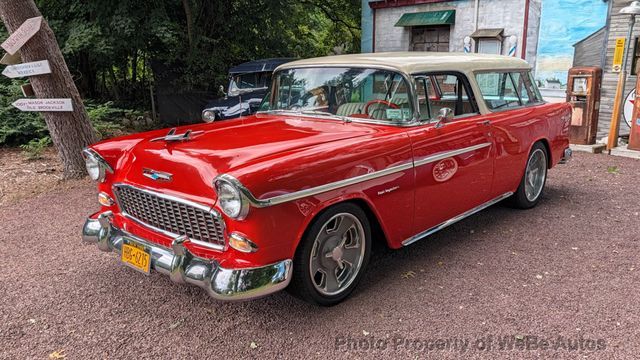
Within the broader 1956 body style lineup, which also included the two-door Sport Coupe hardtop, the convertible, and the Nomad wagon, the Sport Sedan occupied a distinct position as the only four-door hardtop offering. Buyers cross-shopping the two-door hardtop against the new four-door version were making a genuine choice between two different visions of what a sporty Chevrolet family car could be, a comparison worth exploring further in a piece on the two-door version, which is worth a look too for anyone weighing open-top options against the closed hardtop body styles.
| Attribute | 1956 Bel Air Sport Sedan |
|---|---|
| Body style | Four-door pillarless hardtop |
| New for | 1956 model year |
| Structural note | Reinforced body compensating for removed B-pillar |
| Market position | Premium alternative to standard four-door sedan |
| Comparable two-door | Sport Coupe hardtop |
"The Sport Sedan gets overlooked next to the convertible and the Nomad because it lacks their rarity story, but the engineering behind removing that center pillar on a four-door body was not trivial. Chevrolet solved a real structural problem to sell a look, and the sales figures say buyers noticed the effort even if they never thought about why the car felt so solid."
- Tom Ramirez
What the interior gave up, and what it kept
Buyers weighing the Sport Sedan against the standard four-door sedan were not just choosing a roofline. The pillarless design changed how the cabin felt from the inside, with less visual clutter along the beltline and a genuinely different sense of openness once the windows came down, even though the seating position and dashboard layout carried over largely unchanged from the standard sedan. That meant a family did not have to trade practicality for the hardtop look, which was precisely the pitch that made the body style worth the engineering investment.
Trim levels within the Sport Sedan followed the same Bel Air conventions as the rest of the range, with richer upholstery and more brightwork than the lower One-Fifty and Two-Ten series offered. Chevrolet treated the Sport Sedan as a genuine flagship configuration rather than a cost-reduced version of the two-door hardtop, and buyers who ordered one in period were paying for that positioning as much as for the body style itself.
Collecting a Sport Sedan today
The Sport Sedan occupies an interesting middle ground in today's collector market. It carries genuine period significance as the debut of the four-door hardtop format in the Bel Air lineup, but it has not attracted the same premium pricing that convertibles and Nomads command, largely because four-door body styles across the collector market generally trail their two-door counterparts regardless of pillarless styling. That gap makes the Sport Sedan an interesting option for a buyer who wants genuine Tri-Five character and a documented piece of Chevrolet's design history without paying convertible money to get it.
Verifying originality on a Sport Sedan means paying attention to the specific reinforcement and trim details unique to the body style, since the four-door hardtop shares some components with the standard sedan but not all of them. A buyer who does that homework can end up with a genuinely distinctive car for a reasonable price, one that tells a more complete version of the Tri-Five story than a two-door alone can, since it represents Chevrolet's answer to what a stylish family car could look like rather than just a sporty coupe aimed at a single driver. Anyone ready to compare examples in person can shop classic Air listings and see how the four-door hardtop presents next to its two-door sibling on the current market.