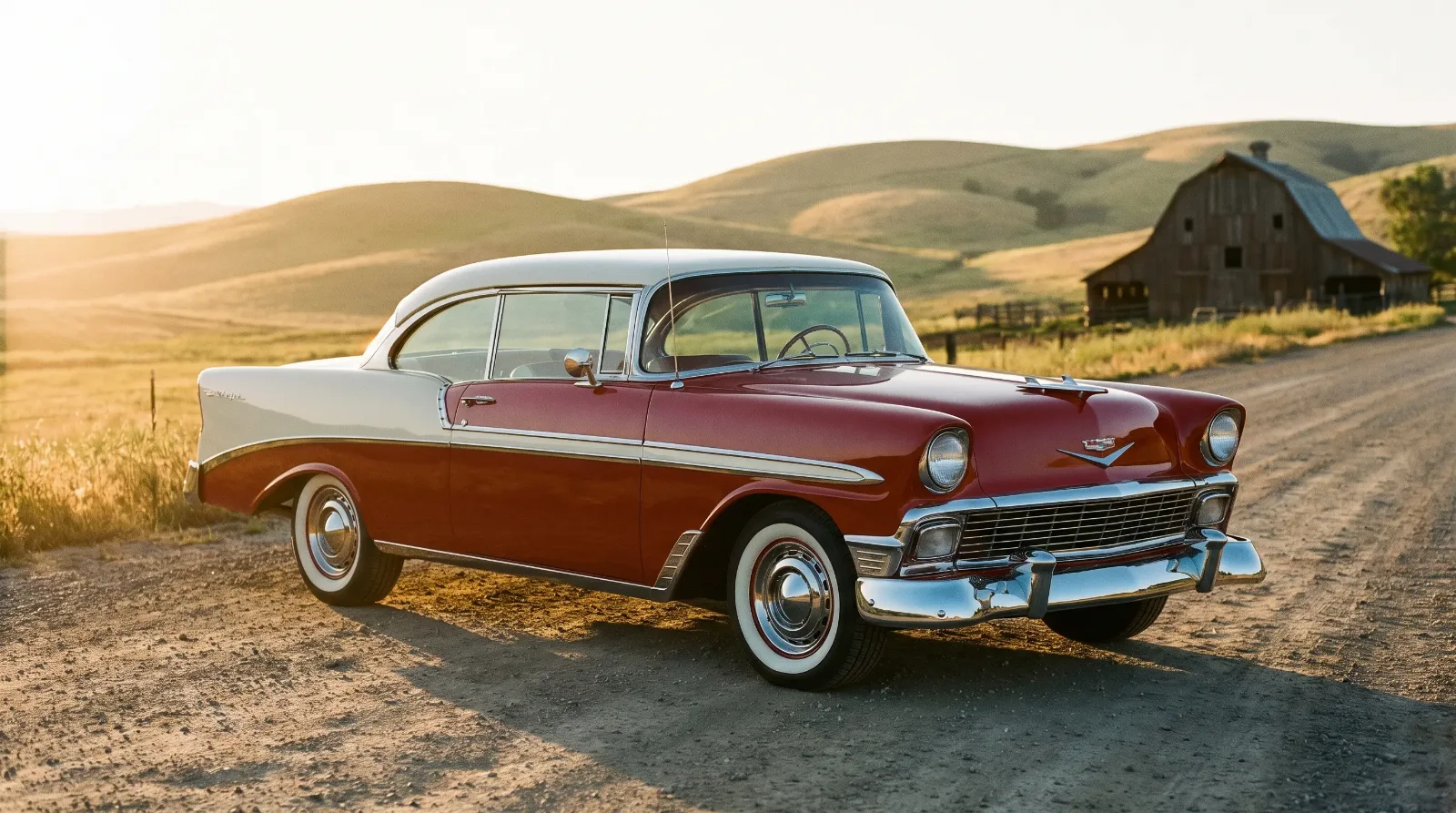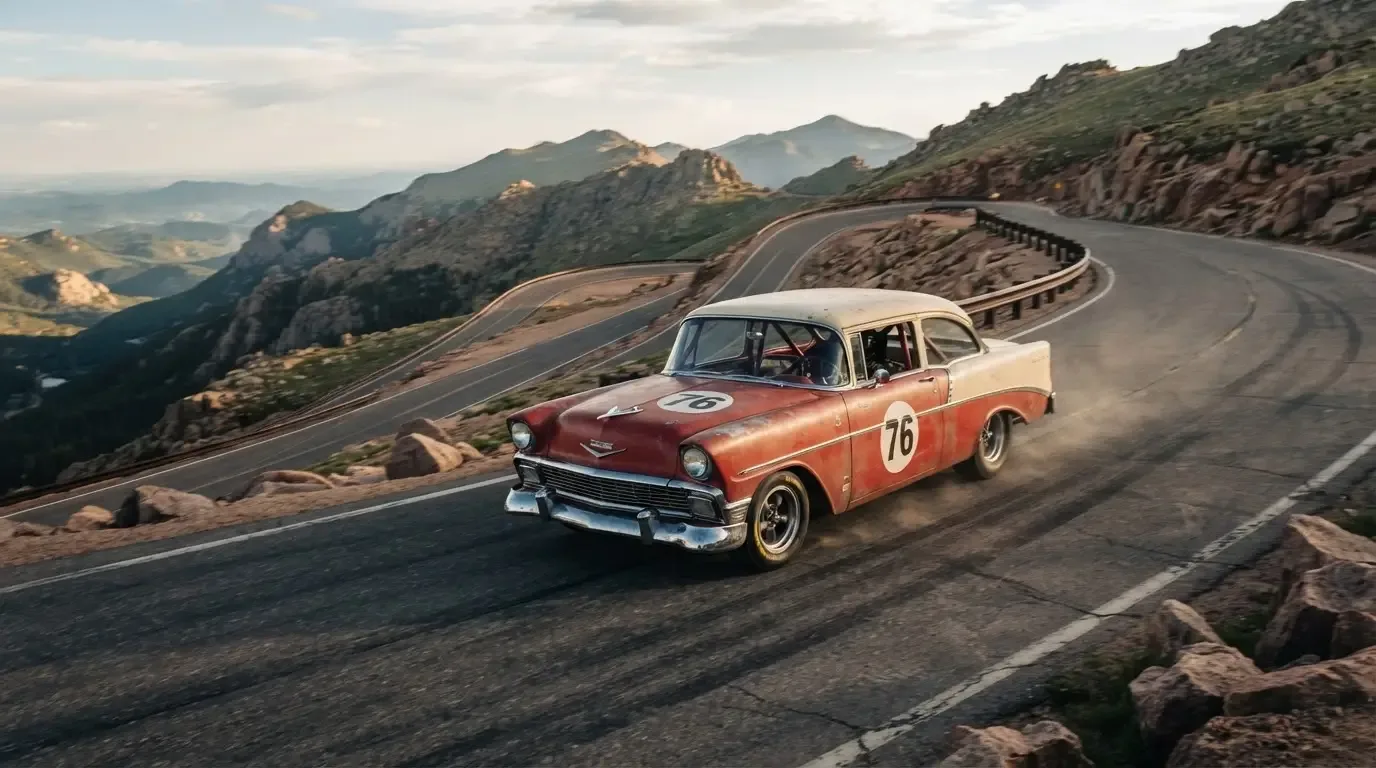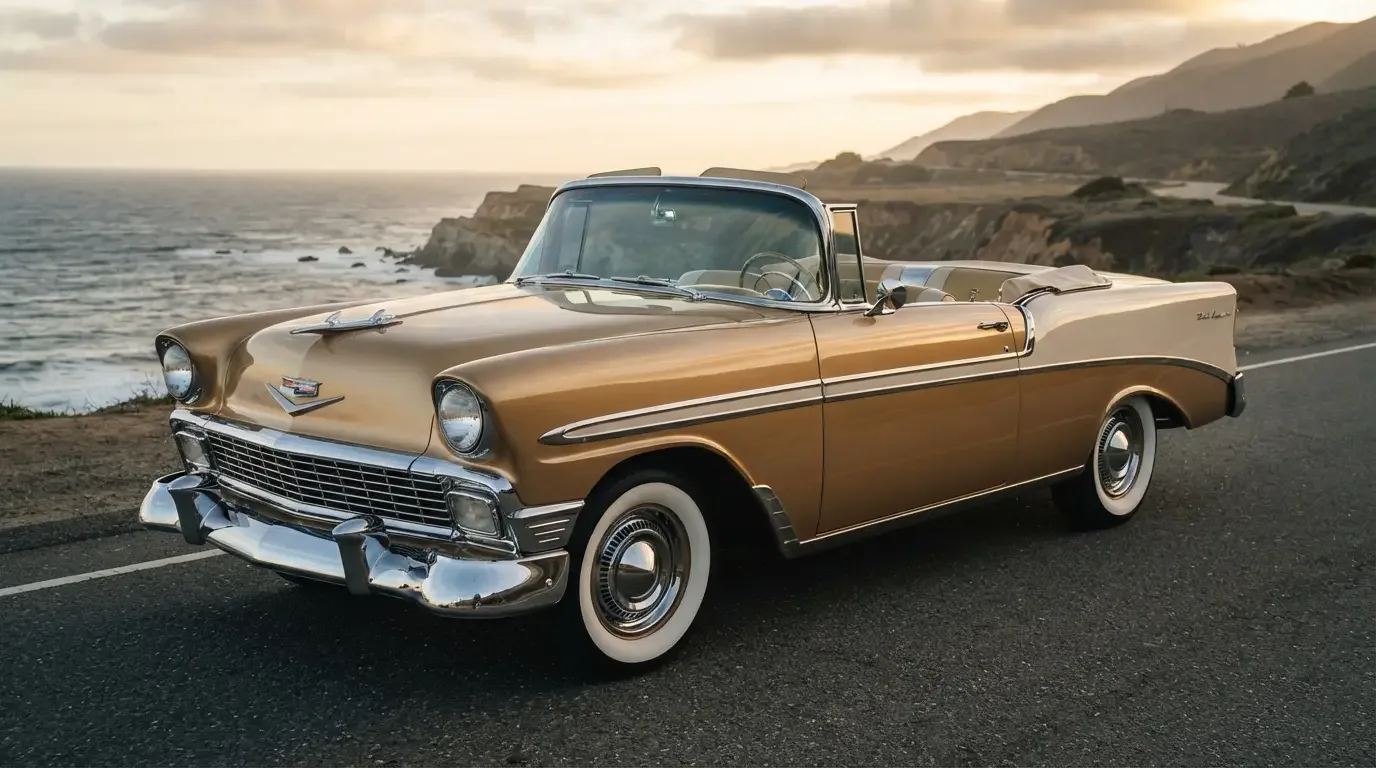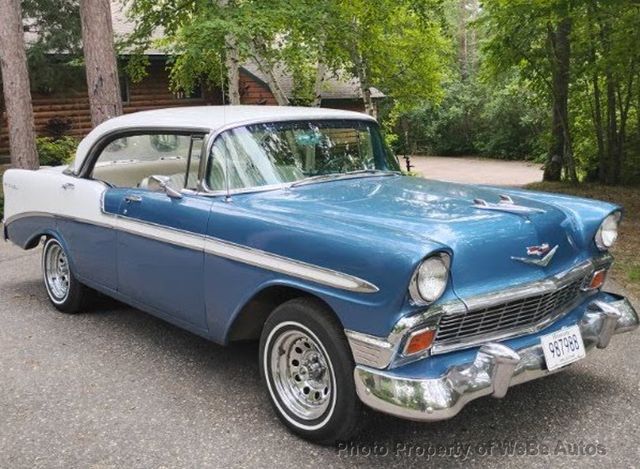
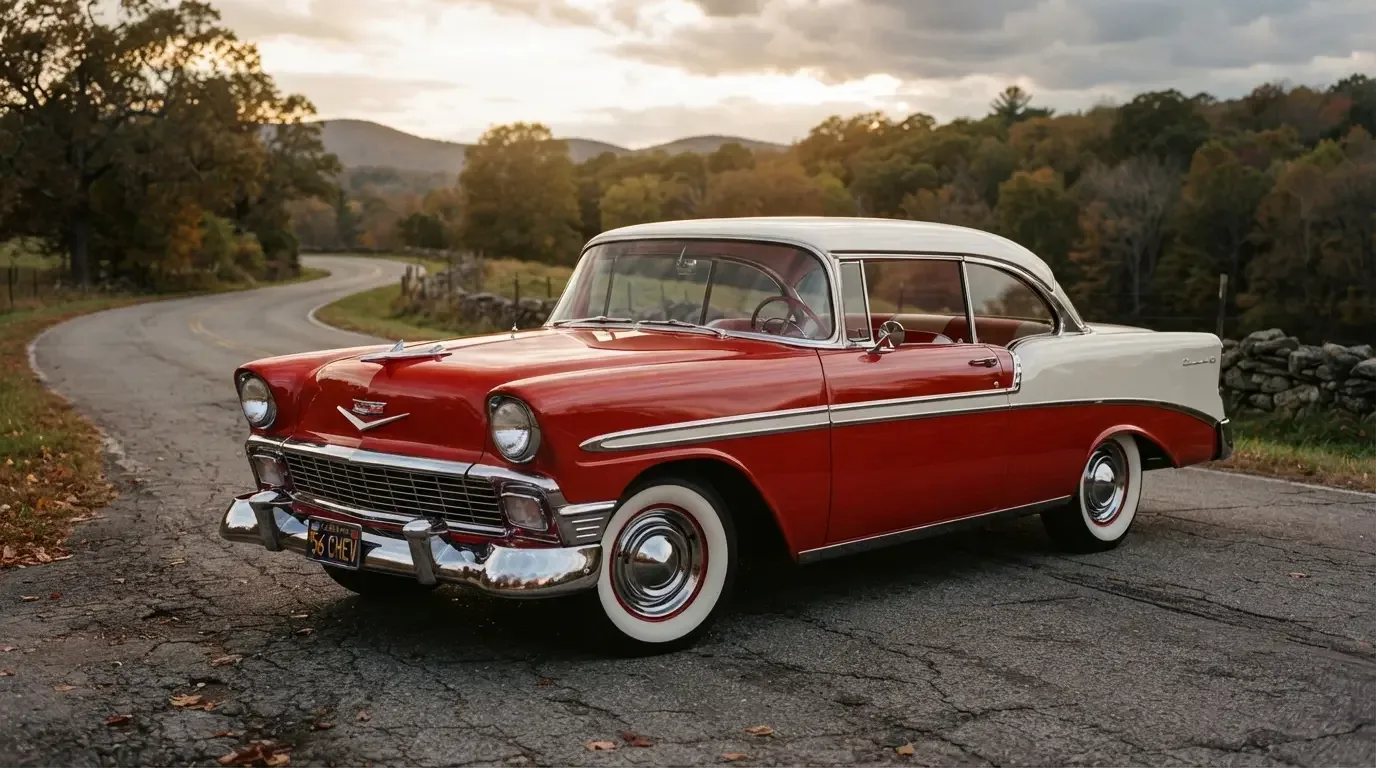
Ask a casual collector to picture a Tri-Five Chevrolet and they will almost always land on 1957, tailfins and all, or they will reach back to 1955 for the small-block V8's debut. The 1956 Bel Air sits between those two louder stories, and the historical record does not actually support treating it as the lesser car. It just got outmarketed by its own siblings, which is a very different thing than being outbuilt by them.
What 1955 actually left unfinished
The 1955 Bel Air is remembered, correctly, for introducing the 265 cubic inch small-block V8 and the completely redesigned body that broke from Chevrolet's older, boxier postwar styling. But a first-year redesign carries first-year compromises, and Chevrolet's engineers spent 1956 quietly fixing them. Suspension tuning, build quality, and detail engineering across the platform improved measurably between the two model years, the kind of unglamorous refinement that never makes a period advertisement but shows up in how a car actually holds up seven decades later.
Chevrolet also expanded the V8's output options for 1956, pushing further into the horsepower competition the entire industry had entered, while keeping the price structure close enough to 1955 that the improvements did not require buyers to pay a meaningful premium. That combination, a more sorted platform with more available power at a comparable price, is not a minor footnote. It is the case for 1956 being the more finished version of the same fundamental car.
What 1957 borrowed and what it changed
The 1957 Bel Air's reputation rests heavily on its styling, the tailfins and the more aggressive grille treatment that turned it into the era's defining visual icon. Underneath that styling, the 1957 shared much of its engineering lineage with 1956, refined further but not reinvented. Collectors chasing 1957 specifically are very often chasing the look, which is a legitimate reason to want a car but not evidence that the 1957 represents some categorical leap in engineering over 1956. It represents a styling leap, and those are not the same thing.
The market consequence of being the middle child
Because collector attention skews so heavily toward 1955 and 1957, 1956 Bel Airs have historically traded at a discount to comparable examples from those bookend years, condition and body style held equal. That gap has narrowed as more serious buyers have done the research and recognized that a 1956 offers most of what makes the Tri-Five era significant, the small-block V8, the era-defining body language before the fin excess, and genuinely improved build quality, without the collector premium attached to the more famous years.
| Model year | Reputation | Engineering reality |
|---|---|---|
| 1955 | Revolutionary debut | First-year platform, some unresolved rough edges |
| 1956 | Overlooked middle year | Refined chassis, expanded V8 options, mature build quality |
| 1957 | Styling icon | Shares 1956's mechanical foundation, adds fins and trim |
A car built for someone who wanted the whole package
The 1956 Bel Air buyer in period was not choosing a compromise. They were choosing a car Chevrolet had spent a full model year improving on the strength of what 1955 had proven the market wanted. That is not a marketing angle invented decades later to justify a discount price. It is simply what the factory record shows when you actually compare the two years side by side rather than relying on which one photographs better on a magazine cover.
"1955 gets the credit for starting something and 1957 gets the credit for finishing it with style, but the factory spent 1956 actually making the car better, and that work doesn't show up in a nostalgia poll."
- Tom Ramirez
Why this matters for a buyer today
For a buyer prioritizing driving experience and mechanical soundness over marque prestige, a well-documented 1956 Bel Air is a genuinely strong argument, often available at a meaningfully lower entry point than a comparable 1955 or 1957. That gap is not a reflection of inferior engineering. It is a reflection of collector psychology that has taken decades to correct itself, and is still correcting. For the full story on the 1956 model year, including its styling and production details, the broader retrospective fills in what this piece leaves out. If the case for 1956 has you looking seriously, there is classic Air for sale worth comparing against its more famous siblings before assuming the fame is the same thing as the quality.
What club and show circuits have quietly noticed
Regional Tri-Five clubs have been slower than the broader auction market to discount 1956, in part because members who actually drive and maintain these cars notice the mechanical refinements firsthand rather than reading about them secondhand. Judges at marque-specific concours events routinely comment that well-prepared 1956 examples present as tightly as their more famous siblings, and in some cases more so, since the smaller pool of restorers working on the year tends to be doing the work out of genuine enthusiasm for the specific model rather than chasing resale value on a more fashionable year.
That grassroots recognition has been slowly filtering upward into the broader market over the past several auction cycles, part of why the value gap between 1956 and its bookend years has been narrowing rather than holding steady. Buyers who did their homework five or ten years ago and bought 1956 examples while the discount was wider have generally been rewarded for it, a pattern that tends to repeat whenever a genuinely undervalued segment gets discovered by a wider audience.
What "underrated" does not mean
None of this is an argument that 1956 will ever surpass 1957 in raw market value or cultural recognition. The styling case for 1957 is real, and the fuel-injection option that year represents a genuine engineering milestone in its own right. The argument for 1956 is narrower and more specific. Dollar for dollar, condition for condition, it offers more car than its reputation suggests, and that gap between reputation and reality is exactly what a careful buyer should be looking for in any collector market, classic cars included.
The parts availability argument nobody mentions
Because 1956 shares so much mechanical architecture with both 1955 and 1957, sourcing drivetrain, suspension, and brake components for a 1956 restoration is generally straightforward, drawing on the same reproduction and salvage supply chains that support the more famous years. That practical reality gets lost in conversations about styling and reputation, but it matters enormously to anyone actually planning to own and drive one of these cars rather than simply admire it from a distance. A collector deciding between three Tri-Five years on restoration feasibility alone would find little meaningful difference between them, since the underlying mechanical platform barely changed across the run.
Where 1956 does differ is in sheet metal and trim specifics unique to that single model year, items that see less reproduction volume than the higher-demand 1955 and 1957 equivalents simply because fewer restorers are asking for them. This is the one area where the underrated reputation genuinely creates friction rather than opportunity, and it is worth factoring into any restoration budget for a 1956-specific project.