
Turn the key in a 1984 Camaro Berlinetta after dark and the cabin answers with light. Numbers bloom where a needle used to sit. A row of bars climbs as the engine catches and settles, and on either side of the steering column two pods of buttons wait within reach of your fingertips. For a driver who had grown up with chrome bezels and white-on-black dials, it felt like sitting in something that had arrived early from another decade. The Berlinetta digital dash was Chevrolet's boldest attempt to make a Camaro feel like the future, and it is still the detail people remember about the car.
Car Features
6 min read
The 1984 Berlinetta's Space-Age Dash
The 1984 Camaro Berlinetta's digital dash: a vacuum-fluorescent cluster, sliding control pods, a swiveling radio and a roof console, and what they meant.
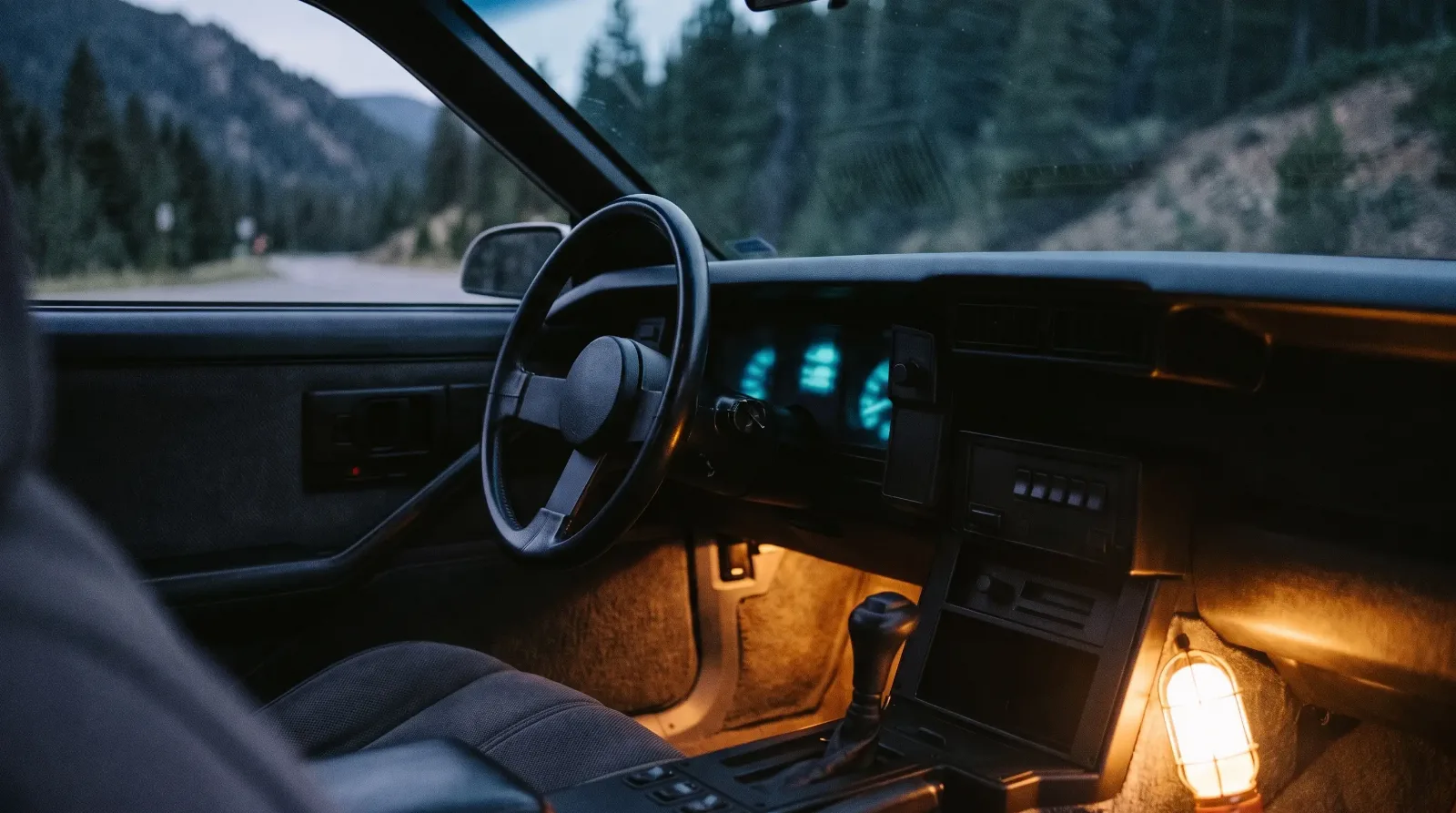
It was also a bold bet for a car that was never the fastest Camaro in the showroom. The Berlinetta sold on comfort and style, and in 1984 Chevrolet decided that style should include the future.
The Berlinetta's place in 1984
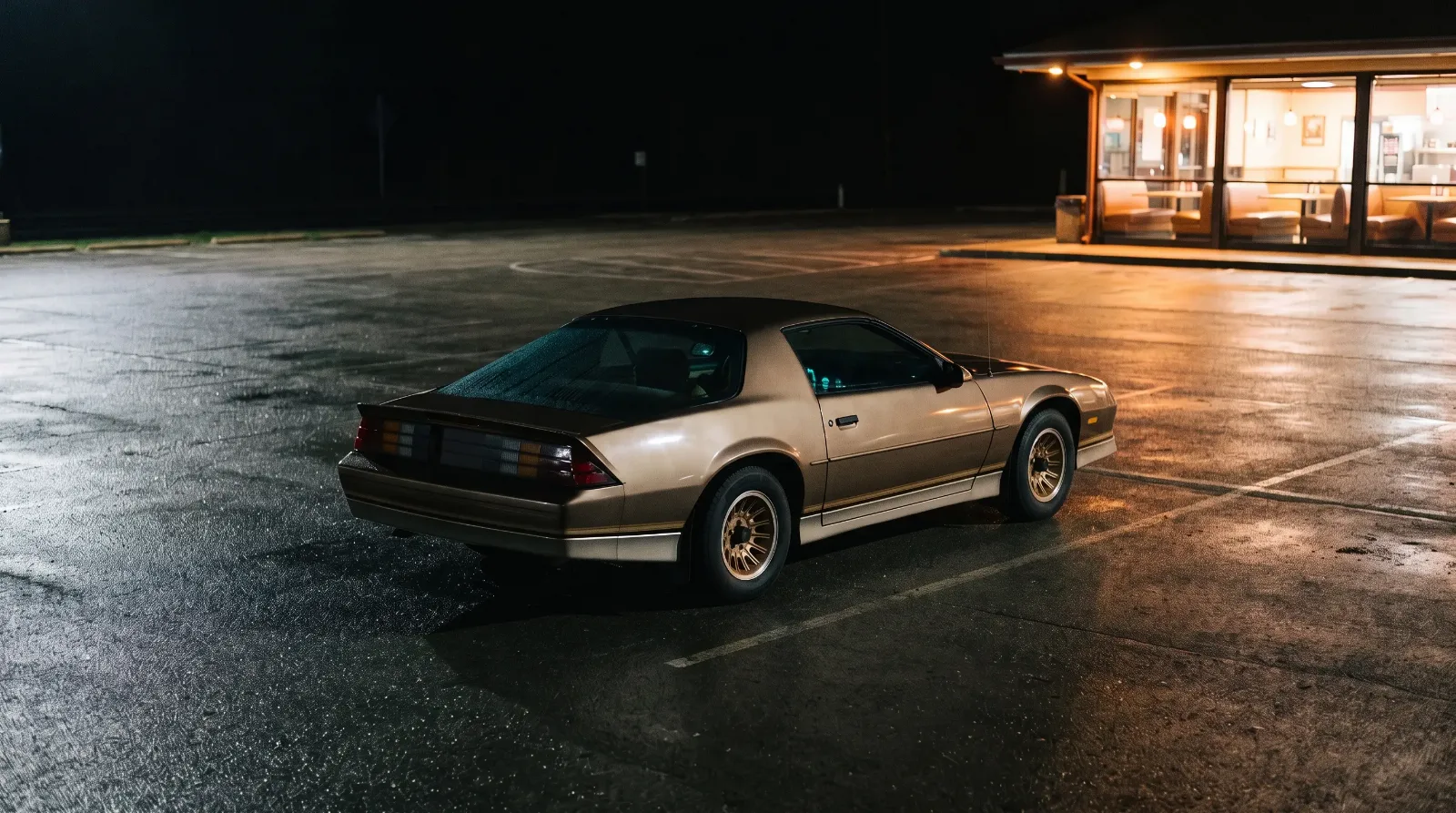
The Berlinetta had been part of the Camaro range since 1979, when it replaced the Type LT as the upscale choice. Its name echoed Ferrari's. When the third-generation car arrived for 1982, the lineup had three trims, Sport Coupe, Berlinetta and Z28, and the Berlinetta held the comfortable middle ground between the plain car and the performance one.
1984 was a high-water mark for the whole range. Chevrolet built 261,591 Camaros that model year, the peak of the third generation, and 100,416 of them were Z28s. The Berlinetta accounted for 33,400. It was not the volume car. It was the one with ideas.
Under the hood, the standard engine was the 2.8-liter V6 at 107 hp, with a V8 on the option list. A later MotorWeek retrospective put a five-speed Berlinetta at about 14 seconds to 60 mph. Nobody bought one for that number. They bought it for what happened when they looked down at the dash.
Inside the Berlinetta digital dash
The heart of the Berlinetta digital dash was a vacuum-fluorescent display. The speedometer read out in digits, and the tachometer became a bar graph, a strip of segments that lengthened as the revs rose. At night the effect was soft and even, the light seeming to float a little behind the glass rather than sit on its surface.
It changed the act of driving in a small but real way. A needle invites a glance; a digital number invites a reading. The bar graph, for its part, turned engine speed into something closer to a pulse.
The cluster was only one part of a whole electronic cockpit. For 1984 the Berlinetta combined the electronic instruments with an overhead console and pod-mounted controls, so the entire space around the driver was rethought at once.
"Most dashboards tell you how fast you are going. The Berlinetta's seemed to want to tell you where you were going, and in 1984 that felt like a promise."
Nora Beckett
Pods, a swiveling radio and a roof console
The pods were the boldest move. Push-button clusters sat on either side of the steering column and slid fore and aft, so a driver could bring the switches closer. They carried the turn signals, wipers, lights, the heating and air conditioning controls and the cruise control. Almost everything a driver touched on the move was in those two pods.
The radio and an upright cassette deck sat on a console pod that swiveled, so the passenger could reach it too. It is a gentle, social detail, the kind of thing a designer adds when imagining two people sharing a long drive and arguing over the music.
Overhead, a roof console held a map light and a removable flashlight. It also carried two thumbwheels that the brochure called "reminder spools," a small mechanical touch in the middle of all that electronics.
The numbers behind the glow
The Berlinetta's sales tell a story of a car that peaked early and then faded, while the Z28 and, from 1985, the IROC-Z took the spotlight. Its 1984 volume was a rebound from the year before, and after that the decline was steep.
| Model year | Berlinettas built | Note |
|---|---|---|
| 1982 | 39,744 | Third generation launches |
| 1983 | 27,925 | |
| 1984 | 33,400 | Electronic dash, pods and roof console |
| 1985 | 13,649 | IROC-Z arrives |
| 1986 | 4,479 | Last Berlinetta |
The electronic cockpit stayed with the Berlinetta to the end. A 1986 car still came with the electronic instrument cluster, the dual adjustable control pods and the roof console with its removable flashlight, though the swiveling radio was by then a $242 option. For 1987 the LT name returned in its place, and the Berlinetta was gone.
The price of entry in 1984 was about $11,000, and by 1986 the base price had climbed to $11,902. Buyers in the middle of the decade were being courted with speed, and the Camaro and Mustang were fighting hard for them. Camaro out-built the Mustang every year from 1982 to 1985; in 1984 Ford built 141,480 Mustangs against Chevrolet's 261,591 Camaros. The rest of the Fox-body Mustang rivalry was fought with horsepower, and that was never the Berlinetta's ground.
Living with a Berlinetta now
A Berlinetta with a working dash is a small event. The electronic cluster and pods are the reason to own one, and they are also the parts that make an incomplete car hard to finish. A buyer is less interested in a perfect paint job than in a cockpit where every light and button does what it should.
Seen today, the Berlinetta is the part of the third-gen Camaro story that tried to imagine the future rather than chase the stopwatch. It got some things wrong and many things charming, and on a dark road with the dash lit and the bars climbing, the charm is the part you remember.
Sources and notes
- The Autopian: the 1984 Camaro Berlinetta's reminder spools, pods and roof console
- Eighties Cars: the 1986 Camaro Berlinetta (equipment, options and prices)
- Jalopnik: the 1984 Camaro Berlinetta's control pods and swiveling radio (MotorWeek retro review)
- Wikipedia: Chevrolet Camaro (third generation)
- Classic Industries: Camaro production numbers by generation
- Wikipedia: Ford Mustang (third generation) production figures
Related Reading
Have a
Chevrolet Camaro
for Sale?
Reach thousands of serious classic car collectors across the US.
Sell It Here →
Selling a classic? Here's how: where to sell your classic car online
Are You a Classic Car Dealer?
List your full inventory and connect with targeted classic car buyers.
Join as a Dealer →
#chevrolet camaro
#1980s cars
#digital dash
#Camaro Berlinetta
#third generation Camaro
#1984 Camaro

About the author
Nora Beckett
Automotive features writer and photographer who tells the human stories behind the cars, from show fields to cross-country road trips.
Related Listings - Chevrolet Camaro
Comments
Be the first to comment on this article.