
Every argument about the Fox body vs third gen Camaro ends up in the same place: a parking lot, two guys, two hoods up and nobody willing to admit anything. The truth is less fun than the argument. The Mustang was lighter and usually quicker in a straight line. The Camaro handled better and, for a few years, had more rated power at the top of the range. Neither one won the decade outright. Both sold by the hundred thousand, and both now cost more than they should.
Car Features
6 min read
Fox-Body Mustang vs Third-Gen Camaro: The 1980s Street Fight
Fox body vs third gen Camaro, year by year: ratings, weight, the MotorWeek tests, production and what to look for before you buy either one.
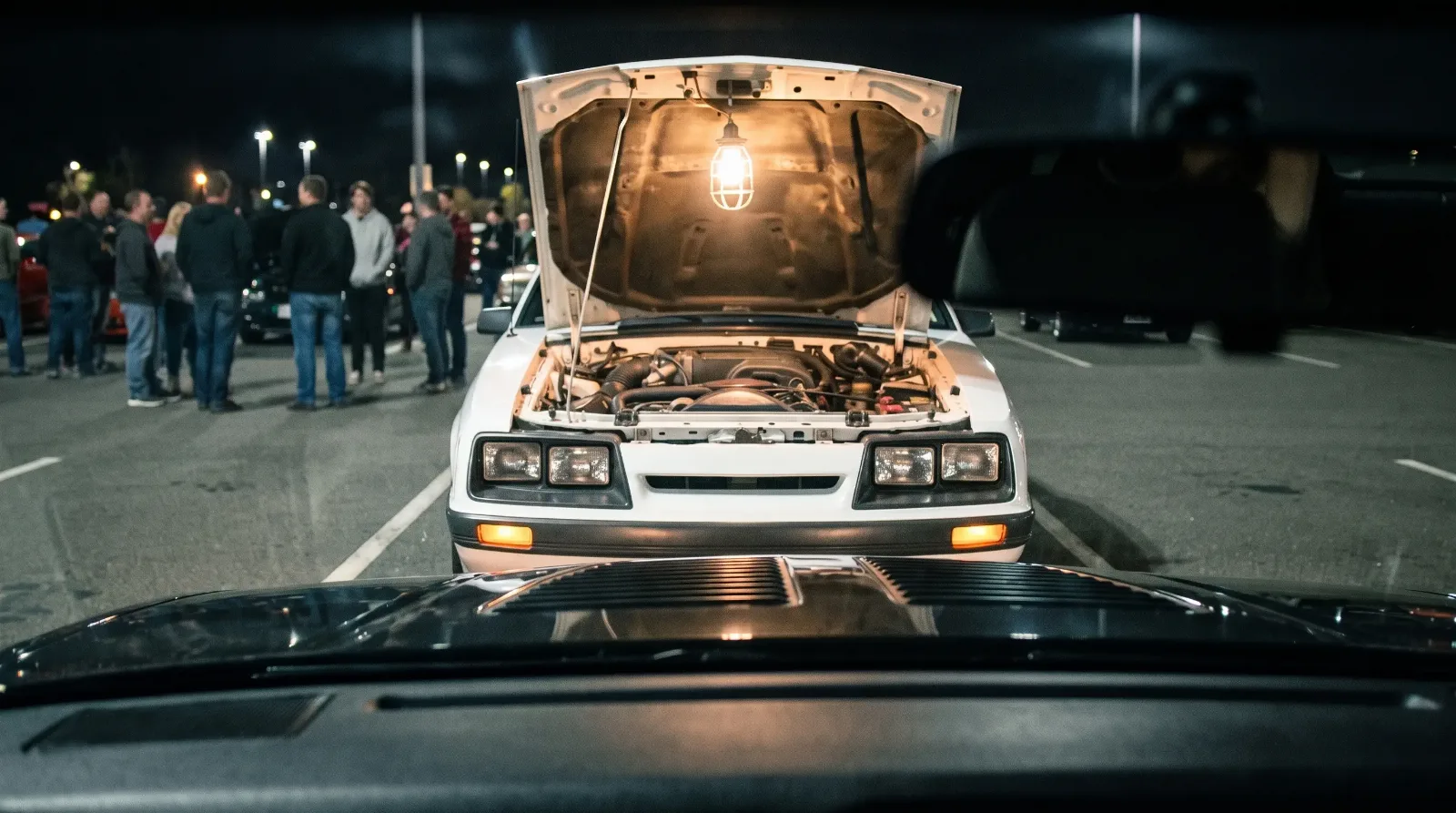
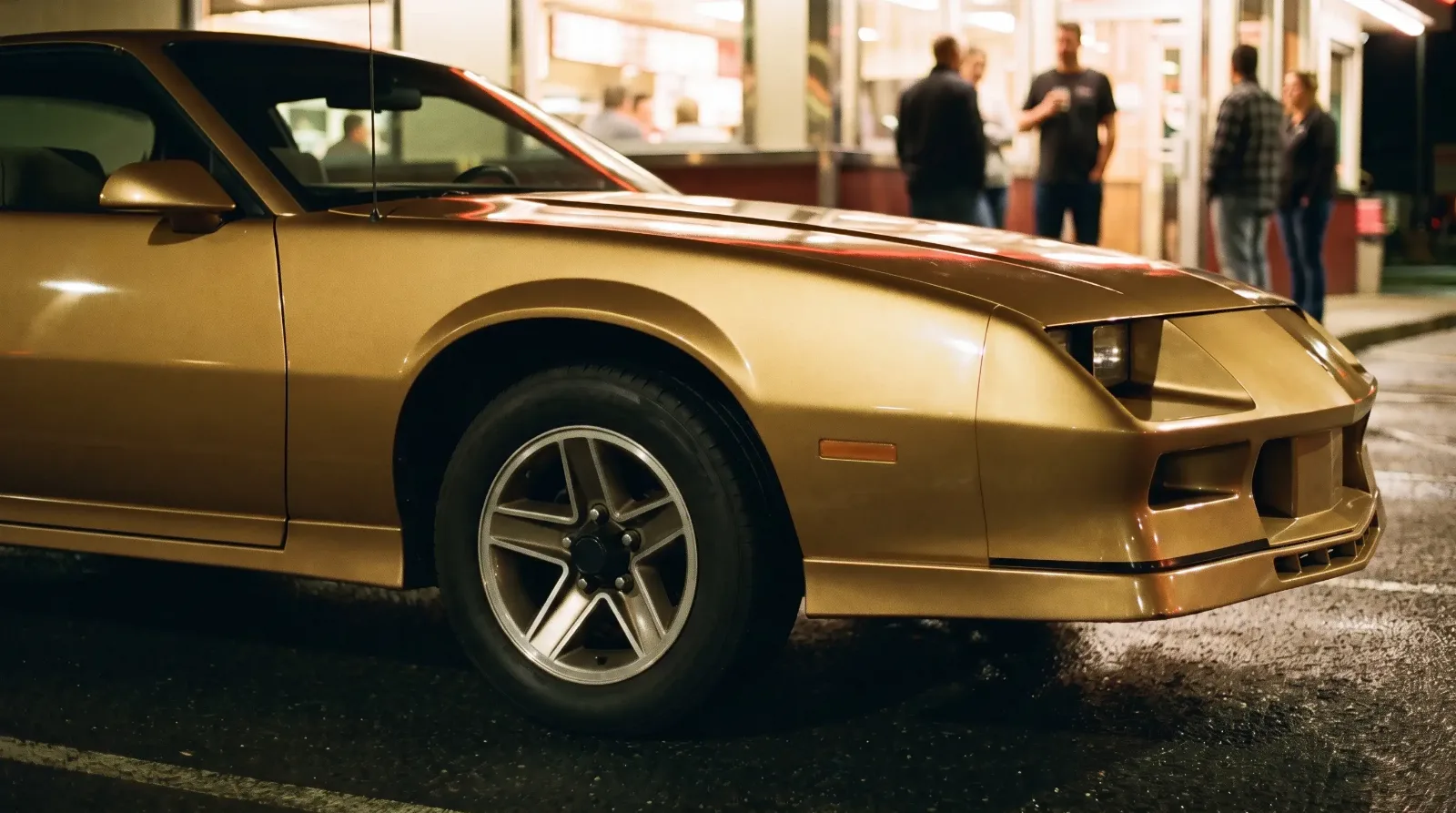
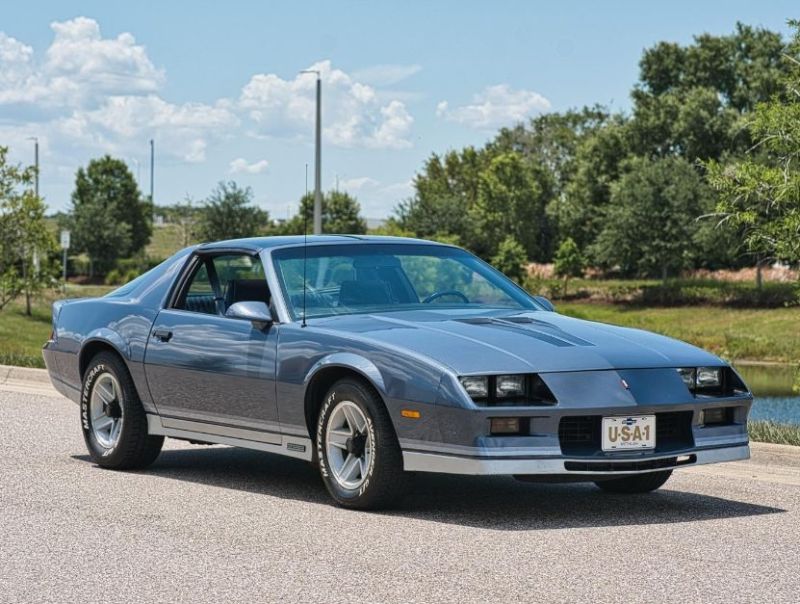
This is the head-to-head, model year by model year, using the numbers the factories published and the magazines measured. For the Camaro side in full, the third-gen Camaro history covers 1982 to 1992. Ford's side has its own page in the Fox-body Mustang story.
The scoreboard, year by year
Start with the ratings. These are SAE net figures for the best V8 each company sold in that model year.
| Model year | Top Camaro V8 | Mustang GT 5.0 |
|---|---|---|
| 1982 | LU5 Cross-Fire 305, 165 hp (automatic only); LG4 305, 145 hp | 157 hp |
| 1983 | L69 305 H.O., 190 hp, 240 lb-ft (from April, five-speed only) | 175 hp, 245 lb-ft |
| 1984 | L69 305 H.O., 190 hp | 175 hp, 245 lb-ft (four-barrel, manual only); 165 hp CFI with the automatic |
| 1985 | LB9 305 TPI, 215 hp (automatic only) | 210 hp, 270 lb-ft |
| 1986 | LB9 305 TPI, 190 hp | 200 hp, 285 lb-ft |
| 1987 | L98 350 TPI, 225 hp, 330 lb-ft (automatic only) | 225 hp, 300 lb-ft |
| 1990 to 1992 | L98 350 TPI, 245 hp (automatic only) | 225 hp |
Look at that table for a minute and two things jump out. First, the Camaro's best number almost always came with an asterisk. The 1982 Cross-Fire car was automatic only. The 1985 TPI car was automatic only. The 350 that arrived in 1987 was automatic only, and stayed that way to the end. If you wanted to row your own gears in a Camaro, you got the 305.
Second, Ford kept it simple. One V8, a manual or an automatic, and a rating that climbed, with a dip or two along the way, from 157 hp in 1982 to 225 hp in 1987. Ford re-rated the 5.0 to 205 hp for 1993, but through the third-gen years it stayed at 225. Simple sells.
Weight decided most of the street fights
Horsepower gets the attention. Weight does the work. A 1983 Mustang hatchback weighed 2,744 lb. A 1987 came in at 2,782 lb. The third-gen Camaro ran from about 3,086 to 3,362 lb depending on model and equipment. Call it three hundred pounds at the light end and more than five hundred at the heavy end.
That gap explains why the Mustang kept winning drag races it had no business winning on paper. In 1985 the IROC-Z's 215 hp topped the Mustang GT's 210 hp. The Mustang still got to the end of the quarter mile first. Five horsepower does not move three hundred pounds.
The Camaro paid for that weight with a chassis that earned it back in the corners. Front MacPherson struts with lower A-arms, and at the back a long torque arm, a Panhard rod and two trailing links. On a smooth road it put power down cleanly and stayed flat. The Fox body was the cheaper, lighter car. The Camaro was the better-engineered one. Both of those things are true, and they do not cancel out.
"Everybody wants to know which one was faster. Faster where? Put them on a drag strip and bet the Ford. Put them on a road with a few corners and bet the Chevy. Put them on a lift and bet on the one with the better maintenance records."
Mike Sullivan
What the magazines found
The first big comparison came in 1982. MotorWeek put a Z28 against a Mustang GT, both with manual gearboxes, at Summit Point Raceway. The Z28 made 145 hp to the Mustang's 157 hp, and the Mustang was lighter. It was also cheaper: about $11,500 against $13,000 for the Z28. Chevrolet had the newer car. Ford had the lighter, cheaper, more powerful one. That set the tone.
By 1985 the rematch had a third player. MotorWeek ran the Mustang GT, the IROC-Z and the Pontiac Trans Am together. The Mustang was quickest, with a 14.3-second quarter mile. On the handling course the IROC-Z was 0.9 seconds faster than the Trans Am and a full second faster than the Mustang. None of the three got past the mid-120s mph at Pocono. MotorWeek's verdict: the Mustang was the fastest, the IROC-Z the most refined. That split held for the rest of the decade.
Road & Track also ran the IROC-Z against the Mustang GT in its December 1984 issue. The figures from that test are not in the sources used here, so I will not guess at them.
Fox body vs third gen Camaro in the showroom
On the sales floor the fight was closer than the parking lot crowd remembers, and it flipped halfway through.
- 1982: Camaro 189,747, Mustang 130,418
- 1984: Camaro 261,591, Mustang 141,480 (the Camaro's best third-gen year)
- 1986: Camaro 192,219, Mustang 224,410
- 1988: Camaro 96,275, Mustang 179,565
- 1992: Camaro 70,007, Mustang 73,200
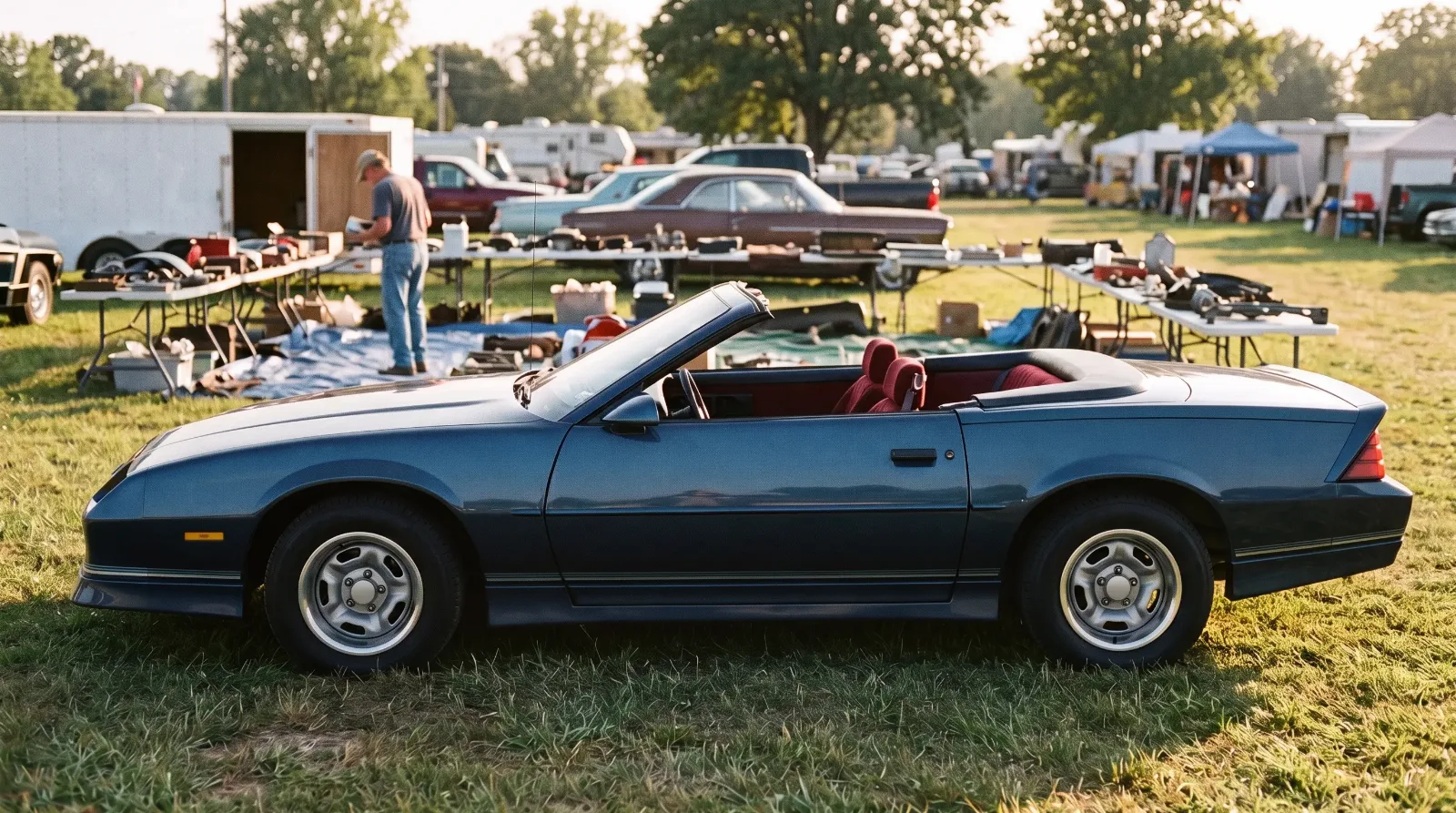
Chevrolet out-built Ford from 1982 through 1985. From 1986 the Mustang led every year except 1991, when the Camaro edged it 100,838 to 90,385. By 1988 Ford was building almost twice as many. The cheaper car with the simpler engine lineup and the five-speed V8 won the long game. Chevrolet's answer in 1987 was to bring back a drop-top, a story covered in the convertible's return, but the gap kept growing.
Which one to buy in 2026
Now the practical part.
If you want a manual and a V8, the Mustang is the easier car to find. On the Camaro side, the five-speed came with the 305: the L69 H.O. from 1983, and the TPI 305 from 1987. A third-gen 350 with a factory stick does not exist, no matter what the seller says. If someone shows you one, ask who did the swap and when.
If you care about how the car drives on a back road, the Camaro is the better starting point. That torque-arm rear end was a good design. Bushings wear, mounts crack, and a tired one will hop and clunk, but the bones are right.
As for money, both camps have gone a little silly. A clean, documented car of either make is worth paying for. A rough one with a story is not. For a reality check on the Camaro side, a black Heritage Z28 with the 245 hp L98 and an automatic sold for $14,445 with no reserve on Hagerty Marketplace in September 2026. One sale is not a market. It is still a better guide than a forum post.
The rivalry did not start in 1982 and it did not end in 1992. It goes back to the day Chevrolet named the car, and the Camaro's first decades were built around beating Ford. The Fox body and the third gen were just the round where Ford finally landed a few.
Sources and notes
- Wikipedia: Ford Mustang (third generation), engine ratings, weights and production
- Wikipedia: Chevrolet Camaro (third generation)
- Camarotech: third-gen Camaro description and suspension
- Motorious: vintage MotorWeek, 1982 Z28 vs Mustang GT
- Motorious: MotorWeek retro review, 1985 Mustang GT, IROC-Z and Trans Am
- Hagerty Marketplace: 1992 Camaro Z28 Heritage sale
Related Reading
Have a
Chevrolet Camaro
for Sale?
Reach thousands of serious classic car collectors across the US.
Sell It Here →
Selling a classic? Here's how: sell my classic car
Are You a Classic Car Dealer?
List your full inventory and connect with targeted classic car buyers.
Join as a Dealer →
#chevrolet camaro
#camaro vs mustang
#Ford Mustang
#fox body mustang
#1980s muscle
#IROC-Z
#Third-Gen Camaro

About the author
Mike Sullivan
Detroit-area muscle car enthusiast and restoration specialist with three decades of hands-on experience working on American iron.
Related Listings - Chevrolet Camaro
Comments
Be the first to comment on this article.