
When people talk about the longest heaviest classic American cars, the conversation usually collapses into one name: Cadillac. That is fair, because Cadillac built the biggest of the big for most of the era. But the full ranking is more interesting than a single badge, and the difference between a very large sedan and an outright leviathan often came down to a foot of wheelbase and a jump seat.
Car Features
6 min read
The Biggest American Classics Ever Built: Ranking Land Yachts by Length and Weight
A ranking of the longest, heaviest classic American cars, from mid-70s Cadillacs and Lincolns to the 21-foot Fleetwood limousine.
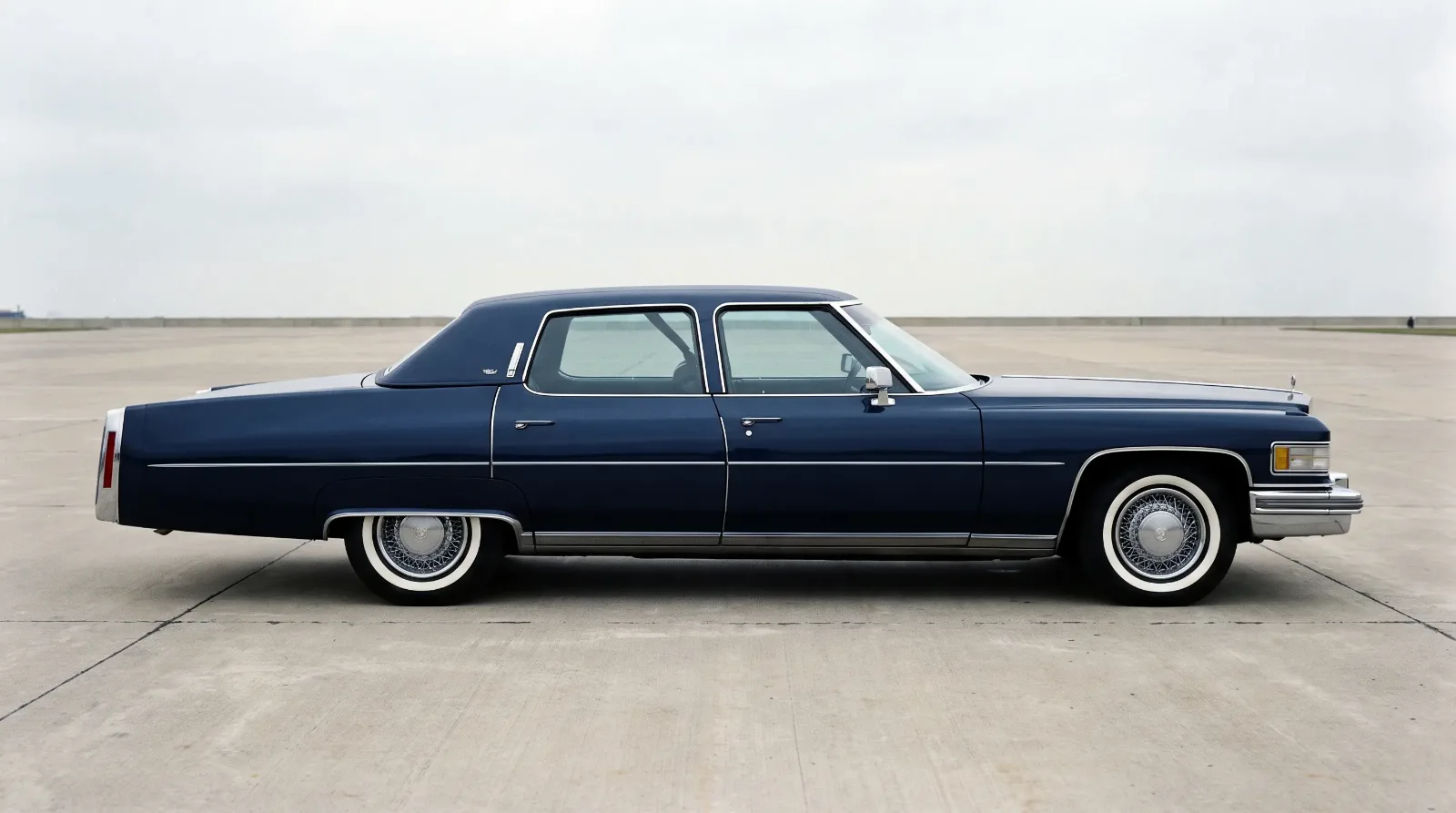
This is a ranking by the two numbers that matter for the category: overall length and curb weight. Both should be read as approximate. Options changed weight, sources disagree at the margins, and a limousine variant can distort a make's reputation. Where a specific figure needs a source check before you quote it, it is flagged.
How to measure "biggest"
Length and weight do not always track together. A stretched limousine is long because of wheelbase, not necessarily because it is dense. A short-wheelbase coupe with a huge engine and every power option can outweigh a longer sedan. So the honest answer to which car is "biggest" depends on which axis you care about.
For collectors the useful split is between standard production cars, the ones you could order off a normal showroom floor, and the factory long-wheelbase limousines that lived in a different category. Keeping those apart stops the limousines from swamping the list. If you want the reasons behind the whole size race before the numbers, start with why land yachts got so big.
The longest standard production cars
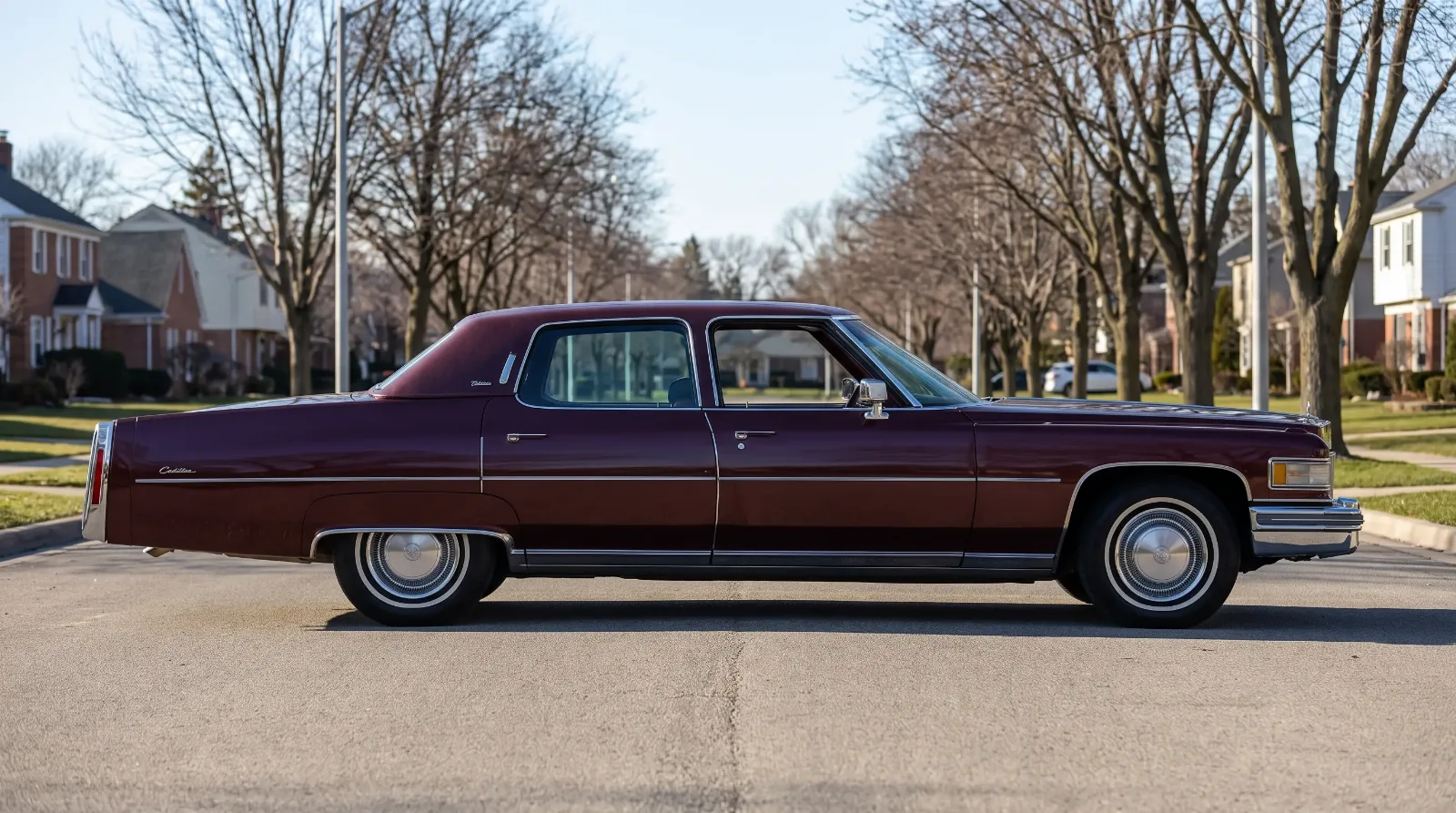
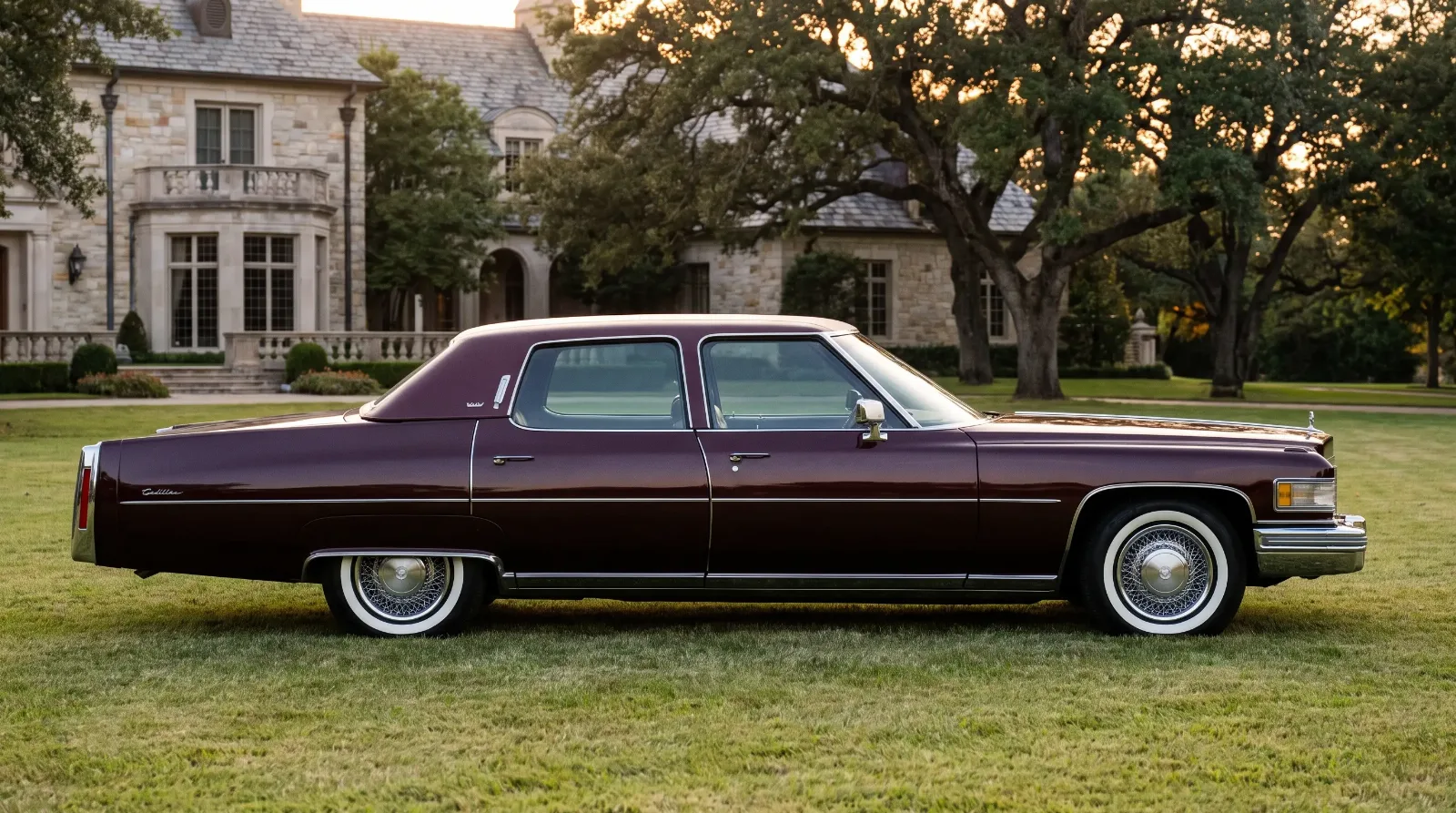
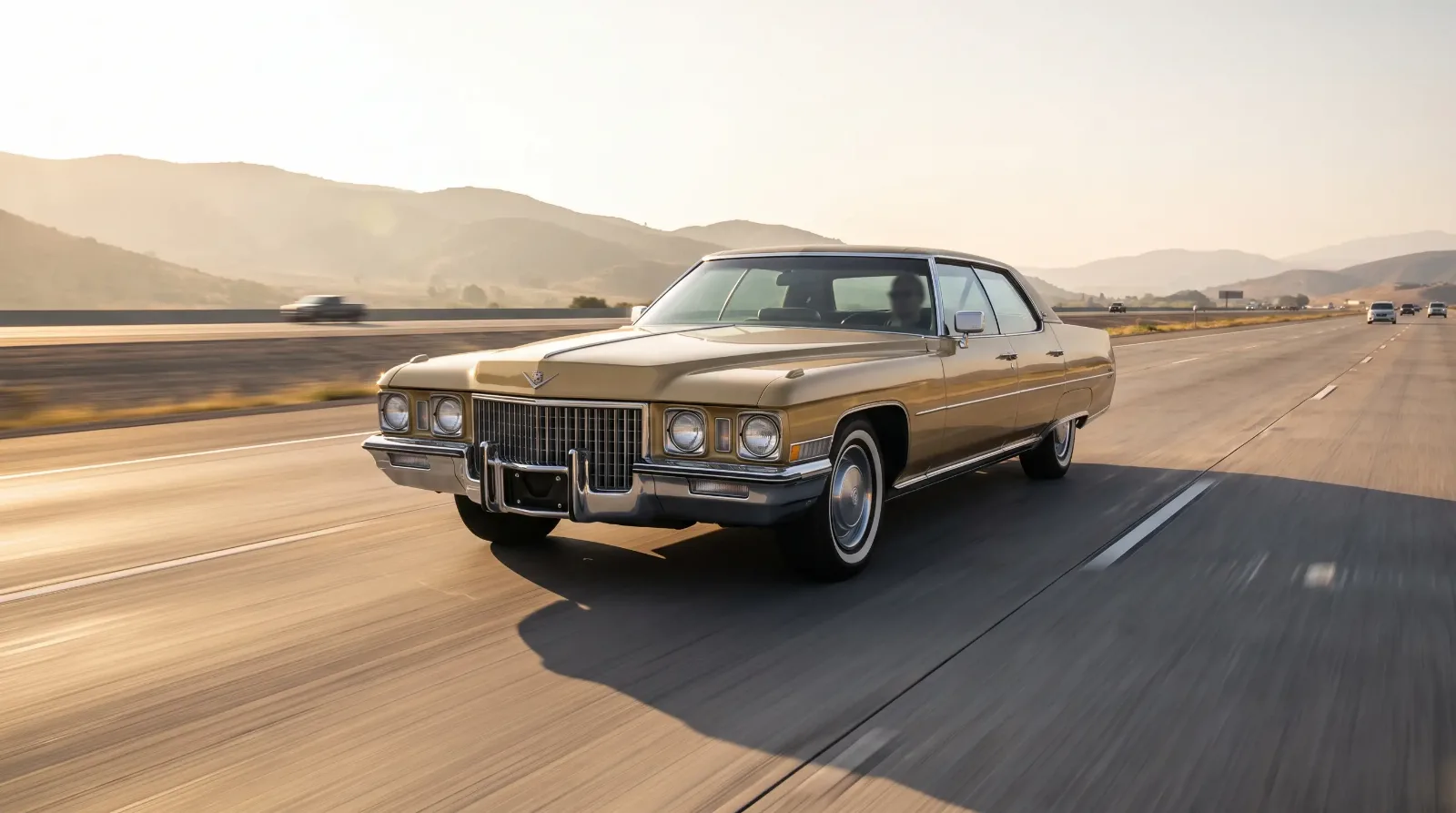
Among cars a private buyer could actually order, the mid-1970s Cadillacs and Lincolns sit at the top. The 1976 Cadillac Fleetwood Brougham measured roughly 233 inches, and its Lincoln Continental rival of the same years landed in the same territory. The Imperial LeBaron of 1973 pushed to around 235 inches, which puts it in the conversation for the longest non-limousine of the era.
| Car | Approx. length | Approx. curb weight | Notes |
|---|---|---|---|
| 1973 Imperial LeBaron | ~235 in | ~4,900 lb | Chrysler's flagship, fuselage era |
| 1976 Cadillac Fleetwood Brougham | ~233 in | ~5,200 lb | Last of the big Broughams before downsizing |
| 1974-76 Lincoln Continental | ~233 in | ~5,100 lb | Heaviest Continentals of the run |
| 1959 Cadillac Series 62 | ~225 in | ~4,700 lb | The tailfin peak |
The takeaway is how tightly the top clusters. A few inches separate the leaders, and reasonable sources place them in slightly different orders. That is why the flag matters. Treat these as strong approximations rather than settled records.
The heaviest of them all
Weight is where the mid-1970s cars pull clear. Emissions equipment, added structure, and the sheer scale of the bodies pushed curb weights toward and past 5,200 pounds on a loaded Fleetwood Brougham or Continental. A car optioned with power everything, air conditioning, and a full-length vinyl roof gained weight in every corner.
The Lincoln Continental of the early 1970s deserves specific mention. With its long doors, heavy chrome, and thick isolation, a fully equipped example could weigh as much as any Cadillac short of a limousine. These were among the heaviest passenger cars the American industry ever sold to private buyers.
It is worth noting how much the options list moved the needle. A base car and a fully loaded one of the same model could differ by several hundred pounds once you added air conditioning, power accessories, a vinyl roof, and a full-size spare. That is why any single published weight is really a midpoint. When you weigh a survivor today, expect the scale to disagree with the brochure, usually on the heavy side.
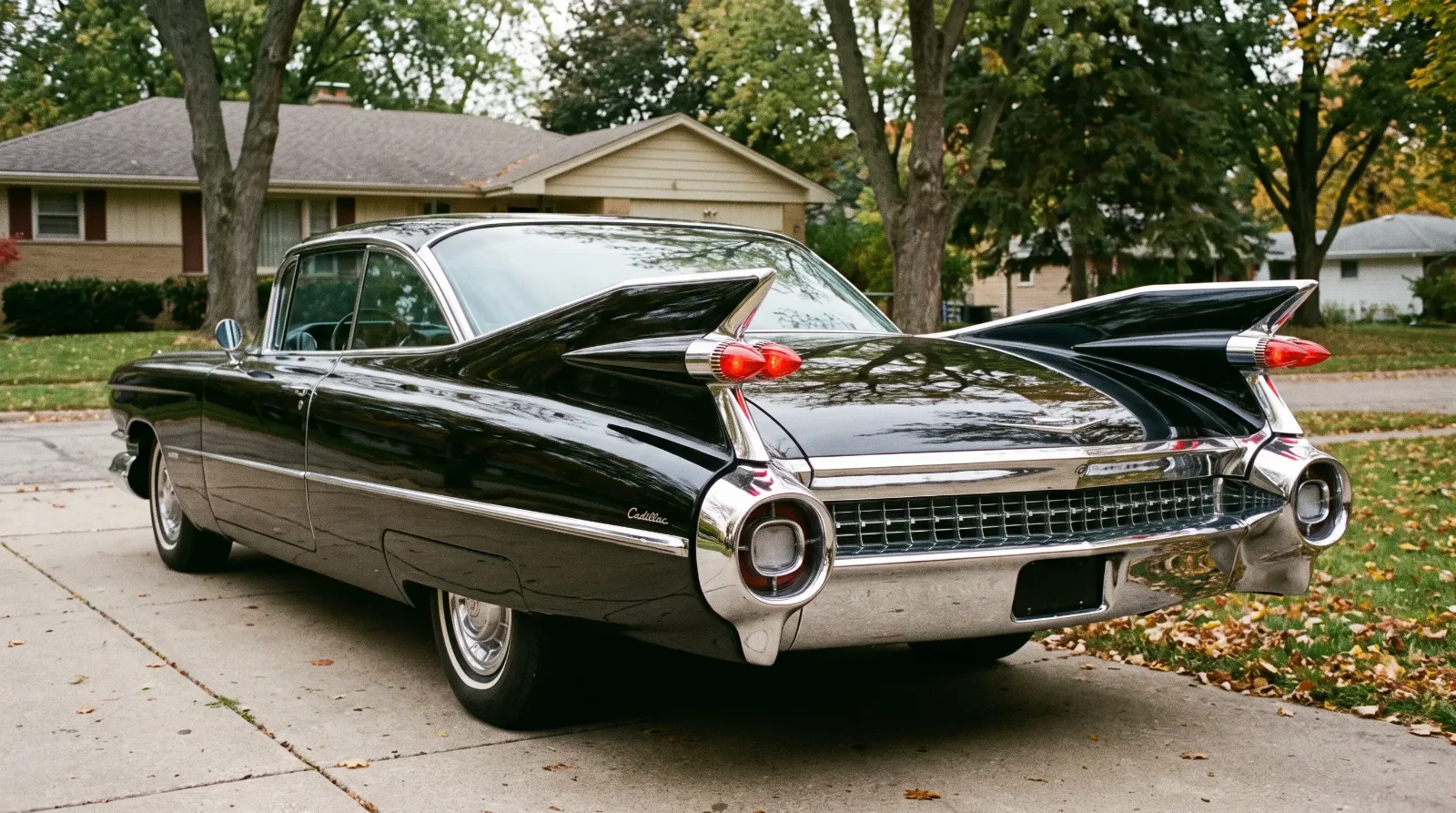
The size race did not start in the 1970s, and the tailfin era produced its own monsters. The 1959 Cadillac is the defining example, stretching to roughly 225 inches with the tallest fins Detroit ever fitted to a production car. It was not the heaviest car on this list, but at the time it felt enormous, and it set the visual template that later cars would follow with more mass and less flamboyance.
Chrysler and the Imperial line pushed hard in the same years, and the Lincoln of the late 1950s grew to genuinely unwieldy proportions before Ford reversed course with the trimmer 1961 Continental. The through-line is clear. The industry tested how large a car the market would accept, pulled back once, and then climbed again toward the mid-1970s peak. The 1959 cars and the 1976 cars are the two summits of that curve.
The limousines in a class of their own
The factory long-wheelbase cars belong in a separate paragraph because they distort everything. The Cadillac Fleetwood Seventy-Five limousine of the 1970s stretched to roughly 252 inches, which is twenty-one feet, and weighed roughly 6,000 pounds. These were built in tiny numbers and served heads of state, funeral homes, and hotels. Counting them alongside a Fleetwood Brougham is like ranking a bus against a station wagon.
"The limousines are the easy answer and the wrong one. The real achievement was the standard Brougham, a car nearly twenty feet long that an ordinary buyer could drive off a lot. That is the object that defined the excess, not the coachbuilt stretch."
Sarah Whitfield
What the size means for a buyer today
These figures are not trivia if you plan to own one. A 233-inch car does not fit a modern single-car garage with room to open the doors, and 5,200 pounds asks real questions of brakes and tires that were designed for the period. Parts for the largest engines are heavier and more expensive to ship. The size that made these cars remarkable is also the size that makes them a commitment.
If the scale appeals rather than frightens you, there is a healthy supply of these cars in the market, and you can browse classic luxury cars for sale to see how the biggest survivors are priced today. To understand the forces that drove Detroit up this curve in the first place, continue with next: Why Detroit Chased Size.
Related Reading
Have a
Classic Car
for Sale?
Reach thousands of serious classic car collectors across the US.
Sell It Here →
Are You a Classic Car Dealer?
List your full inventory and connect with targeted classic car buyers.
Join as a Dealer →
#classic luxury cars
#Lincoln Continental
#land yacht
#Cadillac Fleetwood
#Imperial LeBaron
#car size

About the author
Sarah Whitfield
Third-generation classic car collector specializing in pre-war American and European coachbuilt automobiles. Researcher and concours enthusiast.

Comments
Be the first to comment on this article.