
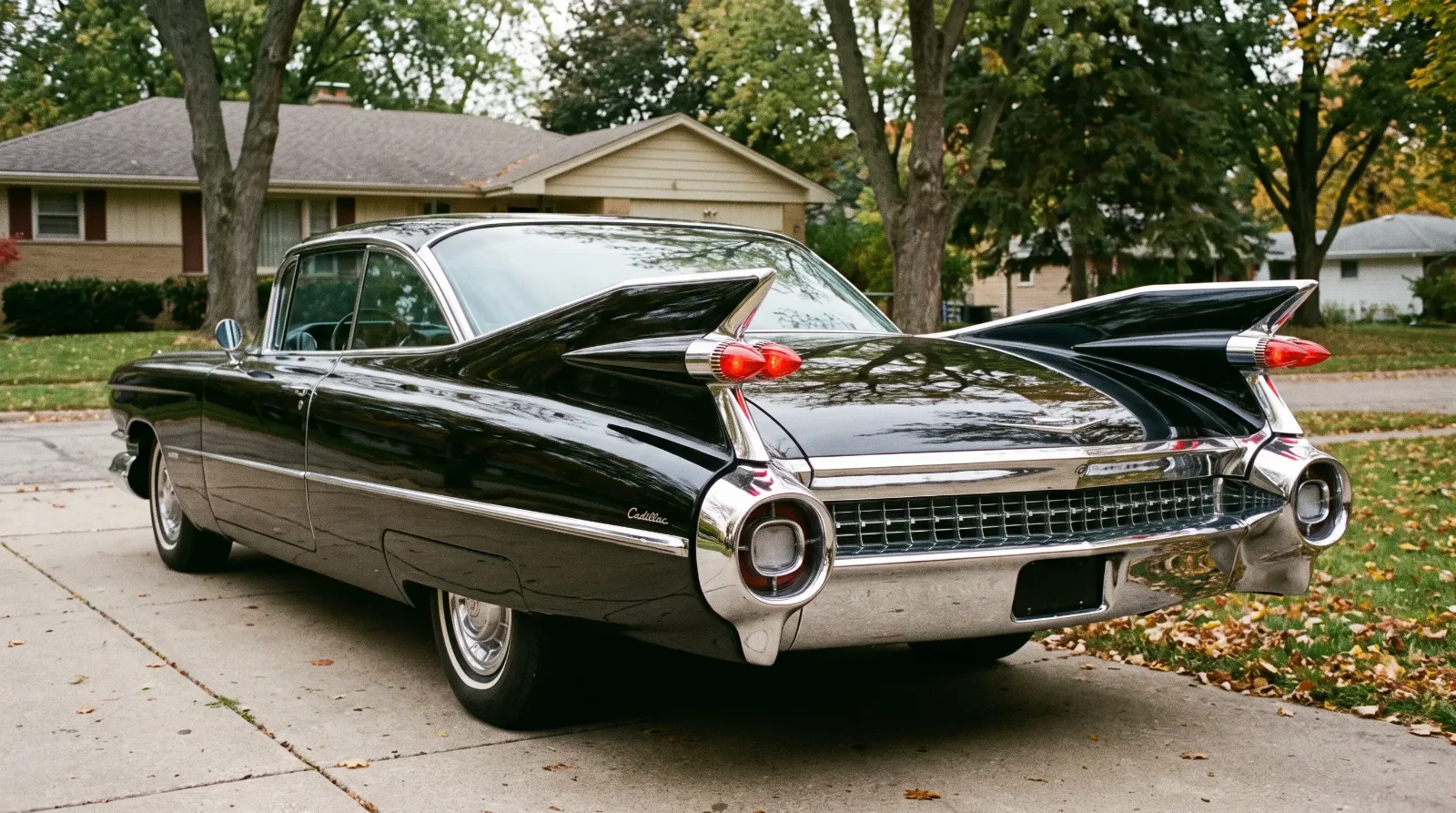
There was a period, roughly from the mid-1950s into the early 1970s, when the American luxury car simply refused to stop growing. Length crept past eighteen feet. Curb weights climbed toward and past two and a half tons. The cars acquired a nickname that stuck because it was accurate: land yachts. To understand the era of land yacht cars you have to set aside the modern instinct that says a car should be efficient, and step into a moment when bigger was not a compromise. It was the entire point.
Car Features
8 min read
The Land Yacht Era: Why American Luxury Cars Got So Big
Land yacht cars explained: why American luxury cars grew to 18 feet of finned steel, the 1959 peak, and what it takes to collect one today.
This is one chapter of a longer arc. If you want the wider frame, it connects back to the story of the classic luxury car, but the land yacht deserves its own examination, because no other period committed so completely to sheer physical scale as a statement of arrival.
What a land yacht actually was
The term is loose, and enthusiasts argue its edges, but the working definition is a full-size American luxury or near-luxury car from the chrome era, built long, wide, heavy, and soft-riding. A 1959 Cadillac is the archetype. So is a Lincoln of the same period, an Imperial, a top-trim Buick or Oldsmobile. These cars prioritized a floating, isolated ride and an imposing presence over anything a European engineer would have called handling.
The name is not an insult, though it started as one. It captures something true about how the cars moved. They did not corner so much as change heading, the body leaning as the soft suspension took up the load, the whole mass settling into a new direction like a boat answering the helm. Owners loved exactly that. It felt like being carried.
Why they got so big
Three forces pushed in the same direction at once. The first was cheap fuel. Gasoline in the United States through the 1950s and 1960s was inexpensive enough that fuel consumption barely entered the buying decision, which freed engineers to add displacement and mass without penalty. The second was postwar prosperity, a growing middle class that read size directly as status. A longer car meant a bigger success.
The third force came from inside Detroit itself. The industry's design philosophy in this period is often summed up in three words: longer, lower, wider. Each model year, the stylists pushed the sheet metal outward, and a car that looked substantial next to last year's model sold better. Since every manufacturer played the same game, the whole fleet inflated together, year over year, with no natural brake on the process.
The 1959 high-water mark
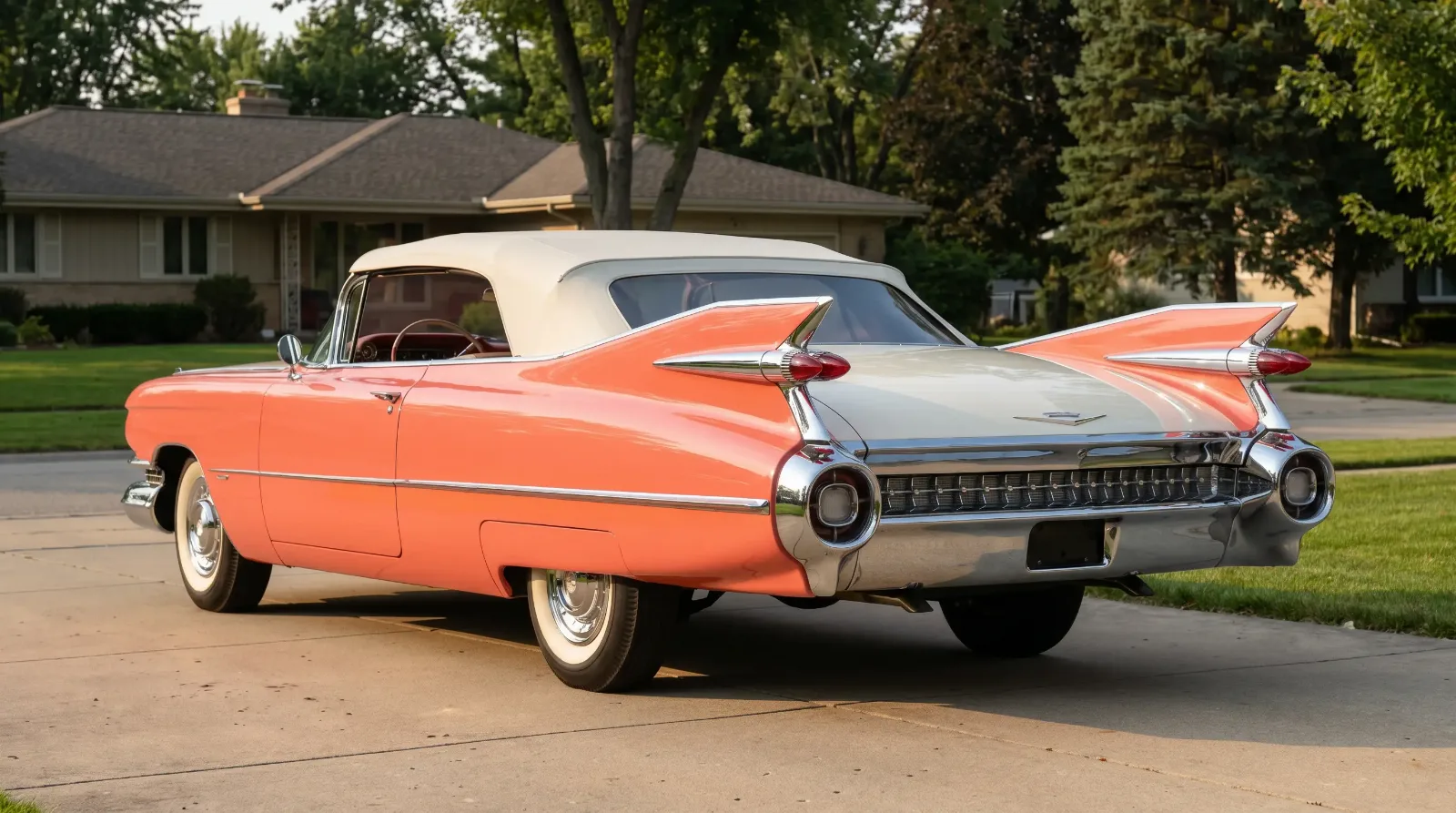
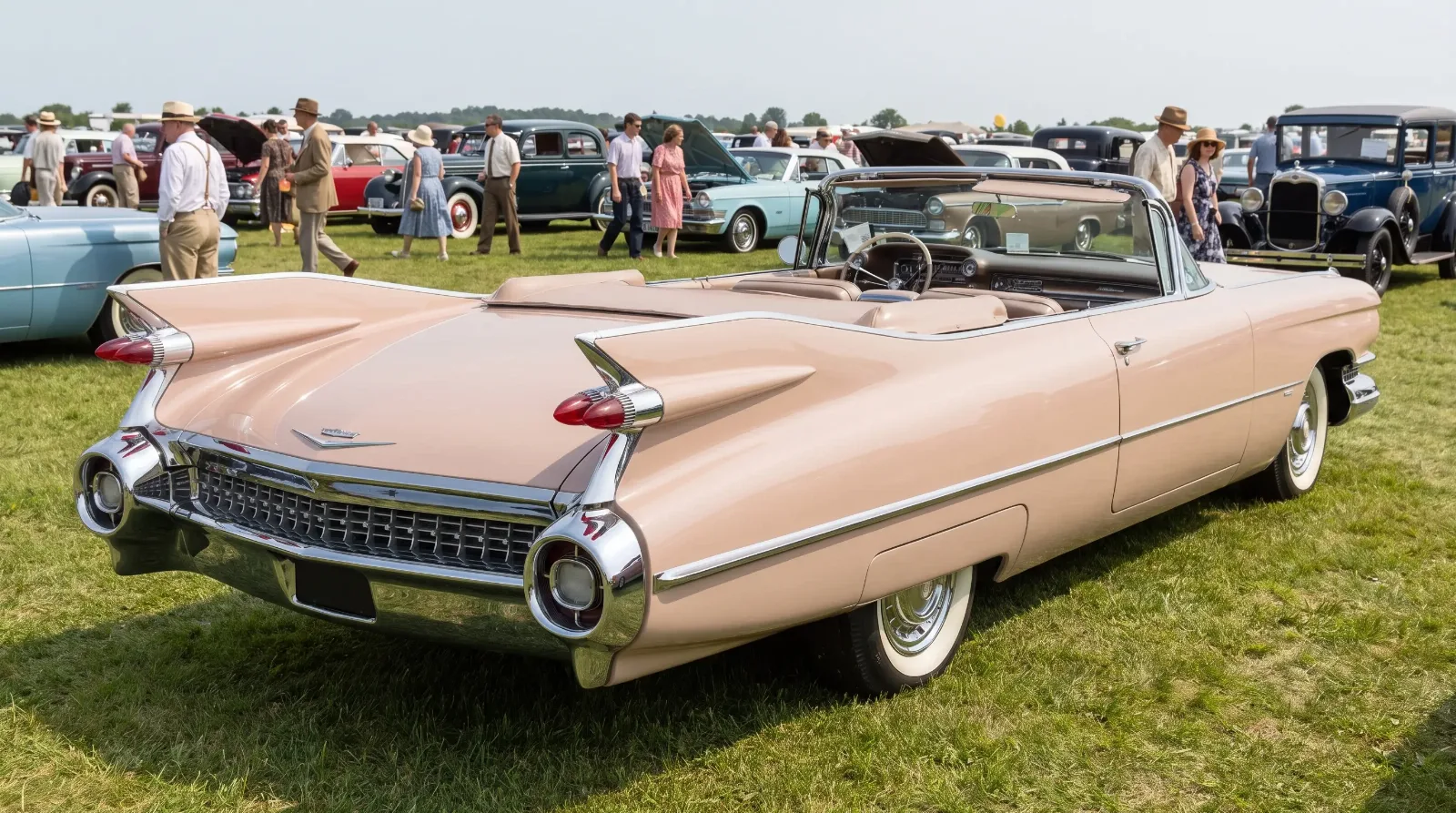
If the land yacht has a single defining year, it is 1959. That is the year the tail fin reached its absolute peak, most famously on the Cadillac, whose rear fins stood taller and sharper than anything before or since. The styling excess of that model year became the reference point for the entire era, the image people summon when they imagine the whole period.
Underneath the sheet metal, the 1959 Cadillac carried a 390 cubic inch V8 rated at 325 horsepower in standard tune, with a 345 horsepower triple-carburetor version reserved for the Eldorado models. That was ample power to move the mass, though never in a hurry, and it was delivered with the quiet, torque-first character these cars were tuned for. The fins were pure styling. The tail fin story, and where that visual language came from, runs onward to Classic Luxury Car Design Language Explained, because the land yacht and the fin grew up together.
| Attribute | Typical 1959 land yacht | Context |
|---|---|---|
| Overall length | ~225 in (Cadillac) | Longer than most modern full-size trucks |
| Curb weight | ~4,700-5,000 lb | Roughly two and a half tons |
| Engine | 390 cu in V8, ~325 hp | Torque-focused, quiet at cruise |
| Ride character | Soft, isolated, floating | Comfort prioritized over handling |
"Modern eyes call these cars excessive, and they were. But excess was the brief. The designers were asked to build the most imposing object a prosperous family could park in a suburban driveway, and they answered with eighteen feet of finned steel that did exactly that. Judge the land yacht against its own ambition, not ours, and it succeeds completely."
Sarah Whitfield
Living with all that steel
These are, in mechanical terms, honest and durable cars. The V8 engines are conventional, unstressed, and long-lived. The bodies are heavy-gauge steel. Parts for the major American marques of the period are reasonably available, and the systems are simple enough that a patient owner can learn them. That is the good news, and it is the reason a land yacht can make a sensible first classic.
The bad news is a matter of physics and rust. A car this large is expensive to store, awkward to park, and thirsty in a way that no longer feels quaint. And the very size that impresses also hides a great deal of metal where corrosion likes to work.
🔧 Inspection Priorities
- Lower body and rear quarters. These cars trap moisture in the long rear sections and behind trim. Rust repair on a fin or a quarter panel is costly and hard to do correctly.
- Frame and floor pans. On a body-on-frame land yacht, structural rust is the difference between a project and a parts car. Get underneath with a light.
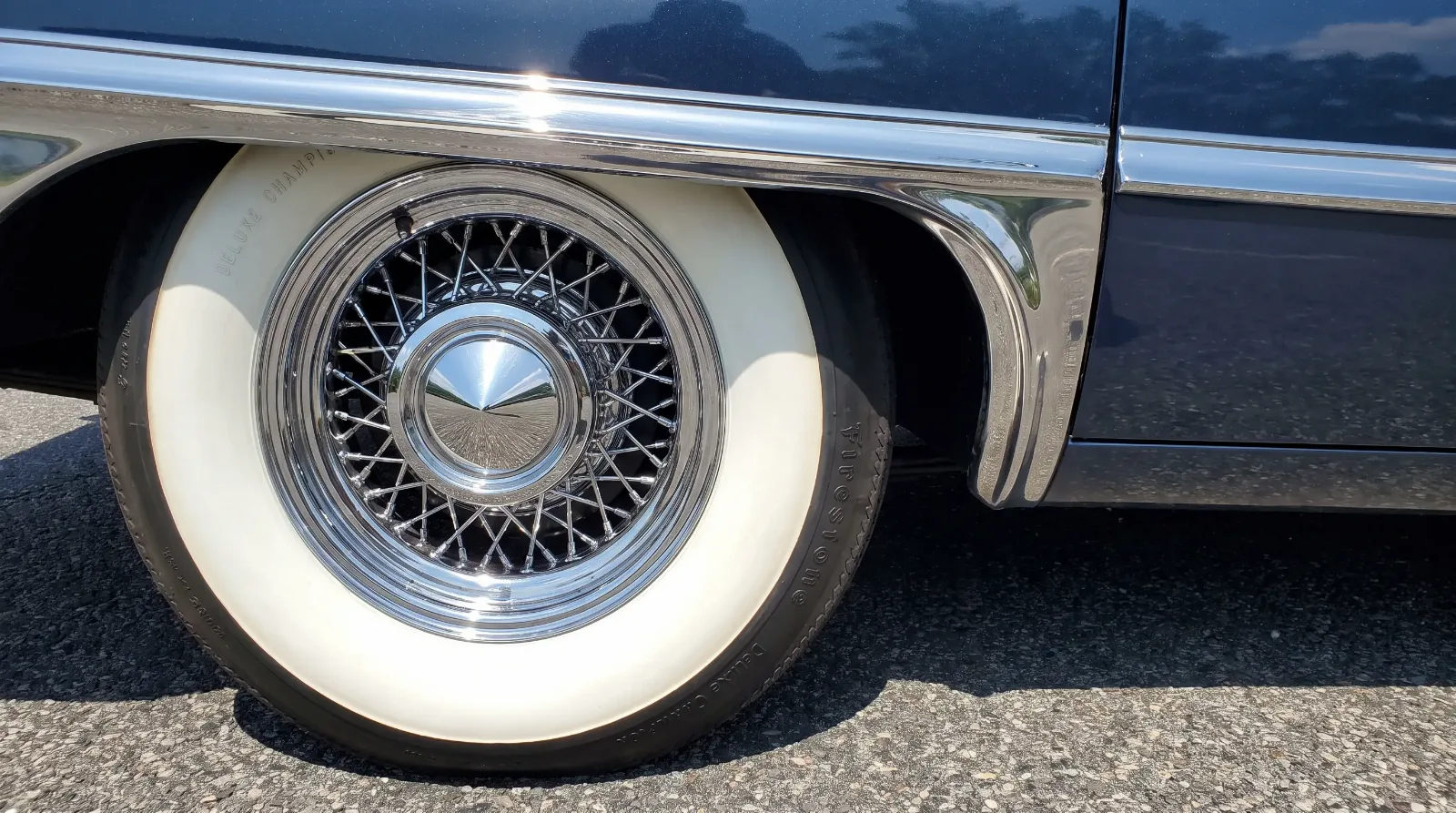
- Brightwork and trim. Chrome and stainless are central to the look. Missing or pitted pieces can be nearly impossible to replace, and re-plating is expensive.
- Suspension and bushings. The floating ride depends on soft components that wear out. A car that wanders or clunks needs work that adds up quickly.
The engineering behind the float
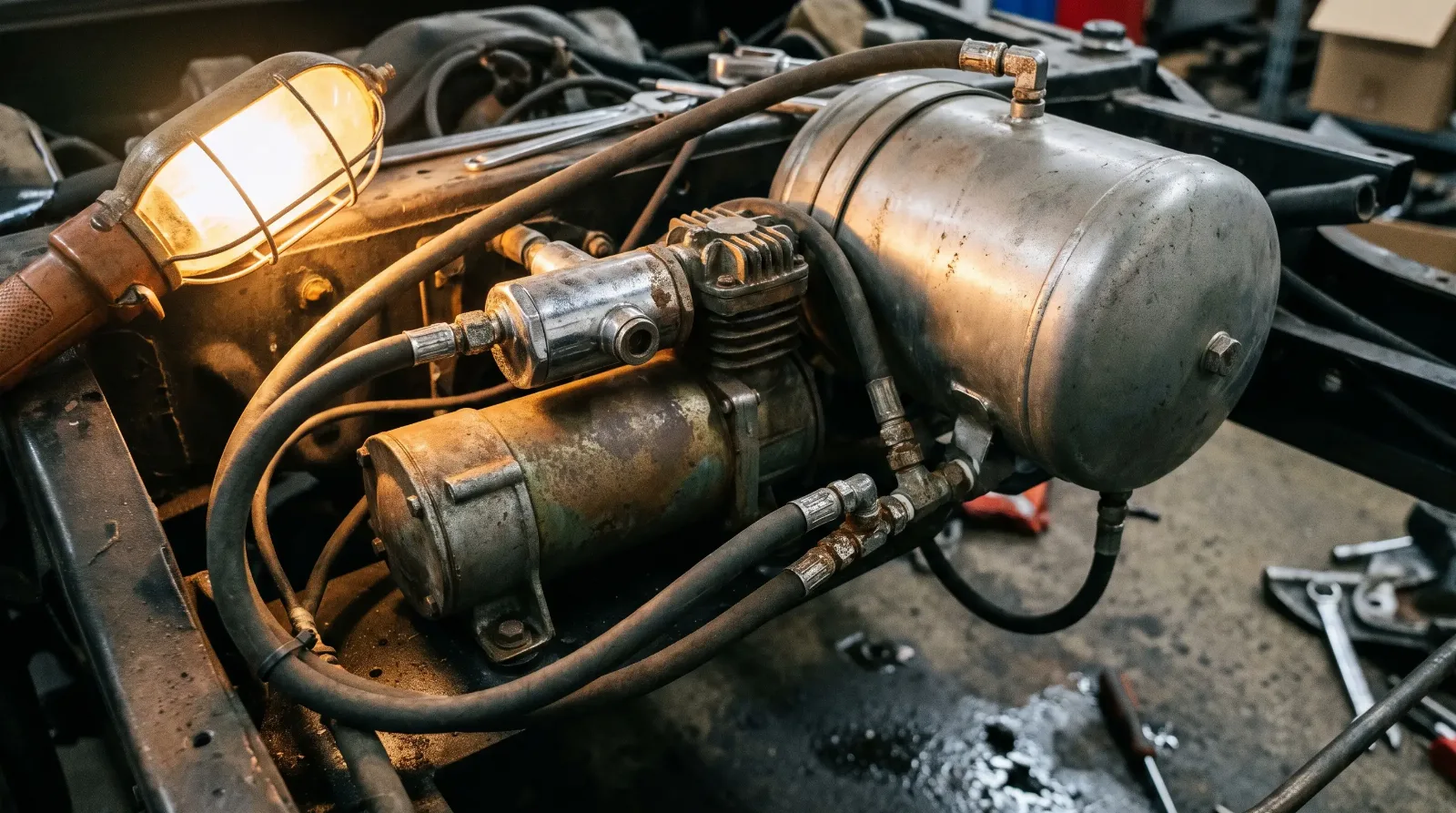
The floating ride these cars were famous for did not happen by accident. It was engineered, and understanding how helps a buyer know what to inspect. The soft, isolated feel came from long-travel suspension with soft coil springs, generous body mounts, and, on some top models, self-leveling or air-suspension systems that promised an even smoother ride. Those air systems were troublesome when new and are a known headache today, so a car originally fitted with one has often been converted to conventional springs somewhere in its life.
The chassis itself was usually a separate frame under a bolted-on body, the body-on-frame construction that gave these cars their solidity and their weight. General Motors favored an X-shaped frame on many of its full-size cars in this period, which allowed a lower floor and a lower overall roofline, feeding directly into the longer, lower, wider goal. The trade-off was reduced side-impact protection, a fact that later regulation would force the industry to confront. For the collector, the important point is simpler. The ride quality that defines a land yacht depends on soft, wear-prone components, and a car that no longer floats has usually had those components go hard or fail. Restoring the original ride is possible, but it means addressing springs, bushings, and dampers as a system, not one part at a time.
The reckoning
The land yacht era ended for a reason no stylist could design around. The 1973 oil embargo made fuel expensive and, for a period, hard to get, and a car that drank gasoline suddenly looked less like success and more like a liability. Emissions and safety regulation piled on further pressure. By the late 1970s the industry had begun downsizing its full-size cars in earnest, trimming length and weight in a way that would have been unthinkable a decade earlier.
The floating giants did not vanish overnight, but the philosophy that produced them was finished. Detroit spent the following years learning to build a luxury car that was smaller yet still felt substantial, a much harder trick than simply making everything bigger.
Collecting a land yacht today
The market for these cars is one of the more approachable corners of the collector world. Values have stayed grounded rather than speculative, which means a genuinely good example remains attainable, and the driving experience is unlike anything built since. There is nothing subtle about arriving in eighteen feet of finned steel, and for a certain kind of owner that is precisely the appeal.
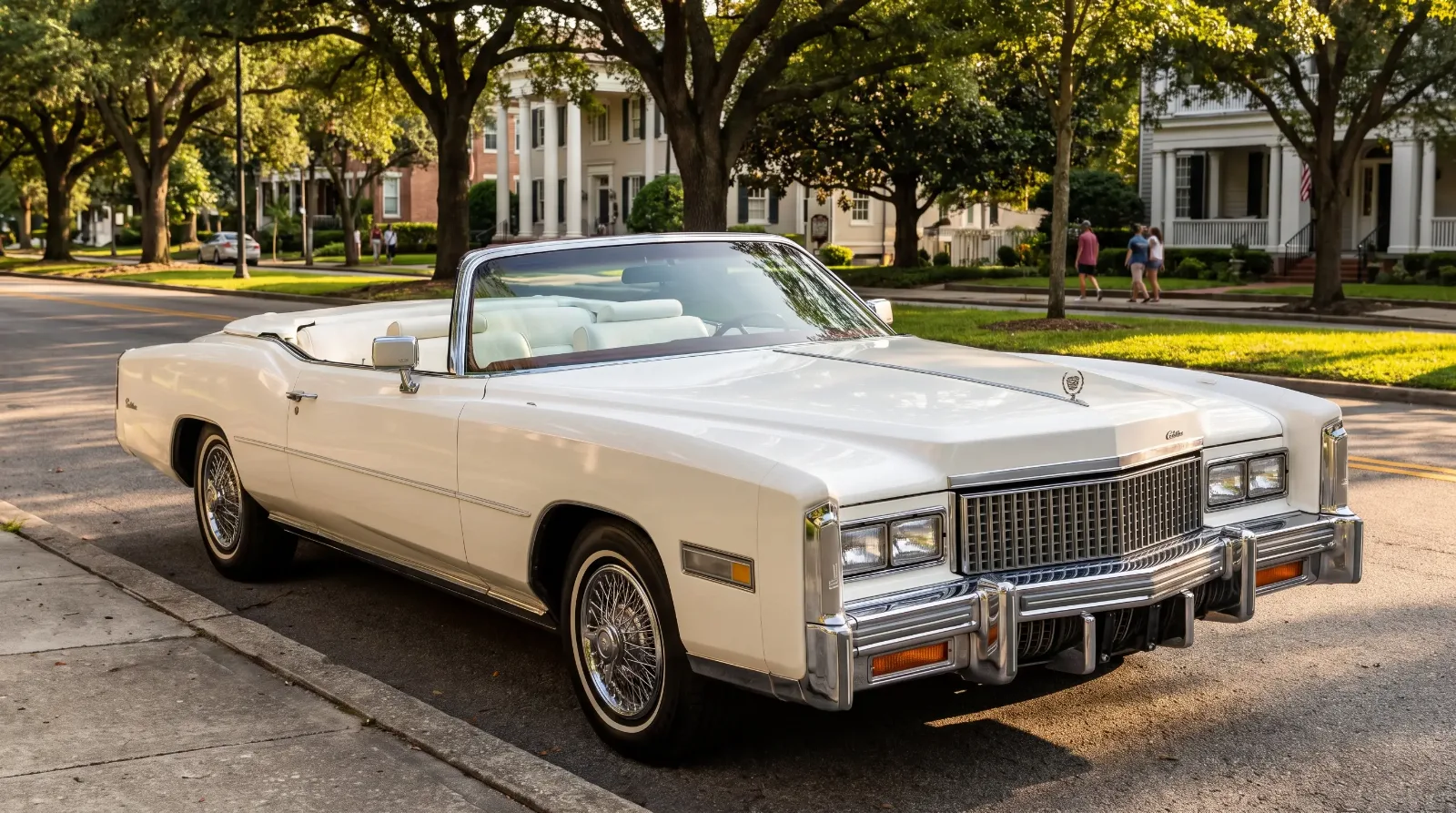
One practical note on values. Convertibles and the top-trim hardtops of a given year carry a clear premium over the four-door sedans, sometimes a large one, so the same model year can span a wide price range depending on body style and options. A four-door sedan is the value entry into the era, a well-optioned convertible the blue chip. Both drive the same way. Only one of them appreciates with any conviction.
If you want to gauge what solid examples are actually bringing, the current listings of classic luxury cars for sale show the spread from clean drivers to concours restorations. Buy the best body you can afford, keep it dry, and accept the fuel bills as the cost of admission. These cars were built to make an entrance, and seven decades on, they still do.
Related Reading
Article
The Classic Luxury Car Story
Article
The Complete History of the Classic Luxury Car

Article
Classic Luxury Car Design Language Explained
Article
What Actually Makes a “Land Yacht”? Size, Weight, and Ride Philosophy Explained
Article
The Biggest American Classics Ever Built: Ranking Land Yachts by Length and Weight
Article
Why Detroit Chased Size: The 1960s-70s Obsession with Bigger Cars
Article
Cadillac's Self-Leveling Air Ride: How Air Suspension Became a Luxury First
Article
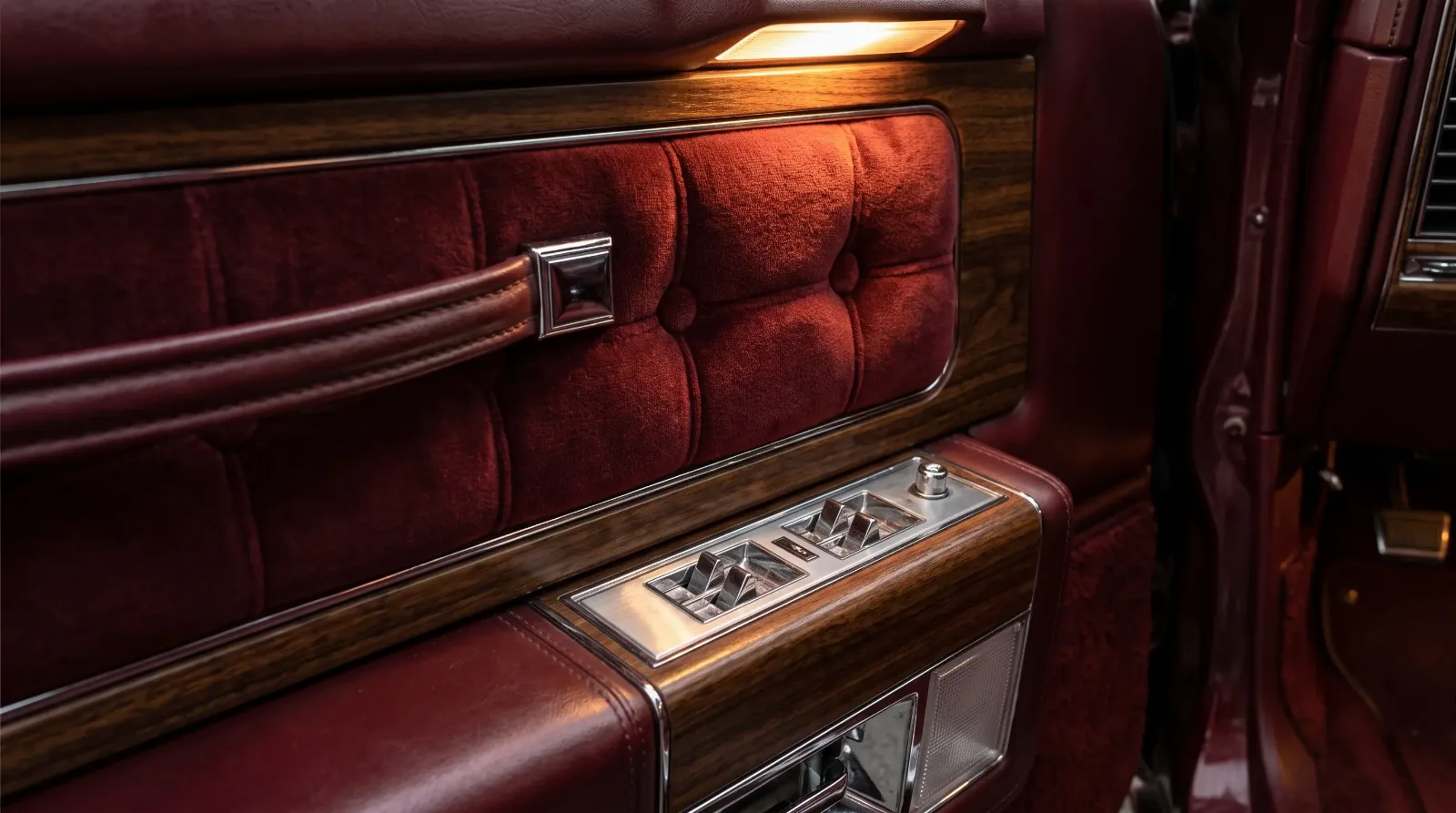
Power Everything: How Windows, Seats, and Locks Became Status Symbols
Article
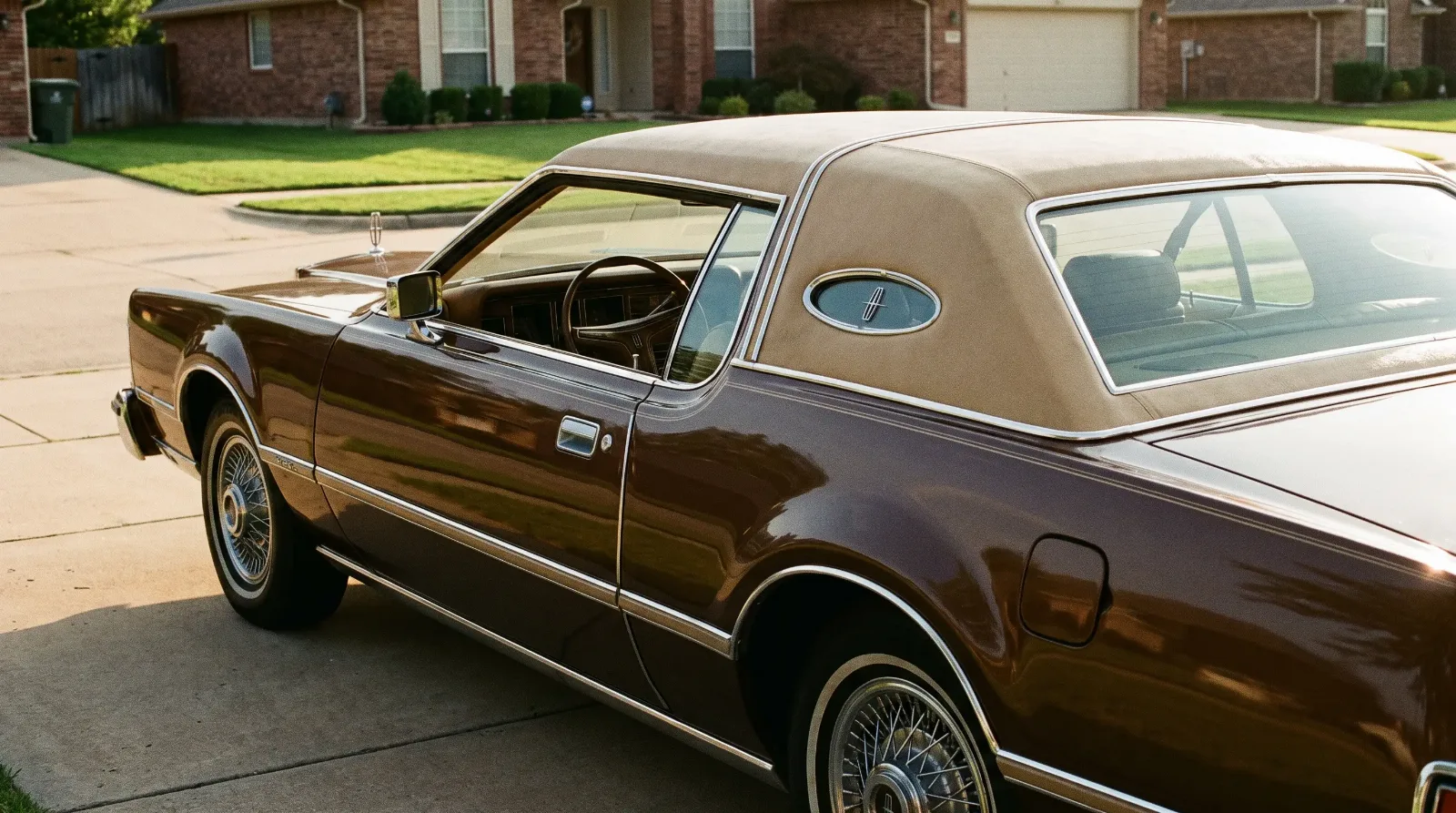
The Vinyl Roof Boom: How the Personal Luxury Coupe Took Over America
Article
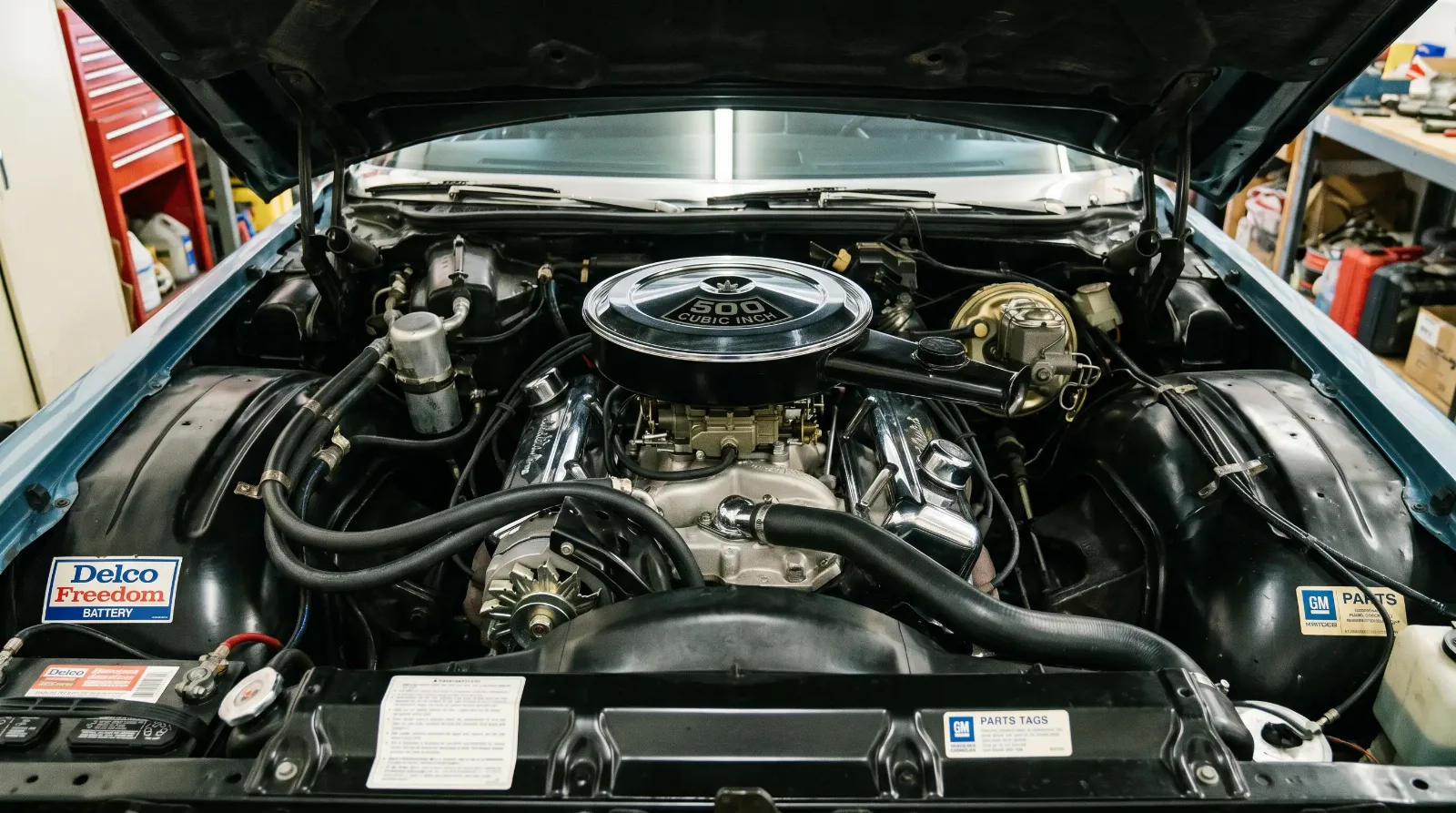
Land Yacht Gas Mileage: The Real Cost of Driving a Classic Cadillac or Lincoln
Article
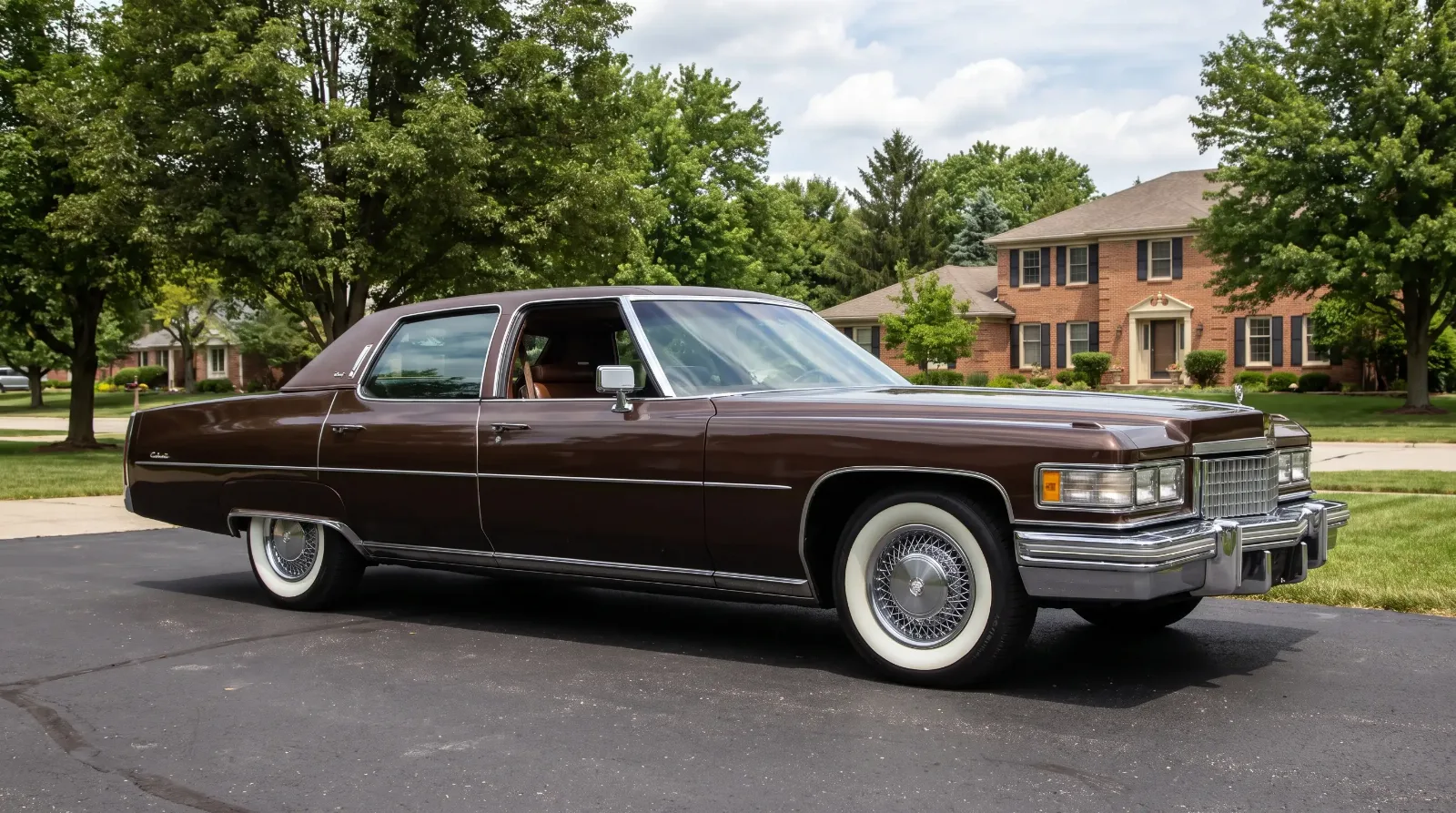
Peak Land Yacht: The 1970s Fleetwood and Continental Town Car Era
Article
Whitewalls and Chrome: The Visual Language of Land Yacht Status
Article
“Six-Passenger Comfort”: How Detroit Marketed Land Yacht Interiors
Article
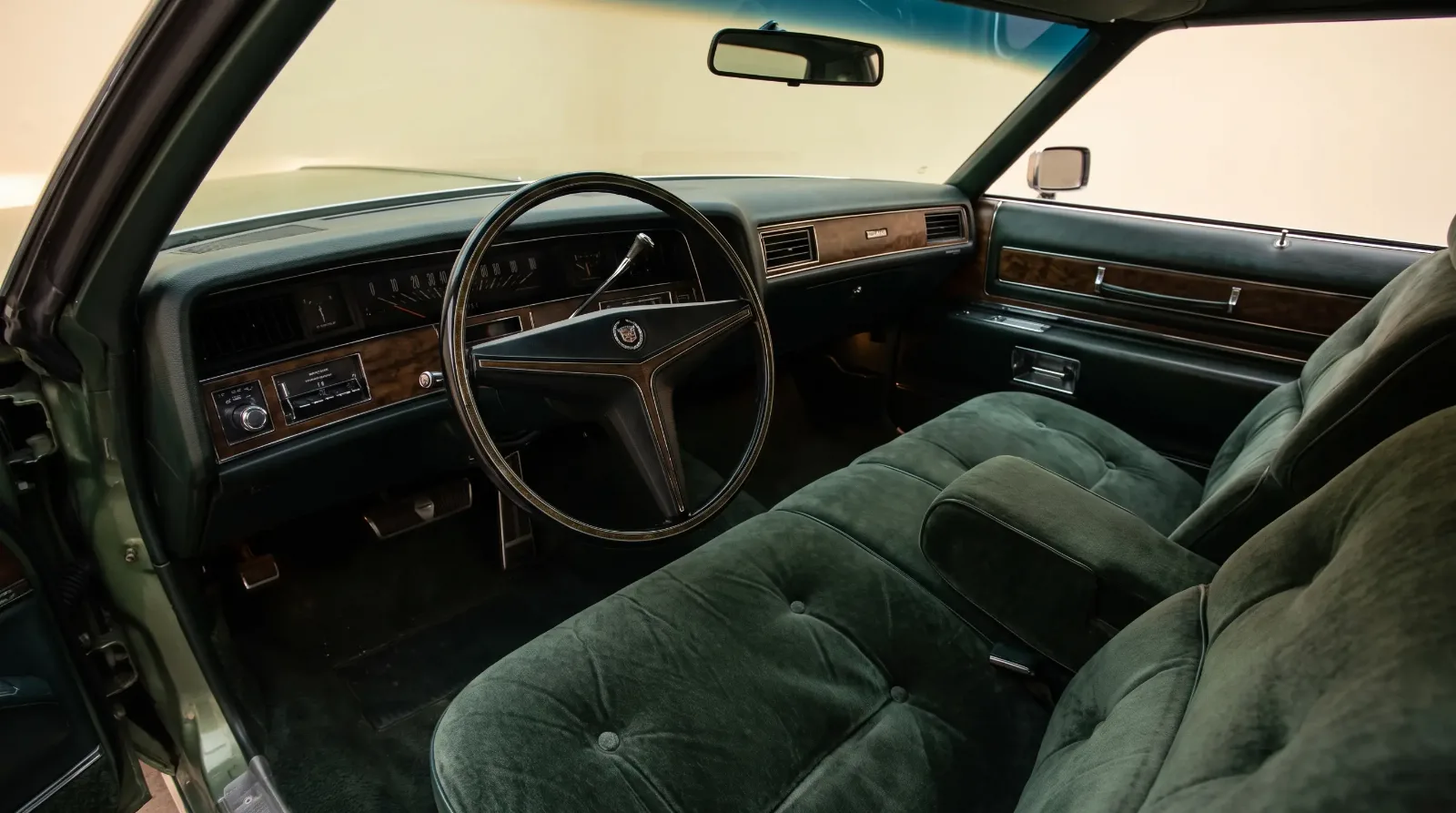
Tufted Velour and Wood-Look Dashes: Inside the Land Yacht Cabin
Article
The Slow Fade of the Land Yacht Convertible
Article
How Land Yachts Actually Drove: Power Steering, Power Brakes, and Boulevard Ride
Article
Land Yacht Icons by Decade: The Models That Defined the Era

Article
Land Yachts on Screen: How Movies and TV Made Big Cars a Status Symbol
Have a
Classic Car
for Sale?
Reach thousands of serious classic car collectors across the US.
Sell It Here →
Are You a Classic Car Dealer?
List your full inventory and connect with targeted classic car buyers.
Join as a Dealer →

About the author
Sarah Whitfield
Third-generation classic car collector specializing in pre-war American and European coachbuilt automobiles. Researcher and concours enthusiast.


Comments (1)
D
Dale Pruitt
3 hours ago
Sarah, my '64 Impala sits on the X-frame you mention. When folks ask me how to check one I tell them 1) look for side rails, there aren't any, 2) check every body mount along the rocker, 3) look hard at the floor where it meets the rocker, because that's carrying load. Was the side-impact issue the main reason GM went to a perimeter frame for '65, or was it styling?
Dale, side protection was part of it, though I'd be cautious about calling it the main reason. The 1965 full-size cars were new from the ground up, and a perimeter frame let the floor sit down between the rails, which served the same longer, lower, wider goal the X-frame had. Your steps are sound. On an X-frame car the rocker and floor carry more of the side structure, so rot there matters more than it would on a perimeter-frame car.