
Ask ten collectors "what is a land yacht car" and you get ten answers that circle the same idea without quite landing on it. The phrase is affectionate and a little mocking at once. It describes the full-size American luxury cars that grew, decade over decade, into something closer to a small boat than a sedan. Cadillac, Lincoln, and Imperial built the purest examples, though Buick, Oldsmobile, and Mercury each sold their share.
Car Features
5 min read
What Actually Makes a “Land Yacht”? Size, Weight, and Ride Philosophy Explained
What is a land yacht car? A clear look at the size, weight, and ride philosophy that defined America's biggest classic luxury sedans.
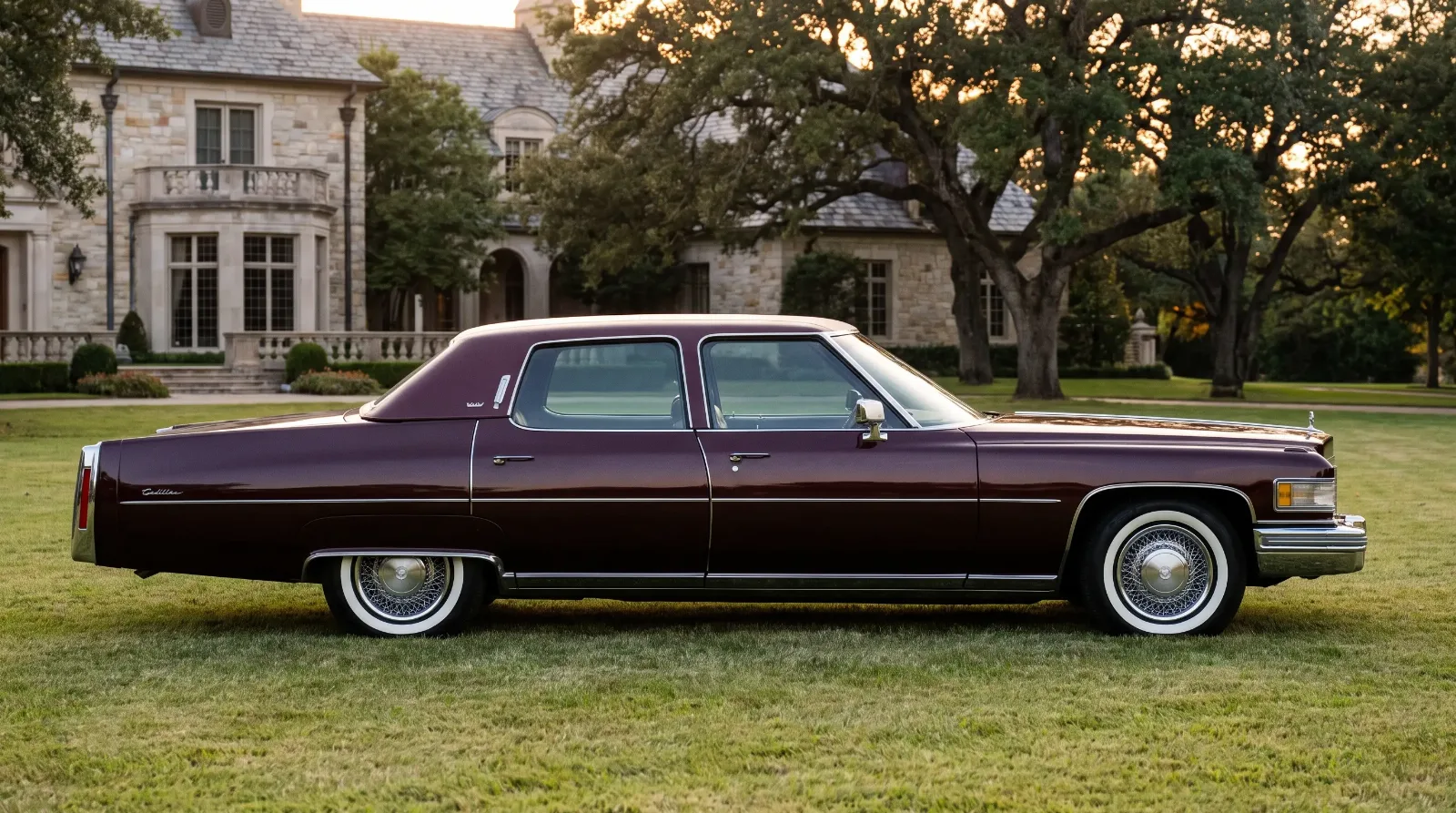
The label was never an official trim or a term Detroit printed in a brochure. It came from the way these cars behaved. They floated. They stretched past eighteen feet. They carried six passengers and their luggage and asked the driver to do very little in return. To understand the type properly you have to look at three things at once: the dimensions, the mass, and the ride philosophy that tied them together.
What the term actually describes
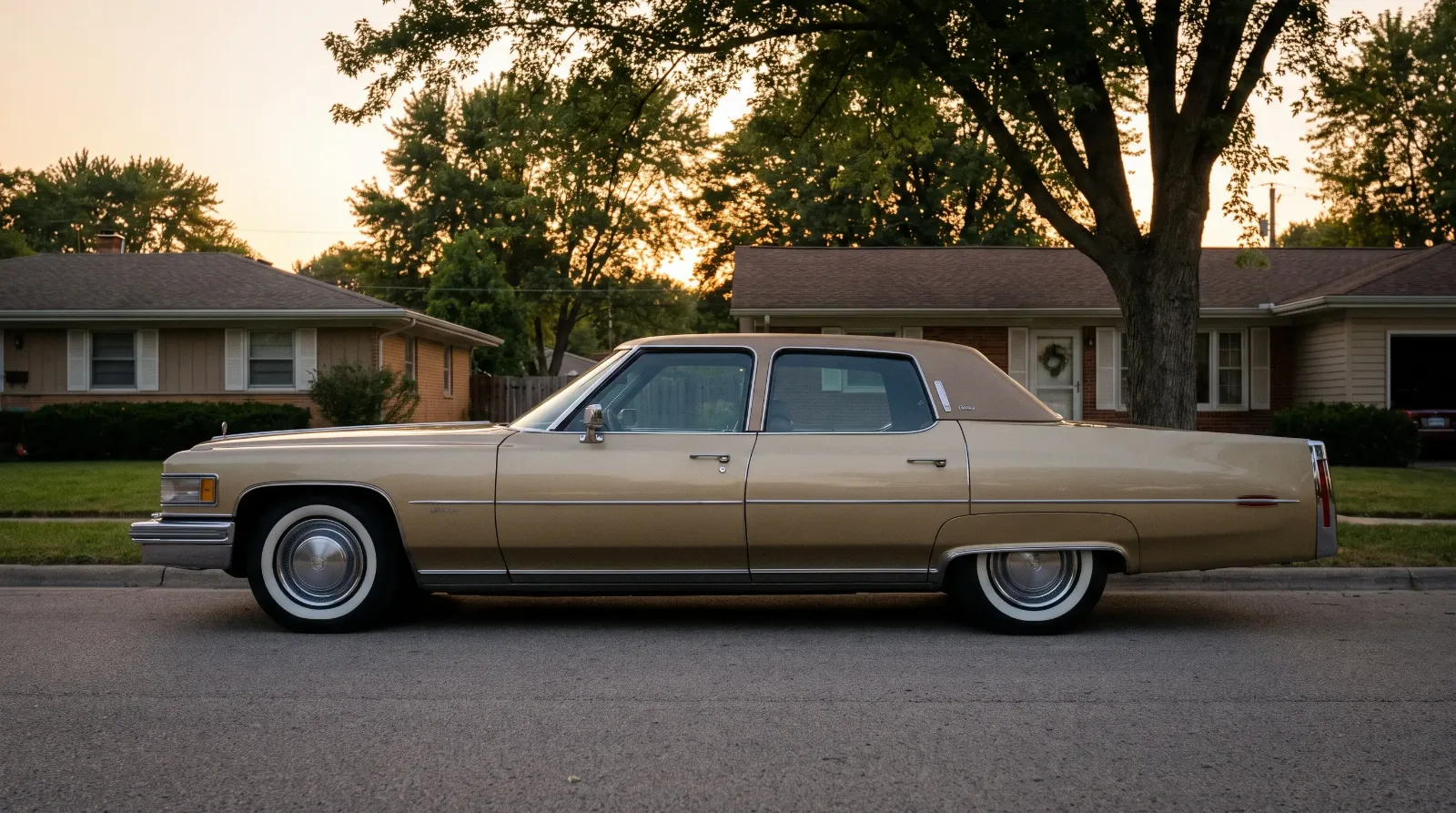
A land yacht is a full-size, body-on-frame American luxury car built roughly between the mid-1950s and the late 1970s, styled and engineered around interior space and ride isolation rather than agility. The nautical nickname is doing real work. These cars shared a yacht's priorities: a long, low horizon, a cabin that felt separate from the surface beneath it, and a sense that the machine was gliding rather than driving.
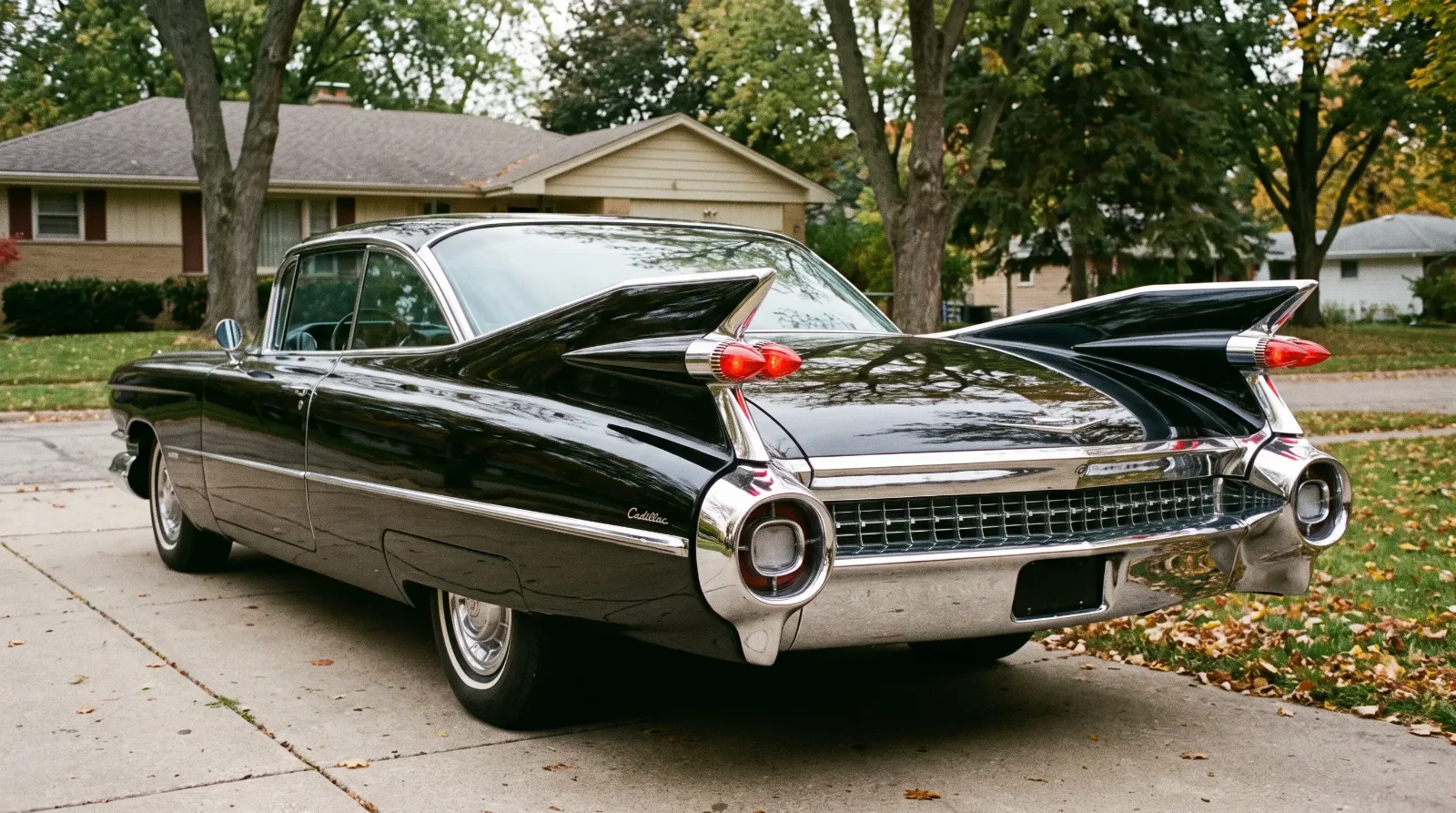
You can trace the aesthetic to the tailfin years, when Harley Earl's studios at General Motors pushed chrome and length as the visible signals of status. By the time the fins receded in the mid-1960s, the size stayed. If you want the longer account of how the type formed and hardened into a decade of excess, it sits at the center of the land yacht era and its causes.
Size and weight, the numbers that qualify
There is no legislated cutoff, but the cars that earn the name tend to cluster around the same figures. Overall length usually ran past 225 inches, which is more than eighteen and a half feet. Curb weight sat in the 4,500 to 5,500 pound range for the sedans and coupes, and the long-wheelbase limousines pushed well past that. Wheelbases of 127 to 133 inches were common on the senior cars.
Those numbers are worth putting side by side, because the abstraction of "big" only means something against a reference.
| Representative car | Approx. length | Approx. curb weight |
|---|---|---|
| 1959 Cadillac Series 62 | ~225 in | ~4,700 lb |
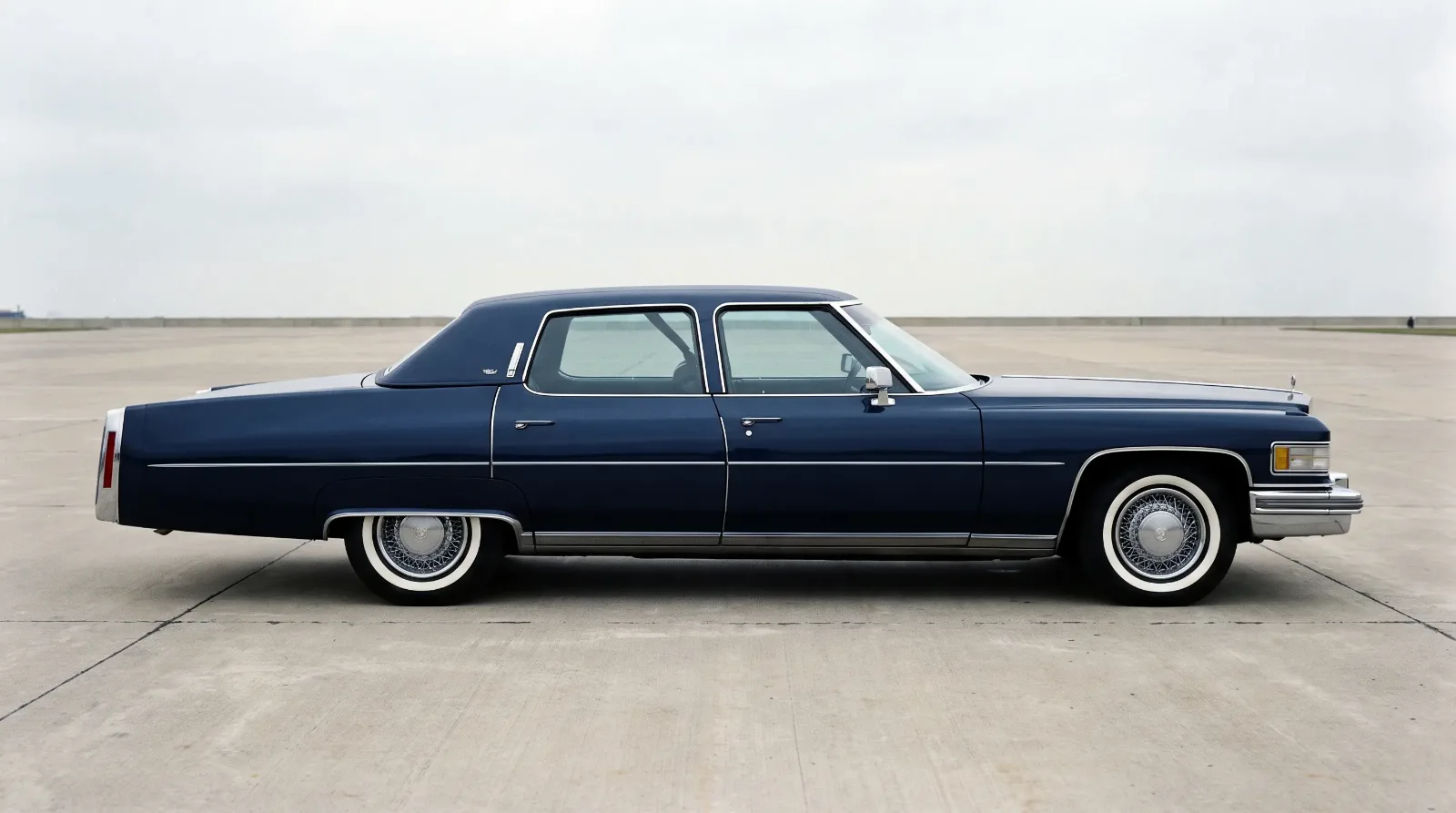
| 1976 Cadillac Fleetwood Brougham | ~233 in | ~5,200 lb |
| 1974 Lincoln Continental sedan | ~233 in | ~5,300 lb |
| 1973 Imperial LeBaron | ~230 in | ~4,900 lb |
| Modern mid-size sedan (reference) | ~192 in | ~3,300 lb |
Read those figures as approximate. Weights in particular shifted with options, and a fully loaded Brougham with every power accessory weighed more than a stripped one. The point is the gap. A land yacht was routinely three feet longer and close to a ton heavier than a family car of the same era.
The ride philosophy, isolation over connection
Dimensions are only half the story. The land yacht was an argument about what a luxury car should feel like, and the answer Detroit settled on was isolation. The driver should be shielded from the road, not informed by it. Soft coil springs, tall sidewall tires, generous suspension travel, and heavily boosted steering all worked toward the same end: to absorb the surface rather than report it.
This is the opposite of the European luxury philosophy taking shape at the same time. A Mercedes or a Jaguar of the period aimed for composed control and a degree of feedback. The American car aimed for quiet, for float, for the sensation that the pavement had been smoothed out somewhere ahead of the front bumper. Body roll in a corner was accepted as the cost of that softness, and the marketing never apologized for it.
Body-on-frame and the engineering that made it possible
None of this floats without the right structure underneath. The land yacht rode on a separate steel frame with the body bolted on top through rubber mounts, and those mounts mattered. They gave engineers a second layer of isolation between the running gear and the passengers. A unibody car transmits more of what the wheels are doing. Body-on-frame construction let Detroit tune the ride toward softness in a way that would have been harder otherwise.
The tradeoff shows up on a scale and at the pump. All that frame steel is heavy, and heavy cars need large-displacement engines to move with any authority. Big V8s of 429 to 500 cubic inches became the norm on the senior cars, which is a subject the broader the story of the classic luxury car covers across makes and decades. The engineering was coherent. Every choice pointed at the same experience.
"A land yacht is best understood as a set of priorities made physical. The engineers were not chasing the numbers a road tester would praise. They were building a room that happened to move, and every inch of length and every pound of frame served that idea."
Sarah Whitfield
Why the label stuck
The nickname has outlasted the cars because it captures something a spec sheet cannot. "Full-size luxury sedan" is accurate and forgettable. "Land yacht" tells you how the thing felt from the driver's seat, and it carries the faint smile of people who found the excess both absurd and wonderful. Collectors use it now with real affection.
Understanding the type matters if you are shopping one, because the qualities that define a land yacht are exactly the ones a restoration can lose. A rebuilt suspension set up too firm, or radial tires chosen for grip over sidewall, changes the character the car was built to have. If you want to see how far the size race actually went, the natural next stop is next: The Biggest American Classics Ever Built, where the numbers do the talking.
Related Reading

Have a
Classic Car
for Sale?
Reach thousands of serious classic car collectors across the US.
Sell It Here →
Are You a Classic Car Dealer?
List your full inventory and connect with targeted classic car buyers.
Join as a Dealer →

About the author
Sarah Whitfield
Third-generation classic car collector specializing in pre-war American and European coachbuilt automobiles. Researcher and concours enthusiast.


Comments
Be the first to comment on this article.