
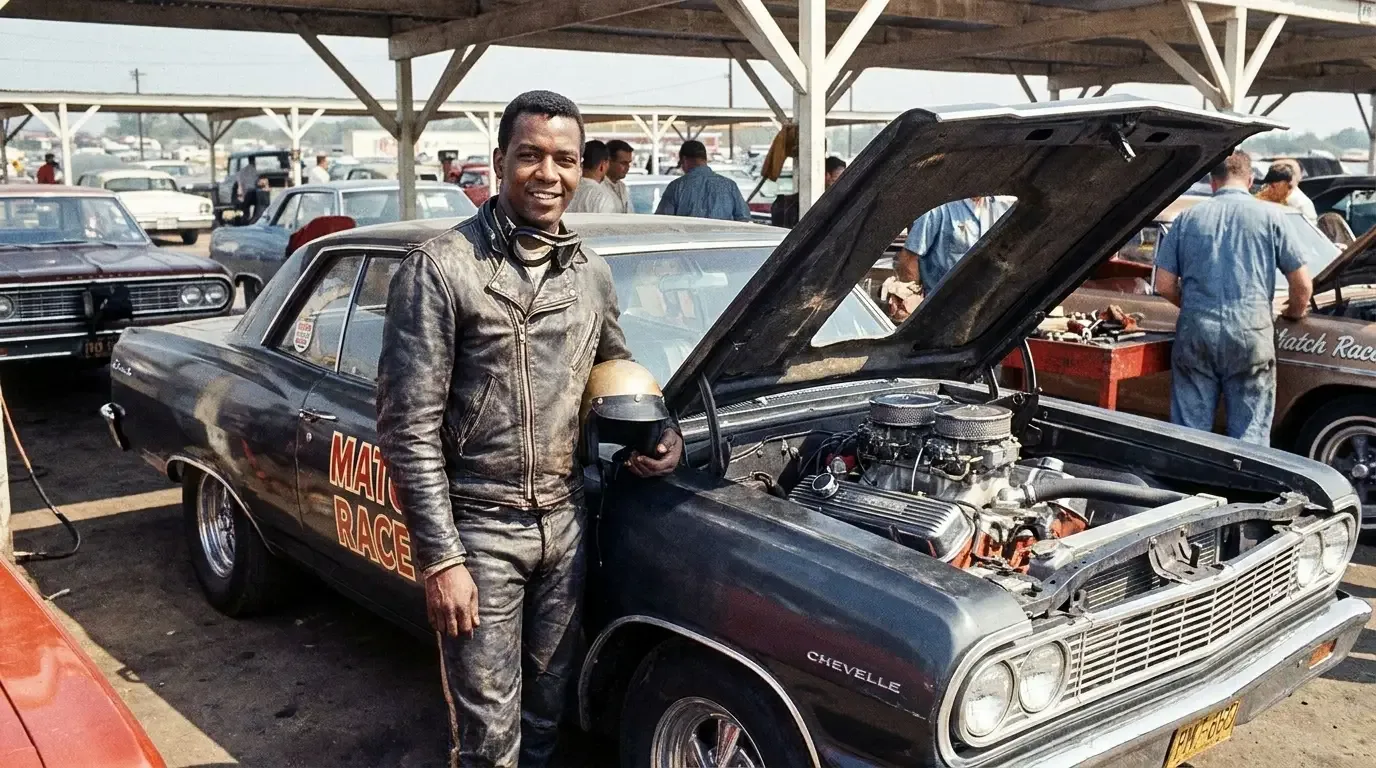
Saturday night at a small local strip, and there's a fifty-three-year-old Chevelle staged next to a car that rolled out of a shop three months ago with a carbon fiber hood and a screen where the dash used to be. Different decades, different budgets, same christmas tree, same win light. The guy in the Chevelle isn't worried about the newer car. He's worried about his own reaction time and whether he dialed his index right. That's bracket racing, and it's the reason a fifty-year-old Chevelle can still be a serious weekend weapon without anybody needing to argue about factory horsepower ratings.
Car Features
6 min read
Bracket Racing Chevelles Today
Why the Chevelle has become a staple of local bracket racing, from consistency-built big-blocks to the community that keeps showing up on Saturday night.
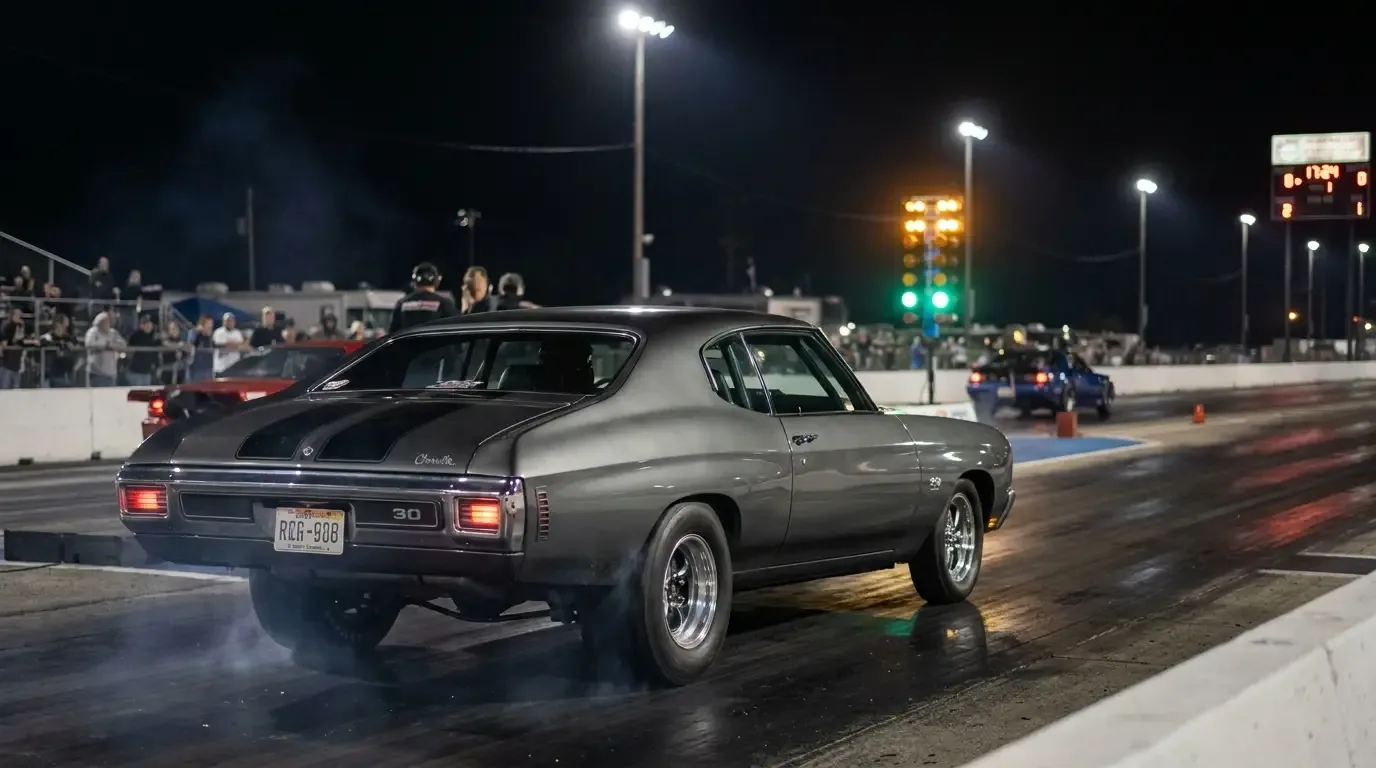
Bracket racing strips away the argument that used to define factory-class drag racing. Nobody's checking your broadcast sheet. Nobody cares if your 396 is really a 396 or if you swapped in a 454 twenty years ago and never told anyone. You pick a number, a dial-in, that represents how quick you think your car will run the quarter, and you race to hit that number as closely as possible without going under it. Consistency wins. That's why the format has quietly become the second life for so many of these cars.
Why Chevelles fit the bracket format so well
A lot of the guys who show up to bracket night with Chevelles didn't build them to be bracket cars specifically. They inherited a family car, or bought one out of a barn, or kept the car they raced in high school and never sold it. The Chevelle's factory geometry, that long wheelbase and the way weight sits over the rear axle with a big-block up front, happens to translate into a car that hooks up and runs consistent numbers without a ton of chassis work. That consistency is the entire game in bracket racing. A car that runs the same number lap after lap beats a faster car that can't repeat itself.
There's also the simple fact that parts are everywhere. A guy building a bracket Chevelle isn't hunting down unobtainium. Suspension pieces, rear ends, transmission parts, all of it is available from more than one supplier, and that keeps the format accessible in a way some other bracket classes aren't. You can build a genuinely competitive bracket Chevelle without remortgaging the house, which matters when the whole point of the hobby is showing up most weekends, not just the big ones.
What a bracket Chevelle actually looks like under the skin
Walk the pits at any regional bracket race and you'll see the range. Some Chevelles are still running numbers-matching big-blocks with mild cam work and a set of slicks, chasing a 12-second index. Others have been built up with aftermarket blocks, a transbrake, and a delay box, chasing something closer to 9 seconds. Both cars are legitimately "bracket Chevelles." The format doesn't care which one you brought, as long as you can hit your dial-in.
What matters more than the engine combination is the consistency package: a transbrake or a manual valve body tuned to leave the same every time, a converter that locks the same way lap after lap, and tires that hook up predictably. Guys who chase raw power before they chase consistency tend to lose first round to somebody running half the horsepower with a car that never varies more than a hundredth from pass to pass.
| Build level | Approximate ET range | What it usually takes |
|---|---|---|
| Street/strip, mild big-block | roughly 13-14 seconds | Stock-style suspension, drag radials, factory-style gearing |
| Dedicated bracket build | roughly 10-12 seconds | Transbrake, slicks, a real converter, chassis tuning |
| Serious index car | roughly 8-9 seconds | Full rollcage, aftermarket block, delay box, dedicated crew |
The community that keeps showing up
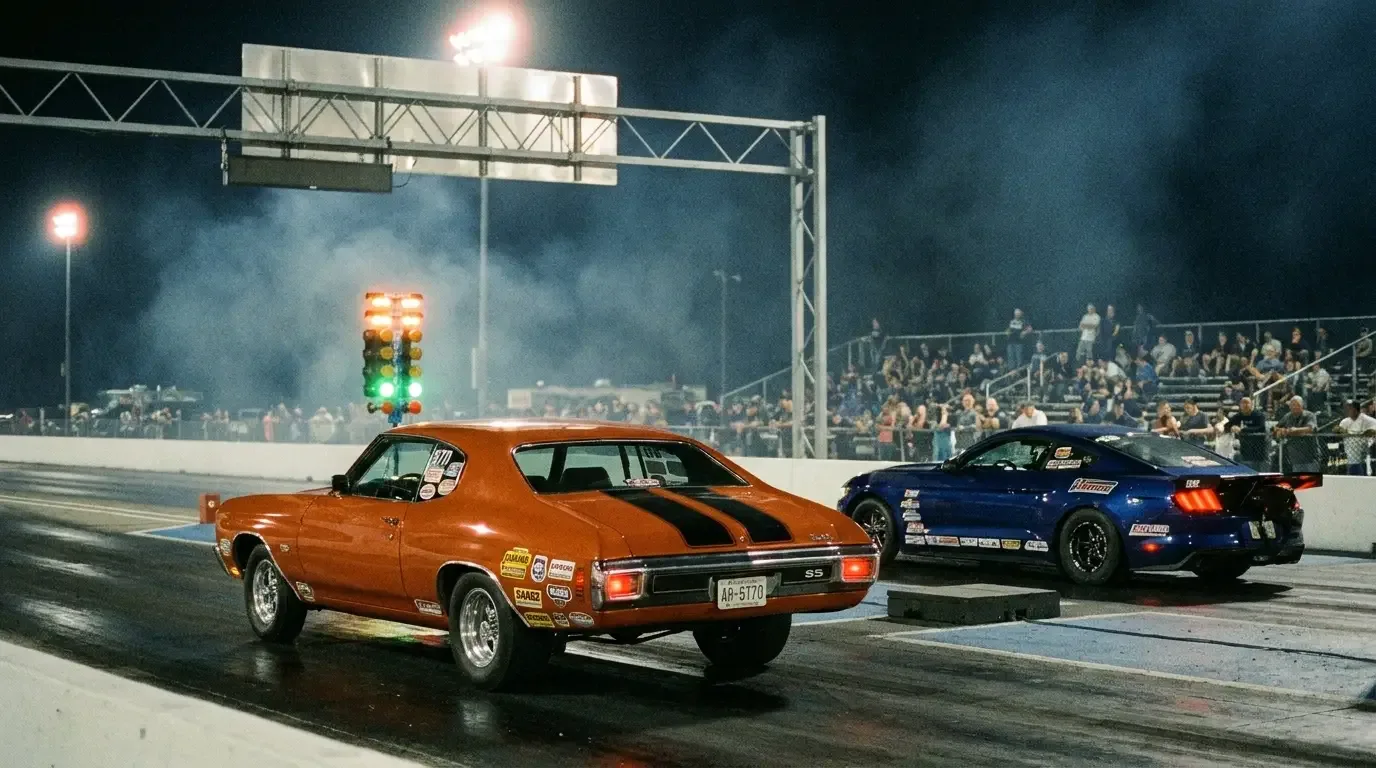
What strikes me every time I spend a Saturday at a local track is how much of the bracket scene is genuinely about the people, not the trophies. Guys help each other with tuning between rounds even though they're about to race each other in the next one. Somebody's kid is learning to drive the family Chevelle in the staging lanes at fourteen, fifteen years old, with dad standing next to the door talking them through the tree. There's a rhythm to a bracket night, the sound of a big-block coming off idle in the lanes, that hasn't really changed since these cars were new, even though everything about how they're raced has.
These aren't concours cars sitting under a cover. They're being used exactly the way a lot of them were built to be used, which is part of why the bracket scene has become such a healthy home for bracket-ready Chevelles looking for a next owner who actually wants to run the car, not just polish it.
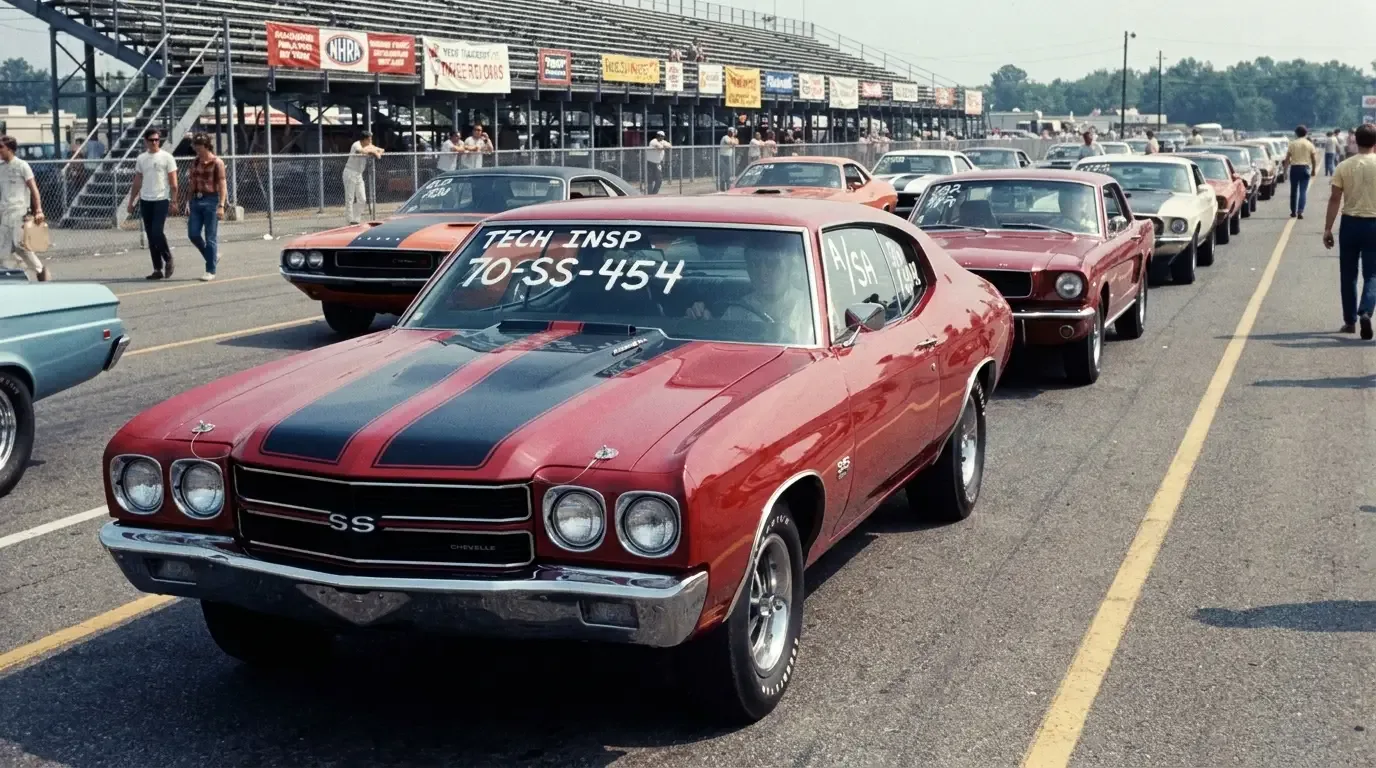
Cars that came out of the Super Stock and factory-class era, the ones tied up in Chevelle in racing, still show up at bracket night more often than you'd think. A car that used to chase a specific NHRA class number now just chases its own dial-in, and honestly, most of the guys running them seem happier for it.
"Nobody's asking to see your broadcast sheet at a bracket race. They're asking if you can cut a light and hit your number twice in a row. That's a different kind of respect, and it's earned every single run."
Patrick Walsh
Getting into the format with a Chevelle you already have
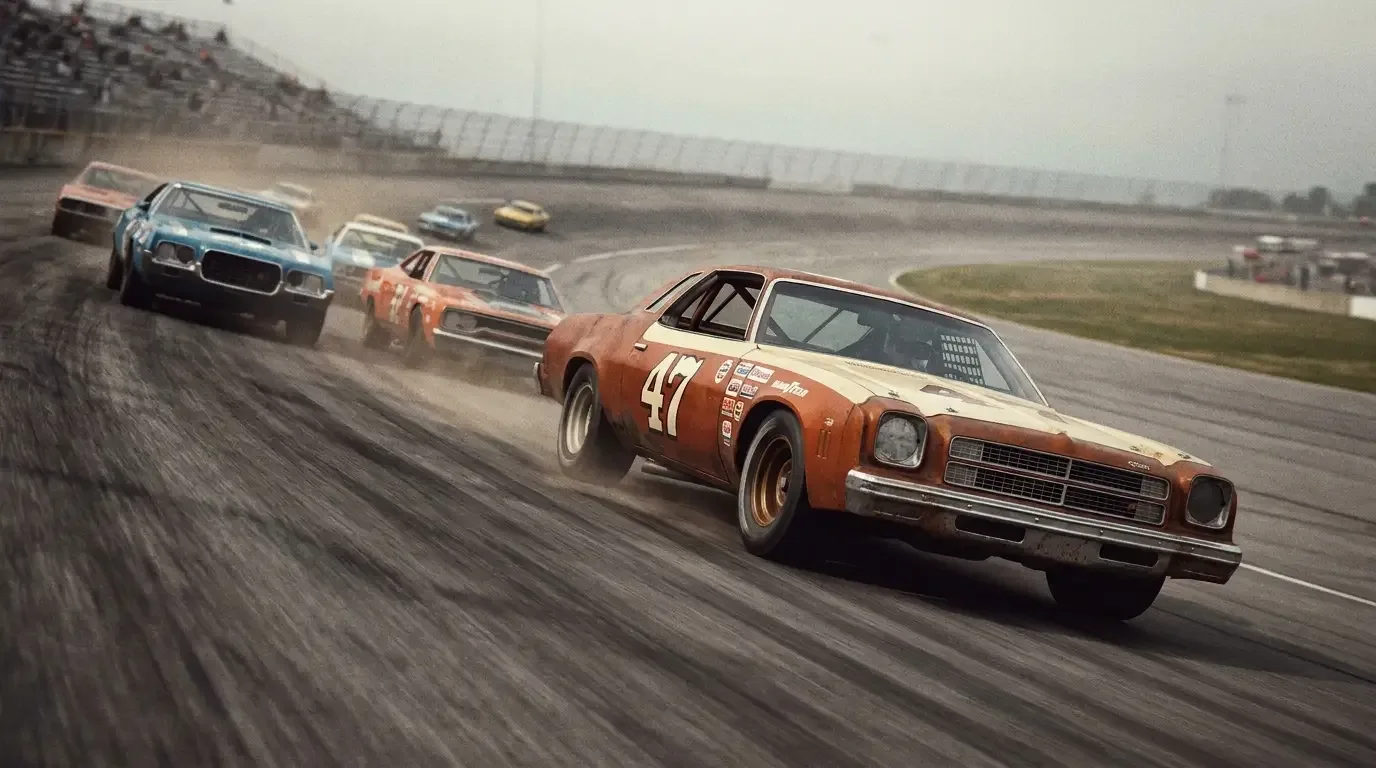
If you've got a Chevelle sitting in the garage and you're curious about bracket racing, the barrier to entry is lower than most people assume. A tech inspection, a helmet, a set of decent tires, and you can run a test-and-tune night at most local tracks without committing to a full build. Talk to the regulars in the pits. Every track has a handful of guys who've been running the same car for a decade and genuinely enjoy explaining how the format works to someone new. That's really the heart of it. It's not about the fastest car in the lot. It's about showing up, learning your own machine, and doing it again next Saturday. For a look at the cars that made this scene's reputation in the first place, there's next: Famous Drag-Racing Chevelles You Should Know, several of which still turn up at tracks like this one.
Sources and notes
- Bracket racing format and history, Wikipedia
- Ron Leek and the Byron Bracket Nationals, Competition Plus
- Ron Leek, Byron Dragway, and bracket racing's growth, BangShift
- Bracket Racing 101, dial-in basics, Wine Country Racing Association
- How NHRA class racing differs from index/bracket racing, Dragzine
Related Reading
Have a
Chevrolet Chevelle
for Sale?
Reach thousands of serious classic car collectors across the US.
Sell It Here →
Are You a Classic Car Dealer?
List your full inventory and connect with targeted classic car buyers.
Join as a Dealer →

About the author
Patrick Walsh
Automotive journalist covering classic car shows, events, and the enthusiast community across North America.
Related Listings - Chevrolet Chevelle




Comments
Be the first to comment on this article.