
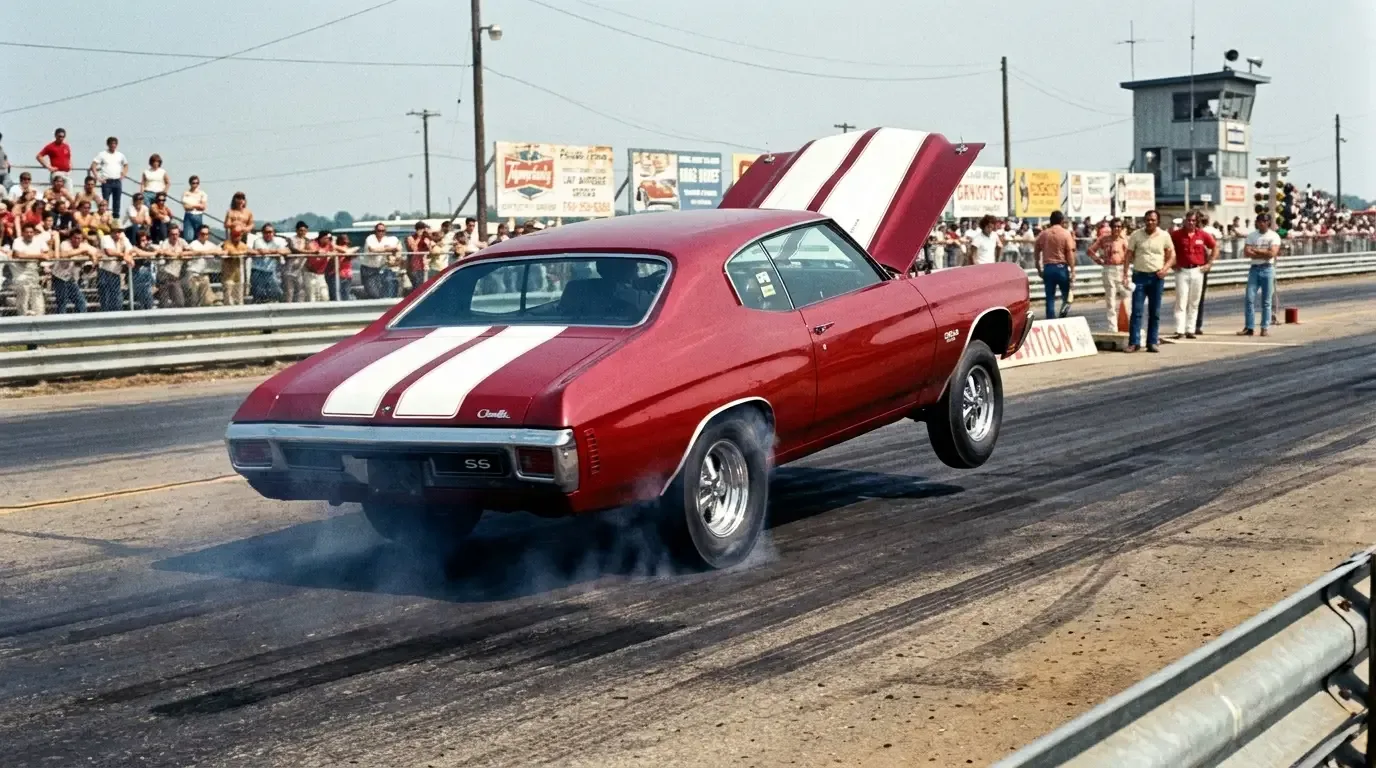
Ask ten different guys at a cruise-in to name the most famous drag racing Chevelle and you'll get ten different answers, and that's kind of the point. This isn't a one-car story the way some model legacies are. The Chevelle's drag racing fame is spread across dealer-built specials, a handful of drivers who became legends in their own right, and a rare factory option code that turned an ordinary mid-size Chevrolet into something the factory never intended regular customers to have. Here are the names and cars that actually earned their reputation, not just the ones that get repeated because they sound good.
Car Features
6 min read
Famous Drag-Racing Chevelles You Should Know
From the rare COPO 9562 to dealer-built specials and pioneering match racers, the names and cars that built the Chevelle's drag racing reputation.
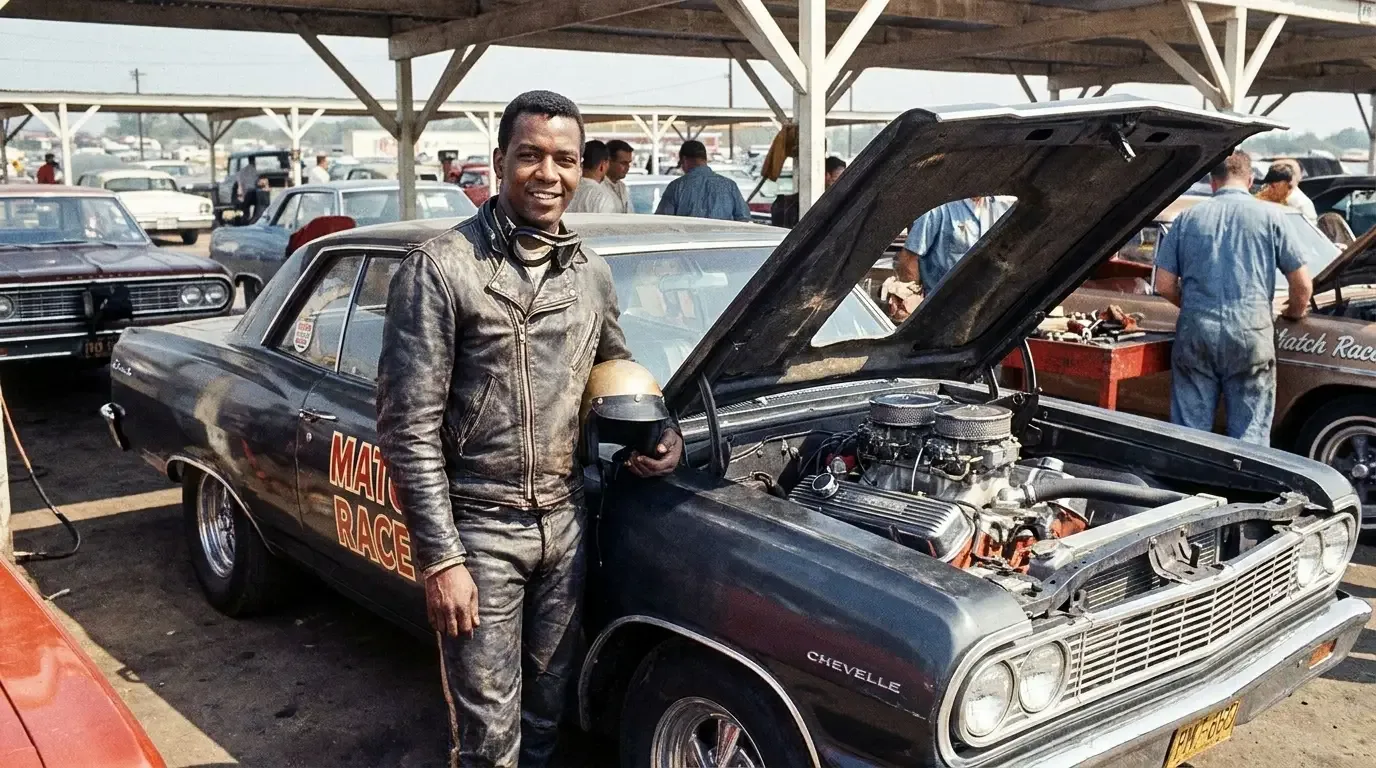
What ties these stories together is that none of them happened by accident. Somebody at a dealership, or in a back room at GM, made a decision that put more engine than the rulebook really wanted into a car built for a family, and the results ended up on record boards for years afterward.
The COPO 9562 Chevelles
Most people know COPO from the Camaro side, the 1969 ZL1 cars that came out of Central Office Production Order 9560, a program Fred Gibb Chevrolet out of La Harpe, Illinois pushed through with Chevrolet's Vince Piggins. Fewer people know that COPO 9562 did essentially the same thing to the Chevelle, dropping the L72 427, factory-rated at 425 horsepower, into the mid-size body for the 1969 model year. These weren't publicized. A dealer had to know the code existed and specifically request it, and it's Don Yenko and Yenko Chevrolet out of Canonsburg, Pennsylvania who are most associated with pushing the 9562 Chevelle program forward, ordering the bulk of the run himself. Documented production records put total 1969 COPO 9562 Chevelle production at 323 cars, with Yenko taking 99 of them.
A 9562 Chevelle wasn't a common sight even when new, and survivors are rarer still, with roughly 66 believed to remain today. What makes them significant isn't just the rarity. It's that they represent the moment GM's engineers and a handful of aggressive dealers figured out how to get a genuine big-inch race engine into a body the factory never officially built that way.
Dick Harrell and the dealer-built specials
Dick Harrell earned a reputation building performance Chevrolets for dealers across the Midwest. He worked with Yenko Chevrolet early on, helping engineer the 427 conversions that made the Yenko Camaro possible, then moved his own shop to Kansas City in 1968, where he converted and modified Camaros, Chevelles, and the newly introduced big-block Nova, all of it sold through an authorized Chevrolet dealer with 427 cubic-inch engines built up to around 500 horsepower. He wasn't the only one doing this kind of work in the era, Yenko's name gets more attention today mostly for the Camaro and Nova side, but Harrell's Chevelle work belongs in the same conversation about how far a determined dealer could push GM's own parts bin.
These cars mattered because they blurred the line between what Chevrolet built and what a shop could build using Chevrolet's own parts catalog. A customer walking into the right dealership in 1969 could order something that looked like every other Chevelle on the lot and drove nothing like it.
🔧 Inspection Priorities
- Documentation before you believe the story. Any Chevelle claimed to be a COPO or dealer-special car needs a paper trail, not just a seller's word. The value gap between a documented car and an undocumented claim is enormous.
- Match the block casting and date codes to the claimed build. Engines get swapped over fifty years, and a correct-looking block isn't automatically the original one.
- Check for a factory build sheet or dealer invoice. These are the strongest evidence for a genuine special-order car, far stronger than a VIN alone.
Malcolm Durham and the Chevelle-based match racers
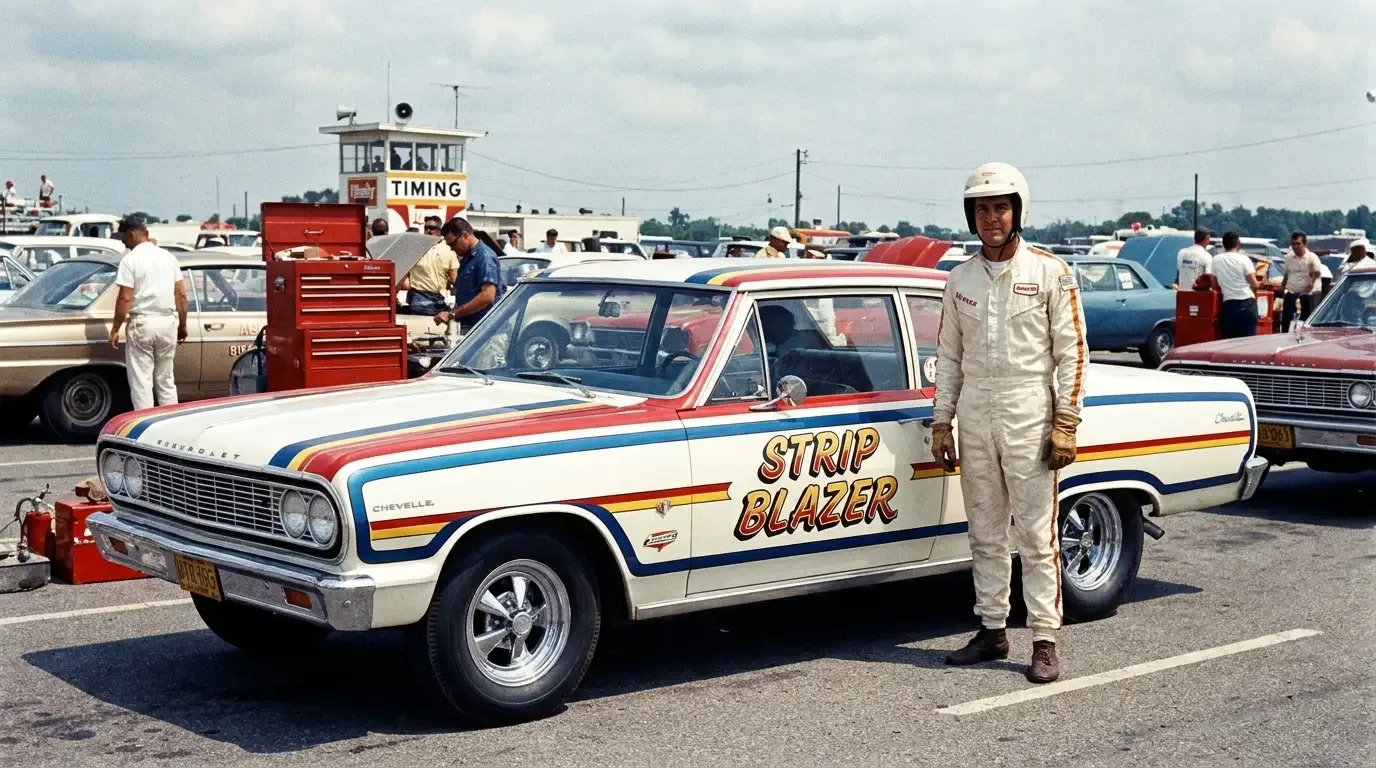
Malcolm Durham built a reputation as one of drag racing's pioneering Black drivers, campaigning under the "Strip Blazer" name at a time when the sport had very few Black competitors and even fewer with cars capable of running at the front. His most famous car was a 1964 Chevelle, Strip Blazer II, built around the 427-cid Z-11 engine originally sourced from a 1963 Impala and moved eight inches back in the chassis, one of the very first A/FX cars in the sport. By 1965 he'd added fuel injection and nitromethane to the Chevelle and was running mid-9-second times as match racing gave way to the early Funny Car era. His significance to the Chevelle's drag racing story isn't a footnote, it's a direct part of how the car built credibility on the strip in the mid-to-late sixties match race circuit.
The match race era these cars came out of was less about factory rulebooks and more about which car could actually get down the track fastest on a given Saturday, and drivers like Durham proved a well-built Chevelle could hang with anything else showing up to race.
| Car / program | Engine | Significance |
|---|---|---|
| 1969 COPO 9562 Chevelle | L72 427, 425 hp | Rare factory-authorized big-inch build, sibling program to the ZL1 Camaro |
| Dick Harrell dealer-specials | 427 big-block, dealer-installed, up to ~500 hp | Blurred the line between factory and dealer-built performance |
| Malcolm Durham's Strip Blazer II | 427 Z-11 big-block | Proved a Chevelle-bodied car competitive against the era's top match racers |
Why these cars still matter to the hobby
Every one of these stories gets told and retold at swap meets and shows because they represent something the mainstream muscle car market often misses: the Chevelle's drag racing reputation wasn't built by one famous factory package the way some other GM cars were. It was built by people, dealers who knew which forms to file, drivers who proved the car could run with anything else on the strip, and a factory that occasionally looked the other way when a good idea came from outside Detroit. That's a more interesting story than a single hero car, and it's part of what makes the Chevelle's competition history worth digging into beyond the obvious SS396 and SS454 headlines.
For the full arc of how the model got here, from a mid-size family car to a genuine performance icon, it's worth reading the Chevrolet Chevelle story from the beginning.
"The Chevelle's drag racing fame was never one car and one driver. It was a network of dealers, builders, and racers who all figured out separately that the same basic body could be turned into something the brochure never mentioned."
Patrick Walsh
One engine combination in particular ended up outliving nearly every other big-block option Chevrolet ever put in the Chevelle, and it deserves its own story. That's next: The 454, the engine that turned a mid-size Chevrolet into a drag-strip name that still gets respect at every cruise-in and cars-and-coffee where a real one shows up.
Sources and notes
- Rare Rides: the 1969 Chevy Chevelle COPO L72, Street Muscle Magazine
- 1969 COPO 427 production totals discussion, Team Chevelle
- Chevy Yenko: the ultimate muscle cars, State of Speed
- About Dick Harrell, Dick Harrell Performance Center
- We salute Malcolm Durham, drag racing's first Black superstar, BangShift
- COPO: more than just performance, Chevy Hardcore
Related Reading
Have a
Chevrolet Chevelle
for Sale?
Reach thousands of serious classic car collectors across the US.
Sell It Here →
Are You a Classic Car Dealer?
List your full inventory and connect with targeted classic car buyers.
Join as a Dealer →

About the author
Patrick Walsh
Automotive journalist covering classic car shows, events, and the enthusiast community across North America.
Related Listings - Chevrolet Chevelle
Comments
Be the first to comment on this article.