
Every big-block Chevelle that ever left the trailer at a divisional race got sorted into a class before the driver even buckled in. Not by how it looked, not by what the owner called it. By cubic inches, by shipping weight, by whether the factory bolted on an automatic or a stick, and by a weight-to-cubic-inch number that decided who it raced and what it had to run to win. I've built cars for guys who didn't understand that part until they got to the strip and got laughed out of their own class, so let's get into it properly.
Car Features
7 min read
NHRA Big-Block Chevelle Classes Explained
How NHRA classed big-block Chevelles for Stock and Super Stock racing, from weight-to-cube formulas to what changed as the sport moved on.
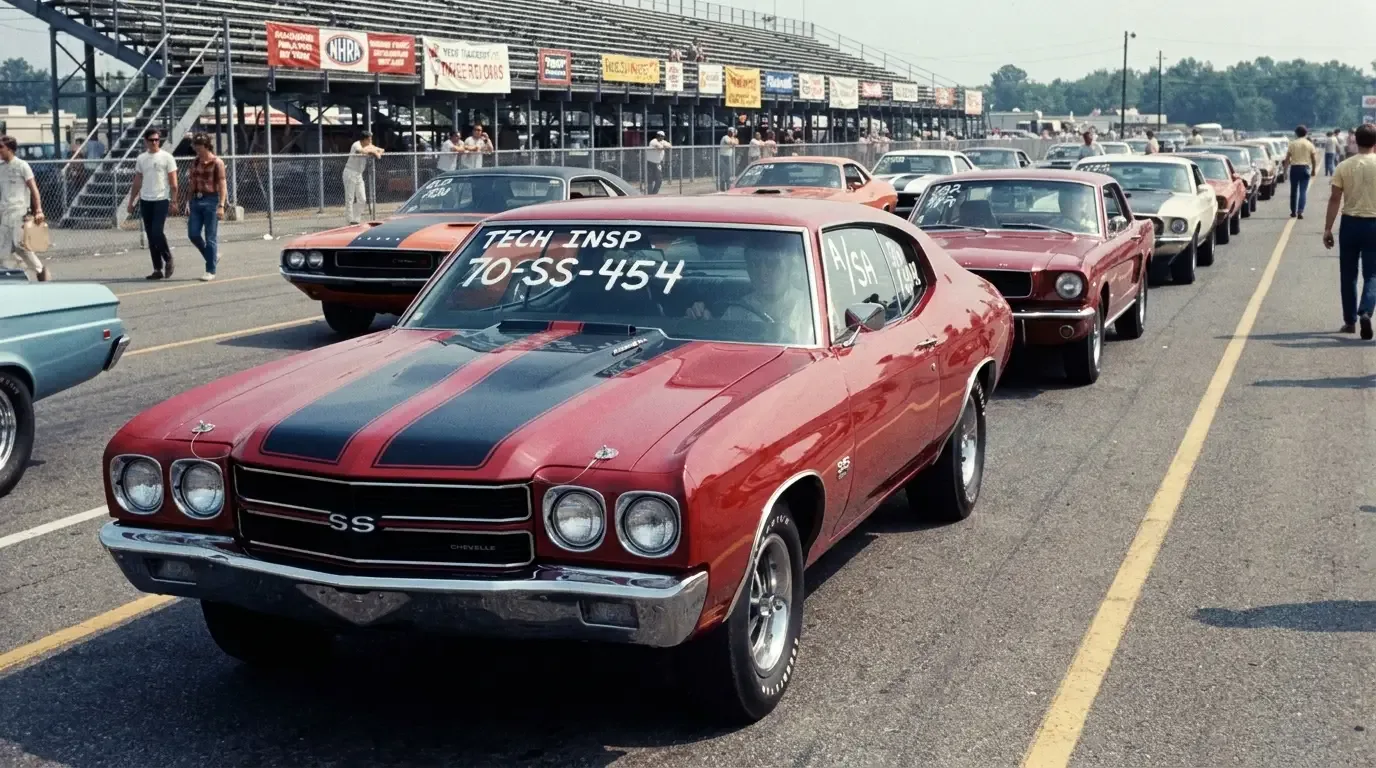
The short version: NHRA never classed a Chevelle as "a 396 car" or "a 454 car." It classed it as a specific combination of body, engine, transmission, and factory weight, and every one of those combinations had its own index. Get the combination wrong and you're not competitive. Get it right and a stock-appearing Chevelle can still be a serious weapon decades after Detroit built it.
How NHRA sorts a big-block Chevelle into a class
Stock and Super Stock classing both work off the same basic idea: a weight-to-cubic-inch ratio, expressed in pounds per cube, that determines the class letter. Lower ratio (lighter car, more cubes) means a faster class. Higher ratio bumps you down the alphabet. A 1970 SS454 Chevelle with the LS6 454, rated at 450 horsepower, landed in a different bracket than the same body with the milder LS5 454, rated at 360 horsepower, because the factory horsepower rating and the actual certified weight both feed the formula.
Super Stock classes get a further split for transmission. An automatic car isn't racing against a four-speed car in the same bracket unless the sanctioning body says the difference doesn't move the needle enough to matter, and with a big-block that difference usually does matter. So you'll see a Chevelle carry one Super Stock letter one year and something adjacent the next, not because the car changed, but because NHRA re-ran the numbers.
🔧 Inspection Priorities
- Confirm the factory shipping weight on the trim tag or broadcast sheet. Guys "forget" fifty pounds of insulation and sound deadener all the time. That's cheating your own class, and tech will catch it eventually.
- Check the actual block casting against what the paperwork claims. A 454 in a body that was factory-invoiced with a 396 changes everything about which class you're legal in.
- Verify the rear gear and transmission match what the class rules allow for that combination. Some class packages locked specific gear ratios to specific engine/trans combos from the factory.
The Super Stock classes that took the big Chevelles
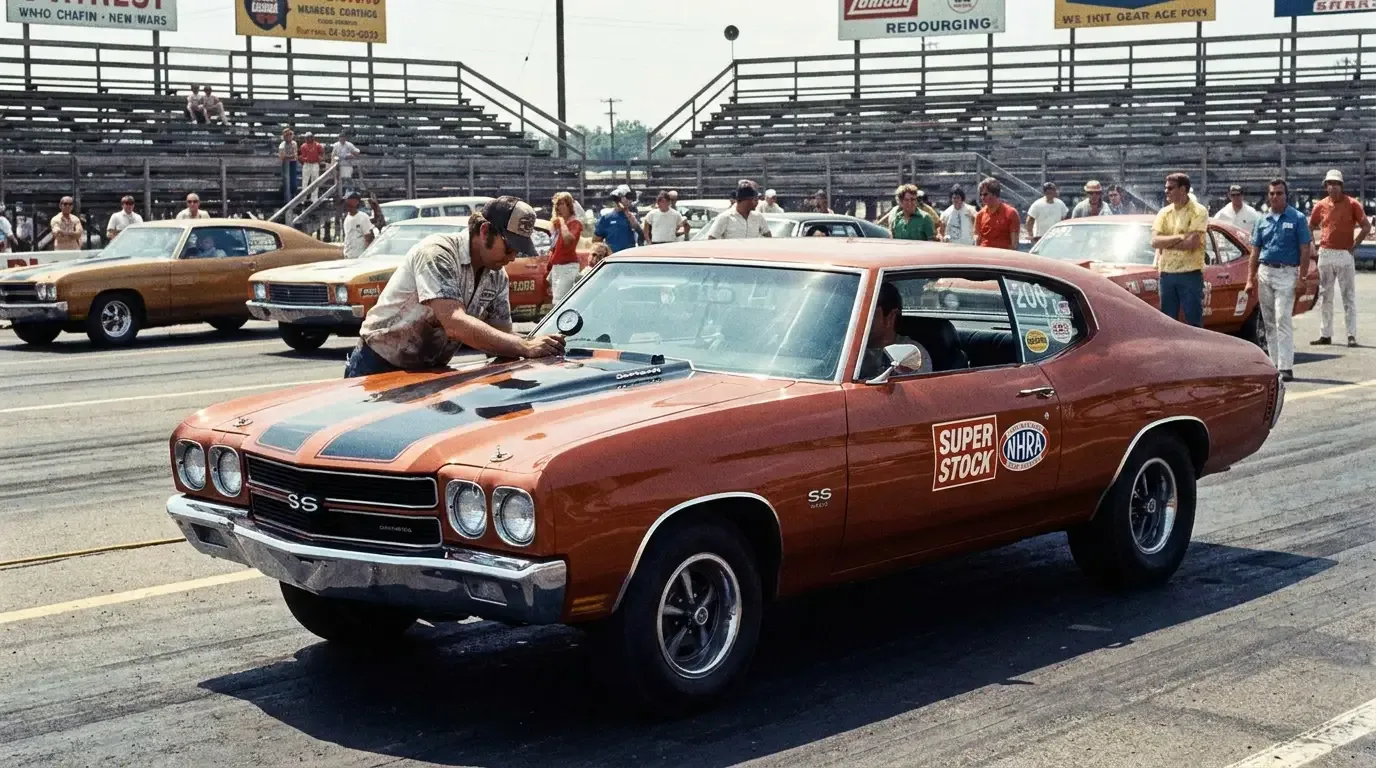
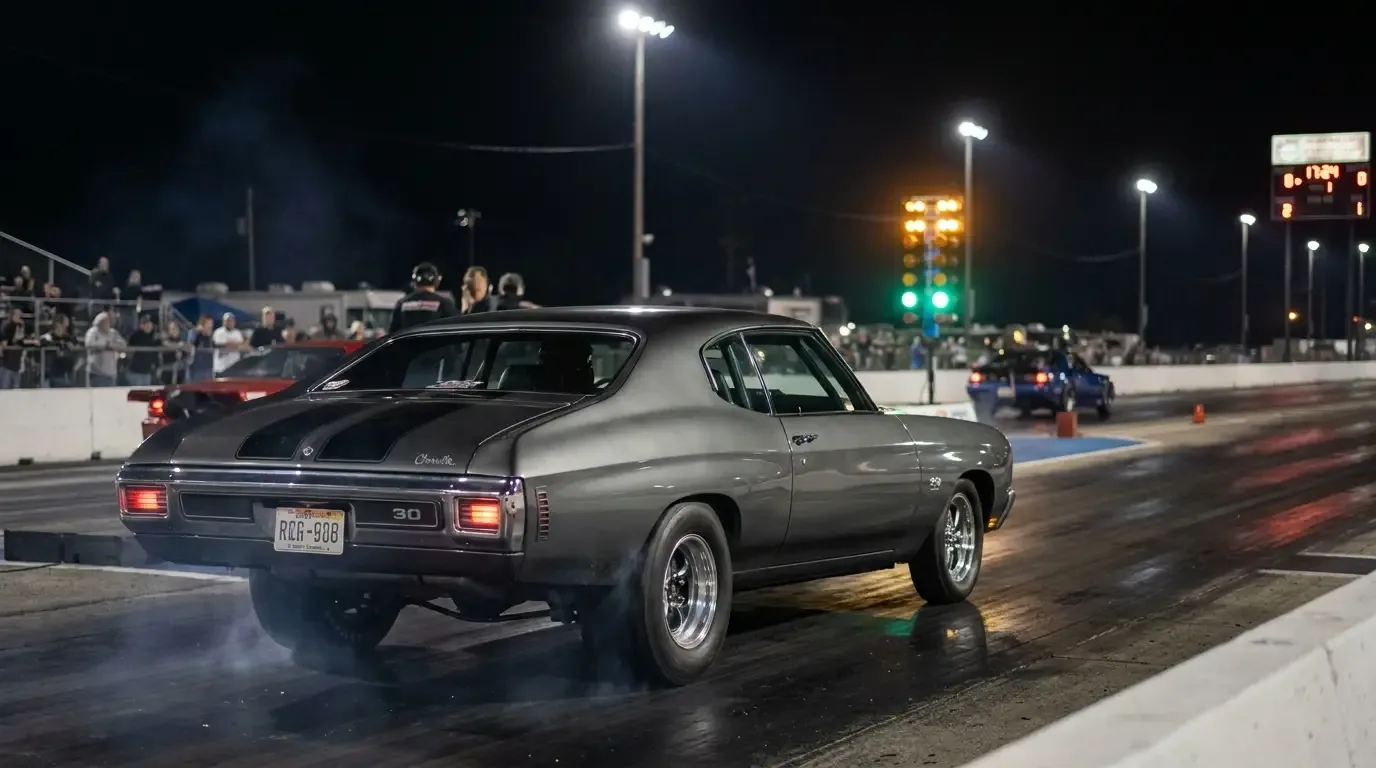
Through the late sixties and into 1970, the big-block Chevelle lived mostly in Super Stock, running against Mopar and Ford factory muscle in classes built around similar weight-to-cube numbers. A 1970 SS454 with the LS6 and a four-speed typically landed in a quicker class than the automatic LS5 cars under NHRA's weight-to-cubic-inch formula, which sorted Stock and Super Stock cars into lettered classes (A through the lower alphabet, roughly 7.50 to 8.99+ pounds per cubic inch in period rulebooks) and split further by transmission. The exact letter a given combination landed in shifted from year to year as NHRA recalculated the breaks, so the lighter, stick-shift combination simply ran a better number within whatever class it fell into that season, and NHRA's formula rewarded that every single year.
What a lot of newer guys don't get is that Super Stock cars in this era were still very close to what left the factory floor. Headers, slicks, and a rollbar, sure, but the block, the heads, the intake, all had to match what Chevrolet actually built. That's why the Chevelle's racing legacy in Super Stock is really a story about how well GM's engineers happened to build a combination that fell into a favorable class number, not about some secret speed parts nobody else had access to.
Stock Eliminator and the factory-optioned cars
Stock Eliminator ran the same basic weight/cube math but with much tighter restrictions on what could be changed from factory configuration. This is where a well-optioned SS396 or SS454 Chevelle, bought bone stock off a dealer lot and never modified beyond safety equipment, could still be a serious runner. The class letter depended on the exact RPO combination: engine code, transmission, rear gear, even things like power steering and air conditioning that added weight the factory build sheet documented.
I've torn into more than one "numbers matching" Chevelle where somebody swapped a lighter manual steering box or pulled the air conditioning compressor to shave class weight, then tried to sell it as all-original. Check the broadcast sheet against what's actually bolted to the car. If the weight doesn't match what the factory invoiced, something got changed, and it either changed for racing or somebody's lying about the history.
| Engine / trans combination | Factory rating | Typical class family |
|---|---|---|
| L78 396, 4-speed | 375 hp | Super Stock (mid-weight bracket) |
| 454 LS6, 4-speed | 450 hp | Super Stock (light bracket) |
| 454 LS5, automatic | 360 hp | Super Stock (heavier bracket, auto) |
What changed as the classes evolved
By the mid-1970s, Stock and Super Stock had drifted toward being a smaller piece of NHRA's overall program as index racing and bracket formats grew. That's not a knock on the classes. It's just where the sport went. Guys who wanted to keep racing their big-block Chevelles without chasing an ever-shifting factory-class rulebook moved into bracket categories where a dial-in number and a good reaction time mattered more than whether your car was invoiced with a 3.31 or a 4.10 rear end. That shift is worth understanding before you commit a car to one path or the other, and it leads pretty directly into Bracket Racing Chevelles Today, which is where most of these cars actually live now.
The factory-class scene never fully disappeared. Vintage Stock and Super Stock racing still exists, and there are still guys running correctly-classed big-block Chevelles against period-correct competition. But it's a smaller, more specialized crowd than it was in 1970, and building a car for it means committing to the documentation, not just the horsepower.
What to verify before you build to a class
Before you spend real money chasing a specific NHRA class with a big-block Chevelle, get the current class breaks in writing from NHRA, not from a forum post from 2009. The weight/cube formula and the class letters have moved around enough over the decades that what worked for your buddy's car in one era doesn't automatically apply to yours now. Pull the actual trim tag and broadcast sheet, weigh the car on a certified scale, and cross-check the engine code against what's documented before you commit to a build.
"I've seen guys build a beautiful correct big-block Chevelle, get it to the strip, and find out they're a full class off because they used numbers from a decade-old magazine article. Get the current class sheet. It's not expensive and it saves you from building the wrong car."
Mike Sullivan
None of this is complicated once you understand the formula. It's just detail work, the same kind of detail work that separates a car that's actually class-legal from one that just looks the part at fifteen feet.
Sources and notes
- Understanding class racing: Stock Eliminator, Dragzine
- NHRA Stock and Super Stock class index reference, Class Racer
- Class Index, NHRA official statistics
- Stock/Super Stock: how did we get here, Competition Plus
- Pro Stock origins out of Super Stock, Wikipedia
- 1970 LS6 Chevelle specifications, Heacock Classic
Related Reading
Have a
Chevrolet Chevelle
for Sale?
Reach thousands of serious classic car collectors across the US.
Sell It Here →
Are You a Classic Car Dealer?
List your full inventory and connect with targeted classic car buyers.
Join as a Dealer →

About the author
Mike Sullivan
Detroit-area muscle car enthusiast and restoration specialist with three decades of hands-on experience working on American iron.
Related Listings - Chevrolet Chevelle
Comments
Be the first to comment on this article.