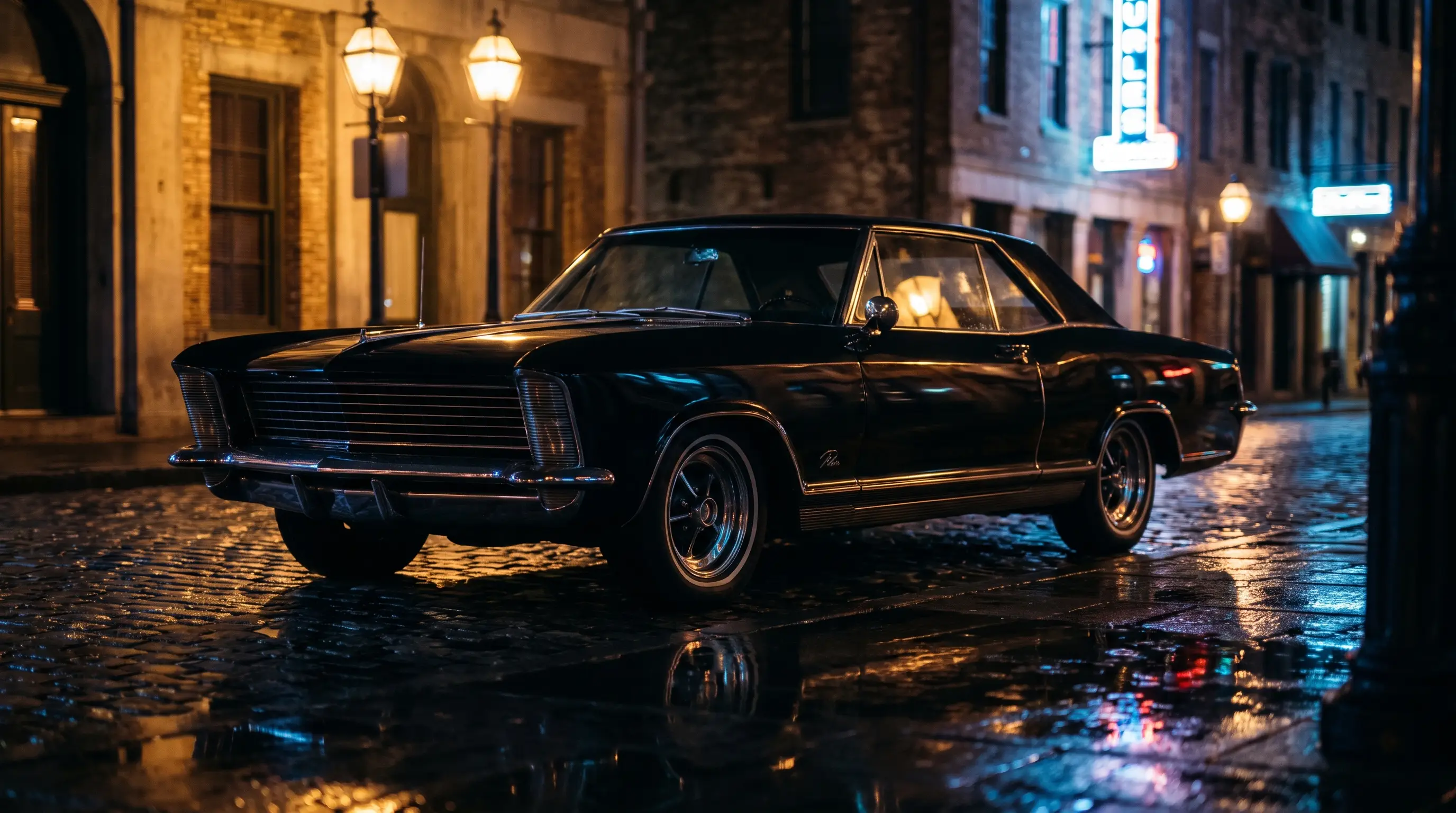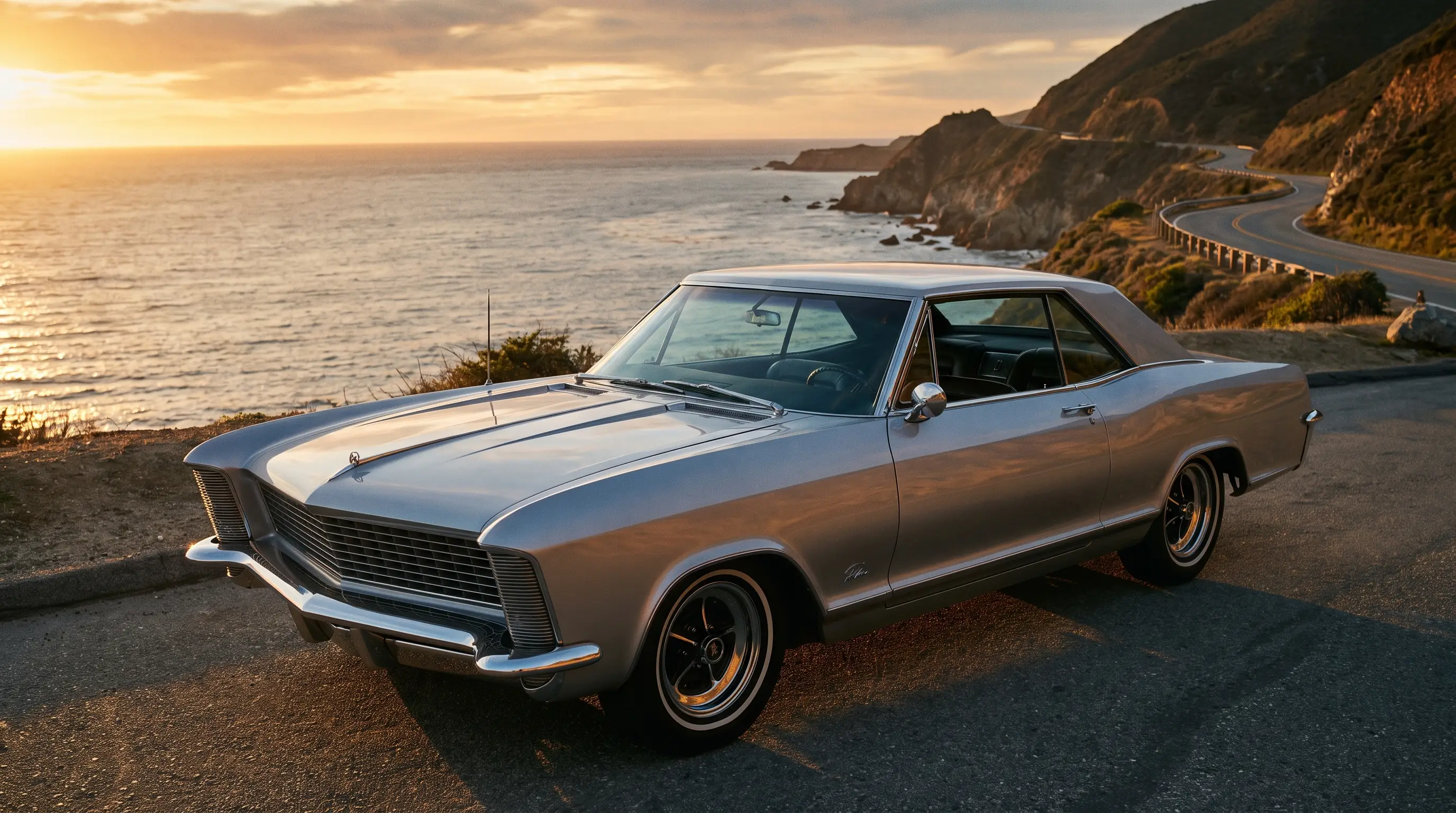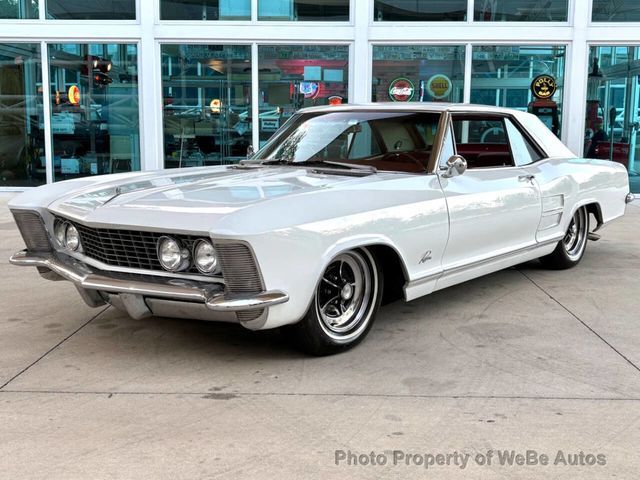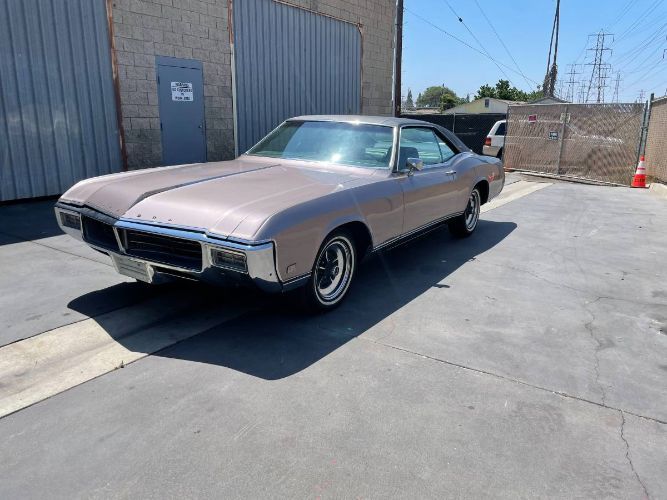
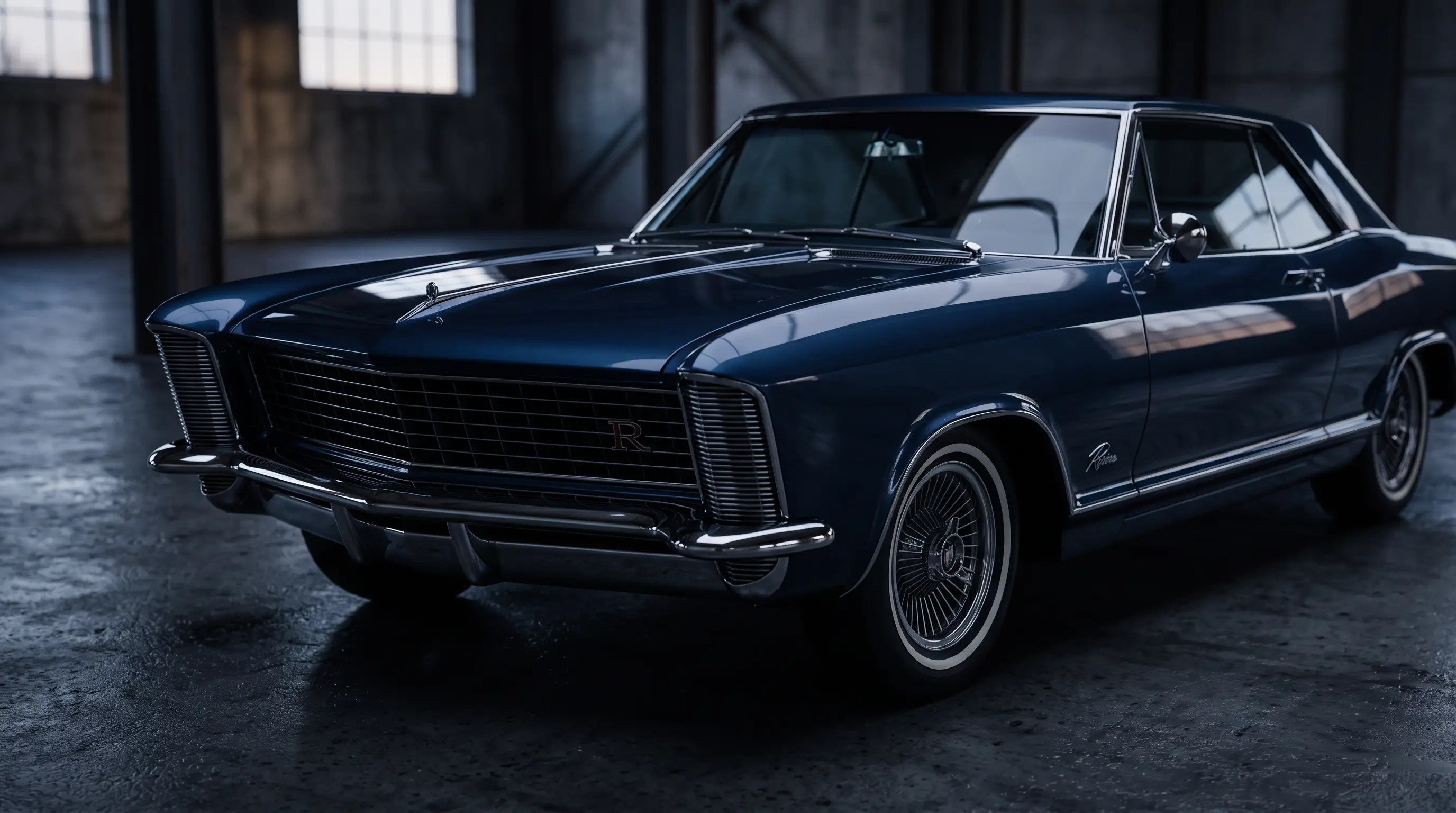
The 1965 Buick Riviera introduced a detail that changed how an entire generation of American coupes thought about the front end: headlights that disappeared. Concealed headlamp systems existed before 1965, but Buick's execution on the Riviera was distinctive enough, and visible enough in period advertising, that it became one of the defining identifiers of the car's first three model years condensed into a single, final one. Documenting exactly how that system worked, and why Buick waited until the third year of the Riviera to introduce it, is a matter of tracing engineering decisions as much as styling ones. The buick riviera 1965 hidden headlights debut is a specific, dateable engineering story, not a vague styling trend.
A styling problem two years in the making
When the Riviera launched for 1963, its designers had already settled on a long hood and a low, tight nose that owed more to European coachbuilders than to contemporary Detroit fashion. The exposed round headlamps did the job, but they interrupted a front end that was otherwise remarkably clean for an American production car. Buick's stylists knew this from the start. The archives show sketches exploring concealed lamp treatments as early as the original design studies, but the mechanism needed to make it work reliably in a mass-production car was not ready for the 1963 launch date, so the division shipped with conventional exposed lamps for the first two years. For the fuller record of how the 1963 and 1964 cars differed from what came next, our complete history covers the full arc.
How the clamshell mechanism actually worked
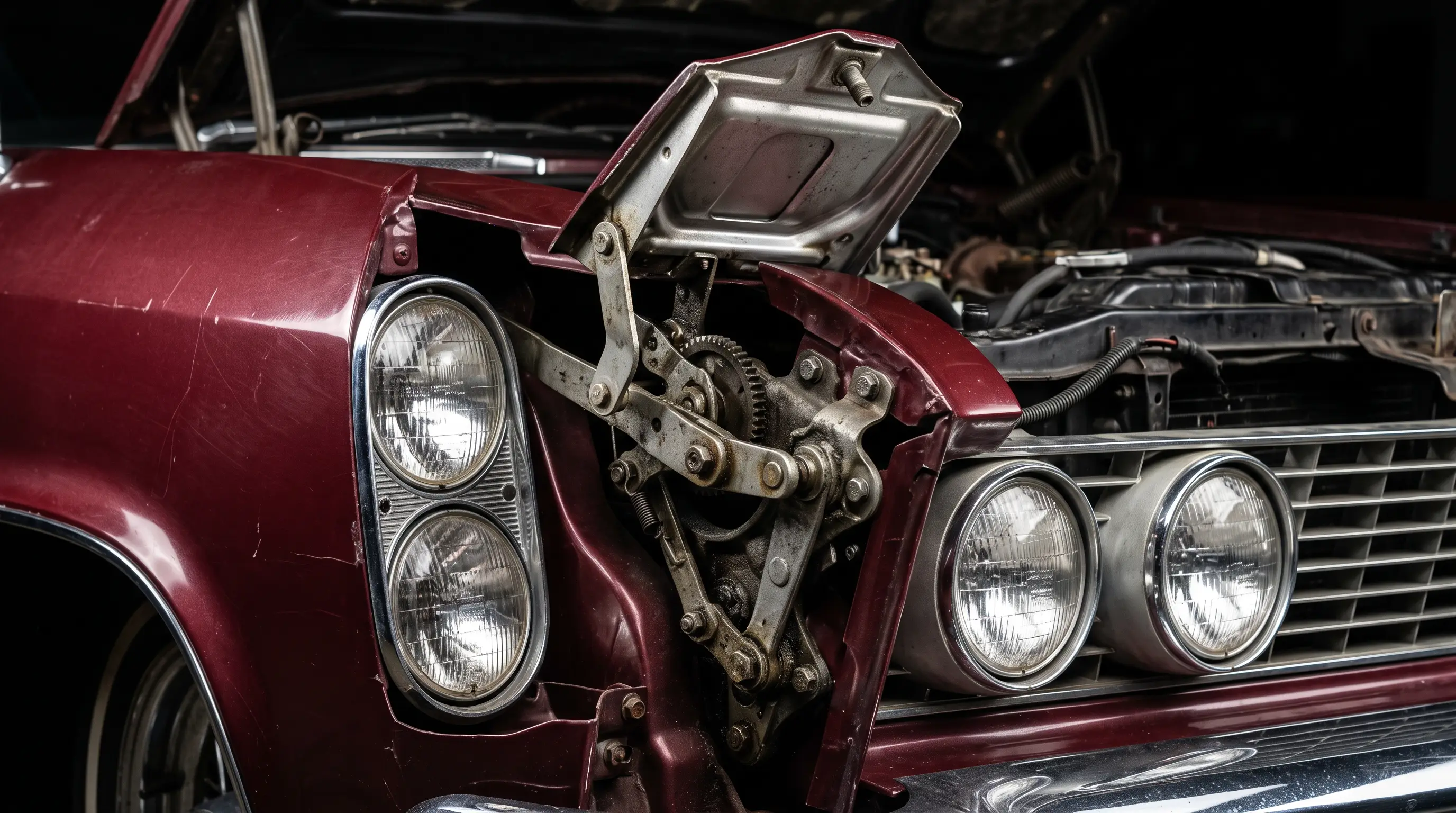
The system Buick settled on for 1965 used vacuum-operated doors built into the leading edge of each front fender. When the headlights were switched off, the doors rotated closed over the lamp housings, presenting a smooth, uninterrupted body line from the grille out to the fender tip. Switch the lights on, and the same doors rotated open in a motion period buyers and journalists both described as a clamshell, which is where the nickname stuck. The mechanism relied on engine vacuum rather than an electric motor, a choice consistent with how a lot of period accessories were actuated, and it meant the doors moved with a slow, deliberate action rather than a snap.
Why 1965 and not sooner
The two-year gap between the Riviera's launch and the introduction of hidden headlights was not indecision. Concealed headlamp systems of the early 1960s had a reputation for reliability trouble, particularly in cold weather when vacuum lines could stiffen or leak, and Buick's engineers wanted a system that would not embarrass the division in service bulletins during the Riviera's crucial early years of establishing a reputation. By the third model year, Buick had watched how its own accessory systems performed in the field and had refined the vacuum architecture enough to commit to the feature at scale. That patience is part of why the system, when it did arrive, worked as well as it did, rather than becoming an early recall story.
There is also a competitive angle worth noting. Buick was not the first manufacturer to attempt concealed headlamps in the postwar era, but the Riviera's version arrived at a moment when the personal luxury coupe segment was becoming genuinely crowded, and a distinctive front-end treatment gave Buick's dealers something concrete to point to on the showroom floor that competitors could not immediately match. Cord had done concealed headlamps decades earlier on a very different kind of car, and a handful of European makers had experimented with retractable lamp covers, but a mass-production American coupe offering the feature as a factory option in 1965 was still enough of a novelty to draw attention in period road tests and dealer literature alike.
Documenting the system for the record
Cataloguing a feature like this properly means going beyond the marketing description and looking at how the parts were actually built. The vacuum canisters, the door hinges, and the linkage rods were all specific to this one application, not shared wholesale with other GM concealed headlamp systems of the era, which is part of why parts availability for a correct restoration can be more limited than owners expect. A researcher assembling a full parts and service history for the 1965 car treats the headlight doors as their own subsystem, distinct from the rest of the front sheet metal, precisely because the vacuum architecture behind them was engineered as a standalone solution to a styling problem rather than adapted from an existing GM parts bin.
1965 Riviera headlight system at a glance
| Detail | Specification |
|---|---|
| Actuation method | Engine vacuum |
| Mechanism location | Leading edge of front fenders |
| Doors | Two, one per headlamp pair |
| First model year offered | 1965 |
| Continued in second generation | No, exposed lamps returned for 1966 |
A feature that did not survive the redesign
What makes the 1965 system particularly interesting to document is how briefly it lasted. When Buick redesigned the Riviera for the 1966 model year, the new body reverted to exposed headlamps, a choice driven by the new styling direction rather than any failure of the clamshell system itself. That makes the 1965 car the only first-generation Riviera, and for a long stretch the only Riviera of any generation, to offer this specific styling solution. Collectors researching the car today treat that exclusivity as a genuine point of interest, since it means an original, functioning set of clamshell doors is something specific to one model year rather than a feature shared across a run of cars.
"When you catalogue enough model years side by side, the ones that stand alone are the ones worth the closest documentation. The 1965 clamshell system exists in exactly one year of Riviera production, and that scarcity is the whole story."
- Sarah Whitfield
What it means for buyers and researchers today
Because the vacuum-actuated doors are mechanical and decades old, functioning originals require attention that a fixed headlight bezel never would. Vacuum lines perish, actuators seize, and doors that once moved smoothly can bind or refuse to open evenly. None of that diminishes the historical significance of the feature, but it does mean anyone evaluating a 1965 car should treat the headlight doors as a genuine inspection point rather than an afterthought, the same way a researcher would treat any original mechanical system on a sixty-year-old car. Buyers who want to see how the feature has held up on cars currently on the market can find a classic Riviera and compare functioning examples directly. The system remains one of the clearest single reasons the 1965 model year is discussed on its own terms rather than folded into a general description of the first-generation Riviera, and it is the detail most often cited when someone is asked to name the single most distinctive year of the car's early production run.
Sources and notes
- Buick Riviera - Wikipedia
- 1965 Buick Riviera 401 V-8 Specs - Automobile Catalog
- 1965 Buick Riviera 425 V-8 Specs - Automobile Catalog
- 1965 Buick Riviera Gran Sport - Hagerty Valuation Tools
- A Detailed Look Back At The 1965 Buick Riviera - HotCars
- Dual Quads: 1965 Buick Riviera Super Wildcat - Barn Finds