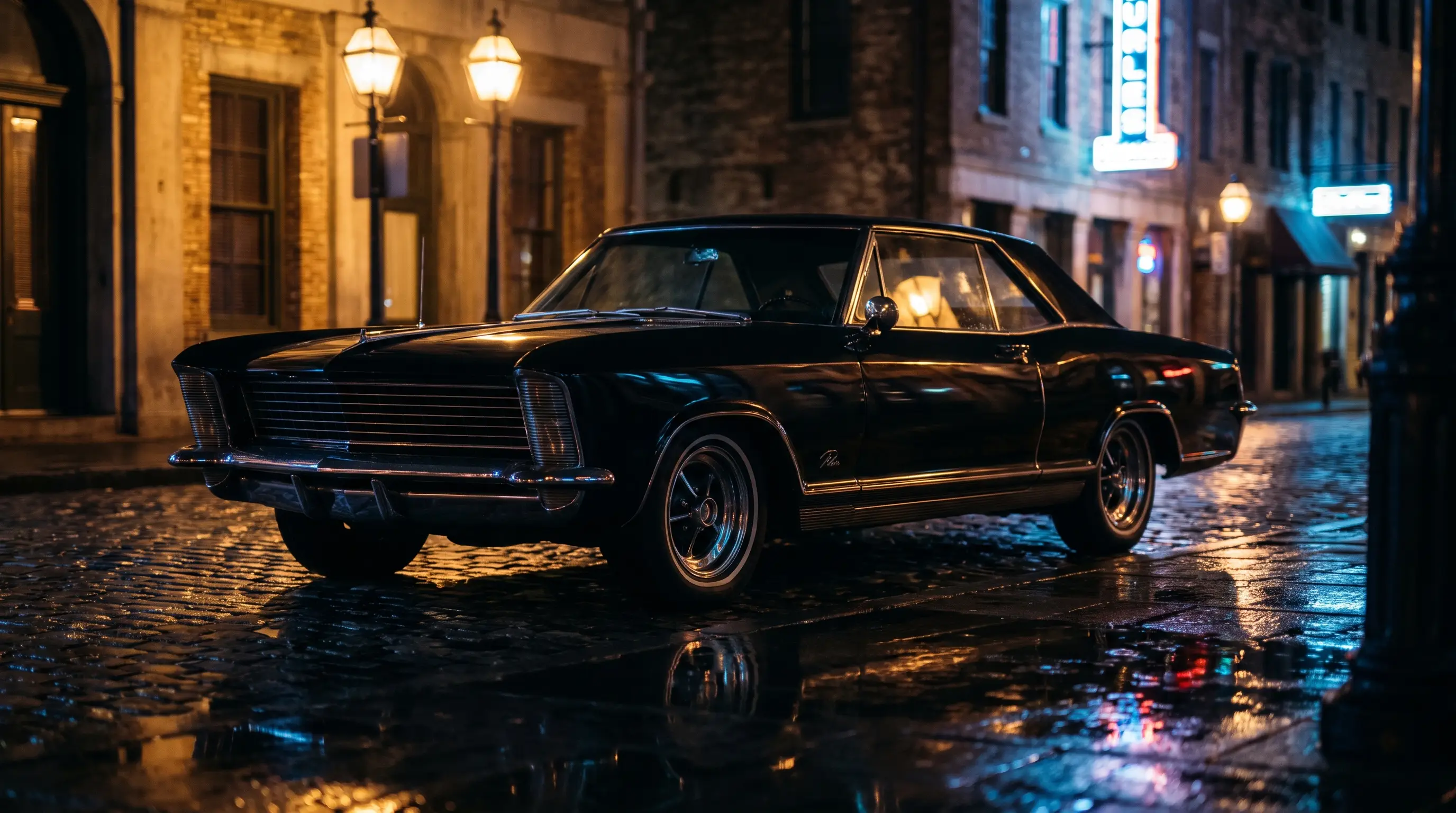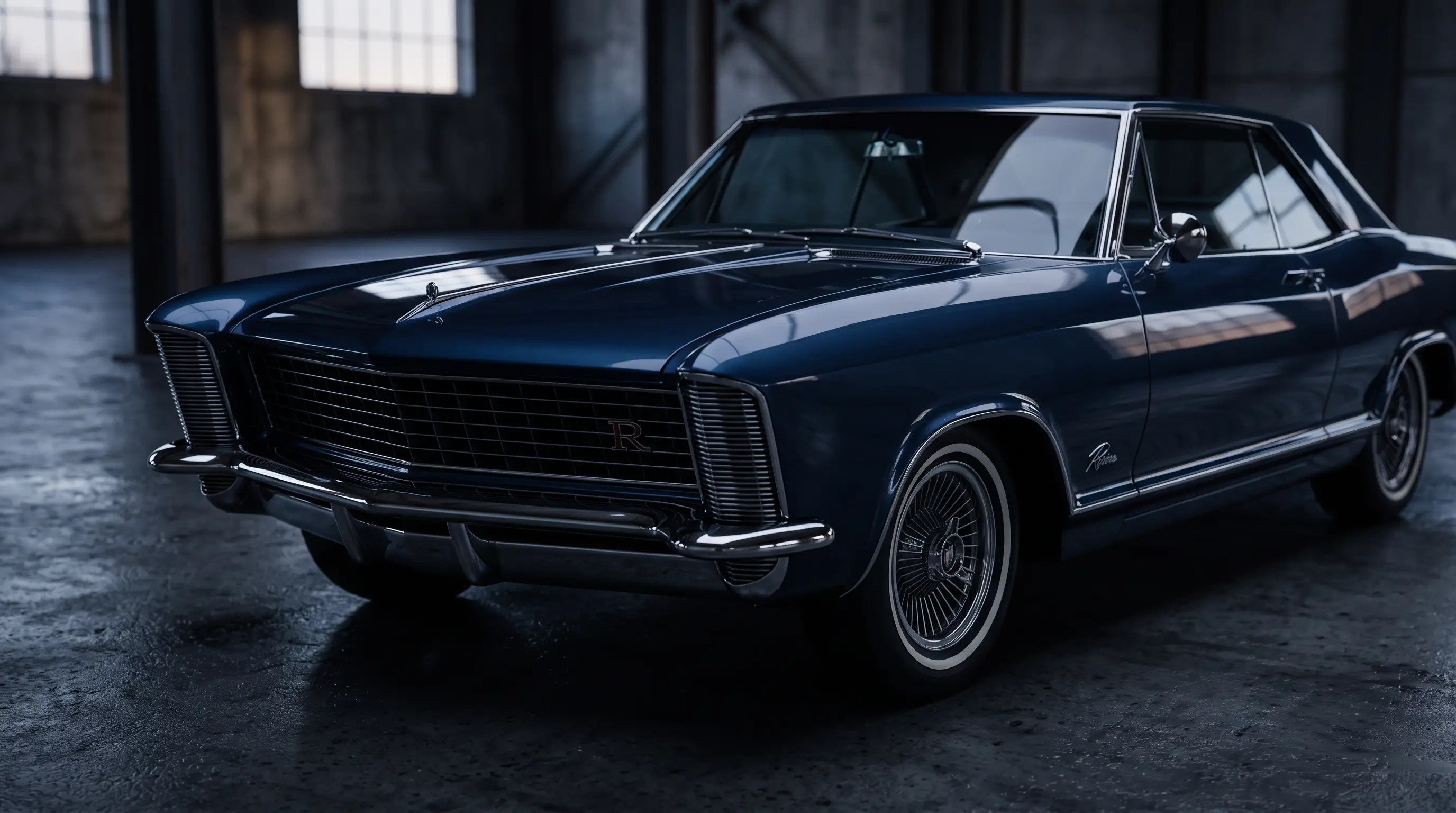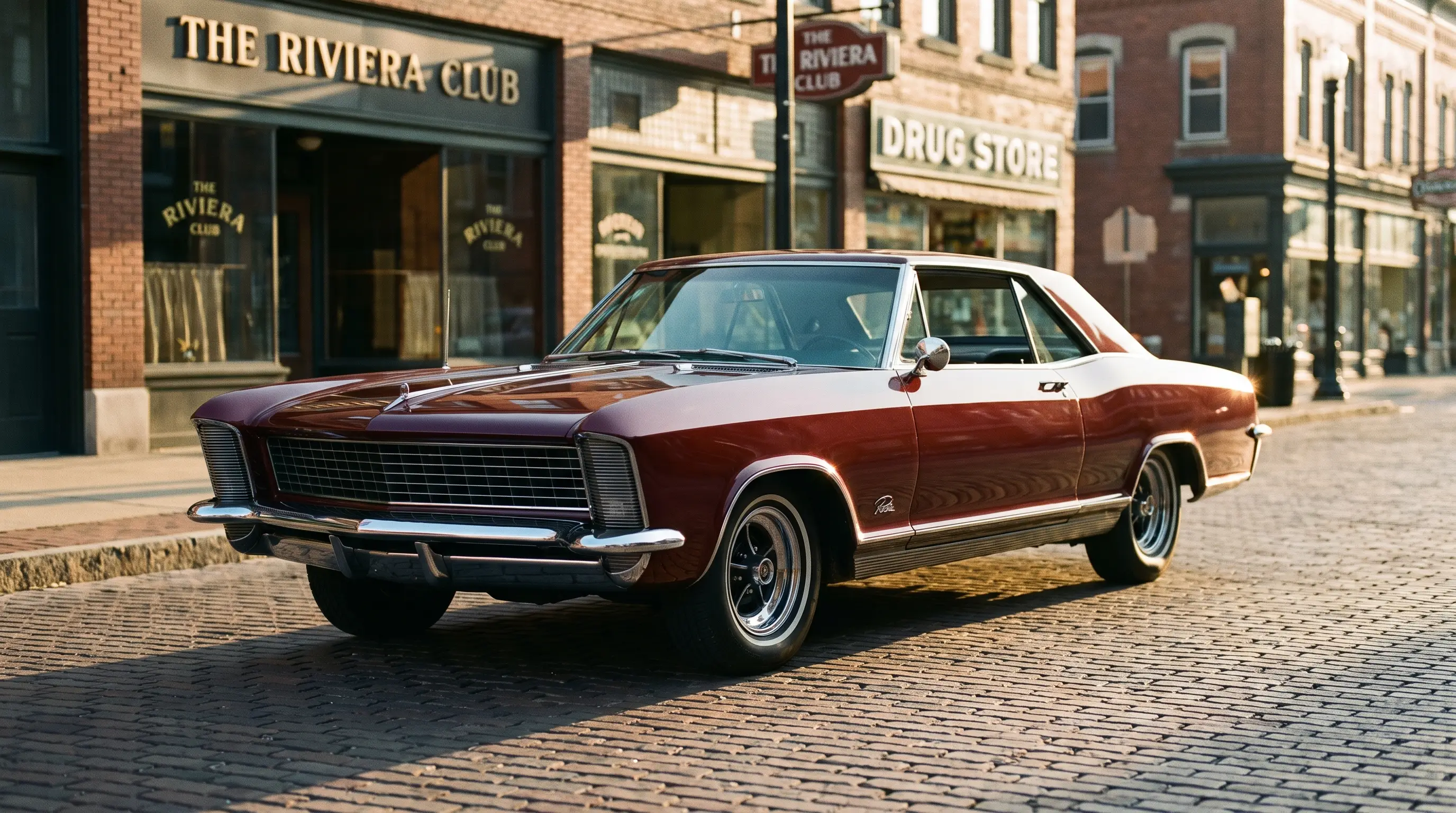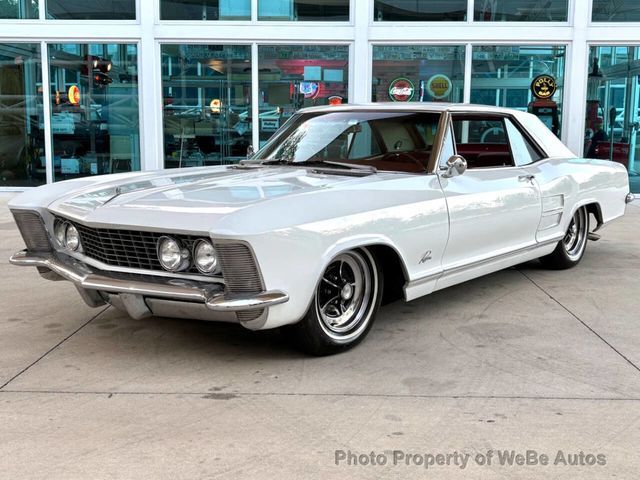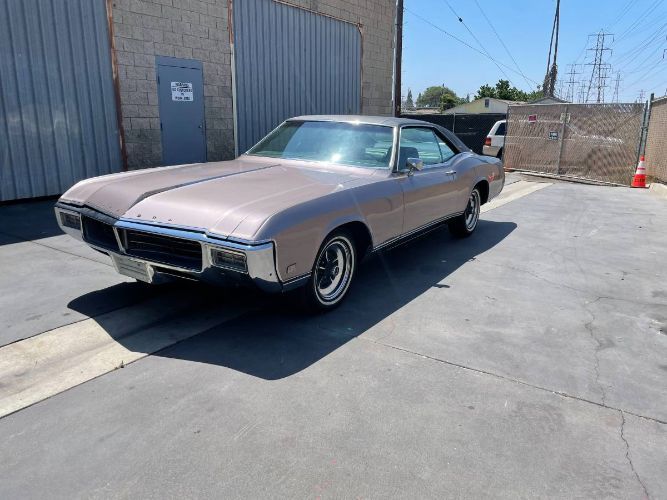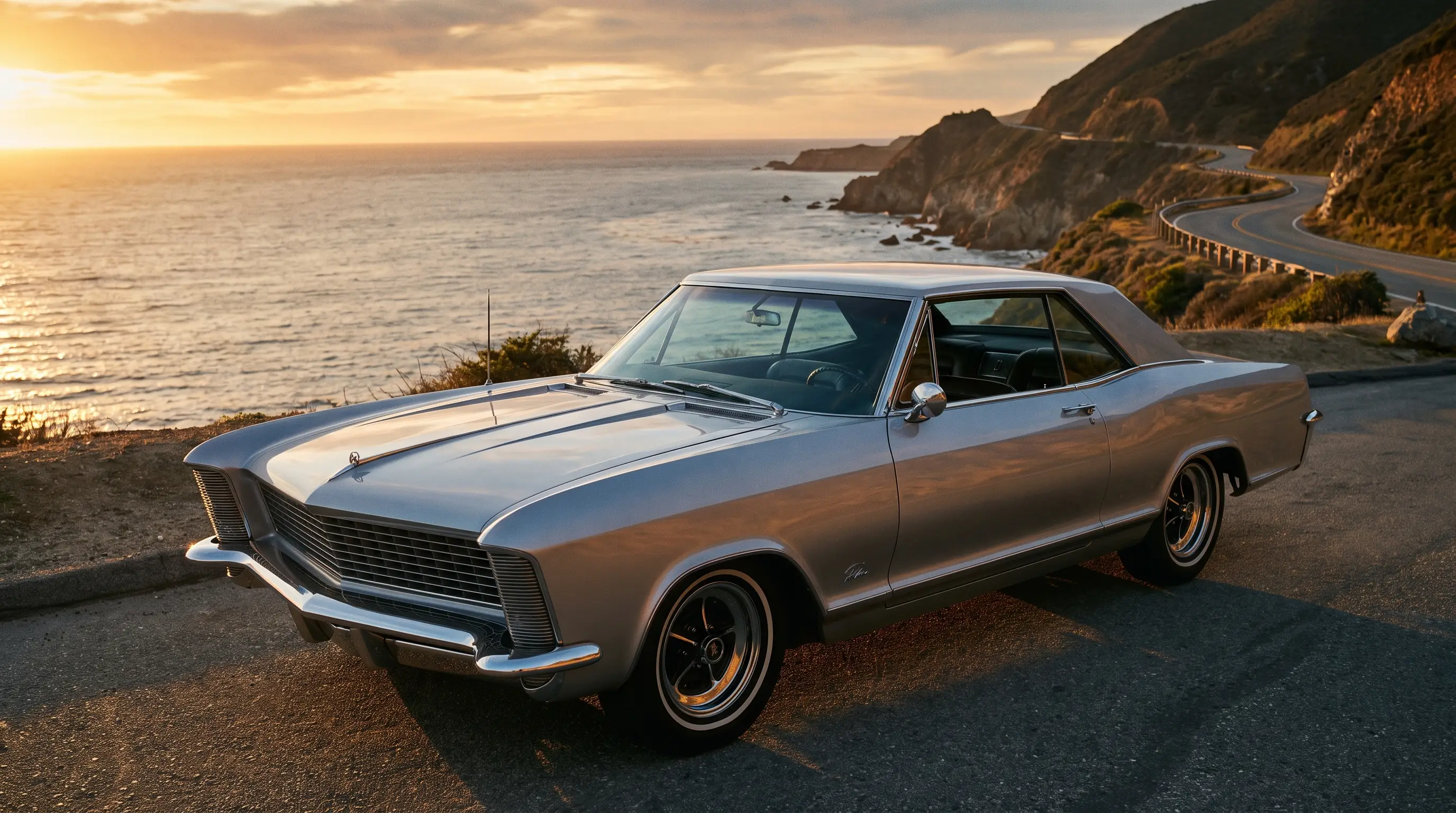
The 1965 Buick Riviera is the year the first generation stopped experimenting and started delivering. Buick had spent two model years finding its footing with a new personal luxury coupe, and in 1965 every piece of that effort lined up at once: the styling gained hidden headlights, the chassis kept its poise, and the engine bay finally offered the torque numbers the body had been promising since 1963. The case for a buick riviera 1965 gen1 peak is not sentiment, it is a record of what actually shipped that one model year. Anyone comparing model years side by side in the showroom, or now at a car show, tends to land on 1965 as the one where the design and the mechanics stopped pulling in different directions.
A three-year arc that ends on a high note
Buick did not build the Riviera to be a one-year sensation. The division needed a coupe that could compete with the Ford Thunderbird without looking like it was copying Detroit's existing personal luxury playbook, and the 1963 original delivered that with clean, almost European lines. The problem was that a first attempt, however good, usually leaves something on the table. By 1965 the design team and the engineers had both had two extra years to correct course, and the result reads less like a facelift and more like the car the original was always meant to become. For a full account of how that body evolved year to year, see where this started.
What makes 1965 the peak rather than just another good year is that Buick resisted the urge to over-correct. The basic proportions, the long hood, the fastback roofline, and the tight greenhouse all carried over. The changes were additions and refinements, not replacements, which is exactly the kind of restraint that keeps a design from aging badly.
There is also a production reality behind why 1965 gets singled out. Buick had worked out its supplier relationships and assembly processes by the third model year, so the fit and finish on a 1965 car tends to be tighter than what left the factory in 1963, when Riviera assembly was still new to the plant floor. Panel gaps, chrome alignment, and interior trim all benefited from two years of accumulated experience building the same basic body. None of that shows up in a spec sheet, but it shows up immediately to anyone who has sat in both a 1963 and a 1965 car back to back.
Hidden headlights change the face of the car
The single most talked-about update for 1965 was the clamshell headlight treatment, where the outer edges of the front fenders rotated to conceal the headlamps when not in use. It gave the nose a cleaner, uninterrupted look during the day and turned the car into a genuine conversation piece at night when the lamps rotated into view. It was not a gimmick tacked onto an existing design; it was engineered specifically to solve a proportion problem the 1963 and 1964 front ends had never quite resolved. The detail earned its own reputation, which is covered at length in a related story.
The engine finally matches the body
Buick's 401 cubic inch Nailhead had powered the Riviera since 1963, but 1965 introduced the optional 425 cubic inch version alongside it, giving buyers a genuine step up in torque for a car that had always looked faster than its base engine delivered. The Nailhead's odd valve geometry made it an unusual performer on paper, yet in practice it produced the kind of low-rpm shove that suited a two-ton personal luxury coupe far better than a high-revving small block would have. Owners who wanted maximum authority under the hood finally had a factory answer for it in 1965.
The Nailhead name came from the unusually small valve heads that stood up from the block like the heads of nails, a design choice that traded high-rpm breathing for a compact engine that fit well in the Riviera's tight engine bay. It was never going to win a drag strip battle against a big-inch Chevrolet or Chrysler wedge motor, and Buick never pretended otherwise. What it delivered instead was smooth, unhurried torque that matched the car's mission as a boulevard cruiser with genuine highway manners, not a stoplight racer wearing a tuxedo.
What the 1965 lineup offered
| Spec | 1965 Riviera |
|---|---|
| Base engine | 401 cu in Nailhead V8 |
| Optional engine | 425 cu in Nailhead V8 |
| Base horsepower | 325 hp |
| Optional horsepower | 340 hp |
| Signature styling feature | Concealed clamshell headlights |
| Body style | 2-door hardtop coupe |
A performance model arrives too
1965 was also the year Buick introduced the Gran Sport package for the Riviera, a factory answer to buyers who wanted the styling without giving up straight-line credibility. It bundled the 425 engine with a dual-quad induction setup and firmer suspension calibration, turning the personal luxury coupe into something that could hold its own against contemporaries that leaned harder into muscle car territory. The full introduction of that package is detailed in worth a look too, but its existence alone tells you how confident Buick had become in the platform by its third year.
The Gran Sport did not replace the standard Riviera lineup, it sat alongside it, which meant a buyer in 1965 could choose exactly how much personality they wanted under the hood without giving up any of the coupe's styling credentials. That flexibility, more than any single spec, is what made the model year feel complete rather than transitional.
"You can trace a company's confidence in a design by what it lets that design carry. By 1965 Buick trusted the Riviera enough to build a genuine performance variant on top of it, not just a trim package."
- Tom Ramirez
Why collectors still point to 1965 first
Ask a longtime Riviera owner which first-generation year they would choose if price were not a factor, and 1965 comes up more often than 1963 or 1964. The hidden headlights are unique to the model year, the 425 option gives buyers real torque to enjoy, and the styling had not yet been diluted the way later personal luxury coupes sometimes were once sales pressure pushed designers toward more chrome and more length. It is a car that represents Buick at a moment when the engineering, the styling department, and the marketing plan were all telling the same story. For the complete history of that model year, read the 1965 buick riviera history, and if you are ready to look at what is actually available today, there are Rivieras for sale now worth comparing against everything covered here.
None of that means 1963 and 1964 cars are lesser machines. They are the reason 1965 exists at all, and they carry their own following among buyers who prefer the earliest, most minimalist reading of the design. But when the conversation turns to which single first-generation year got the most things right at the same time, the styling department's hidden headlights, the engine bay's new torque option, and the introduction of a genuine performance variant all point toward the same twelve months.
Sources and notes
- Buick Riviera - Wikipedia
- 1965 Buick Riviera 401 V-8 Specs - Automobile Catalog
- 1965 Buick Riviera 425 V-8 Specs - Automobile Catalog
- 1965 Buick Riviera Gran Sport - Hagerty Valuation Tools
- A Detailed Look Back At The 1965 Buick Riviera - HotCars
- Dual Quads: 1965 Buick Riviera Super Wildcat - Barn Finds