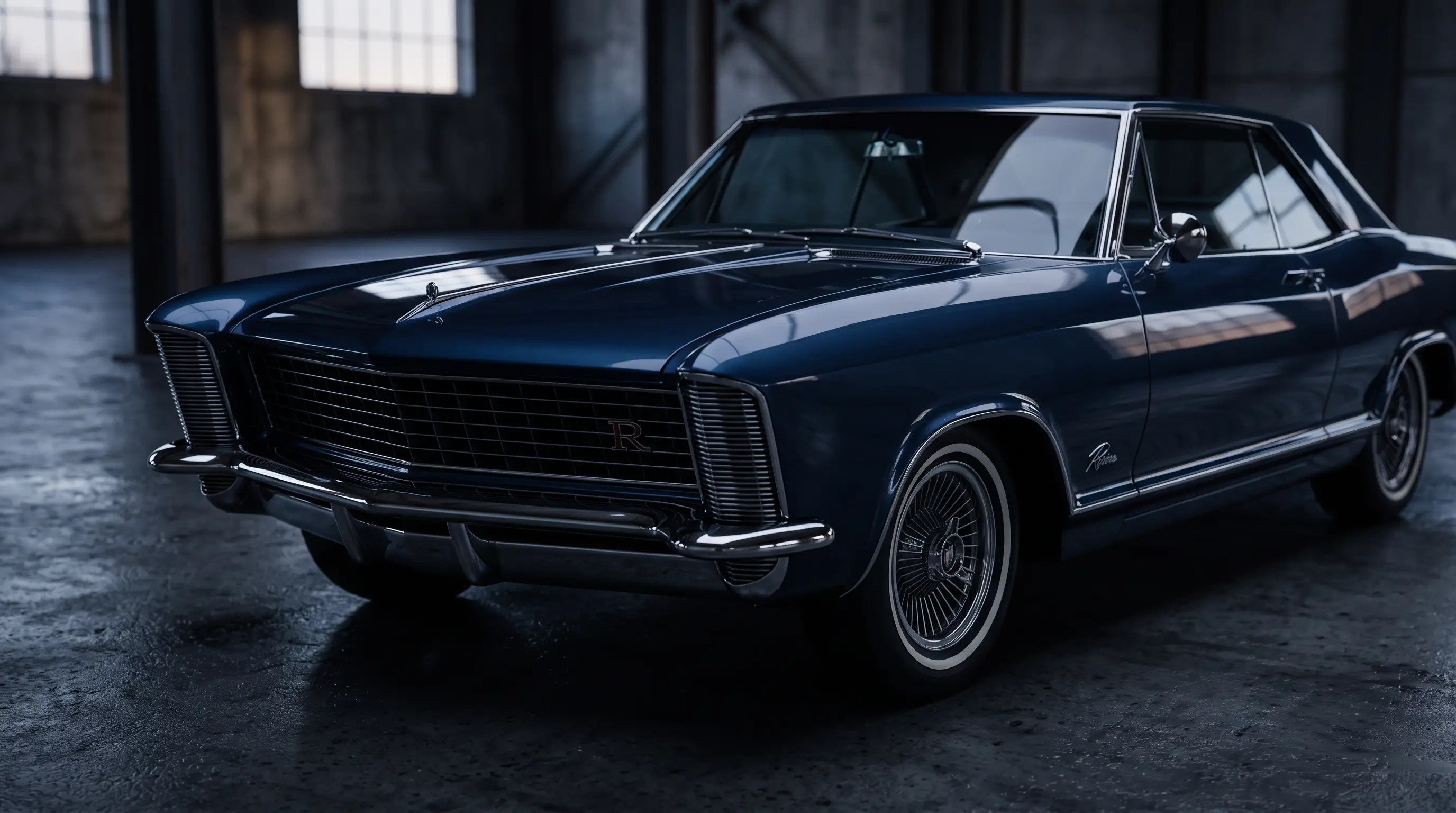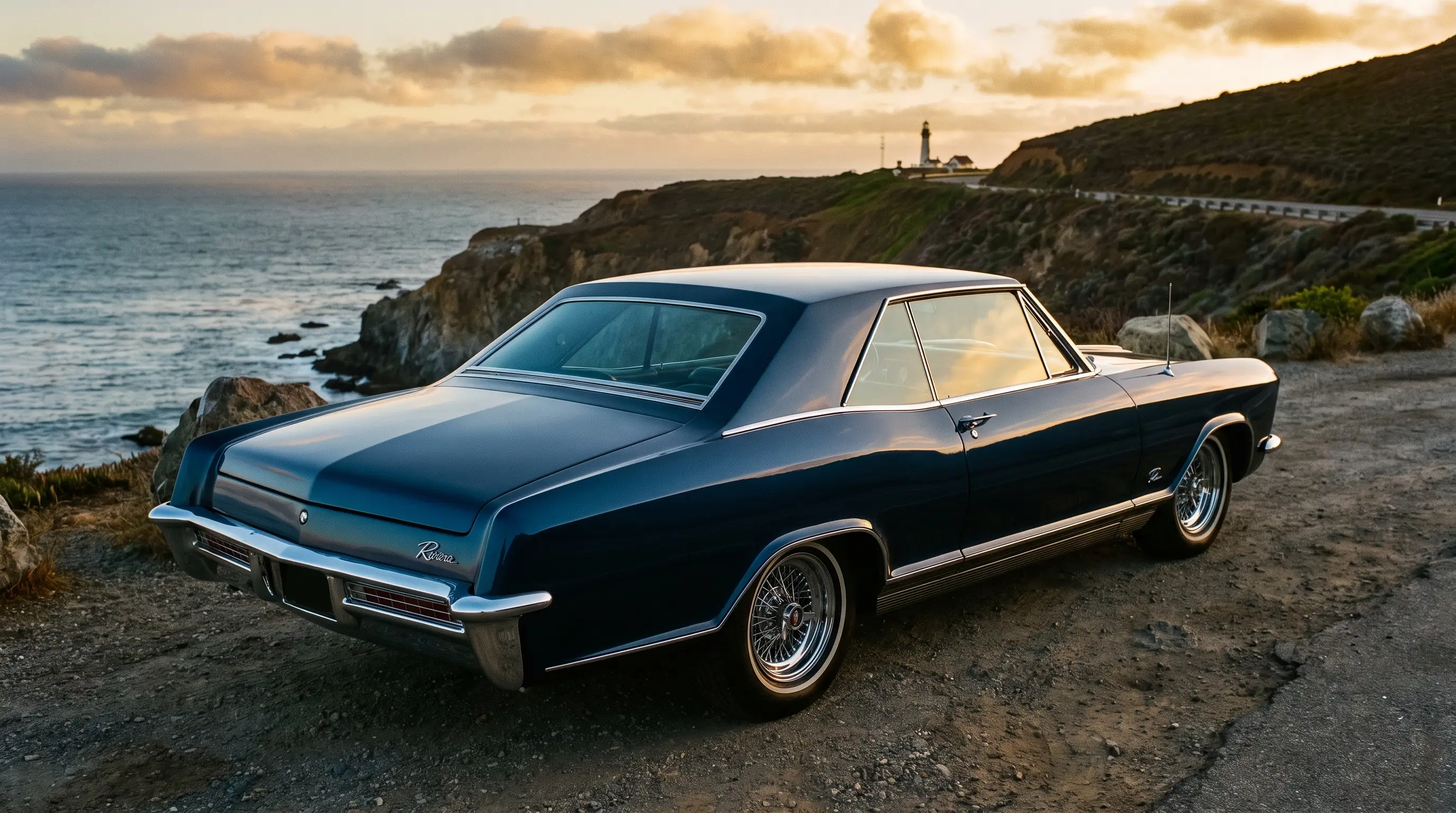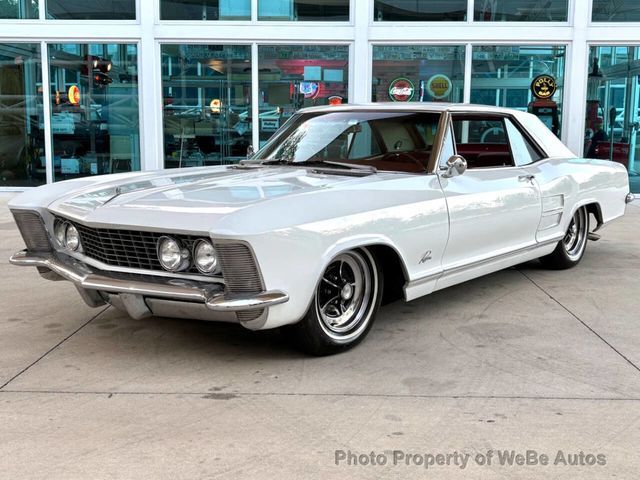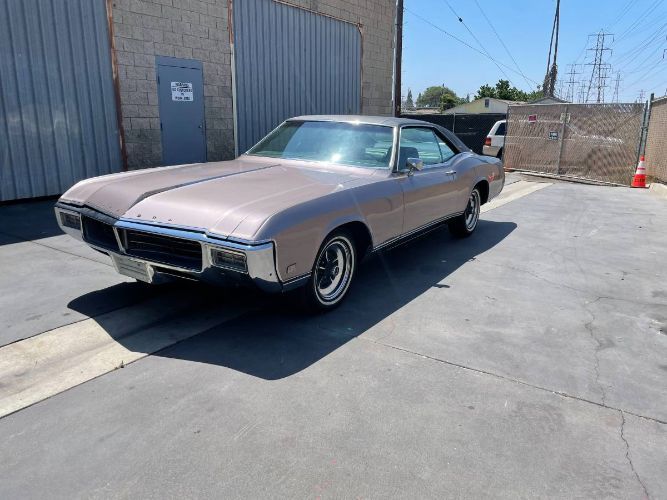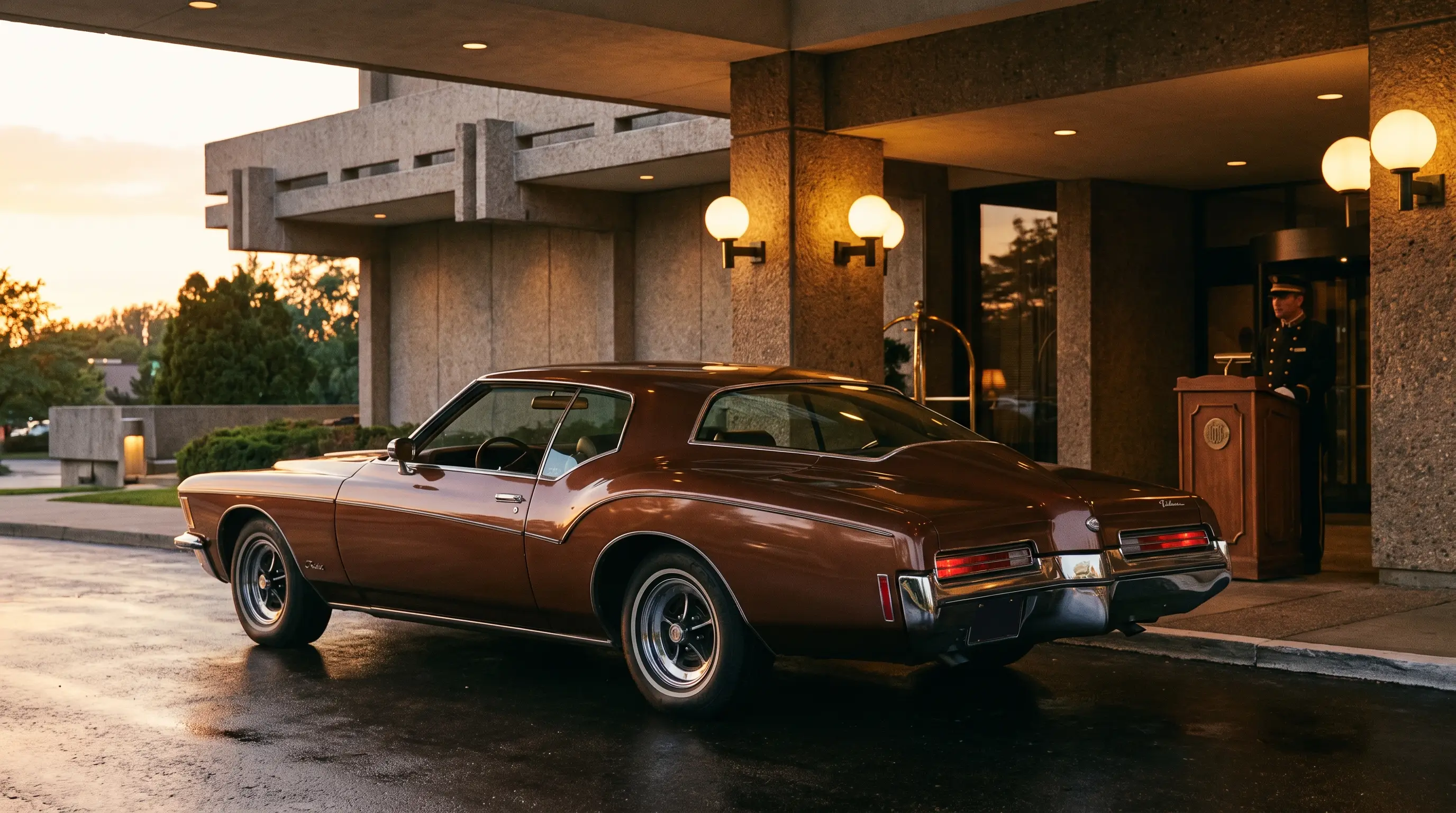
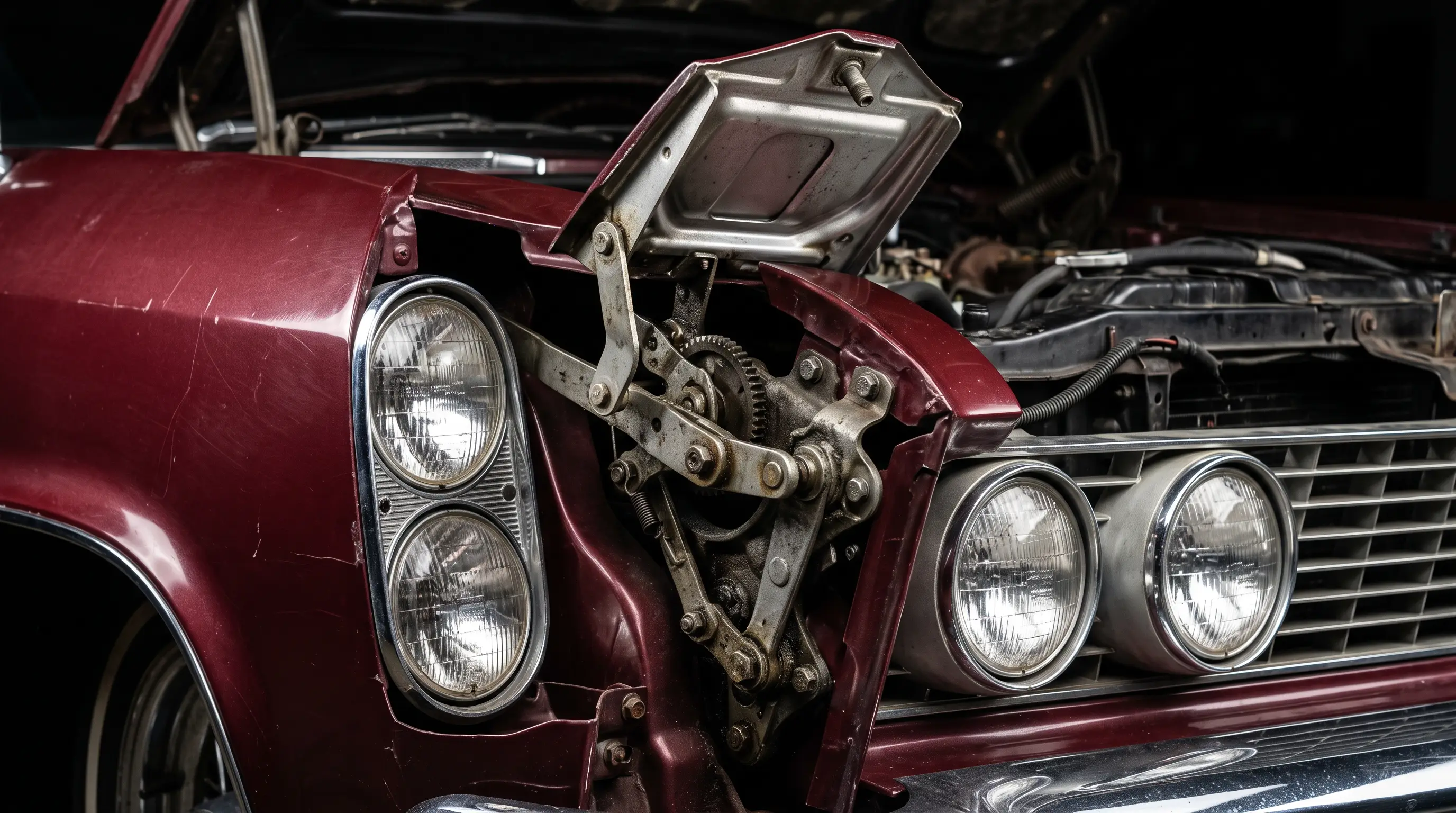
A body shop that has worked on enough first-generation Rivieras develops opinions about which model year gave the stylists the most credit, and the 1965 clamshell headlight doors come up constantly. The buick riviera 1965 clamshell design drama is not about anything going wrong on the assembly line. It is about how much risk Buick's design department took by hiding a functional part behind moving sheet metal on a mass-production car, and how that gamble paid off well enough to define the year. For the background on how the whole first-generation body evolved before this feature showed up, read the background first.
Hiding a headlight is harder than it looks
Any body man will tell you that adding a moving panel to a fender is asking for trouble. Every seam is a place for water to get in, every hinge is a place for alignment to drift over sixty years, and every extra mechanism is one more thing that can bind when a car sits unused for a winter. Buick's engineers built the 1965 clamshell doors into the leading edge of each front fender, using vacuum pressure pulled off the engine to swing the panels open and closed. From a bodywork standpoint, that is a genuinely difficult panel to get right, because it has to close flush with the rest of the fender in the exact same spot every single time, for years, without ever standing proud of the surrounding sheet metal or dropping below it.
What impresses me looking at an original, unmolested 1965 car is how tight that gap stays when the mechanism is healthy. Get a car with worn hinges or a stretched linkage rod, and the door sits crooked, sometimes rocking slightly at idle. Get one where a previous owner has fought the vacuum system for years, and you will often find filler or shims someone added trying to chase a gap that was never going to close right once the hinge geometry had worn. A correct example, by contrast, closes with a crispness that a lot of 1960s trim work simply does not have.
Why the doors moved the way they did
The system ran on engine vacuum rather than an electric motor, which explains the slow, deliberate sweep of the doors when the headlight switch was pulled. That was a deliberate engineering choice, not a limitation. Electric motors of the era were reliable enough for small tasks like power windows, but a panel the size of a headlight door needed more torque than a compact motor could deliver cheaply, and vacuum actuation was already a proven, mature technology from years of use in things like power door locks and climate control flaps. Buick's engineers took a known-good actuation method and scaled it up to a bigger, more visible job.
What restorers and buyers actually look for
Anyone shopping a first-generation Riviera with the clamshell feature should treat the door mechanism the way they would treat any original, decades-old system built to move under vacuum pressure. Lines perish. Rubber seals harden. Linkages wear at their pivot points and introduce play that shows up as a door that closes a fraction of an inch off from its neighbor. None of that is a reason to walk away from a car, but it is a reason to watch the doors cycle in person before assuming the mechanism is sound, since a system that looks fine sitting still can reveal its age the moment vacuum is applied.
The doors also interact with the rest of the front clip in ways that matter to anyone doing bodywork on one of these cars. Because the fender, the door, and the surrounding trim were engineered together as one system, panel work on a clamshell fender is not something you can treat like a standard quarter panel repair. Get the door geometry wrong during a repair and the panel will never sit flush again, no matter how good the paint looks. That is part of why a correctly functioning set of doors on an original 1965 car carries real weight with people who know what they are looking at.
Clamshell door basics
| Detail | Specification |
|---|---|
| Actuation | Engine vacuum |
| Location | Leading edge, both front fenders |
| Model years offered | 1965 only, first generation |
| Common wear points | Vacuum lines, hinge pivots, linkage rods |
A design decision that paid off in the showroom
Whatever the maintenance reality decades later, the doors did exactly what Buick's stylists wanted in 1965. They gave the front end a smooth, uninterrupted line during the day and a genuine spectacle at night when the lamps rotated into view under headlight beams. Buick was not the only manufacturer chasing that effect, but the Riviera's version arrived at a moment when the personal luxury segment badly needed something for dealers to point at that competitors could not immediately copy. If you want to see the fuller performance story of the year that introduced this feature alongside a new engine option, worth a look too covers the Gran Sport package that debuted the same season.
"Anybody can bolt on a chrome grille and call it a styling update. Building a moving panel that has to close flush for sixty years and counting, that is a company betting its reputation on a hinge."
- Jim Vasquez
Living with the feature today
Owners who keep the vacuum system in good order report that the doors remain one of the most satisfying details on the car to demonstrate, precisely because so few other cars from the period do anything like it. It is a feature that rewards patience and correct maintenance rather than aggressive modification, since swapping in an electric actuator or otherwise deviating from the factory system tends to hurt both the car's authenticity and its resale story with buyers who specifically want the original mechanism. For anyone weighing a purchase, comparing several examples side by side and watching the doors cycle is worth more than any written description, and you can start that comparison by looking at what is currently listed if you shop classic Riviera listings. Sixty years on, the clamshell doors remain the single detail that separates a 1965 Riviera from every other first-generation year, and the one most worth understanding before you buy.
What a shop actually checks before signing off on a set
When a car comes into a shop with a claim that the clamshell doors work correctly, the first thing worth doing is cycling them cold, with the engine off, then again once it has run long enough to build normal vacuum. A door that closes fine warm but hangs open or drifts when the engine has not built full vacuum yet usually points to a line with a slow leak somewhere in the routing, not a failed actuator. That distinction matters because a leaking line is a straightforward fix, while a worn actuator or stretched linkage is a bigger job that touches the fender itself.
The second thing worth checking is symmetry. Both doors should reach their fully open and fully closed positions at roughly the same speed and land in the same place relative to the surrounding sheet metal. A car where one door consistently lags the other, even slightly, usually has uneven vacuum distribution between the two sides, which points to a line that was rerouted or repaired at some point rather than left in its original factory configuration. None of this is difficult to spot once you know to look for it, but it is exactly the kind of detail a casual walk-around inspection misses entirely, which is why watching the doors cycle in person, more than once, matters more than any photograph a seller can provide.
Sources and notes
- Buick Riviera - Wikipedia
- 1965 Buick Riviera 401 V-8 Specs - Automobile Catalog
- 1965 Buick Riviera 425 V-8 Specs - Automobile Catalog
- 1965 Buick Riviera Gran Sport - Hagerty Valuation Tools
- A Detailed Look Back At The 1965 Buick Riviera - HotCars
- Dual Quads: 1965 Buick Riviera Super Wildcat - Barn Finds