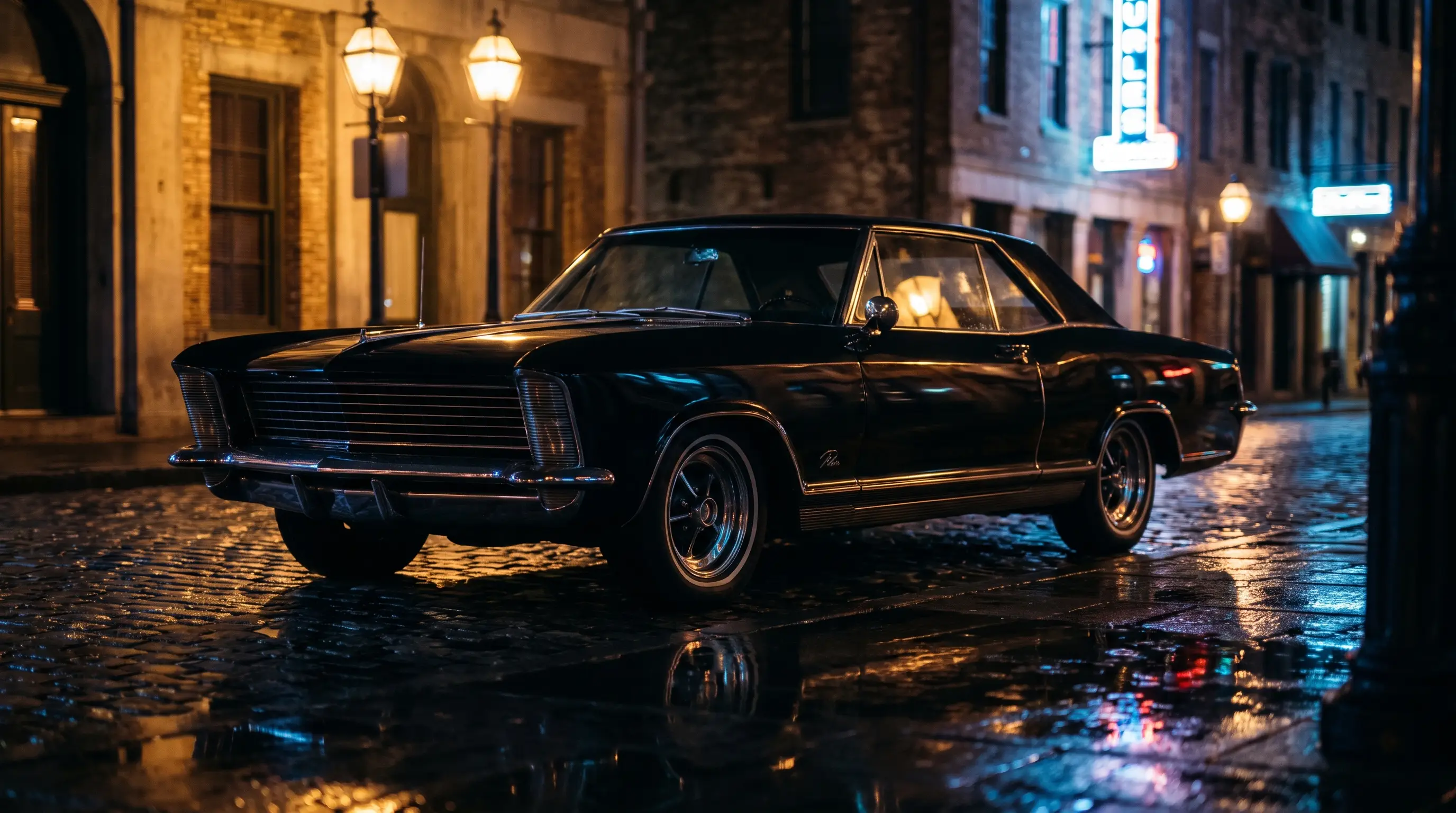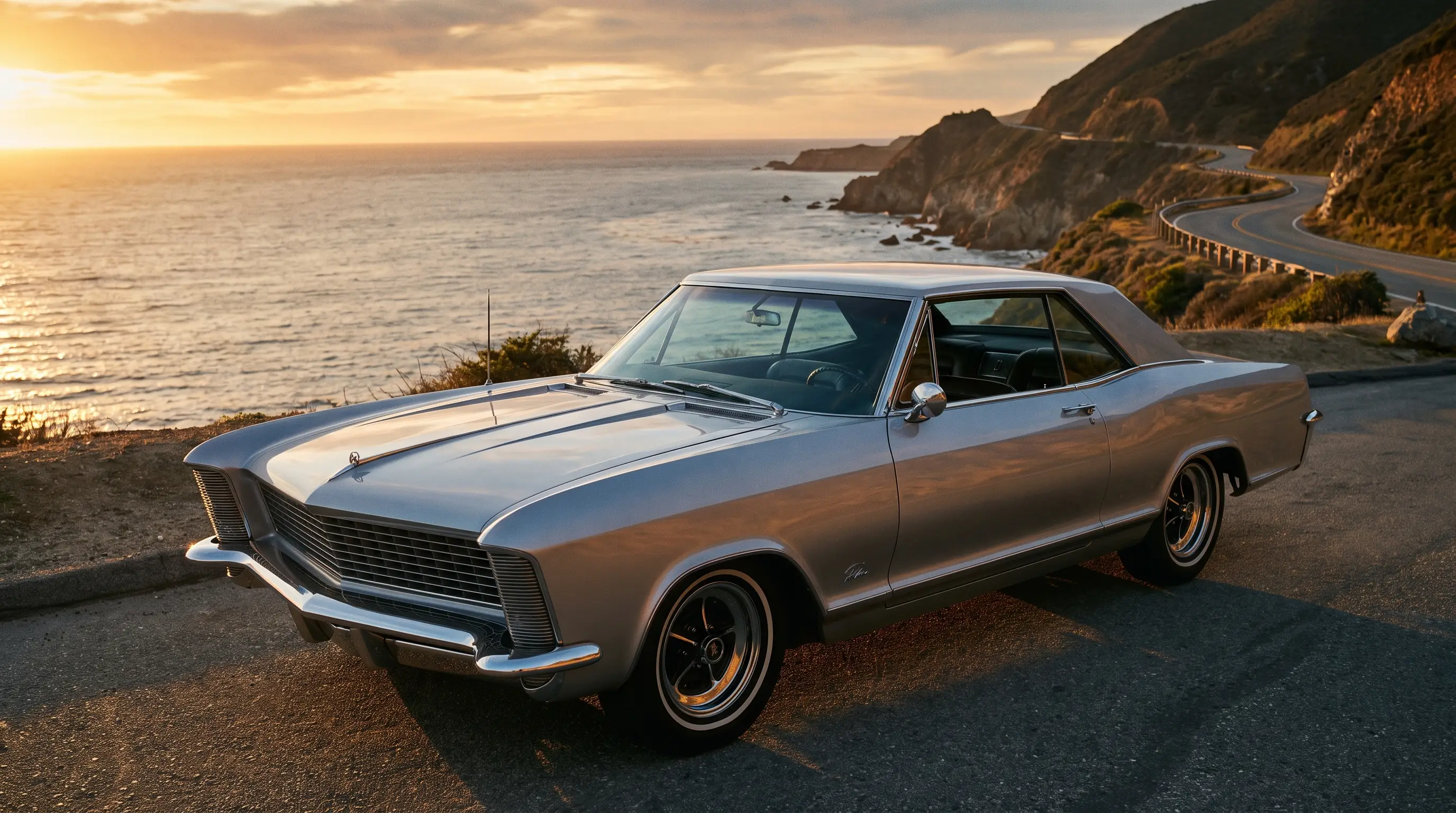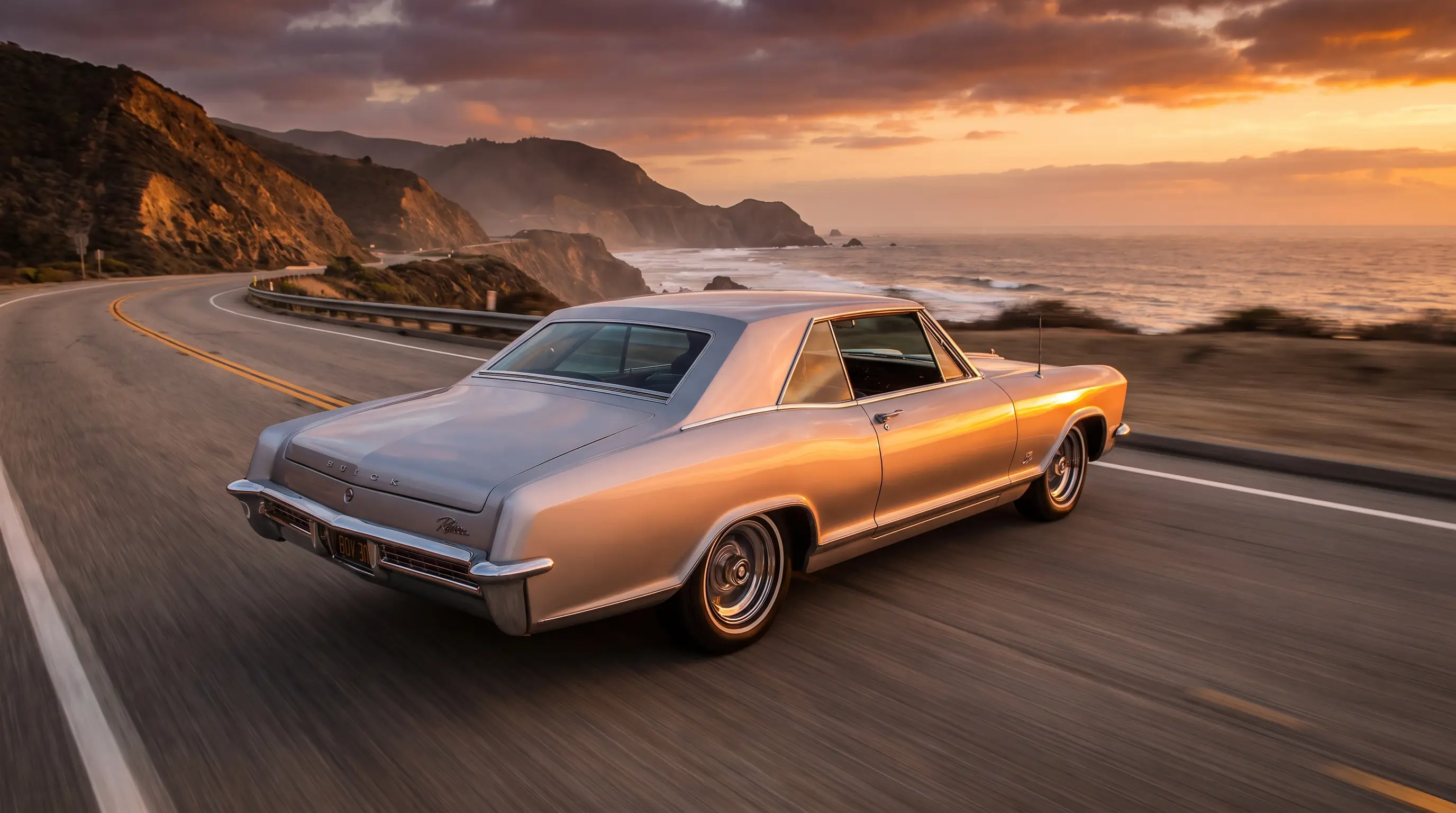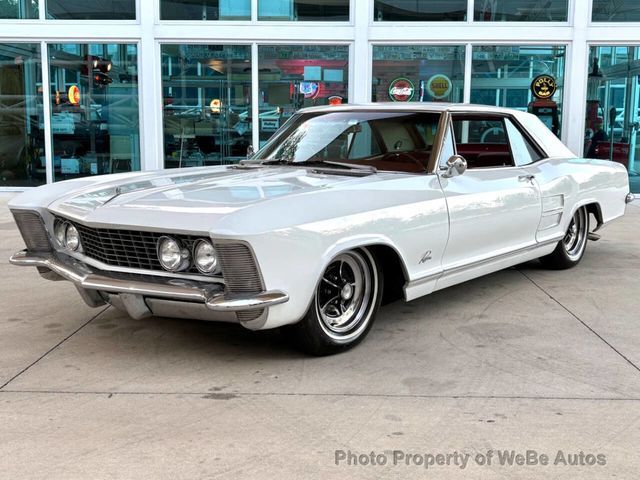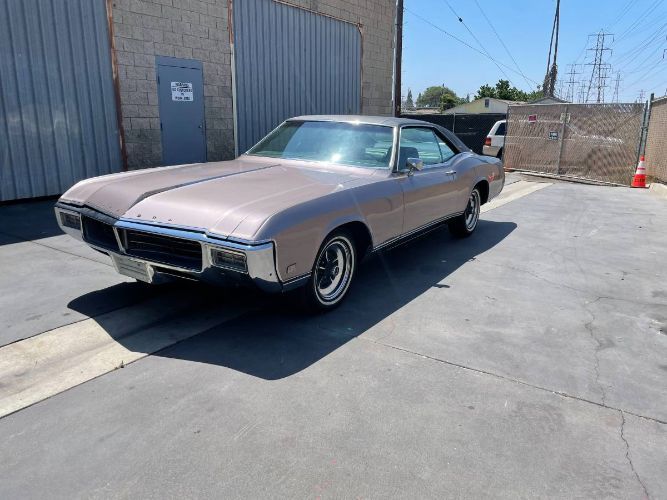
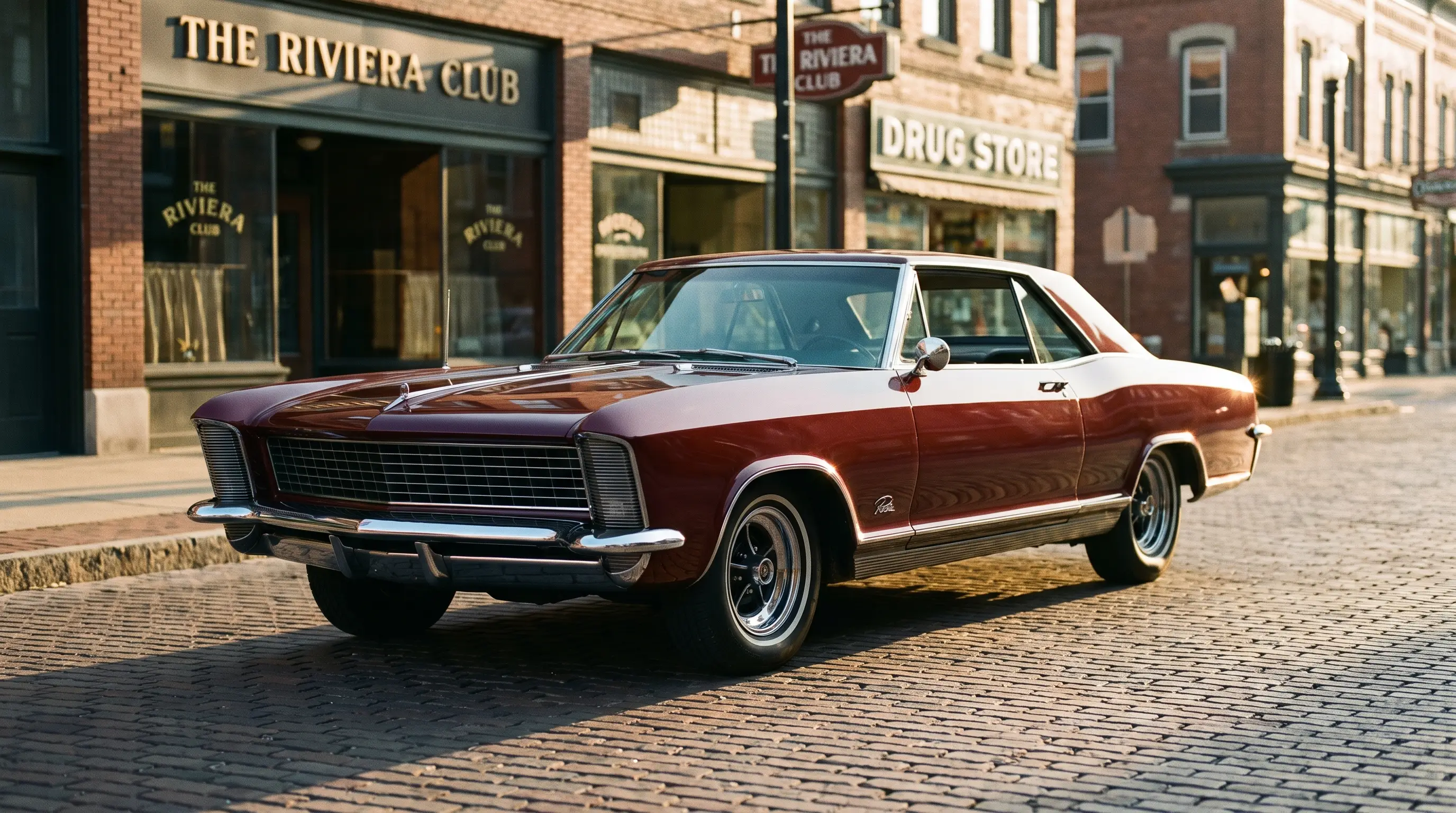
A 1965 Buick Riviera photographed under studio light reveals something that period road tests rarely bothered to mention: the surfaces do almost all the talking. There is no chrome spear slashing the doors, no gaudy scoop pretending to feed an engine, no badge oversized enough to read from across a parking lot. The question of why the 1965 Riviera endures, while so many of its contemporaries have become footnotes best known to specialists, comes down to a design discipline that was unusual for Detroit in the middle of the 1960s and remains rare in any era.
A design built on restraint, not addition
Bill Mitchell's design studio treated the Riviera as an exercise in what could be removed rather than what could be added, a philosophy that ran against the prevailing instinct of American car design in this period, where more brightwork and more visual incident were assumed to signal more value. The 1965 model sharpened that restraint further by hiding the headlamps behind fender doors, a mechanism that let the front fascia read as a single unbroken plane when the lights were off. Contemporary reviewers noted the effect immediately, describing the car in terms usually reserved for European coachbuilt machines rather than mainstream American product. That comparison was not incidental. Mitchell had reportedly been chasing a Rolls-Royce and Ferrari sensibility since the earliest Riviera studies, and by 1965 the execution had caught up with the ambition.
Proportion did the work that ornamentation usually does
Strip away the trim on a 1965 Riviera and the proportions still hold. The greenhouse sits low and narrow relative to the body, the hood stretches long in front of a modest front overhang, and the rear deck tapers just enough to suggest motion without resorting to a literal fin. Every one of those choices reads as deliberate rather than accidental, and that deliberateness is exactly what separates a design that ages gracefully from one that dates itself the moment its decade ends. Cars that lean on decoration to signal luxury or performance tend to look correct only within their original context. Cars that lean on proportion tend to look correct indefinitely, and the 1965 Riviera has spent six decades proving the second category exists.
The mechanical case behind the visual one
Endurance is not purely an aesthetic argument. The 1965 Riviera carried Buick's 401 cubic inch nailhead V8 as its standard engine, a unit whose low-revving torque character suited the car's mission as a personal luxury coupe rather than a straight-line performance machine, with the optional 425 cubic inch Super Wildcat, rated at 360 horsepower and 465 lb-ft of torque in its dual four-barrel form, available for buyers who wanted more authority under the right foot. That mechanical honesty, an engine built for effortless cruising rather than a spec sheet arms race, matches the visual restraint of the body. Nothing about the 1965 Riviera oversells itself, and that consistency between how the car looks and how the car actually drives is a large part of why collectors describe it as a complete design rather than a styling exercise wrapped around ordinary hardware.
| Spec | 1965 Buick Riviera |
|---|---|
| Standard engine | 401 cu in nailhead V8 |
| Optional engine | 425 cu in Super Wildcat V8 |
| Transmission | Super Turbine 400 three-speed automatic |
| New for 1965 | Hidden headlamps behind fender doors |
| Body style | Two-door hardtop coupe |
Why collectors still chase this specific year
Within the first generation, 1963 through 1965, the last year carries a specific weight among serious buyers, precisely because it combines the original body's cleanest lines with the added visual trick of the hidden headlamps, a feature the 1966 redesign abandoned entirely when the Riviera moved to a shared platform with the Oldsmobile Toronado and Cadillac Eldorado. That makes 1965 a genuine endpoint, the last and arguably most resolved expression of a design that began in 1963 as an idea and finished as a fully realized statement. Collectors who understand this often describe the 1965 car as the version Mitchell's studio had been building toward all along, rather than simply the newest entry in a three-year run.
"Most 1965 cars need their era explained to you before you can appreciate them. The Riviera does not. Set it in any decade and the proportions still make the argument on their own."
- Sarah Whitfield
A reputation earned rather than manufactured
Design reputations built on hype tend to fade once the original marketing noise dies down, but the 1965 Riviera's standing has done the opposite, growing steadier and more secure as decades of design historians, museum curators, and everyday enthusiasts have kept arriving at the same conclusion independently. It is not a car that requires context or nostalgia to appreciate. Put a clean example next to nearly anything else built in Detroit that year and the Riviera's discipline becomes the argument by itself. That is the quiet, durable case for why this car endures while so much of its era has not, and it is a case that only strengthens the more closely you look at it. For the full account of how this shape came together inside Buick's design and engineering process, read the background on the year that closed out the first generation in style.
Anyone who has spent time studying the details covered here will understand immediately why clean, honestly preserved examples command real attention in the current market, and why patient buyers willing to wait for the right car rarely regret it. Those ready to look further can browse classic Riviera listings and see for themselves how well this particular design has held its shape against sixty years of changing taste.
Judging a 1965 Riviera at a serious concours event tends to expose exactly how much rests on the details this article has been describing. A judge's eye goes first to the headlamp door mechanism, checking that both units retract in unison and seat flush against the fender when closed, because a misaligned door breaks the very effect Mitchell's studio spent so much effort achieving. From there attention moves to the roofline welts, the door gap consistency, and the chrome window surrounds, all areas where a hurried restoration reveals itself under close inspection. Owners who understand why the car endures as a design object tend to restore it differently than owners chasing only originality points, because they are protecting a specific visual argument rather than simply checking boxes on a judging sheet.
That distinction matters more than it might first appear. A technically correct restoration that ignores panel fit or headlamp door alignment can still lose ground to a slightly less numbers-matching example that nails the details a trained eye associates with the car's original design intent. Serious buyers researching a purchase would do well to study period photography closely before committing to a car, since the gap between a properly executed 1965 Riviera and a merely adequate one shows up exactly in the places this design was built to be judged.