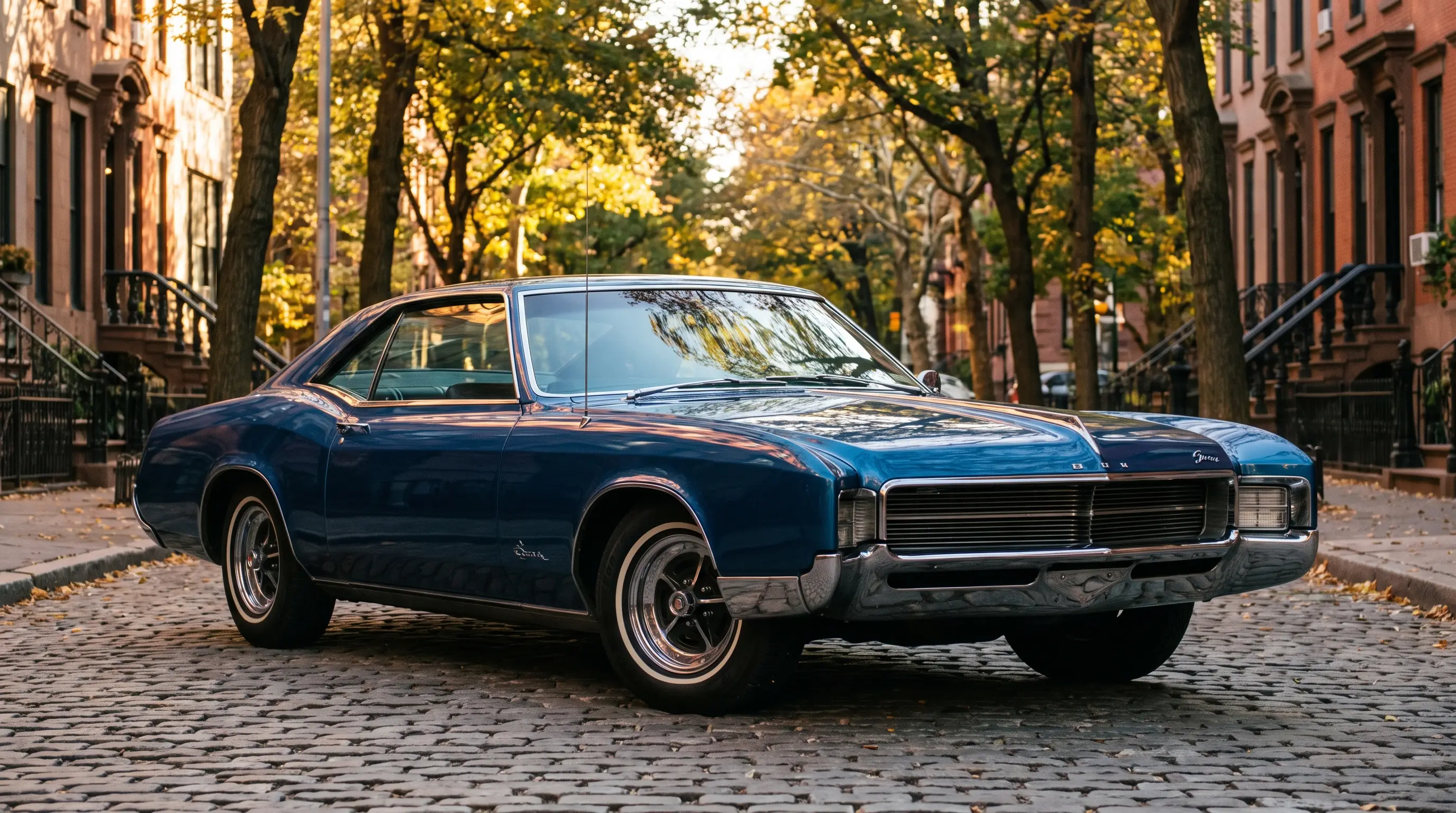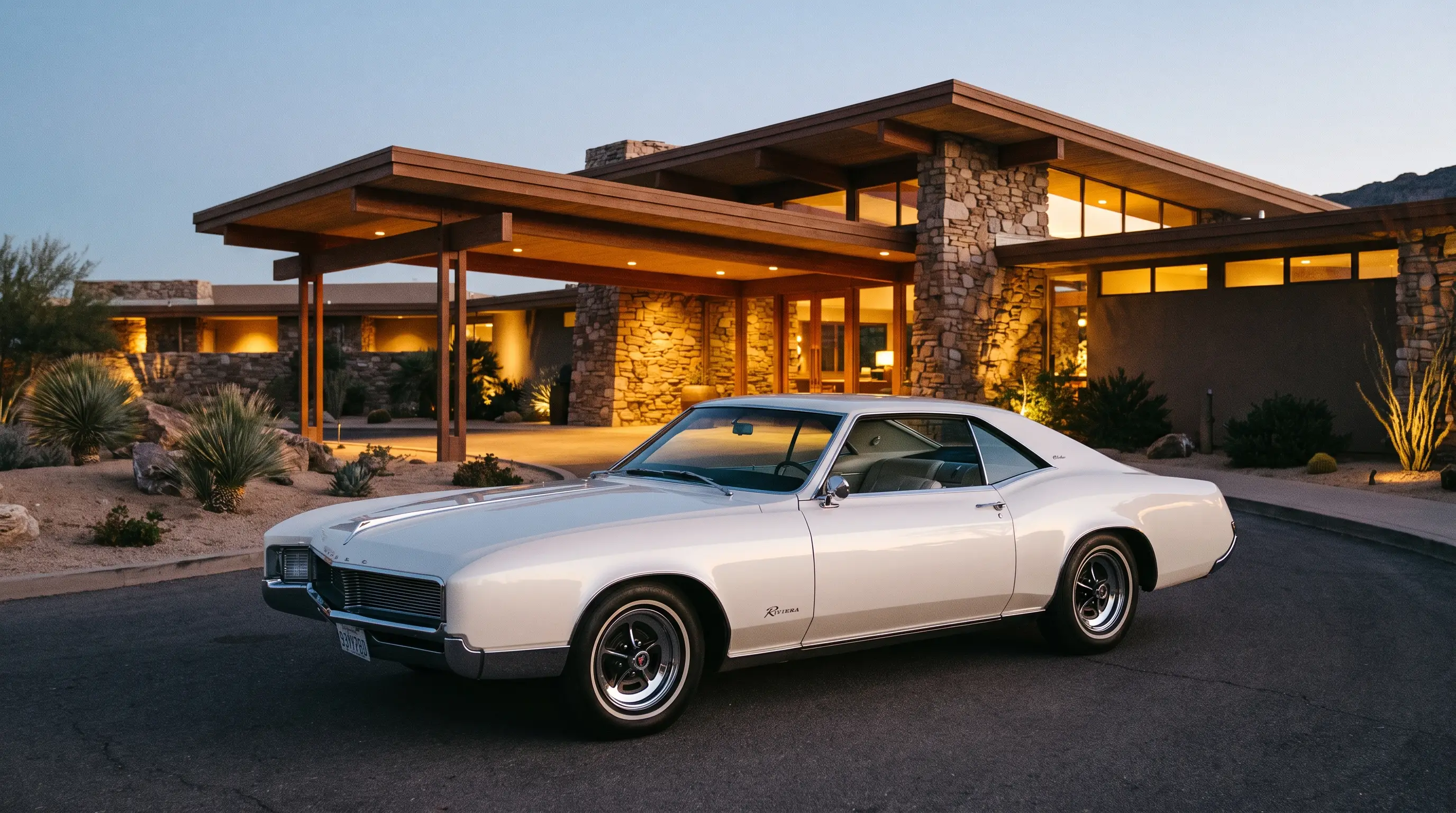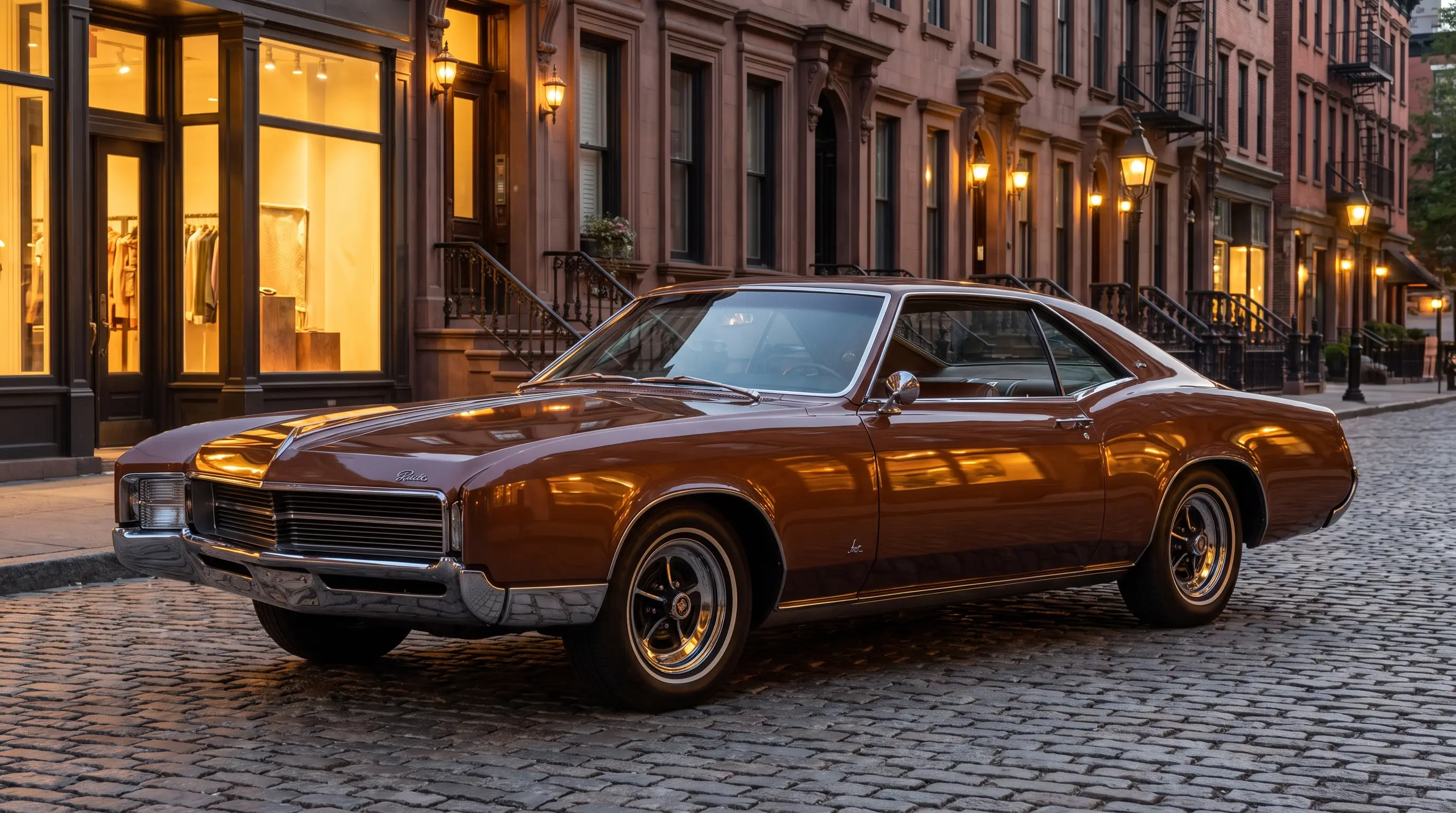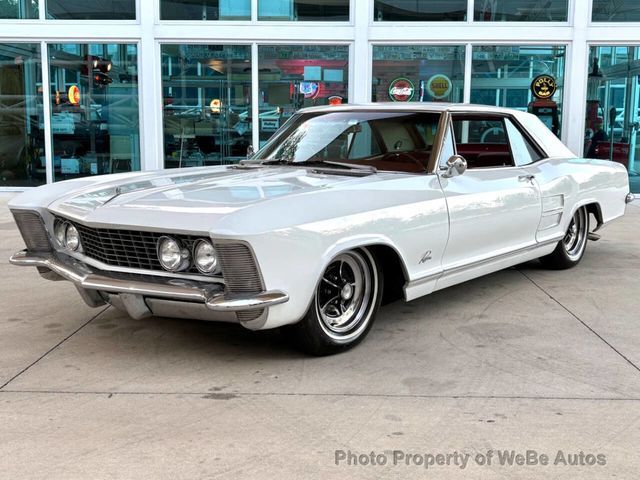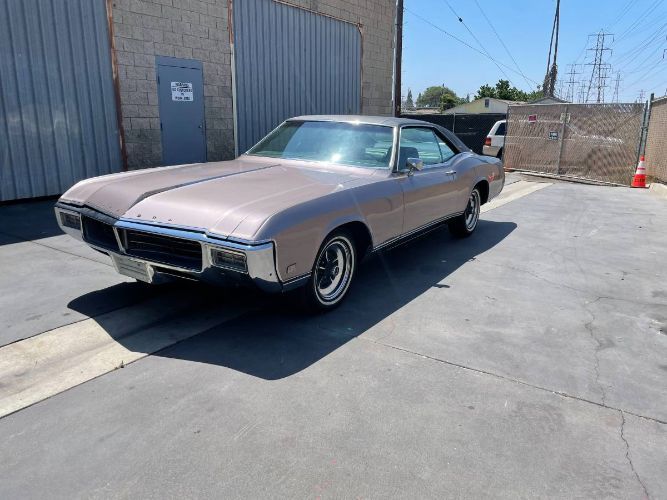
Sit in a 1966 Buick Riviera with the door closed and the engine off, and the first thing that hits you is how quiet it is even without the ignition on. That is the interior doing its job before the car has moved an inch. This generation of Riviera was built as a lounge on wheels, and once you understand what Buick's trim shop was actually trying to accomplish, the cabin makes a lot more sense than it does from photos alone.
A cabin designed around the driver's shoulders, not the dashboard
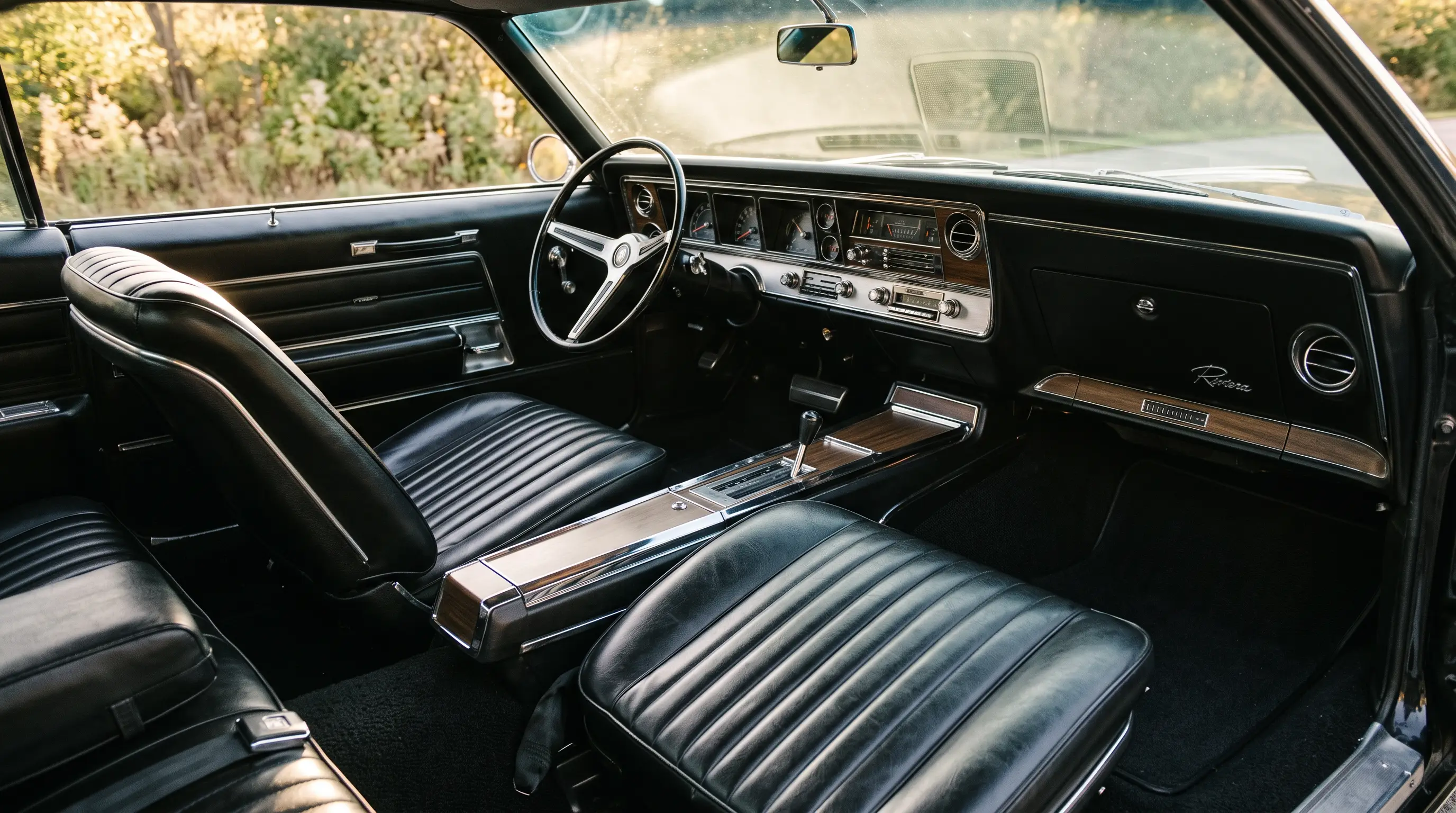
Open the door and the seating position tells the story. The bucket seats sit low and wide, with a console running back between them like a divider in a private booth. Buick's designers were not chasing a sporty low-slung feel for its own sake, they were building a driving position that let a six-footer sit comfortably for three hours without shifting once. The bench seat option existed for buyers who wanted a proper six-passenger car, but the buckets were where Buick put its real design attention, and it shows in how the seat bolsters are shaped compared to a base Buick sedan of the same year.
The dash itself runs the full width of the cabin with real depth to it, a wraparound feel that puts gauges and switchgear within reach without requiring the driver to lean forward. Chrome trim frames each instrument cluster segment, and the wood-grain applique, real or simulated depending on trim level, gives the whole layout a den-like warmth that a lot of 1966 competitors did not bother with.
Materials that were built to age like furniture, not carpet
Vinyl and cloth were the two upholstery choices, and both were specified to hold their shape rather than just look good on delivery day. Original leather was a rare option, and cars that left the factory with it command real attention today because so few survive with the hides intact. What holds up best across the board is the door panel work, deep padding stitched into patterns that echo the seat design, giving the whole cabin a sense of continuity that cheaper cars from the period simply skip.
The steering wheel deserves its own mention. Thin-rimmed but substantial in the hand, it sits at an angle that feels closer to a boat's helm than a sports coupe, which fits the whole personal-luxury brief the car was built around. That wheel, more than any other single piece, is what people mean when they call the 1966 Riviera's interior a lounge rather than a cockpit.
"You can restore sheet metal from a parts catalog all day, but original Riviera door panels and dash pads are getting scarce. If the interior is intact, that's half your restoration budget already spent by somebody else."
- Jim Vasquez
What actually breaks down over sixty years
The vinyl dash pad cracks in sun-exposed cars, especially anything that spent real time in the south or southwest without a garage. Foam in the seat cushions collapses unevenly, which is why a lot of driver-quality cars have a slight lean to the bolster on the door side, where people brace themselves getting in and out. Wiring behind the dash for the optional power windows and locks is original cloth-wrapped harness in most cars, and it gets brittle enough that anyone doing serious work under there should expect to handle it carefully rather than yank on connectors.
None of that is a reason to avoid an original-interior car. It is a reason to budget time, not just money, because sourcing period-correct replacement parts for a 1966 cabin takes patience that a numbers-matching engine rebuild does not.
Carpet is another quiet failure point. Original loop-pile carpet was never built to survive six decades of foot traffic, and most surviving cars have been recarpeted at least once by now. That is one area where a replacement does not hurt originality claims much, since even careful period owners typically had this done once or twice during normal ownership. The same forgiveness does not extend to headliners, where a sagging or discolored original tells a buyer plenty about how the car was stored, and a poorly done aftermarket replacement is often more obvious than the wear it was meant to fix.
How the console and switchgear reward a careful look
The console between the seats does more than separate the buckets visually. It houses the shifter, a storage bin, and on cars ordered with the right options, auxiliary gauges that base coupes did not get. Buick used real switchgear weight here, toggle-style controls that click with a mechanical certainty modern cars have mostly traded away for lighter, quieter buttons. Sitting in a well-preserved example, that tactile difference is one of the fastest ways to feel how much thought went into the cabin beyond what shows up in a brochure photo.
Air conditioning, where factory-installed, adds another layer worth checking closely. The vents and control faceplate are specific to this generation, and replacement parts for a non-functioning original system are harder to source correctly than the mechanicals themselves. A working original AC system, vents intact and control graphics unfaded, is a small detail that separates a genuinely well-kept car from one that has simply been kept running.
Why the interior is the tell on originality
Engine bays get swapped, repainted, and re-detailed constantly. Interiors are harder to fake convincingly. A seller who has kept the original dash pad, the factory console, and the correct door panel patterns intact is usually a seller who has treated the whole car the same way. That correlation is not perfect, but buyers who have looked at enough of these cars start reading the cabin first and the paint second, because the cabin is where corners actually show.
For the fuller model year picture, from styling to engine changes, the full story covers what changed outside the cabin as well as in it.
What this means for buyers today
A Riviera with a well-preserved factory interior is worth chasing even if the paint needs work, because paint is a known, quotable cost and an original cabin is not. Anyone shopping seriously should sit in more than one example before deciding, since photographs flatten out exactly the details, seat bolster shape, dash pad texture, wood grain depth, that separate a good original interior from a merely acceptable one. That patience pays off later too, since a well-documented original cabin is one of the strongest arguments a seller can make when it comes time to move the car on, and buyers who learn to read those details now are the ones who will spot the honest survivors first. Browse classic Riviera for sale listings with that in mind, and ask sellers for close-up interior photos before anything else.