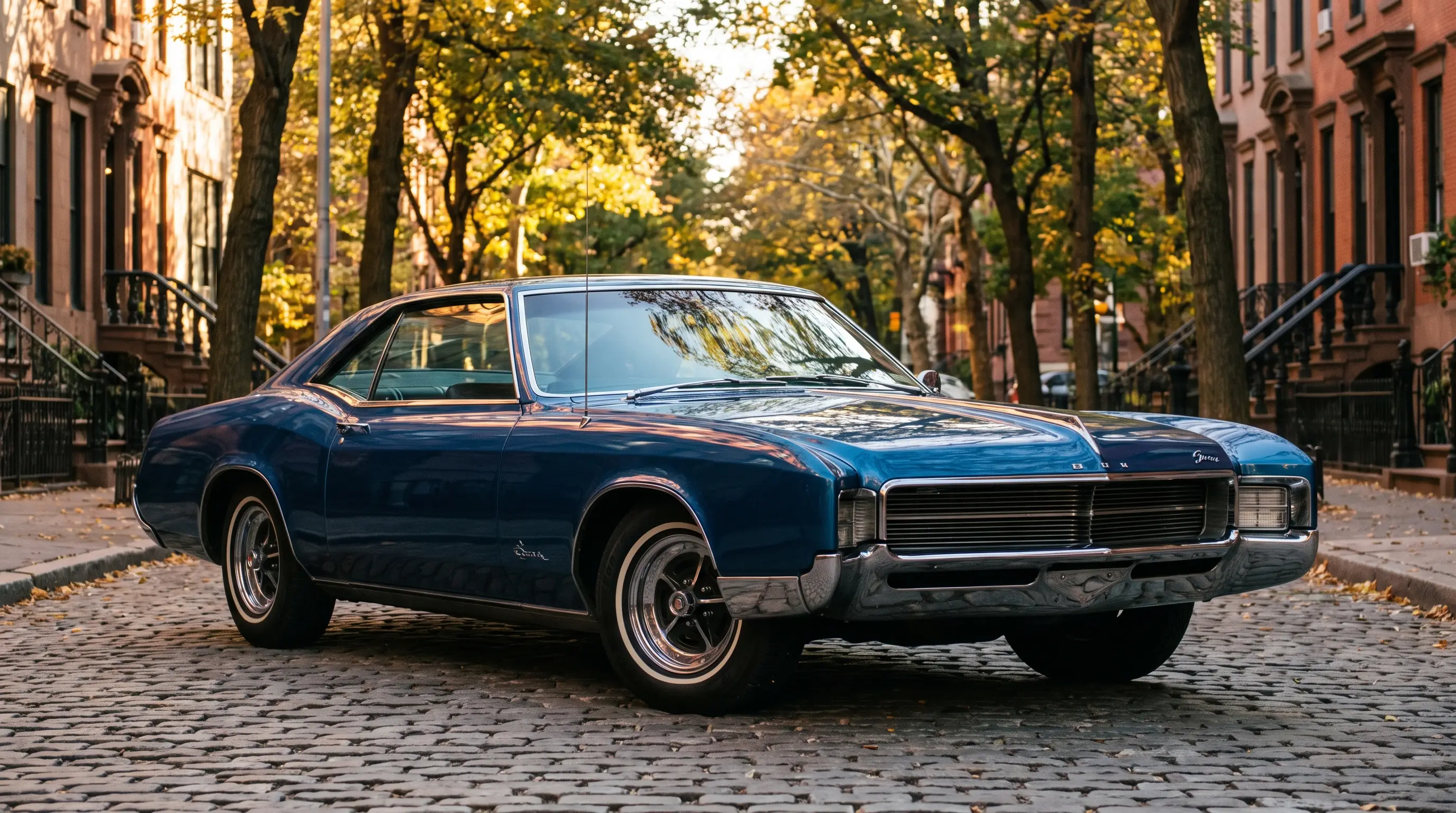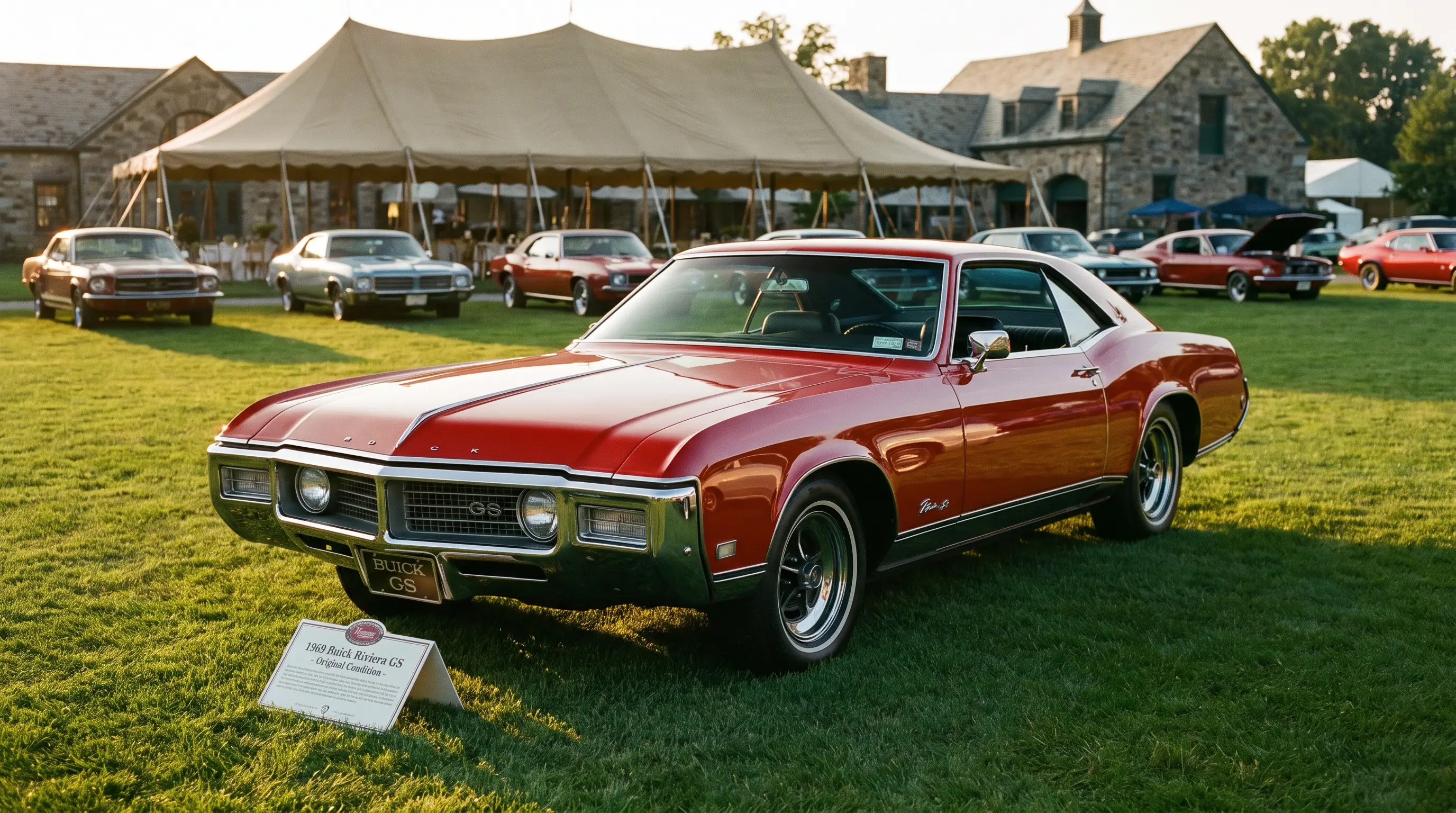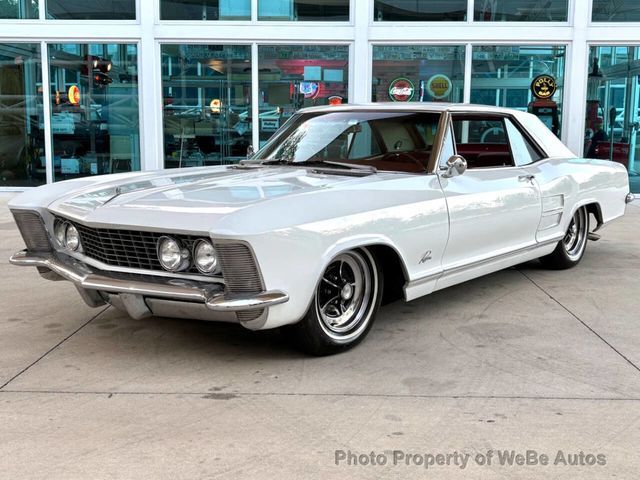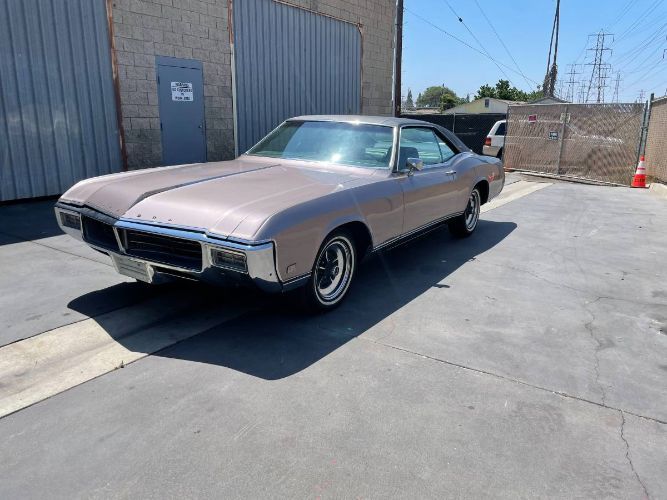
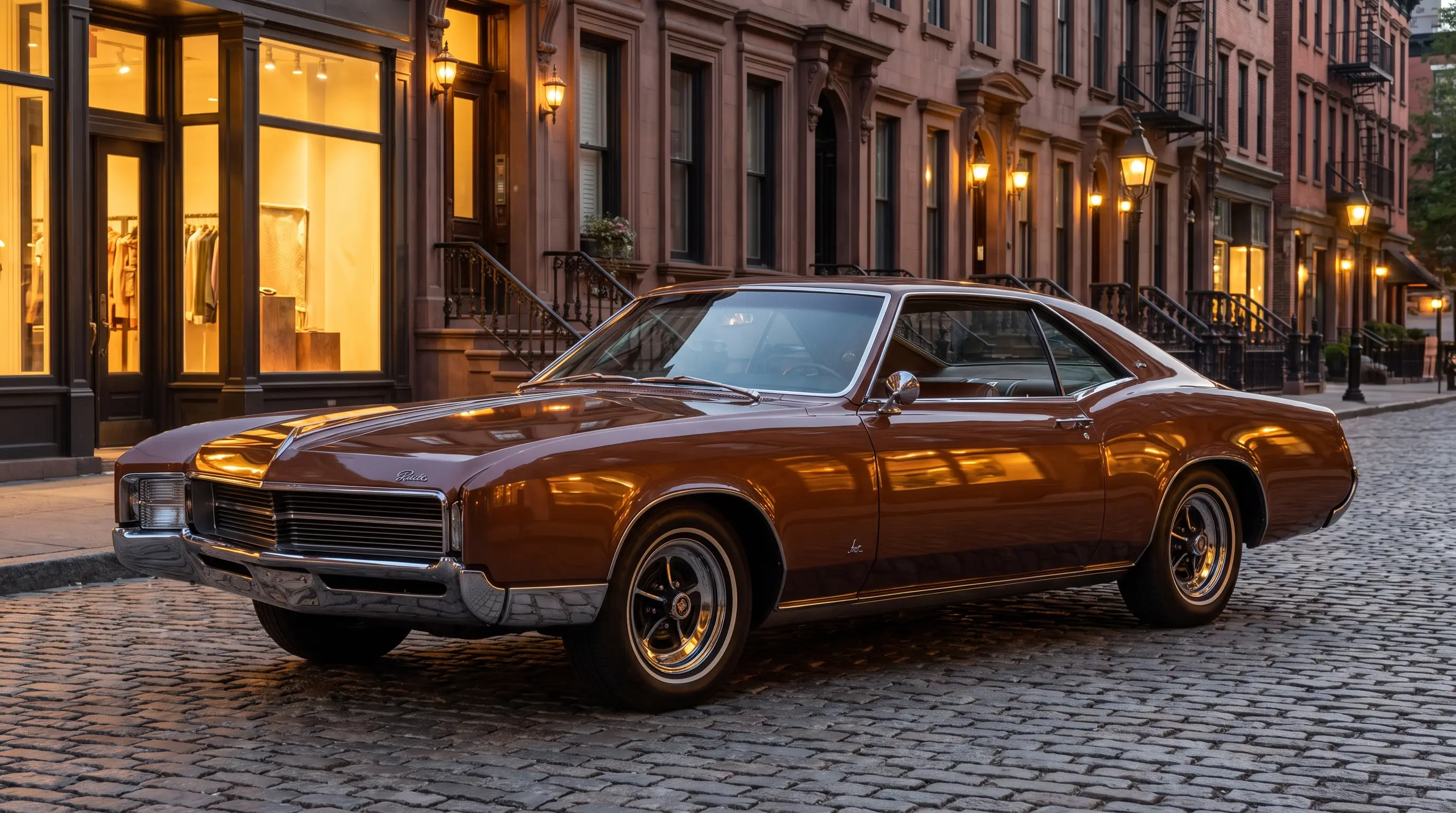
Park a 1966 Buick Riviera next to a same-year Cadillac Eldorado and a Pontiac Grand Prix, and you get a tidy summary of how differently three GM divisions interpreted the same brief. All three were chasing the same buyer, someone with real money who wanted a two-door that photographed like a boulevard car but drove like something with intent. The results could not have been more different in engineering philosophy, even with a shared parent company writing the checks.
Three divisions, three different answers to the same question
The Riviera in 1966 was still a conventional front-engine, rear-drive coupe riding on a dedicated Buick platform, refined rather than reinvented from its 1963 debut. The Eldorado that year was the last of the old-guard Cadillac convertibles built on the full-size C-body before the nameplate went front wheel drive in 1967, so the 1966 car buyers cross-shopped against the Riviera was still a traditional layout too, just heavier and more ornate. The Grand Prix, meanwhile, was Pontiac's leaner, sportier read on the same idea, sharing bones with the full-size Catalina but wearing a longer hood and a more aggressive stance.
What separates the Riviera from both of them is restraint. Cadillac's design language in 1966 still leaned on chrome and scale to communicate status. Pontiac leaned on performance cues, hood scoops, wide-oval tires, a driver-focused cockpit. Buick split the difference, building a car that looked expensive without shouting and drove with more composure than its size suggested.
Weight, power, and how each one actually drives
The Eldorado was the heaviest of the three by a real margin, carrying Cadillac's full-size architecture and trim regardless of body style. That weight bought comfort but cost agility, and period road tests consistently noted the Eldorado's softer, more isolated ride compared to its rivals. The Grand Prix was the lightest and most tossable of the group, benefiting from Pontiac's reputation for chassis tuning even on a car built for cruising rather than racing.
The Riviera sat in the middle on weight but punched above that position on feel. Buick's nailhead V8s, the 401 standard and 425 optional, gave the car enough torque to move confidently without feeling strained, and the chassis tuning kept body roll in check better than the Eldorado managed. Buyers cross-shopping all three in period frequently picked the Riviera specifically because it did not feel like a compromise between comfort and control, it felt like both were considered from the start.
"Cadillac built the Eldorado to be seen arriving. Buick built the Riviera to be enjoyed on the drive over. Those are two completely different design briefs even though the marketing brochures used almost identical language."
- Sarah Whitfield
Interior philosophy: three different ideas of luxury
| Model | Interior Character | Design Priority |
|---|---|---|
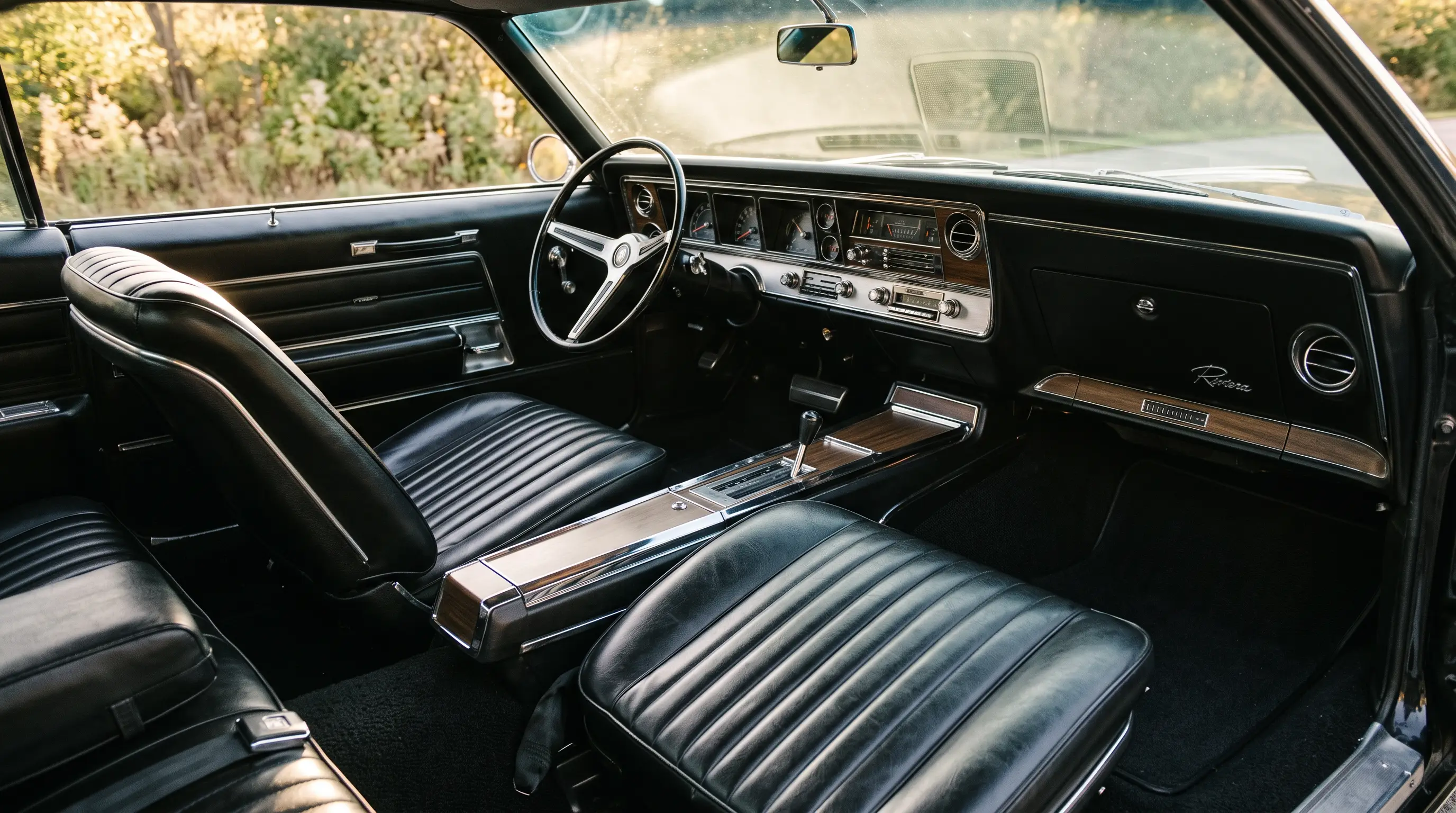
| Buick Riviera | Low bucket seats, console, driver-focused dash | Comfort with control |
| Cadillac Eldorado | Wide bench or bucket options, ornate trim | Visible status |
| Pontiac Grand Prix | Cockpit-style dash, sportier bolstering | Driver engagement |
None of these approaches was wrong for its intended buyer, which is exactly why the personal luxury segment supported three distinct interpretations from one manufacturer without any of them cannibalizing the others' sales.
How that history reads in today's collector market
Collectors who study this era closely tend to rank the Riviera as the most complete driving car of the three, the Eldorado as the strongest pure status symbol, and the Grand Prix as the value play for buyers who want period style without personal-luxury pricing. That ranking has held up remarkably well over decades of auction results, which suggests the original engineering differences were real rather than just marketing spin.
For readers who want the full model year detail on the Riviera side of that comparison, from options list to production changes, our complete history covers what made 1966 such an important year for the nameplate.
What each brand was actually protecting
The competition between these three cars was never purely about styling, it was about what each division had to lose if the personal luxury bet failed. Cadillac was protecting its position as the default answer to American prestige, which meant the Eldorado could not afford to look cheap or restrained even at the cost of agility. Pontiac had spent the decade building a performance reputation and could not release a personal luxury car that felt soft, which explains why the Grand Prix kept sportier ambitions even in a comfort-first segment. Buick had less brand equity riding on the outcome than either rival, and that lower pressure may be exactly what let its designers and engineers take the more balanced, less compromised approach that the Riviera ended up representing.
That context also explains why period buyers describe cross-shopping these three as picking a personality rather than picking a car. Someone who wanted the room to say they owned a Cadillac bought the Eldorado regardless of how it drove. Someone chasing a sportier image bought the Grand Prix. The buyer who actually cared most about the experience behind the wheel, without needing either brand's status signaling, is the one who usually walked away with a Riviera, and that buyer profile has aged well into the modern collector market.
How survivor rates compare across the three today
Surviving examples of all three cars exist in reasonable numbers, but condition and originality vary by nameplate in ways that track back to how each was used when new. Eldorados were more likely to be pampered from day one given their price point and buyer profile, which means a larger share of surviving cars present well cosmetically even when mechanically tired. Grand Prix buyers tended to drive their cars harder given the sportier positioning, so clean, low-mileage survivors are comparatively rarer. Riviera survivors sit in between, benefiting from an owner base that valued the car enough to maintain it without necessarily babying it into pristine but mechanically neglected condition.
That middle position shows up in parts and documentation too. Eldorado owners today benefit from a large, well organized club infrastructure built around Cadillac's broader collector base, while Grand Prix parts support leans on the wider Pontiac full-size ecosystem. Riviera owners have carved out their own dedicated network over the decades, smaller than Cadillac's but deep enough that sourcing correct trim and mechanical parts for a 1966 car is rarely the obstacle it can be for more obscure GM products from the same era.
The takeaway for buyers deciding between them
If the goal is a car that drives as good as it looks, the 1966 Riviera remains the strongest all-around choice of this trio. If pure presence at a car show is the priority, the Eldorado still wins that argument outright. The Grand Prix rewards buyers who want personal luxury styling on a tighter budget. All three are worth cross-shopping before committing, and current inventory makes that easier than it has been in years. Anyone ready to compare a Riviera in person can browse classic Riviera listings and see how the car holds up against its old rivals firsthand.