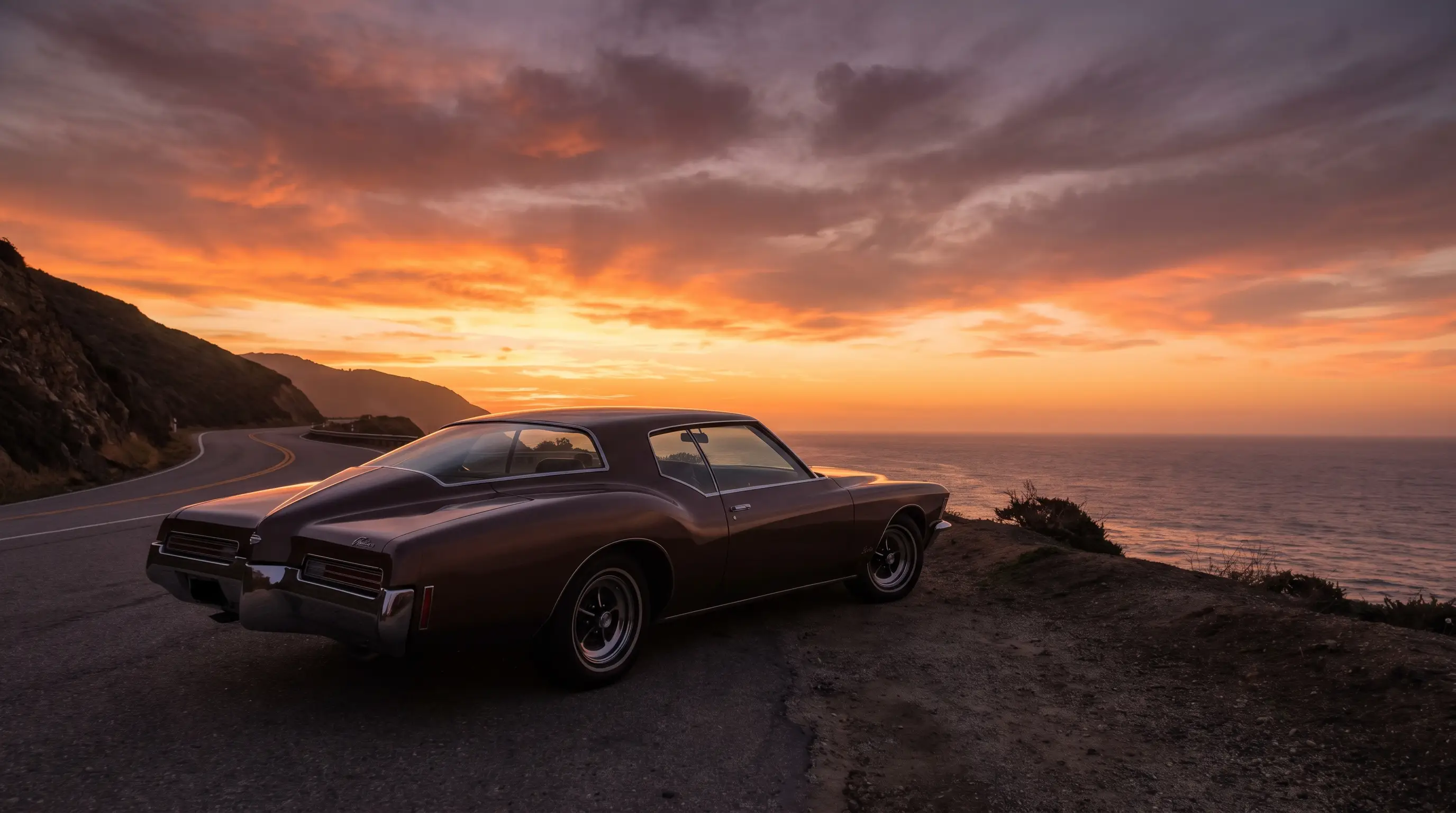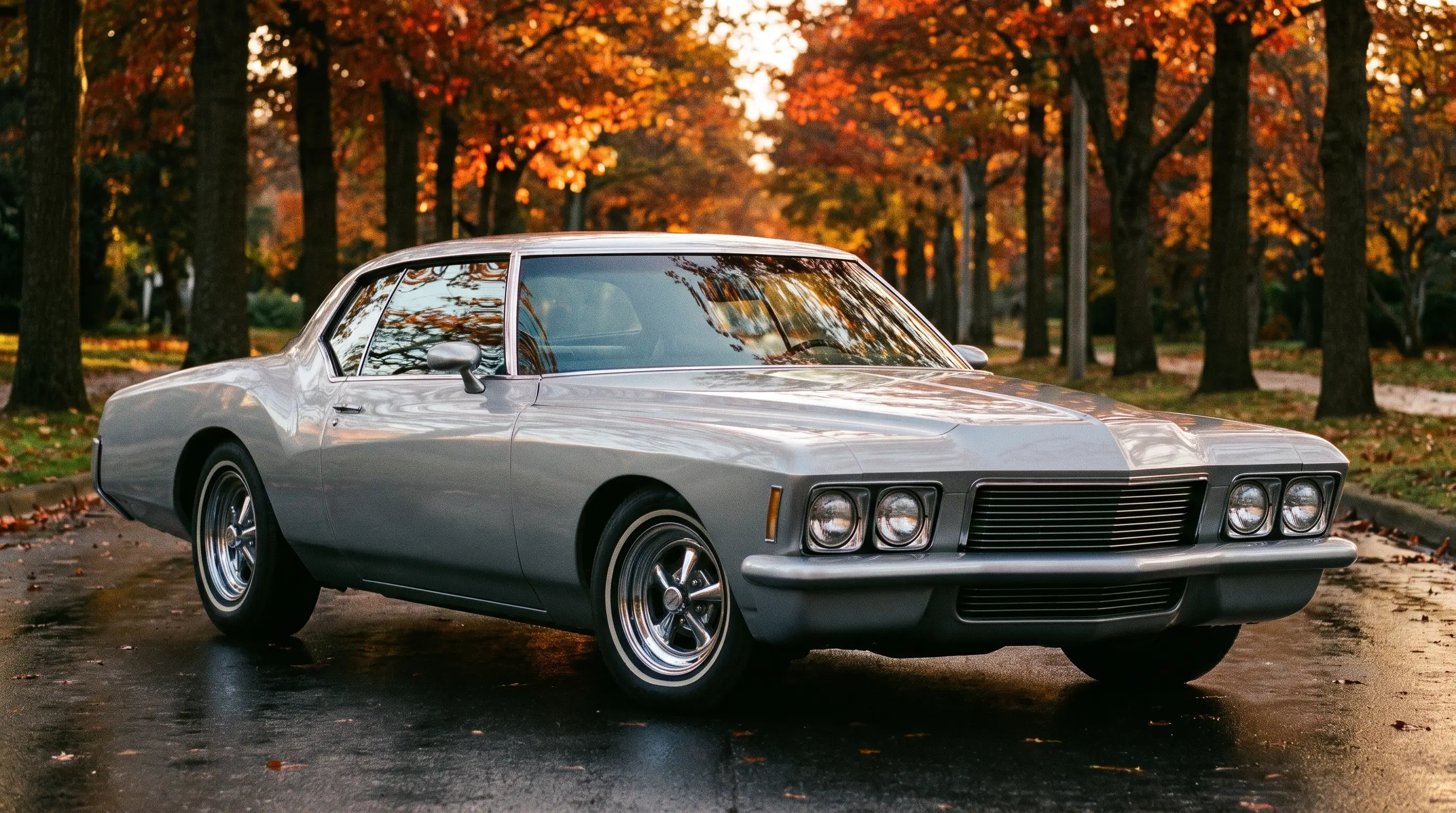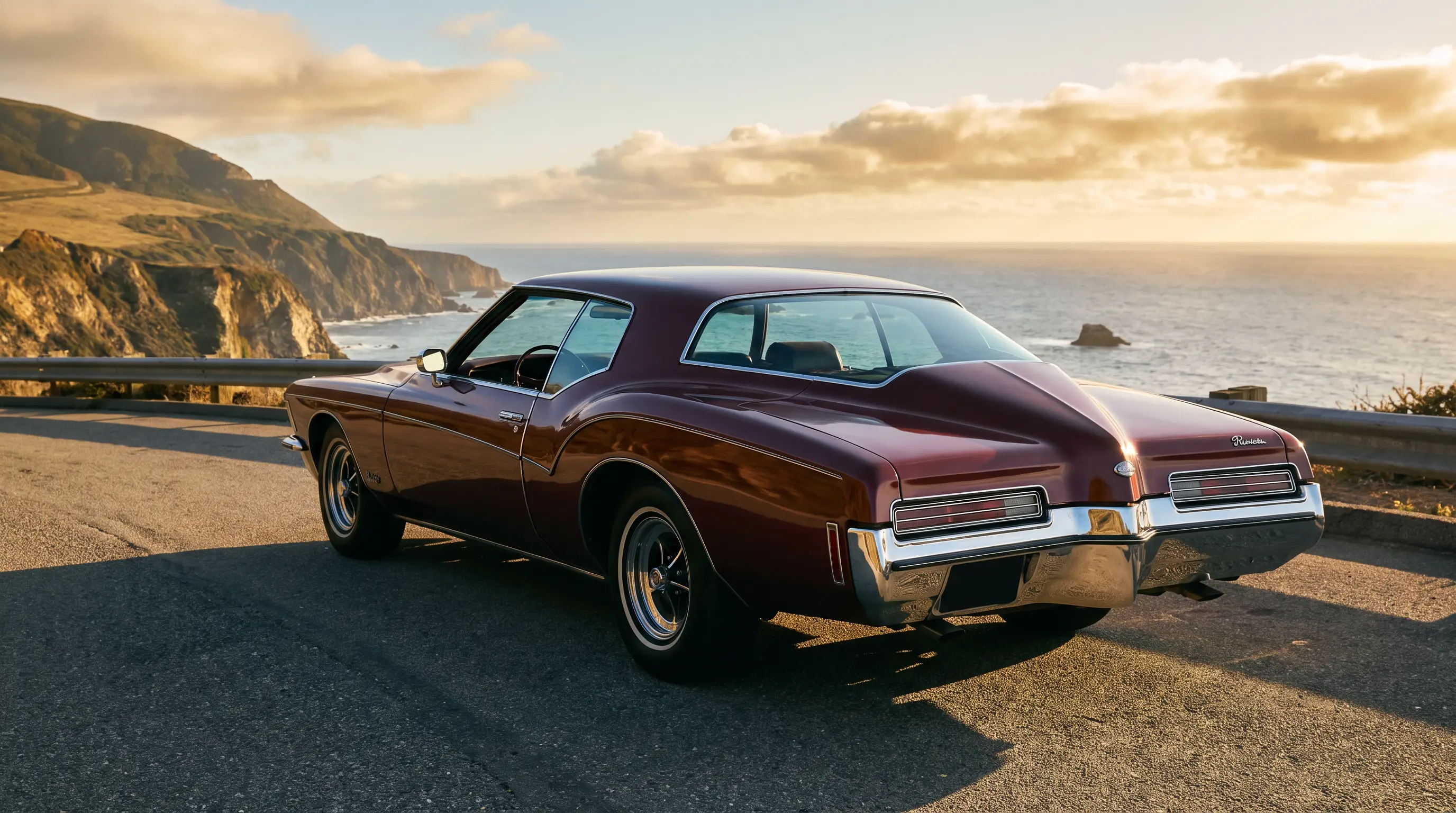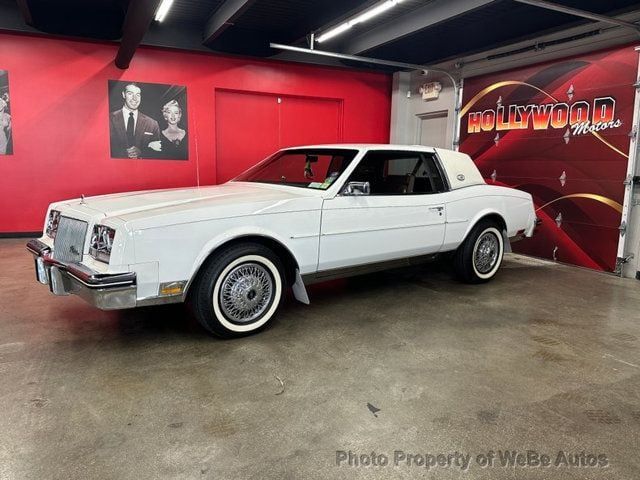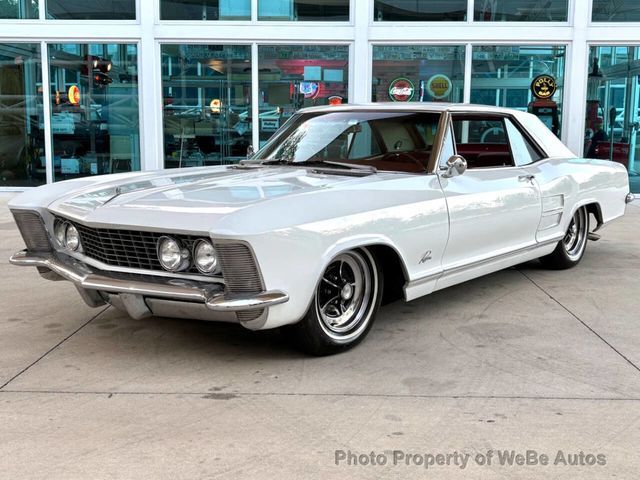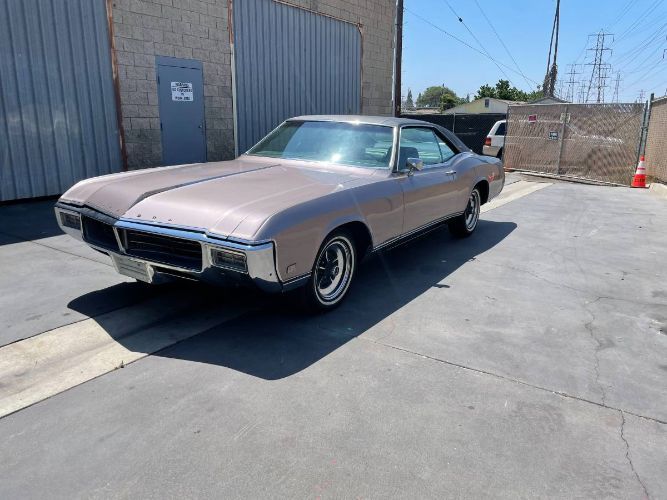
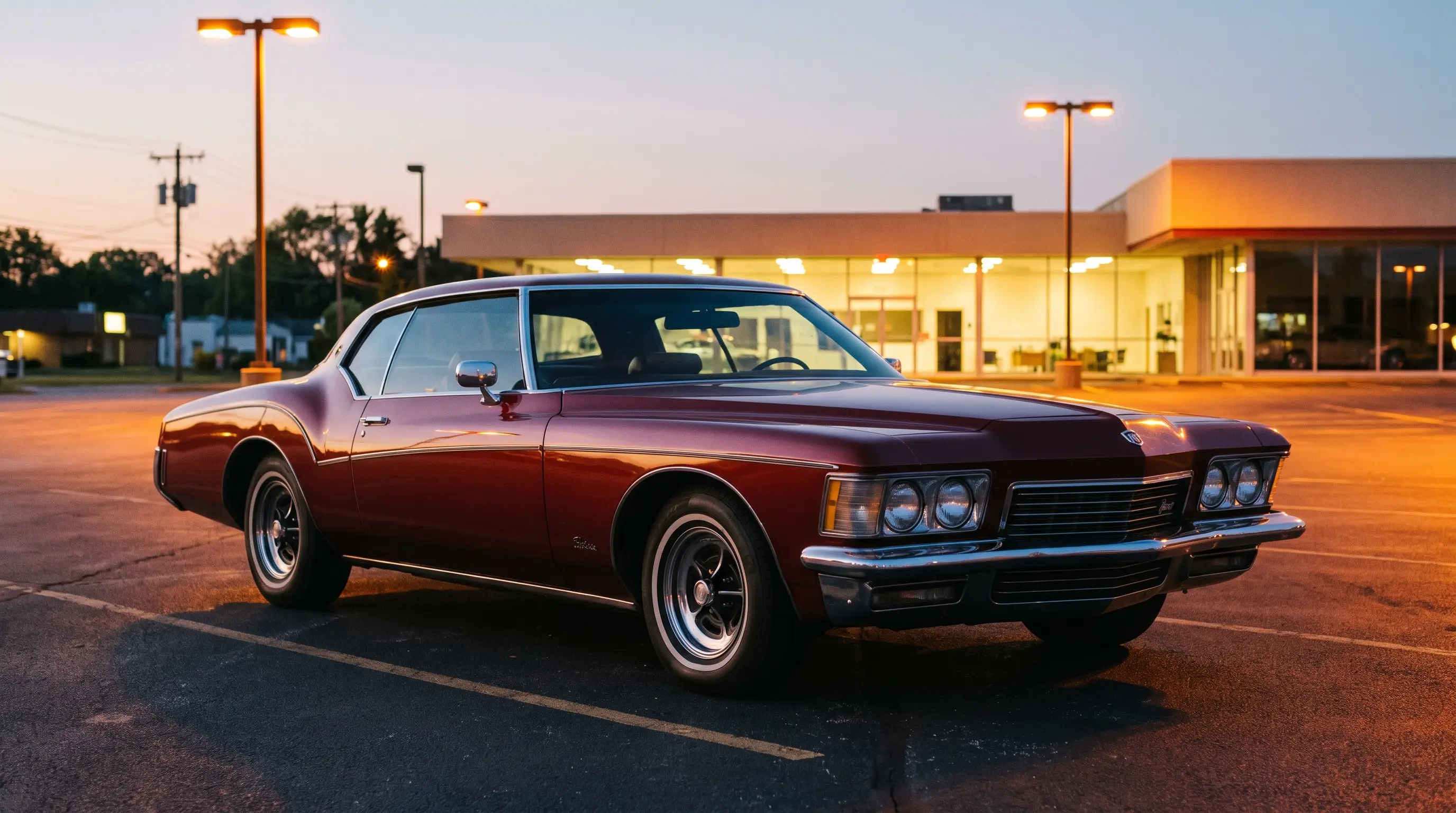
The buick riviera 1973 boattail finale is the car nobody in the hobby argues about with a straight face. Everybody has an opinion. I have spent enough hours with a grinder in one hand and a body hammer in the other to know that 1973 is the year the boat-tail Riviera got its nose bobbed and its tail trimmed, and depending on who you ask that was either common sense or a crime against Bill Mitchell's original vision. I fall somewhere in the middle, but closer to the crime-scene side.
What actually changed on the sheet metal
By 1973 the front bumper had grown to meet the new federal 5 mph impact standard, and that alone reshapes the whole face of the car. The header panel got flatter, the grille got wider and more upright, and the delicate needle-nose look from 1971 got thicker through the middle. Around back, Buick pulled in the dramatic taper of the deck lid. The 1971 and 1972 cars had a rear window and trunk line that curved down and in like the stern of a boat, hence the name everybody uses even though Buick never printed "boat-tail" in a brochure. For 1973 that curve got blunted. Less overhang, less drama, more trunk you could actually load a suitcase into without cursing.
I have had both years apart on a rotisserie and the difference in panel fitment tells the story better than any spec sheet. The 1971-72 rear quarter panels are compound curves that take real patience to metal-finish if you ever have to repair rust in that lower kick. The 1973 quarter is a simpler shape. Easier to fix, less impressive to look at leaned up against a fence at a show.
Why Buick blunted it in the first place
Dealers had been telling Buick for two years that the extreme taper made the car hard to sell to a customer who just wanted a big comfortable coupe. Some buyers loved the shape. A lot more found it strange, and a strange personal-luxury coupe does not move off a showroom floor the way a handsome one does. Buick's response for 1973 was to soften the whole design language: shorter overhang out back, a face that looked more like the rest of the Buick lineup, and less of the swoopy uniqueness that made 1971 either beautiful or bizarre depending on the eye. You can read our 1971 buick riviera retrospective for the full arc of how that first year landed with the public.
From a builder's chair, I get why they did it. The 1971 shape needed a customer who understood what they were buying. The 1973 shape needed a customer who just wanted a Buick.
Under the long hood in the final boat-tail year
The 455 cubic inch V8 carried into 1973, though by then Buick was quoting output in the new SAE net method, which reads lower than the gross figures from a couple years earlier even when the hardware underneath is close to identical. The base 455 was rated at 250 hp net for 1973, down on paper from the 315 to 330 hp gross figures the same basic engine family carried in 1971 (315 gross for the standard car, 330 gross with the GS option), mostly a function of the measurement change rather than a gutted engine. Compression had already been dropped to run on lower-octane and unleaded-compatible fuel, which took some bite out of the engine compared to the earlier high-compression nailhead-descended big blocks. It is still a torque monster at low RPM, which is exactly what a personal luxury coupe is supposed to deliver. Nobody buying a Riviera in 1973 was racing stoplights. They wanted to roll onto the highway without downshifting.
The Gran Sport package was still available for buyers who wanted firmer suspension and a little more attitude, though take rates by 1973 were thin. If you want the deep dive on that combination in its prime year, a related story covers the GS 455 in detail.
Buying and building one today
Here is where I get opinionated. A lot of guys chase the 1971 for the styling and ignore 1973 cars sitting cheaper at auction, and that is a mistake if what you actually want is a driver you can enjoy without babying compound curves during bodywork. The 1973's simpler rear quarters make rust repair and paintwork more approachable for a home builder. Parts commonality with other full-size Buicks of the era is decent, though trim-specific pieces like the unique grille and bumper components get scarce fast, so budget for patience if you need NOS or reproduction trim.
What I will not tolerate is a car dressed up with reproduction GS badges and a fake hood scoop trying to pass as something it never was. Buy the car for what it is. A 1973 base Riviera is a handsome, honest personal-luxury coupe with real presence. It does not need to pretend to be a 1971 boat-tail or a GS 455 it never was from the factory.
Paint, trim, and the details that mark a genuine 1973
Color and trim choices shifted along with the sheet metal. Buick offered a range of the deeper, more saturated early-1970s hues on the 1973 Riviera, and the interior trim carried forward the same cockpit-style dash from the earlier boat-tail years with minor detail changes to the bezels and switchgear. If you are trying to date a car quickly in a driveway without pulling a trim tag, the bumper shape is the fastest tell. A thick, more upright front bumper integrated into a flatter grille opening means 1973. The earlier needle-nose front end with a slimmer, body-color-matched bumper belongs to 1971 or 1972.
Wheel covers and exterior brightwork also got simplified slightly for this final year, part of the same cost and styling consolidation that reshaped the rear deck. None of it is dramatic on its own, but taken together it adds up to a car that reads as calmer and more conventional than its two predecessors, inside and out.
What a rotisserie teaches you about survivor rates
Fewer 1973 boat-tails survive in show condition than 1971 cars, and it is not because the metal is inherently worse. It is because the earlier year got more enthusiast attention for decades while the 1973 sat in the shadow of its more dramatic siblings, which meant less preservation effort, more parts cars getting cut up, and more neglect before the hobby caught up to appreciating this final year on its own terms. That gap is closing now as more builders realize the 1973 is genuinely the easier car to own and maintain long term. Rust tends to show up in the same spots across all three years, lower quarters, rocker panels, and the trunk floor under that deck lid, so a pre-purchase inspection should focus there regardless of which year you are chasing.
| Spec | 1973 Buick Riviera |
|---|---|
| Engine | 455 cubic inch V8 |
| Wheelbase | 122 inches |
| Body style | 2-door personal luxury coupe |
| Boat-tail rear window/deck | Blunted, reduced taper vs 1971-72 |
| Final boat-tail model year | 1973 (styling changed further for 1974) |
"The 1971 is the sculpture. The 1973 is the car you can actually own, fix, and drive without treating it like a museum piece."
- Jim Vasquez
The last word on the last boat-tail
1973 closed out three years of one of the most divisive shapes General Motors ever put into production. It is not the purest expression of Mitchell's original idea, but it is the most livable one, and livable matters if you actually intend to drive the thing instead of trailering it between shows. If you are shopping this era right now, Rivieras for sale now tend to include a mix of both the extreme 1971-72 cars and the tamer 1973, and knowing which shape you are actually looking at in a listing photo saves you a wasted phone call.