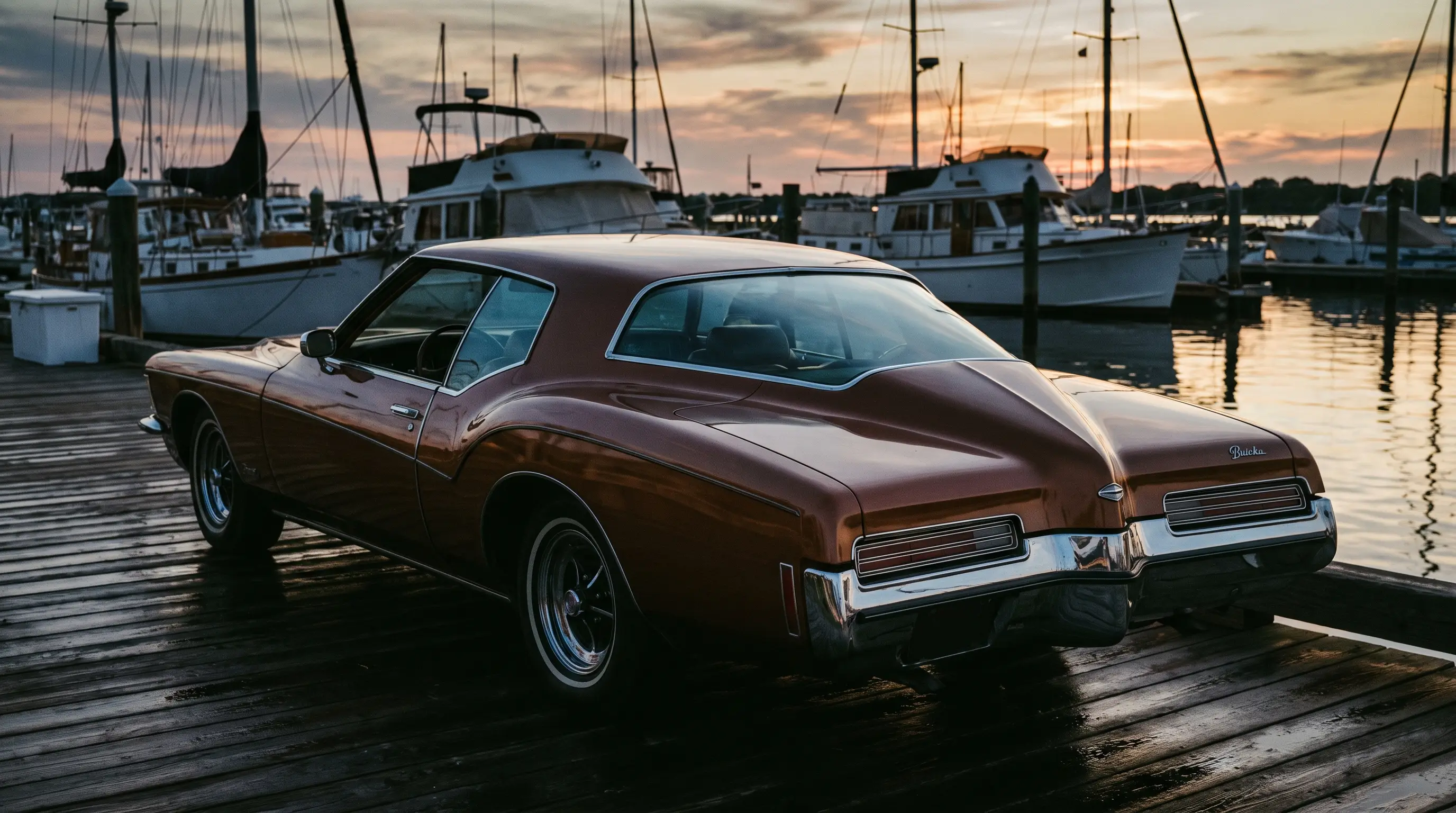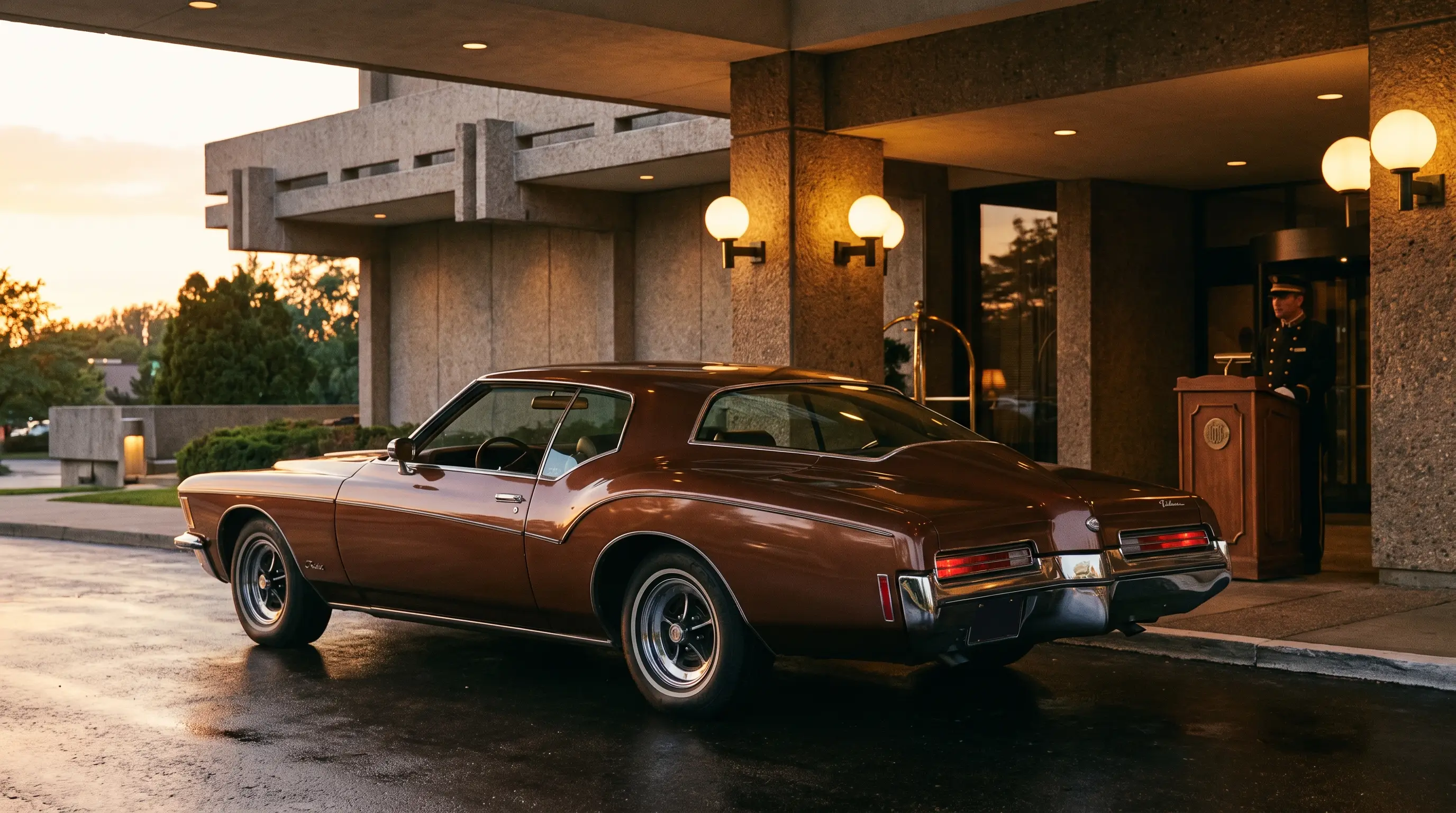
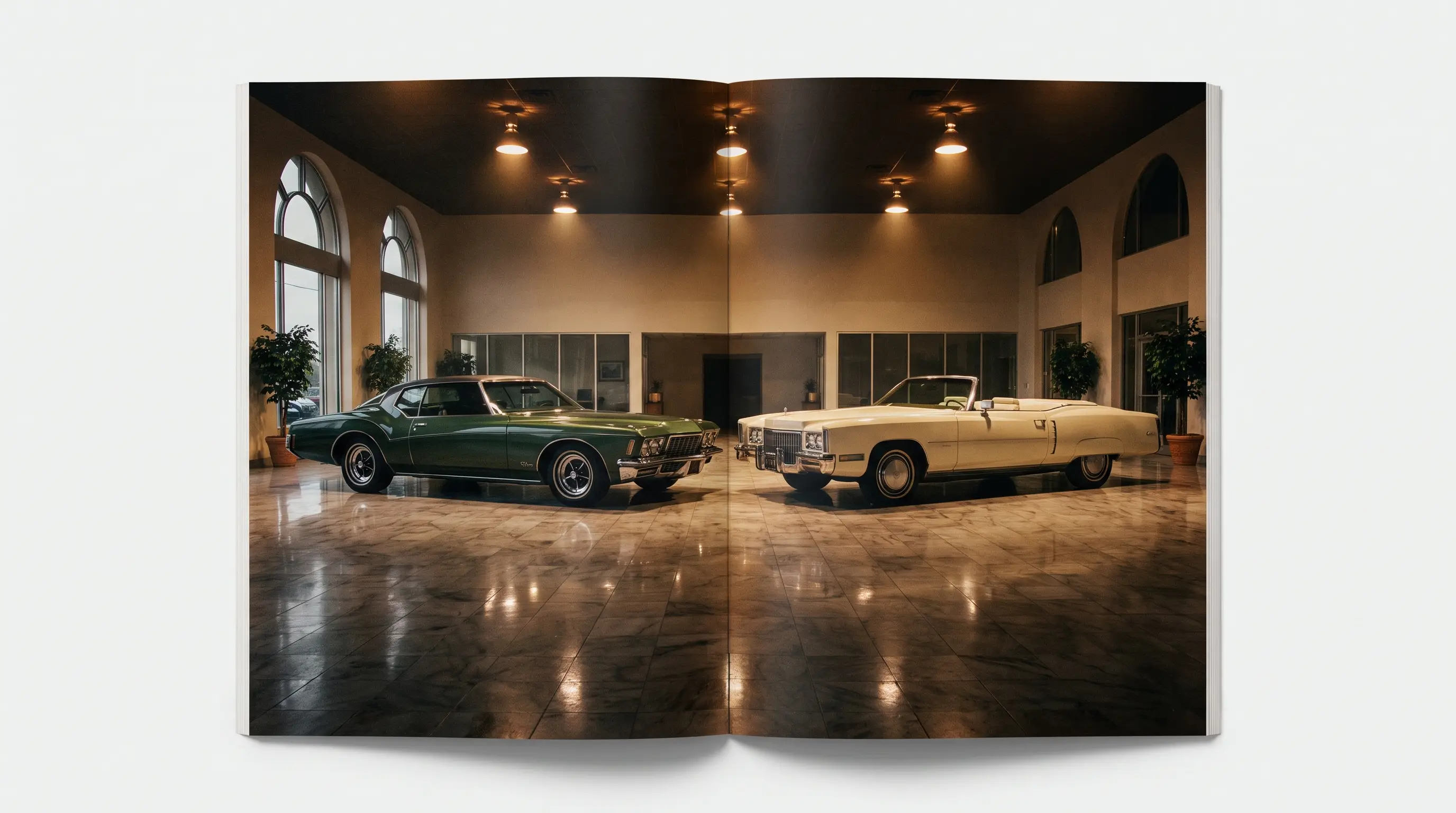
A woman at a car show in Ohio once told me she chose her 1972 Buick riviera boattail vs eldorado design comparison the hard way, by test driving both a Riviera and a Cadillac Eldorado back to back in the same weekend in 1972, then living with the decision for the next fifty years. She still has the Riviera. She still remembers exactly why she picked it over the Cadillac, and her reasons were never about badge or price. They were about the shape of the tail end and the way the car felt like it was hers rather than her husband's company car.
Two coupes born from the same platform
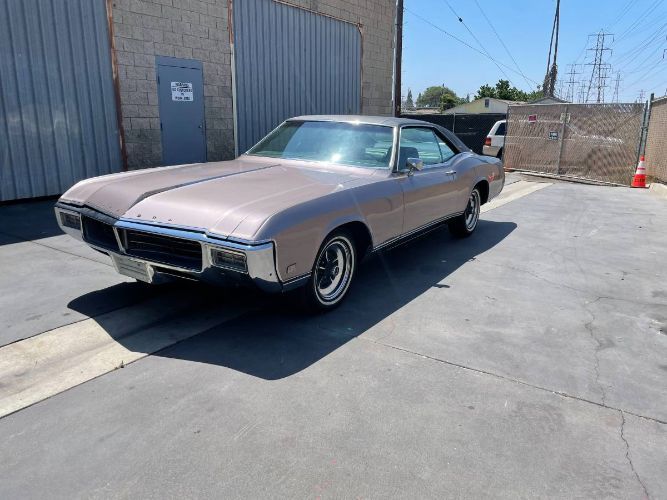
The boat-tail Riviera and the Cadillac Eldorado of the same years shared GM's E-body architecture, the same basic underpinnings that also carried the Oldsmobile Toronado. That shared bones story makes the visual split between the two cars even more striking, because Buick and Cadillac's design studios took the same starting point in almost opposite directions. Cadillac kept the Eldorado's lines long, flat, and formal, chasing an established luxury look that its buyers already understood. Buick let its studio sculpt the Riviera into something closer to a rolling sculpture, with a rear deck that tapered to a point instead of stretching flat to a squared off tail.
One important mechanical difference sat underneath the shared platform. The Eldorado and the Toronado were front wheel drive, a genuinely unusual layout for American luxury cars of that era. The Riviera stayed rear wheel drive, which meant Buick's engineers were solving a more conventional set of problems even as Buick's designers were solving one of the least conventional styling problems in the industry.
The Eldorado's case for restraint
Cadillac's approach was not timid, it was calculated. The Eldorado's flat decks and crisp creases photographed well in showroom brochures, aged gracefully next to formal architecture, and read as luxury to a buyer who wanted their coupe to look expensive rather than experimental. That restraint paid off in showroom traffic. The Eldorado pulled ahead of the boat-tail Riviera in the sales race as the generation went on. Buick sold around 33,810 Rivieras in 1971 against roughly 27,368 Eldorados, but by 1972 Cadillac had surged to about 40,074 Eldorados while Riviera sales held nearly flat at around 33,728, proof that a safer design decision often wins the sales race even when it does not win the design conversation decades later.
There is a quieter argument buried in that restraint too. Cadillac buyers in 1971 were often a full luxury tier further along in life than Buick buyers, more conservative by both age and temperament, and less inclined to reward a coupe for taking a risk with its rear end.
The Riviera's case for drama
Buick's design studio, working under GM design chief Bill Mitchell, treated the Riviera's rear deck almost like a piece of nautical design, tapering it into a point the way a yacht's stern narrows toward the water. That reference was not incidental. Mitchell was an avid sailor, and the boattail nickname the car earned from the public matched language the design team was already using internally.
What that gave Riviera buyers was a coupe that looked like nothing else in a Cadillac dealership or a Buick dealership. It asked more of its owner. You had to want to be the person driving the boldest personal luxury coupe on the block, not simply the person driving the most expensive one. That is a smaller buyer pool than Cadillac's, and it shows in the production numbers, but it is also the reason the Riviera generates a different, more personal kind of loyalty from the people who chose it.
How the years changed the argument
The comparison is not static across the three boat-tail model years. The 1971 Riviera wore the purest version of Mitchell's shape, with a tucked in rear bumper that barely interrupted the taper. By 1973, federal bumper regulations forced a heavier bumper onto the back of the car, softening the very drama that made the design distinctive in the first place. The Eldorado absorbed those same bumper rules more comfortably, because its flatter, more formal rear end had less delicate a shape to protect.
That means an early boat-tail and a late boat-tail are not quite arguing the same case against the Eldorado. A 1971 car makes the boldest possible version of Buick's argument. A 1973 car is already a slightly compromised version of it, still striking, but a step closer to the Cadillac's more conventional proportions than Mitchell's original studio sketches ever intended.
What the comparison still teaches collectors
Set them side by side today and the comparison still holds up as a lesson in two different definitions of confidence. The Eldorado says confidence through familiarity, a shape that never asks the viewer to reconsider what luxury looks like. The Riviera says confidence through risk, a shape that asks the viewer to reconsider it every time. Neither answer is wrong, and the fact that both cars still draw crowds at shows five decades later says something about how well each studio executed its own idea.
For anyone weighing a boat-tail purchase against an Eldorado from the same years, the honest advice is to stop comparing specification sheets and go look at both cars in person, the way that Ohio driver did in 1972. The decision was never really about horsepower or trim levels. It is about which shape you want to live with every time you walk up to the car in a parking lot.
I have talked with owners of both cars at more shows than I can count, and the pattern holds up. Eldorado owners tend to talk about comfort, presence, and the badge on the hood. Riviera owners tend to talk about the moment someone first noticed the tail end and asked what it was. Neither group is wrong about what they value, but they are clearly answering a different question when they explain why they bought the car they bought. It is a small difference in wording, but after enough conversations at enough shows, it starts to look like the real dividing line between the two cars rather than anything you could measure with a tape measure or a dyno.
"She told me the Eldorado felt like her father's car and the Riviera felt like her car. That sentence has stayed with me longer than any spec sheet ever has."
- Nora Beckett
If you want the design history behind that tapered rear deck, our complete history traces how Mitchell's studio arrived at the shape and why it changed across three model years. And if the comparison has you leaning toward the bolder of the two cars, you can browse classic Riviera listings to see what a well kept example looks like in person, which is really the only fair way to settle the argument.