
The 1969 Shelby GT500 history is short, and it ends with a paperwork trick. These were the last Shelby Mustangs of the original run. They were restyled, longer and louder looking than any Shelby before them, and closer to a regular Ford underneath than the badges suggest. Carroll Shelby walked away from the deal in the summer of 1969. Ford was left with several hundred unsold cars and fixed the problem with new serial numbers, not new cars. For the whole arc of the Carroll Shelby cars, start there. This one sticks to 1969, the "1970" cars that followed, and what to check before you hand over money for one.
Car Features
6 min read
The 1969–70 Shelbys: The Last of the Line
1969 Shelby GT500 history: the 351 and 428 Cobra Jet, 3,150 cars built, and the 789 leftovers that became 1970 Shelbys under FBI supervision.
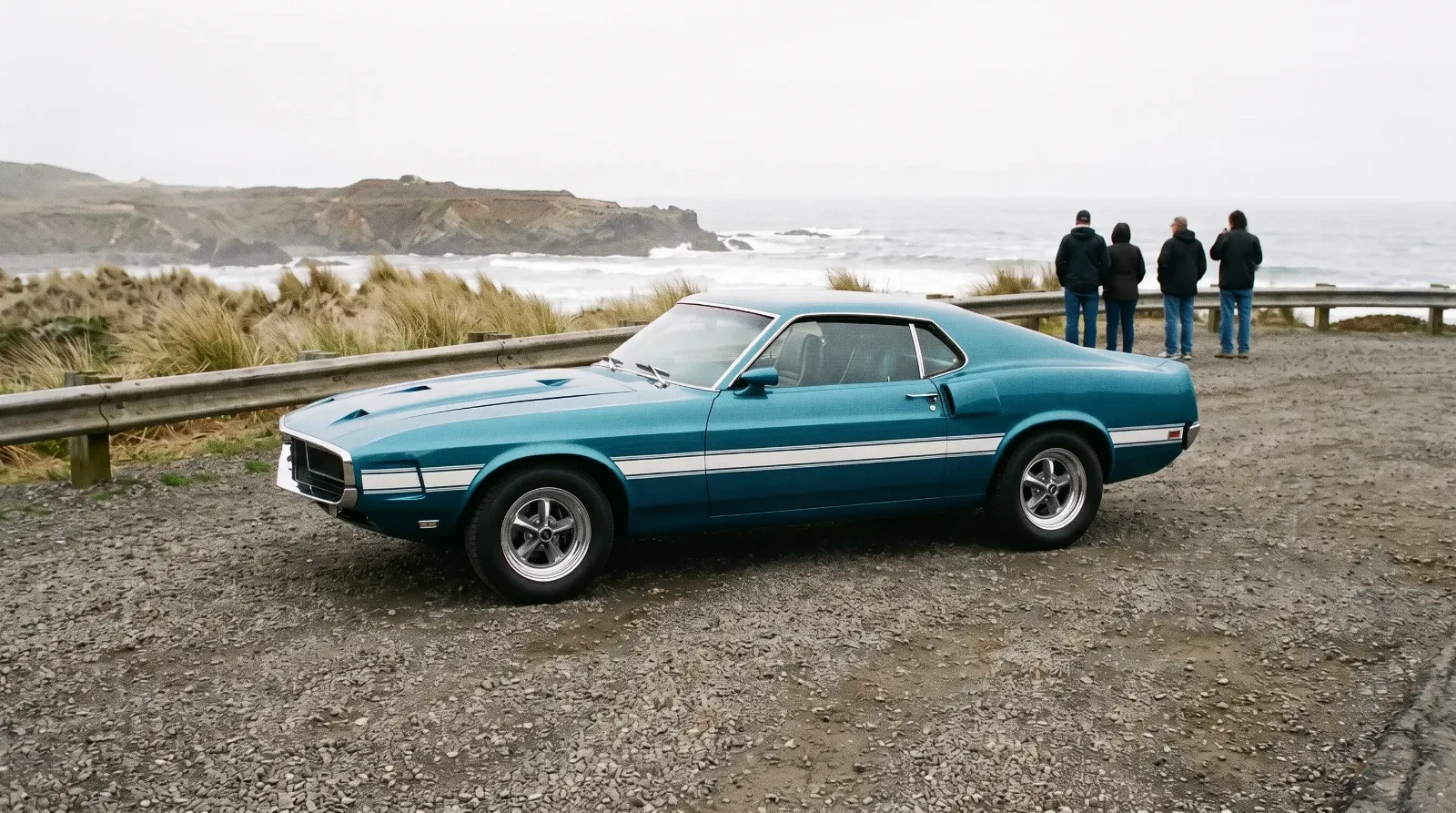
1969 Shelby GT500 history starts with a longer body
The Mustang got a full restyle for 1969, and the Shelby went further. Its body ran 4 inches longer than the 1968 Shelby's. Two models carried on: the GT350 and the GT500, each offered as a SportsRoof fastback or a convertible.
Here is the part Shelby people don't love hearing. Ford's own 1969 showroom had a new Mach 1 that could be ordered with the same 428 Cobra Jet as the GT500, plus a Boss 302 and a Boss 429. The Mach 1 alone found 72,458 buyers that year. The Shelby had turned into a dressed-up version of cars Ford already sold, and the gap between them was mostly bodywork and badges. Nice bodywork. Still bodywork.
Engines and drivetrain: the 351 and the 428 Cobra Jet
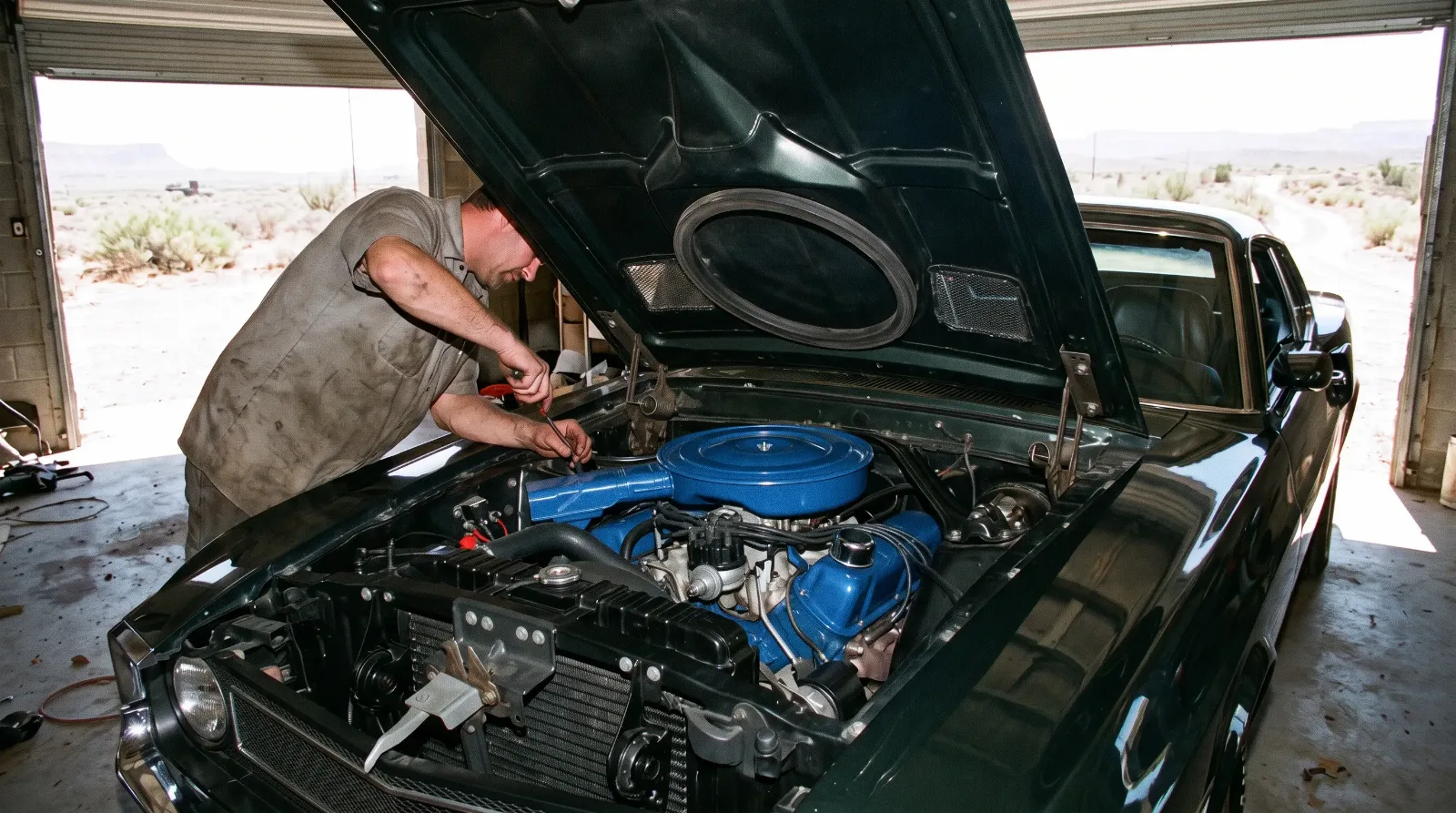
The GT350 dropped the 302 for a 351 Windsor with a four-barrel carburetor, the M-code, rated at 290 hp and 385 lb-ft. That is the same 290 hp printed for the Boss 302 that year. Different engines, different personalities, identical number on paper. Catalog ratings from this era tell you what the brochure wanted to say.
The GT500 got the 428 Cobra Jet with a single 735-cfm Holley, rated at 335 hp at 5,200 rpm and 440 lb-ft at 3,400 rpm. That rating is widely regarded as low. You won't find many owners arguing.
Behind either engine sat a Toploader four-speed or a C6 automatic, feeding a Ford 9-inch rear axle with optional Traction-Lok. Gearing ran from 3.00:1 on cars with air conditioning up to 4.30:1 on cars without it. That spread matters more than the horsepower when you actually drive one. A 3.00 car cruises. A 4.30 car spends the whole highway trip asking to get off it.
Period test numbers are thin. We could not find a 1969 magazine road test of either Shelby that we could check against the original pages, and the figures that circulate trace back to fan lists. The best-known one is a trap: a widely repeated 5.5-second 0 to 60 time from Car Life's March 1969 issue, often pinned on the GT500, was actually a 428 Cobra Jet Mach 1 with an automatic. So when someone quotes you a 1969 GT500 road test, ask which car the magazine really drove.
How many were built
Shelby built 3,150 cars for 1969, and that total includes the ones later sold as 1970 models. The breakdown below comes from a long-running Shelby FAQ, and it adds up to the total. For how these counts were gathered and who keeps them, see our piece on production and the registry.
| Model | Body | Engine | Built (1969 and re-serialed 1970) |
|---|---|---|---|
| GT350 | SportsRoof | 351 Windsor, 290 hp | 935 |
| GT350 (Hertz) | SportsRoof | 351 Windsor, 290 hp | 152 |
| GT350 | Convertible | 351 Windsor, 290 hp | 194 |
| GT500 | SportsRoof | 428 Cobra Jet, 335 hp | 1,534 |
| GT500 | Convertible | 428 Cobra Jet, 335 hp | 335 |
| Total | 3,150 |
One wrinkle. Another source puts the GT500 total at 1,871, two more than the 1,869 this breakdown gives. Two cars is noise, but it's a fair reminder that nobody's numbers from 1969 are perfect. The 152 Hertz GT350s are counted as 1969 cars. And 306 Shelbys were built in Mexico by Shelby de Mexico in 1969. Those aren't in the US count at all, so don't let anyone fold them in to make a car sound rarer or more common than it is.
The 1970 Shelby that was really a 1969
Shelby ended his agreement with Ford in the summer of 1969. No 1970 Shelbys were ever built. Instead, about 789 unsold 1969 cars were given 1970 serial numbers, and the job was done under FBI supervision. One source says 601. Most say 789, and that's the number to use.
The update kit was small. Outside, the cars got a Boss 302-style chin spoiler and twin black hood stripes. Underneath, the changes were for emissions: the GT500's carburetor was modified and re-tagged, and both models got a 1970-type distributor. That's it. Mechanically, a "1970" Shelby is a 1969 Shelby with a new title and some emissions paperwork. If a seller claims anything bigger changed underneath, ask for the document that says so. You'll be waiting a while.
"Pull the badges off a GT500 and you've got a 428 Cobra Jet in a longer body. That's fine. Just know you're paying for the Shelby paperwork, because the hardware was sitting at every Ford dealer."
Mike Sullivan
What to check before you buy one
Start with the serial number and the registry, not the stripes. A car titled as a 1970 should be one of the re-serialed 1969s, and the registry can tell you whether it is. Next, look at the wheels. If a GT500 still wears early aluminum-center wheels, find out whether the 1969 recall work was done, because the defect was lug nuts working loose. Then find out the axle ratio. A 4.30 car and a 3.00 car are two different machines on the road, and neither one is wrong, but you should know which one you're buying.
Last, keep the engine claims honest. The GT350's 351 and the GT500's 428 Cobra Jet are both well understood, and parts are not exotic. What makes these cars valuable is that they were the end of the line, and the end of the line is a story the paperwork has to back up.
For where these cars fit in the complete history of the Ford Mustang, they're the full stop on the first Shelby era. If a regular Ford suits your budget better, look through the 1969 Mustangs listed right now. A Mach 1 could be ordered with the GT500's 428 Cobra Jet, and Ford built tens of thousands more of them.
Sources and notes
- Wikipedia: Shelby Mustang (1969 to 1970 cars and the re-serialed 1970s)
- StreetMuscle: the 1969 to 1970 Shelby GT500 and its 3,150-car total
- Shelby FAQ (fan-compiled production breakdown)
- Motorious: the 1970 Shelby Mustang
- NHTSA campaign 69V089000: 1969 Shelby GT500 wheel recall
- Curbside Classic: Car Life's March 1969 test of the 428 Mach 1
Have a
Ford Mustang
for Sale?
Reach thousands of serious classic car collectors across the US.
Sell It Here →
Selling a classic? Here's how: compare the places to sell classic cars
Are You a Classic Car Dealer?
List your full inventory and connect with targeted classic car buyers.
Join as a Dealer →
#Ford Mustang
#428 Cobra Jet
#1969 mustang
#Shelby GT350
#Carroll Shelby
#shelby gt500
#Shelby production

About the author
Mike Sullivan
Detroit-area muscle car enthusiast and restoration specialist with three decades of hands-on experience working on American iron.
Related Listings - Ford Mustang
Comments
Be the first to comment on this article.