
Anybody who has spent time under old Cadillacs knows the cadillac air ride suspension history is not a straight line of progress. It is a story of a good idea that showed up before the parts could keep it running. Cadillac wanted its big cars to sit level no matter how you loaded them, and to ride like the surface underneath had been paved twice. Air was the obvious way to get there. Making air behave for the life of the car was the hard part.
Car Features
6 min read
Cadillac's Self-Leveling Air Ride: How Air Suspension Became a Luxury First
Cadillac air ride suspension history, from the troublesome 1957 Eldorado Brougham to the rear leveling system that actually lasted.
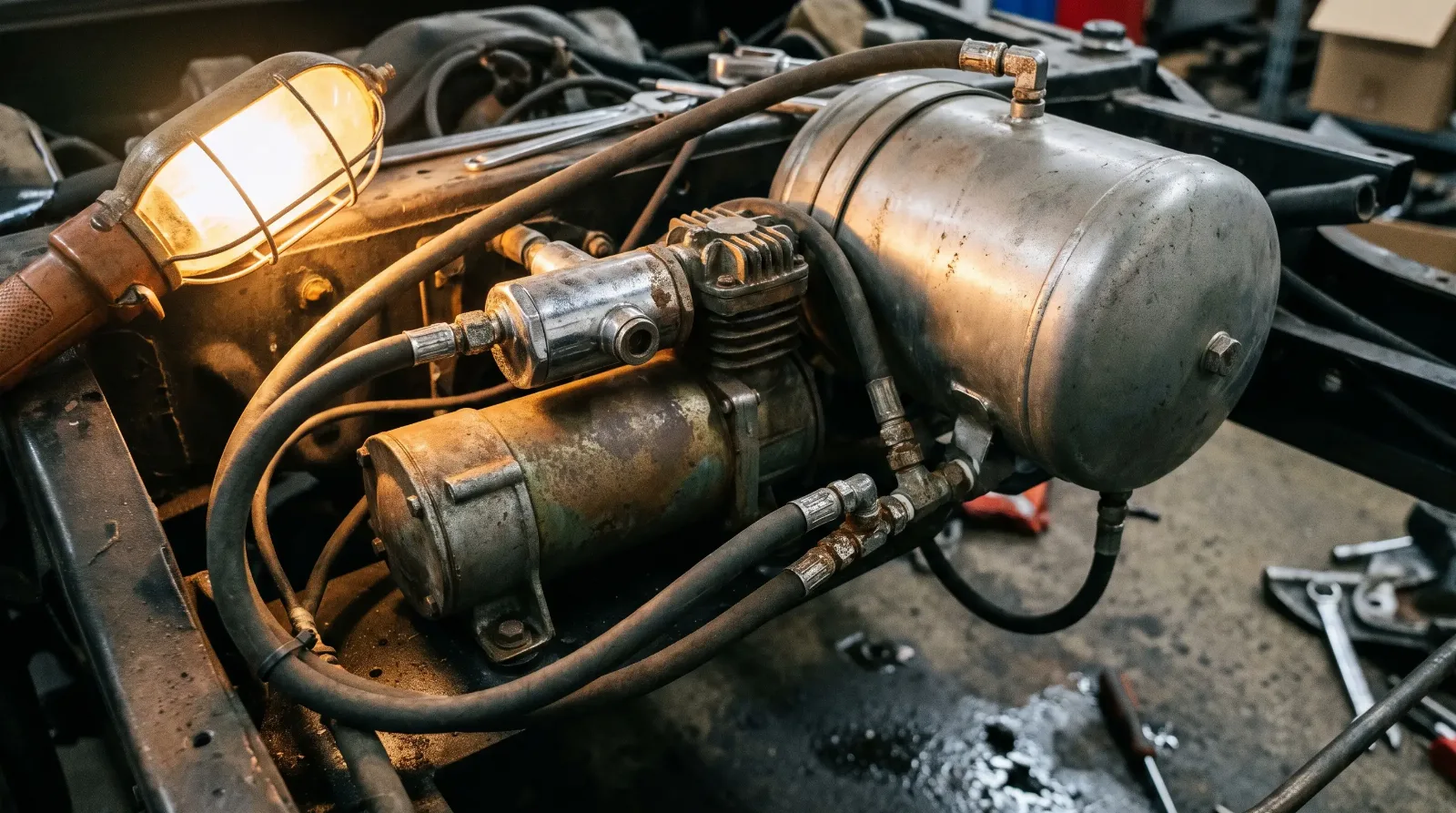
I have pulled apart enough of these systems to tell you the concept was sound and the execution, at least early on, was a headache. That is worth understanding before you buy a car wearing one, because a leaking air setup is exactly the kind of expensive problem that hides until the car has been sitting overnight.
Where it started, the 1957 Eldorado Brougham
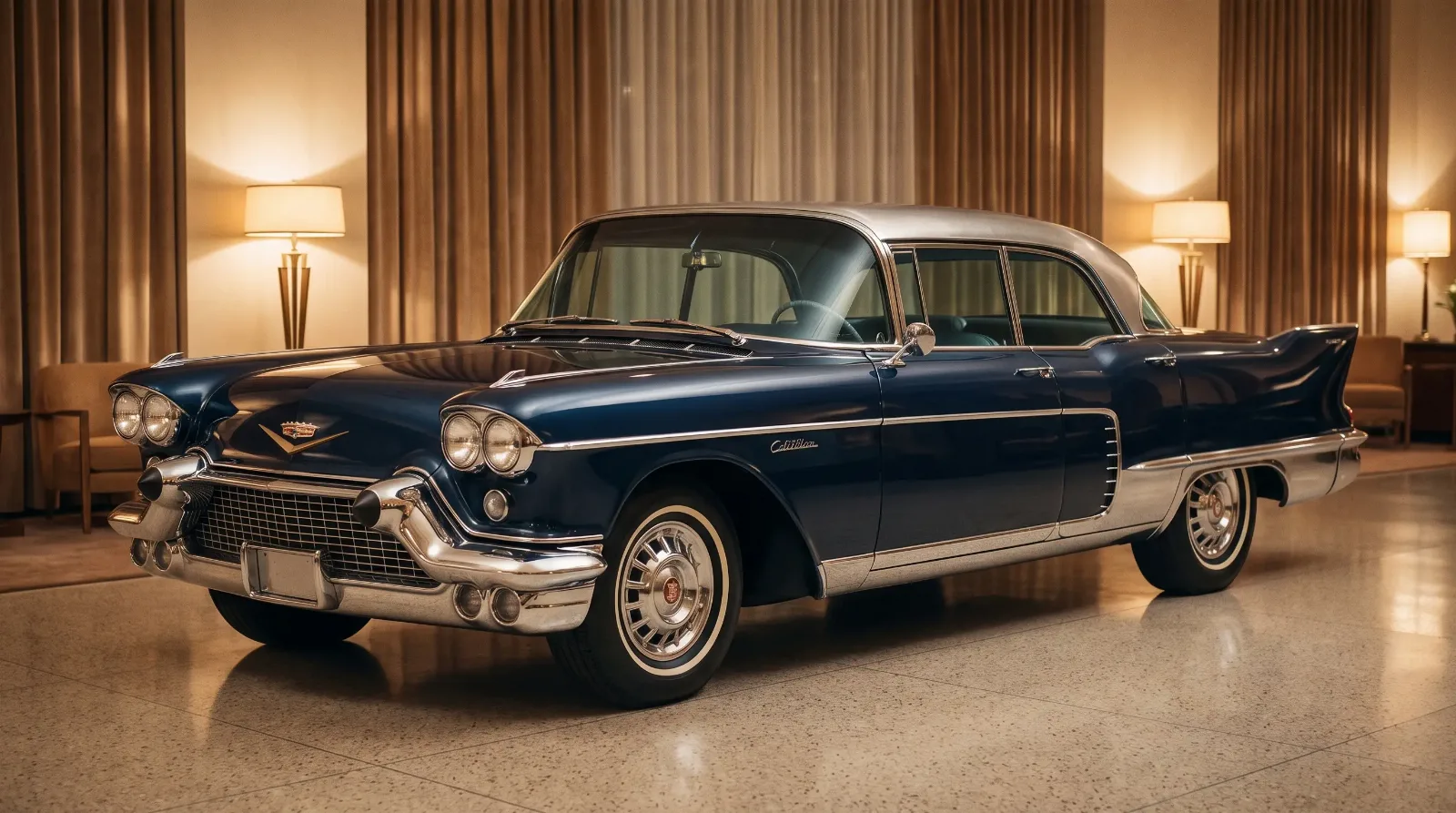
The load-bearing fact in this whole story is the Cadillac Eldorado Brougham. Built for 1957 and 1958, this was Cadillac's hand-finished flagship, and it came with air suspension as standard equipment. Four air units took the place of conventional springs, fed by a compressor and reservoir, with leveling valves meant to keep the car sitting right whether it held one passenger or six.
On paper it was ahead of its time. In practice the early systems leaked. Owners would come out in the morning to find the car squatting on its bump stops because the air had bled off overnight. Plenty of Broughams got converted to coil springs by frustrated owners and mechanics, which is why an original working air setup on one of these is a real find today. The Brougham itself sits right in the era of the land yacht, and it was the most ambitious car of its moment.
The 1958 gamble across General Motors
Cadillac was not alone. For 1958 General Motors offered air suspension across its divisions, each under its own name (Chevrolet's Level Air, Pontiac's Ever-Level, Oldsmobile's New-Matic Ride and Buick's Air-Poise), as an option on lesser cars, and few buyers took it. The idea was to bring the Brougham's trick ride down to the volume lineup. It did not go well. The seals and lines of the period could not hold pressure reliably in the real world of temperature swings and road grime.
Most buyers who ticked the box regretted it, and the option faded fast. The takeaway is simple. The engineering ambition ran ahead of the materials science. Rubber, valves, and compressors of the late 1950s were not up to a sealed air system that had to last years, and the market noticed.
What actually survived, automatic level control
Here is where the story gets useful. Full air suspension went away, but the piece of the idea that worked stuck around. Cadillac kept offering automatic level control, a rear-only system that used air shocks fed by a compressor and a height sensor to keep the tail from sagging under load. That is the "self-leveling" feature that outlived the full setup, and versions of it ran on Cadillacs for decades.
The difference matters when you are diagnosing one. Full air suspension replaces the springs. Automatic level control leaves the springs in place and just adds air-assist shocks at the back to handle load. The second system is simpler, has less to leak, and is far easier to live with. When a 1960s or 1970s Cadillac squats under a trunk full of luggage and then rises back up, that is level control doing its job.
Think about why a luxury buyer wanted this in the first place. A big car with the trunk loaded and the back seat full will sag at the rear, which points the headlights at the trees and upsets the ride the whole car was sold on. Level control fixed that automatically, without the driver touching anything. It kept the car sitting the way the engineers intended no matter the load, and that quiet, invisible competence is exactly what separated a Cadillac from a cheaper car. The feature earned its keep every time you hitched a trailer or packed for a trip.
That is why I call the air ride a luxury first even though the early version stumbled. Cadillac was solving a problem the volume brands did not even bother to address. The idea that the car should manage its own stance was genuinely ahead of the field, and it filtered down to ordinary cars only decades later.
"The full air setup was Cadillac reaching for something the parts couldn't deliver yet. The rear leveling system was them keeping the part that worked and throwing out the part that didn't. That's good engineering, learning what to leave behind."
Mike Sullivan
Buying a car with an air system today
If you are looking at a car with any form of factory air suspension or level control, the inspection is straightforward but non-negotiable. Air systems fail at the seals and lines first, and the symptoms are easy to read if you know when to look.
None of this should scare you off a good car. A working system, or an honestly converted one, is fine to own. You just want to know which you are buying and price it accordingly. The air ride was one of many features Cadillac used to separate its cars from the field, and the rest of that arms race is worth understanding too. Continue with next: Power Everything.
Related Reading
Have a
Classic Car
for Sale?
Reach thousands of serious classic car collectors across the US.
Sell It Here →
Are You a Classic Car Dealer?
List your full inventory and connect with targeted classic car buyers.
Join as a Dealer →

About the author
Mike Sullivan
Detroit-area muscle car enthusiast and restoration specialist with three decades of hands-on experience working on American iron.


Comments
Be the first to comment on this article.