
The 1948 Cadillac wears the most consequential piece of trim in American car design, and almost nobody noticed at the time how small it was. The fins on that car are barely fins at all, just raised crests on the rear fenders capping the taillamps. Yet those modest bumps started an escalation that ran for a full decade and pulled every American manufacturer into it. The history of the Cadillac tail fin is really the history of an idea that would not stop growing.
Car Features
6 min read
Cadillac's 1948 Tail Fin and the Fin Arms Race That Followed
The 1948 Cadillac started with tiny fins and set off a decade-long fin arms race that peaked in 1959. Here is how the escalation unfolded.
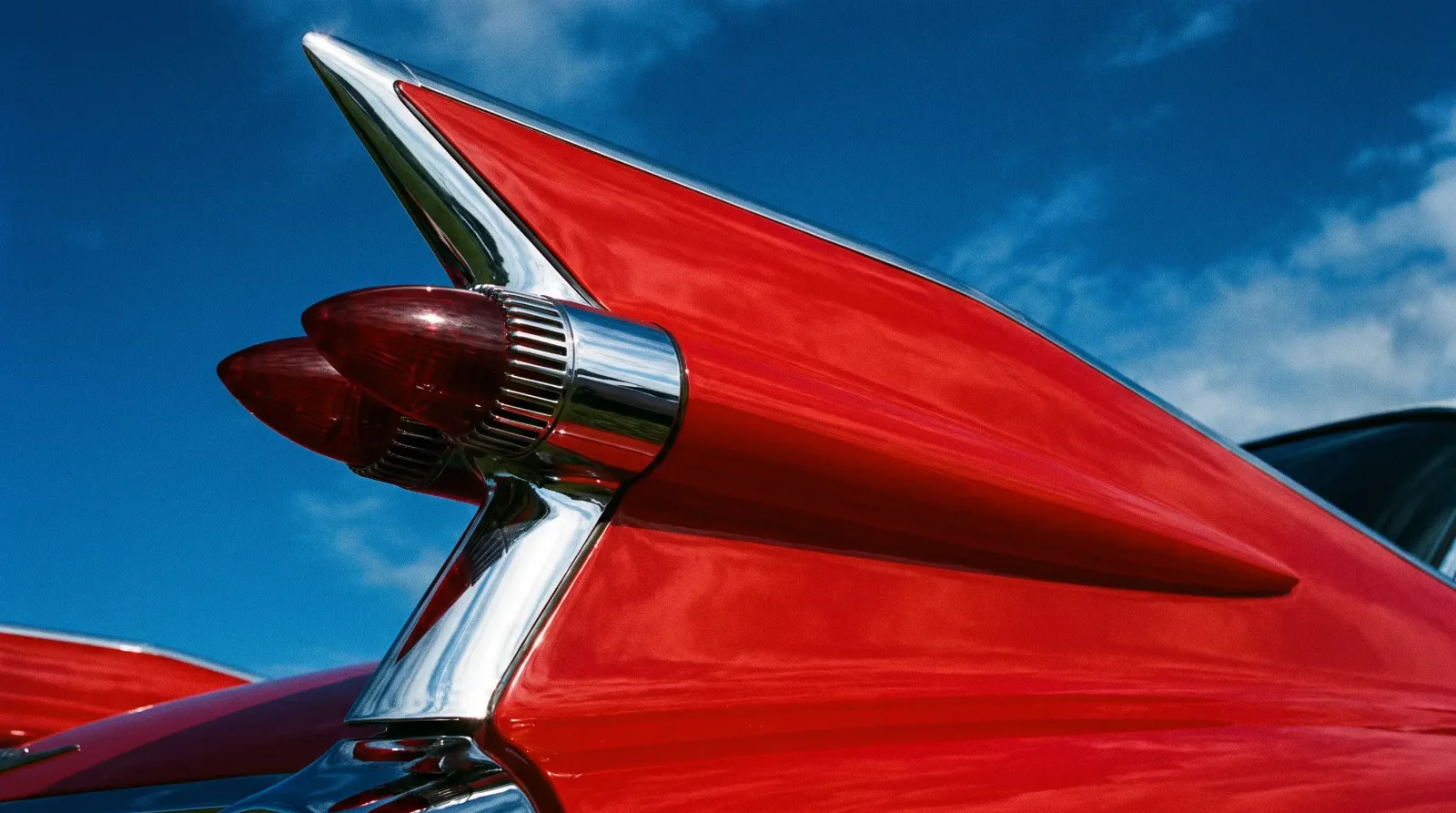
What makes the 1948 car worth studying closely is the restraint. Design historians tend to jump straight to the towering fins of the late 1950s, but the whole meaning of the arms race depends on how quiet the starting gun was. Cadillac's stylists were nervous about those first fins. Management thought buyers might reject them. Understanding why they gambled, and why it paid off, explains the ten years that followed.
The 1948 car and its cautious fin
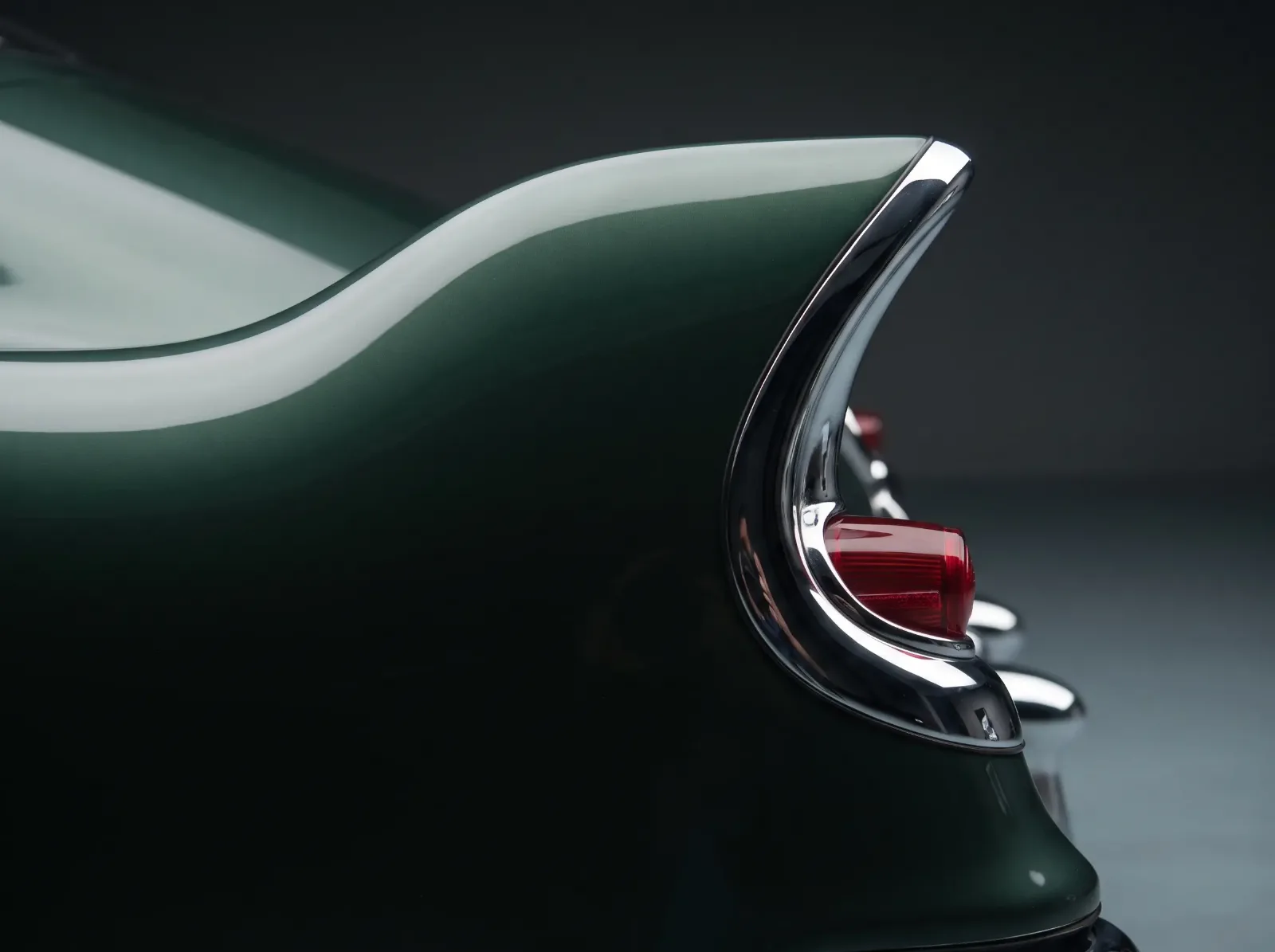
The 1948 Cadillac was the first postwar restyle of the brand, and it introduced fins that Frank Hershey is most consistently credited with shaping under Harley Earl's direction. The inspiration, viewed by Earl's team in 1941, was the twin-tail Lockheed P-38 Lightning. On the production car the reference is faint. The fin is a soft hump, the taillamp tucked into its trailing edge, the whole gesture more suggestion than statement.
Cadillac hedged. The fins appeared on the more expensive Series cars first, positioned as a distinguishing detail rather than a revolution. Buyers responded the way Earl's studio hoped. The fin gave the car a rear identity that a Buick or an Oldsmobile did not have, and identity from behind turned out to matter to people who spent Cadillac money. That success is what licensed the studio to go bigger the next year, and the year after that. This piece connects directly to how luxury design language evolved across the postwar decade.
How the escalation worked
Once the fin proved it could sell, it became a competitive weapon. The logic was simple and a little absurd. If a taller fin read as newer and more expensive, then every model year invited a taller fin. General Motors could restyle the rear of a car cheaply compared to re-engineering the chassis, so the fin became the easiest place to spend a styling budget. Cadillac raised its fins through the early 1950s, adding the bullet-shaped taillamp housings that would define the look.
The escalation was not GM's alone. Chrysler, under Virgil Exner, launched the Forward Look in the mid-1950s and pushed fins that were sharper and, on some 1957 models, arguably more elegant than Cadillac's. Exner argued his fins had a functional aerodynamic case, a claim that was mostly showroom theater at real road speeds. What mattered was the visual arms race it created. Once Chrysler went tall and sharp, Cadillac could not afford to look conservative.
| Year | Cadillac fin character | Context |
|---|---|---|
| 1948 | Small fender crest with integrated taillamp | First fins, cautiously introduced |
| Early 1950s | Taller fins, bullet taillight pods emerge | Look becomes a brand signature |
| 1957 | Cadillac responds to Chrysler's Forward Look | Exner's sharp fins raise the stakes |
| 1959 | Fins reach their tallest, most theatrical scale | Peak of the fin era |
The 1959 peak
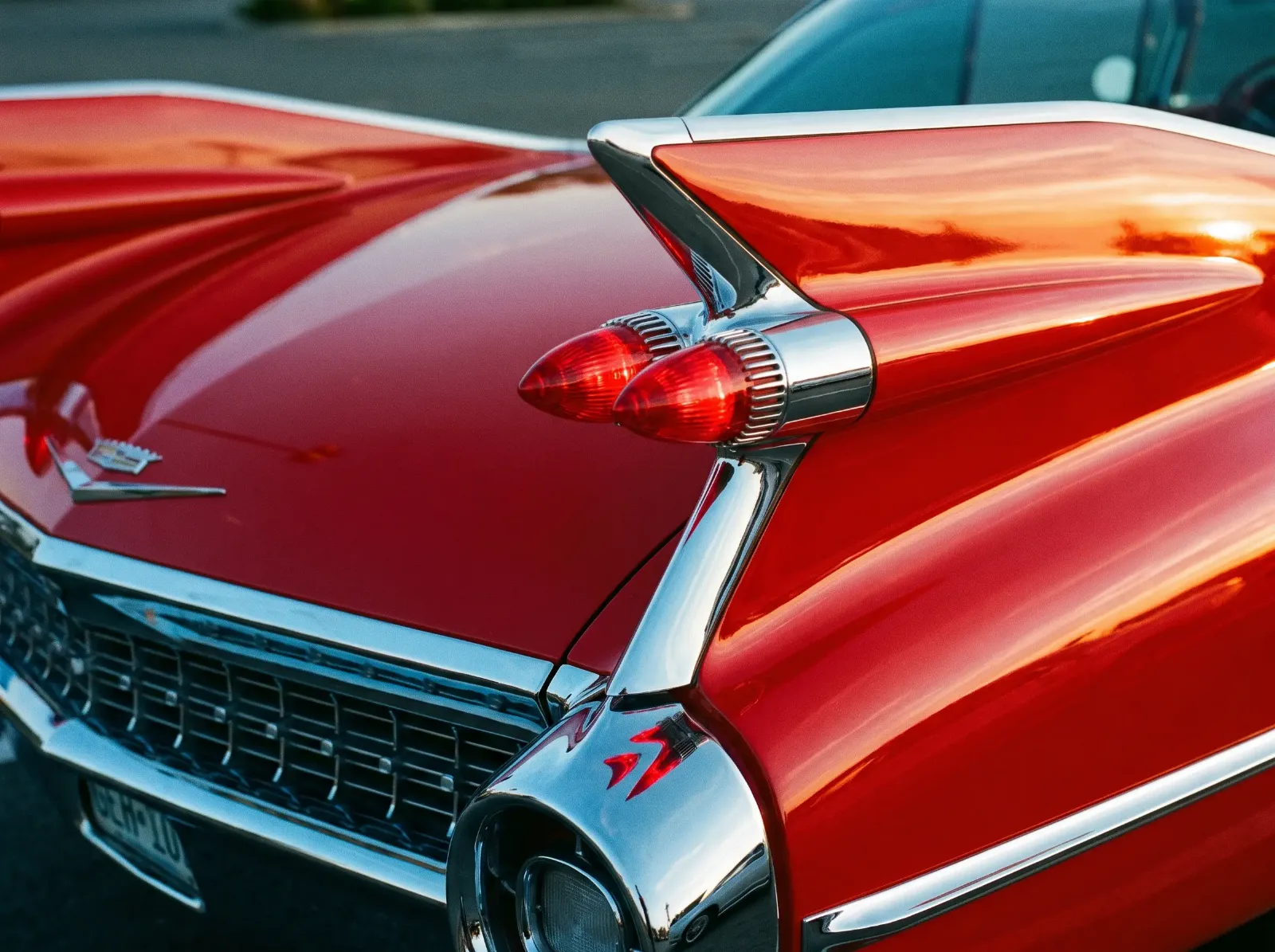
The 1959 Cadillac is where the whole thing crests. Its rear fins are the tallest the brand ever built, crowned by twin bullet taillights that became instantly iconic. The car is enormous, dramatic, and completely committed to the idea that a rear fender should look like the tail of a rocket. It is the logical endpoint of the path that opened in 1948, and standing in front of one you can see there was nowhere left to go. A fin cannot get meaningfully taller than that without becoming a sail.
What followed was collapse rather than plateau. Bill Mitchell had taken over GM styling from Earl in 1958, and his instinct ran toward crisper, cleaner lines. The fin fell almost as fast as it rose. By the early 1960s Cadillac was trimming the fins down, and by the middle of the decade the tall fin looked like a relic of a more anxious, more theatrical era. The arms race ended not with a bigger weapon but with a change of taste at the top of the studio.
It is worth noting how quickly the reversal registered with buyers. A 1959 Cadillac that had looked triumphant on the showroom floor looked slightly overdone within two or three model years, and a used one depreciated accordingly. The very feature that had driven desire now dated the car, which tells you something about how fragile a purely stylistic selling point can be. When appearance is the argument, appearance can also become the liability the moment fashion turns. Cadillac had ridden the fin up and then had to ride it back down, and the studio learned to be more careful about committing so completely to a single dramatic gesture again.
Why the arms race still matters
The fin arms race is the clearest example of design driving the American car industry rather than following it. For roughly a decade, the shape of a rear fender was a genuine competitive battleground, watched by rival stylists and argued over in design studios from Detroit to Highland Park. It shows how quickly a styling idea can escalate when appearance becomes the primary selling point and the tooling to change it is relatively cheap.
"The 1948 fin is the interesting one, not the 1959. One is a whisper the stylists were afraid to make. The other is a shout nobody could top. Everything expensive and excessive about the fifties lives in the distance between them."
Sarah Whitfield
Judged by the standards of design rather than engineering, the fins were a success and then an embarrassment, which is exactly what makes them such good history. They tell you how a nation felt about the future for ten years, and they tell you how fast a feeling can date. The next question is which manufacturers handled the fin with real taste and which simply piled it higher, and that is worth a proper reckoning, so read next: Who Did Tail Fins Best (and Worst)? A Design Retrospective.
Related Reading



Have a
Classic Car
for Sale?
Reach thousands of serious classic car collectors across the US.
Sell It Here →
Are You a Classic Car Dealer?
List your full inventory and connect with targeted classic car buyers.
Join as a Dealer →

About the author
Sarah Whitfield
Third-generation classic car collector specializing in pre-war American and European coachbuilt automobiles. Researcher and concours enthusiast.


Comments
Be the first to comment on this article.