
Everybody remembers the tail fin, but not everybody did it right. That is the part the nostalgia glosses over. For about ten years American stylists all reached for the same trick, and the results ran from genuinely beautiful to flat-out ridiculous. If you have ever stood in a show field and watched people crowd around one finned car while walking straight past another, you already know the difference is real. The best tail fin designs held together as a whole shape. The worst ones were just tall for the sake of tall.
Car Features
6 min read
Who Did Tail Fins Best (and Worst)? A Design Retrospective
Which American cars did tail fins best and which got them wrong? A builder's honest scorecard on the fin era, from 1957 Chrysler to 1959 Cadillac.
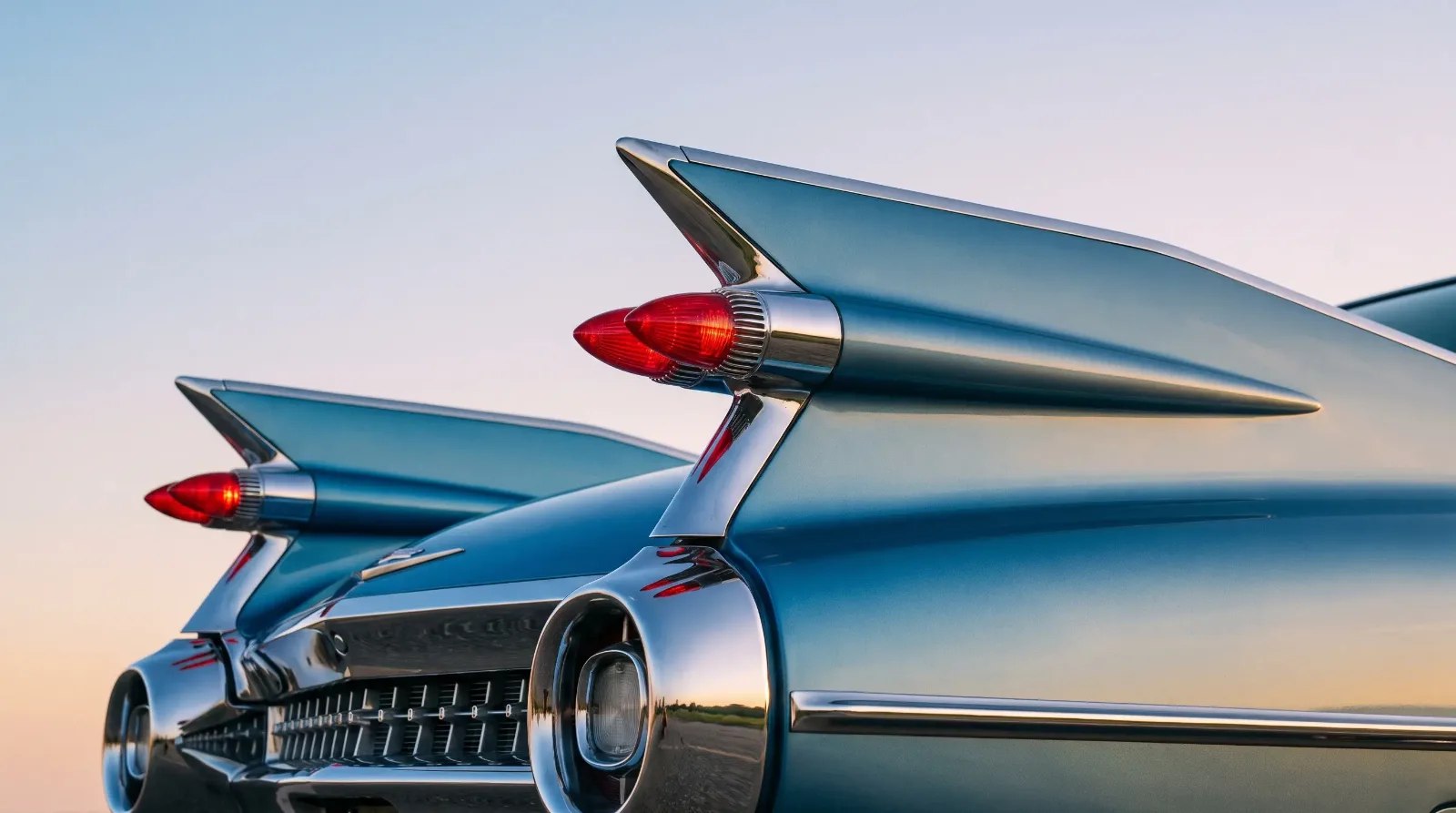
This is a builder's argument as much as a historian's. When you spend time reshaping metal, you learn fast that a line either flows or it fights the rest of the car. The fin era gave us both, sometimes from the same manufacturer in back-to-back years. So here is the honest scorecard on who understood the fin and who lost the plot.
Best: the 1957 Chrysler Forward Look
Say what you want about Chrysler in that period, but Virgil Exner's 1957 cars got the fin more right than anyone. The fins on a 1957 Chrysler or DeSoto grow out of the rear fender instead of being pasted on top of it. The line starts low near the front door and sweeps up in one clean move, so the fin feels like the end of a gesture rather than a decoration bolted to the trunk. That is the whole secret. A good fin is the finish of a line that runs the length of the car.
Exner beat Cadillac to the punch that year, and it forced GM to respond. He sold the fins on a stability story that did not really hold up at street speeds, but as pure shape they worked. Stand behind a '57 Chrysler 300 and the tail reads as fast even parked. If you want to see how these ideas thread through the whole era, they connect back to the design language hub that ties this cluster together.
Best of the loud ones: the 1959 Cadillac
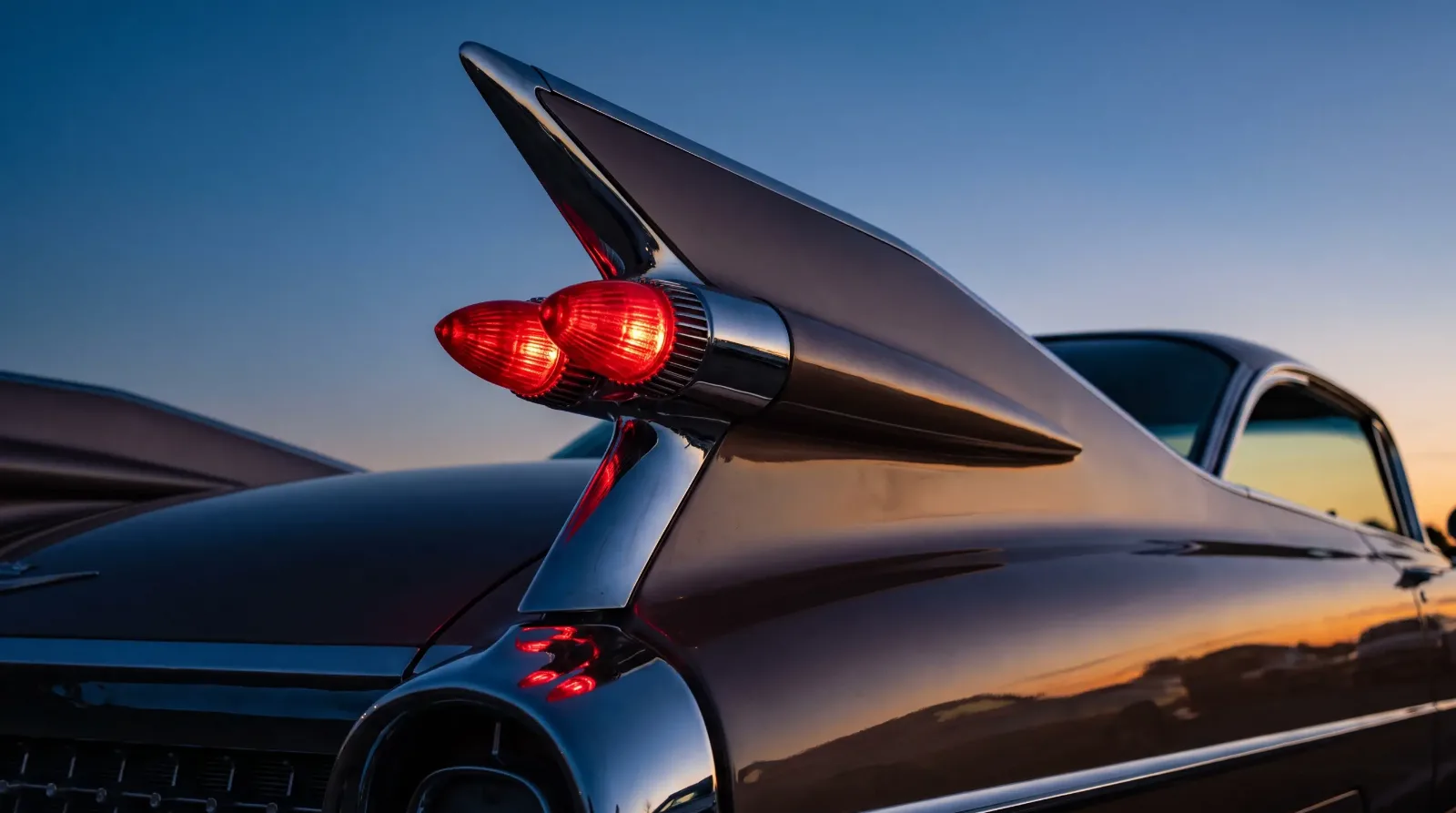
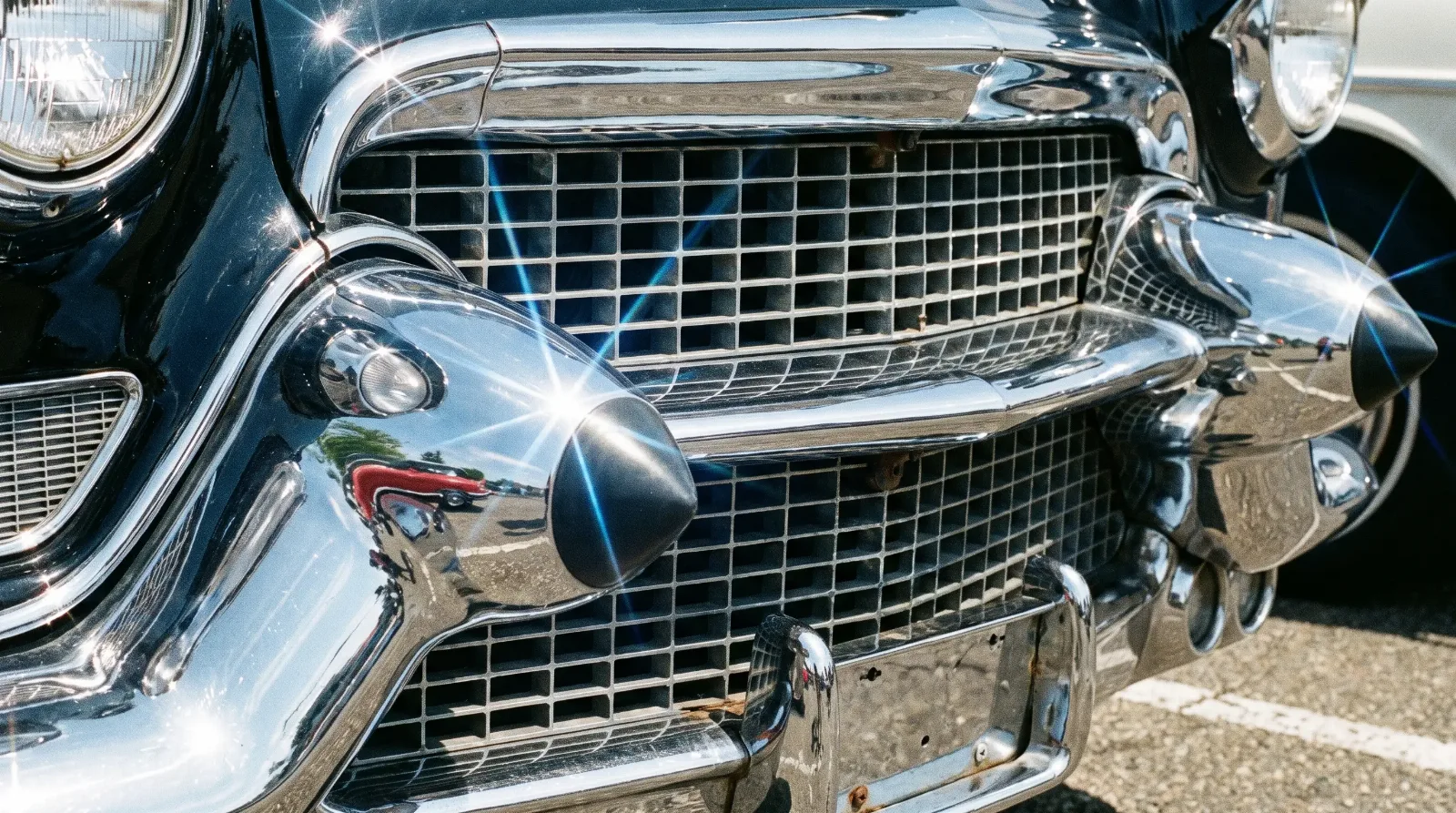
The 1959 Cadillac is the tallest fin of them all, and by any rational measure it should be the worst. It is not. It is the best of the excessive ones because the whole car commits to the idea. Everything on that Cadillac is scaled to match the fin, from the twin bullet taillights to the acres of chrome up front. Nothing about it apologizes. When a design goes all the way instead of halfway, it earns a kind of respect even when it is absurd.
That is the lesson the losers never learned. A fin does not fail because it is big. It fails because it is big while the rest of the car stays timid. The 1959 Cadillac is honest about what it is, and honesty in a design counts for a lot. These are also the cars that hold their value, which is why you still see clean examples among classic luxury cars for sale commanding serious money.
Worst: fins bolted onto the wrong car
The failures nearly always come from the same mistake. Somebody in a studio wanted a fin because the competition had one, and they added it without rethinking the body underneath. You end up with a fin that sits on top of a fender line going the other direction, so the eye catches a fight instead of a flow. The late 1950s are full of these, cars where the trunk suddenly sprouts sheet metal that has nothing to do with the shape below it.
The other failure is the tacked-on chrome spear that pretends to be a fin. A real fin is formed steel. A fake one is a bright strip trying to fake the drama without the shape. Buyers could tell, even if they could not have told you why. The cars that leaned on trim instead of form are the ones that dated fastest and the ones nobody fights over today.
You also saw plenty of cars that hedged, giving you a fin that started with conviction and then lost its nerve halfway back, flattening out before it reached the taillight. Those are almost worse than the honest failures, because you can see the good instinct getting talked out of itself in the metal. A committee got to that rear fender. Somebody wanted the drama and somebody else wanted to play it safe, and the compromise pleased neither. When you spend time cutting and reshaping this stuff, you learn that half a bold move usually looks worse than no bold move at all.
| Car | Verdict | Why |
|---|---|---|
| 1957 Chrysler / DeSoto | Best executed | Fin grows from a clean body-length line |
| 1959 Cadillac | Best of the excessive | Whole car commits to the scale |
| Late-50s tacked-on fins | Worst | Fin fights the fender line beneath it |
| Chrome-spear fakes | Worst | Trim imitating form, not real shape |
What separates the good from the bad
Strip away the era and the nostalgia and it comes down to one thing. Does the fin belong to the car or is it sitting on it? The winners treated the fin as the last stroke of a shape that started up front. The losers treated it as a hood ornament for the back end. That distinction is why some of these cars look timeless and others look like a costume.
"A fin is not a decoration you add. It is where a line ends. The guys who understood that built cars people still chase. The guys who bolted a tall piece of tin on the trunk built cars that looked old the day the next model dropped."
Jim Vasquez
The fin era is short enough to grade honestly, and the grades stick. Chrysler nailed the elegant version, Cadillac nailed the outrageous one, and a whole lot of forgettable cars proved that copying a shape is not the same as understanding it. If you want the wider arc of how American luxury styling kept reinventing itself, it runs through the complete classic luxury car story. And the fin was not the only bit of brightwork these cars piled on, which brings us to next: Chrome Trim Culture.
Related Reading
Have a
Classic Car
for Sale?
Reach thousands of serious classic car collectors across the US.
Sell It Here →
Are You a Classic Car Dealer?
List your full inventory and connect with targeted classic car buyers.
Join as a Dealer →

About the author
Jim Vasquez
Southern California hot rod and custom car builder with roots in the traditional kustom kulture scene.

Comments
Be the first to comment on this article.