
The short version of Camaro 1LE history is this: 1,360 cars across five third-generation model years, a package you could not find in a single dealer brochure, and a buyer list that was supposed to consist of people who could prove they were going racing. The 1LE was Chevrolet's way of making the IROC-Z competitive in SCCA Showroom Stock without telling the general public it existed. It worked. It also produced one of the most misread option codes of the era, because 589 of the 705 cars built in its biggest third-gen year were police cars.
Car Features
7 min read
The 1LE: The Camaro's Showroom Stock Racing Package
Camaro 1LE history by the numbers: the G92 and A/C delete trick, the brake and fuel tank parts, 1,360 third-gen cars and the 1992 police car catch.
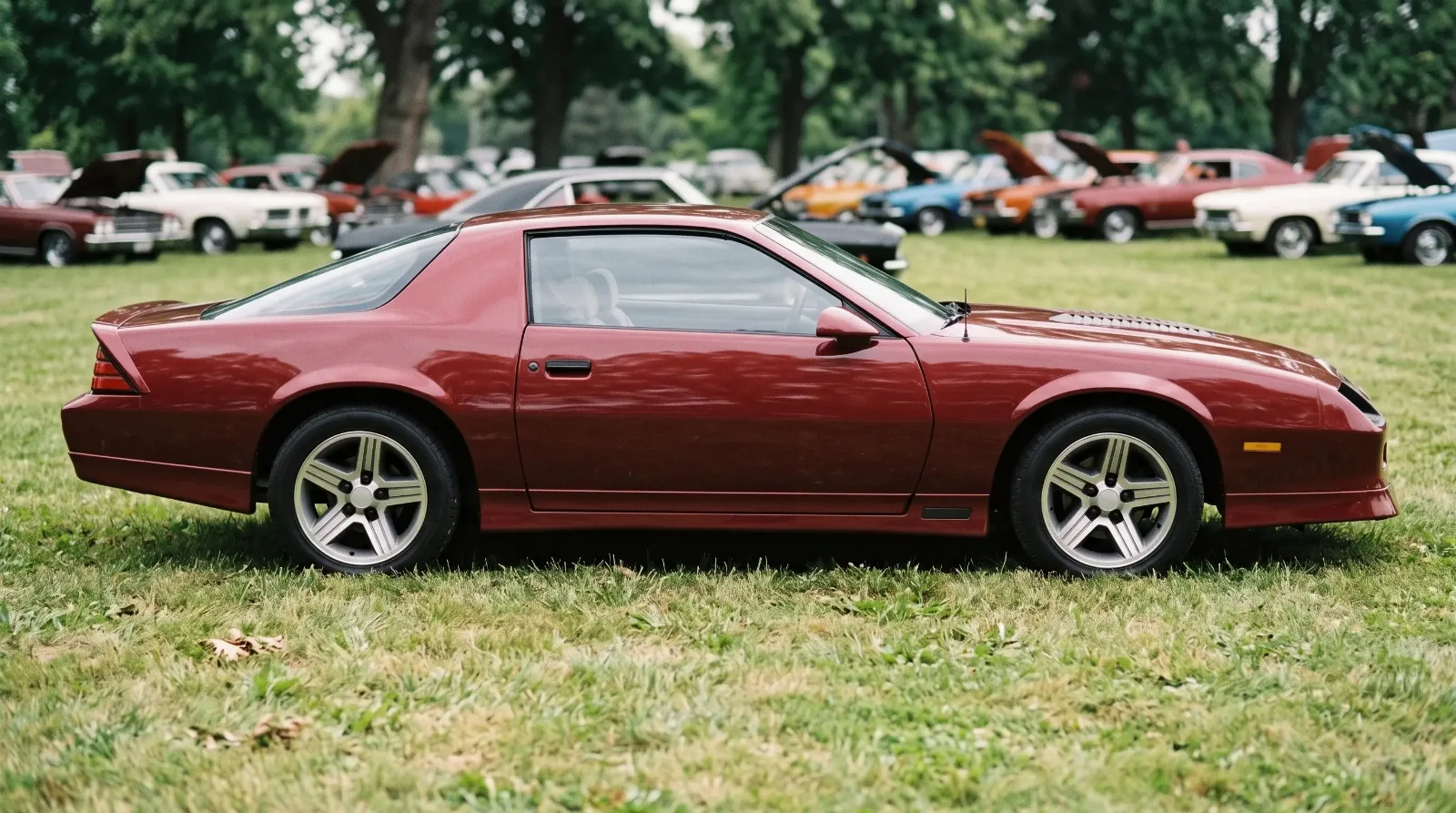
This piece sticks to the package itself: how it was triggered, what it changed, how many were built and what that means for a buyer today. For the wider context of the racing Camaros, from Trans-Am to the drag strip, start there.
A race package with no brochure
Showroom Stock racing has a simple premise. The car on the grid is supposed to be the car on the dealer floor, with safety gear added and very little else changed. That puts the burden on the factory. If the brakes fade after five laps, the racer is stuck with them, because the rulebook says so. The only way around it is to make better parts a regular production option.
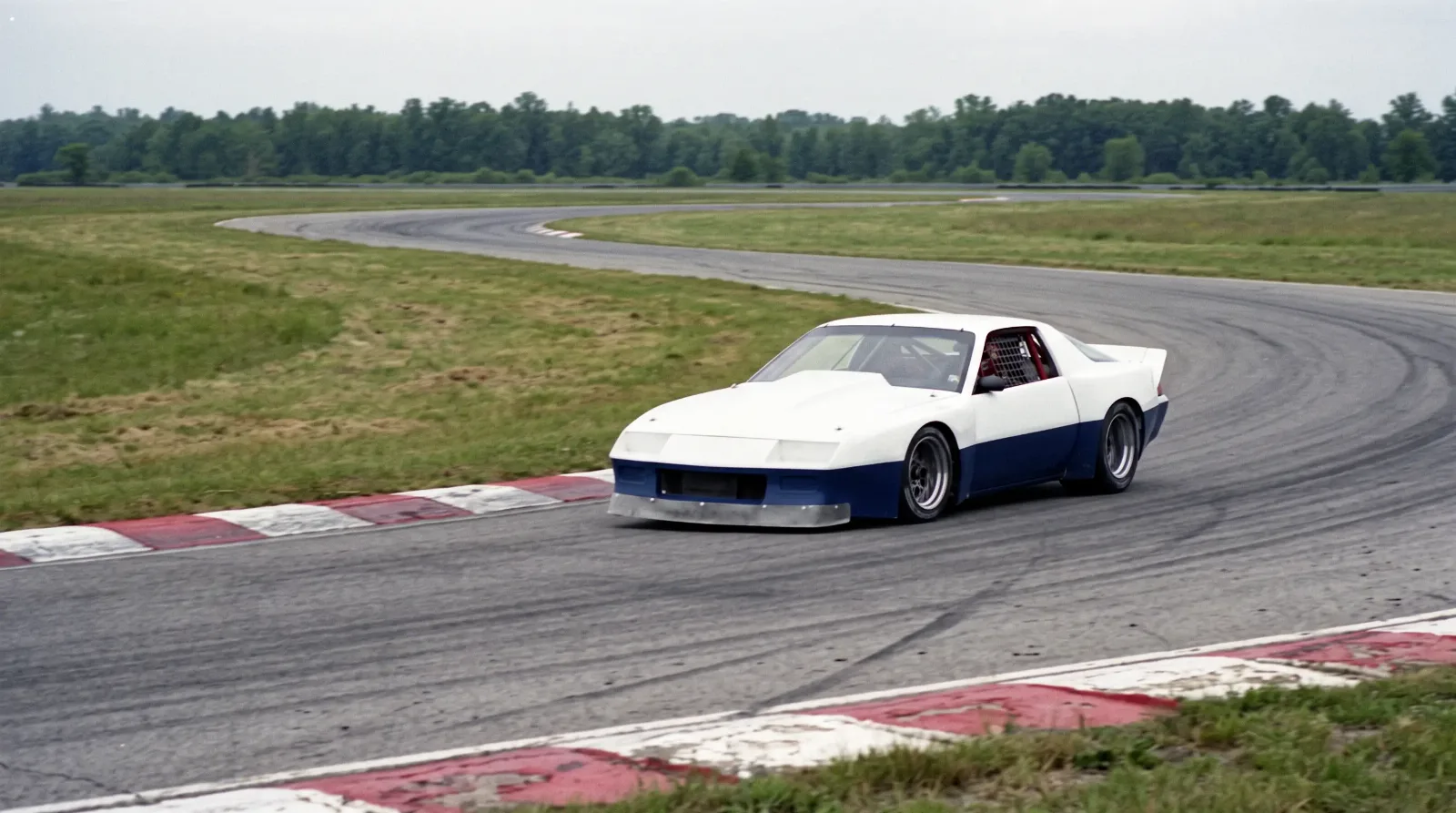
That is what the 1LE did. It was an option combination built to make the IROC-Z competitive in SCCA Showroom Stock, and Chevrolet kept it out of dealer literature on purpose. Buyers had to show proof that they would race in SCCA or IMSA events. The point was homologation, not showroom traffic. The parts needed to be legal for the class. They did not need to be sold to commuters.
The names usually attached to the program are Ray Canale, then the Camaro and Firebird powertrain manager, and John Heinricy, Chevrolet's product engineering manager, who later ran GM's high-performance vehicle work. Heinricy also raced the idea: in 1989 he won both the SCCA Escort Endurance and the IMSA Firestone Firehawk championships, and Hagerty credits those titles to a 1LE. Those results were the proof that the package did what it was built to do.
How you ordered one: the code trick
There was no box marked "1LE" on the order form. You built the car by ticking other boxes. The recipe was the G92 performance axle package plus G80 limited slip, with air conditioning deleted through code C41. Put that combination in the system and RPO 1LE was set automatically. From 1991 it went on the Z28 coupe, after the IROC name was dropped and the Z28 returned as the range-topper.
The A/C delete was the gatekeeper. G92 on its own was a well-known package that ordinary buyers ordered, and in 1989 it brought a performance axle ratio, the N10 dual-converter exhaust, J65 four-wheel disc brakes, an engine oil cooler, P245/50ZR16 Goodyear Eagles and a 145 mph speedometer. Almost nobody ordered a performance car in the late 1980s without air conditioning. Tying the 1LE to C41 kept it in the hands of people who meant it.
Engines were whatever the IROC-Z offered. The 1LE was built with the 305 TPI and five-speed, or the 350 with the automatic. Hagerty's example of a 1989 car is a 5.0 with a manual, and in 1989 that LB9 was rated 220 hp with single exhaust or 230 hp with the N10 dual exhaust in manual cars. By 1990, Hagerty says the 350 was standard in them. That is an odd fit for a race package, since the 350 TPI came only with the TH700-R4 four-speed automatic from 1987 to 1990. More on the generation as a whole is in the third-gen chapter.
What the 1LE added and what it took away
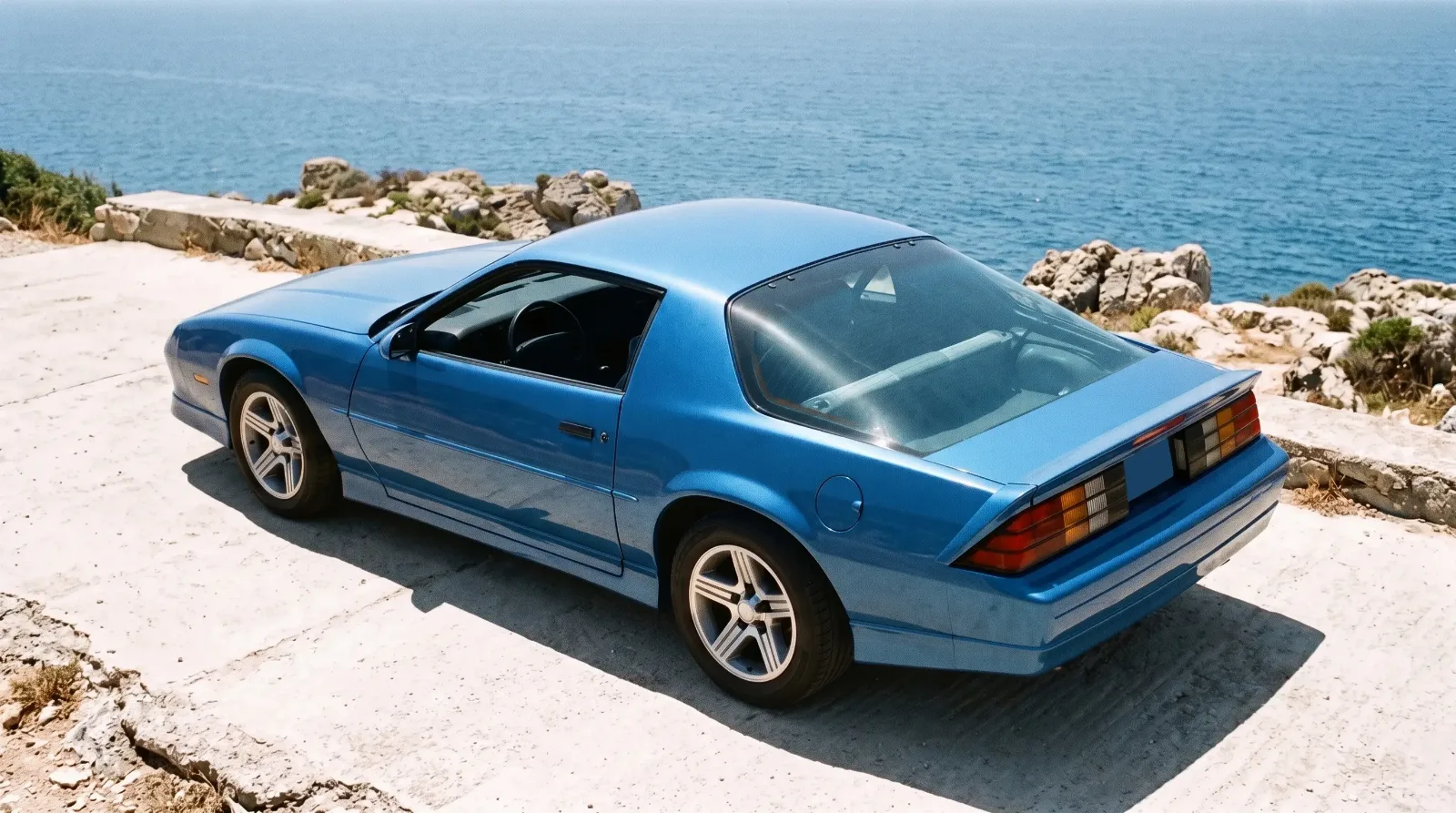
The hardware list is short, and every item on it answers a problem a Showroom Stock car runs into on lap ten, not on the drive to work.
- Larger front rotors, 11.65 inches, with PBR two-piston aluminum calipers
- An aluminum driveshaft
- A baffled fuel tank with dual pickups, so the engine does not starve in long corners
- Specific shocks and stiffer bushings
- Fog lamps, air conditioning and power windows deleted
The fuel tank is the tell. Nobody notices fuel starvation on a highway on-ramp. You notice it at the end of a long sweeper with a quarter tank, when the engine coughs and the car in your mirror goes by. The deletions are weight and simplicity. The brakes are the main event.
"Strip out the window motors and the A/C and you have not made the car faster. You have made it legal to put the parts on that do. That was the whole trick, and Chevrolet never put it in a brochure."
Dan Reeves
Camaro 1LE history by the numbers
Production tells the real story. The package started as a handful of cars and never became a volume item, even when the fourth generation picked it up.
| Model year | 1LE cars built | Note |
|---|---|---|
| 1988 | 4 to 6 | Sources disagree; no primary count |
| 1989 | 111 | IROC-Z |
| 1990 | 62 | Short model year |
| 1991 | 478 | Z28 |
| 1992 | 705 | 589 were B4C police cars, 116 non-police |
| 1993 | 19 | $330, no A/C allowed |
| 1995 | 106 | |
| 1996 | 55 | $1,175 |
| 1997 | 48 | $1,175 |
| 1998 | 99 | |
| 1999 | 74 | $1,200; last year |
Read the 1992 line twice. Of the 705 cars coded 1LE that year, 589 were B4C police pursuit coupes that got 1LE brakes. Only 116 were the civilian race package. Anyone who quotes 705 as the number of "real" 1992 race cars is off by a factor of six. The third-gen total of 1,360 carries the same caveat.
The 1990 count of 62 is low for a reason that has nothing to do with demand. The 1990 model year was cut short, with production at roughly 32 percent of 1989. The 1988 figure is the weakest number here: one source says six, another says about four, and none of them is a GM record. Call it a handful and move on.
The fourth generation kept the code. From 1993 to 1996 it brought a better-ratio Borg-Warner six-speed, Koni shocks and stiffer bars and bushings. Air conditioning became standard from 1996, which tells you the "proof of racing" era was over. The 1999 cars got double-adjustable Konis, and Chevrolet dropped the package for 2000. We found no confirmed count for 1994, so that year is left out of the table.
What a 1LE is worth, and how to prove one
The premium is real. As of May 2021, Hagerty put a 1989 IROC-Z 1LE in number-two condition at about $37,000, roughly 60 percent more than a comparable IROC-Z without the code. That is a five-year-old figure, so check a current guide before you write a check.
Documentation is everything. The parts that made the car a 1LE are the parts a racer replaced first, so an honest car with a hard track life may have lost half its original hardware. That does not kill the value, but it moves the burden onto paperwork. A car that raced should have the logbooks to show it.
The 1LE ended its fourth-gen run in 1999, but the idea outlived it: a cheap code, a short list of serious parts and no fuss in the showroom. The tracks it was built for kept running Camaros, and the later Trans-Am Camaros carried that thinking into professional racing.
Sources and notes
- Hagerty on the 1989 Camaro IROC-Z 1LE, its developers and its value
- Third-generation Chevrolet Camaro, 1LE production by year (Wikipedia)
- LSX Magazine on 1LE production and the 1,360 third-gen total
- In The Garage Media, Steve Magnante on the IROC-Z and 1LE hardware
- 1989 IROC-Z G92 equipment as listed in dealer text
- Road Racing Drivers Club profile of John Heinricy and his 1989 titles
Related Reading
Have a
Chevrolet Camaro
for Sale?
Reach thousands of serious classic car collectors across the US.
Sell It Here →
Selling a classic? Here's how: sell my classic car
Are You a Classic Car Dealer?
List your full inventory and connect with targeted classic car buyers.
Join as a Dealer →
#chevrolet camaro
#camaro racing
#camaro 1le
#rpo-codes
#IROC-Z
#Third-Gen Camaro
#SCCA Showroom Stock

About the author
Dan Reeves
Performance engine builder from North Carolina's motorsports corridor, focused on swaps, forced induction and making real, repeatable power.
Related Listings - Chevrolet Camaro
Comments
Be the first to comment on this article.