
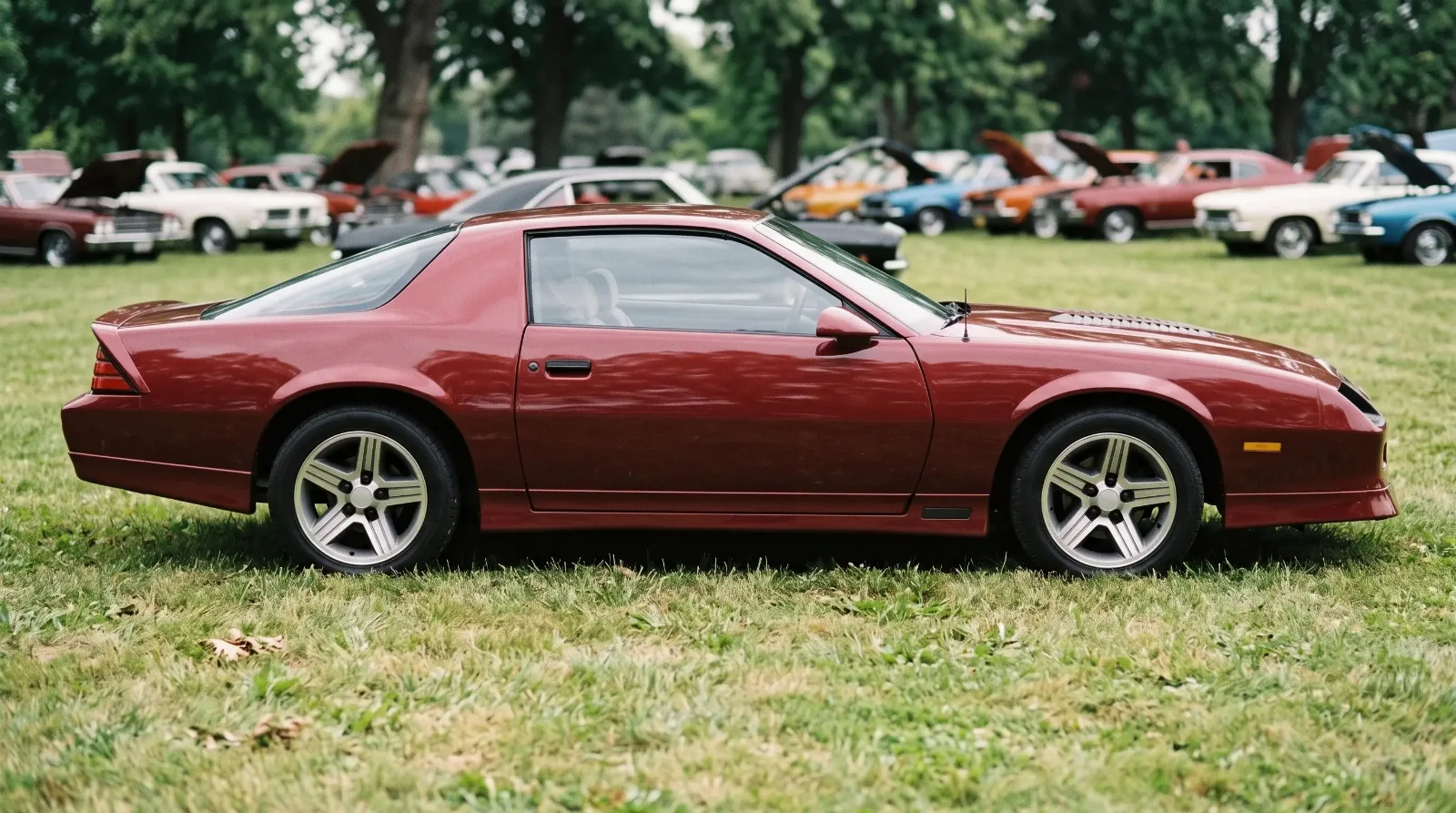
Every club meet has one. A fellow in a folding chair next to a mid-1980s Camaro, telling anyone in range that his car is "a real IROC." The door decals agree with him. The window sticker, if he still has it, tells a different story: it lists a B4Z option package on a Z28, ordered at a Chevrolet dealer. That car is an IROC-Z, and a good one. An actual IROC series Camaro is something else entirely: a race car built for the International Race of Champions, driven by the best names in American and world racing, and never sold by any dealer. Chevrolet supplied those cars for twelve seasons, from 1974 to 1989, with a gap in the early 1980s. This is the story of the race cars, not the street cars. For the wider picture of Camaros in competition, the racing guide has the full story.
The IROC Series Camaros, 1974 to 1989
The race cars behind the IROC-Z name: three generations of IROC series Camaros, the drivers who won in them, and why Chevrolet's deal ended after 1989.
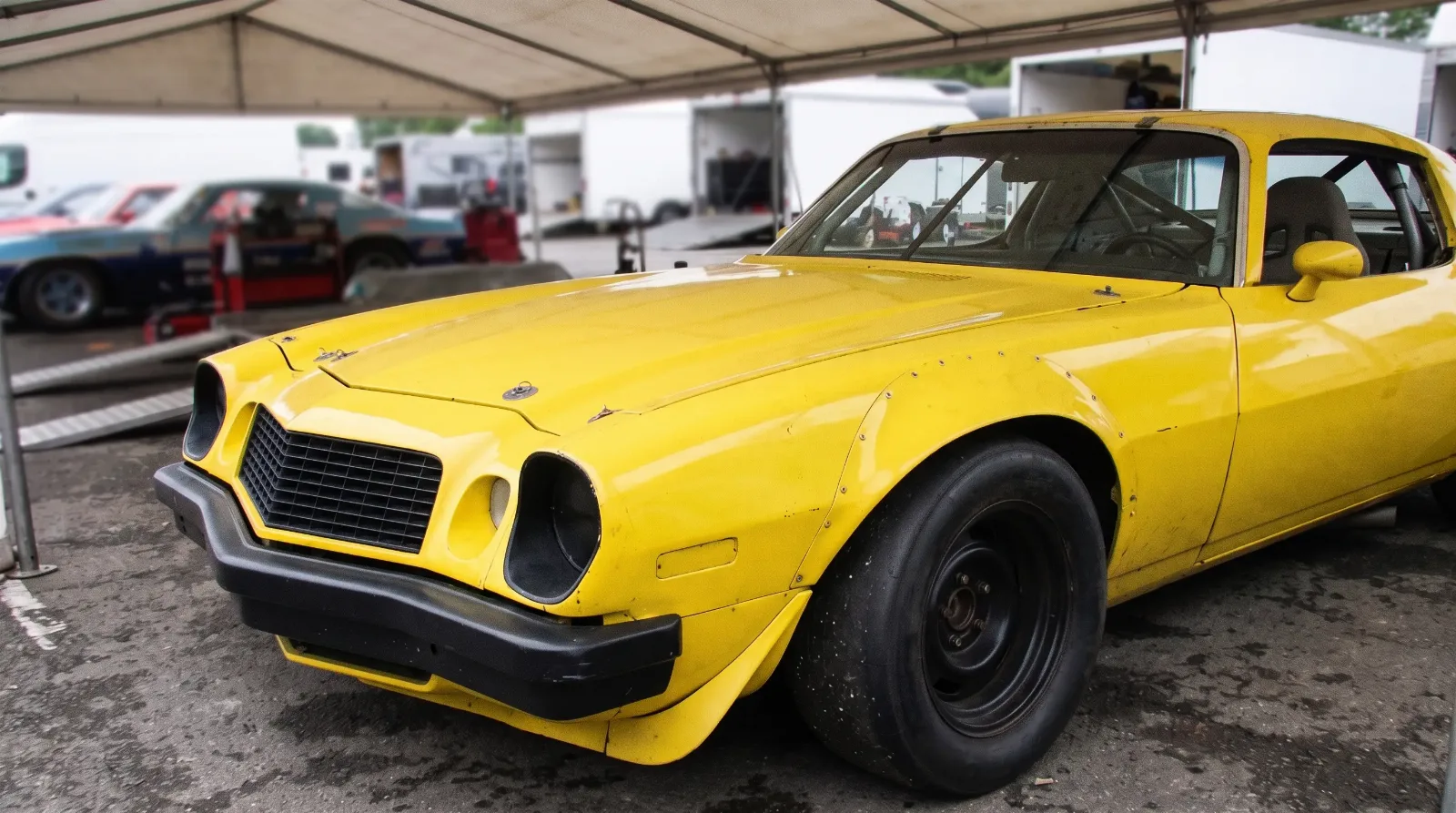
How the IROC series Camaro replaced the Porsche
The International Race of Champions was put together by Roger Penske, Les Richter and Mike Phelps, with the idea credited to David Lockton, the developer behind Ontario Motor Speedway. The format was simple and a little cruel. Twelve drivers from Formula One, NASCAR, IndyCar and sports cars raced identically prepared cars, and the cars were handed out by a blind draw. No team advantage, no budget advantage. Just the driver.
The first season ran in Porsches. The opening race was held on October 27, 1973, at Riverside International Raceway in California, and Mark Donohue won it in a Porsche 911 Carrera RSR. For the second season, IROC II, Chevrolet took over as the car supplier and the Camaro replaced the Porsche.
There is a fine irony in the timing, and club historians enjoy it. Chevrolet had just put the Camaro on national television against the world's best drivers, yet it had no performance Camaro to sell for 1975 and 1976. The Z28 was gone from the showroom while the race cars wore the bowtie every weekend they ran.
The first cars: 1974 Camaros with a Traco 336
The first IROC Camaros were built from 1974 Camaros in the summer of 1974. Fifteen were built, three of them backups. Traco built the engines: a 336 cubic inch V8 rated at 440 hp, give or take 5 hp, with a 7,200 rpm cutoff. Power went through a Borg-Warner Super T-10 four-speed. The cars weighed 3,200 lb, about 1,100 lb more than the Porsches they replaced. Those build details come from interviews with Jay Signore, who managed Penske Racing for 12 years and then ran IROC for 25.
The first Camaro IROC race was held at Michigan Speedway in September 1974, and Bobby Unser won it. The Riverside races the next month went to Emerson Fittipaldi and Bobby Allison. The Daytona finale in February 1975 went back to Bobby Unser, who took the IROC II title. A.J. Foyt won the next season's championship.
Banjo Matthews and the tube-frame years, 1977 to 1980
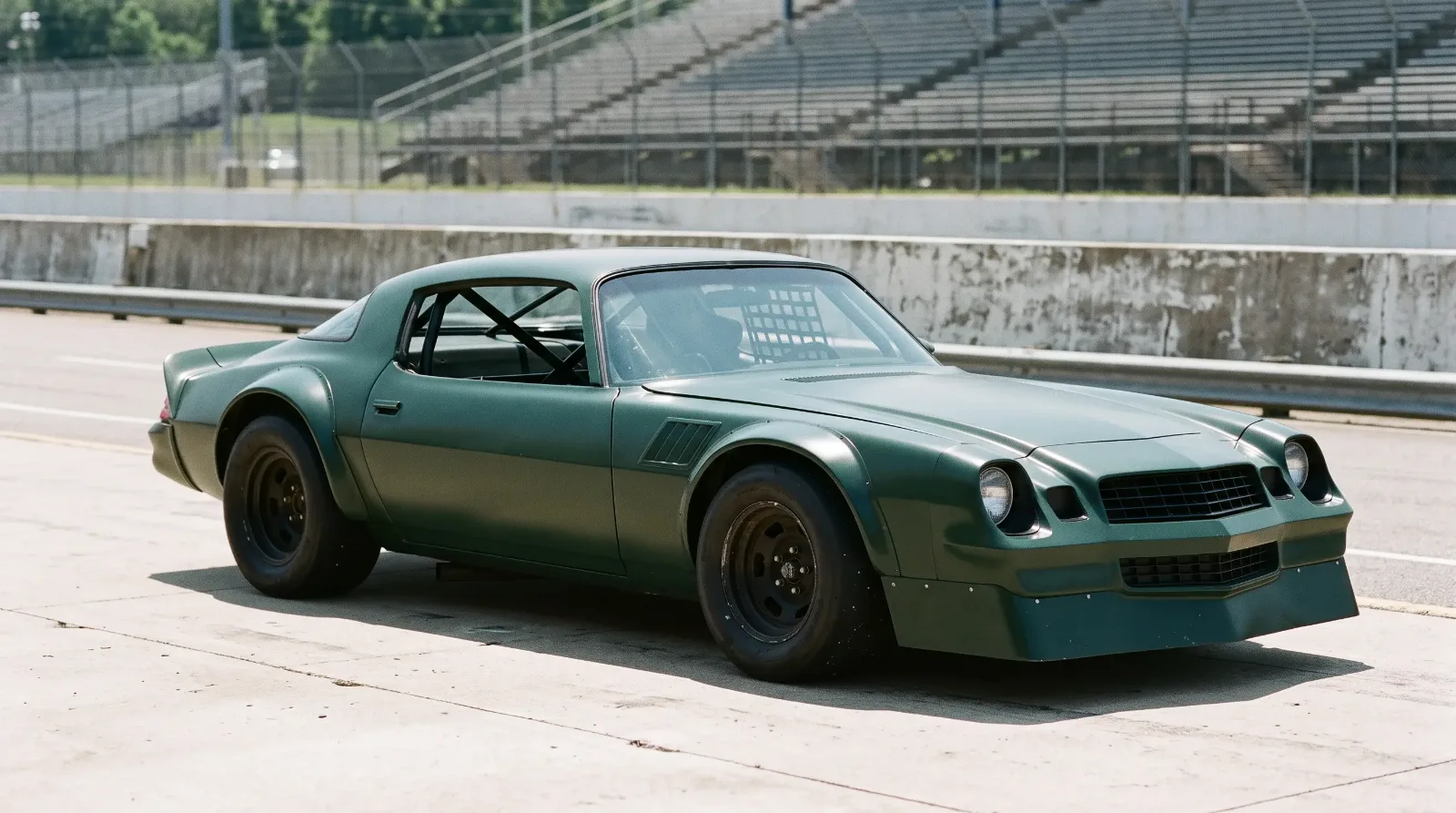
For 1977 the series moved to a second generation of IROC Camaros, and this is where the race cars stopped having much in common with anything on a dealer lot. NASCAR builder Banjo Matthews built 15 tube-frame Camaros. The bodies were mostly fiberglass panels, fitted at Penske Racing in Reading, Pennsylvania. Traco again supplied the engine, now a 350 rated at 450 hp.
Those cars carried the series through the 1980 season. The champions in that stretch included Al Unser in 1978, Mario Andretti in 1979 and Bobby Allison in 1980. Then the series went quiet. No IROC was held from 1981 to 1983, and in 1981 the operation moved from Reading to Red Bank, New Jersey.
| IROC Camaro era | Seasons | Chassis | Engine | Rated output |
|---|---|---|---|---|
| First cars | 1974 to 1976 (IROC II and III) | Built from 1974 Camaros, 15 cars | Traco 336 cu in V8 | 440 hp |
| Second generation | 1977 to 1980 (IROC IV to VII) | Banjo Matthews tube frame, 15 cars | Traco 350 | 450 hp |
| Comeback cars | 1984 to 1989 (IROC VIII to XIII) | Banjo Matthews/IROC tube frame | Katech 350 | 470 hp, 400 lb-ft |
The comeback seasons, 1984 to 1989
When IROC returned for 1984, it came back in Camaros. Underneath was still a Banjo Matthews and IROC tube frame. The engine was a Katech forged-aluminum 350 with a 390 cfm Holley, rated at 470 hp and 400 lb-ft, again through a Super T-10. The cars weighed 3,350 lb.
The champions from those six seasons read like a roll call of the era: Cale Yarborough in 1984, Harry Gant in 1985, Al Unser Jr. in 1986, Geoff Bodine in 1987, Al Unser Jr. again in 1988 and Terry Labonte in 1989. Four of those six titles went to NASCAR regulars, which surprised nobody who had watched them work a heavy car on a banked oval.
"I have heard more IROC stories told over a tailgate than there were IROC cars built. The race cars had tube frames and fiberglass panels. If the car in front of you has a Chevrolet VIN plate and a window sticker, it is a fine street car with a famous name. Ask for the paperwork, and enjoy the story either way."
Wayne Coburn
From the race to the showroom, and the end of the deal
The connection between race and showroom came in 1985, when Chevrolet launched the IROC-Z as an option package on the Z28, named after the series. That street car carried the IROC name through the 1990 model year, and it became the Camaro most people picture when they hear the letters. The full account of those cars lives in more on the IROC-Z cars.
The partnership ended after the 1989 season. GM's IROC licence ran out in 1989, Chevrolet did not renew the contract, and the series switched to Dodge Daytonas for 1990, when Dale Earnhardt won the title. The 1990 IROC-Z was the last Camaro to wear the name, and for 1991 the Z28 returned as the top model. Chevrolet's showroom racing tie moved to a quieter place: the 1990 Camaro was offered with the 1LE package, of which 62 were built that year.
IROC itself carried on without Chevrolet. Dodge Avengers ran in 1994 and 1995, and from 1996 to 2006 the cars were Pontiac Firebird Trans Ams, a run that is told in the Firebird's IROC chapter. The last season was 2006, won by Tony Stewart, and the series assets were auctioned in March 2008.
For twelve seasons, though, the cars that decided who was the best driver in the country were Camaros. If you want to see where that fits in the longer run of the model, from the first 1967 coupe on, our Camaro history picks it up from there. And if somebody at the next meet swears his car ran at Riverside, smile, nod and ask to see the papers.
Sources and notes
- International Race of Champions, Wikipedia: format, champions by season, the 1981 to 1983 gap and the 2008 auction
- IROC II, Wikipedia: the first Camaro season, races and purse
- GM EFI: the history of IROC and its three generations of Camaro race cars
- Hagerty, May 2018: the first IROC Camaro, with Jay Signore's build details
- Motor Sport: the true race of champions
Related Reading

Longtime Corvette owner, judge and club figure who knows the cars, the records and the people behind them.
Related Listings - Chevrolet Camaro
Comments
Be the first to comment on this article.