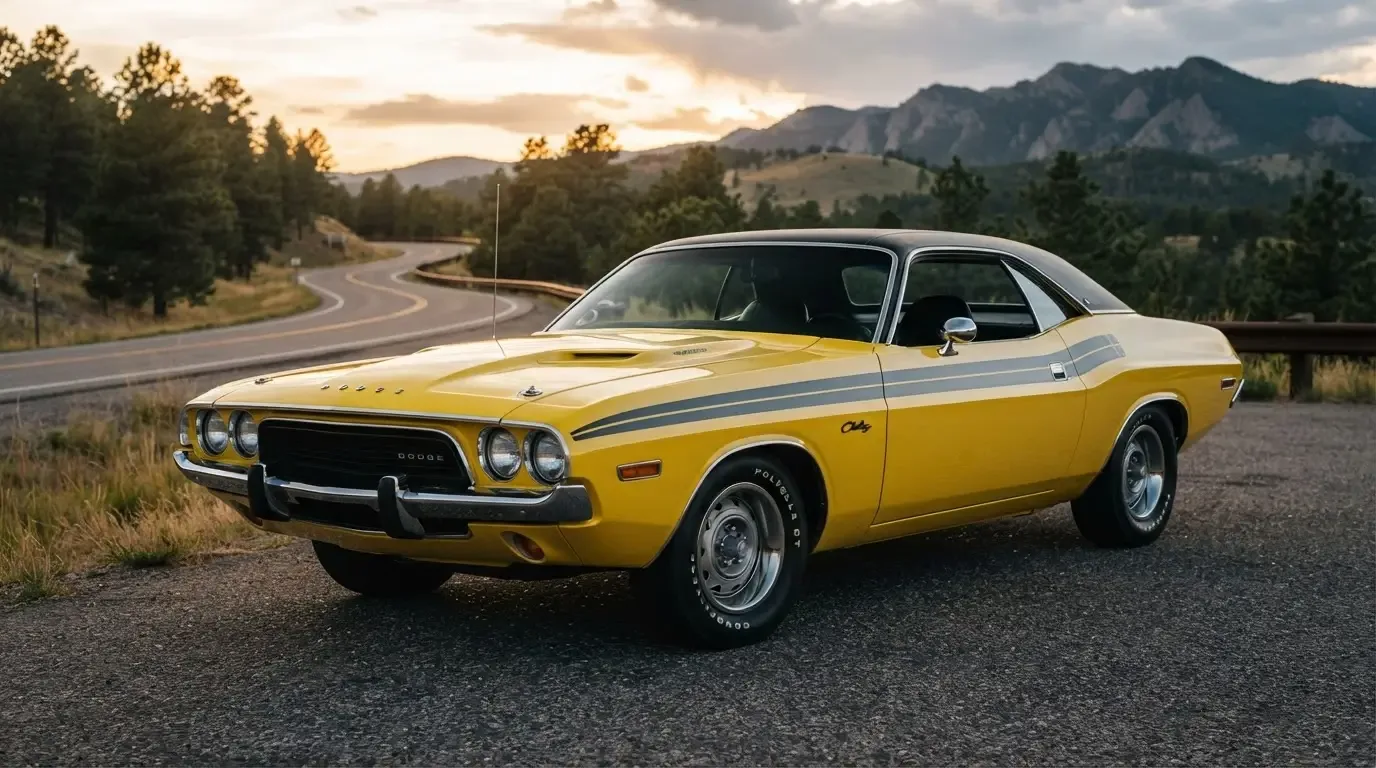

Park a 1970 Challenger next to a 1971 Challenger grille to grille and the difference is immediate even to someone who has never opened a parts catalog. The single-piece divided grille of 1970 gave way in 1971 to a split, twin-nostril design flanked by smaller round parking lamps set into the outer grille sections, a restyle so distinctive that period documentation and dealer literature treated it as a genuine model-year event rather than a minor trim update. For a car built on the same E-body platform for only its second year, that is a significant amount of tooling investment devoted to a single design element.
What changed and why it mattered to buyers
The 1971 Challenger grille split the single wide opening of 1970 into two separate segments divided by a center body-color panel, each side housing its own eggcrate insert. Round parking lamps moved outboard into the grille surround itself, a departure from the 1970 layout that had integrated them differently within the bumper assembly. Dodge's design department made this change deliberately visible, not subtle, because 1971 also brought engine and trim shuffles of its own, including a detuned 383 four-barrel now limited to the R/T and the debut of a stripped-down Deputy model, that needed a way to signal newness on showroom floors already crowded with returning 1970 stock. A distinctive front clip did that job efficiently and cheaply relative to a full body change.
| Detail | 1970 | 1971 |
|---|---|---|
| Grille layout | Single wide divided opening | Split twin-segment design |
| Parking lamp position | Integrated lower bumper area | Outboard grille surround |
| Center trim | Continuous grille bar | Body-color divider panel |
| Documentation source | 1970 dealer literature | 1971 dealer literature |
Why this detail matters for concours judging
Restoration shops and concours judges treat the 1971 grille as one of the clearest single-year identifiers on the entire E-body platform, more reliable than many interior trim details that carried over across model years with only minor supplier variation. A car presented as a 1971 with a grille sourced from a 1970 or 1972 donor car, whether from an incorrect restoration or a repair using whatever parts were available at the time, is an immediate and visible flag for anyone doing period-correct verification. Because the grille assembly bolts in relatively easily compared to structural body panels, incorrect substitutions happen more often than owners might expect, usually from decades-old repairs rather than any intent to misrepresent the car.
Supplier records and the parts behind the design
Chrysler sourced grille components from outside suppliers rather than manufacturing every trim piece in house, and the 1971 redesign required entirely new tooling for the split segments and their mounting hardware. Parts catalog entries from the period list the 1971 grille assembly under a distinct part number from both the preceding 1970 piece and the following 1972 redesign, confirming that Dodge treated this as a genuine single-year part rather than a running production change carried across model years. That distinction matters enormously for anyone trying to source a correct replacement decades later, since a part number one digit off can mean an assembly that looks similar in photographs but does not actually match factory records for a 1971 build.
Reproduction manufacturers have gotten considerably better at replicating the 1971 grille's proportions over the past two decades, closing a gap that once made original parts almost mandatory for serious restorations. Even so, subtle differences in plastic texture, chrome plating thickness, and mounting tab spacing persist between the best modern reproductions and genuine period pieces. A researcher comparing the two side by side under good lighting can usually tell them apart, though the difference has narrowed enough that casual inspection at a car show rarely settles the question definitively.
Sourcing and authenticating a correct grille today
Original 1971 grille assemblies are not as plentiful as reproduction parts suppliers might suggest, and casting marks, mounting tab locations, and finish texture all vary subtly between a genuine period piece and a reproduction built decades later to looser tolerances. Serious documentation efforts compare the physical part against period parts catalog illustrations and, where possible, against a factory build sheet or broadcast sheet referencing the correct trim code. This level of scrutiny sounds excessive to a casual buyer, but it is standard practice for anyone presenting a car at a national-level concours event where a single incorrect part can affect judging outcomes measurably.
"I have failed cars on grille details alone. It sounds harsh until you understand how much a single-year design element like this tells you about whether the rest of the restoration was done with the same level of care."
- Sarah Whitfield
The grille in the context of the broader 1971 to 1974 story
This front-end change is only one chapter in a generation of Challengers that shifted styling and engineering direction almost annually through the early 1970s. Readers wanting the fuller context of how these year-to-year changes fit together should read the background covering the full production run this grille belongs to. Understanding the sequence of changes across 1971 through 1974 makes each individual detail, including this one, easier to place correctly when authenticating a specific car, and it prevents the common mistake of judging a single year's trim in isolation from the decisions that came before and after it.
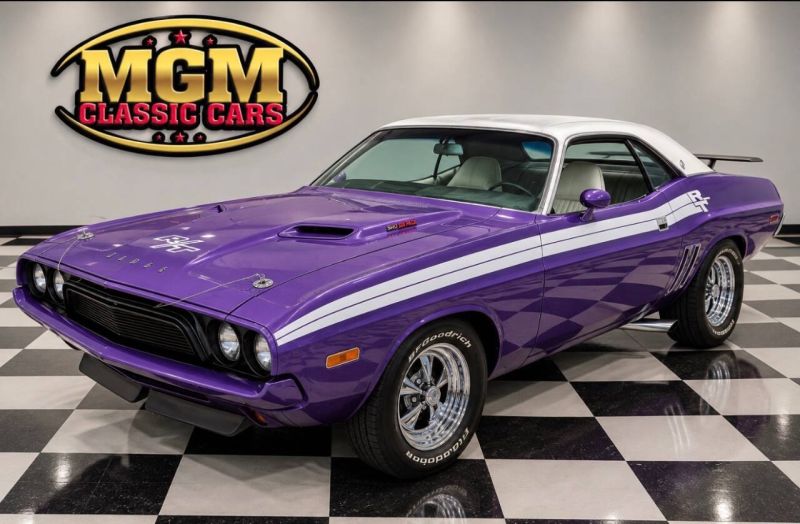
For collectors and buyers currently searching for an example with correct, period 1971 front-end trim, patience matters more than speed. Grille condition and originality directly affect both concours eligibility and resale value, and it is worth inspecting this detail closely before committing to a purchase. Those ready to start that search can find a classic Challenger and compare available examples with an eye toward front-end originality alongside the usual mechanical and body condition checks.
Documenting a grille for insurance and appraisal purposes
Beyond concours judging, a documented original grille assembly carries weight in insurance appraisals and pre-purchase inspections, since it is one of the more affordable single-part indicators an appraiser can check quickly without disassembling anything. Photographs paired with a build sheet reference, filed with the car's other ownership documentation, add measurable credibility when the car eventually changes hands or comes up for a policy renewal that requires updated valuation paperwork. Owners who skip this step are not necessarily hiding anything, but they are leaving an easy, low-cost piece of provenance unrecorded that a future buyer or appraiser will likely ask about anyway. Treating small details like this with the same seriousness applied to engine numbers and body tags is, in practice, what separates a thoroughly documented example from one that merely looks correct in photographs. A single-year detail this specific rewards patient, methodical buyers far more than it rewards anyone in a hurry to close a deal, and that patience is exactly what separates a documented, research-backed purchase from a costly guess made under showroom pressure.