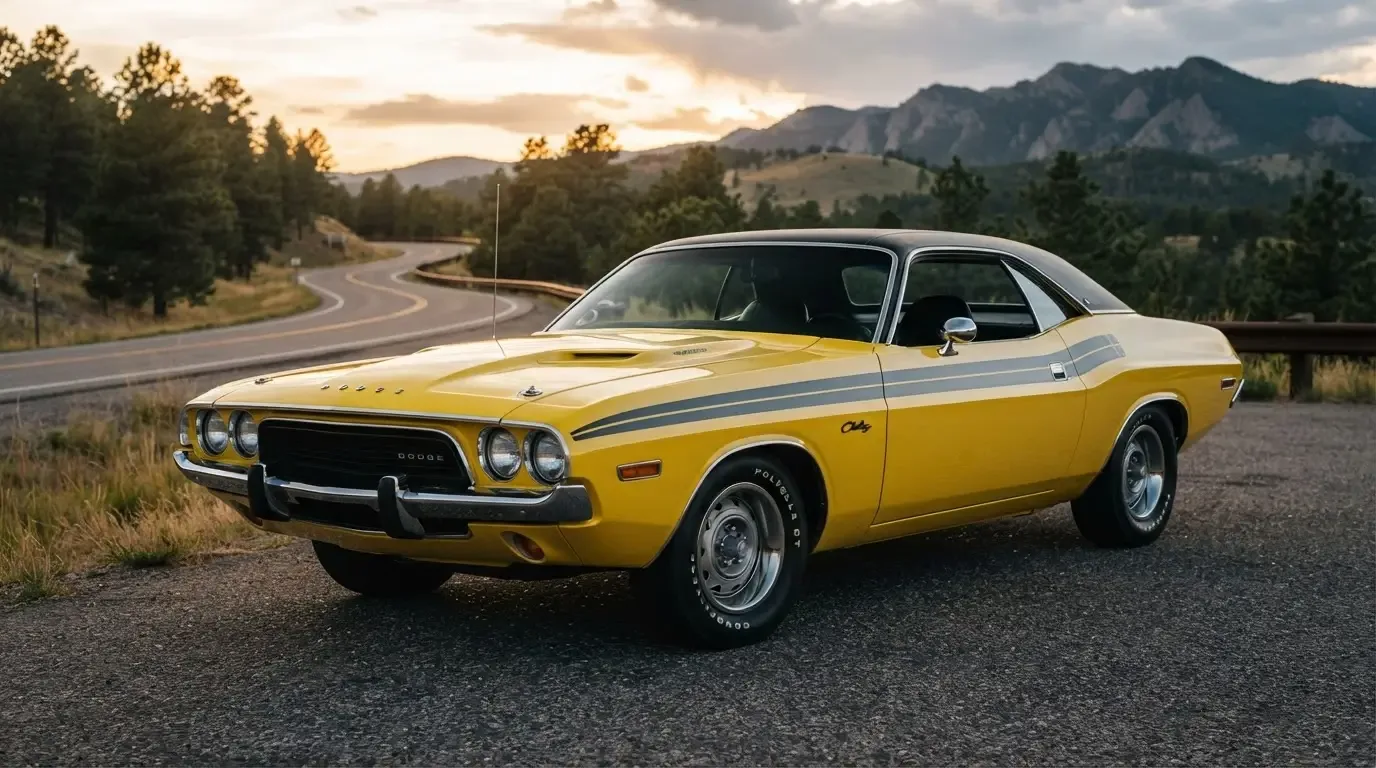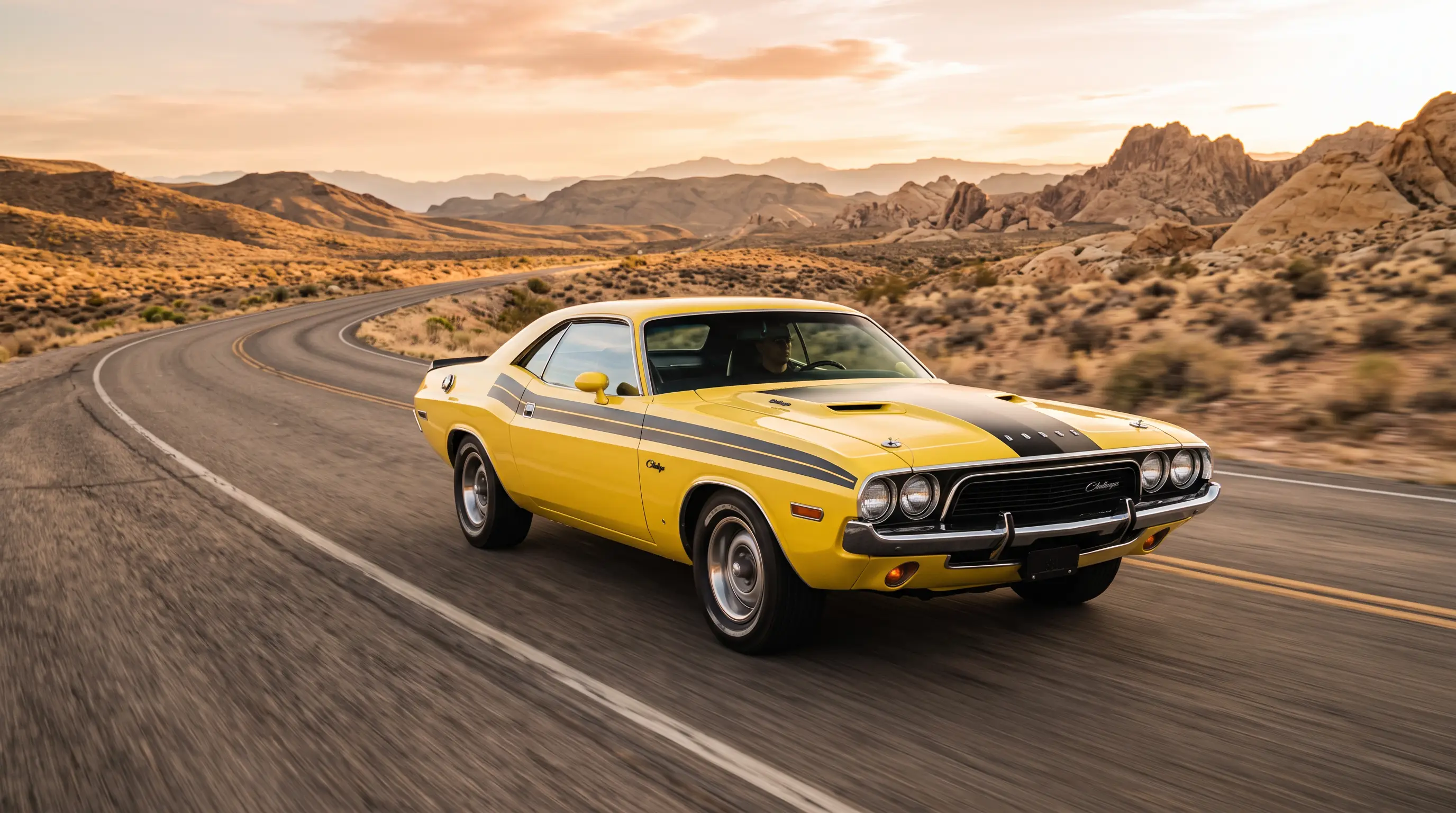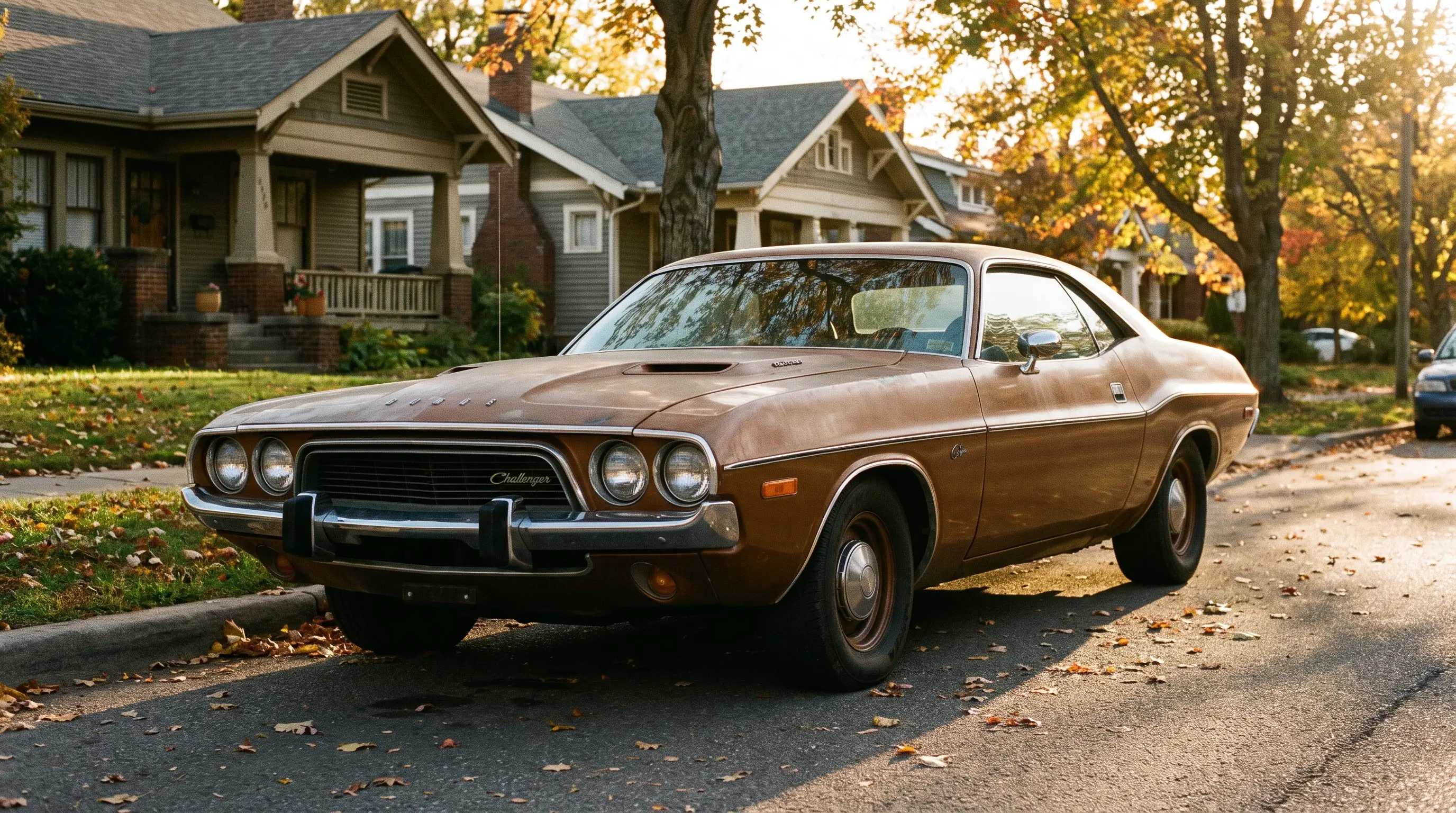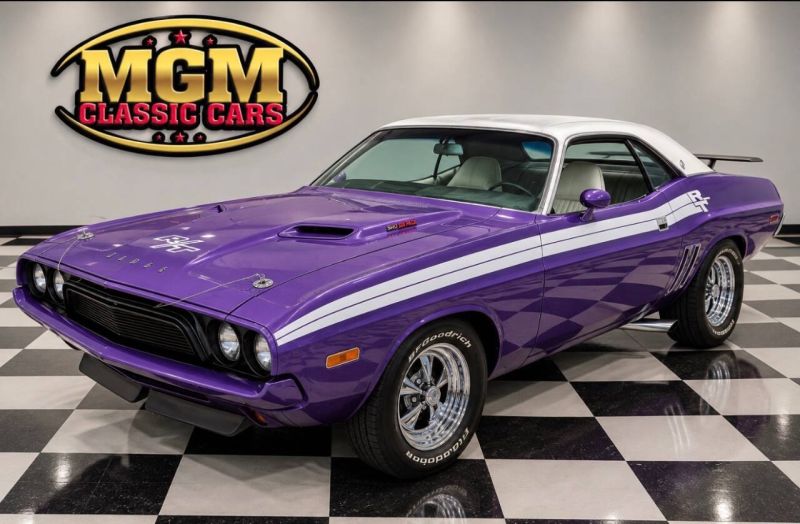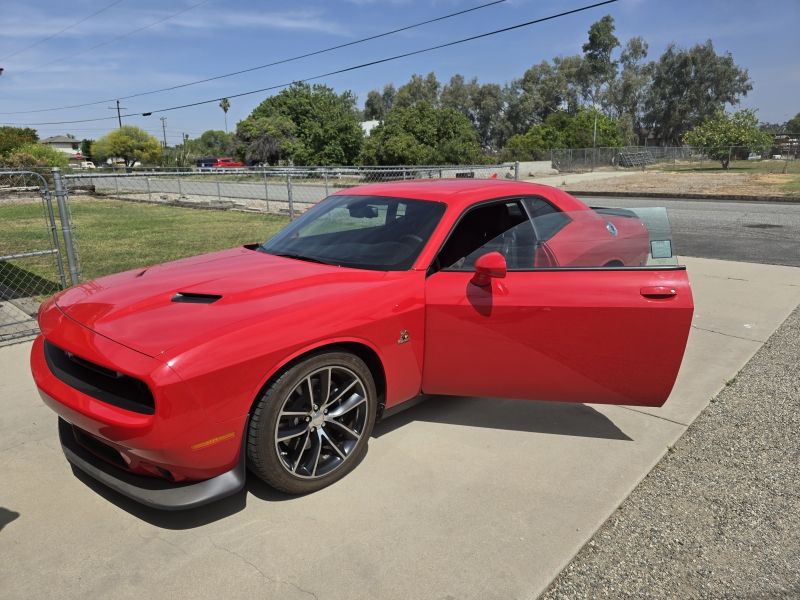
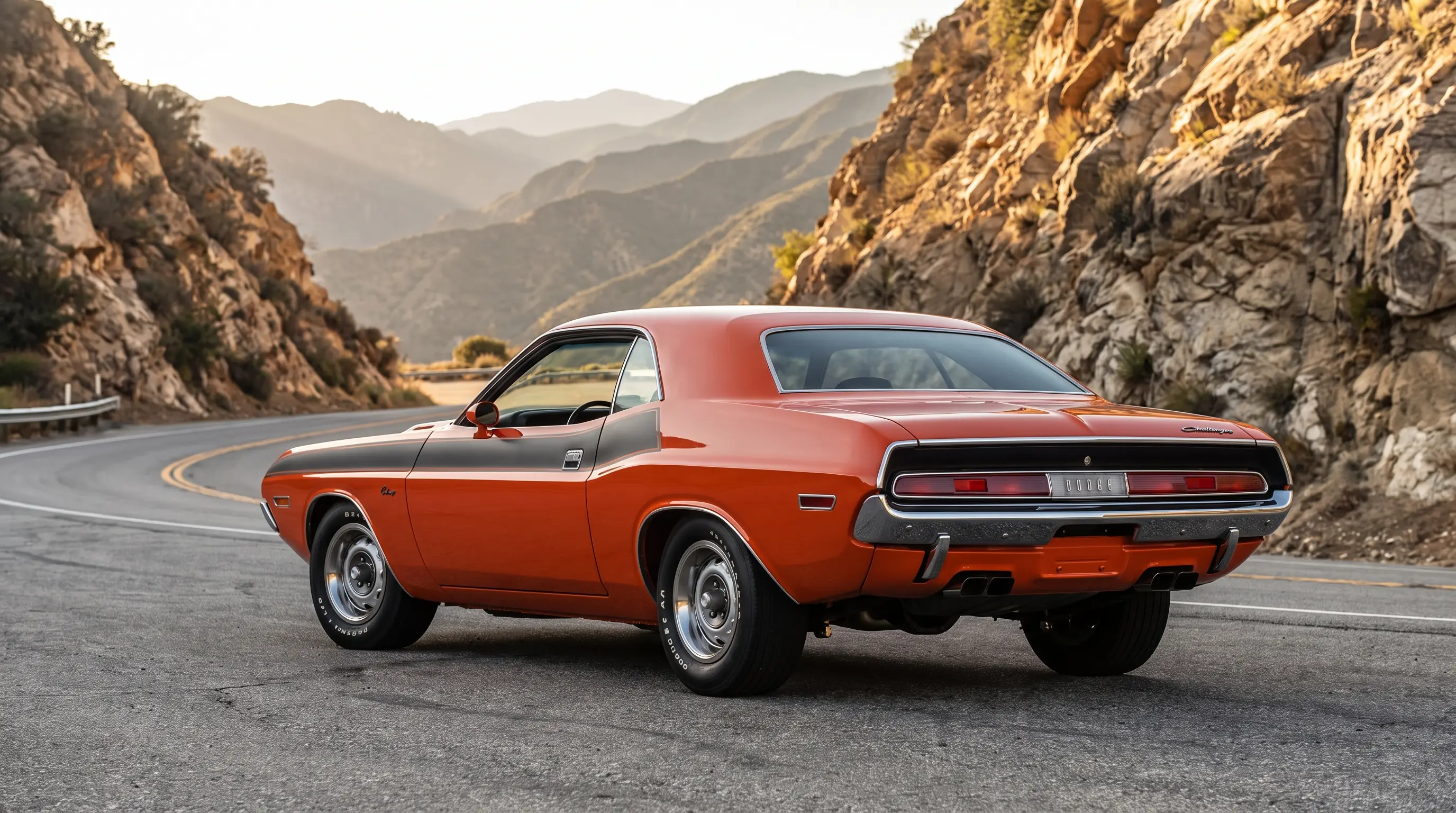
The 1972 Challenger Rallye package deserves a closer look than it usually gets, because most retrospectives mention it only in passing as the car that replaced the R/T. That framing undersells what Dodge actually built. You can read the background if you want the full context around why the R/T disappeared that year. Here the focus stays squarely on what the Rallye package itself included, and why it earned genuine respect despite arriving without a big block option.
What the Rallye package actually contained
Factory documentation lists the Rallye as an appearance and handling package built around a specific set of hardware rather than a single headline engine. It included a distinctive hood with functional or simulated air intakes depending on engine selection, a bold body side tape stripe treatment, and Rallye badging on the exterior that distinguished the car at a glance from standard trim Challengers. Underneath, the package brought genuine handling upgrades including firmer suspension tuning and, in many configurations, upgraded wheels that improved both the car's stance and its actual road manners compared to a base model. Interior touches included a Rallye instrument cluster with a more complete set of gauges than the base dash offered, a detail that mattered to buyers who wanted to monitor their engine rather than simply trust a warning light.
None of this matched the R/T's earlier access to big block engines, and factory literature never claimed it did. The Rallye was positioned honestly as a different kind of performance package, one built around handling, appearance, and a genuinely capable 340 small block rather than outright displacement.
The 340 as the Rallye's actual heart
The 340 cubic inch V8 available with the Rallye package earned respect from period road testers precisely because it paired well with the car's lighter front end compared to big block equipped Challengers. Weight distribution improved noticeably with the smaller engine up front, and several period comparisons noted the 340 Rallye handled with more precision through corners than its big block predecessors, even if it could not match their straight line numbers. This is a case where the factory's engineering priorities shifted in response to regulation and made a genuinely different, rather than simply lesser, car.
Documented output for the 340 in Rallye trim was 240 horsepower at 4,800 rpm on the newly adopted SAE net rating scale, a number that looks modest against the Hemi's 425 gross rated figure but that translated to real world performance many contemporary owners found entirely satisfying for a car built to be driven rather than raced at a strip. Part of the apparent drop from earlier 340 ratings reflects the industry wide switch from gross to net horsepower measurement that took effect for 1972, not a mechanical change to the engine itself.
How the Rallye compares to the same year's plain hardtop
Set a Rallye equipped Challenger next to a standard hardtop from the same model year and the differences go well beyond the stripe package. Beyond the suspension and instrument upgrades already mentioned, Rallye cars typically came with a more complete trim package inside, including upgraded seat materials in many configurations. Buyers cross shopping the two trims in 1972 were not simply choosing between looks. They were choosing between a car tuned specifically for a more engaged driving experience and one built primarily for basic transportation with Challenger styling. Dealer records from the period suggest the Rallye commanded a real premium on the lot and moved briskly among buyers who understood what the extra money bought.
"The Rallye package gets dismissed sometimes as a consolation prize for buyers who couldn't get an R/T anymore. Factory documentation doesn't support that framing. It was a genuinely different, carefully engineered package, not a diminished substitute."
- Tom Ramirez
Wheel and color choices specific to the Rallye
Dodge offered a distinct wheel option with the Rallye package, a design that visually separated these cars from standard trim Challengers even before a buyer noticed the hood treatment or stripe kit. Factory records show these wheels were not a universal fitment across every Rallye car, meaning some buyers ordered the package without the signature wheel option, which matters today when a researcher is trying to confirm whether a given wheel and hubcap combination on a surviving car is original to that specific vehicle or a later addition. Color availability for Rallye equipped cars generally mirrored the broader 1972 palette, though certain combinations of stripe color against body color were more common than others based on surviving production data, giving researchers another useful cross check point when working from period photographs alongside dealer invoices where those documents have survived.
None of these details are trivial to a careful restoration. A Rallye car restored with an incorrect wheel and stripe combination, even an attractive one, misrepresents the car's documented original configuration, and buyers paying a premium for factory correctness deserve to know the difference between a period correct restoration and a tastefully modified one, and a reputable seller will disclose that difference without being pressed on it.
Verifying a genuine Rallye today
For anyone researching or buying a car claimed to be an original Rallye, the fender tag and broadcast sheet remain the only reliable verification method. Stripe kits and badging can be reproduced and applied to any Challenger decades after the fact, and an honest seller should welcome a buyer's request to cross check build codes against the package's documented content. The Rallye's story remains worth telling accurately, since it represents a real engineering response to a changing market rather than simply a rebadged decline. Readers following this era of the Challenger's history should treat the 1973 model year as worth a look too, since it continued adapting the same basic formula under even tighter regulation. Those shopping today can shop classic Challenger listings and compare how many surviving examples carry documentation supporting their claimed Rallye equipment.
Why the Rallye's reputation has improved with time
For years the Rallye package sat in the shadow of the R/T and the Hemi, treated by casual enthusiasts as a footnote to a more famous era. That reputation has shifted as more collectors and researchers have looked closely at the actual factory documentation rather than repeating secondhand summaries. The Rallye represents Dodge's engineers adapting cleanly to a genuinely different regulatory and market environment, producing a car that handled well, looked distinctive, and gave buyers real value without pretending to be something it was not. That kind of honest engineering deserves more credit than nostalgia has traditionally given it, and the growing interest in documented, correct Rallye cars among today's collectors reflects a wider recognition that the 1972 model year, on its own terms, produced something genuinely worth preserving, documenting, and driving rather than dismissing as a compromise forced on Dodge by circumstances entirely outside its own control at the time.