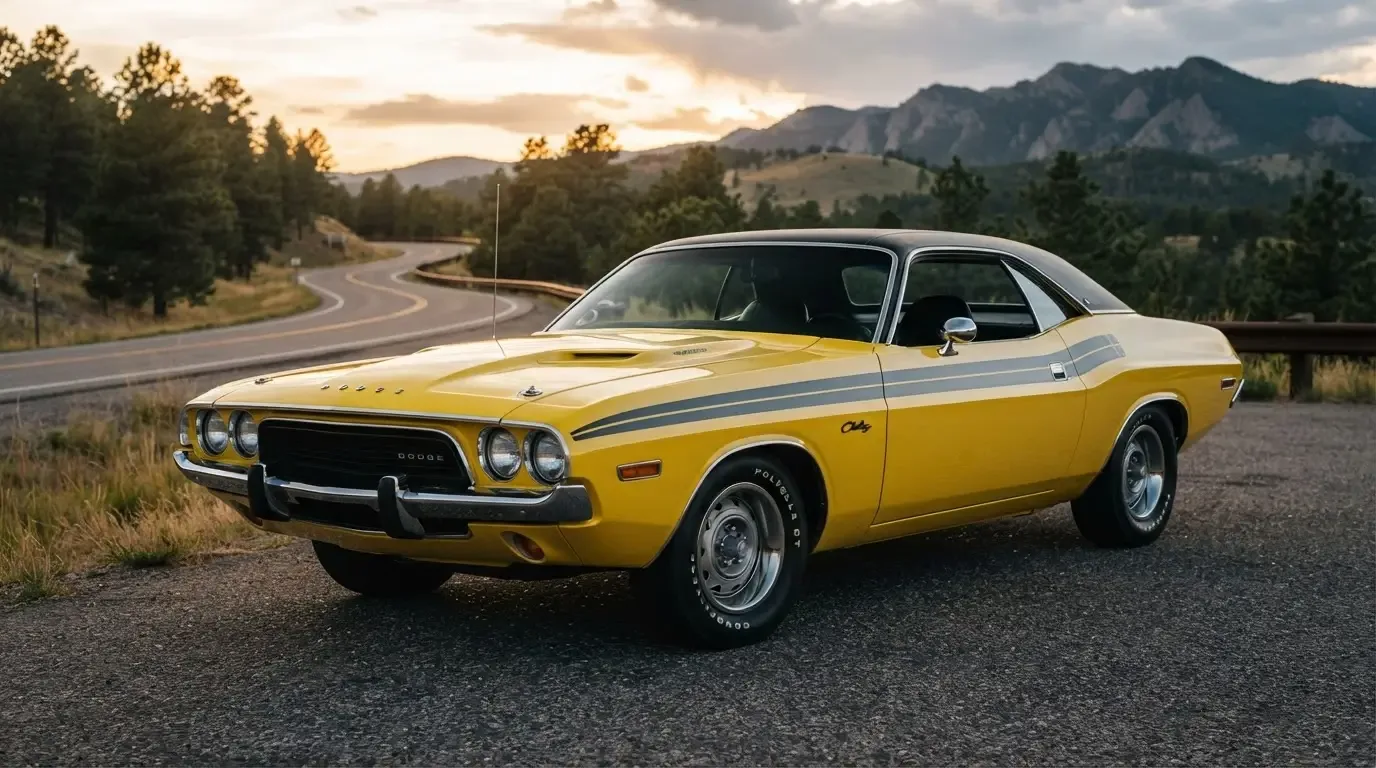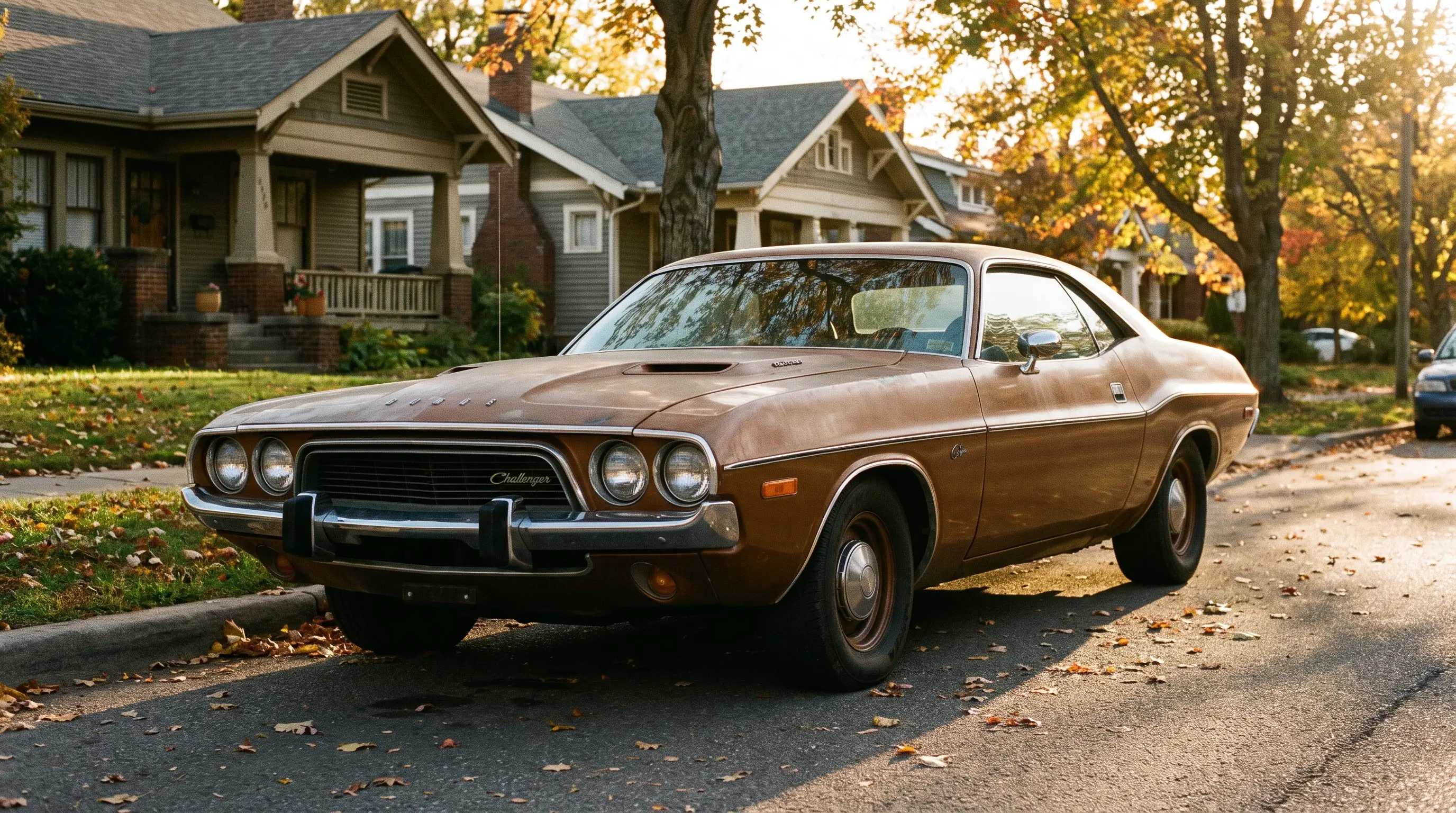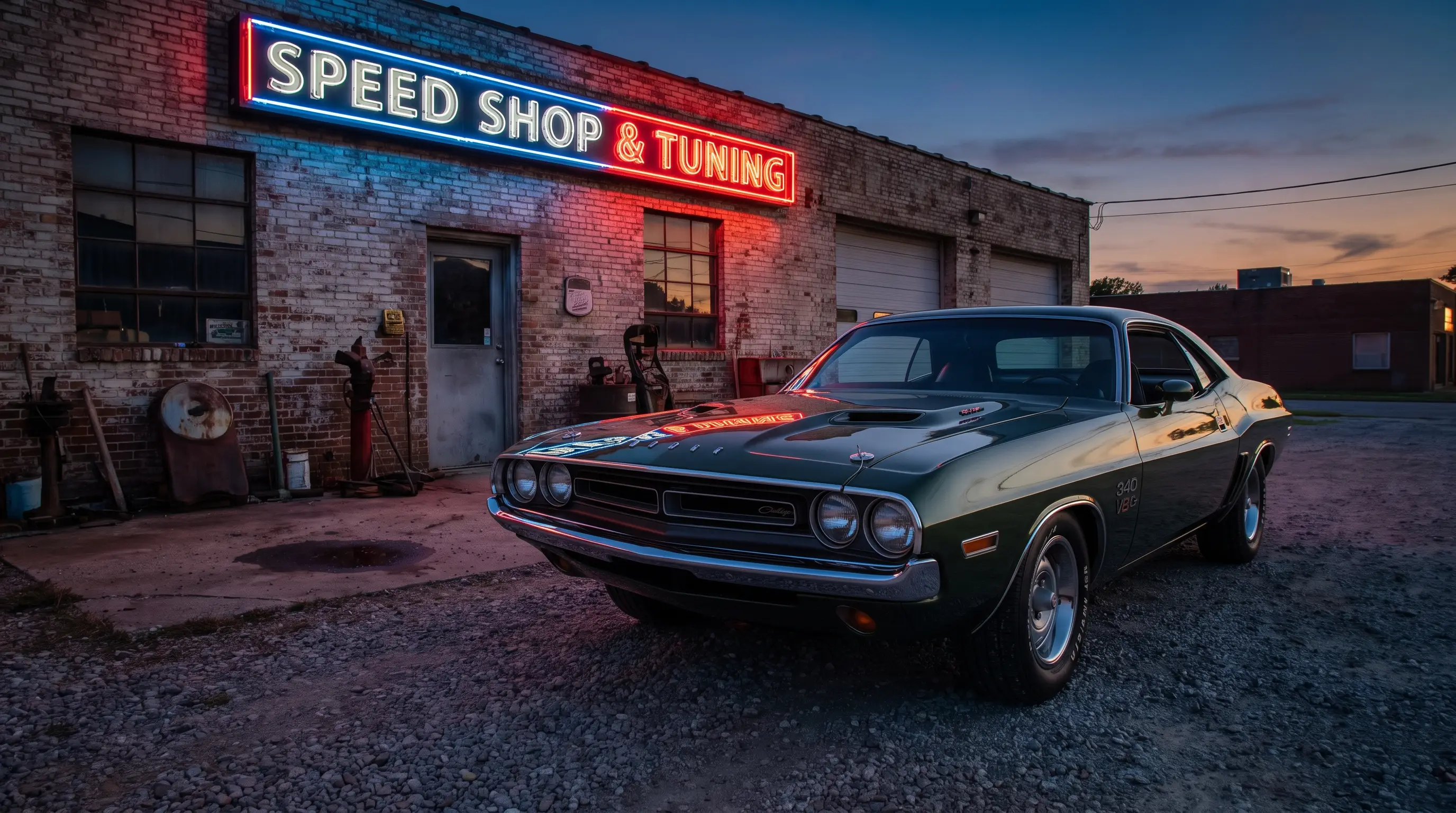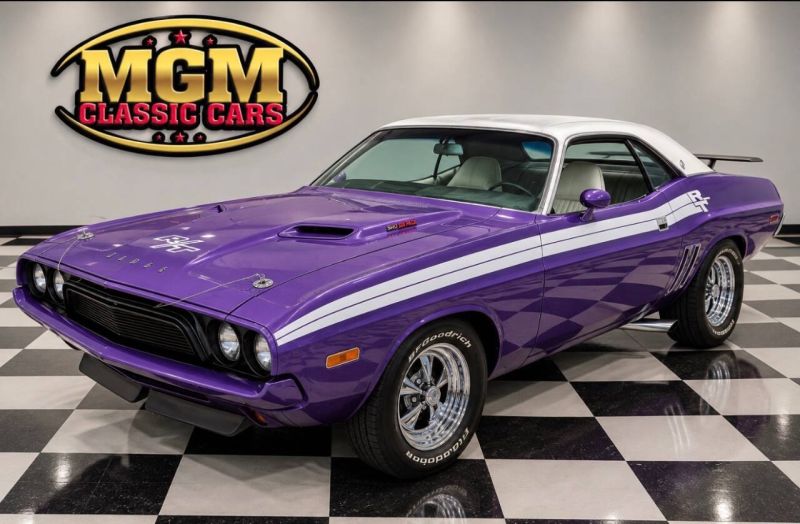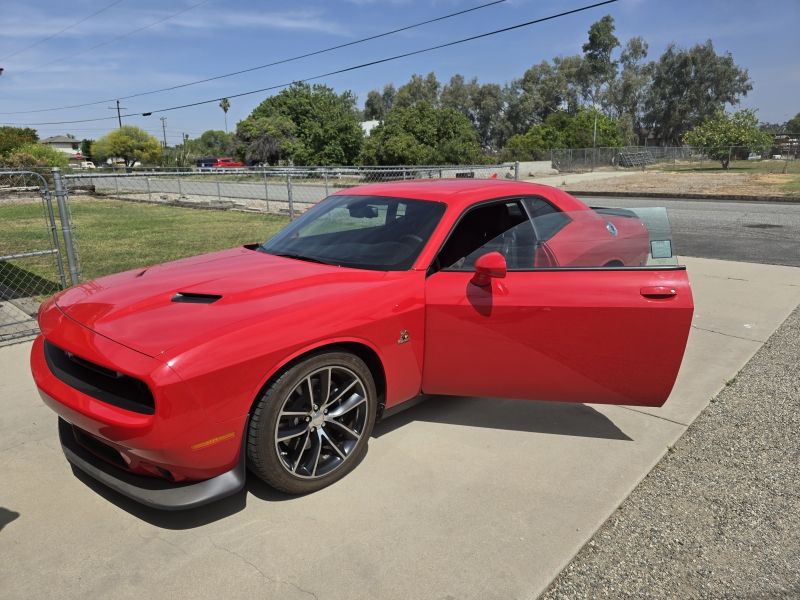
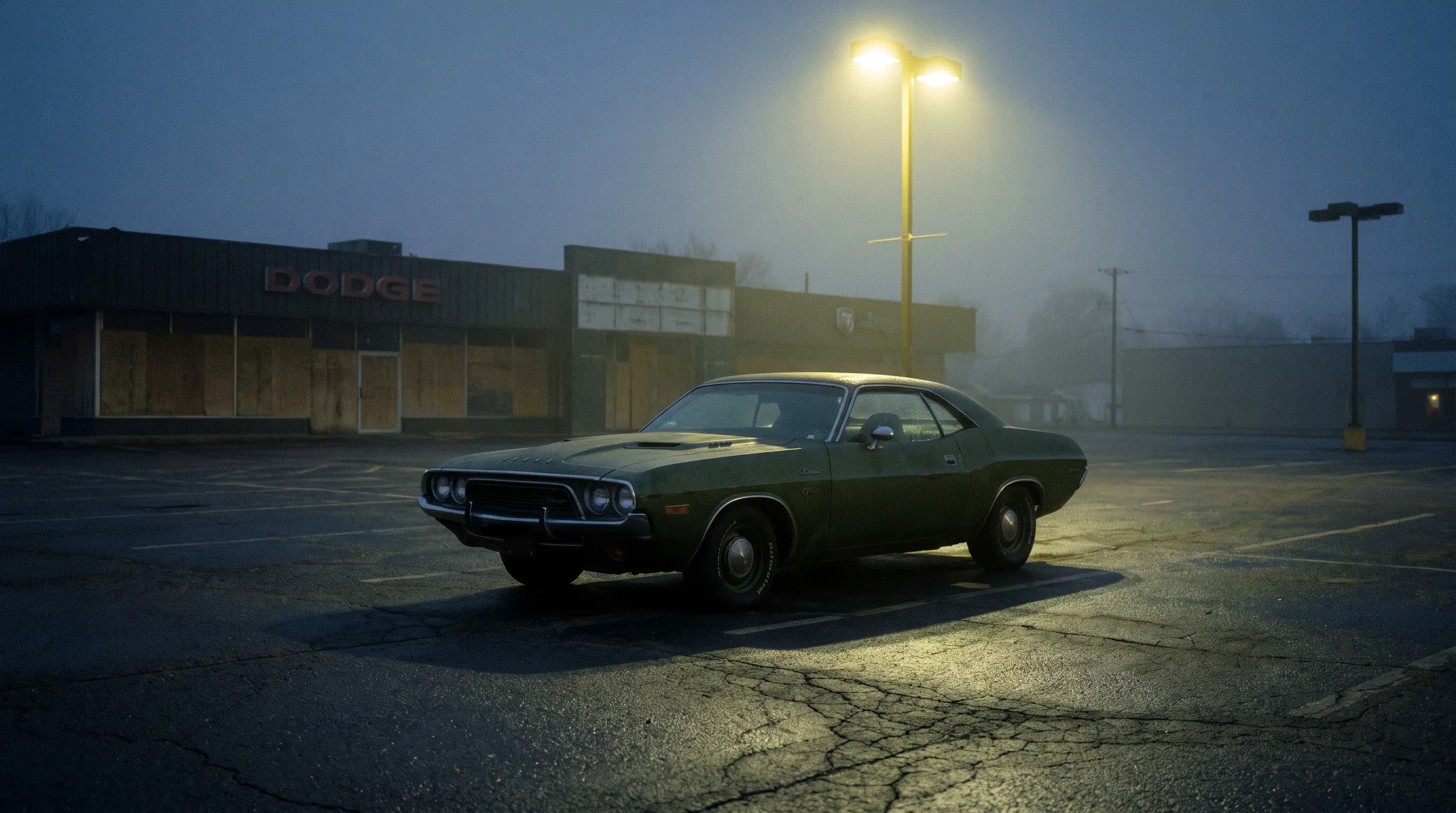
Production records at Chrysler close the book on the 1974 Dodge Challenger with a number that still surprises people who assume the car simply vanished after 1970: 16,437 built for the model year before the line shut down that spring. The 1974 Dodge Challenger was not killed by a single decision. It was worn down by insurance surcharges, a fuel shortage, and a corporate balance sheet that no longer had room for a low-volume pony car sharing a plant with the better-selling Barracuda. Understanding this final year means reading production paperwork, not nostalgia.
What was actually left by 1974
By the time the 1974 model year opened, the options sheet had already been stripped down for two years running. The 440 Six Pack was gone after 1971. The 383 disappeared after 1971 too. What remained for 1974 was a lineup topped by the 360 cubic inch V8, rated at a modest 245 horsepower on paper, a number that reflected the switch to net horsepower measurement as much as any real loss of output. Base engines were the 318 V8 and, in some markets, a 225 cubic inch slant six that would have been unthinkable in a 1970 Challenger R/T brochure. Rallye trim was the closest thing left to a performance package, bundling stripes, a rear spoiler, and dual exhaust tips onto a car that could no longer back up the look with the numbers the badge once implied.
Chrysler's dealer literature for 1974 leaned hard on comfort and value language instead of performance, a tonal shift that tells its own story. Where a 1970 brochure talked about cubic inches and quarter mile times, the 1974 sheet talked about vinyl roof options, AM/FM stereo availability, and a longer list of exterior colors than the car had carried in years. That is not an accident of copywriting. It reflects a genuine repositioning of the Challenger nameplate away from performance and toward whatever market Dodge thought was still buying a two door coupe in a fuel-conscious economy.
| Spec | 1974 Dodge Challenger |
|---|---|
| Model year production | 16,437 total |
| Top engine option | 360 cubic inch V8, 245 hp net |
| Base engine | 225 cubic inch slant six |
| Top trim package | Rallye |
| Assembly plant | Hamtramck, Michigan |
| Final build date | April 1974 |
Insurance, emissions, and a shrinking buyer pool
Muscle car insurance surcharges had been climbing since 1970, and by 1974 they had priced a meaningful share of the traditional buyer, young, male, under 25, straight out of the market for anything with a performance nameplate. Layer on federal emissions requirements that forced compression ratios down year over year, and the math for Chrysler's engineers got harder every season. A 1974 Challenger with the 360 was still a reasonably quick car for its era, but it no longer separated itself from ordinary Detroit iron the way a 1970 R/T 440 did. That erosion of identity, more than any single regulation, is what made the car easy to cancel.
The Barracuda connection nobody can ignore
The 1974 Challenger cannot be told without its Plymouth twin. Both cars shared the E-body platform, both were built at the same Hamtramck assembly plant, and both were cancelled in the same announcement. Chrysler's math was blunt: two low-volume pony cars competing for the same shrinking pool of buyers, built on tooling that needed replacement money nobody wanted to spend on a segment in decline. When production ended that April, it closed out not just one nameplate but an entire era of Chrysler pony cars that had started with the 1970 launch just four years earlier. For context on how the car arrived at this point, where this started lays out the earlier chapters of that same generation.
Internally, Chrysler's product planners had already moved on before the 1974 model year even opened for sale. Development money that might once have gone toward a facelift or a new engine option was instead going toward the smaller, front-wheel-drive economy cars the company correctly guessed the next decade would demand. The Challenger and Barracuda were not so much killed as simply left off the list when the next round of investment decisions was made. That is a quieter kind of ending than a dramatic cancellation memo, but it is the more accurate one.
What dealers and buyers actually experienced
Showroom traffic for two door pony cars had thinned out considerably by early 1974, and the Arab oil embargo that started the previous October only accelerated the trend. Buyers who had been cross-shopping a Challenger against a Mustang or a Camaro increasingly walked past all three toward smaller, more fuel-efficient options. Dodge salesmen of the period have described moving 1974 Challengers as a harder sell than any year before it, not because the car was badly built, but because the entire category it belonged to had fallen out of favor with the buying public almost overnight.
Why collectors treat 1974 differently today
For decades, 1974 Challengers sat at the bottom of the E-body pecking order. Low compression, no big block option, and a reputation as the car nobody wanted new made them cheap and plentiful project candidates well into the 1990s. That has shifted. Final-year status carries its own weight with a certain kind of buyer, the same instinct that makes a last-of-line anything more interesting than the year before it. A clean, numbers-matching 1974 Rallye with the 360 now draws real money at auction, not because it is the fastest E-body, but because it is the one that closed the story.
"People used to skip right past the 1974s looking for a 1970. I tell them the 1974 is the one that tells you how the story actually ended, and that is worth documenting just as carefully."
- Tom Ramirez
Finding one worth owning
Because so many 1974 Challengers were treated as disposable performance cars in the 1980s and 1990s, survivor rate on trim details is uneven. Original Rallye stripe kits, factory spoilers, and correct 360 badging are worth verifying against build sheet documentation before paying a premium. Buyers researching the model today often start where the market actually is, and a classic Challenger for sale listing is a reasonable way to compare condition and pricing across the run before narrowing in on a final year car specifically.
The 1974 Dodge Challenger will never outrun a 1970 R/T in a straight line, and it was never built to. It was built to survive one more year in a market that had already decided against it, and it did that job with more dignity than its reputation usually gets credit for. Its production paperwork, its dealer invoices, and its factory build sheets are the closing chapter of a nameplate that started strong and ended quietly, and that closing chapter deserves the same documentation rigor collectors apply to the flashier years that came before it.