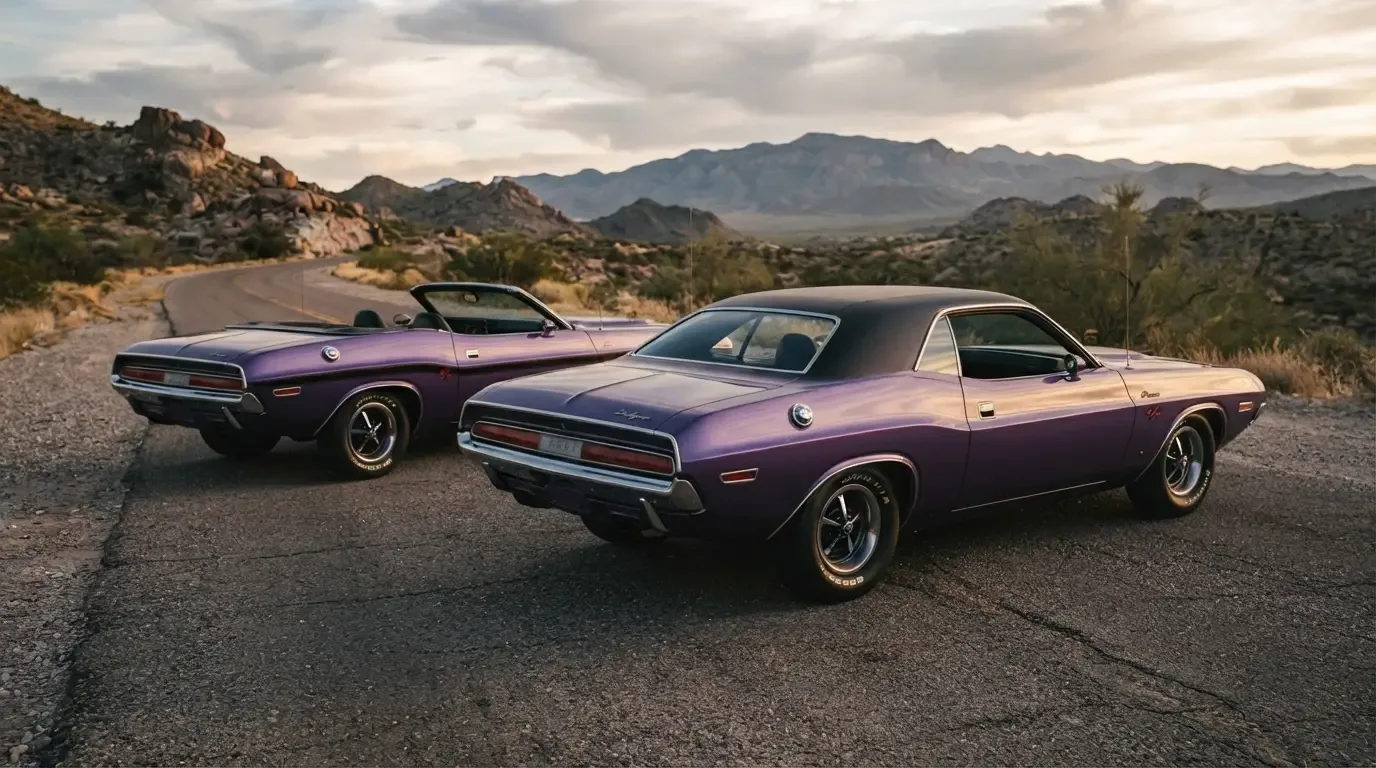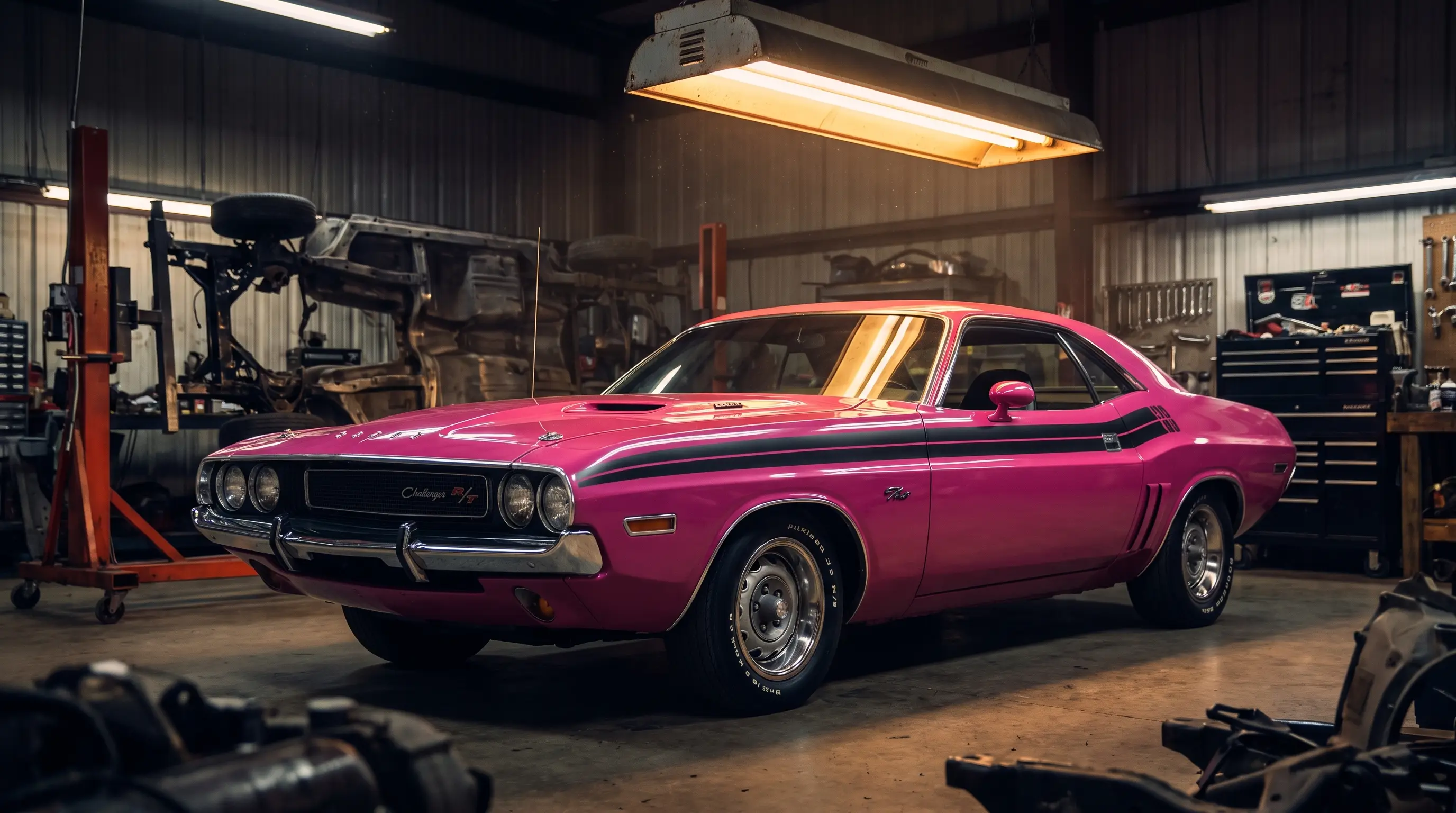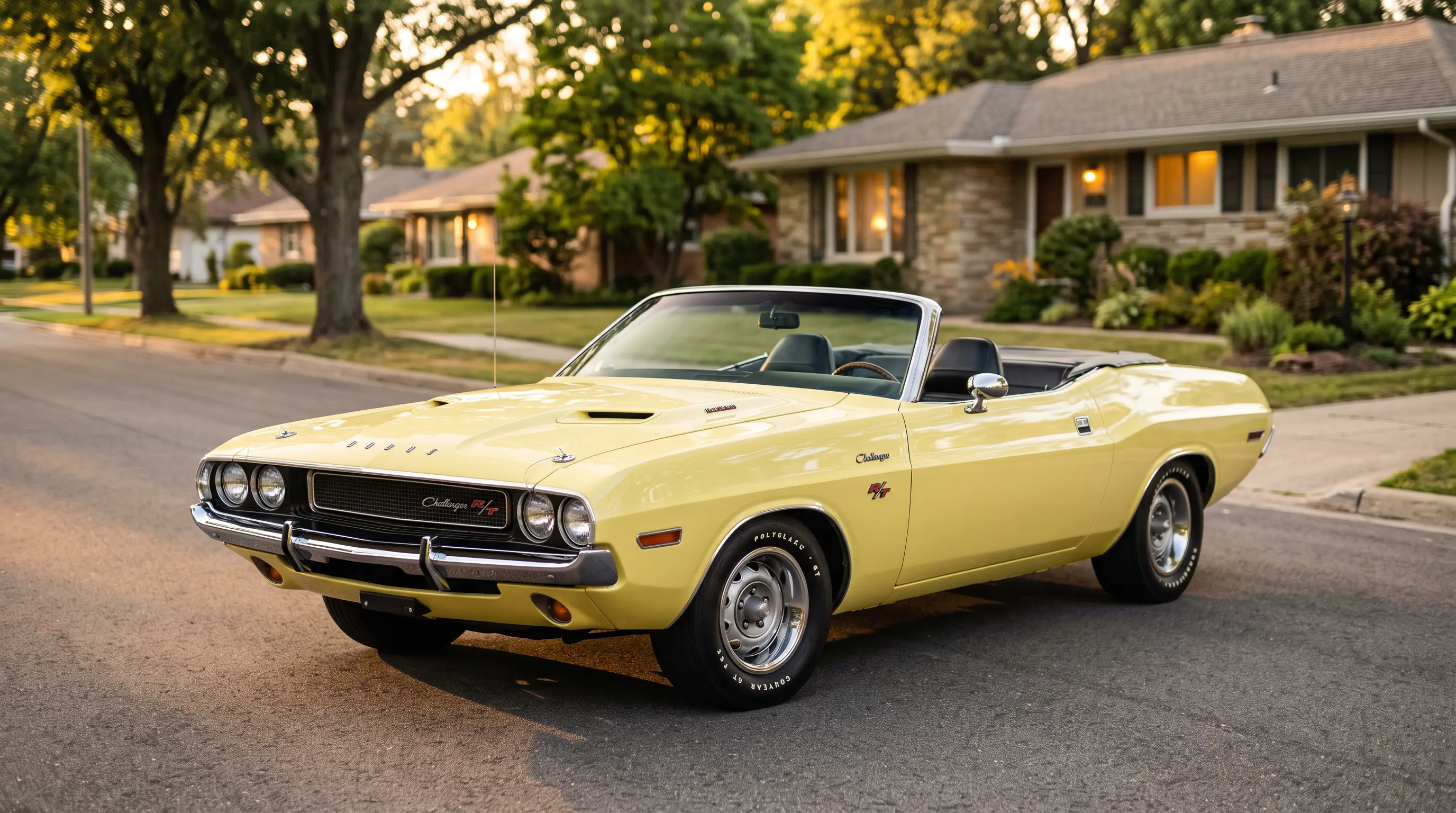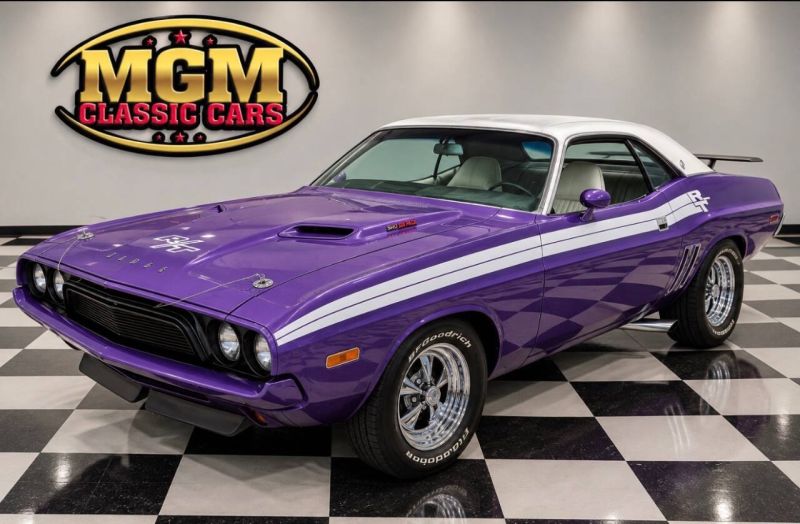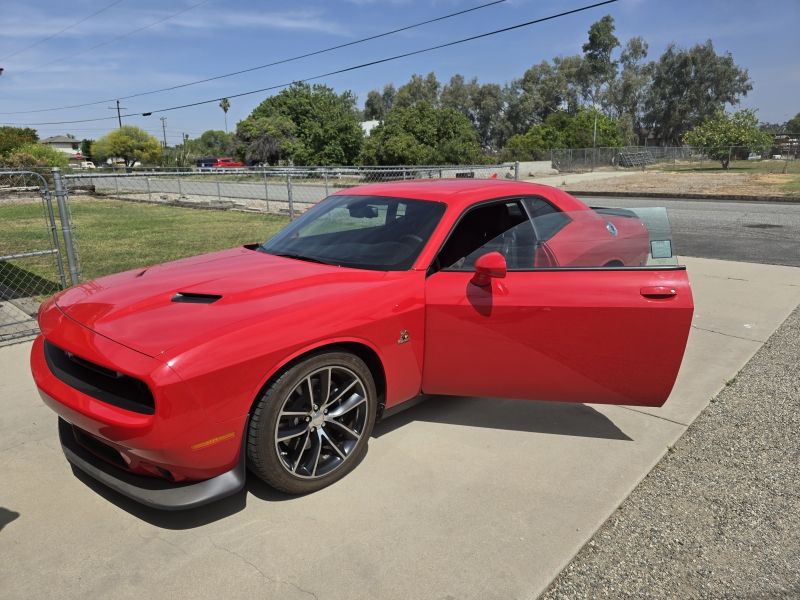
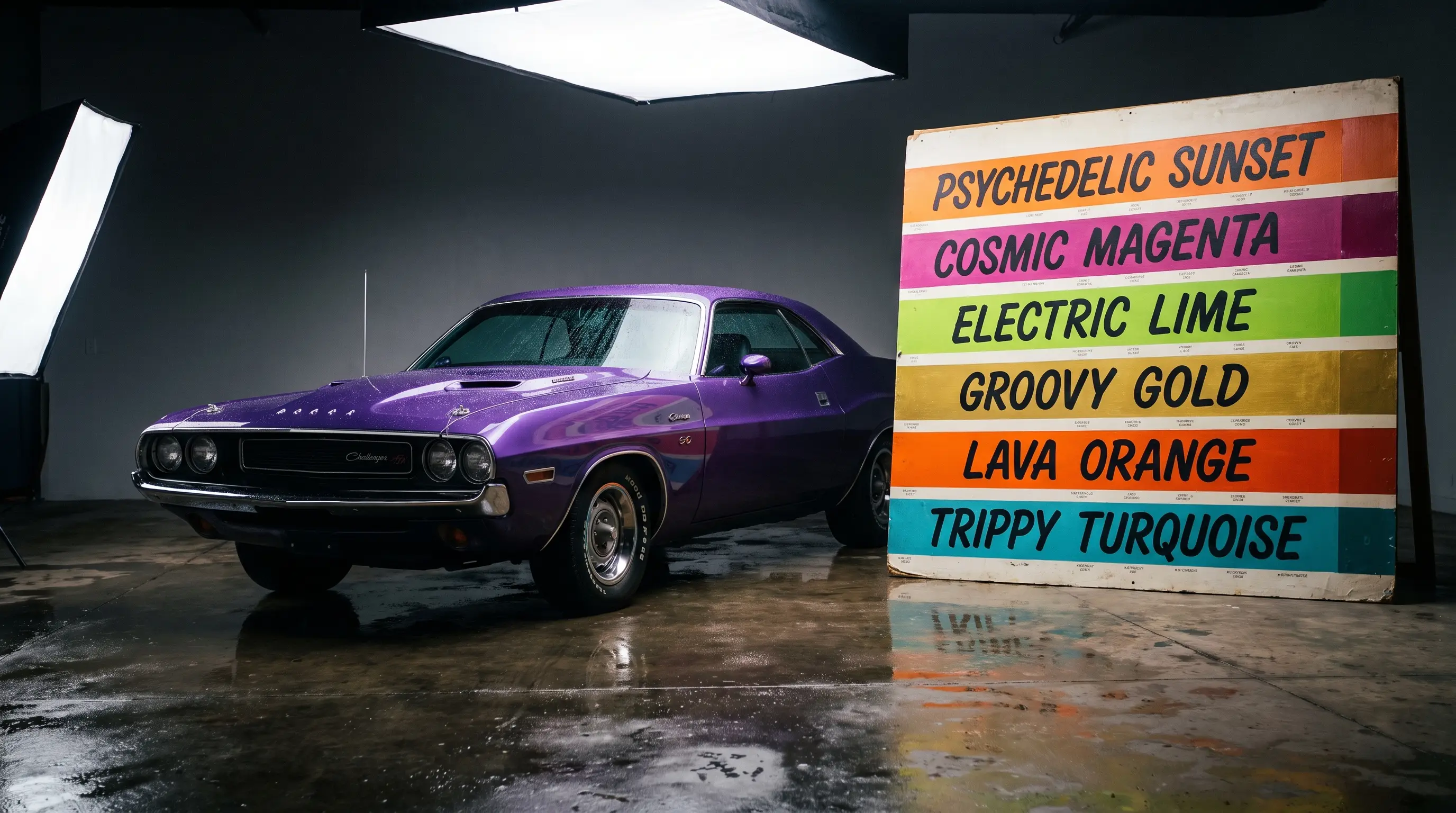
Somebody in Chrysler's marketing department in 1970 sat down with a paint chip in one hand and a typewriter in the other and decided that beige and light blue were not going to cut it anymore. Whoever that person was, they gave the world Plum Crazy, Go Mango, Sublime, and Panther Pink, and fifty years later people are still repeating those challenger color names like they are reciting poetry rather than reading a sales brochure. There is a real story behind why these names exist at all, and it says as much about 1970 as it does about paint.
Selling attitude, not just color
By 1970, Chrysler was fighting for attention in a market Ford and GM had shaped for years already. A straightforward color name like blue or red was not going to make a teenager or a young buyer stop walking past a showroom window. So the naming strategy shifted entirely. Instead of describing the color, the names described a feeling, an attitude, almost a dare. Plum Crazy did not just tell you the shade, it told you something about the kind of person expected to buy it.
This was not an isolated Dodge decision either. Plymouth ran a nearly identical strategy the same year with names like In-Violet for the same purple formula Dodge called Plum Crazy, and Moulin Rouge for the Plymouth version of Panther Pink. The whole corporation had clearly decided that boring names belonged to boring cars, and neither Dodge nor Plymouth wanted to be caught selling a boring car in 1970.
Where some of these names actually came from
Go Mango leaned into fruit imagery the way a lot of consumer products did in that era, evoking something bright and almost edible rather than technical. Sublime borrowed a word usually reserved for grand emotional experiences and slapped it on a fluorescent green paint job, which either was brilliant or absurd depending on who you asked at the time. Panther Pink went a different direction entirely, pairing something predatory and fast with a color that had nothing traditionally aggressive about it, which was exactly the kind of contradiction the marketing team seemed to enjoy.
None of these names were accidental. Chrysler's marketing team understood that a memorable name could do work a paint chip alone never could, sticking in a buyer's head long after they walked out of the showroom without making a purchase that day. Some of those buyers came back weeks later specifically asking for the car in that name they could not stop thinking about.
Why the names outlived the cars
Most of the actual Challengers built in these colors were sold, driven hard, and eventually scrapped or traded away like any other used car from the era. What survived far longer than most of the physical cars was the language attached to them. People who never sat in a Plum Crazy Challenger still know the name. People who could not tell you a single spec of the car still recognize Go Mango when they hear it. That is unusual staying power for what was, at its core, a paint marketing gimmick from a single model year.
Part of that longevity comes from how these names got repeated in car culture over the decades, in magazine retrospectives, in casual conversation among collectors, eventually in modern Dodge marketing when the company brought some of these color names back for current production Challengers and Chargers. A name built to move 1970 inventory ended up becoming a permanent piece of American car culture vocabulary, which is more than most marketing campaigns from that era can claim.
"Somebody at Chrysler in 1970 understood something a lot of marketing people miss even now, that a good name outlives the product it was built to sell, sometimes by decades."
- Nora Beckett
What these names still mean to collectors
Ask a collector today which color they are chasing, and they rarely answer with a paint code. They answer with the name, Plum Crazy or Go Mango or Panther Pink, said with the same familiarity you would use for a person's name rather than a manufacturer's inventory code. That is the real legacy of whoever sat down with those paint chips in 1970. They did not just choose colors. They built a small piece of shared language that outlasted the cars, the company's original marketing budget, and most of the people who worked on that campaign in the first place.
If you want the full story behind how each of these individual colors fits into the wider collectibility picture, that piece goes deeper into the history and the market value attached to each specific shade. And if all this naming history has you wanting to see the actual colors in person rather than just read the words, you can browse classic Challenger listings and decide for yourself which name still earns its reputation fifty years later.
The names Chrysler eventually left behind
Not every color from that era earned the same staying power. Chrysler ran through a much longer list of names across its full 1970 and 1971 color offerings than most people remember today, plenty of shades with names nobody repeats anymore because the colors themselves faded from cultural memory even faster than the paint faded on the cars. A handful of names survived purely because the colors attached to them turned out to be genuinely rare, and rarity has a way of keeping a name in circulation long after everything else about a product has been forgotten.
That selective survival says something honest about how car culture actually preserves history. It is not systematic. Nobody sat down in 1975 and decided which names deserved to last. Certain colors simply kept showing up at car shows, kept appearing in the hands of dedicated owners willing to talk about them at length, kept getting photographed by people who found them visually striking enough to bother. The names that stuck are, in a real sense, the names that earned it through decades of informal repetition rather than any deliberate preservation effort.
Somewhere in a Chrysler archive there is probably a full list of every color name proposed and rejected for that model year, names that never made it past an internal committee meeting. Those forgotten names are their own small piece of history too, evidence of just how much creative effort went into a decision most car buyers today assume was simple. Choosing a name for a paint color turned out to be serious business in 1970, even if nobody outside that marketing department realized it at the time.
Talk to enough people who collect these cars and eventually somebody admits the name mattered to their decision as much as the actual shade of paint did. A collector chasing a Go Mango Challenger is, in a real sense, chasing a word as much as a color, a specific bit of language that caught their attention decades ago and never quite let go. Few marketing campaigns can claim that kind of hold on a customer's imagination fifty years after the fact.
Sources and notes
- Mopar Paint: Dodge and Plymouth High-Impact Paint Colors - Classic Industries
- 1970 Dodge Challenger T/A Colors and Paint Codes
- The 10 Mopar High-Impact Colors: Complete Guide - autoevolution
- 2010 Dodge Challenger SRT8 Now Available In Plum Crazy Purple - Motor Authority
- Dodge Challenger (1970) - Wikipedia