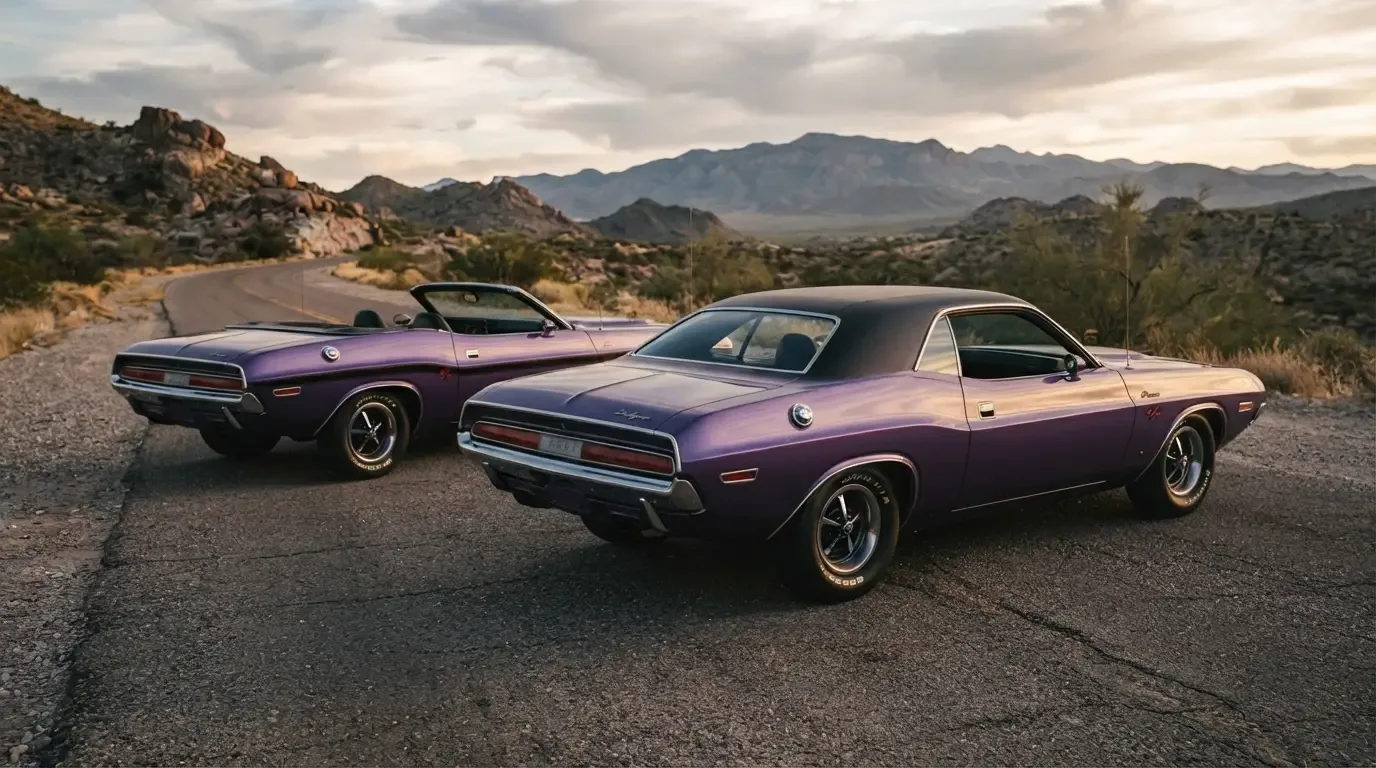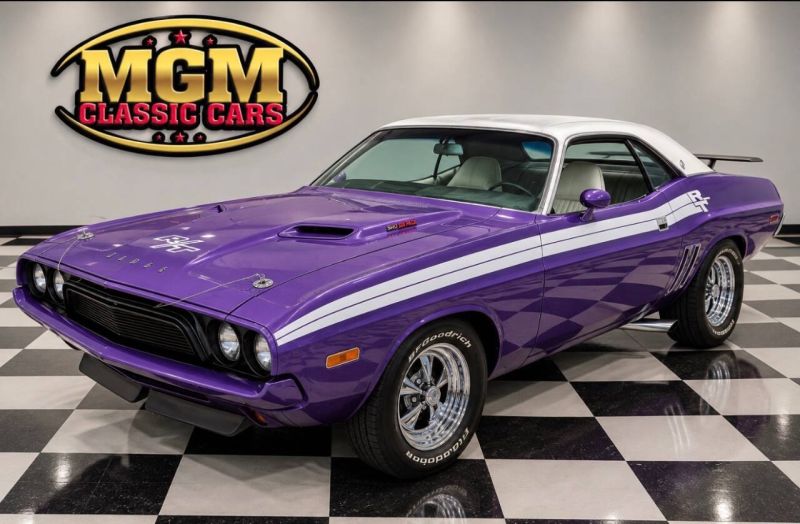
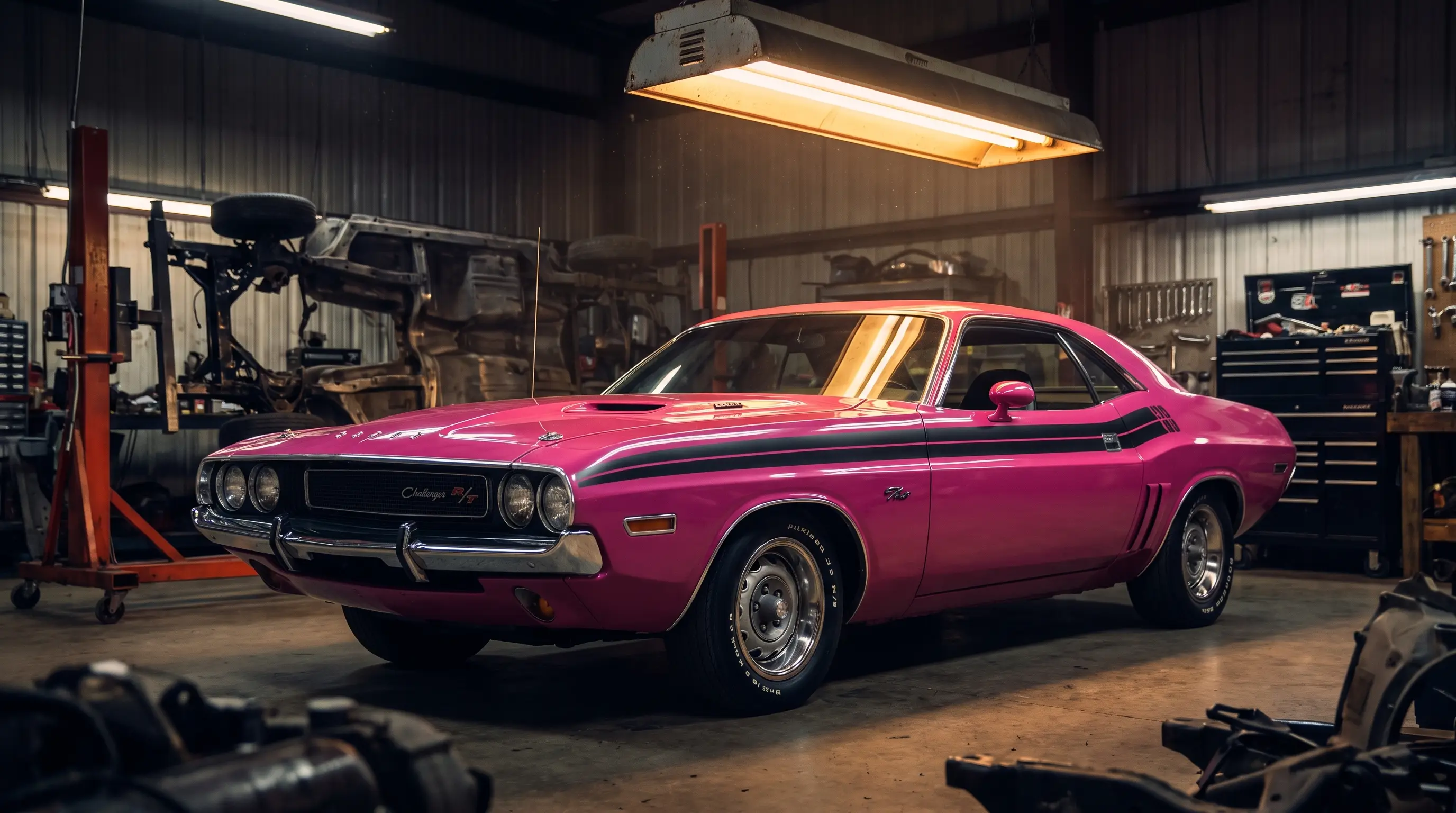
I have worked on exactly one genuine Panther Pink Challenger in my career, and I remember every hour of it, because a car this rare does not come through the shop twice. The panther pink challenger question comes up constantly from customers who found something pink at a swap meet and want to know if they got lucky. Almost every time, the honest answer is no. This color is rare enough that most people go their whole lives without ever seeing a documented one in person.
Just how rare are we talking
Panther Pink was part of Chrysler's High Impact palette, but Dodge only offered it on the Challenger for the 1970 model year before it disappeared from the option sheet entirely. Total production numbers for Panther Pink Challengers are low enough that specific figures get debated among Mopar historians, and I am not going to throw out a hard number here without a documented source backing it up. What I can tell you from direct experience is that finding one is genuinely difficult, and finding one with clean documentation is harder still.
Plymouth offered the identical formula under the name Moulin Rouge on some models the same year, which sometimes confuses people cross-shopping old sales literature between the two brands. On the Challenger specifically, Panther Pink stands as one of the shortest production runs of any factory color in the whole High Impact lineup.
The one I actually got my hands on
The car came to me needing rust repair on the quarter panels, nothing unusual for a fifty-year-old unibody that had spent time in a wetter climate before landing in a drier state. What made the job different was the pressure of knowing I could not just match the color out of a modern paint chip book. I had to source a formula match calibrated against a verified sample, not a generic tint that looked close enough under shop lighting.
Every panel I touched, I photographed before and after. Every weld, every filler pass, documented and dated. The owner wanted that paper trail specifically because he understood what this color does to a car's value when the work is done right and documented, versus what happens to that same value when a shop does sloppy work and hopes nobody checks too closely later. On a car this rare, sloppy work does not just hurt the paint job, it hurts the whole provenance chain.
Why fakes are a real problem with this color
Because genuine cars are so scarce and so valuable, Panther Pink attracts more fraud than some of the more common High Impact shades. I have seen sellers spray a car this color specifically because they know the rarity story sells itself to an inexperienced buyer, then either stay vague about documentation or produce paperwork that does not actually hold up under close inspection. Always ask for the fender tag paint code first, matched against a broadcast sheet if one exists, before you get emotionally invested in a color this famous.
I tell every customer the same thing. A repaint in Panther Pink is not worthless. It can be a beautiful driver car and a fun conversation piece. But it is not the same asset as a documented factory original, and the price difference between those two things is not small. Anybody selling you a claimed factory Panther Pink car without offering to show you the fender tag in person is asking you to trust them more than the evidence, and that is backward.
"I have built exactly one genuine Panther Pink Challenger from the ground up, and I have turned down painting three more cars that color for people who wanted the story without the paperwork to back it up."
- Jim Vasquez
What this means if you are hunting for one
Patience matters more with this color than almost any other in the Challenger lineup. If you go looking for a documented Panther Pink car expecting to find one quickly, you are going to be disappointed, and disappointment is exactly what pushes some buyers into accepting weak documentation just to finally own the color they have wanted for years. Do not let that urgency talk you into a bad deal. The right car will have a paper trail that holds up, and the wrong car will always have some excuse for why it does not.
To understand how Panther Pink fits into the wider color story Chrysler built across the whole High Impact program, where this started lays out the full picture, color by color, rather than just this one shade in isolation. And whenever you are ready to start the actual search, whether for a Panther Pink car or something a little easier to verify, you can look at classic Challenger for sale listings and begin asking sellers the same hard questions I ask before I ever pick up a spray gun.
What the paperwork actually needs to show
People sometimes ask me what documentation would actually convince me a Panther Pink car is genuine, so here is the honest checklist I use myself. First, the fender tag paint code needs to match, no exceptions, no explaining that away. Second, if a broadcast sheet or build sheet survived with the car, the color notation on it needs to agree with the fender tag rather than contradict it. Third, I want to see evidence of the color in places a fraudster would not think to check, inside the trunk drop-off panel, behind the dash pad, in the spare tire well where original paint often survives even after multiple exterior repaints.
Fourth, and this one surprises people, I want provenance beyond just the paint. A genuine rare-color car often has other supporting details that track together, matching numbers drivetrain components, a consistent ownership history, service records that reference the car's actual color rather than a generic description. None of these individually proves anything on its own. Together, they build a case that either holds up or falls apart the moment you start asking pointed questions.
I have walked away from appraisal jobs where a seller got visibly frustrated that I would not just take their word for it. That frustration is itself informative. A seller with genuine documentation is usually eager to produce it, because it only helps their asking price. A seller who gets defensive when asked for basic verification is telling you something important, whether they mean to or not.
I keep a mental list of every genuine Panther Pink Challenger I have personally verified over the years, and it is a very short list. That scarcity is the entire reason this color commands the attention it does, and it is also exactly why patience matters more here than with almost any other purchase decision in this hobby. Rushing a rare-color purchase because you are tired of searching is how good money ends up chasing a story that will not hold up the first time somebody else looks closely at it.