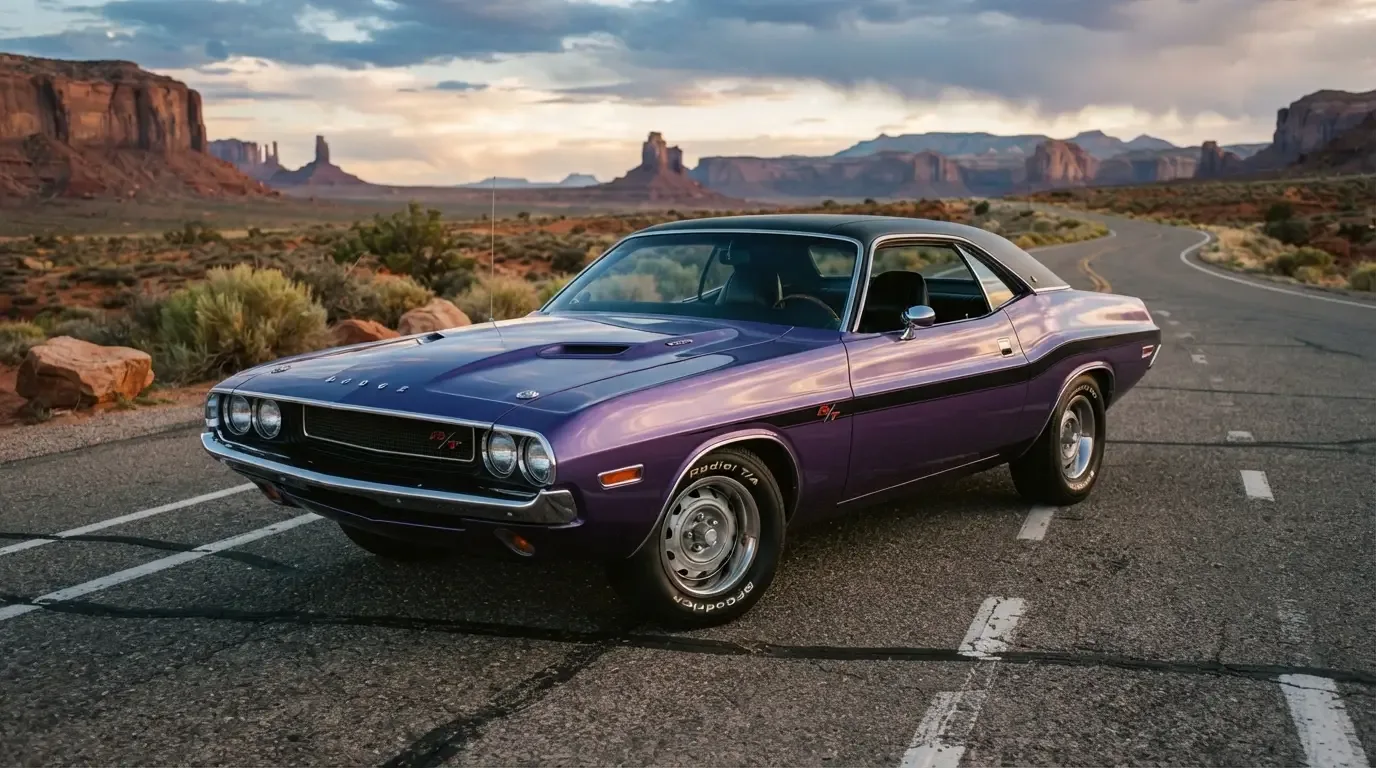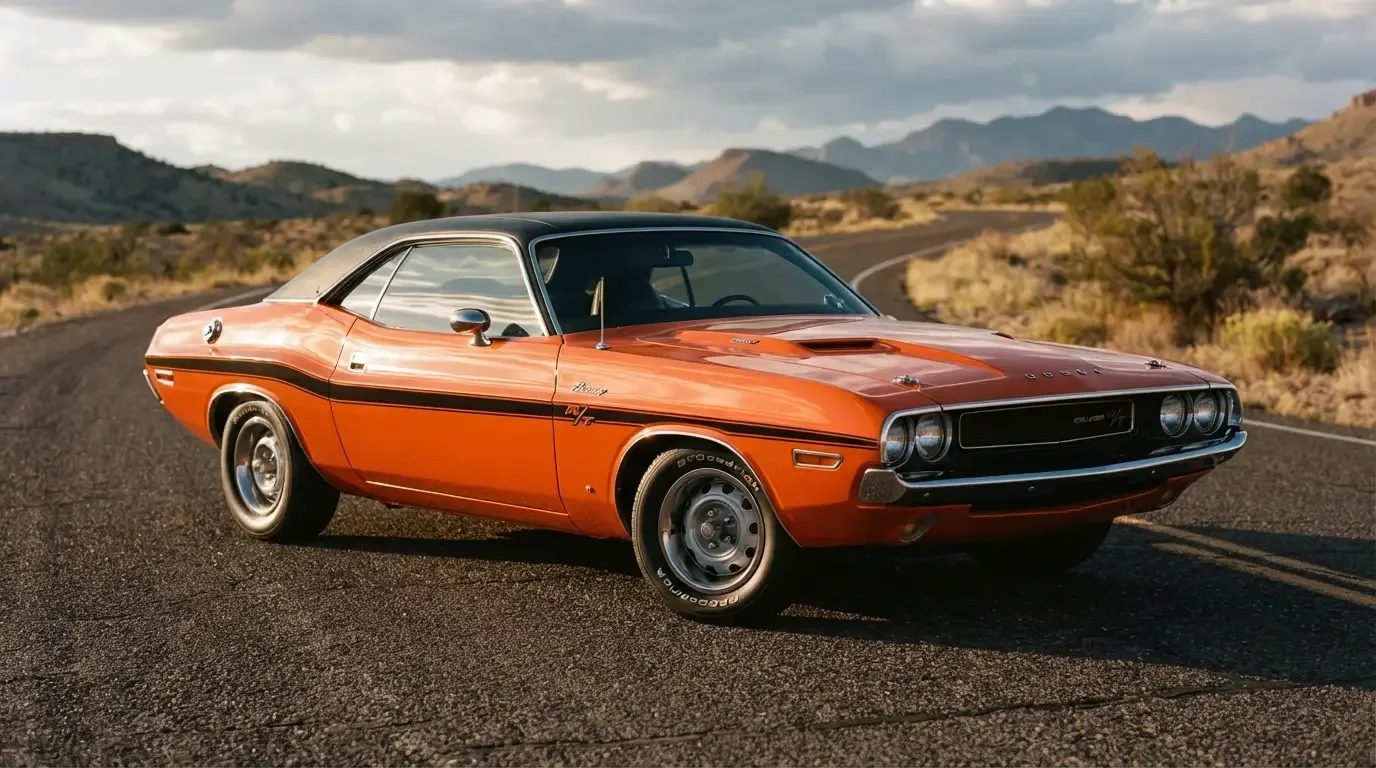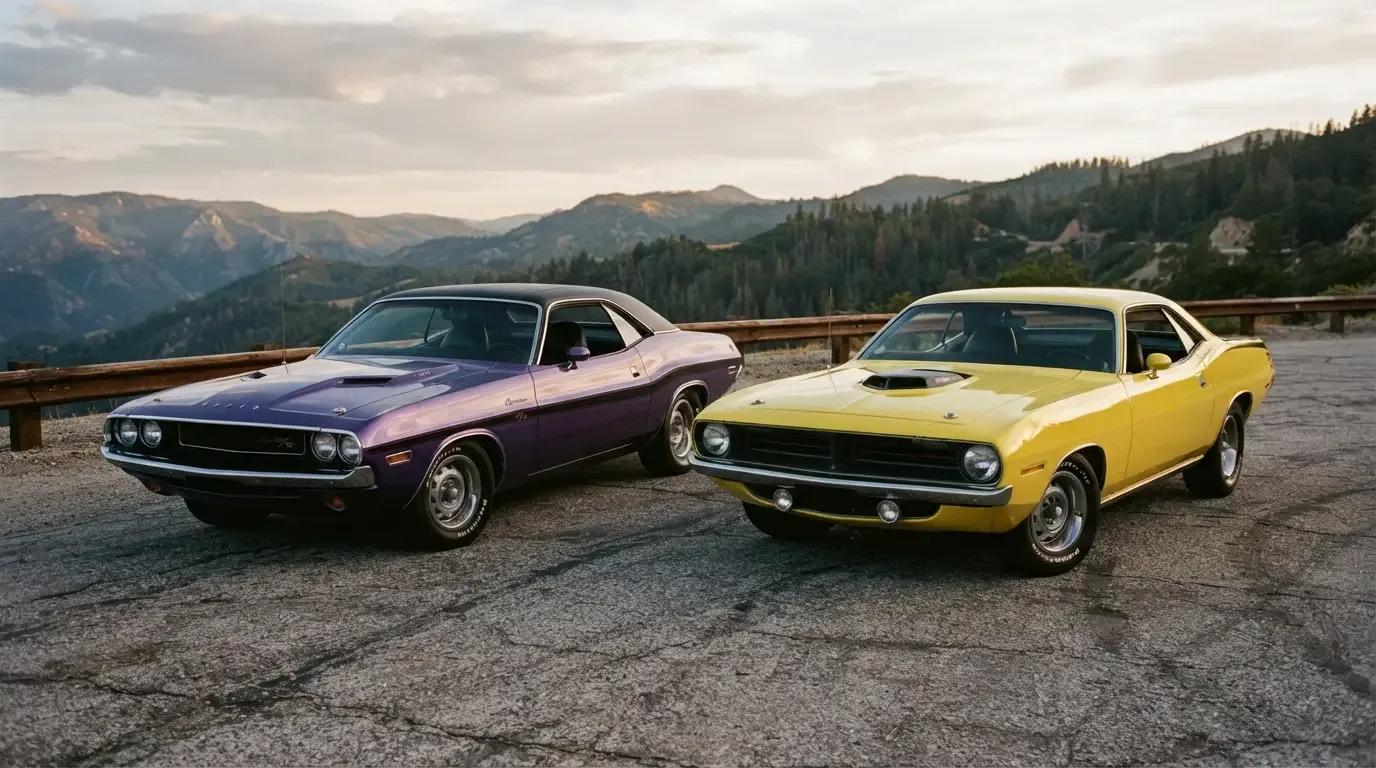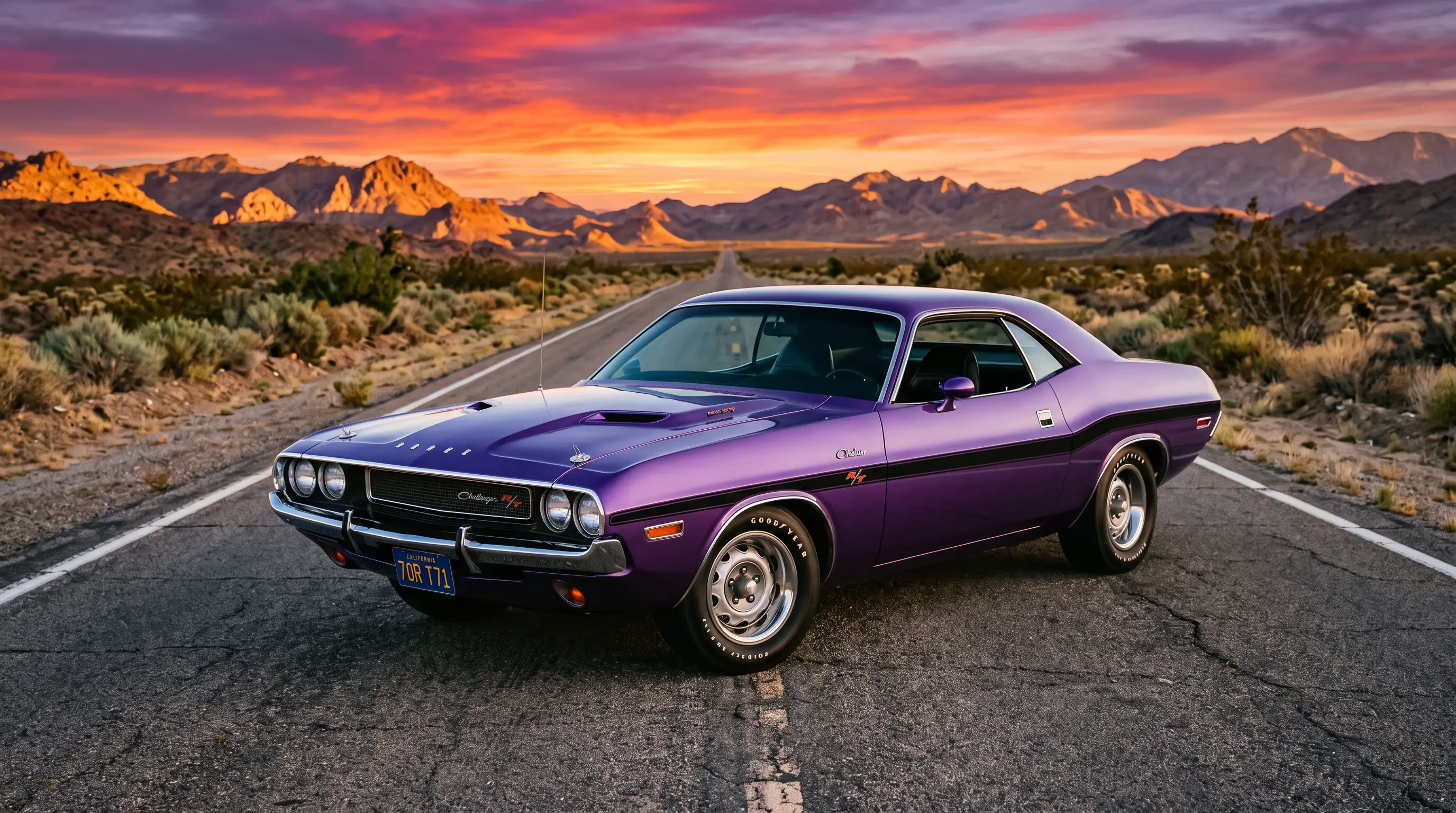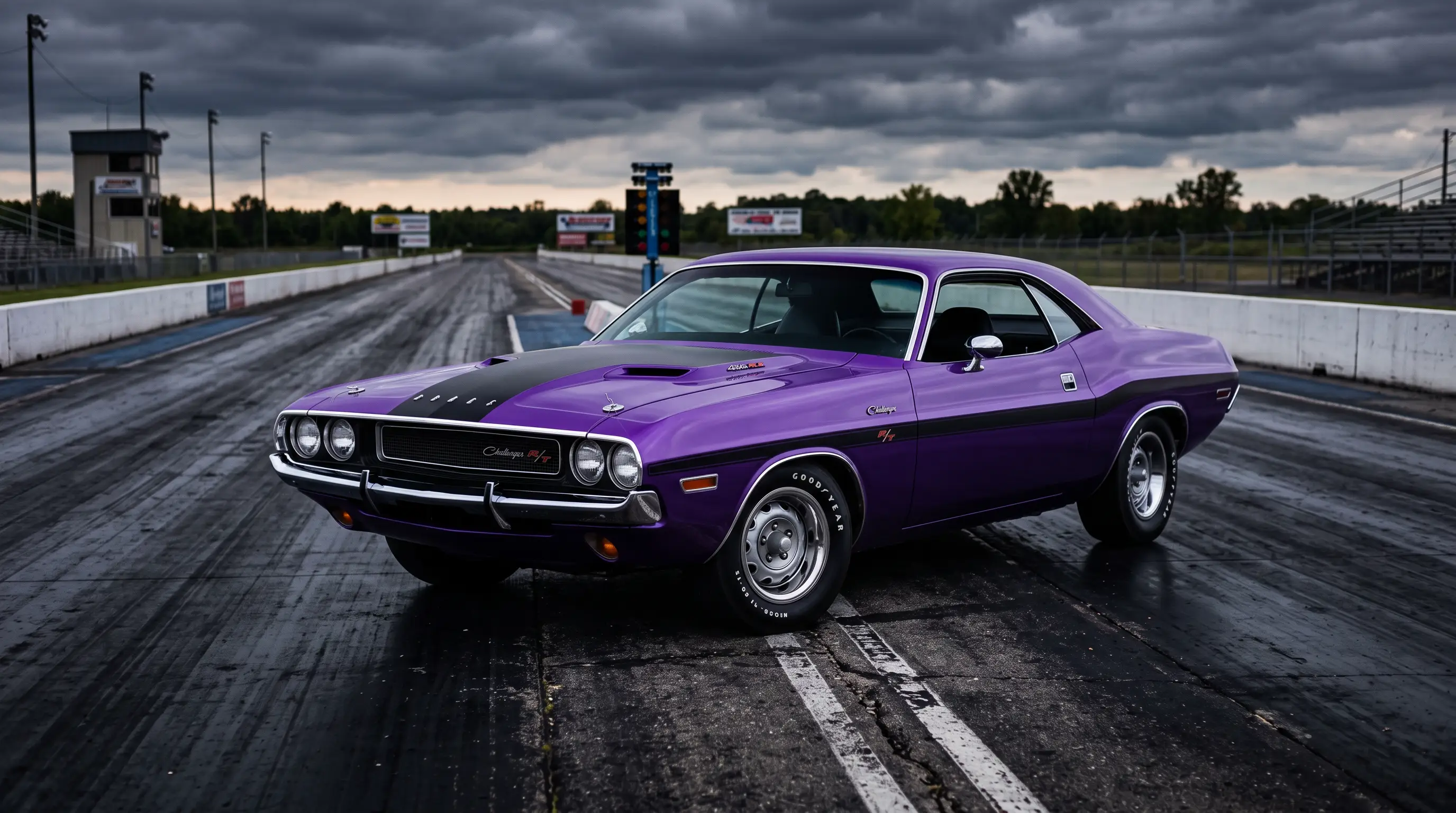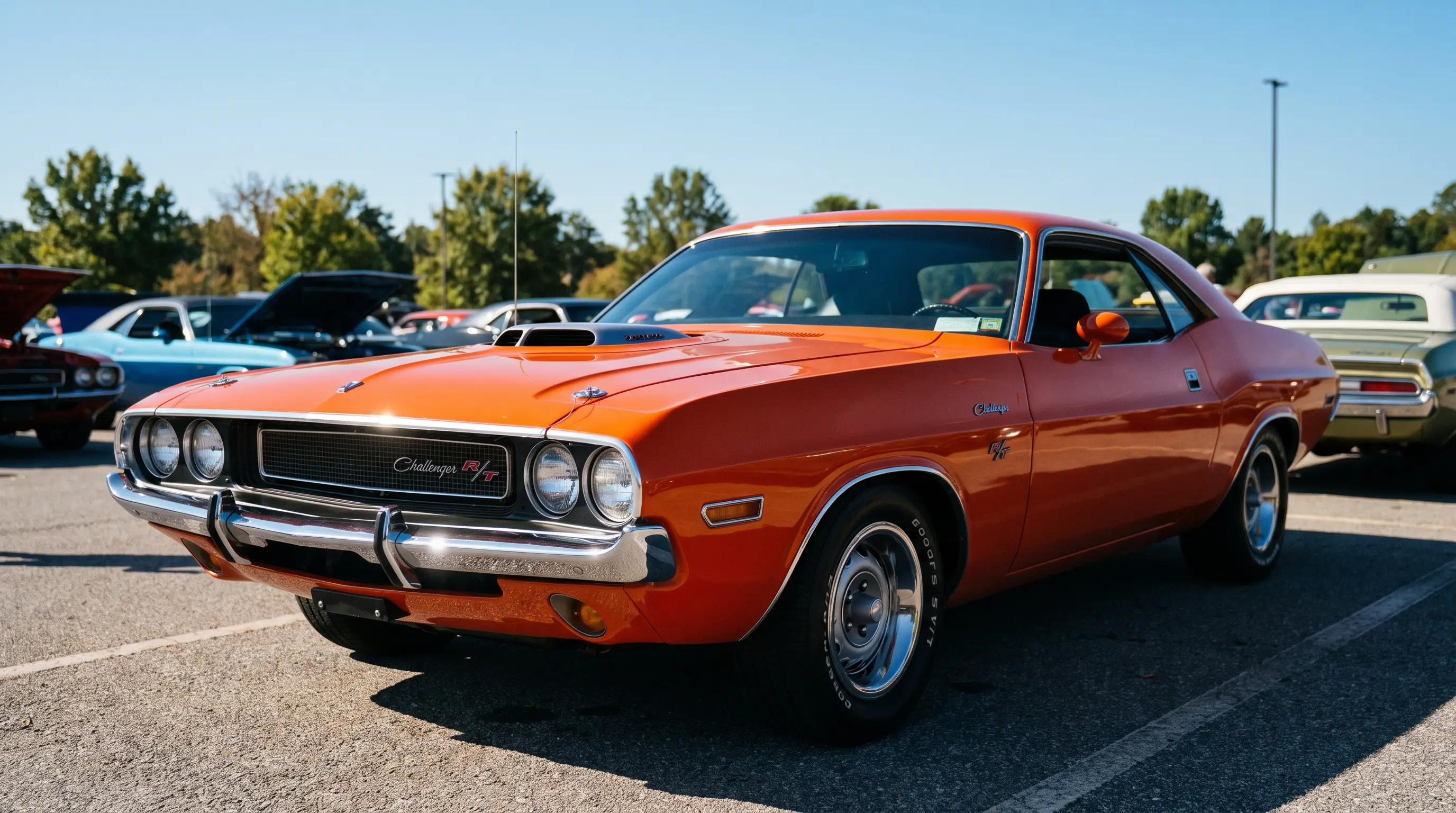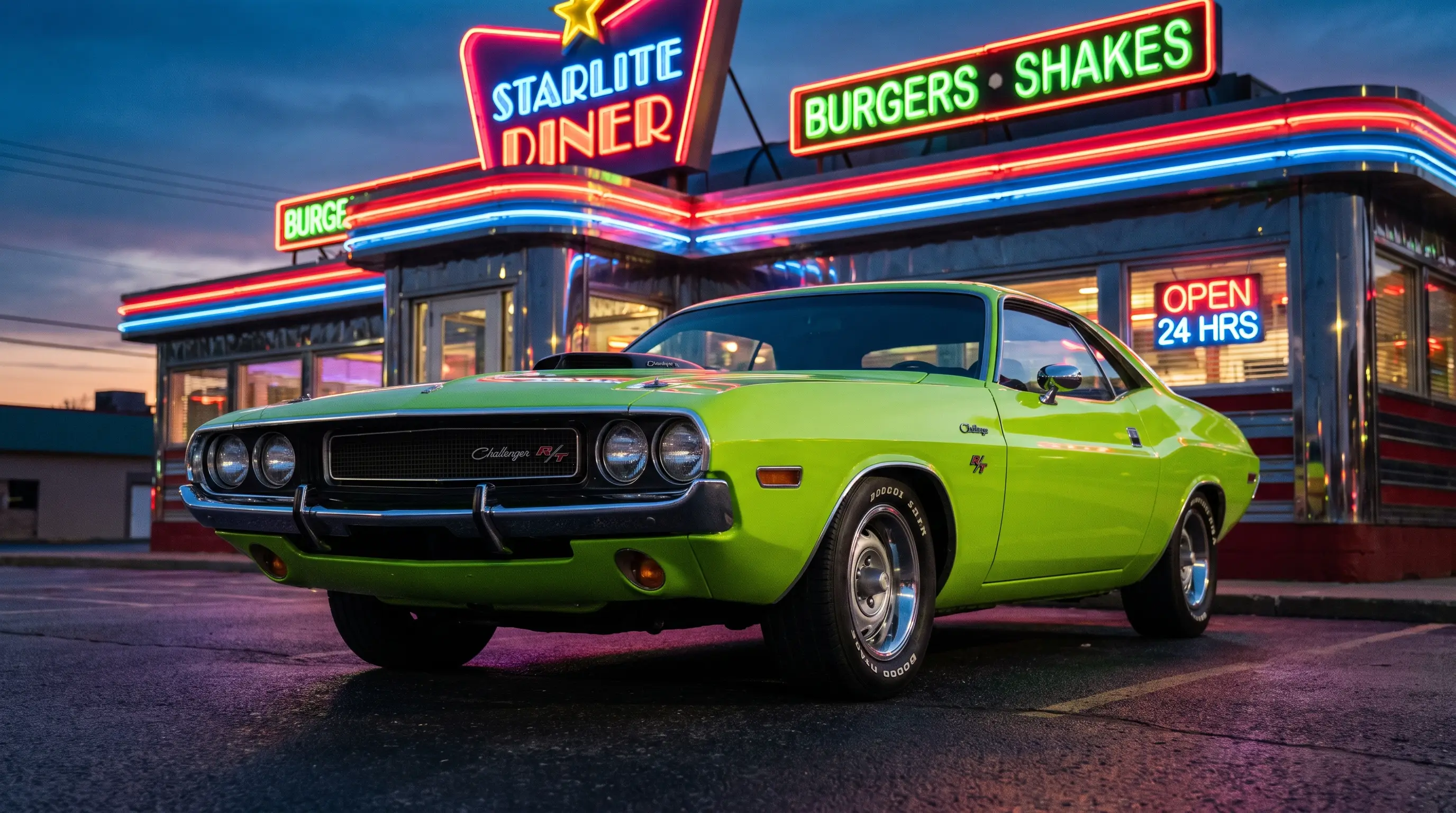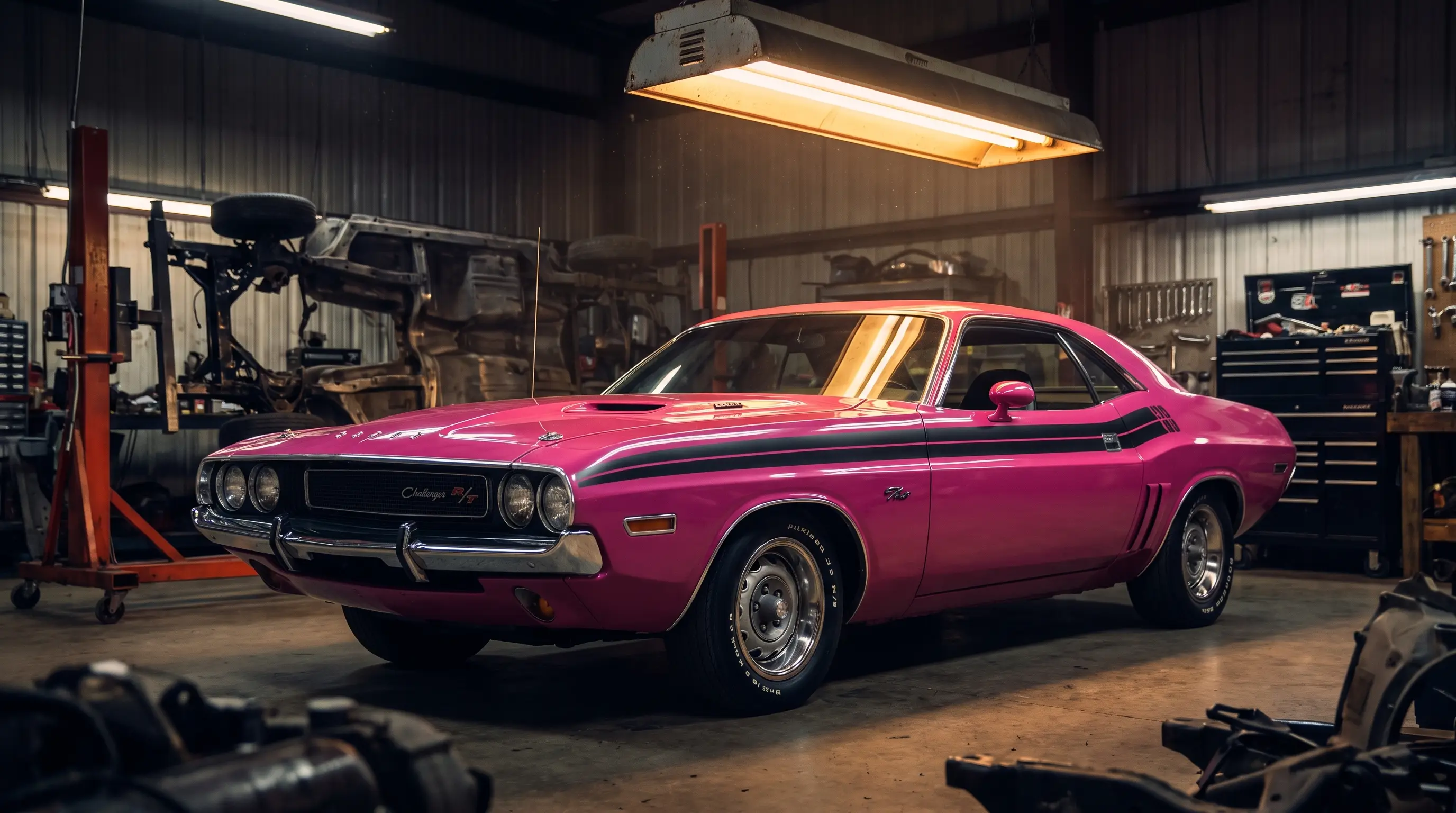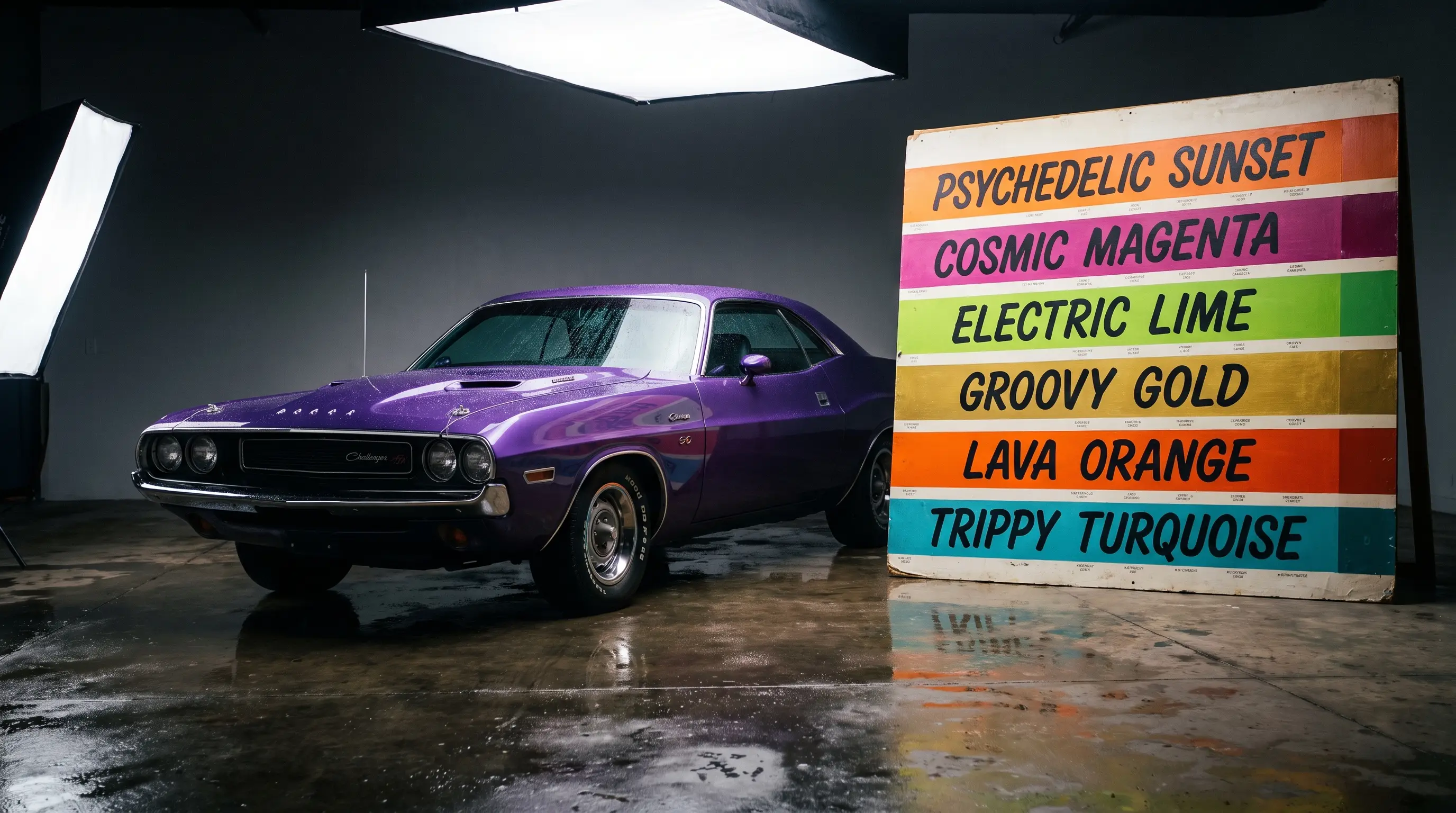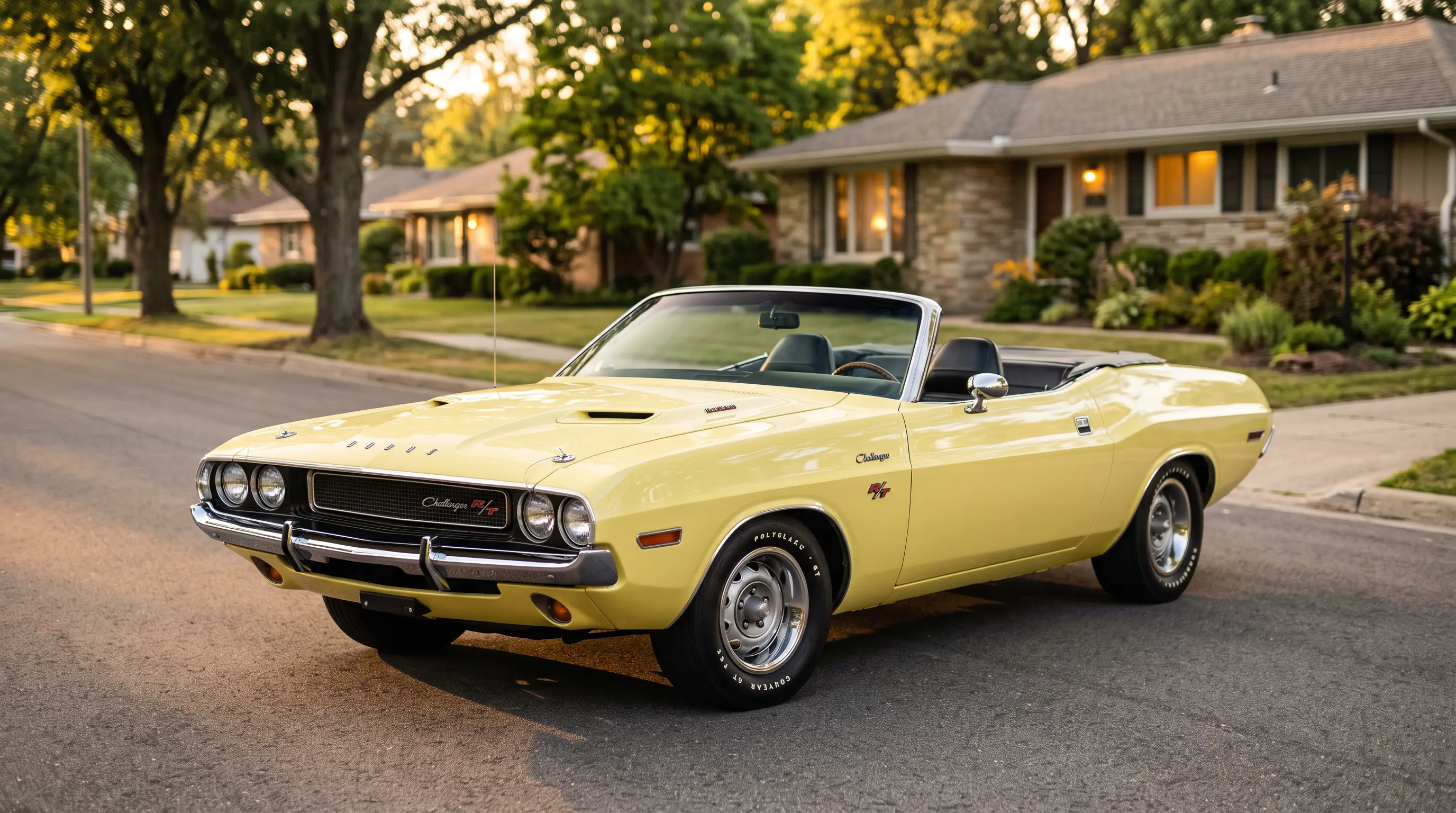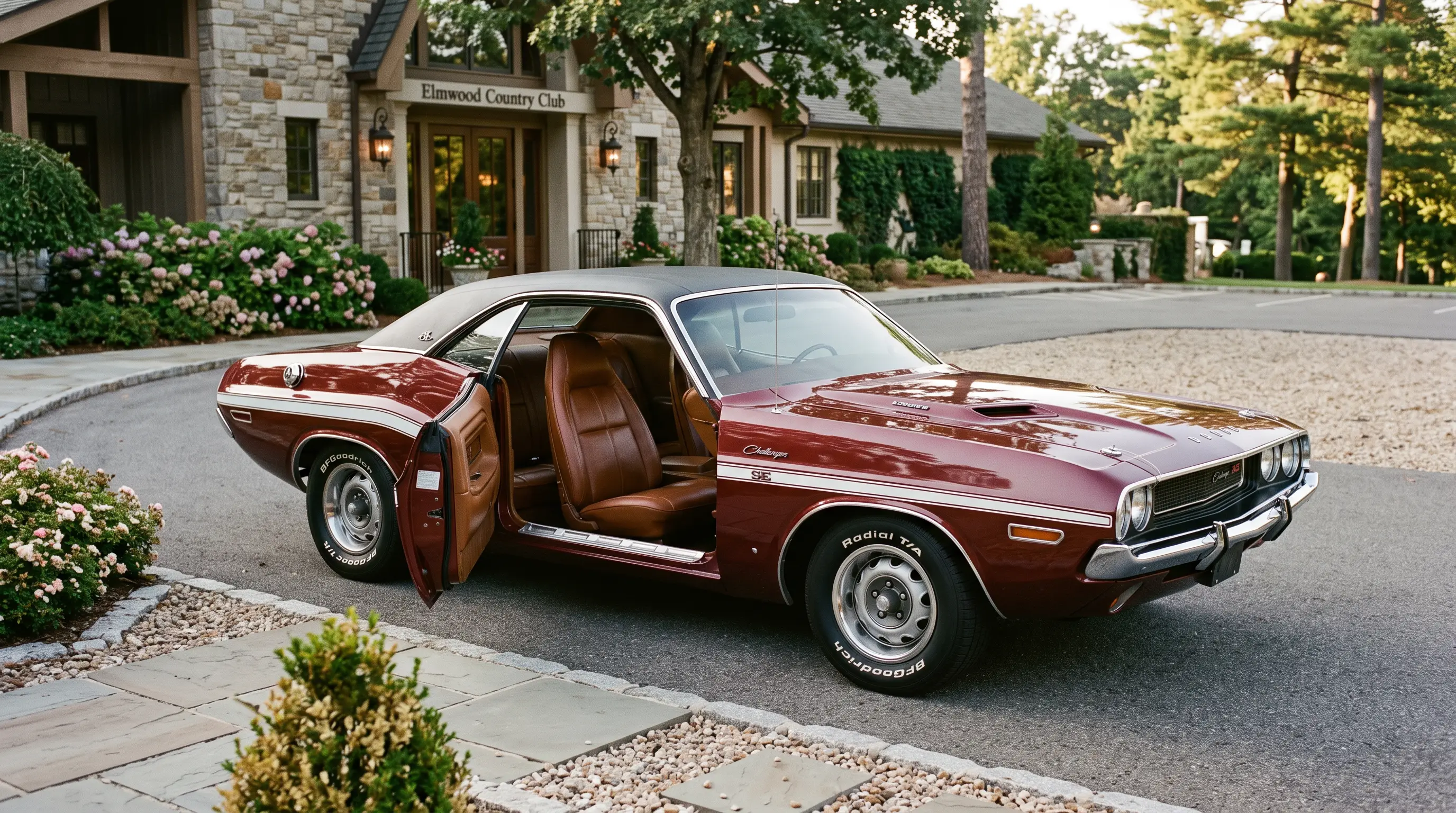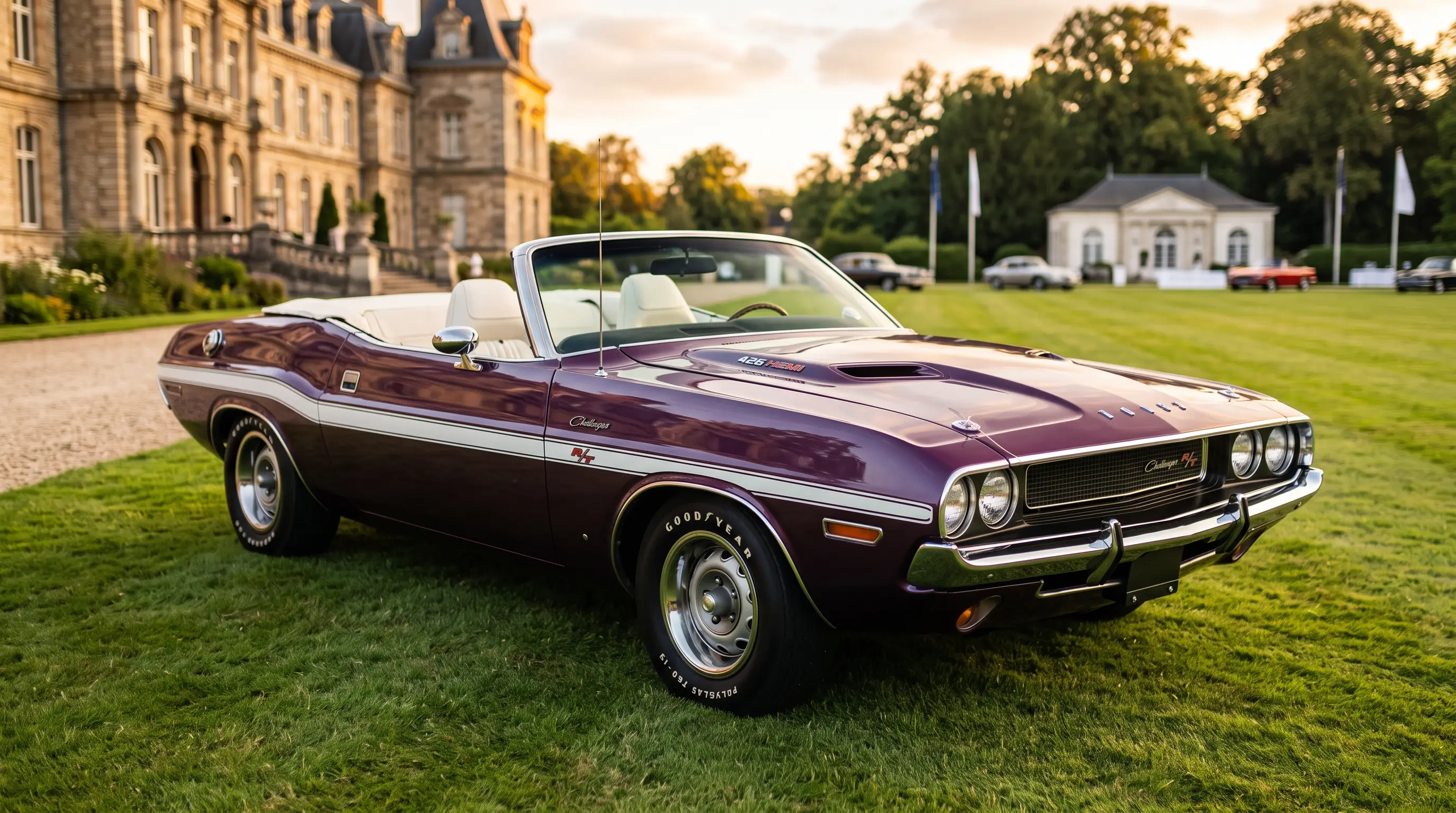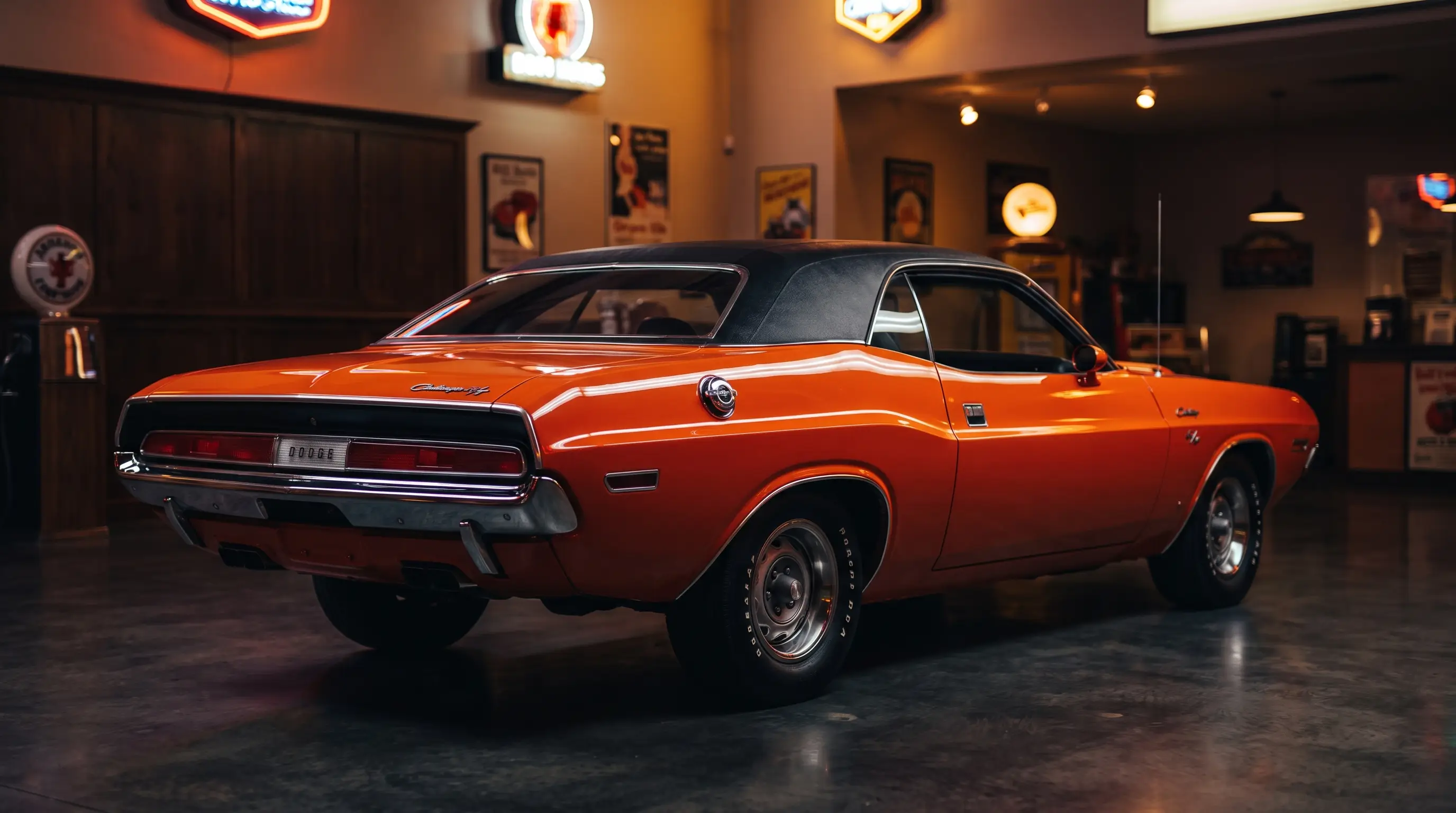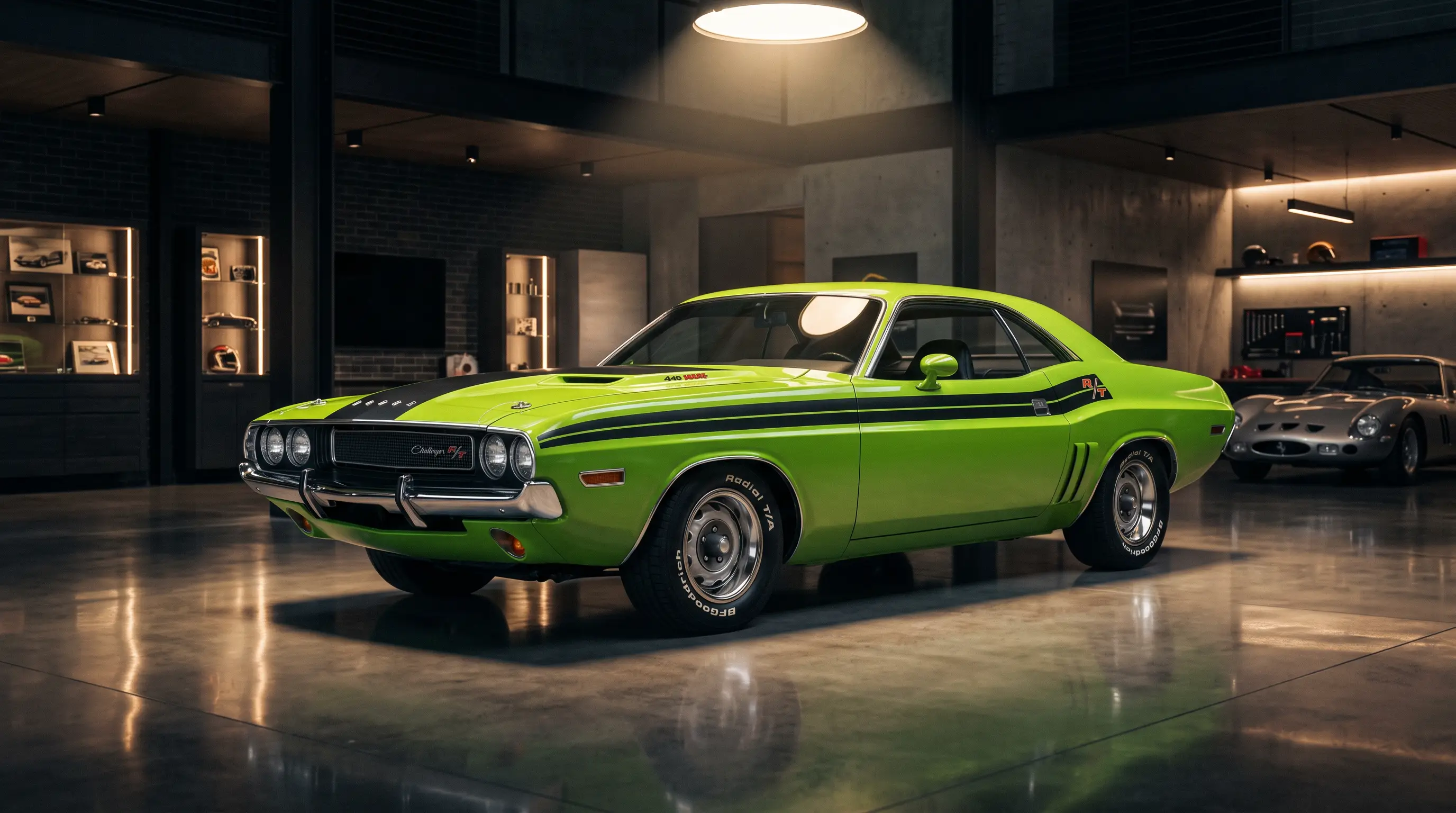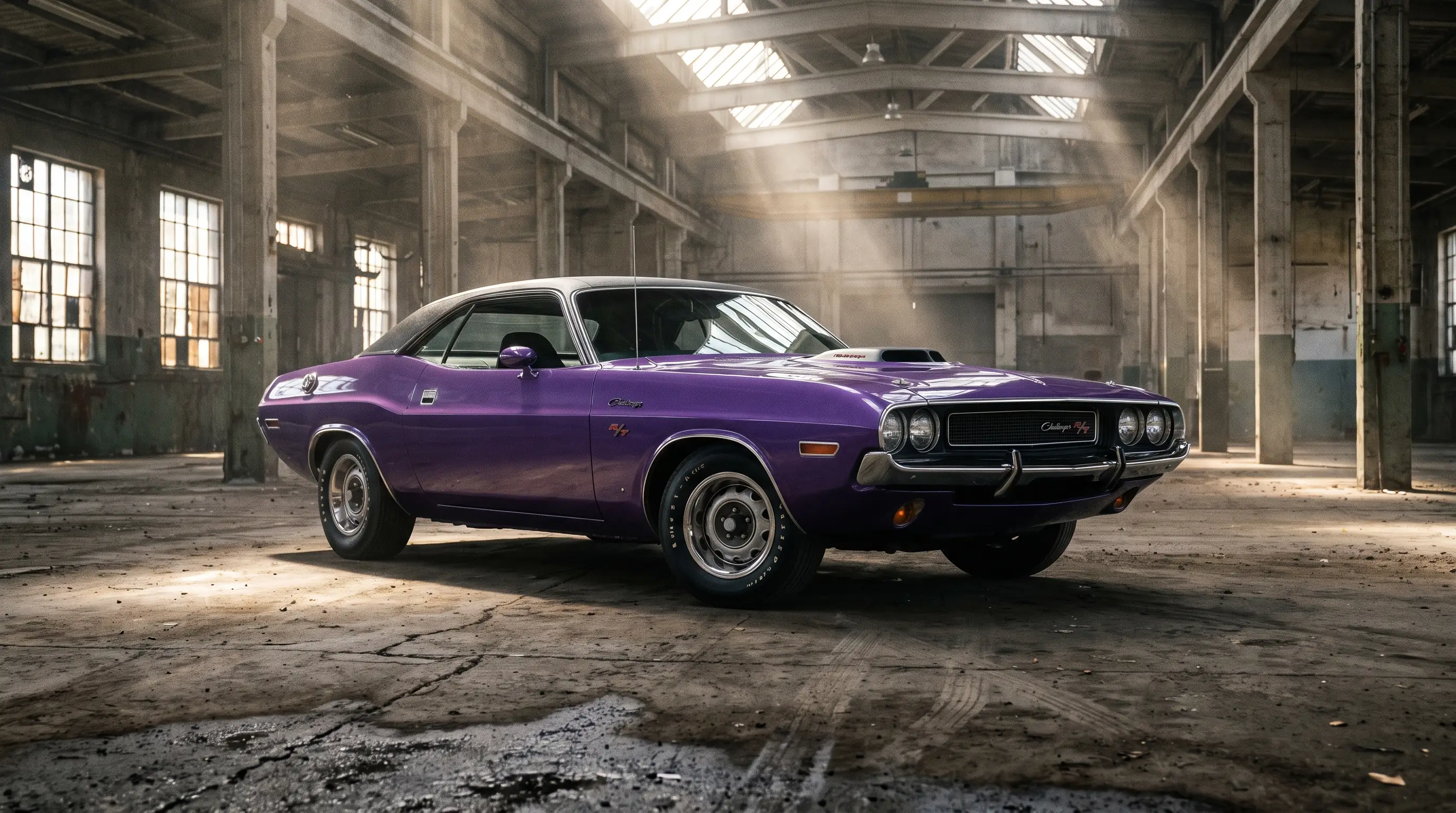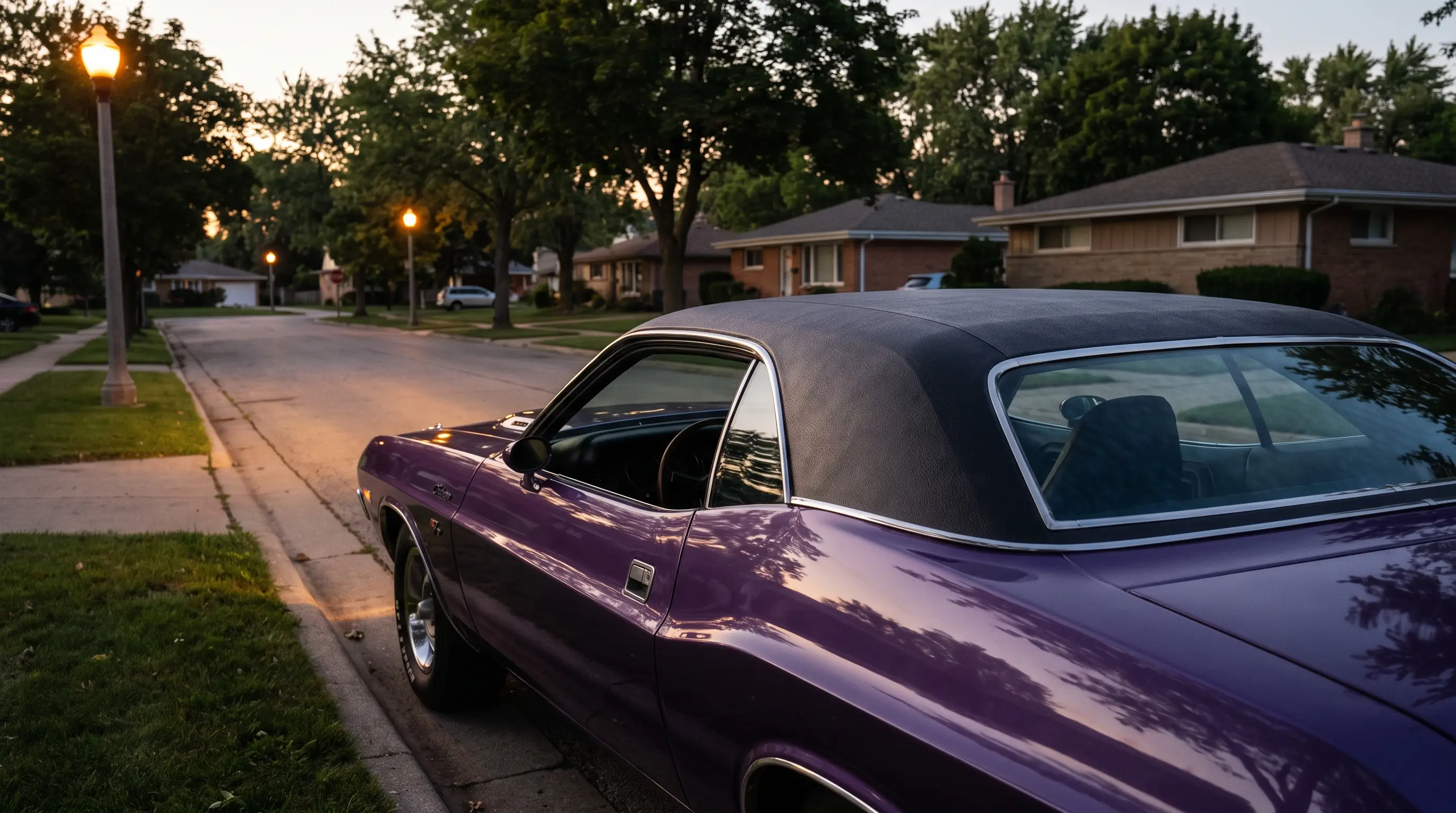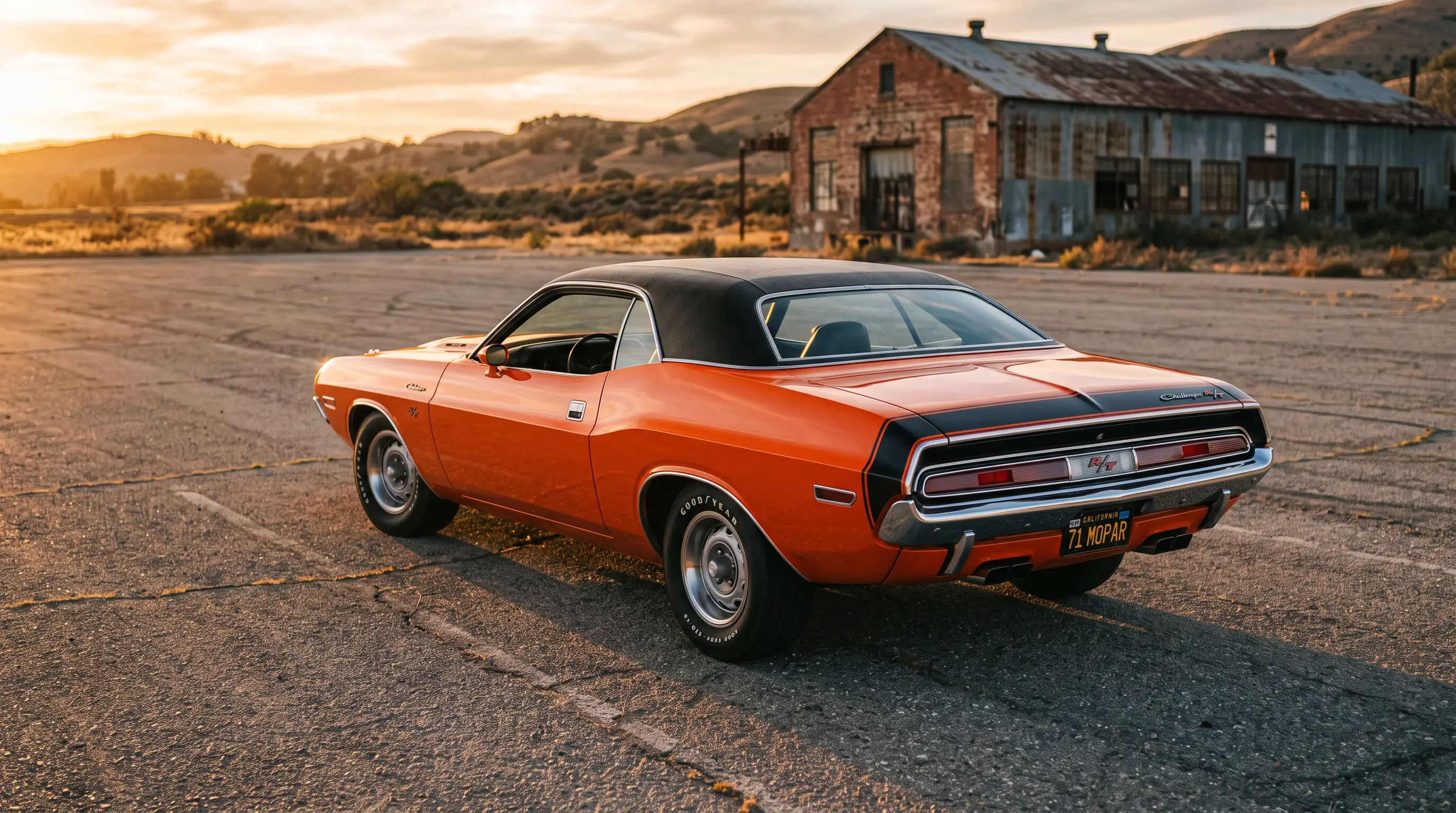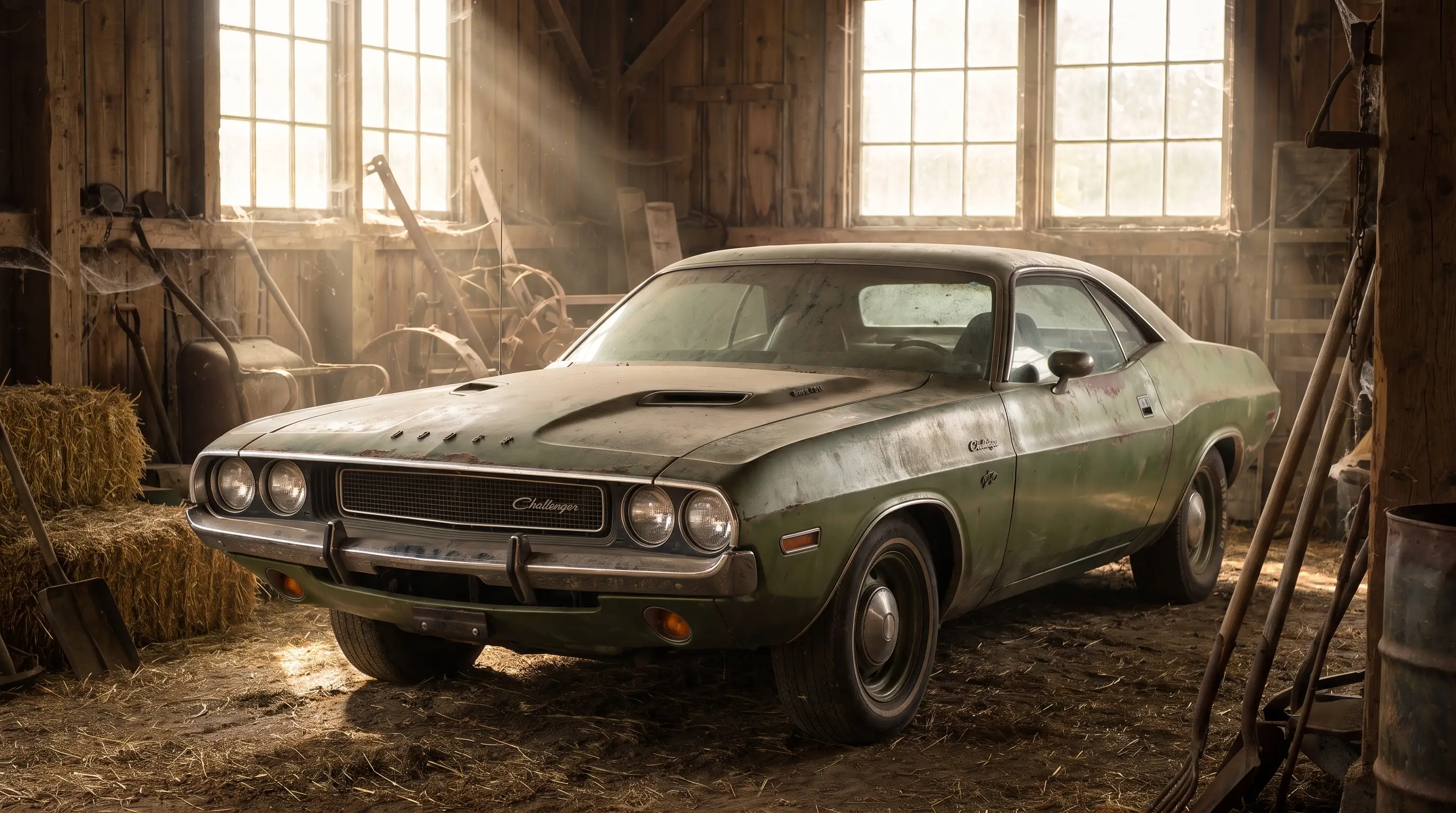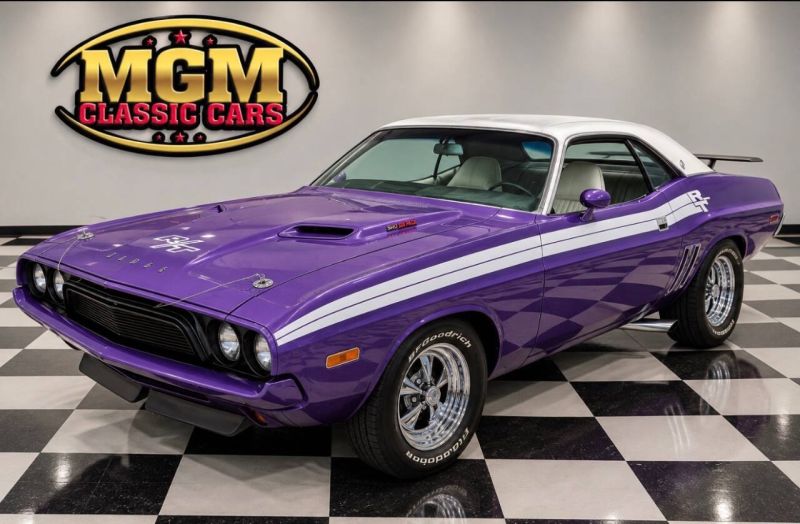
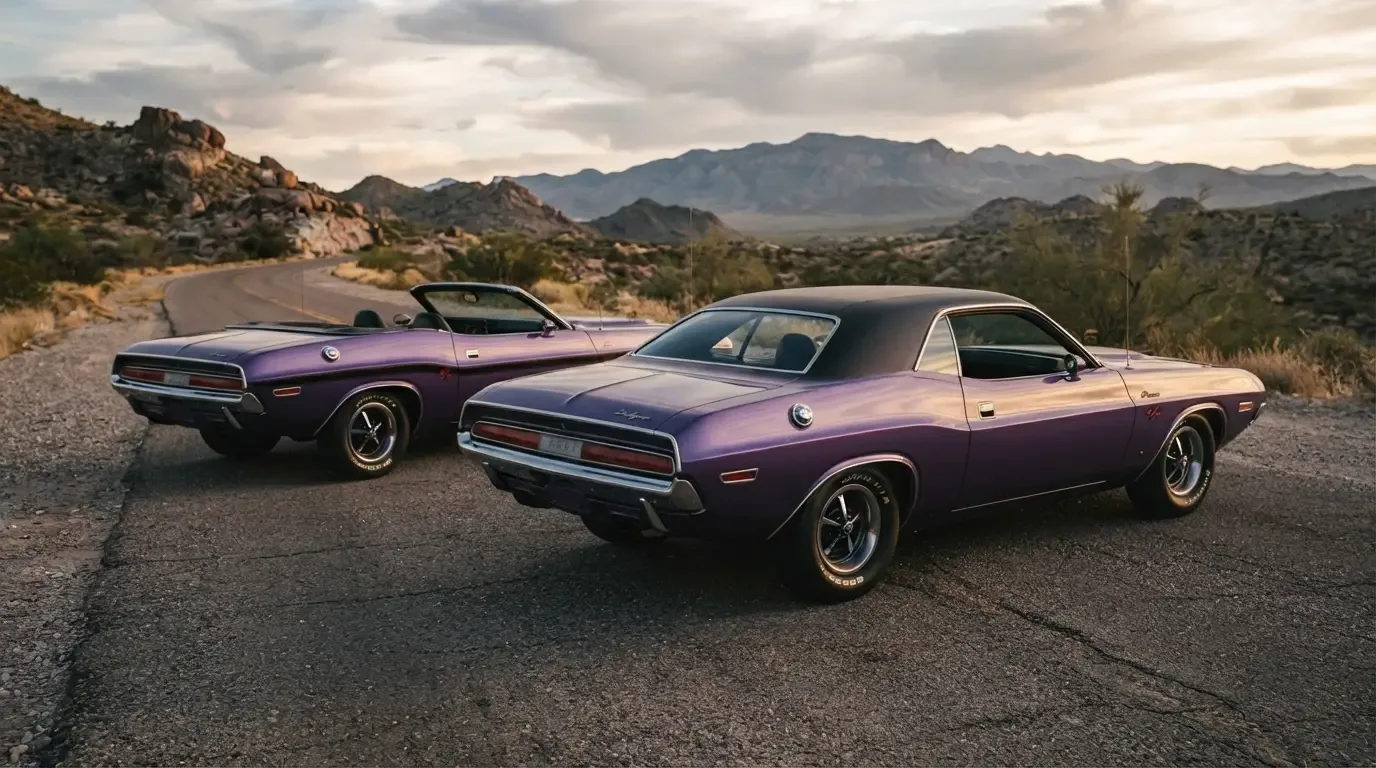
I have shot enough paint over the years to know that most colors are polite. They sit on a car and behave. The Dodge Challenger high impact colors were never polite. Somebody at Chrysler decided in 1970 that a muscle car should be visible from three blocks away, gave the paint names like Plum Crazy and Go Mango, and changed how a whole generation thought about what a factory car was allowed to look like. I still get a little jolt when a genuine Sublime car rolls into the shop. That green is not trying to be liked. It is trying to be seen.
What I want to get into here is not how the paint went on, but why it mattered and why it still moves money. Color and options are what separate a Challenger that everybody chases from one that sits in the classifieds for a year. I have seen both, up close, in primer and in glory.
The names were the marketing
Chrysler rolled out its High Impact paint program for 1970, and the names did as much work as the pigment. Plum Crazy was a loud purple. Go Mango was a hot orange. Sublime was a lime green that almost hums. Top Banana was exactly the yellow you are picturing. There was a Hemi Orange, and for the truly brave there was Panther Pink. Plymouth ran the same colors under its own names on the Barracuda side, so the paint crossed the whole E-body family, but Dodge gave the Challenger its own set of labels.
These were extra-cost options, and not everybody checked the box. A lot of buyers played it safe with white, black, or one of the quieter metallics. That is exactly why the loud cars matter now. Every High Impact car that survived is a survivor of a minority choice, and the market has spent decades rewarding the people who were bold at the order desk. If you have read more on the dodge challenger and its launch, you know 1970 was the year the whole lineup came out swinging, and the paint was part of that same swing.
| High Impact color (Dodge name) | Family |
|---|---|
| Plum Crazy | Purple |
| Sublime | Lime green |
| Go Mango | Orange |
| Top Banana | Yellow |
| Hemi Orange | Orange |
| Panther Pink | Pink |
| Green Go | Green (1970-71) |
Why the loud cars are worth more
Let me be blunt about it, because I have watched this play out at auctions and in private sales. A Challenger in a rare High Impact color, with the paperwork to prove it left the factory that way, brings more than the same car in a common shade. The color is not just cosmetic to the market. It is scarcity you can see from across a field. Panther Pink is the classic example. So few people ordered it that a real one turns heads and opens wallets.
The trap here is repaints. Any car can be sprayed Plum Crazy today. That is the whole problem. A color that valuable draws people who want the value without the history, and the hobby is full of cars wearing a High Impact shade they were never born with. I have nothing against a nice repaint on a driver. I have a real problem with one being sold as a numbers-matching factory color car when the build sheet says it left in green. That is the line between period-correct and poseur, and it is the line that separates an honest price from a bad one.
The convertibles are the other rarity
Paint is one axis of collectibility. Body style is the other, and the Challenger convertible is where the two meet. Dodge offered a Challenger convertible for 1970 and 1971 only, then dropped it when the market for open muscle cars fell apart. Two model years. That is the entire classic-era window for a factory drop-top, and the production numbers were modest even during those years.
Put a rare High Impact color on a convertible body and you have stacked two kinds of scarcity on the same car. A Sublime or Plum Crazy convertible from 1970 is about as desirable as an E-body gets short of a Hemi car. When people go looking to browse classic Challenger listings for an open car, they find out fast that the good ones do not sit around. The combination of a two-year body style and a minority paint choice keeps supply thin and interest high.
The culture the colors created
What people forget is how brave these colors were for a mainstream car company in 1970. Detroit had spent decades selling respectable metallics and dignified two-tones. Then Chrysler put a lime green car in the showroom next to a purple one and dared people to order them. That was not just a paint decision. It was a read on a whole generation of young buyers who wanted their car to look like nothing their father would drive.
The colors became shorthand for the muscle era itself. When someone who was not even alive in 1970 pictures a classic Challenger today, they do not picture it in beige. They picture Plum Crazy or Sublime, because those shades are what stuck in the culture. The paint did its job so well that it outlived the cars, the company's troubles, and the whole era that produced it. That is rare for a color to pull off, and it is why the names still make collectors lean in.
I have seen the effect at shows. A tasteful white numbers-matching car will draw respect and a small crowd. Park a genuine High Impact car next to it and watch where the phones come out. The color pulls people across the field before they know a single thing about the engine or the options. That magnetism is real, and it is priced into the hobby whether the purists like it or not.
Reading a color car honestly
From a builder's chair, the thing I care about most is whether the car is telling the truth. A factory High Impact color leaves evidence of what it always was, in the places a quick respray never bothers to chase. I am not going to walk you through an inspection here, because that is not the point of loving these cars. The point is that the color has to be earned by history, not sprayed on to chase a number.
When the story checks out, a High Impact Challenger is one of the most honest expressions of what the muscle era was actually about. It was loud on purpose. It wanted attention. Pretending otherwise, dressing a plain car up in borrowed paint and a borrowed story, misses the whole spirit of the thing. The original buyers who checked that box were making a statement, and a real color car still carries it.
"A real High Impact car does not need me to sell it. The color does that from across the lot. My job is just to tell you whether the paint earned its place or somebody sprayed a story onto a car that never lived it."
- Jim Vasquez
What the market rewards
If you line up everything that moves a Challenger's value, color and body style sit near the top alongside engine and documentation. A common-color hardtop with a small block is a lovely car and an affordable way in. A documented High Impact convertible is a blue-chip piece. Most cars live somewhere between those poles, and knowing where a given car falls is the whole game.
The mistake I see newer buyers make is chasing the color first and the truth second. They fall for the Plum Crazy and forget to ask whether it is real. Do it the other way around. Confirm the history, then enjoy the paint. The right car rewards that patience, and there is always another one worth waiting for.
There is a quieter reward in a color car that most people miss until they own one. A common shade lets you blend into a show field. A genuine High Impact car makes you the custodian of a choice somebody made at a dealer desk more than fifty years ago, a small act of nerve preserved in paint. I have handed cars like that back to owners who suddenly understood they were not just buying a color. They were keeping a decision alive. That is a different kind of ownership, and it is the part of this hobby I care about most.
Engine and documentation still set the ceiling on price, and nobody should forget it. But among cars of similar mechanical merit, the color and the body style are what decide which one a room remembers. The Dodge Challenger high impact colors were built to be remembered, and the honest survivors do exactly that, decade after decade.
Sources and notes
- The 10 Mopar High-Impact Colors: Complete Guide, autoevolution
- High-Impact Colors: When Hot Muscle Cars Got Some Crazy Paint, Hagerty Media
- Mopar Paint: Dodge & Plymouth High-Impact Paint Colors, Classic Industries
- Chrysler Sublime J5/FJ5, Tamco Paint
- High Impact Colors, DodgeGarage
Color as the whole point
People sometimes act like the High Impact colors were a gimmick. I disagree, and I have the shop stories to back it up. Those colors were the clearest statement Detroit ever made about what a muscle car was for. It was not for blending in. The Dodge Challenger high impact colors turned a well-built pony car into a rolling declaration, and the ones that survived with their history intact are the cars that still stop a room.
If this pulled you in and you want to keep going, the launch year has its own story worth knowing, and the 1970 car is another one worth knowing if you care where all this color and swagger started. It began loud, and the best of these cars have never quieted down.