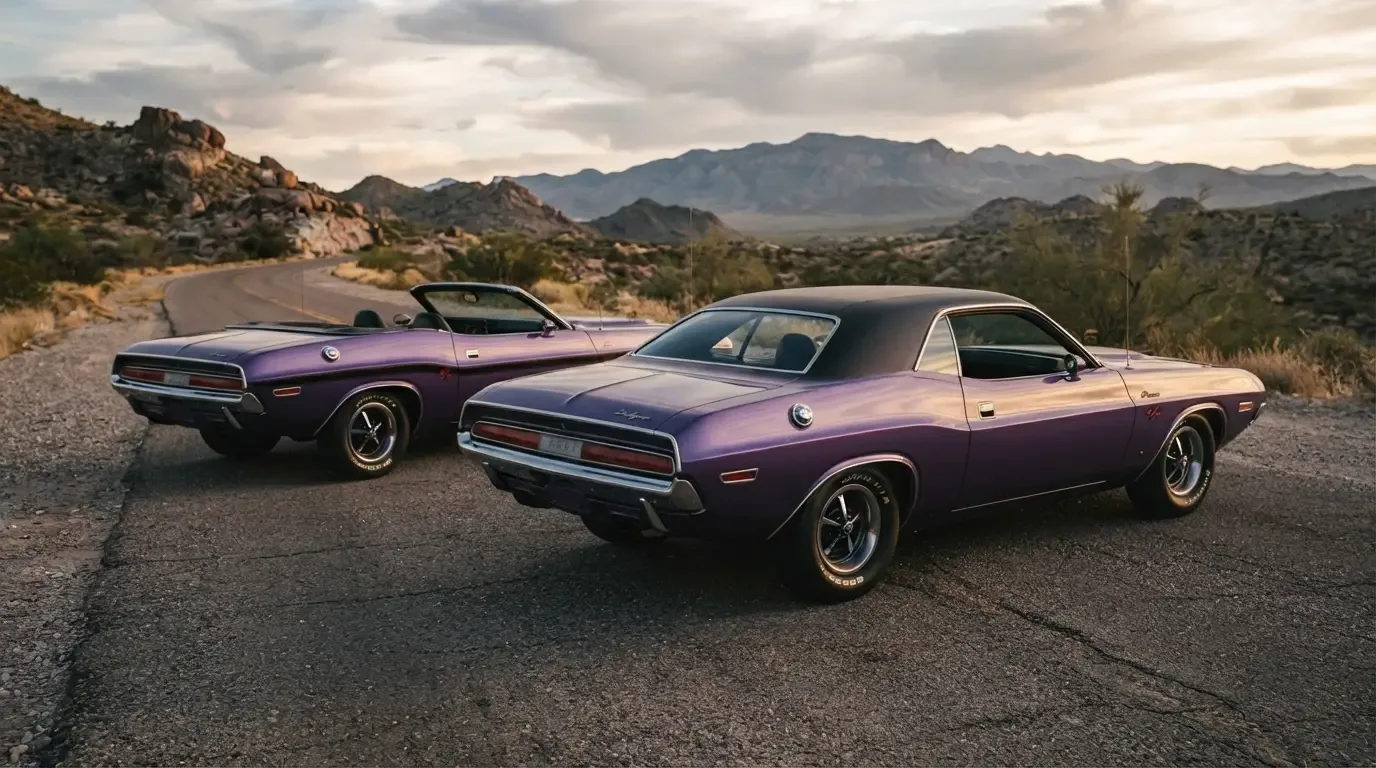
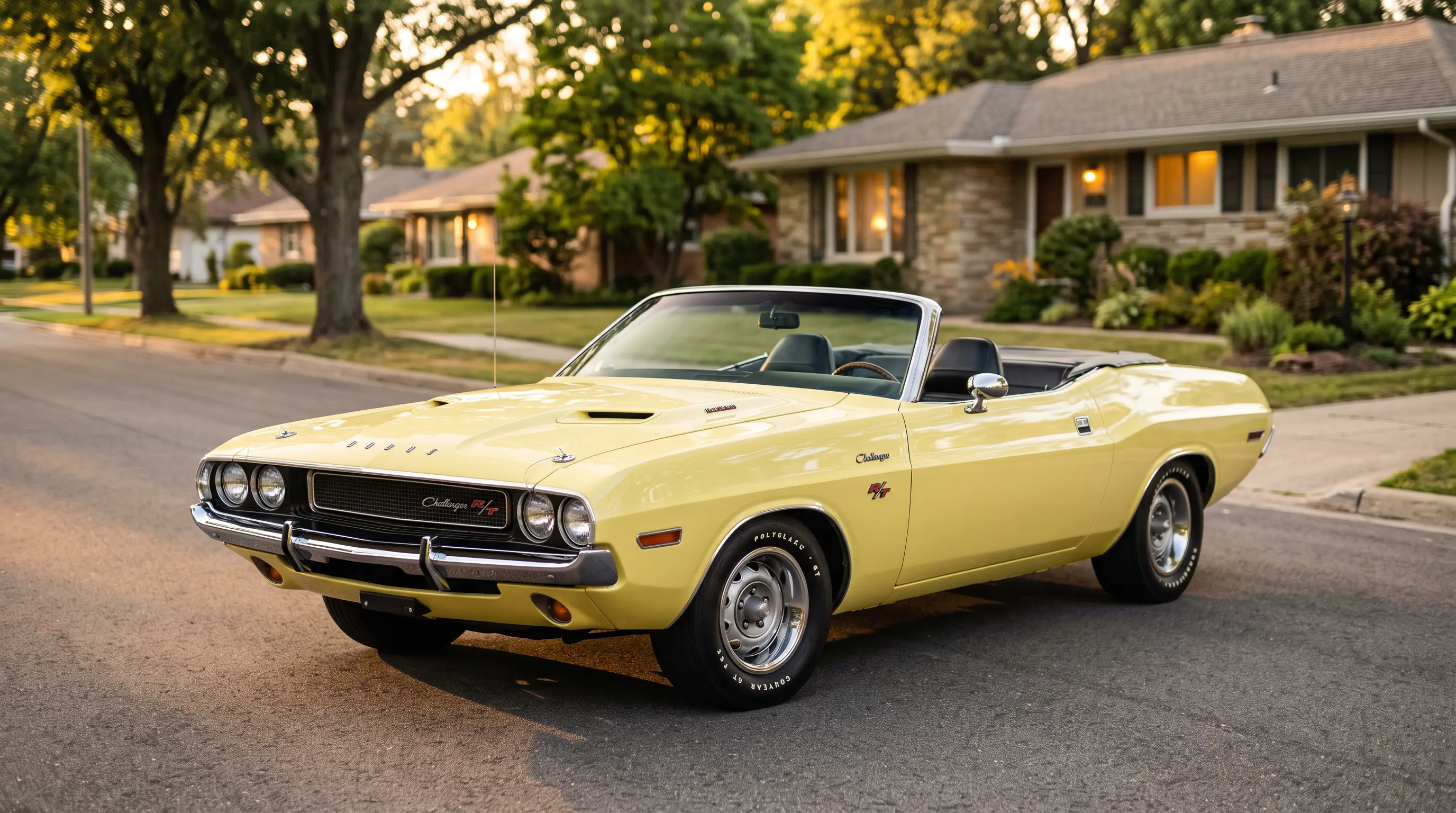
Picture a beach town parking lot in the summer of 1970, top down, a Challenger convertible idling at a stoplight next to a row of surfboards leaned against a diner wall. That image is basically the whole marketing pitch behind the car, and it worked well enough in period that Dodge kept building the droptop version through the entire first generation. The challenger convertible was never the sales leader of the lineup, but it became the version people remember most vividly, the one that shows up on postcards and magazine covers instead of just spec sheets.
A short run that carries outsized weight
Dodge built the Challenger convertible from the car's 1970 debut through the 1971 model year, then quietly dropped the body style as convertible sales collapsed across the entire industry in the early 1970s. Insurance costs were climbing, rollover safety regulations were tightening on the horizon, and buyers everywhere were simply choosing hardtops in bigger numbers. Two model years is a short window for any variant, and that brevity is exactly why the convertible carries so much weight among today's collectors.
Production numbers for the convertible were always a fraction of the hardtop's volume. Most buyers who wanted a Challenger in 1970 or 1971 chose the coupe, and the convertible remained something closer to a specialty order, the kind of car a dealer might have exactly one of on the lot at any given time rather than a rack of them waiting for buyers.
What made the drop-top experience different
Losing the roof changes more about a car than people expect walking in. The Challenger's convertible body required additional structural reinforcement to make up for the rigidity lost when engineers cut the roof out of the design, and that reinforcement added weight the coupe never carried. Owners in period noticed the difference in how the car handled compared to a hardtop with the same drivetrain, a touch more flex over rough pavement, a slightly different feel through a hard corner.
None of that stopped buyers who wanted the experience specifically. There is something about a big block Challenger with the top down on a summer highway that a coupe simply cannot replicate, no matter how good the coupe's chassis behaves on paper. That is the trade collectors have always understood about convertibles generally, and the Challenger convertible earns its reputation on exactly that trade.
Why values split so sharply from the coupe
Anyone shopping this segment quickly notices how much further apart convertible and coupe values sit compared to almost any other muscle car nameplate from the era. Part of that gap comes from straightforward scarcity, fewer convertibles built means fewer available today after decades of attrition, rust, and neglect. Part of it comes from the simple fact that convertible tops fail, get replaced poorly, or get removed entirely by owners who wanted a coupe's structural rigidity back, which further shrinks the pool of properly documented, original convertibles still on the road.
A documented big block convertible in a desirable color, with the original top mechanism intact and correctly restored, commands a serious premium over an equivalent coupe. That gap has only widened as more coupes survive in reasonable numbers while convertibles have thinned out through decades of neglect, weather damage, and top-related deferred maintenance that eventually claimed a lot of these cars entirely.
"You can find a coupe on a decent afternoon of searching if you are patient. A documented convertible, especially in one of the rarer colors, takes real hunting, and most people who eventually land one describe it as a years-long search rather than a lucky afternoon."
- Patrick Walsh
The pop culture image that outlasted the sales numbers
Film and television leaned on the convertible image far more than actual 1970 sales figures would suggest was representative. A hardtop Challenger might have been the more common sight on an actual street corner, but the convertible became the version directors reached for whenever a scene called for open road freedom and California sunshine, whether the story was actually set in California or not. That imbalance between real sales volume and cultural visibility is part of why so many people picture the convertible first when somebody says the word Challenger, even though the coupe vastly outsold it in period.
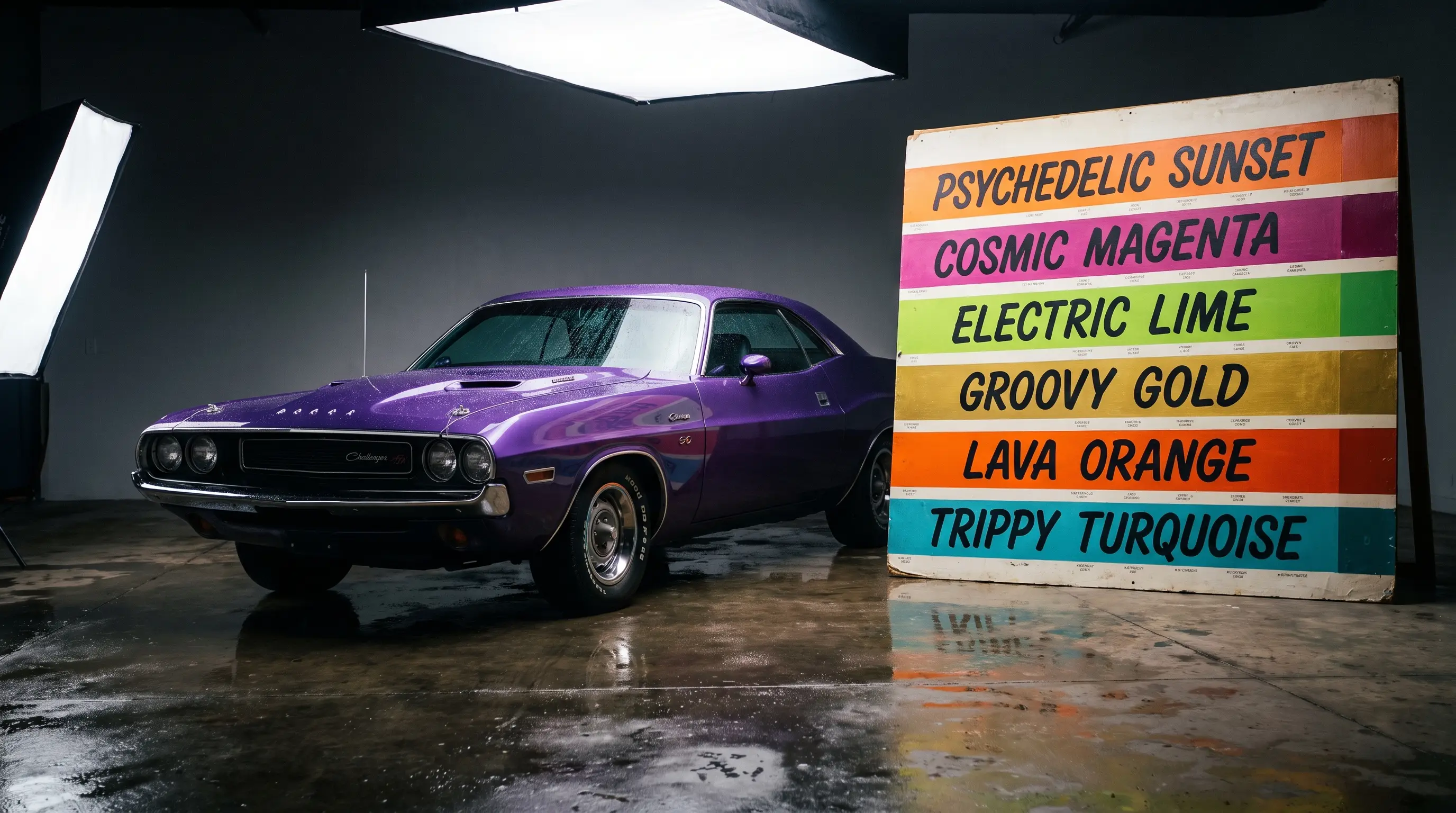
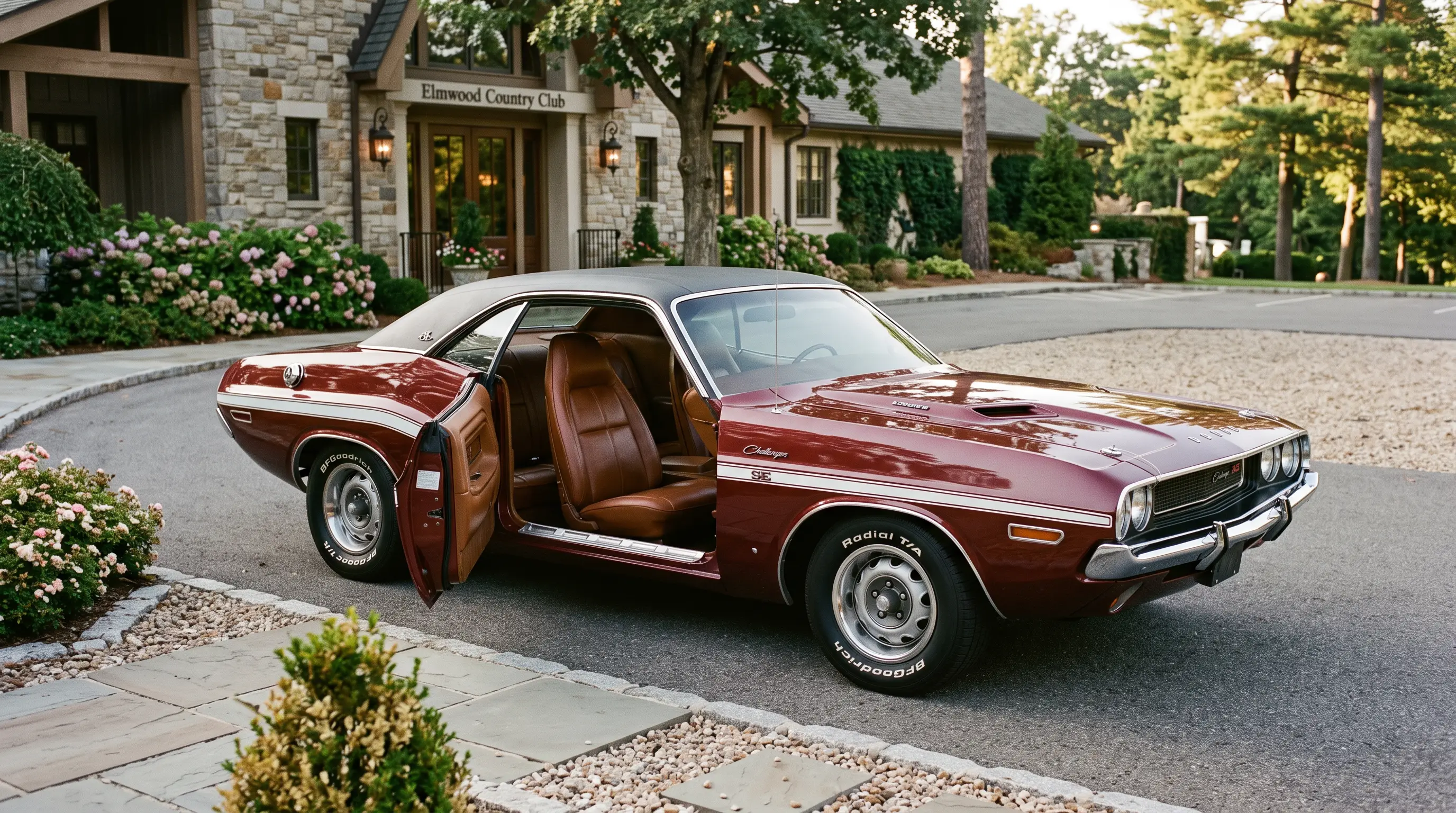
That gap between memory and market reality is not unique to this car, but the Challenger convertible wears it more visibly than most. If you want to understand how the convertible's factory color options fit into our dodge challenger high impact colors retrospective, that piece breaks down how each shade performed across both body styles. The SE hardtop's own story is a related story worth reading if you want the fuller contrast between how Dodge marketed the two very different personalities within the same model line.
For anyone who has been picturing themselves in that beach town parking lot, top down, engine idling at a stoplight, there are genuine Challengers for sale now worth a serious look. Just go in knowing the search for the right one, with the right documentation, usually takes longer than anybody expects walking in.
A car that asks more of its owners
Owning a convertible has always demanded a different kind of commitment than owning a coupe, and Challenger convertible owners talk about that reality more openly than you might expect. The folding top, the extra structural pieces underneath the body, the general reality that a convertible simply has more moving parts and more places for age to show, all of it means these cars ask their owners for a level of attention a hardtop never really requires. Collectors who choose the convertible anyway are, in a sense, choosing the harder path on purpose, because the experience the car delivers is worth that extra demand to them.
That trade shows up in the community around these cars too. Convertible owners tend to know each other, trade notes, recommend the same handful of specialists who genuinely understand this specific body style rather than treating it like any other Mopar restoration. A coupe owner can often find generic help locally. A convertible owner usually ends up in a smaller, more dedicated circle, because the car itself demands a narrower kind of expertise than the broader muscle car hobby typically offers.
That smaller circle has its upside. People who own these cars tend to genuinely know their history, know which cars have changed hands over the decades, know which sellers are trustworthy and which ones are not. Anybody looking to buy a convertible would do well to find that circle before writing a check to a stranger, because the community around this specific body style has usually already done the verification work that a first-time buyer would otherwise have to do entirely alone.
Sources and notes
- Dodge Challenger (1970) - Wikipedia
- The 1970s Dodge Challengers: A New Line of Performance Cars - MotorCities
- Was There Ever a 1971 Dodge Hemi Challenger Convertible - Dodge Challenger Forum
- A Brief History of the Original Dodge Challenger 1970-1974 - autoevolution
- Dodge Challenger - The Ultimate Guide - Supercars.net