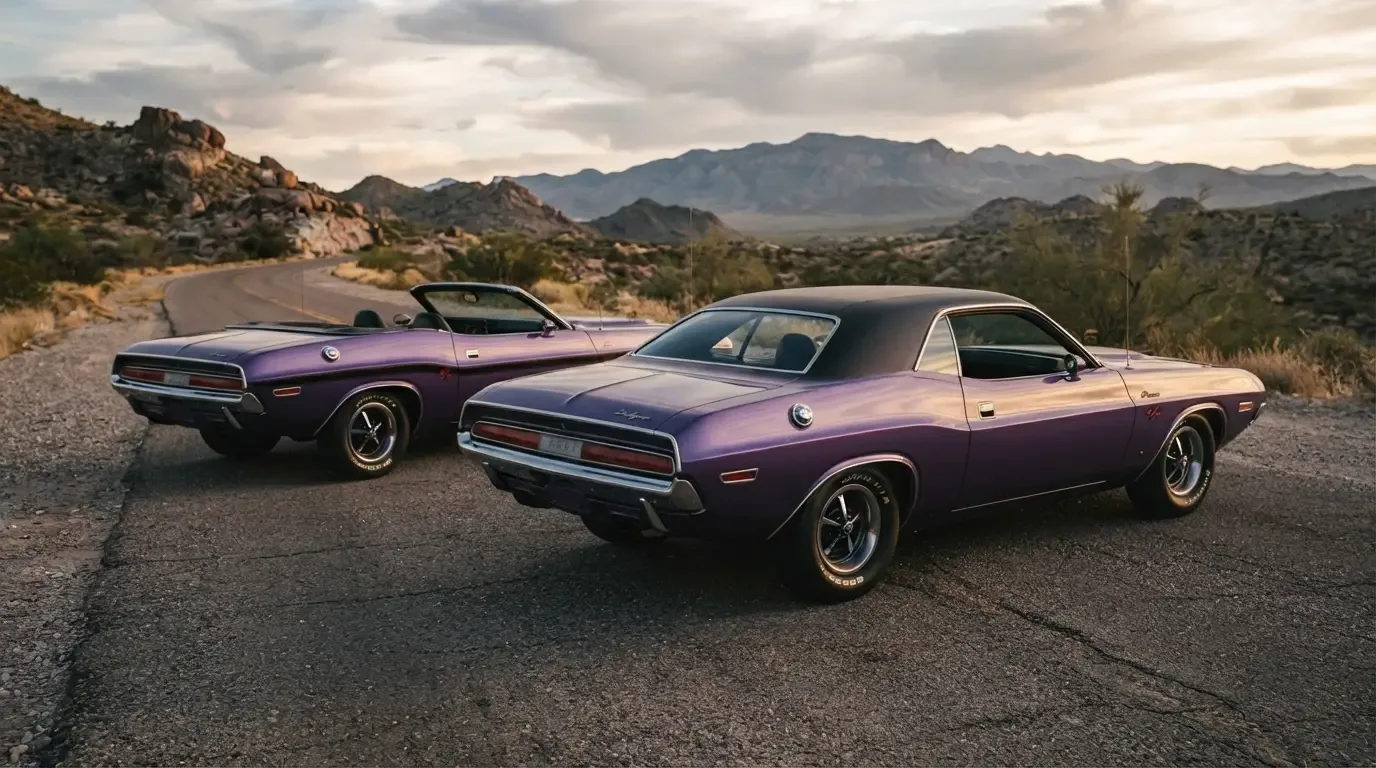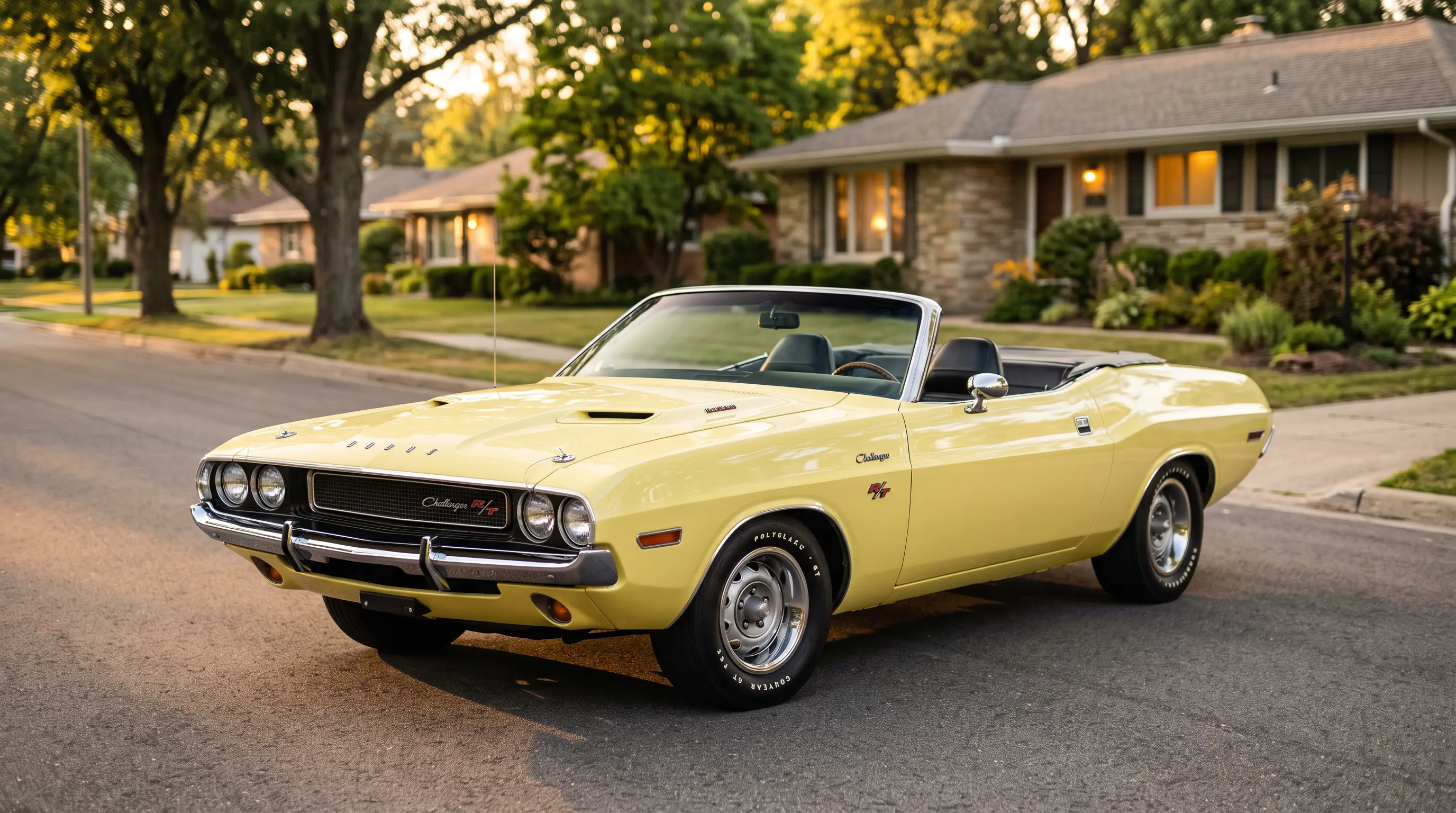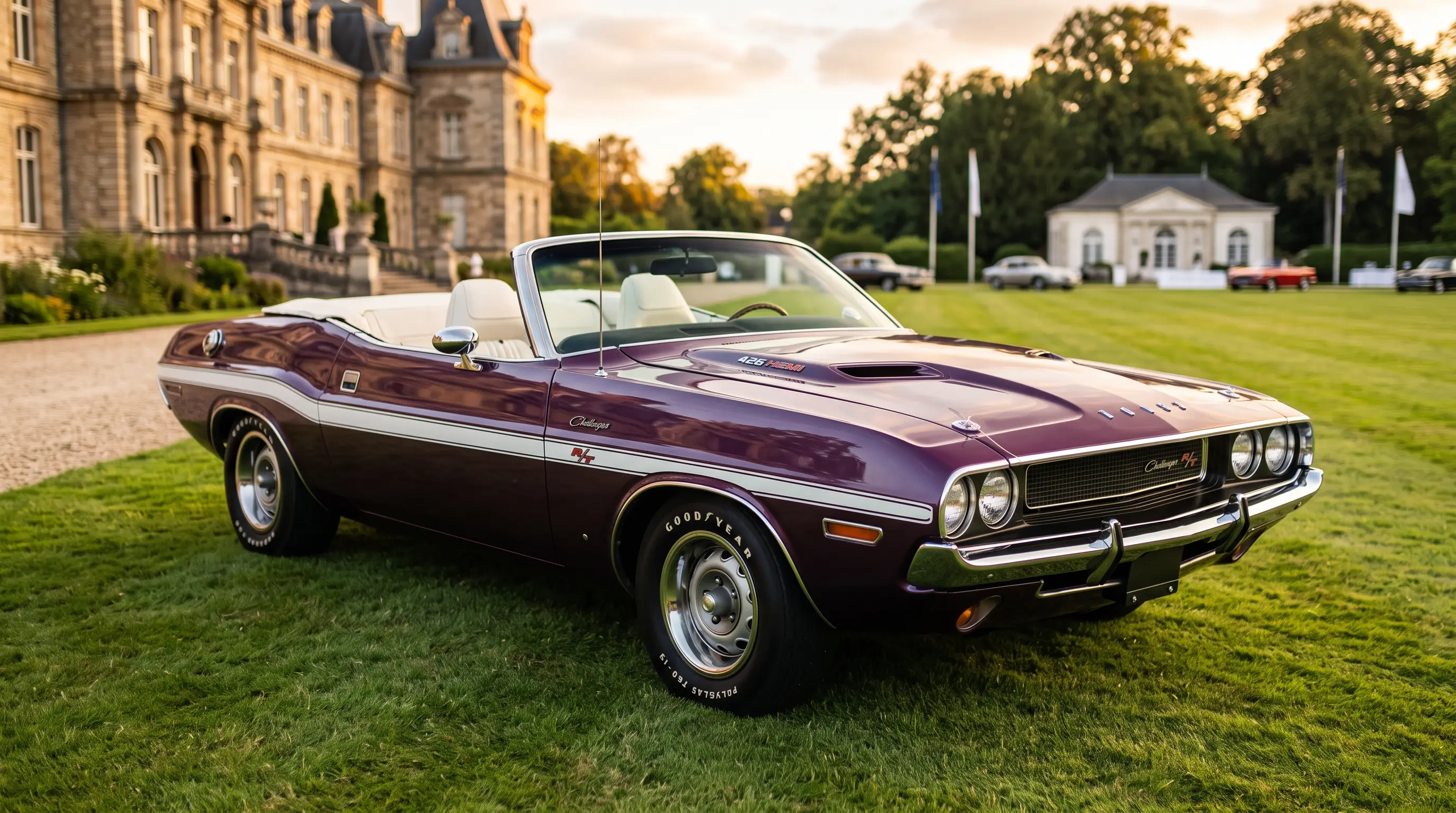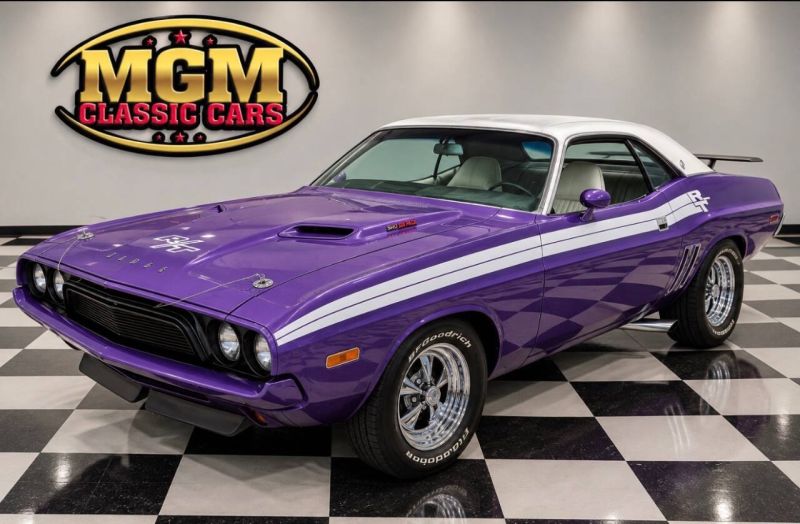
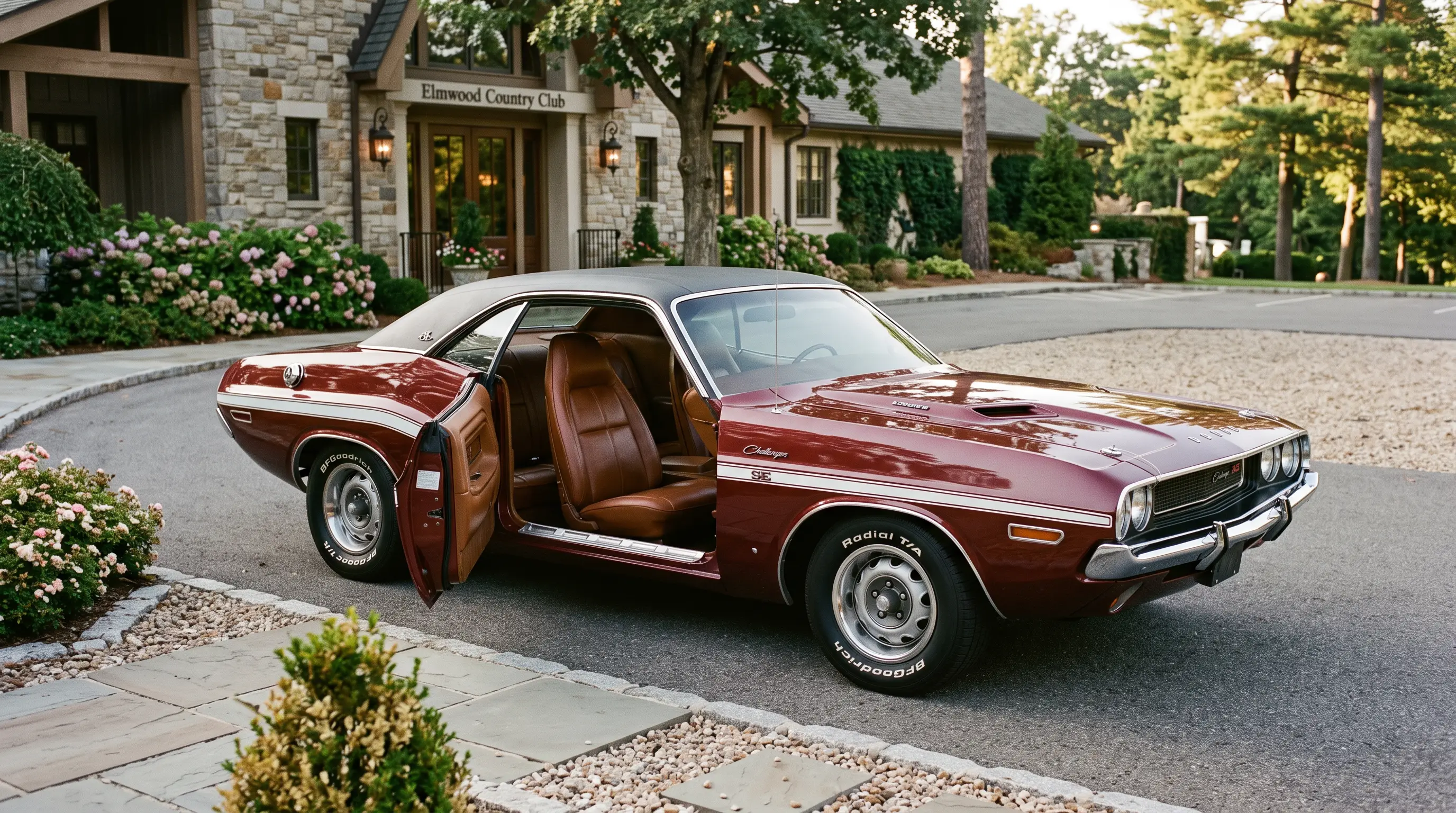
Every car club has a guy who shows up to the cruise-in with something nobody else brought, and for years at our Dodge meets that guy was Ray, rolling in with a black vinyl-roofed 1970 Challenger SE that half the newer members didn't even recognize as a Challenger. The Dodge Challenger Special Edition was Dodge's answer to a question Detroit kept asking itself in 1970: what happens when you put a vinyl roof, a smaller steering wheel and a leather-and-vinyl bucket seat interior on a pony car and call it upscale? Ray's answer, delivered over coffee more times than I can count, was always the same. "It's the Challenger for people who wanted the shape without the shouting."
What the SE package actually added
The SE option, technically RPO code that stacked on top of a base Challenger hardtop, was never about horsepower. It brought a vinyl half roof with a smaller rear quarter window, an interior upgrade with a leather-grained vinyl seat insert, a smaller diameter steering wheel trimmed to match, and overhead courtesy lights. Dodge marketed it as the Challenger for buyers who wanted the fastback's stance but a cabin that felt closer to a personal luxury coupe than a drag strip refugee. It could be ordered with virtually any engine in the lineup, from a slant six up through the 426 Hemi, which is part of what makes the SE such an odd duck to explain to newcomers. It was never a performance trim. It was a comfort and appearance trim wearing a performance car's body.
Ray used to point out that this is exactly why so many SE cars survived in better shape than their R/T siblings. Nobody drag raced a Challenger SE with a 318 and a vinyl roof. Nobody bracket raced it into a wall on a Friday night. It sat in driveways, got waxed on Saturdays, and went to church on Sundays. That survivorship bias is a big part of the collector story around the SE today, and it deserves its own telling, which is why I'd point you toward read the background on how color and condition shaped what actually made it to the present tense.
1970: the only year with the full SE treatment
The 1970 model year is the purest expression of the SE concept. Dodge offered it as its own distinct package with the smaller rear window, the specific vinyl roof treatment, and an interior that visually separated it from a standard hardtop at a glance. For 1971, Dodge dropped the SE as its own distinct series (the JH29 and JS29 codes went away), and the rear window grew back to the standard full size, so the smaller "formal" glass that defined the 1970 look was gone. Some of the SE's other pieces, like the vinyl roof and interior trim, could still be ordered as separate options on any Challenger coupe. By 1972, the SE nameplate had disappeared entirely along with the R/T, the convertible, and the big-block engine options, as the whole lineup was cut back hard. Collectors who care about originality treat 1970 SE cars as the benchmark, the only year the concept existed as Dodge originally built it.
Total 1970 SE production is usually put at a bit over 10,000 cars combined, roughly 6,200 base Challenger SEs and around 3,900 to 4,000 R/T SEs, and Ray always warned newer members not to trust the first figure they read in a forum post since sources round those numbers a little differently. What everyone agrees on is that SE cars were a minority build within an already limited-production nameplate, ordered by a buyer who wanted comfort options checked alongside a specific look, not by someone chasing the fastest quarter mile time on the lot.
The buyer Dodge was actually chasing
Pony cars in 1970 were segmenting hard. Ford had the Mustang Grande doing something similar, adding brougham touches to a car built for speed. Dodge's SE package was the Challenger's answer to that same customer, someone who wanted the fastback silhouette and the image that came with owning a Challenger, but who cross-shopped against a Thunderbird or a Riviera as much as against a Camaro. It's a strange positioning looking back from today, when the R/T and the Hemi cars get all the attention at auctions, but at the time the SE represented real, deliberate market segmentation by Dodge's product planners.
That's part of what makes the Dodge Challenger Special Edition worth a second look now. It wasn't a footnote or a dealer-installed afterthought. It was a factory-engineered answer to a specific kind of buyer, built in the same plants on the same line as the R/T, wearing the same body, just dressed for a different occasion.
Why club members chase SE cars today
At swap meets, the SE crowd is a quieter bunch than the R/T faithful, but they're just as particular. They want the correct vinyl grain pattern, the right steering wheel diameter, the specific courtesy lamp lenses. None of it is loud, all of it is exacting. Ray's SE eventually sold to a member two towns over who wanted exactly what Ray had, not a Hemi, not a big block flex, just a clean, honest, well-kept example of what Dodge actually built for the ordinary customer in 1970.
If you're in the market yourself, the good news is that SE cars tend to be priced below their R/T counterparts while still delivering the shape and the history. Whether you want a driver or a restoration project, you can find a classic Challenger without needing a Hemi-sized budget to get into the club.
"Nobody ever raced their SE to prove a point. They bought it to enjoy a Sunday drive, and forty years later that's exactly the car that's still in one piece."
- Wayne Coburn
Living with an SE today
Parts availability for SE-specific trim is thinner than for R/T pieces, since the aftermarket chases what sells in volume, and R/T reproduction parts sell better than SE-specific vinyl roof moldings. That means owning one takes patience, a network of fellow owners, and a willingness to hunt swap meets rather than order everything from a catalog. It also means an original, correct SE stands out more at a show precisely because fewer people bother to get the details right. For a buyer who wants a Challenger that turns heads for being right rather than for being loud, the Special Edition remains one of the more honest, underappreciated corners of the whole model's history.
Spotting a genuine SE versus a dressed-up hardtop
Because the Special Edition never wore a distinct fender badge separate from the base Challenger script, plenty of cars have picked up a vinyl roof and a set of bucket seats over the decades and gotten passed off as something they weren't from the factory. The build sheet and the fender tag are the only honest witnesses left. The SE's specific interior trim code, the smaller rear window stamping, and the vinyl roof option box on the broadcast sheet either line up with each other or they don't, and there's no faking all three at once. Ray used to say he'd rather own an honest six-cylinder SE with matching paperwork than a big-block clone with none, because the paperwork is what you're actually buying once a car is more than fifty years old.
That patience pays off at resale too. Serious buyers ask for the fender tag before they ask about the engine, and a documented SE with its original interior and roof still intact holds a quiet, steady premium over a car that merely wears the parts without the history behind them. In a hobby that increasingly rewards documentation over decibels, the Special Edition's whole appeal was always about getting the details right rather than making noise, and that's still true of the people who collect them today.
Sources and notes
- Dodge Challenger (1970) - Wikipedia
- 1970 Dodge Challenger Fact Sheet - Over-Drive Magazine
- Dodge Challenger 1970-1974 - Allpar
- Holy-Grail 1970 Dodge Hemi Challenger R/T SE - autoevolution
- From Roller to Driver: 1970 Dodge Challenger SE - Barn Finds
- 70's SE edition and options - Dodge Challenger Talk Forum