Ask ten Challenger owners which car in the lineup is worth the most and you'll get ten confident, mostly wrong answers. The most valuable classic Challenger conversation gets dominated by whichever Hemi story someone read most recently, but valuation is not folklore. It's a function of rarity, engine, body style, and documentation, stacked in that order, and the numbers tell a more disciplined story than the message boards do.
The Hemi convertible sits alone at the top
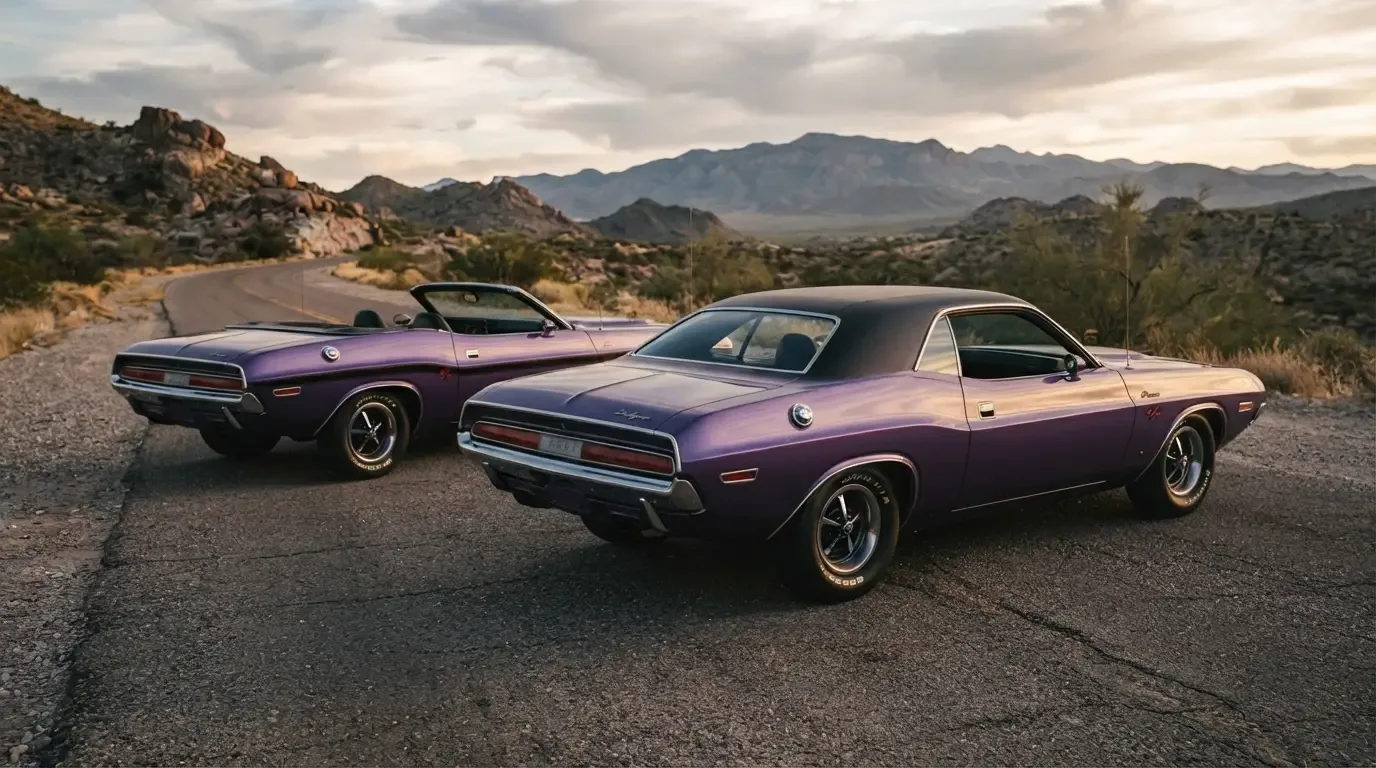
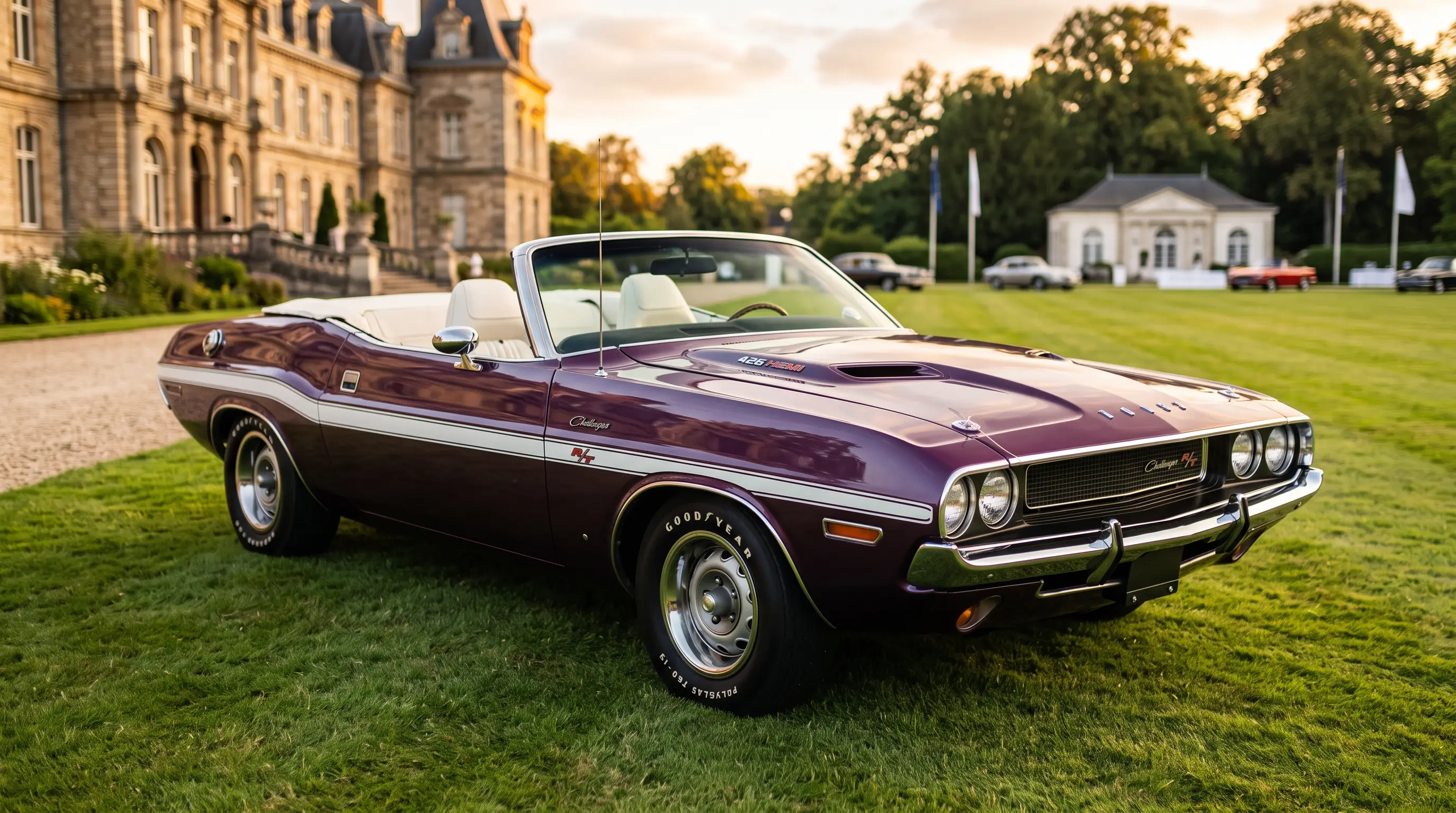
There is no real argument at the summit. A 1970 Hemi Challenger convertible, four-speed, factory documented, is the single most valuable classic Challenger built, and it isn't close. Dodge built the Hemi convertible only for the 1970 model year, and the widely cited factory count is just nine cars, out of 356 total Hemi Challengers built that year across every body style. No factory Hemi convertible was ever built for 1971; the Hemi that year was R/T-only and the convertible body wasn't offered with it, so any "1971 Hemi convertible" that surfaces is a later conversion or a dealer-assembled oddity, not a catalog car. The combination of that kind of open-top rarity with the 426 Hemi has produced auction results in the seven-figure range for the best documented 1970 cars. When a car that rare also happens to carry the most desirable engine in the lineup, the math stops being subjective.
Below that summit, the field spreads out fast. A Hemi hardtop or a Hemi R/T coupe brings serious money, but it's a different tier entirely from the convertible, often a fraction of the price despite sharing the same drivetrain. Body style matters that much.
What actually separates a six-figure car from a five-figure car
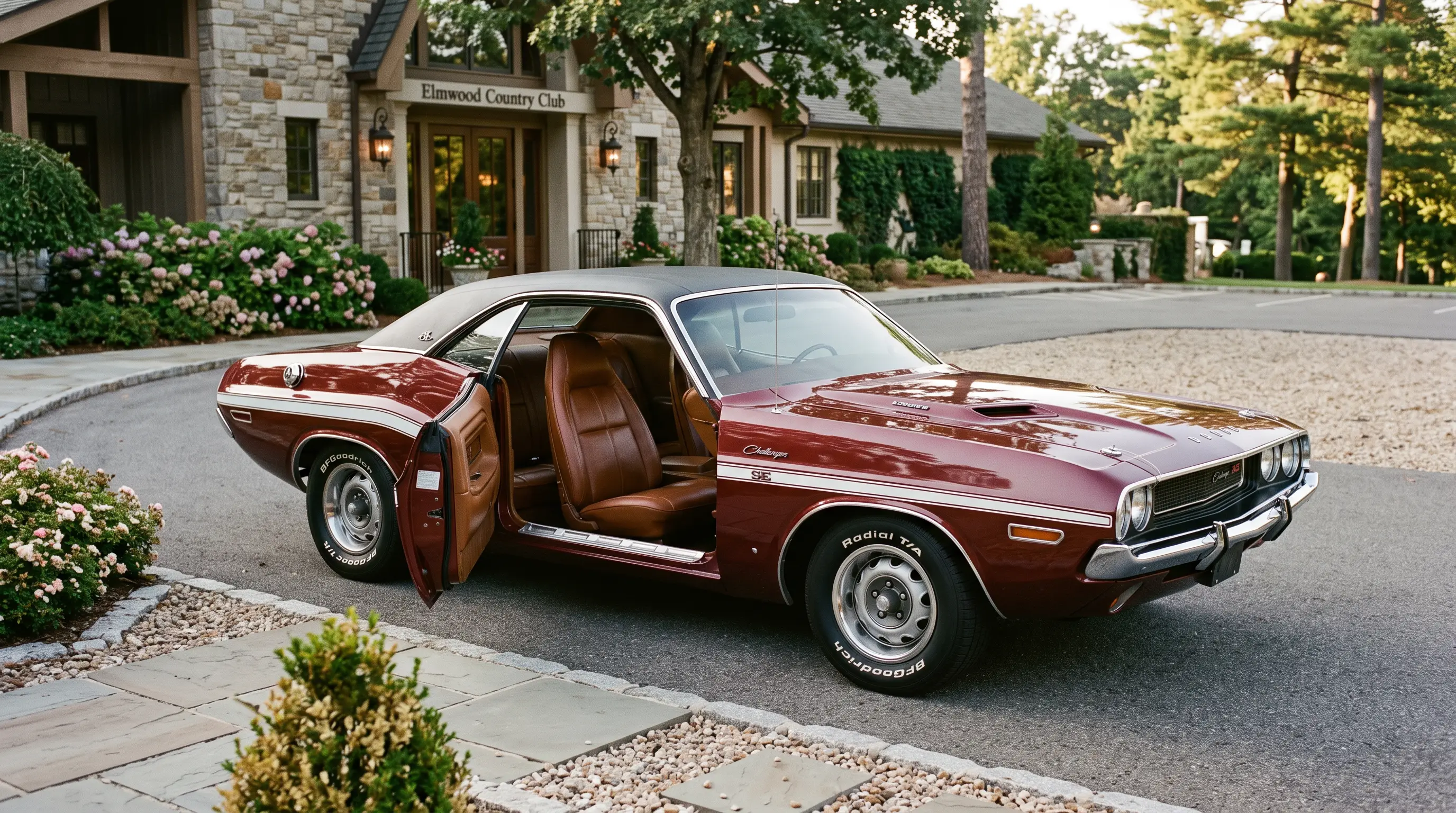
Engine and body style get a car into the conversation. Documentation and originality decide where it lands once it's there. A numbers-matching Hemi with its original broadcast sheet, fender tag, and a clean chain of ownership will outsell a visually identical clone or a re-created tribute car by a wide margin, sometimes several multiples. Buyers at this level are not paying for horsepower they'll never fully use on public roads. They're paying for scarcity they can prove.
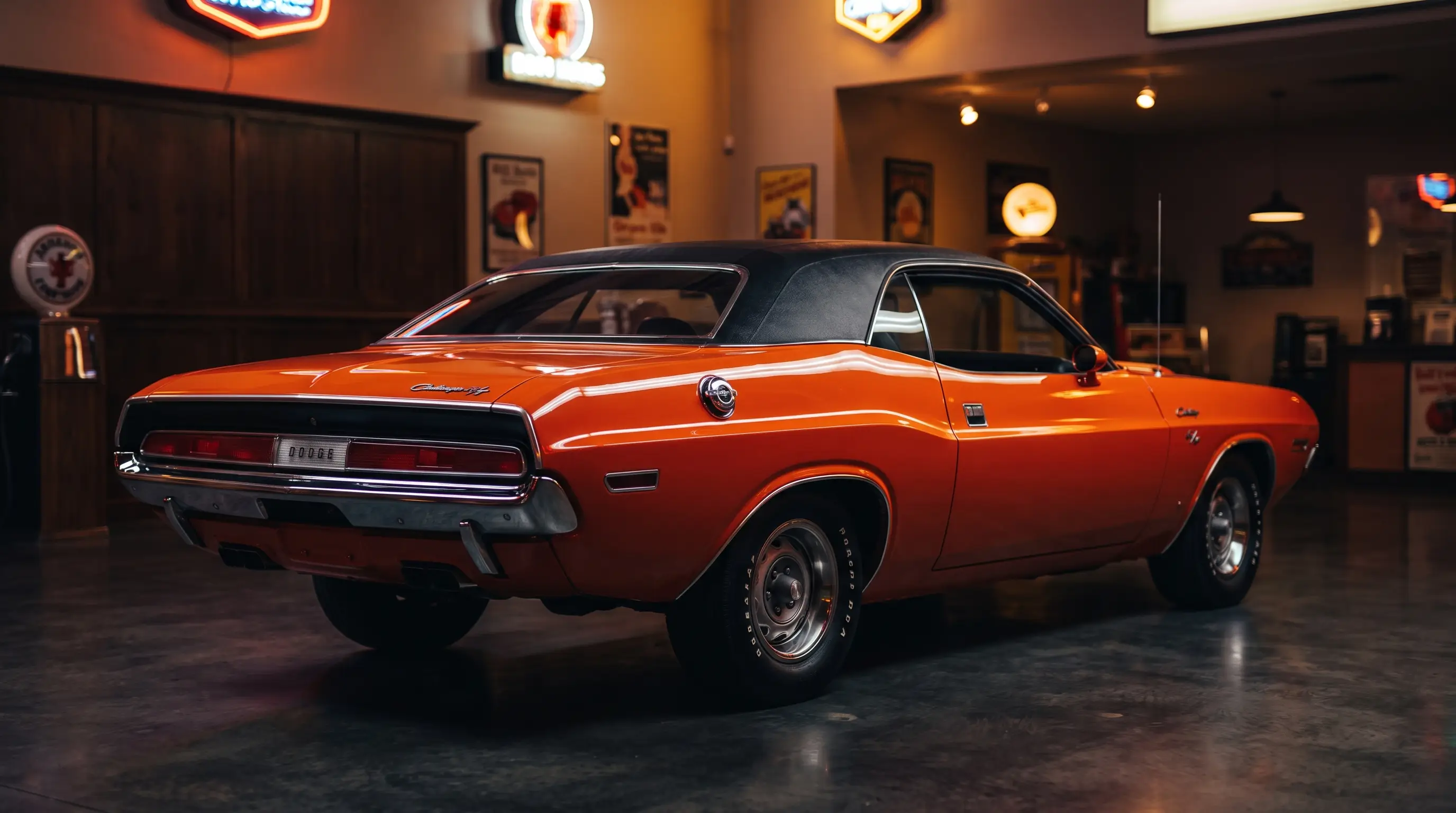
That's the same principle that governs value across the rest of the model line, not just the Hemi cars, and it's worth understanding the whole picture on how factory colors and originality interact with rarity to set price, because paint code and build sheet often move a car's value as much as its engine does.
| Tier | Example | Typical position |
|---|---|---|
| Summit | 1970 Hemi convertible, documented | Highest recorded classic Challenger sales |
| Upper tier | 1970 Hemi R/T hardtop, four-speed | Strong six figures, well below convertible tier |
| Mid tier | 440 Six Pack R/T, documented | Solid five to low six figures depending on condition |
| Entry collector | 318 or 340 hardtop, clean original | Affordable entry into genuine collector ownership |
Why the R/T convertible matters even without a Hemi
Skip the Hemi question for a moment and the R/T convertible with a 440 Six Pack or 383 Magnum still ranks near the top of the value chart, because convertible production across the board was a fraction of hardtop volume. Open cars got driven harder, exposed to weather, and scrapped at a higher rate over five decades, so surviving originals are scarcer than raw build numbers alone suggest. A well-documented big-block R/T convertible, even without the Hemi badge, routinely outsells a Hemi hardtop of lesser condition or shakier paperwork. Rarity of body style competes directly with rarity of engine, and buyers with real money at auction understand that trade-off better than casual observers.
The risk side nobody likes to discuss
Value at the top of any market carries downside risk, and the Challenger market is no exception. Clone cars built from a base hardtop with a swapped drivetrain and reproduction R/T or Hemi badging have flooded the lower and middle tiers for years. A buyer who doesn't verify the fender tag, the broadcast sheet, and the VIN's engine code against a known-authentic reference is exposed to paying top-tier money for a mid-tier car. This is the single biggest risk in high-value Challenger buying, bigger than mechanical condition, bigger than rust, because a bad drivetrain can be fixed and a false pedigree cannot be un-created. Liquidity matters too. The summit-tier cars sell rarely enough that comparable sales data is thin, which means pricing them always carries a wider margin of uncertainty than pricing a common mid-tier hardtop with dozens of recent comparable sales to reference.
"The engine gets a car into the room. The paperwork decides whether it leaves with a check or an apology."
- Marcus Feld
Where a real buyer should actually be looking
For most collectors, chasing the summit tier is neither realistic nor necessary to own something genuinely valuable. A documented big-block R/T, a rare color combination on a mid-tier engine, or a clean original 340 car all sit in territory that's both attainable and likely to hold value if the car is bought with proper documentation and sold with the same. The most valuable classic Challenger will always be the Hemi convertible, but the most sensible purchase for most buyers sits several tiers below that, where authenticity is easier to verify and the downside risk is far smaller. If you're ready to start comparing real examples against these tiers, you can shop classic Challenger listings and weigh documentation against price before committing.
Condition, of course, still moves every number on this list. A rough, incomplete Hemi car sells for less than a pristine, fully sorted mid-tier example, and buyers who forget that basic rule are the ones who overpay at the top and underpay at the bottom, distorting the market for everyone trying to price a car honestly.
Auction results versus private sales
Published auction results are the number everyone quotes, but they're only part of the picture. A significant share of high-value Challenger transactions happen privately, between collectors who already know each other or through brokers who don't publish figures. That means the widely cited record sales are real data points, but they aren't the full distribution of what these cars actually change hands for. A private sale on a documented, lower-profile car can quietly exceed a publicized auction result for a flashier one if the private buyer values the paperwork and originality more than the seller's marketing. Appraisers who rely only on public auction data risk both overvaluing hyped cars and undervaluing quiet, well-documented ones that never crossed a stage.
This is worth remembering before treating any single headline sale as the market. One record-setting Hemi convertible tells you what a buyer paid for that specific car on that specific day, with that specific bidding rivalry in the room. It doesn't set the floor or the ceiling for every other Hemi convertible, and it certainly doesn't set the price for the R/T and mid-tier cars that make up the bulk of real transactions in this hobby. Treat the record numbers as data points, not gospel, and price your own car or your own purchase against comparable, verified sales rather than the single biggest number you saw in a headline.
Sources and notes
- 1970 Dodge Challenger R/T Hemi Convertible - Sports Car Market
- 1970 Challenger Production Numbers - Stock Mopar
- Was there ever a 1971 Dodge Hemi Challenger convertible? - Challenger Talk Forum
- 1971 Dodge Challenger Fact Sheet - Over-Drive Magazine
- Dodge Challenger (1970) - Wikipedia
- 1971 Dodge Hemi Challenger R/T - RM Sotheby's