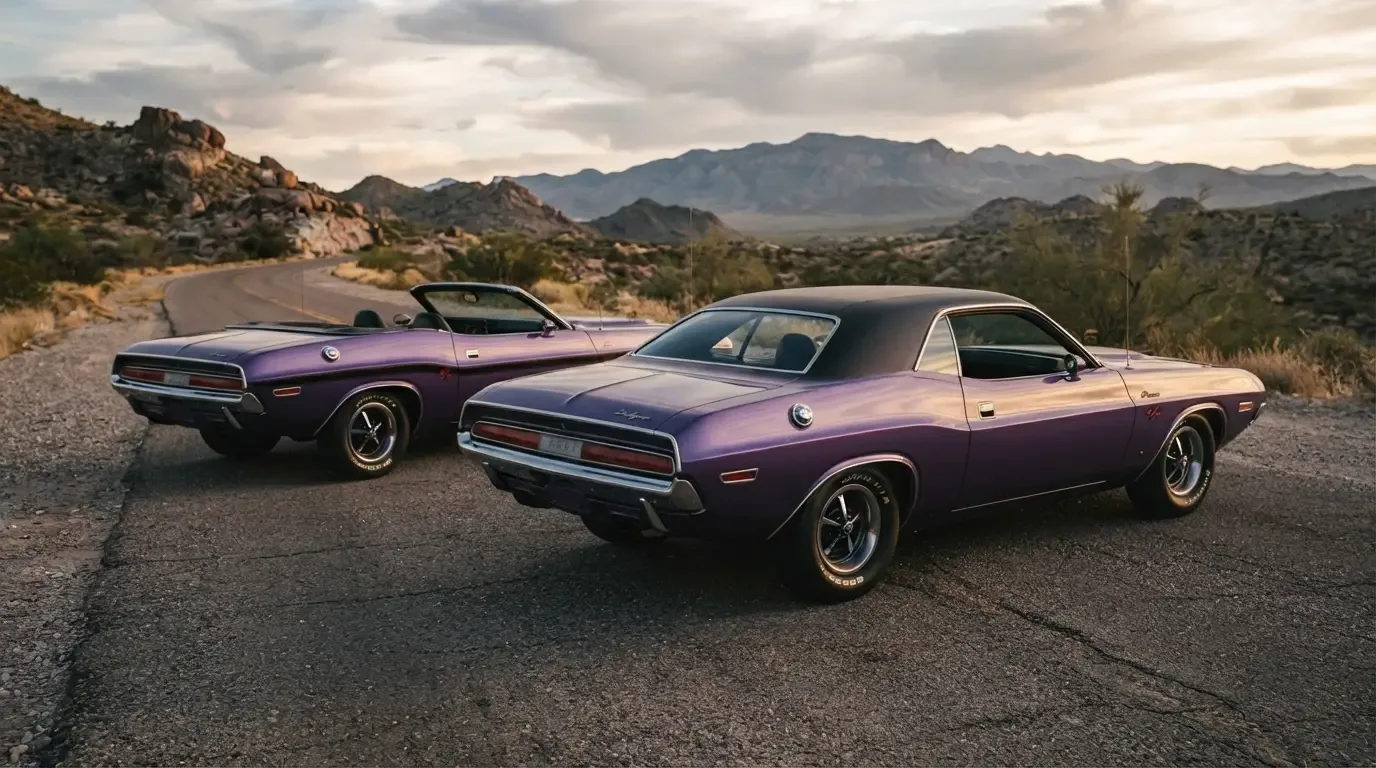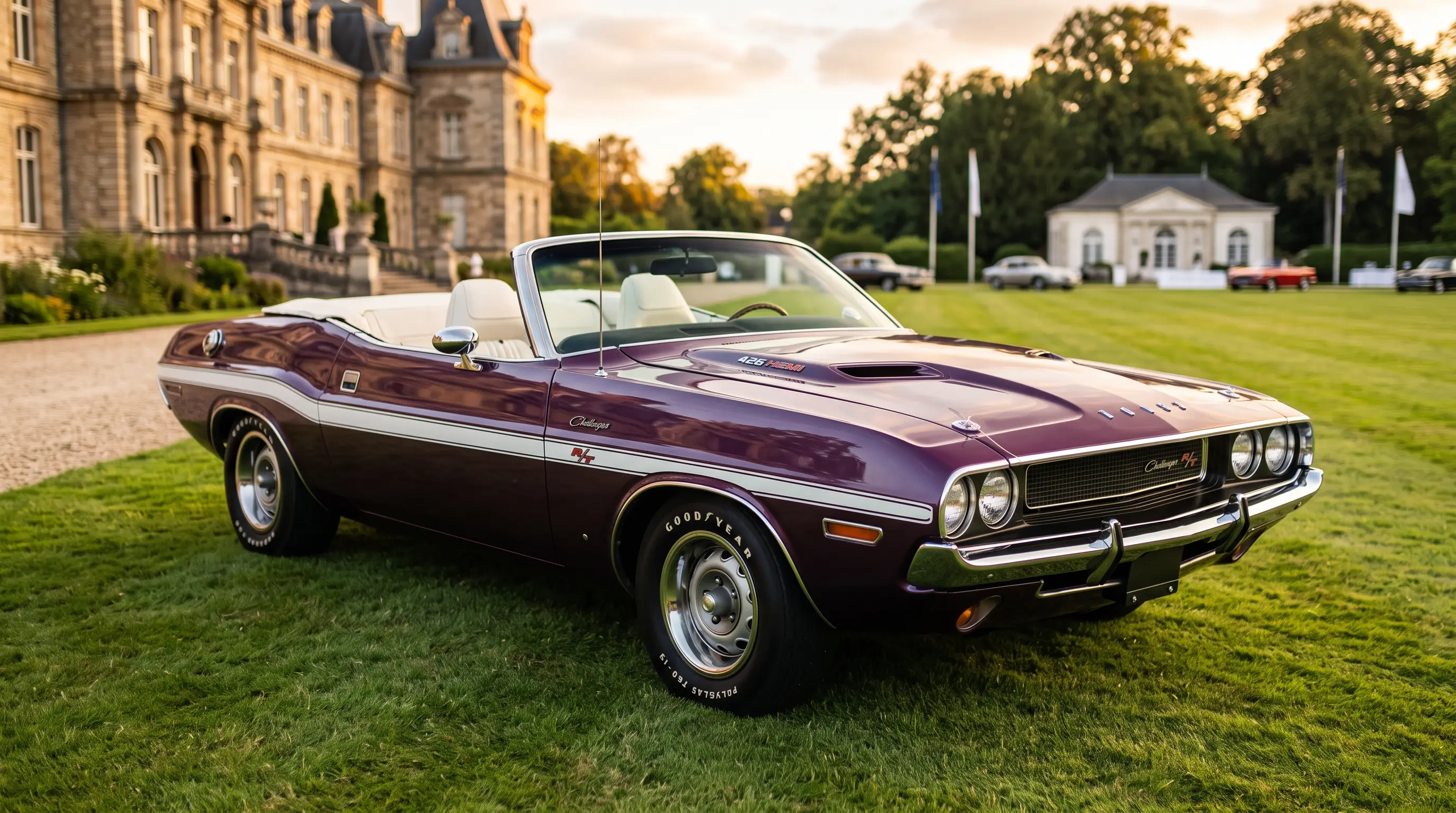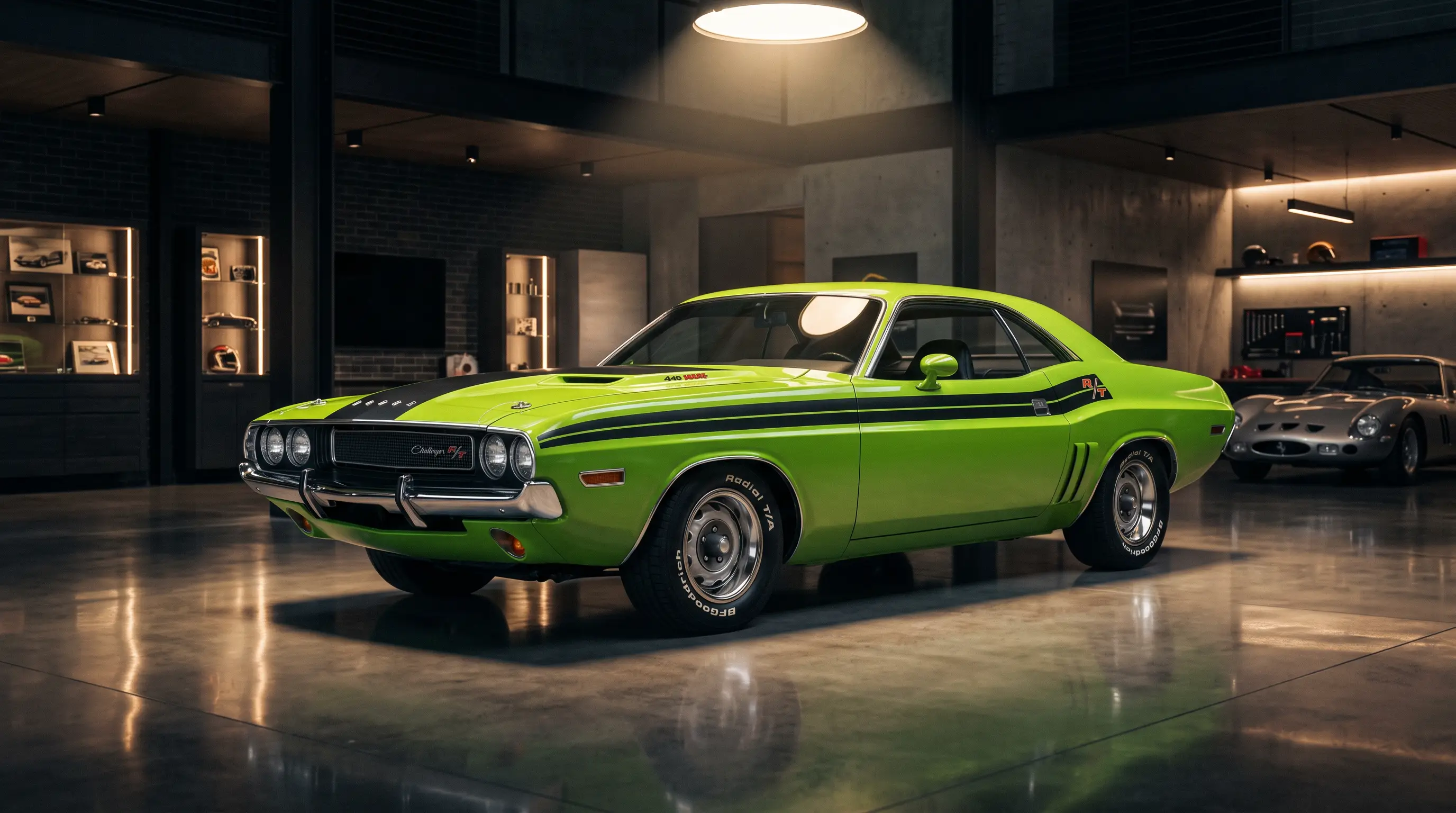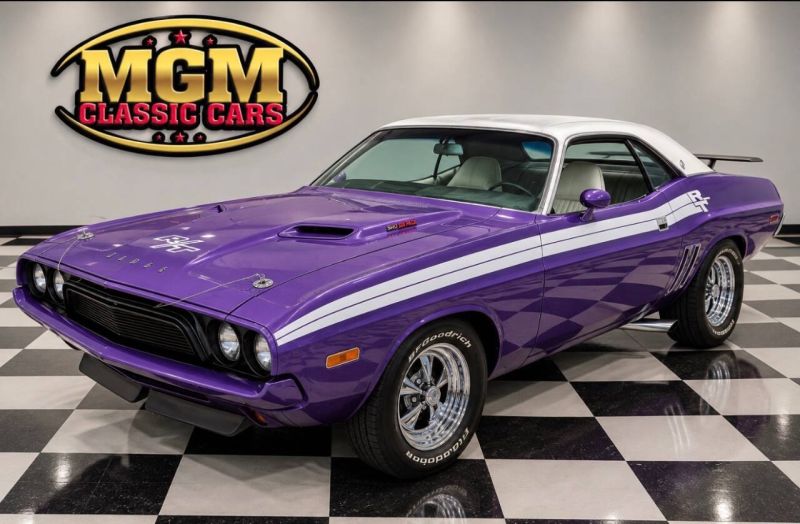
What makes a collectible Dodge Challenger is not a mystery buyers need to guess at. It's a checklist, and the data behind auction results over the past two decades backs it up consistently. Engine, body style, production numbers, originality, and documentation, in roughly that order, determine whether a given car is a genuine collector piece or simply an old car with a famous name on the fender.
Rarity is the foundation, but it's not the whole equation
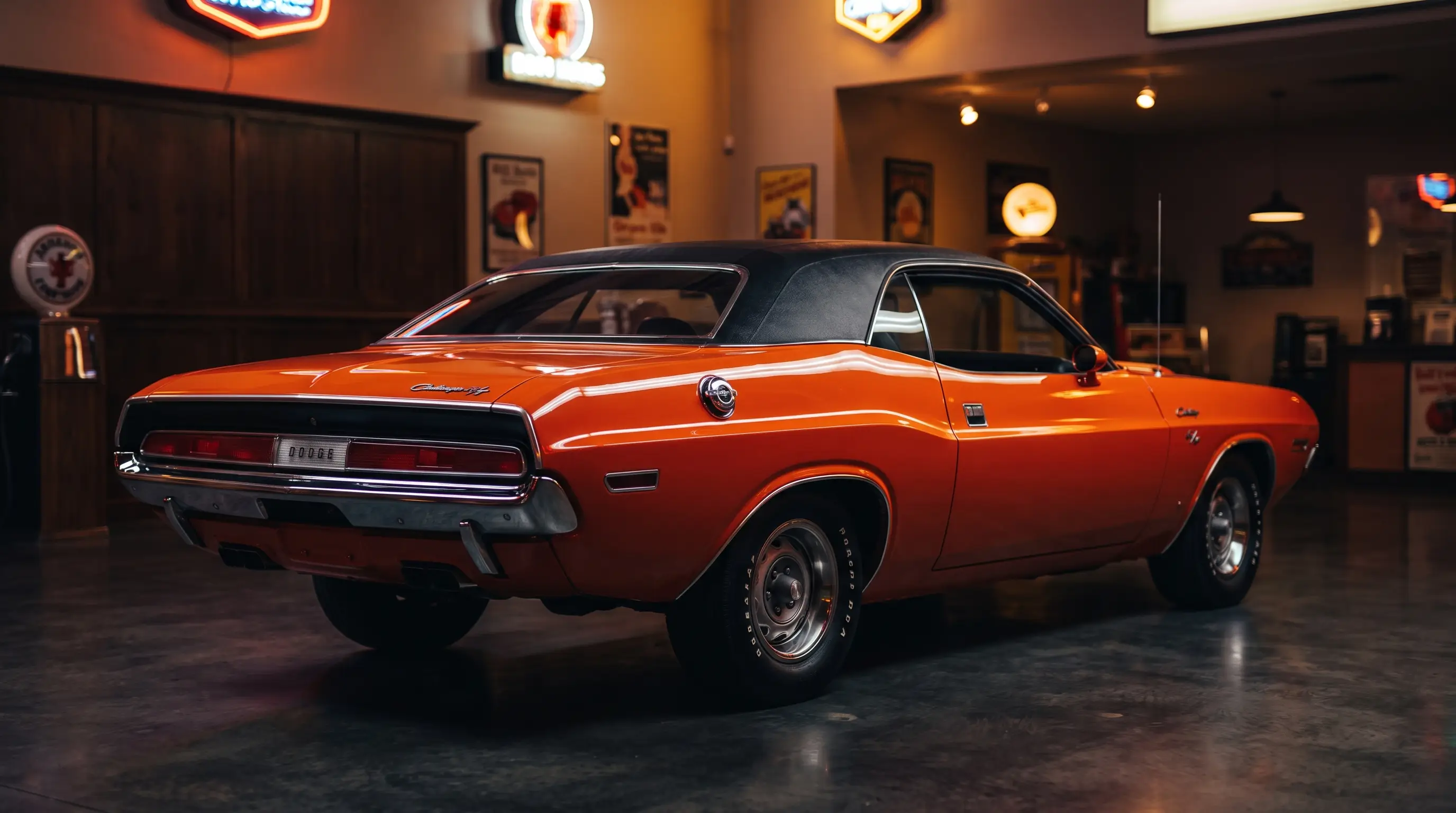
Dodge built the first-generation Challenger from 1970 through 1974, and production numbers dropped sharply as the muscle car era wound down under insurance surcharges and tightening emissions rules. The 1970 model year, the Challenger's first and most performance-focused, produced the bulk of the cars collectors chase today, including every Hemi and 440 Six Pack variant. By 1972 through 1974, the Challenger had lost its big-block options entirely, and collector interest in those later years is comparatively thin. Low production numbers alone don't create collectibility though. A rare color on an otherwise unremarkable six-cylinder car is a curiosity, not a blue-chip collectible. Rarity has to intersect with desirability, and desirability in this market has consistently meant big-block engines, R/T trim, and convertible bodies.
The engine hierarchy that drives real prices
Auction data across the last twenty years shows a clear and repeatable hierarchy. The 426 Hemi sits at the top, commanding prices several multiples above any other engine option, particularly in the rare convertible body. The 440 Six Pack and 440 Magnum occupy a strong second tier, delivering big-block performance credibility at a fraction of Hemi pricing. Beneath that sit the 383 Magnum cars, still desirable R/T material but priced well below the 440 tier. Six-cylinder and small-block 318 cars round out the bottom of the collector market, valued more for honest originality and affordability than for outright performance. None of this is guesswork. It's the same pattern that shows up sale after sale, year after year, whenever comparable cars cross the block.
Color and originality move the needle more than people expect
This is where a lot of buyers underestimate the market. A documented, numbers-matching car in an original High Impact color like Plum Crazy or Hemi Orange consistently outsells an identical drivetrain repainted in a common shade, sometimes by a meaningful percentage. It's worth reading the dodge challenger high impact colors story in full, since color code alone can shift a car's position in the collector hierarchy almost as much as a trim level change does. Buyers chasing a collectible Dodge Challenger should treat original paint code documentation with the same seriousness they'd give an engine block casting number, because the market clearly does.
Documentation is the line between collectible and merely old
A fender tag, a broadcast sheet, and a clean title history separate a genuine collectible from a car that simply looks the part. This gap in value has widened over the past decade as buyers have become more sophisticated about cloned and re-created cars built from base hardtops with swapped engines and reproduction badges. A documented car with matching numbers and a traceable history will consistently outsell a visually identical but undocumented example, sometimes by a wide enough margin that documentation alone justifies a completely different price bracket. For the full arc of how the model got here, from its 1970 debut through the end of the first generation, the full story lays out the context that shapes why certain years and trims carry so much more weight than others.
"Buyers keep asking me which Challenger to buy. The honest answer is always the one with the paperwork, not the one with the better story at the swap meet."
- David Mercer
My actual buy or no-buy read on the market
For a buyer with a serious budget chasing a blue-chip collectible, the 1970 Hemi or 440 Six Pack R/T, documented and numbers-matching, is still a defensible buy despite elevated prices, because scarcity at that tier isn't manufactured, it's real and it isn't increasing. For a buyer with a moderate budget, a documented 383 Magnum R/T or a clean, original small-block car in a desirable color offers better long-term value retention than an undocumented big-block car with murky history, because the market has repeatedly punished unclear provenance more harshly than it rewards raw cubic inches. My no-buy warning is simple and consistent: any Challenger marketed heavily on engine size alone, with a thin paper trail and a seller reluctant to produce a fender tag or broadcast sheet, is a bet on hope rather than data, and the data in this market has not been kind to that bet over the last two decades.
If you want to compare real, currently available inventory against these tiers before deciding where your budget fits, you can browse classic Challengers on the market and weigh documentation, color, and engine against asking price the same way the auction data suggests you should.
Body style is the variable buyers underweight
Engine gets most of the attention in collector conversations, but body style has quietly outperformed engine as a value driver in several documented cases. Convertible production across every trim and engine combination ran far behind hardtop volume, and that gap has only widened as open cars saw harder use and higher attrition over five decades. A 383 Magnum R/T convertible with clean documentation has, in more than one recorded sale, outsold a Hemi hardtop in comparable condition. That result surprises casual buyers who assume engine size is the only lever that matters. It shouldn't surprise anyone who has actually studied the sales data, because scarcity of body style compounds with scarcity of engine rather than simply sitting beneath it in a fixed hierarchy.
The practical takeaway for anyone building a collection or making a single purchase is to price body style and engine as two separate multipliers rather than treating engine as the only number that matters. A rare drivetrain in a common body style is valuable. A common drivetrain in a rare body style is also valuable. The two together, with clean documentation on top, is what actually produces the auction results that make headlines, and it is a combination that shows up far less often than the raw engine hierarchy alone would suggest.
None of this means a buyer should overpay chasing a rare body and engine combination just because the theory holds up in aggregate data. Every individual sale still depends on condition, mechanical health, and how honestly the seller has represented the car's history. The hierarchy above is a guide for where value tends to concentrate across the market, not a guarantee for any single transaction, and the buyers who do best in this hobby treat it exactly that way, as a starting point for negotiation rather than a fixed price sheet.
Sources and notes
- The 10 Mopar High-Impact Colors: Complete Guide - autoevolution
- The colors of yesteryear (Dodge exterior colors 70-74) - Challenger Talk Forum
- Dodge Challenger (1970) - Wikipedia
- Dodge Challenger 1970-1974 - Allpar
- 1970 Challenger Production Numbers - Stock Mopar
- 1971 Dodge Challenger Valuation - Hagerty