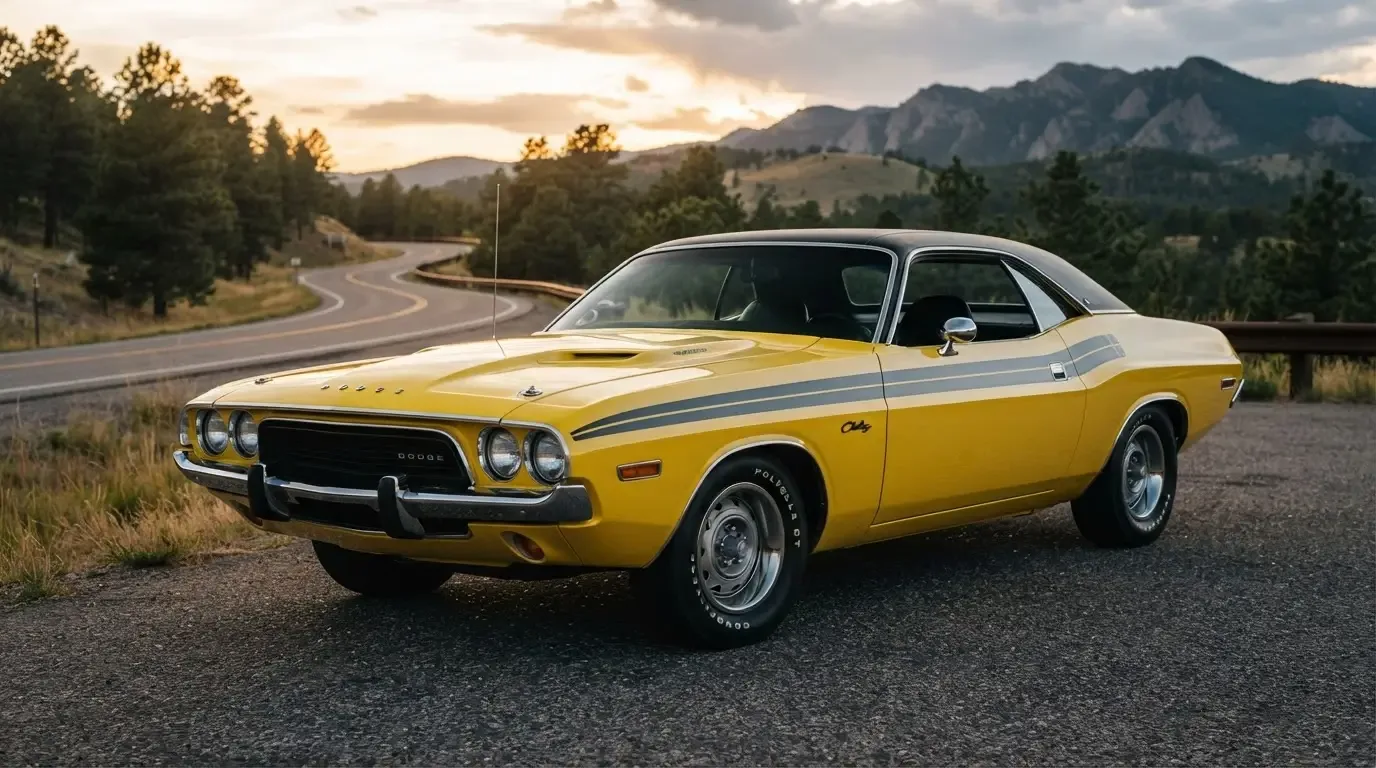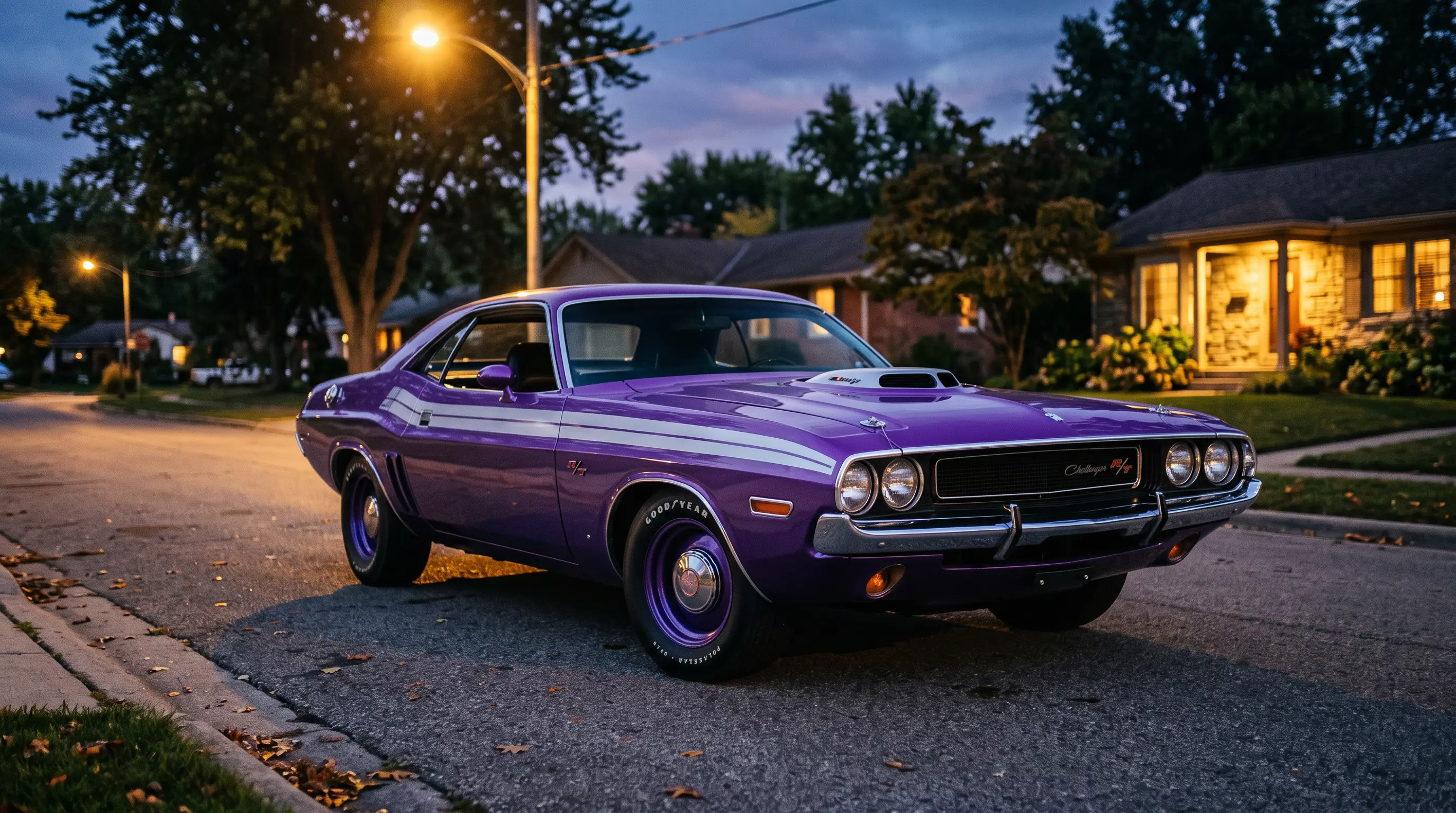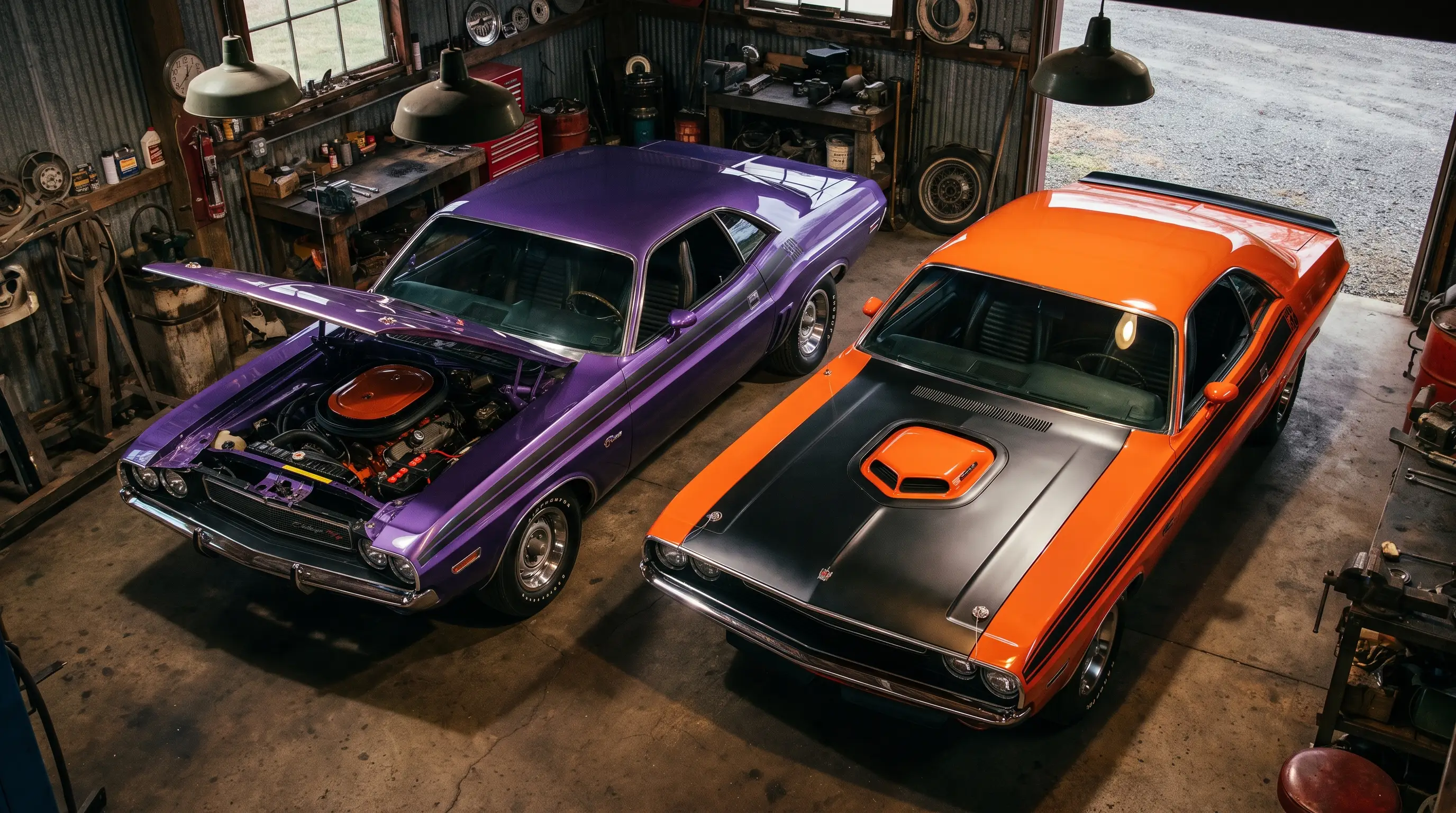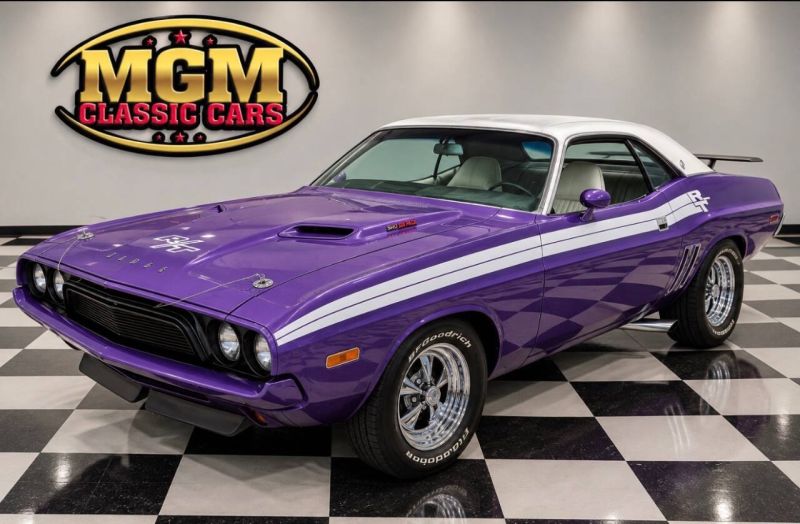
Ask a Dodge Challenger collector what they want and most will say a 1970 R/T Hemi. Ask them what they actually see cross an auction block with real, verifiable production numbers behind it, and the answer is more often a 1972 to 1974 car that survived by being unfashionable for thirty years. These late Challengers were cheap enough, unpopular enough, and modest enough in performance that a surprising number of them simply were not thrashed, raced, or parted out the way the big-block early cars so often were.
The late Challenger was built to lower expectations
By 1972 the Challenger had lost its biggest engines entirely. The 440 and the Hemi were gone from the order sheet, emissions and insurance pressure had pushed Dodge toward smaller displacement, and net horsepower ratings made every remaining engine look weaker than it had the year before, even where actual output changes were smaller than the numbers suggested. A 1974 Challenger with a 318 or 360 under the hood was, by the standards of 1970, an ordinary car. That is exactly why so many of them are still around.
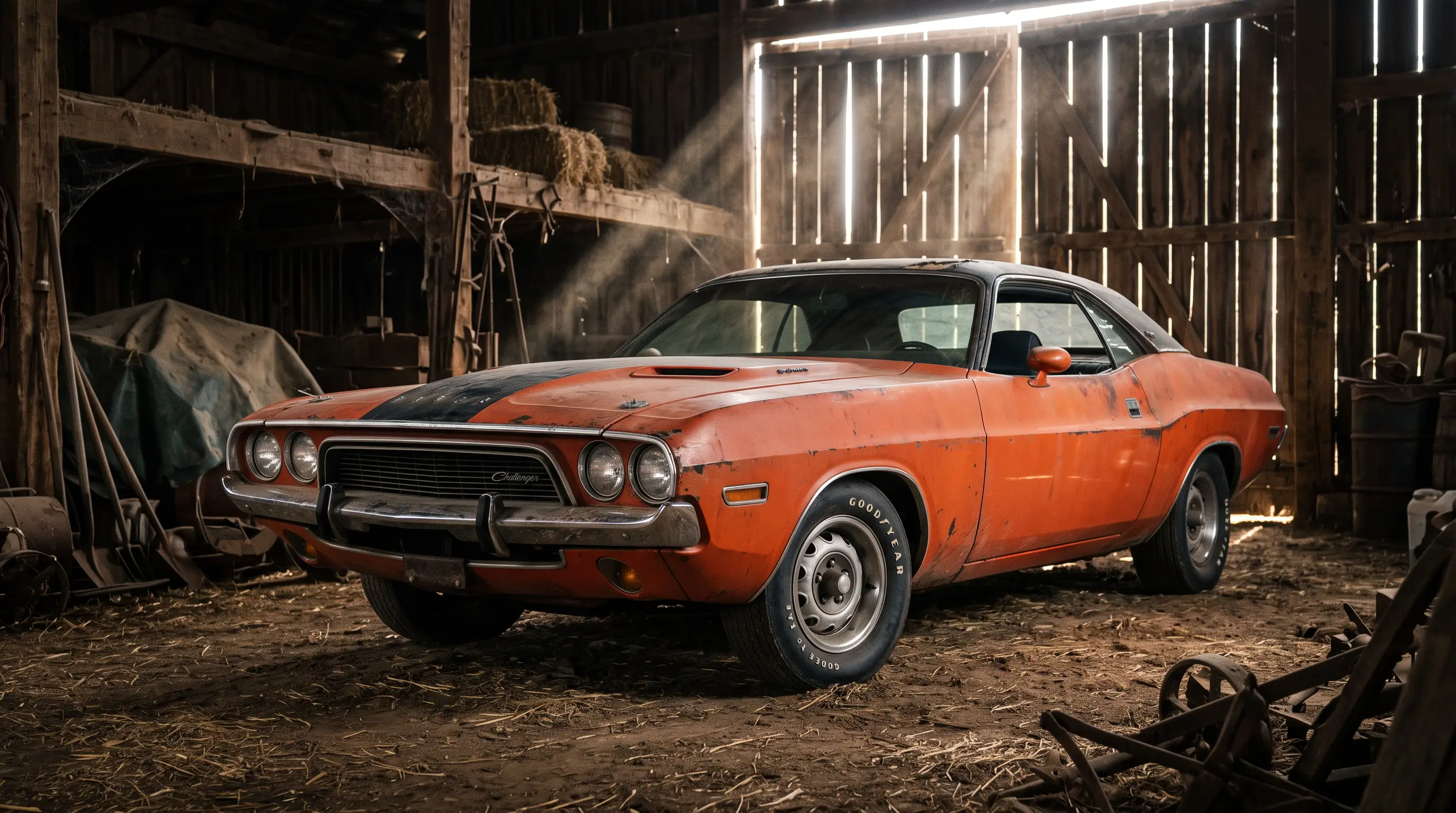
An ordinary car does not get raced hard, does not get its numbers-matching engine swapped for something bigger, and does not attract the kind of aggressive daily use that wears out a car in ten years instead of forty. Late Challengers spent decades as forgettable used cars, the kind that sat in a garage or a barn because nobody thought they were worth much, and that neglect turned out to be a form of preservation.
Production numbers tell the survival story
Challenger production dropped hard through these final years. From the roughly 76,900 units built in the 1970 debut year, the number fell most seasons after, and by its final, shortened 1974 model year production had dropped to around 11,000 units, a small fraction of that peak. Fewer cars built means fewer cars to begin with, but it also means a smaller population that was never chased hard by collectors, so survival rates as a percentage of production have held up better than you would expect for a car nobody wanted at the time.
That combination, low production plus low demand equals low attrition, is unusual. Most collector cars follow the opposite pattern: high demand keeps cars alive because owners protect them. The late Challenger got protected by indifference instead, which produces a different kind of survivor. These are often unrestored, mechanically honest cars with original paint under a layer of oxidation, original interiors that were never abused because nobody drove the car hard enough to wear them out.
| Model year | Top engine available | Why it survived well |
|---|---|---|
| 1972 | 340 cubic inch V8 | No big-block temptation to modify or race hard |
| 1973 | 340 or 360 cubic inch V8 | Low resale value discouraged aggressive use |
| 1974 | 360 cubic inch V8 | Final year cars often parked and forgotten |
What a genuine late survivor looks like
The difference between a restored trophy car and an honest survivor comes down to what actually happened to the metal over fifty years, not what a paint gun did to it last year.
"A restoration tells you what a car could look like. A survivor tells you what actually happened to it, and for a 1973 or 1974 Challenger that history is often more interesting than people expect."
- Tom Ramirez
A genuine survivor from this era typically shows its age honestly. Faded paint, a dash that has cracked from decades of sun, upholstery that has held together because it simply was not used enough to fail. These cars carry original build sheets and broadcast sheets more often than early Challengers do too, partly because nobody thought to remove or lose the paperwork on a car assumed to be worthless.
Documentation separates a real survivor from a good story
Anyone shopping this segment of the market needs to understand that a survivor claim is only as good as the paperwork behind it. A genuine matching-numbers late Challenger should have a fender tag consistent with its VIN, ideally a broadcast sheet or at minimum a build sheet reference, and a title history that does not show large gaps where the car could have been rebuilt around a replacement engine without anyone noting it. Absent that documentation, a seller's claim that a car is a numbers-matching survivor is really just a claim, and buyers pay a real premium for the difference between a claim and a verified fact.
Rust is the other variable that separates a true survivor from a project car dressed up in survivor language. Late Challengers, like most cars of this era, were not built with long-term corrosion resistance in mind, and decades of sitting unused in a garage or barn is not automatically a guarantee against rot, especially in floor pans, trunk floors, and the notoriously vulnerable torsion bar crossmember area. A careful inspection matters more on these cars than a compelling backstory does, because the backstory does not tell you what is actually happening underneath the paint.
Why the market is starting to notice
For decades, the 1972 to 1974 Challenger sat well below its earlier siblings in value, and in many cases it still does. But the underlying scarcity, low production, low modification rate, honest survival, has started drawing attention from buyers priced out of the Hemi and 440 market. A well-documented late Challenger offers something those bigger-engine cars increasingly cannot: an accessible entry point into genuine, unmolested Mopar history.
To understand how this final chapter connects to the rest of the car's story, where this started lays out the full arc from the platform's introduction through its final seasons. And if you want to see what is actually available right now rather than just read about the trend, shop classic Challenger listings and look closely at the documentation on any late-model car before writing it off as the lesser Challenger. Plenty of them earned their survival the hard way, by simply being left alone.
There is also a practical argument for buying into this segment now rather than waiting. As original 440 and Hemi cars keep climbing out of reach for most buyers, the documented, honest 1972 to 1974 Challenger remains one of the few paths left into genuine E-body ownership without a six-figure budget. Prices for these cars have moved, but they have moved gradually rather than in the sharp spikes that hit the earlier big-block models over the past two decades, which gives buyers more room to find a fairly priced, well-documented example if they are willing to look past the smaller engine and focus on what the car actually represents historically.
None of this argues that a late Challenger is secretly equivalent to an early Hemi car in value or performance. It never will be, and treating it that way misreads the market. What it does argue is that dismissing these final model years outright, simply because the spec sheet looks thin next to 1970, ignores exactly the qualities that make a survivor worth owning in the first place: honesty, originality, and a paper trail that a heavily modified early car frequently cannot match.