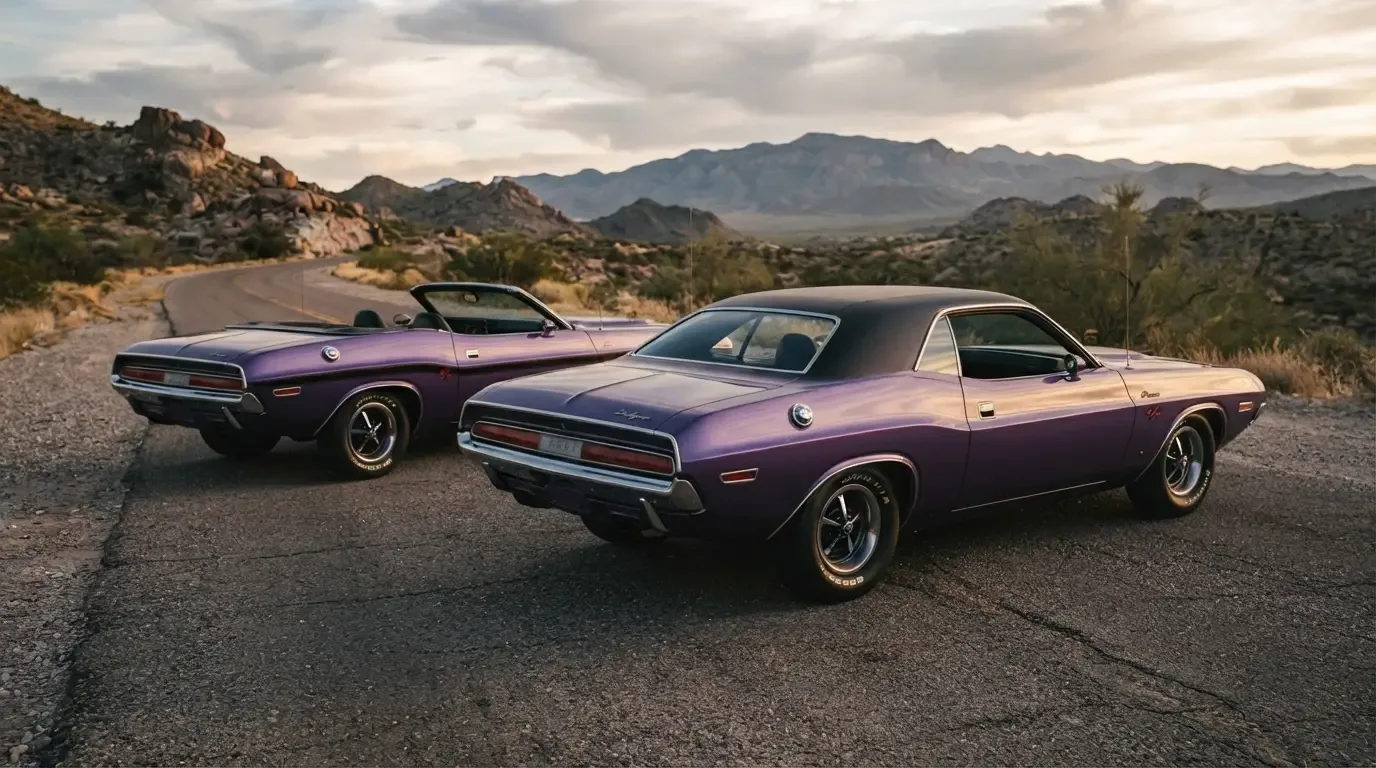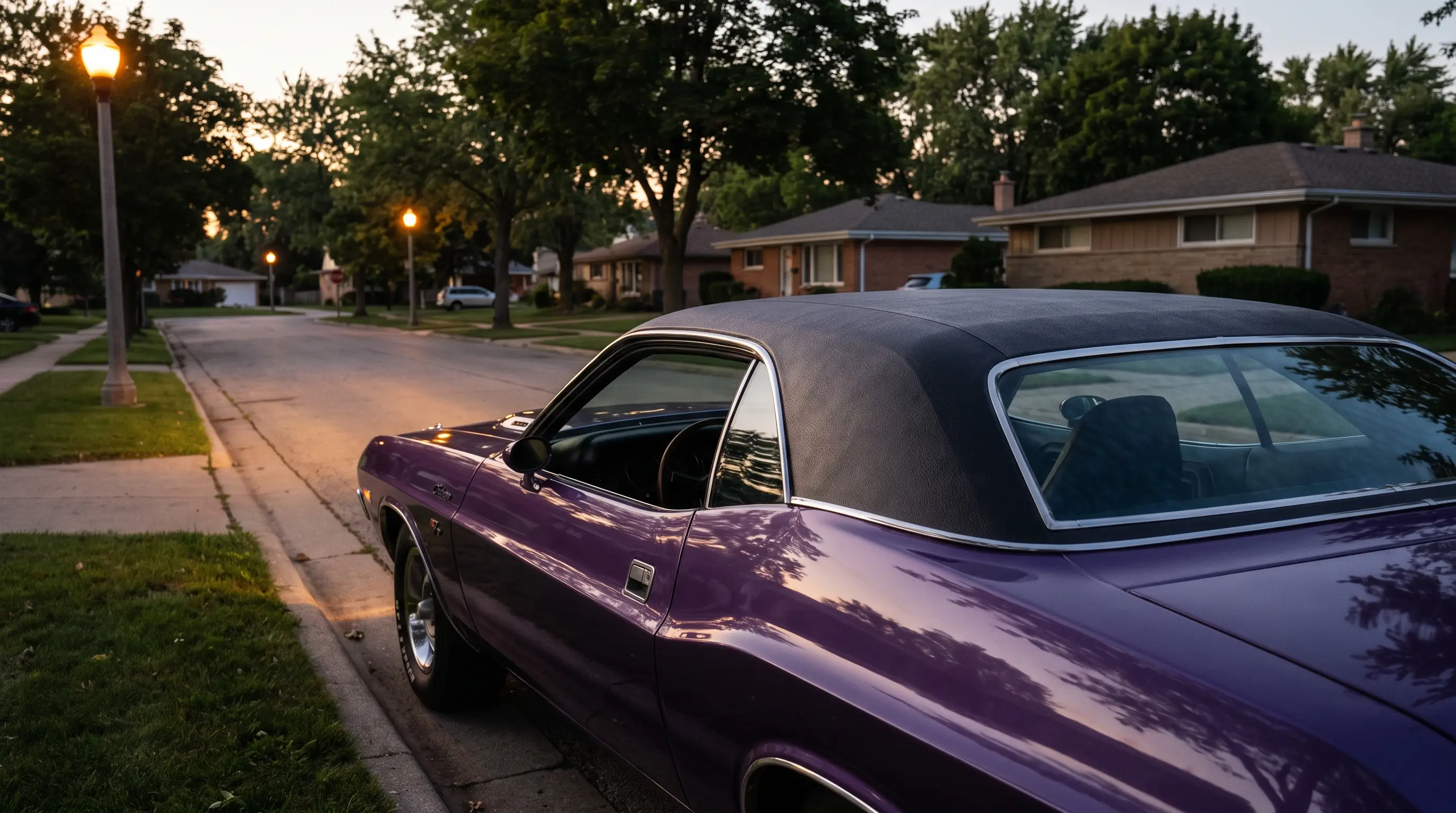
My father kept a photograph in his wallet for thirty years, soft at the corners, of himself at twenty-two leaning against a Plum Crazy Challenger with a bumblebee stripe wrapped around its tail like a ribbon on a gift he'd already decided to give himself. He never explained why that photo mattered so much more than the others from that summer. He didn't have to. The stripe told the story better than his memory could, a bright, deliberate band of black across a loud purple car, announcing something about who he wanted to be before he'd fully figured it out. Challenger stripes were never just decoration. They were a language, and everyone who grew up around these cars learned to read it without realizing they were doing it.
The bumblebee stripe and what it borrowed
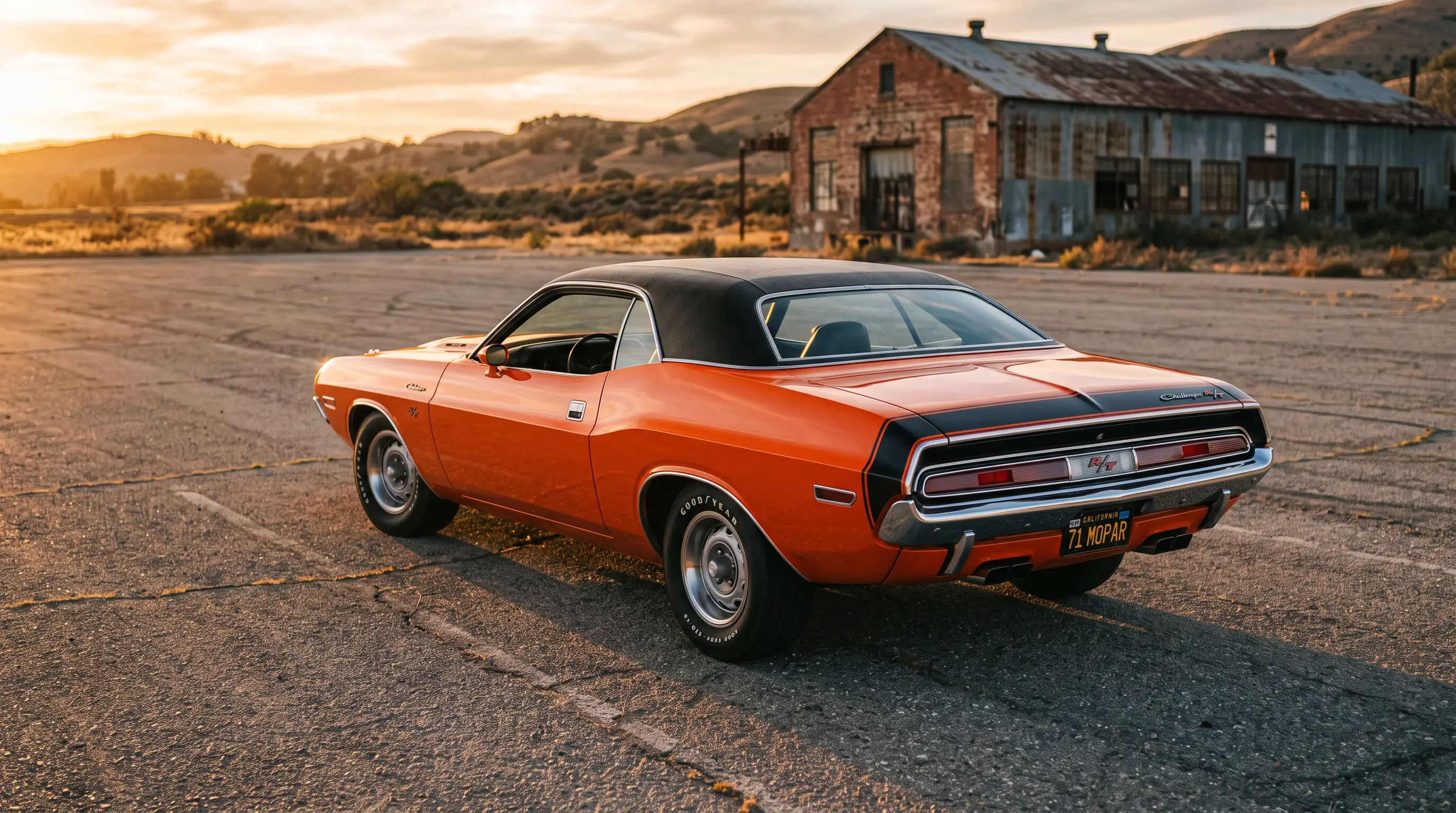
The bumblebee stripe, that wide black band circling the tail end of the car just ahead of the trunk lid, wasn't a Challenger invention. Dodge and Plymouth had used the treatment across the muscle car lineup for a few years before it landed on the Challenger, but it fit this particular body in a way that felt almost inevitable. The long, low tail of the fastback gave the stripe room to breathe, a horizontal band that made the whole rear end look wider and lower than it actually was, an optical trick as much as a styling flourish. On some cars, a small performance callout sat inside that black band, a quiet detail most people driving past never noticed but that mattered enormously to the person behind the wheel.
Strobe stripes and a different kind of loud
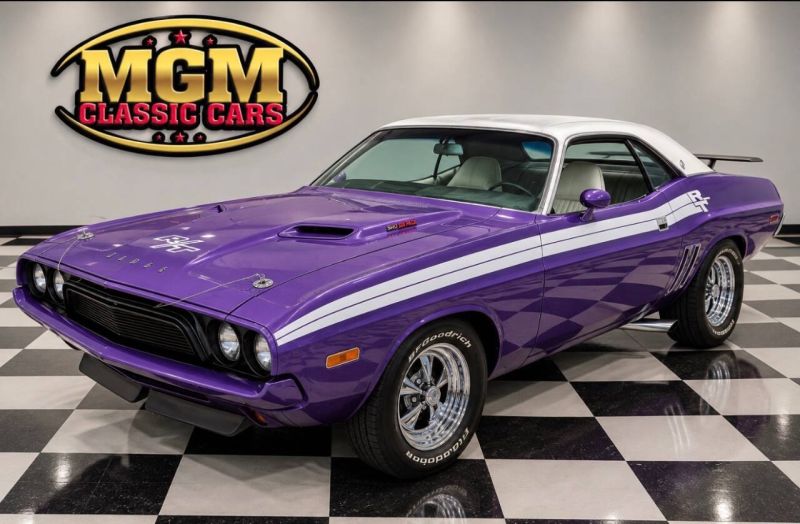
Where the bumblebee stripe whispered in a wide, confident band, the strobe stripe shouted. Those long, angled slashes running down the hood and fenders, sometimes in reflective material that caught headlights at night, belonged to a different personality of buyer, someone who wanted the car to announce itself the second it rolled under a streetlight. I've talked to owners who chose strobe stripes specifically because they wanted people to notice the car before they noticed the driver, a kind of borrowed confidence a shy twenty-year-old could wear on a car even if he couldn't quite wear it himself yet. That's the quieter truth behind a lot of these loud options. They did emotional work for people who needed a little help being seen.
What a stripe choice actually says about a person
I've sat with enough original owners now to notice a pattern that no spec sheet will ever capture. The buyers who chose a bumblebee stripe tended to describe themselves, decades later, as wanting something classic, something that would still look right at fifty. The buyers who chose strobe stripes almost always laughed a little before answering, admitting they wanted attention, wanted the car loud because they weren't loud themselves. A stripe delete, no stripe at all on an otherwise dressed-up car, told its own story too, usually from someone who wanted the shape and the engine without inviting quite so much conversation at the gas station. None of these choices were about performance. The engine did that work. The stripe was about who you wanted to be seen as while you did it.
"Every stripe on that car was a decision somebody made about themselves at twenty-two, and most of them never had to explain it to anyone again."
- Nora Beckett
How stripes and color built one visual sentence
A stripe never worked in isolation from the paint underneath it. A black bumblebee stripe read completely differently against Plum Crazy than it did against a more restrained white or black body, and Dodge's designers clearly understood the two choices as a single visual sentence rather than separate decisions a buyer made independently. It's worth understanding the whole picture of how factory color choices shaped the way these cars were seen and remembered, because the stripe was always a modifier on the color, never a standalone statement, and getting one right without the other misses half of what the original buyers were actually choosing.
My father's photograph, forty years later
He sold that Challenger in the mid-1970s, needing the money more than he needed the car, and he never fully forgave himself for it, not in any dramatic way, just a small ache that surfaced whenever a similar car passed him on the highway decades later. When I finally understood why he kept that photograph, worn soft from being handled too many times, it wasn't really about the car at all. It was about a version of himself he'd wrapped in a black stripe and a loud purple paint job for one brief summer, and never quite got to keep. If you're chasing that same feeling, whatever your own version of it looks like, you can find a classic Challenger and start writing a stripe story of your own, one that maybe you get to keep a little longer than he did.
Stripe deletes and the quiet ones who chose them
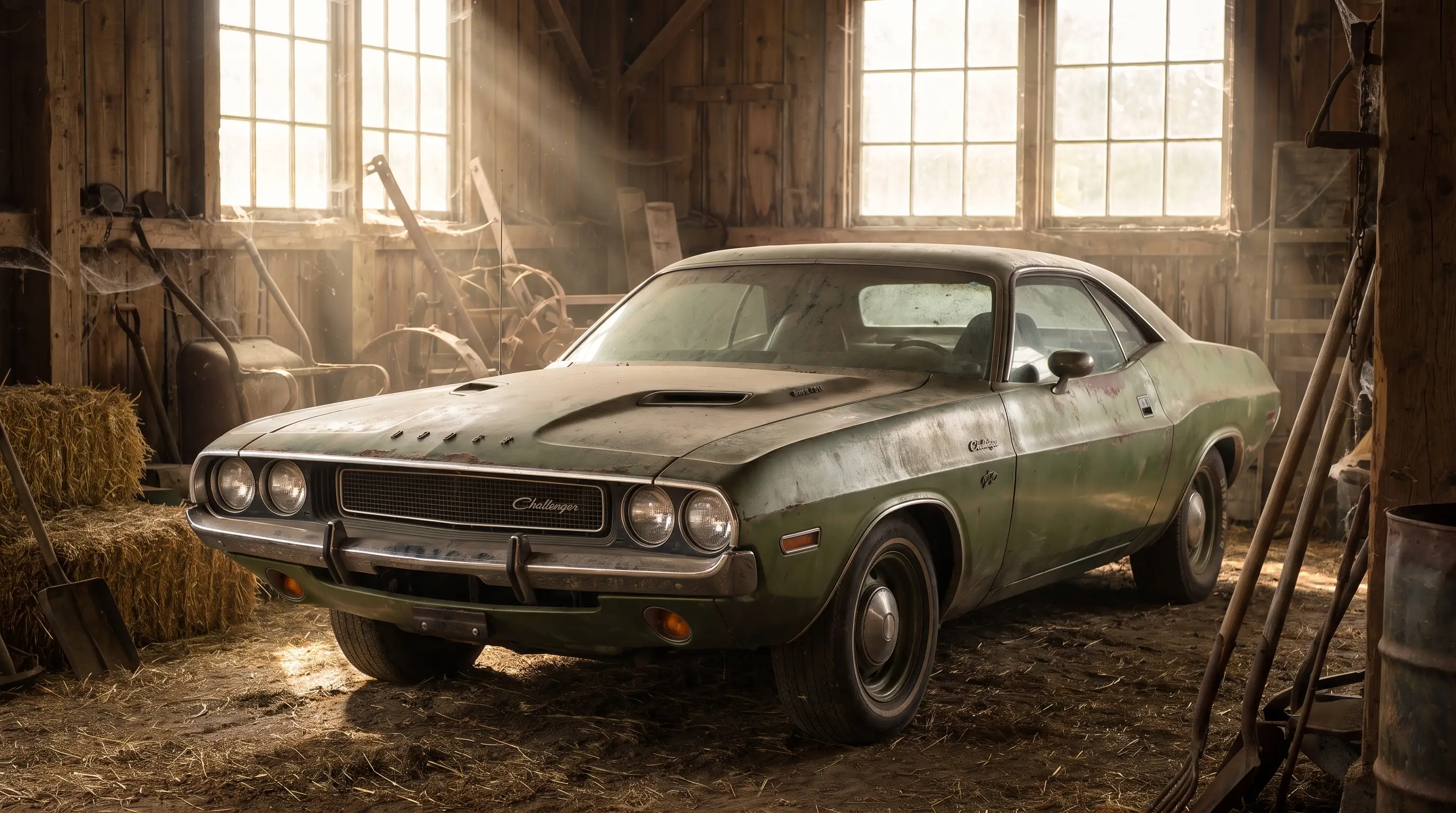
Not every buyer wanted to be found. A stripe delete order, a Challenger left in its factory color with no bumblebee band, no strobe slashes, nothing but the shape and the paint doing the talking, tells a story just as specific as the loudest strobe car does, just a quieter one. I've met owners of stripe-delete cars who describe the choice almost apologetically, as though they need to justify not wanting attention, and then in the next breath they'll tell you exactly why they loved that restraint, how the clean lines let the body do what the designers actually intended before anyone added a single stripe to the drawing. There's a version of confidence in that choice too, the kind that doesn't need the black band to prove anything.
Talking to these owners over the years, I've come to think the stripe decision was never really about the car at all, not fundamentally. It was a mirror, offered by a design department that probably never intended it as anything so sentimental, and every buyer who stood in a dealership showroom in 1970 looking at a stripe order form was quietly answering a question about themselves they may not have even realized they were being asked. Some answered loud. Some answered with restraint. Both answers are still visible today, on the surviving cars, waiting for someone to notice what they actually say.
My father never got to answer that question a second time. But somewhere out there, someone is standing in front of a stripe order form of their own, a listing, a photo, a decision waiting to be made, and I like to think the language hasn't changed nearly as much as the decades between then and now would suggest.
Sources and notes
- Dodge Challenger (1970) - Wikipedia
- Dodge Challenger 1970-1974 - Allpar
- The 10 Mopar High-Impact Colors: Complete Guide - autoevolution
- 1970 Dodge Challenger Fact Sheet - Over-Drive Magazine
- The colors of yesteryear (Dodge exterior colors 70-74) - Challenger Talk Forum
- A Brief History of the Original Dodge Challenger (1970-1974) - autoevolution