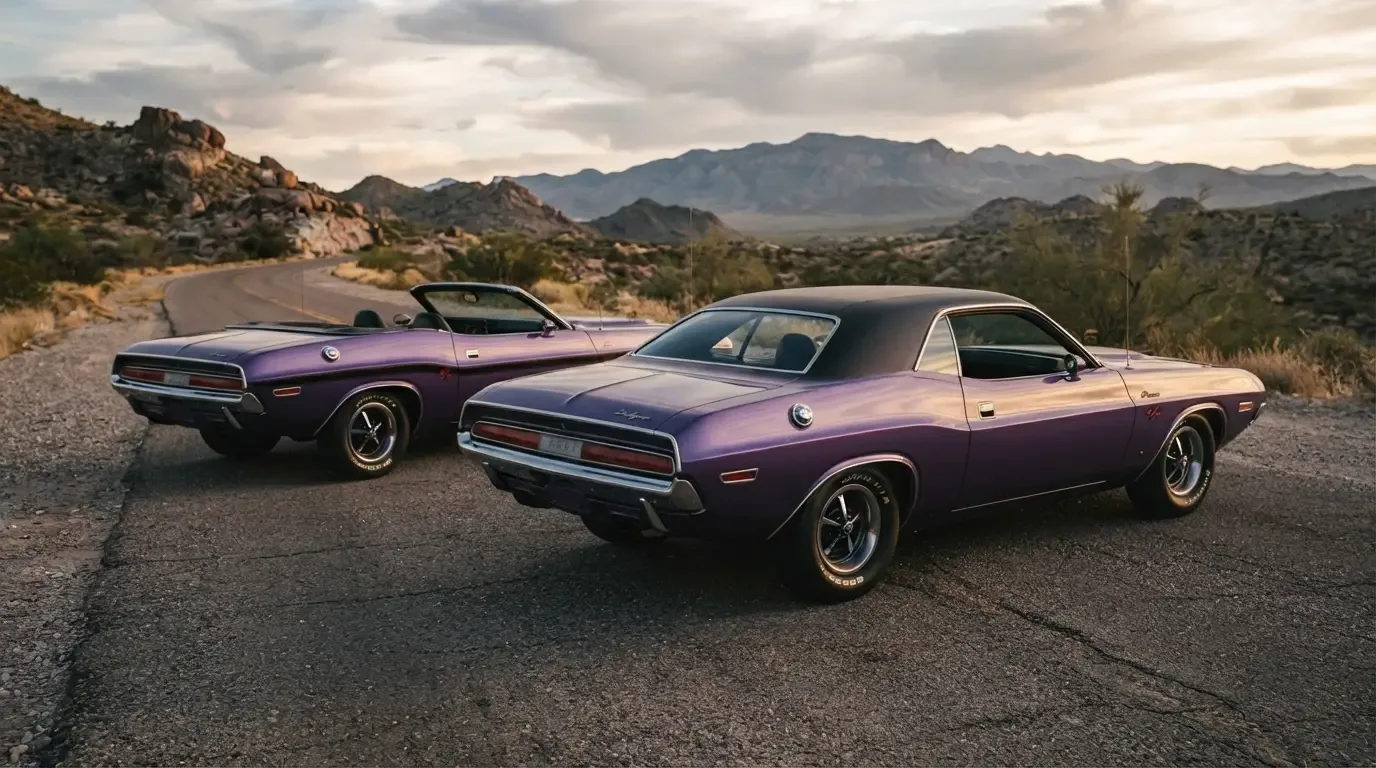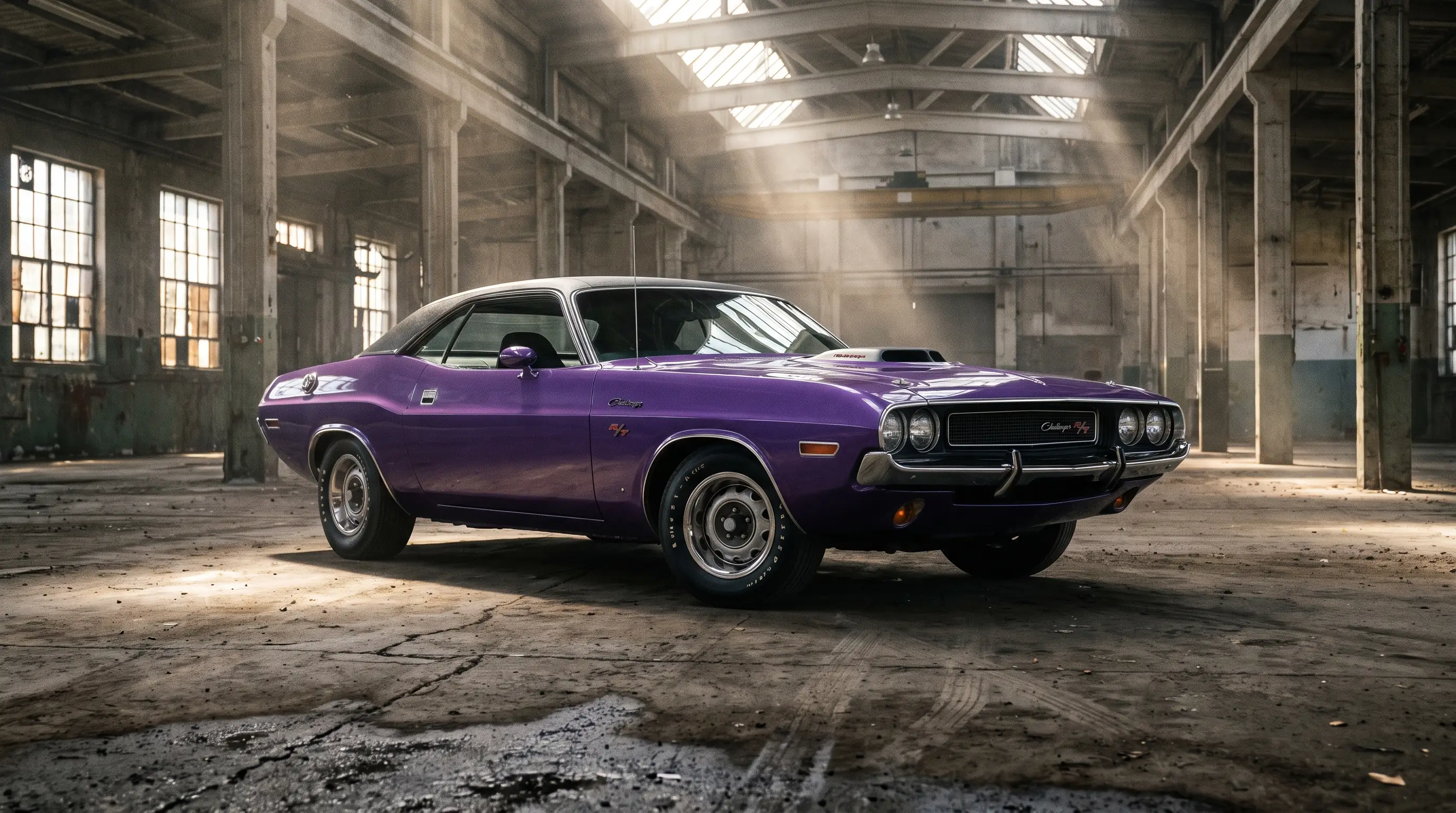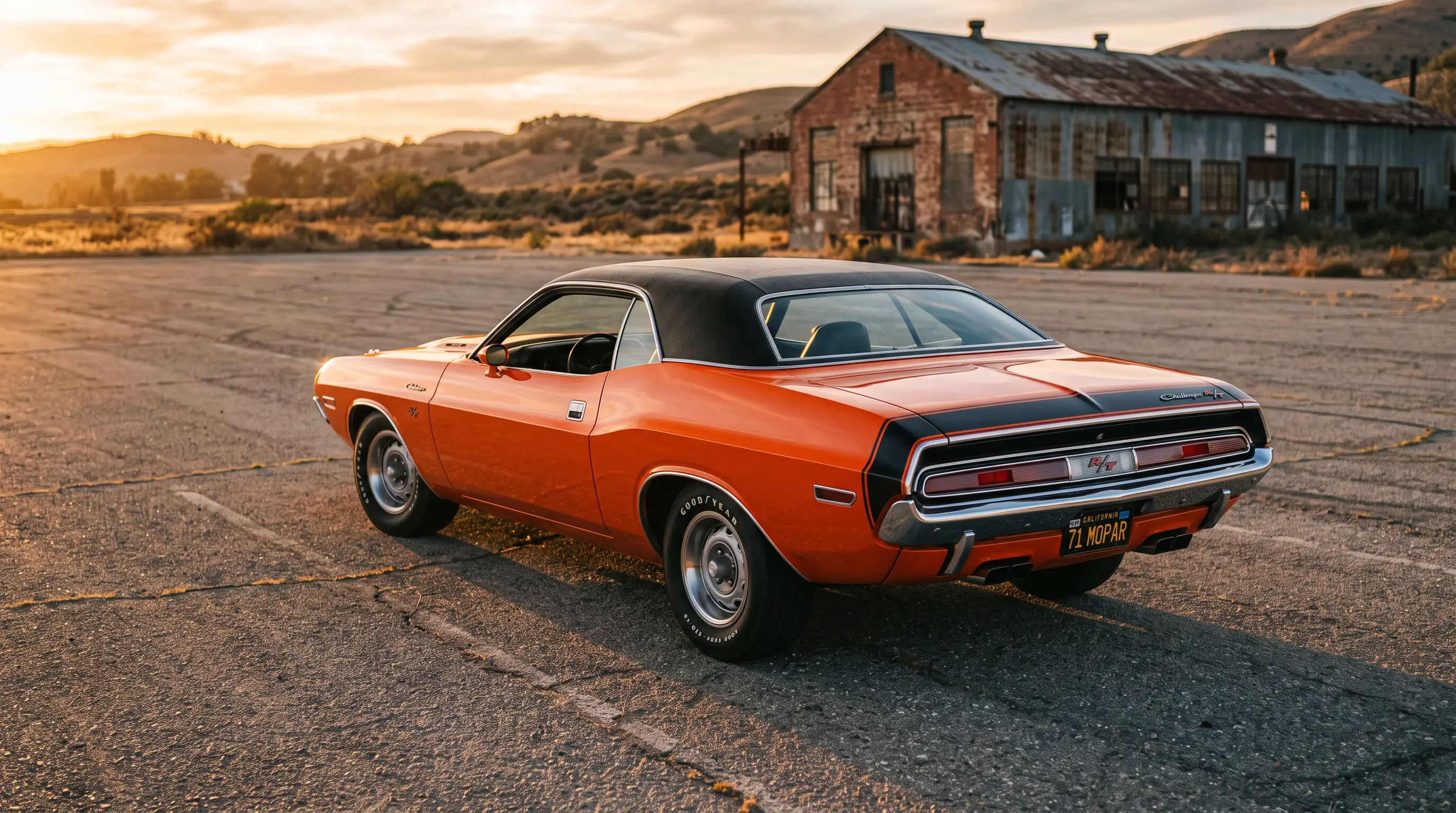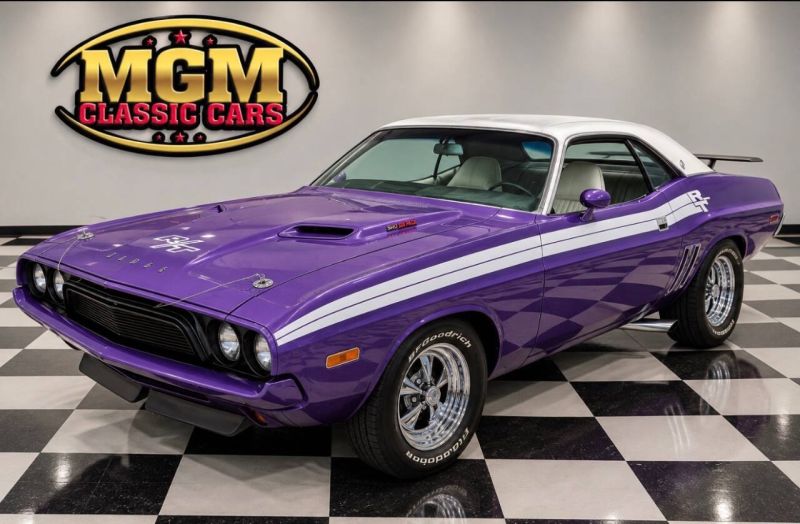
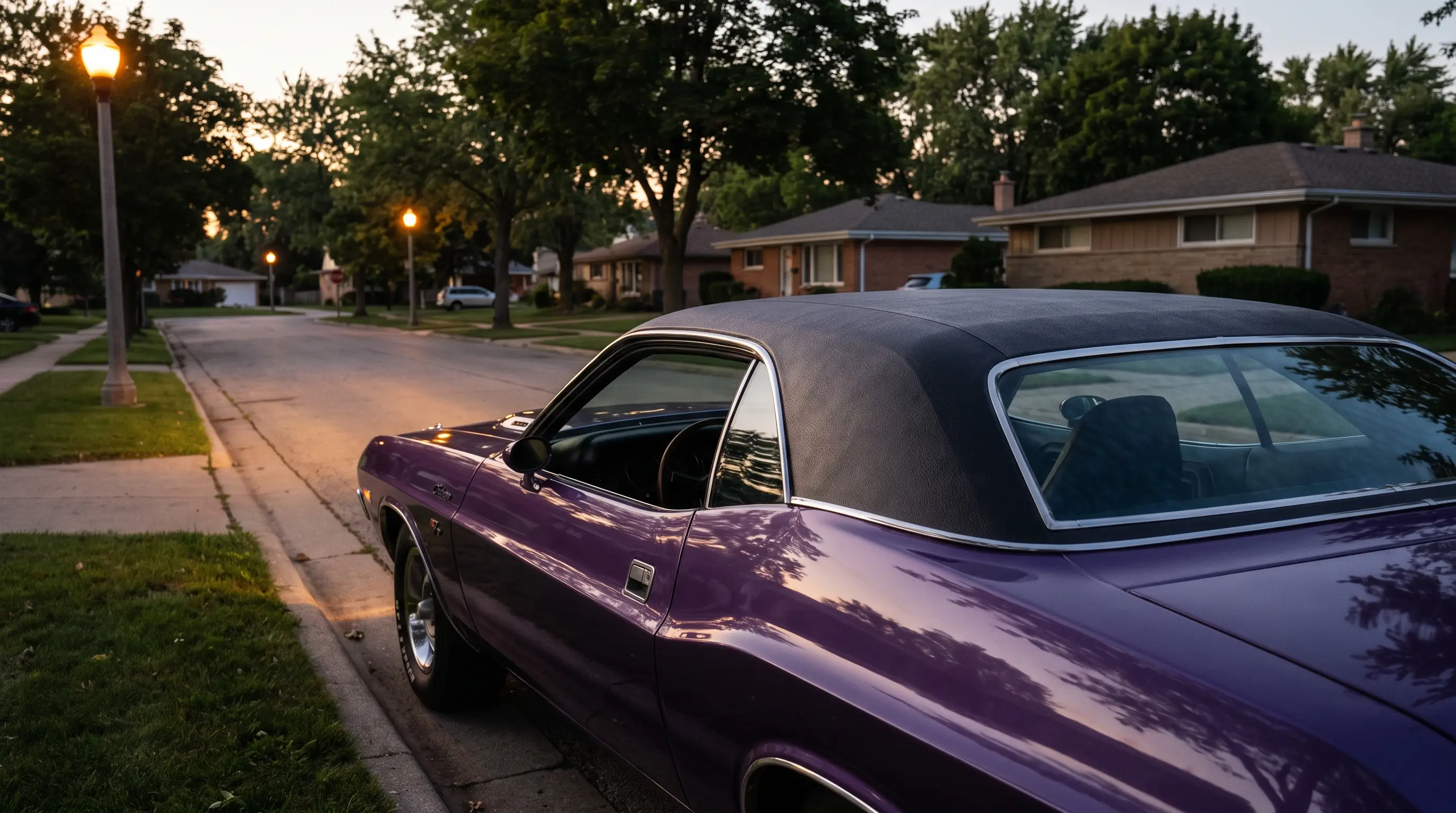
I've had more Challengers on my lift with a vinyl top than without one, and I'll tell you straight, half the arguments I've had with customers over the years come down to whether that roof belongs there in the first place. The Challenger vinyl top wasn't a gimmick Dodge slapped on to sell trim levels. It was a real styling statement that changed how the whole car read from the curb, and getting it right or wrong says a lot about whether a build is period-correct or just dressed up to look that way.
What the vinyl roof actually did to the car's shape
A Challenger's roofline is long and low, and Dodge's designers knew a vinyl top would break up that expanse of sheet metal in a way that read as more formal, more finished, closer to a personal luxury coupe than a straight fastback. On SE-trimmed cars, the roof came with a smaller rear quarter window that made the whole rear three-quarter view look tighter and more upright. On R/T and base cars ordered with the vinyl option, the effect was more subtle, just texture and a visual break line where the roof met the sail panel, but it still changed how the car sat next to a body-color roof at a cruise night. I've had customers swear their car looked faster with the vinyl off and looked more expensive with it on, and honestly they're both right depending on what story the car is telling.
Why so many original tops didn't survive
Vinyl ages the way nothing else on these cars does. UV exposure cracks it, water gets underneath through failed seams and rusts the roof skin from the inside out where you can't see it until you're elbow deep in a restoration, and decades of cheap aftermarket recover jobs replaced factory-grain material with whatever the shop had on the shelf. That's the real reason correct, factory-grain vinyl on an untouched roof is worth something to the right buyer. It's not about the vinyl itself, it's about what it tells you regarding whether the roof underneath ever got wet and started rotting without anyone noticing.
Poseur roofs versus the real thing
I can spot a wrong vinyl top from across a parking lot most of the time. Wrong grain pattern, wrong roof color relative to the exterior paint code, wrong trim molding where the vinyl meets the drip rail, they all add up fast to a car that's trying to look like something it isn't. A period-correct roof matches the factory option list for that specific paint and interior combination, because Dodge didn't offer every vinyl color with every exterior shade. Builders who skip that homework and just pick whatever roof color looks good to them are building a nice-looking car, which is fine, but they're not building a correct one, and there's a real difference between those two goals that matters once the car goes in front of judges or a serious buyer.
The color story on these cars runs deeper than the roof alone, and if you want the full picture on how Dodge's paint and trim choices worked together as a system rather than isolated options, it's worth reading the dodge challenger high impact colors history, because roof color and body color were never picked independently by the factory the way some restorers treat them today.
"A vinyl top tells you more about a car's honesty than the paint does. Paint can be redone perfectly. A roof that's been done wrong twice never quite lies flat again."
- Jim Vasquez
Where the vinyl top fits in the bigger styling story
The vinyl roof never worked alone. It was part of a broader visual language Dodge built into the Challenger, alongside stripe packages, colors, and trim badges that all had to agree with each other to read correctly. A car with a period vinyl top and the wrong stripe treatment still looks off to a trained eye, the same way a car with perfect stripes and a poorly executed roof does. If you want to see how the stripe side of that language worked, there's a related story worth your time, because the two options were designed by the same people with the same goal, making a fastback body read as something more specific than just a shape on the road.
What I tell customers building toward a correct roof
My advice hasn't changed in twenty years of doing this. Find out what your car's broadcast sheet actually specified before you touch the roof. Don't guess, don't go with what looks right to your eye, and don't trust a random parts catalog to tell you the correct grain and color for your specific build combination. A vinyl top redone to factory spec, on a roof that was properly protected from moisture underneath, is one of the more satisfying details to get exactly right on one of these cars, and it's one of the fastest things a knowledgeable buyer checks when they're deciding whether the rest of the car deserves their trust. If you're hunting for a car to start that process on, there are Challengers for sale now worth a look, vinyl-topped and otherwise, and knowing what you're looking at before you buy saves a lot of grief down the line.
The half top versus full top debate
Not every vinyl-topped Challenger wore the same roof. Some cars got a full vinyl covering from the windshield header all the way back to the trunk lip, while other combinations, especially certain SE and later production configurations, used a half top that stopped further forward, leaving a band of body-color roof visible up front. This isn't a matter of taste or a later modification in most legitimate cases, it's a documented factory configuration tied to specific model years and trim combinations. Builders and buyers who don't know the difference sometimes assume a half top is an incomplete or damaged installation, when in fact it might be exactly correct for that car's original build sheet. Knowing which configuration your specific car and year actually called for is as important as getting the color and grain right, because a technically perfect vinyl job in the wrong coverage pattern is still wrong.
I've turned away more than one job where a customer wanted me to "fix" a half top into a full one because they thought it looked more finished, and I've had to explain that doing so would actually take the car further from correct, not closer. That conversation happens more than people expect, and it's usually the moment a customer decides whether they're building a period-correct car or just a car that looks good to them personally. Both are valid goals. They're just not the same goal, and a good shop tells you which one you're actually paying for before the work starts, not after.
Sources and notes
- 1970-1972 Challenger Vinyl Top (Boar Grain) - Legendary Auto Interiors
- Dodge Challenger (1970) - Wikipedia
- 1970 Dodge Challenger Fact Sheet - Over-Drive Magazine
- 70 RT/SE vinyl roof installation - Dodge Challenger Forum
- AMD Roof Skin, 70-74 Dodge Challenger - Auto Metal Direct
- Dodge Challenger 1970-1974 - Allpar