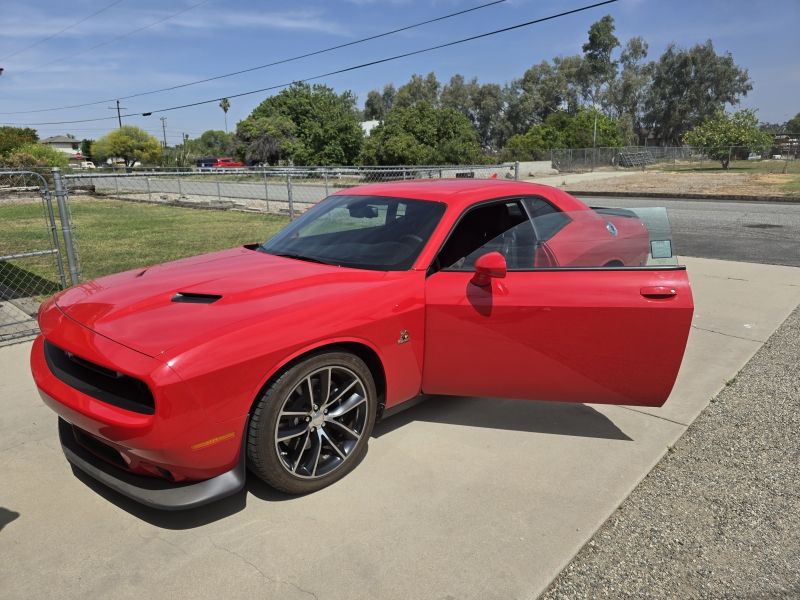
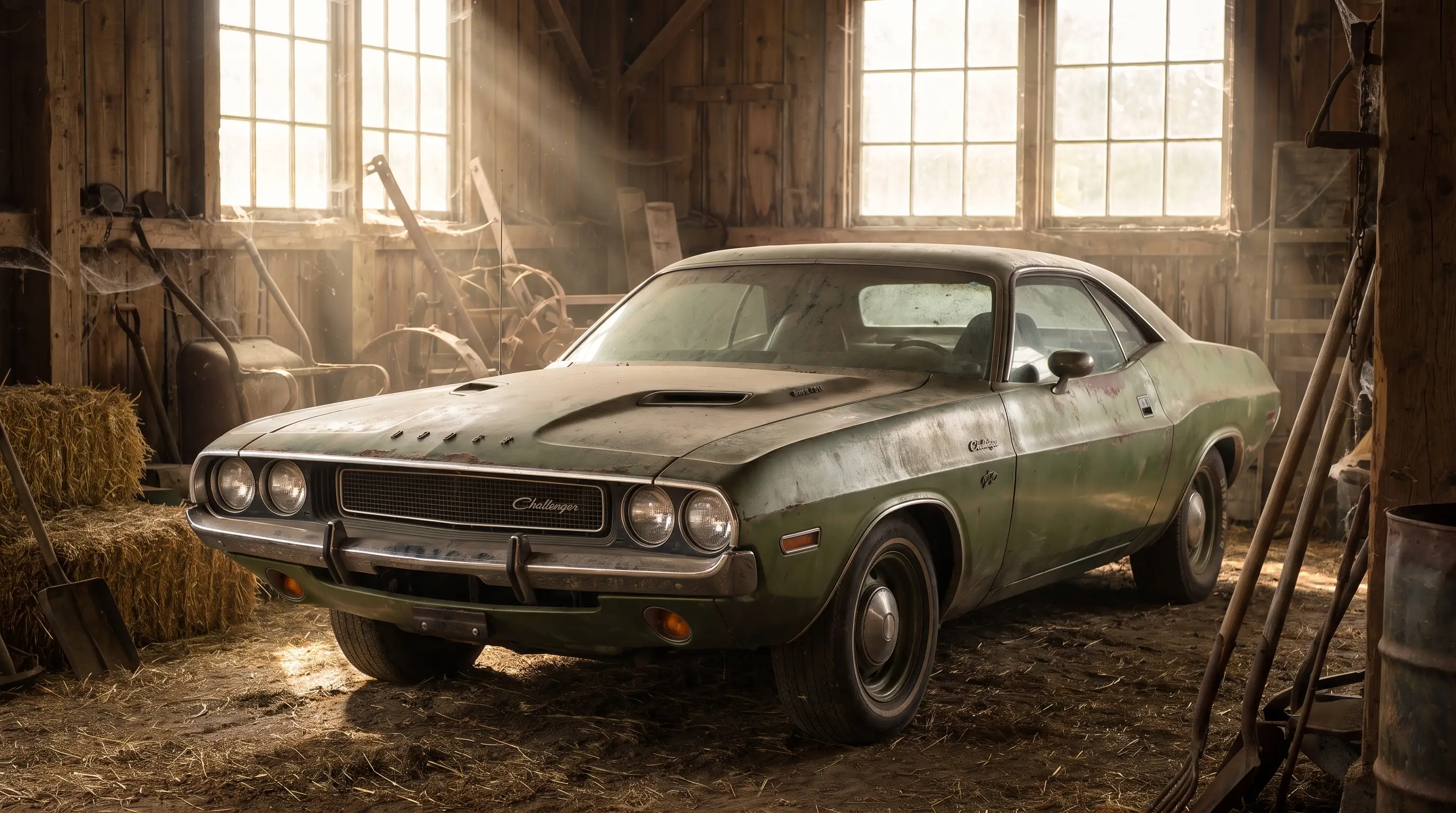
Every few months somebody rolls a Challenger into my shop and asks the same question in a slightly different way. Should they leave it alone or fix it up. Original vs restored Challenger is not a question with one right answer, and anybody who tells you otherwise is selling something. I've seen crusty original cars outsell gorgeous restorations, and I've seen the opposite happen the very next week. The market has opinions, and they're more particular than most owners expect.
What "original" actually means to a serious buyer
Original doesn't mean untouched forever. It means the car still carries its factory drivetrain, its factory sheet metal, its factory paint or at least evidence of it, and a documentation trail that matches. A Challenger with 100,000 honest miles, some touch-up paint, and its original engine still in the car is worth more to the right buyer than a flawless repaint with a swapped motor, because the first car is telling the truth and the second one might not be. Buyers who chase originality aren't chasing shabby for its own sake. They're chasing a car whose history hasn't been erased by somebody's idea of an improvement.
What restoration actually buys you
A proper restoration, done right, brings a tired car back to a condition it probably never actually left the factory in, since factory build quality in 1970 wasn't exactly flawless either. Fresh paint, correct upholstery, a rebuilt drivetrain, all of it can make a car more usable and more presentable than it's been in decades. The catch is that a restoration is only worth what its documentation says it's worth. A restoration backed by photos, receipts, and a clear record of what was done and why sells for real money. A restoration with no paper trail, done by "a guy who knew a guy," sells for a lot less, because the buyer has no way to know whether the work was done to factory spec or just done to look good in photos.
The color question complicates everything
Here's where it gets messier than most owners expect. A car's factory color, and whether that color is still on the body, changes the whole original versus restored calculation. A car repainted in its correct factory color, verified against the fender tag, is treated very differently by serious buyers than a car repainted in a color the original owner never chose, even if the second paint job is objectively better executed. This is exactly where where this started gets useful, because understanding how factory color codes intersect with collectibility explains why two seemingly similar restorations can land at wildly different prices depending on whether the color matches the original build sheet.
My honest take after doing this for decades
If I had to bet my own money, I'd take a solid original over a flashy restoration every time, assuming the original car is mechanically sound and rust-free. Originality can't be recreated once it's gone. A bad paint job can be redone. A swapped engine can, in theory, be replaced with a correct one if you can find and verify a matching-numbers replacement, though that gets expensive and complicated fast. But an original car that's been repainted, re-upholstered, and had its numbers-matching engine pulled for a crate motor has lost something no amount of money buys back. That's not sentiment talking. That's just how the resale market has behaved every single time I've watched it play out.
"You can restore a car back to new. You can't restore it back to original. Once that's gone, it's gone, and no amount of chrome fixes that."
- Mike Sullivan
The middle ground most buyers actually end up in
Most Challengers on the market today aren't purely original or purely restored. They're somewhere in the middle, original drivetrain with a repaint, original paint with a rebuilt interior, a mix of preserved and refreshed that reflects fifty-plus years of ordinary ownership rather than a museum-piece time capsule or a full-blown restoration. That middle ground is fine, and it's honestly where most sensible buyers should be shopping, because a car that's had sympathetic, well-documented work done to it is usually a better daily reality than either extreme. The key, whichever direction a given car leans, is documentation. Know what's original, know what's been touched, and make sure the seller can back up the difference with paperwork rather than just their word. If you're ready to start comparing real cars against that standard, you can shop classic Challenger listings and ask every seller the same blunt question I ask. What's original, and what can you prove.
Overrestoration is a real risk, not a compliment
There's a version of this problem people don't talk about enough. Overrestoration, where a shop makes a car nicer than it ever was from the factory, tighter panel gaps than Detroit ever achieved, a paint finish with more depth than any 1970 assembly line could produce, chrome that gleams brighter than anything that rolled off a period truck. It looks incredible in photos. It also tells a knowledgeable buyer the car has been fussed over past the point of honesty. Judges at serious concours events will mark a car down for overrestoration just as fast as they'll mark one down for sloppy work, because the goal isn't "better than new," it's "correct." A shop chasing perfection without a factory reference to check against usually ends up drifting away from correct without realizing it, and that drift costs real money at resale even though the car looks better than ever.
I've turned down jobs where a customer wanted me to make panel gaps tighter than spec because they thought it would look more impressive. I told them straight, that's not restoration, that's fantasy, and the market for fantasy is smaller and less reliable than the market for correct. Most customers appreciate hearing that even if it's not what they wanted to hear walking in the door.
What I actually check before I'll touch a car
Before I start any work, original or restoration, I want the fender tag, the broadcast sheet if it exists, and whatever paper trail the owner has. That tells me what the car actually was, not what somebody thinks it should have been. I've had customers insist their car was a factory R/T only to find the broadcast sheet says otherwise, and that conversation is a lot easier to have before any money gets spent than after. Whatever direction you're headed, preserving an honest original or restoring one back to health, start with the paperwork. Everything else, the paint, the upholstery, the engine work, follows from what that paperwork actually says the car is supposed to be.