
A kid at a cars and coffee show in Ohio once told me the matte black hood on a Challenger T/A parked three rows over looked like "someone forgot to paint it." His dad, standing nearby with a coffee going cold in his hand, just smiled and said nothing, letting the kid figure it out on his own over the next twenty minutes of walking the car. That is the challenger ta hood in a sentence. It reads as unfinished to someone who has not learned the story, and it reads as the whole point to someone who has.
Car Features
7 min read
The Matte-Black Fiberglass T/A Hood
The challenger ta hood was functional racing hardware wearing a street car badge, and its matte black finish still stops people at car shows decades later.
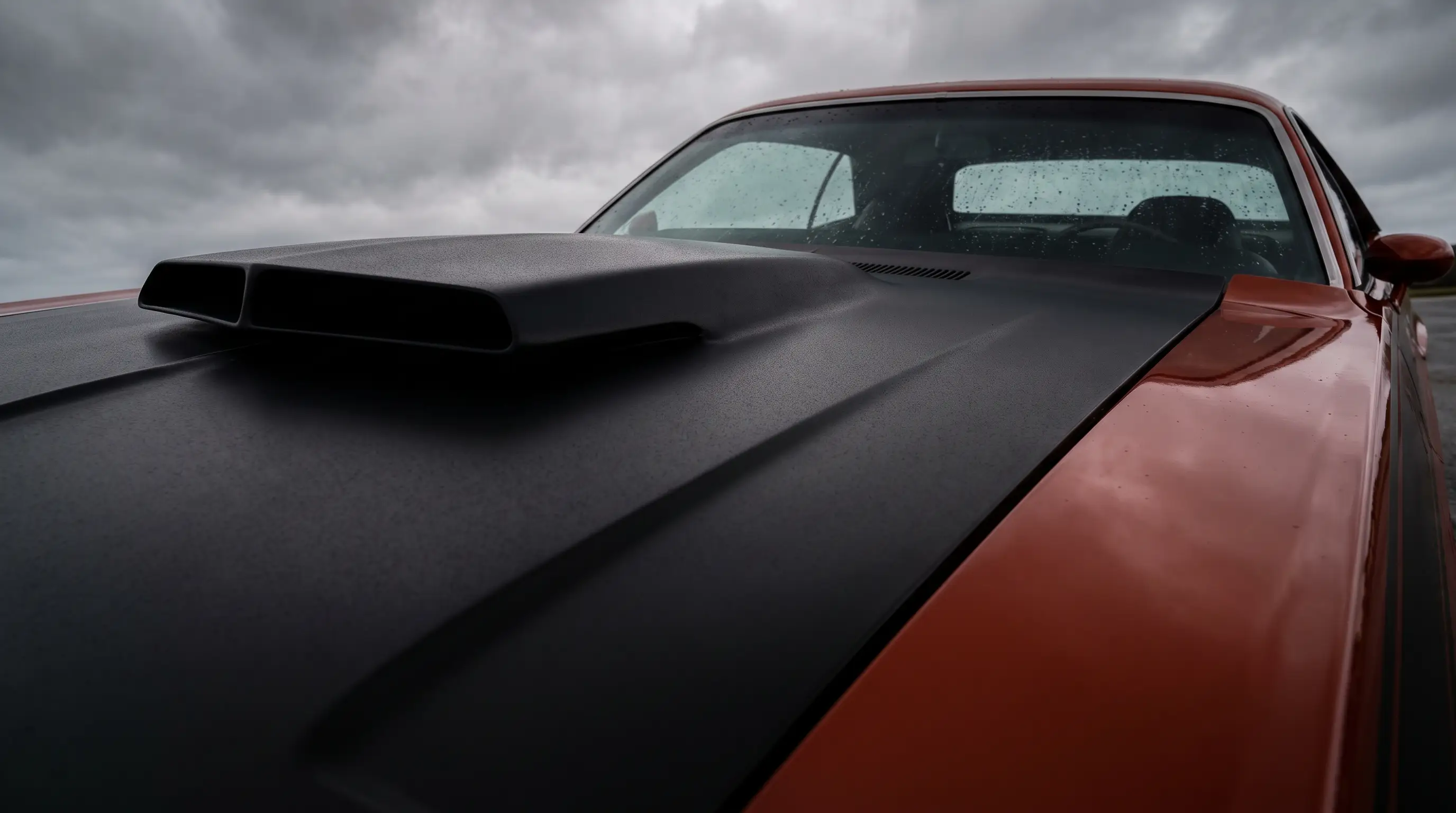
Not paint, fiberglass
The T/A's hood was not steel with flat black paint sprayed over it, the way some later muscle cars faked the look. It was molded fiberglass, a genuine weight saving measure pulled straight from the racing program the street car was built to legalize. Anyone wanting the full dodge challenger ta history will find the racing mandate behind every strange detail on this car, and the hood is the most visible example of that mandate showing up on a showroom floor. Dodge dealers in 1970 were selling a piece of a race car to street customers, whether those customers fully understood it or not.
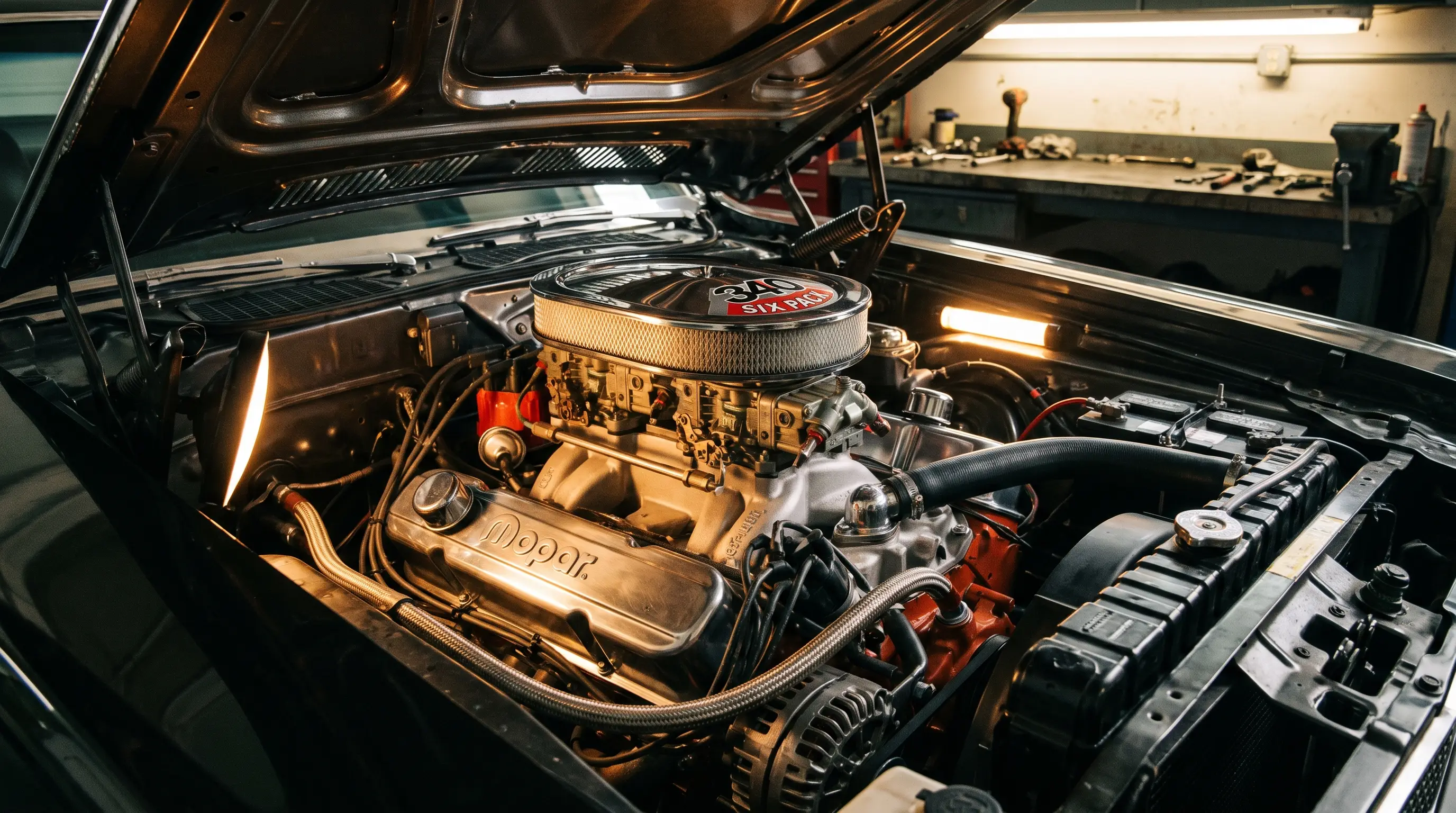
Underneath, a functional scoop fed air toward the Six Pack induction system, and the twin pins holding the hood down were not decorative either. Fiberglass panels flex and lift at speed in ways steel does not, so the pin system kept the hood seated under the aerodynamic loads the racing version would generate on track. The street car inherited the hardware even though most owners never approached those speeds on public roads. It was there because the rulebook required the street version to share real hardware with the race car, not a cosmetic approximation of it.
Matte black as a design statement
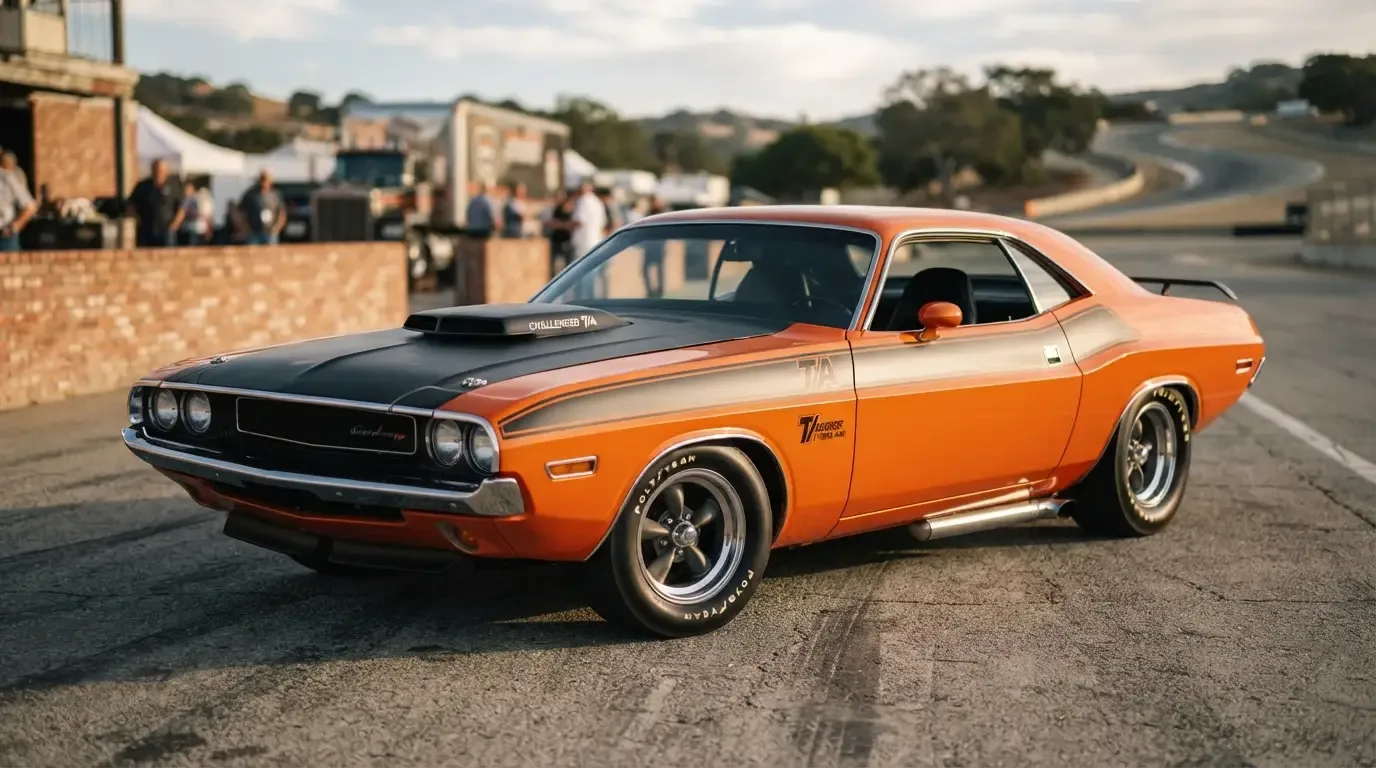
The flat black finish was a deliberate choice, not a cost cutting shortcut. Paired against the T/A's exterior colors, it created a hood that visually separated itself from the body, drawing the eye down the car's length and signaling, at a glance across a parking lot, that this particular Challenger was different from the one parked next to it. Detroit had experimented with matte and flat finishes before, but rarely with this much confidence on a mainstream production car. It photographed well, which mattered in 1970 advertising, and it aged into something close to iconic, which nobody at Dodge could have planned for at the time.
| Feature | Detail |
|---|---|
| Material | Molded fiberglass |
| Finish | Matte black, non-reflective |
| Scoop function | Fed air toward the Six Pack induction system |
| Retention | Twin hood pins |
| Design origin | Adapted from the Trans Am racing program |
The part that scares restorers
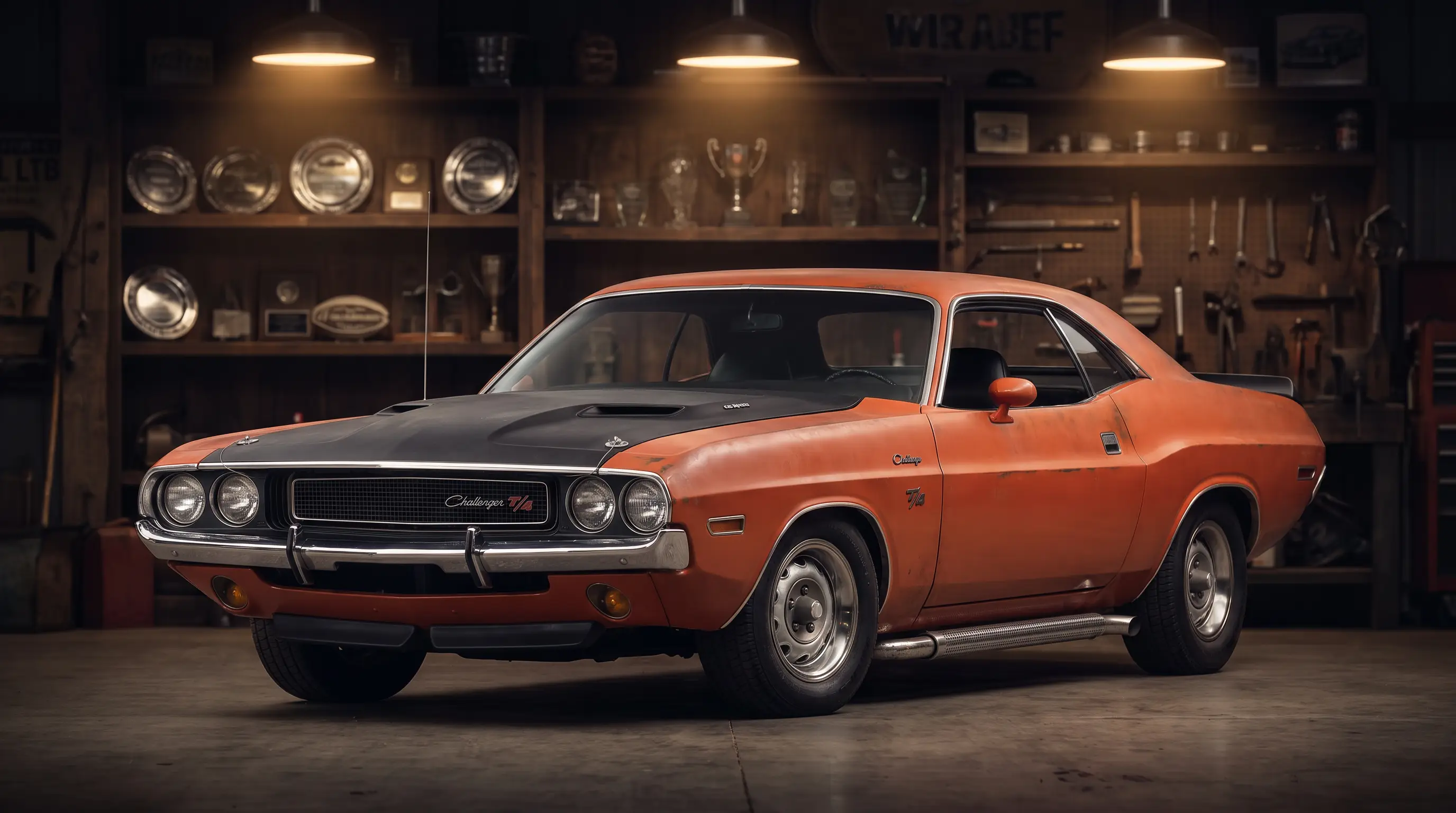
Fiberglass ages differently than steel, and it fails differently too. Stress cracking around the pin mounts, discoloration from decades of sun exposure, and the sheer scarcity of correctly molded reproduction hoods have made the challenger ta hood one of the more expensive single components to source for a serious restoration. A hood that looks fine from ten feet away can hide hairline cracks that only show up once a restorer strips the finish down. I have talked to more than one shop owner who treats the hood as the single item on a T/A restoration budget most likely to blow past the original estimate.
That scarcity connects directly to the broader story of why these cars command the attention they do decades later. For readers curious about how a single production year turned into this kind of lasting reputation, a related story traces that arc in more detail.
"You could spot a T/A across a parking lot in 1970 before you ever saw the badge, and that was entirely the hood's doing."
- Patrick Walsh
What a real inspection looks like
I have stood next to enough T/A hoods at shows and swap meets to know what a careful buyer actually checks, and it is not the paint. It is the mounting points around the hood pins, where fiberglass tends to develop stress cracks first, and the panel gaps along the cowl, where a poorly fitted reproduction hood almost always gives itself away. Original fiberglass has a specific weight and flex to it that reproduction panels sometimes get close to but rarely match exactly, and a restorer who has handled dozens of these over the years can often tell an original from a reproduction just by lifting a corner and feeling how it moves.
Color match is another tell. The matte black finish was applied with specific factory materials, and decades of touch up work with whatever flat black was available at a local parts store has left a lot of surviving hoods with subtly inconsistent sheen across the panel. It rarely jumps out in a photograph. It is obvious in person, in direct sunlight, to someone who knows to look for it. That gap between what a listing photo shows and what a hands on inspection reveals is exactly why serious buyers do not trust pictures alone with a component this expensive to get wrong.
How the hood shaped the rest of the car's look
Once Dodge committed to a matte black fiberglass hood, the rest of the T/A's visual package had to work around it, and you can see that in the stripe treatments offered on the car. The graphics packages were designed to complement rather than compete with the hood's flat finish, often running lower on the body and using colors that would not fight the black panel for attention across the length of the car. That is a level of visual coordination you do not always see on muscle cars from this period, where individual options were sometimes bolted together without much thought to how they read as a whole package once a customer checked several boxes on the order form.
Talk to a body shop that specializes in this era and they will tell you the hood is also the reason certain color combinations on the T/A photograph better than others decades later. Lighter body colors against the matte black create the strongest visual separation, which is part of why certain color and stripe combinations command a premium among collectors chasing the most photogenic examples, independent of any mechanical rarity consideration. The hood was never just a functional racing carryover. It became the anchor the rest of the car's design had to answer to.
Why it still works decades later
Design details that were purely functional often age poorly once their original purpose fades from memory. The T/A's hood is the exception. It still reads as purposeful even to someone who has never heard of SCCA homologation rules, because matte black against a bright body color is a visual trick that does not require historical context to land. That is a rare thing in automotive design, a functional racing carryover that also happens to be genuinely good looking on its own terms, independent of the story behind it.
Walk a car show today and the T/A still stops people who know nothing about Trans Am rules or displacement caps. They just see a hood that looks like it means business, sitting on a car that backs up the claim. Anyone chasing that feeling in person rather than in a magazine spread can look at Challengers for sale now and see how many of these hoods have survived in honest, unmolested condition. It is fewer than you would think, and that scarcity is exactly why the kid at that Ohio show was going to remember that particular car long after he forgot most of the others parked around it.
Sources and notes
Related Reading
Have a
Dodge Challenger
for Sale?
Reach thousands of serious classic car collectors across the US.
Sell It Here →
Are You a Classic Car Dealer?
List your full inventory and connect with targeted classic car buyers.
Join as a Dealer →

About the author
Patrick Walsh
Automotive journalist covering classic car shows, events, and the enthusiast community across North America.
Related Listings - Dodge Challenger
Comments
Be the first to comment on this article.