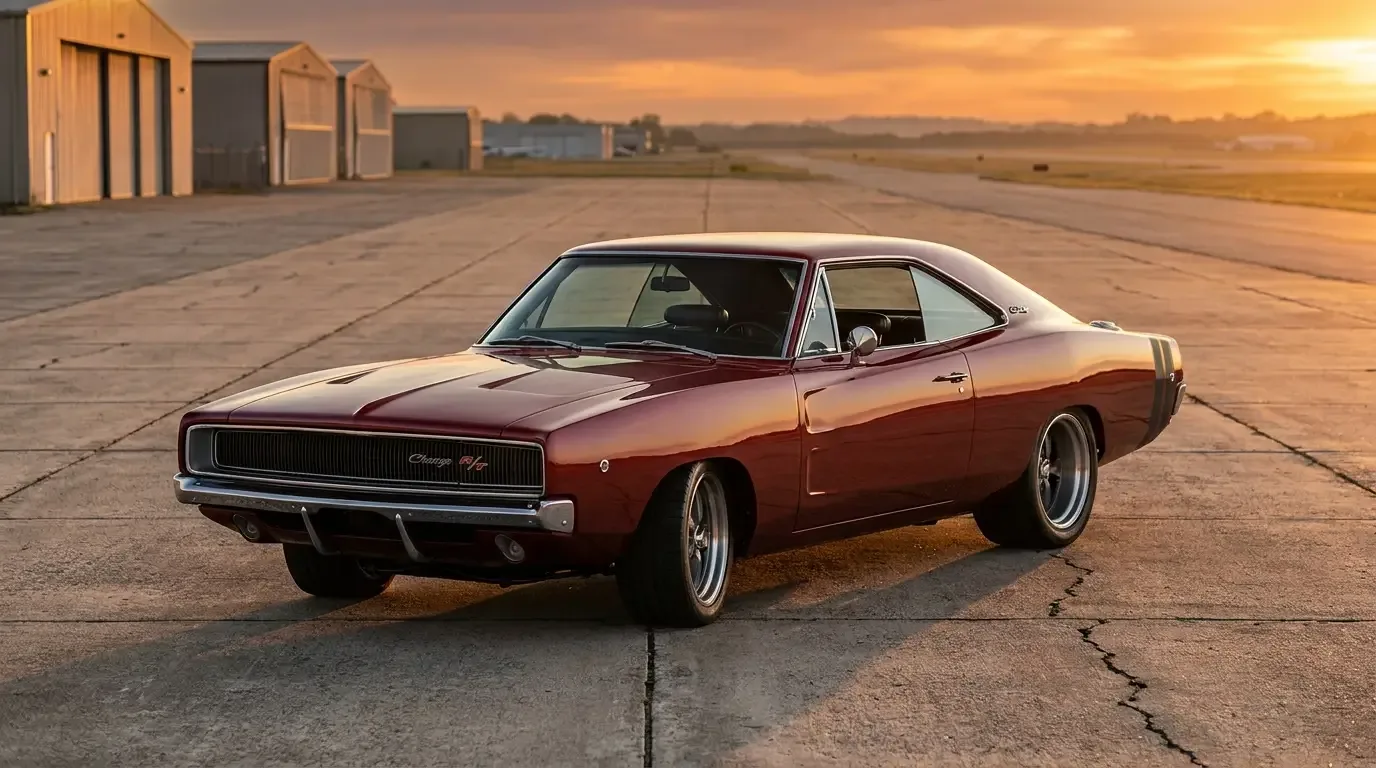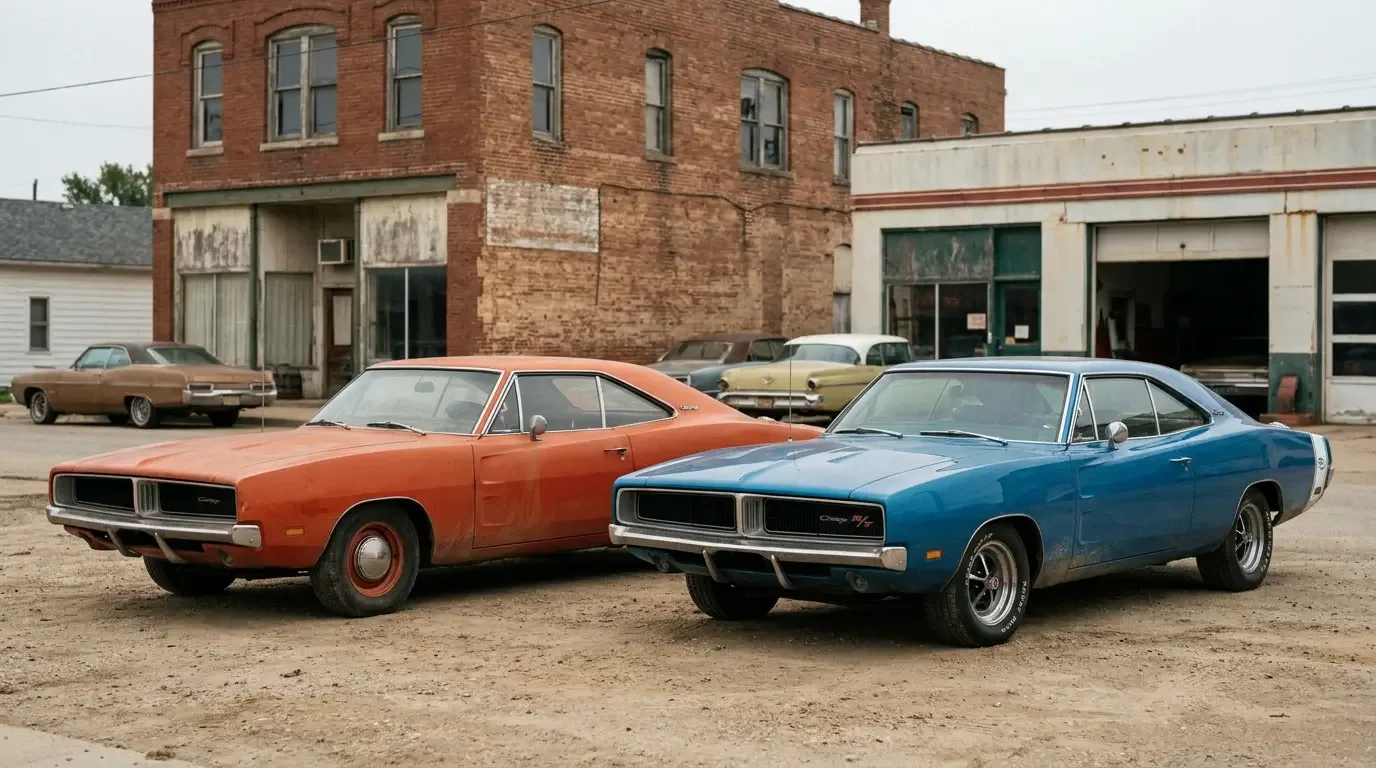
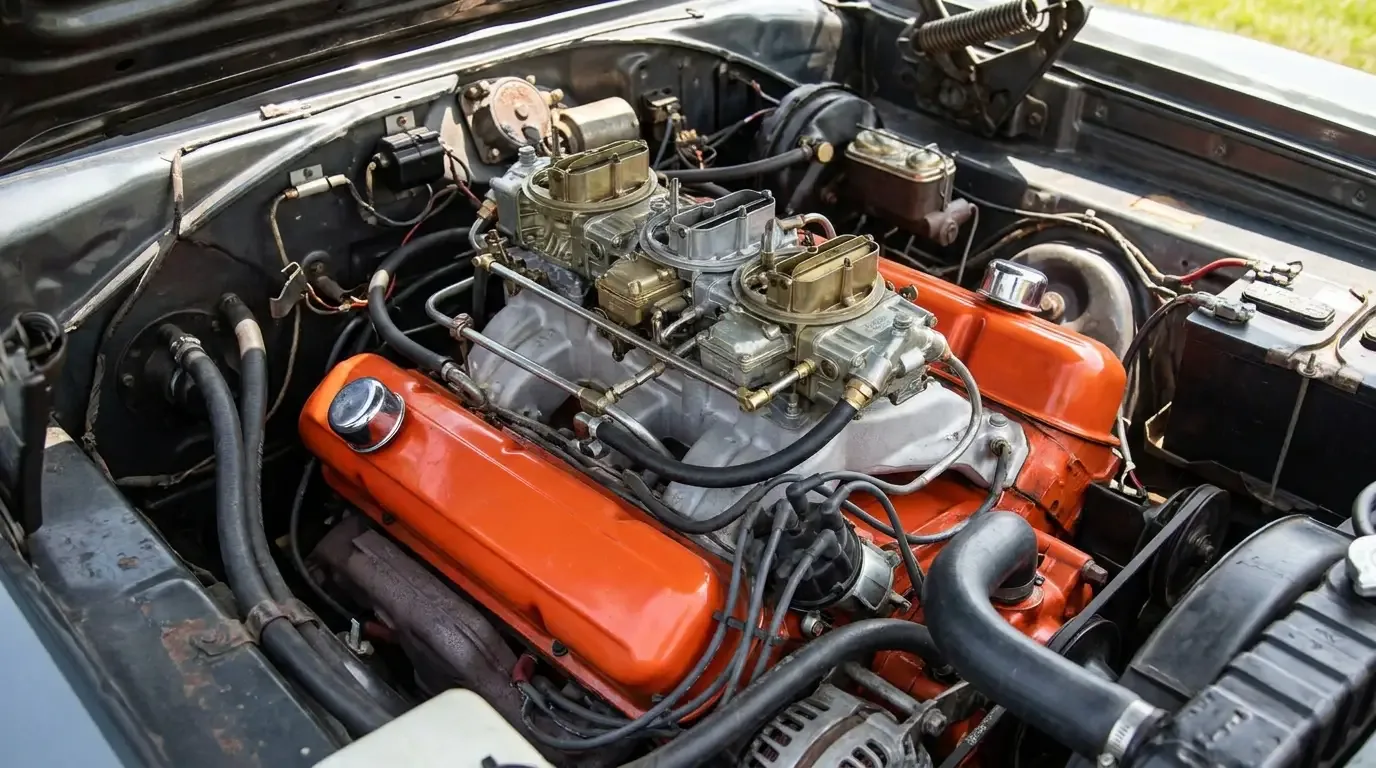
Three carburetors instead of one. That's the whole sales pitch for the 440 Six Pack in one sentence, and it's a better pitch than most marketing departments manage in a full paragraph. Two outboard Holley two barrels sitting dormant at part throttle, a center carb doing the daily driving work, and then all three opening up together when the throttle hit the floor. It's a simple idea executed well, and it made the 440 Six Pack one of the more interesting engine options Dodge ever put in a Charger R/T.
This wasn't the standard engine. The 440 Magnum with its single four barrel held that job across most R/T production. The Six Pack was a step up, less common than the standard engine, more accessible than the Hemi, and it carved out its own reputation for a specific kind of straight line performance that a lot of buyers still chase today.
How the Six Pack setup actually worked
The three two barrel carburetor arrangement, carrying the V engine code in the Charger's VIN, mounted three Holley two barrels on a single intake manifold. The famous aluminum Edelbrock intake was actually a 1969½ detail on the A12 Road Runner and Super Bee, the Charger never got the Six Pack until 1970, by which point Chrysler had switched to a heavier cast iron intake that closely copied the Edelbrock casting. Under normal driving, only the center carburetor fed the engine, and the two outer units stayed closed, controlled by a vacuum operated linkage that opened them progressively once the driver got into the throttle. This gave the car reasonable manners around town, nothing like the compromised idle and part throttle behavior you'd expect from three wide open carbs running simultaneously all the time.
Rated horsepower for the 440 Six Pack came in at 390 hp for 1970, dropping to 385 hp for 1971, a clear step above the standard 440 Magnum's 375 hp rating, achieved mostly through better breathing at higher rpm rather than a fundamentally different bottom end. Compression and cam specs were closer to the standard Magnum than to the Hemi, which is part of why the Six Pack developed a reputation as an engine that gave you meaningfully more top end pull without the daily ownership headaches that came with the 426.
"The blower looks great on the invoice. On the dyno it made twelve more horsepower than the combo that cost a third as much. That's the number that matters."
— Dan Reeves
Where it landed against the standard 440 and the Hemi
Straight line performance put the Six Pack in an interesting middle position. It ran quicker than the standard 440 Magnum, the extra breathing at wide open throttle showing up clearly in quarter mile times, typically a few tenths quicker in period testing. Against the Hemi, the gap closed further than most people expect, close enough on some runs that a well tuned Six Pack car could hang with a Hemi car that wasn't perfectly dialed in, even though the Hemi held a real advantage when both cars were tuned correctly.
Cost was where the Six Pack made its real case. It came in well below the Hemi option price while delivering a genuine step up over the standard engine, which made it the practical performance buyer's choice, the option for someone who wanted more than the base 440 Magnum but didn't want to pay Hemi money or deal with Hemi cooling demands. For the fuller comparison against both ends of that spectrum, read more here on how the full R/T lineup broke down against the base Charger.
| Spec | 440 Six Pack (V-code) |
|---|---|
| Displacement | 440 cubic inches |
| Carburetion | Three 2-barrel Holleys (cast iron intake on 1970-71 Charger) |
| Horsepower | 390 hp (1970), 385 hp (1971) |
| Standard 440 Magnum comparison | 375 hp (rated) |
| Positioning | Between standard 440 Magnum and 426 Hemi |
What to check when buying one today
The Six Pack's intake and carb setup is more fragile from a documentation standpoint than a single four barrel car, mostly because the individual pieces get separated, sold, and swapped more easily than a whole intake assembly tends to survive intact. A genuine numbers matching Six Pack car needs the correct Edelbrock intake casting, the correct three carburetors with matching tag numbers for the application, and a fender tag and VIN confirming the V-code engine designation. It's common to find 440 Magnum cars that have had a Six Pack setup added later for looks or performance, and those cars aren't fraudulent exactly, but they're not what a Six Pack listing should claim to be without disclosure.
Vacuum linkage condition matters too. A worn or improperly adjusted progressive linkage causes the outer carbs to open too early or too late, killing both fuel economy and the smooth transition the system was designed to deliver. It's a known maintenance item, not a design flaw, but it's one a lot of casual buyers don't know to check before assuming the car simply "runs a little rough."
The Six Pack's place in R/T history
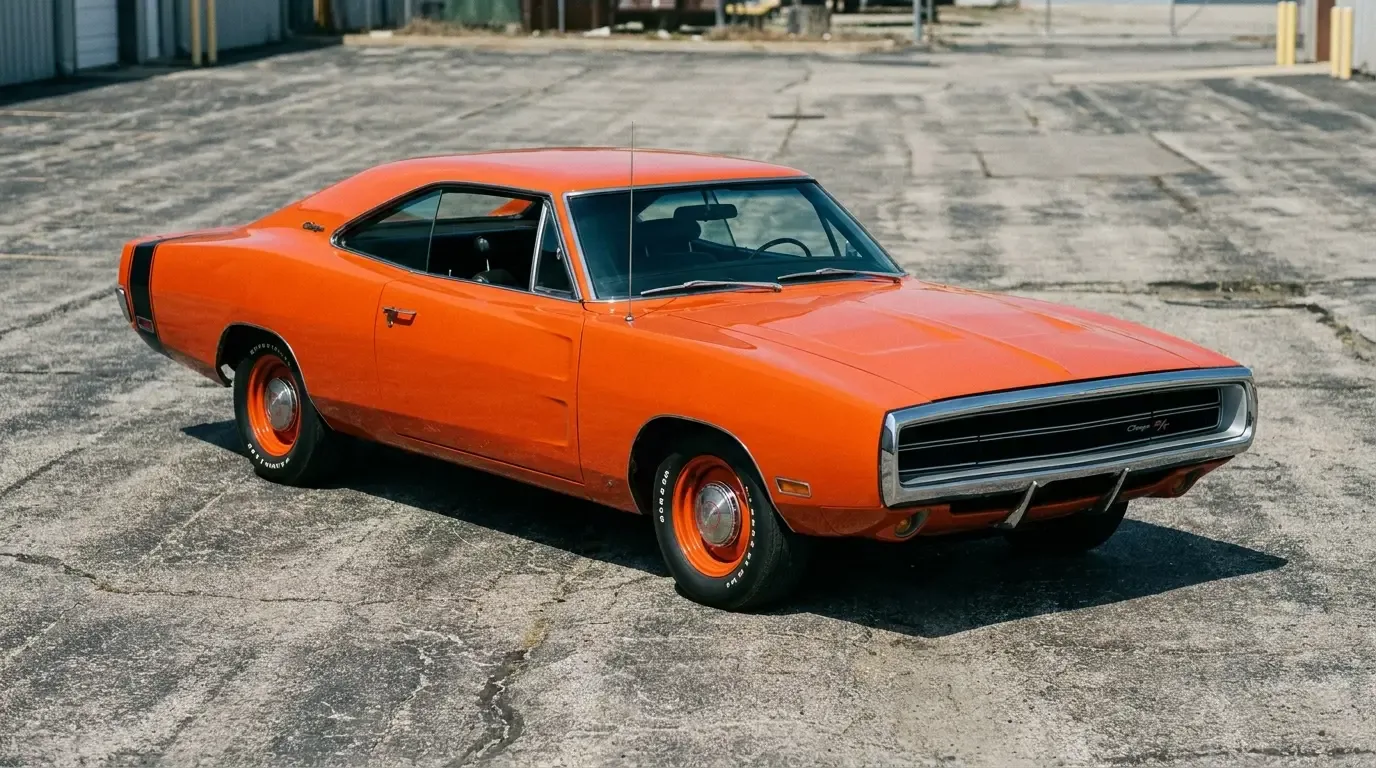
The 440 Six Pack option ran for a limited stretch of Charger R/T production before market shifts and emissions rules pushed multi carburetor setups off the table across the industry. That limited window is part of what makes surviving, documented examples desirable today, a genuine middle ground option that offered real performance gains without Hemi level complexity or cost. Understanding where this option sits requires understanding the broader R/T story, which the Charger R/T story covers in full, and for readers new to this car generally, Classic Cars Arena's Charger story lays out the complete model history from 1966 through 1978.
Sources and notes
- Dodge Garage: Mopar 440 big block, 1970 - 1972 - 390/385 hp ratings and the aluminum-to-cast-iron intake switch.
- Silodrome: 1971 Charger R/T V-code 440 Six Pack - V engine code and Charger Six Pack rarity.
- Dodge Garage: 440 Six Pack heritage - triple Holley two-barrel setup and progressive linkage operation.
- Wikipedia: Chrysler B/RB engine - Six Pack (A12) origin on the 1969½ Road Runner and Super Bee.
- HotCars: what 440 Six Pack means - center-carb daily driving versus outboard carbs under load.