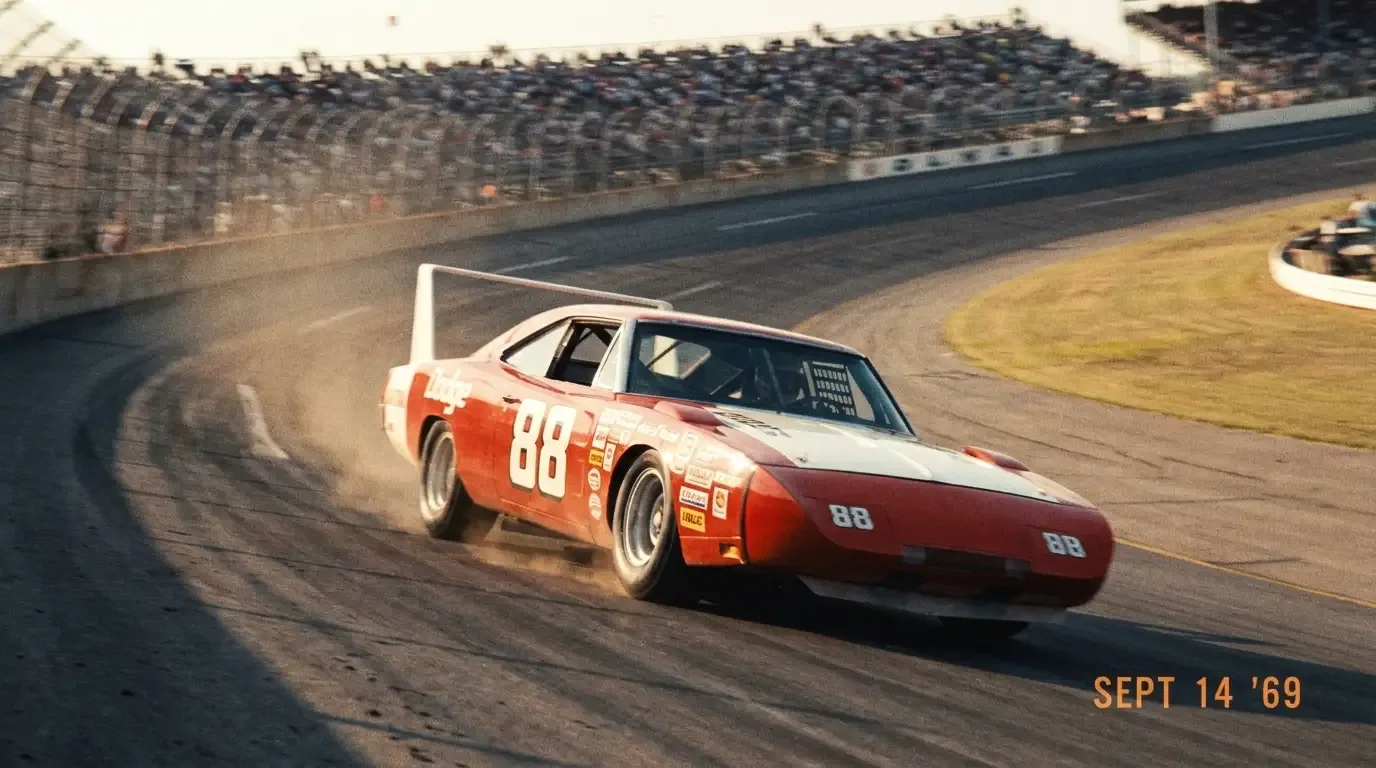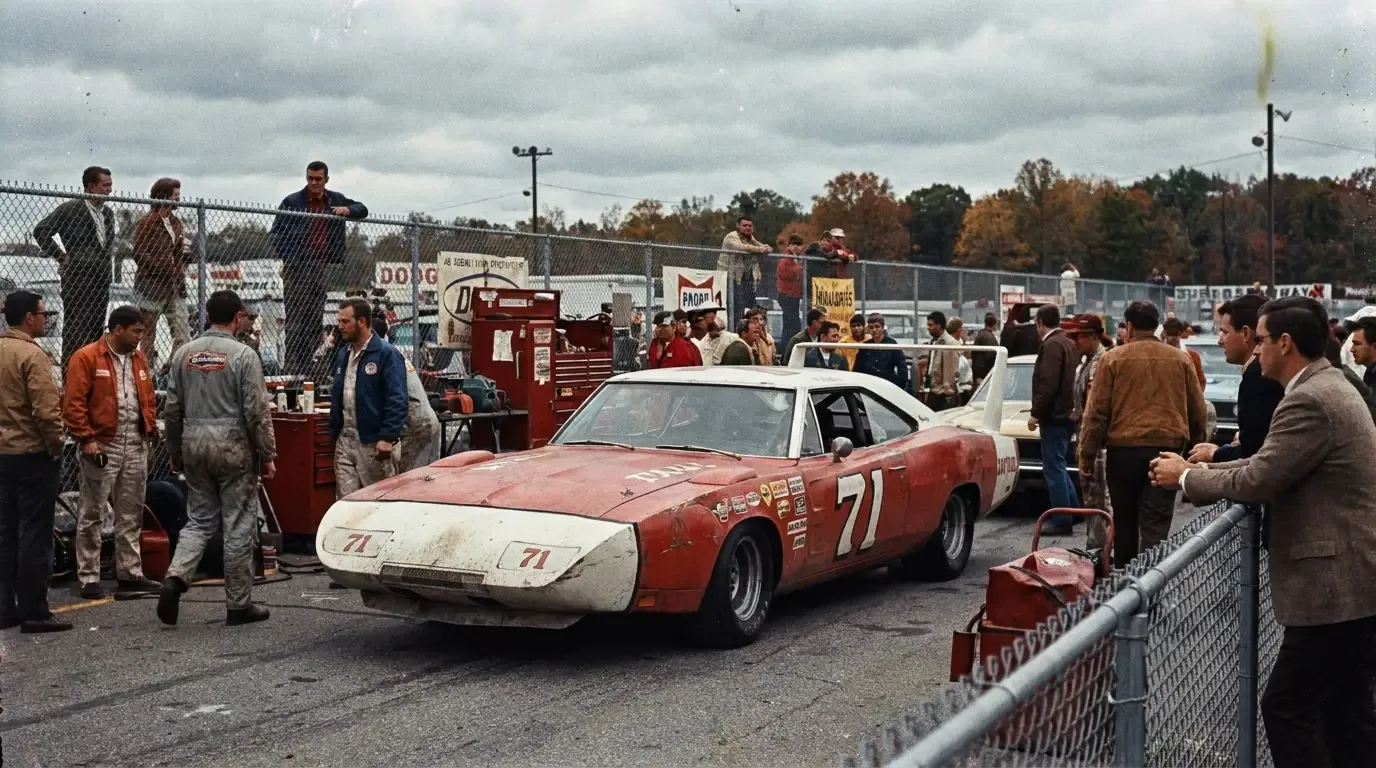
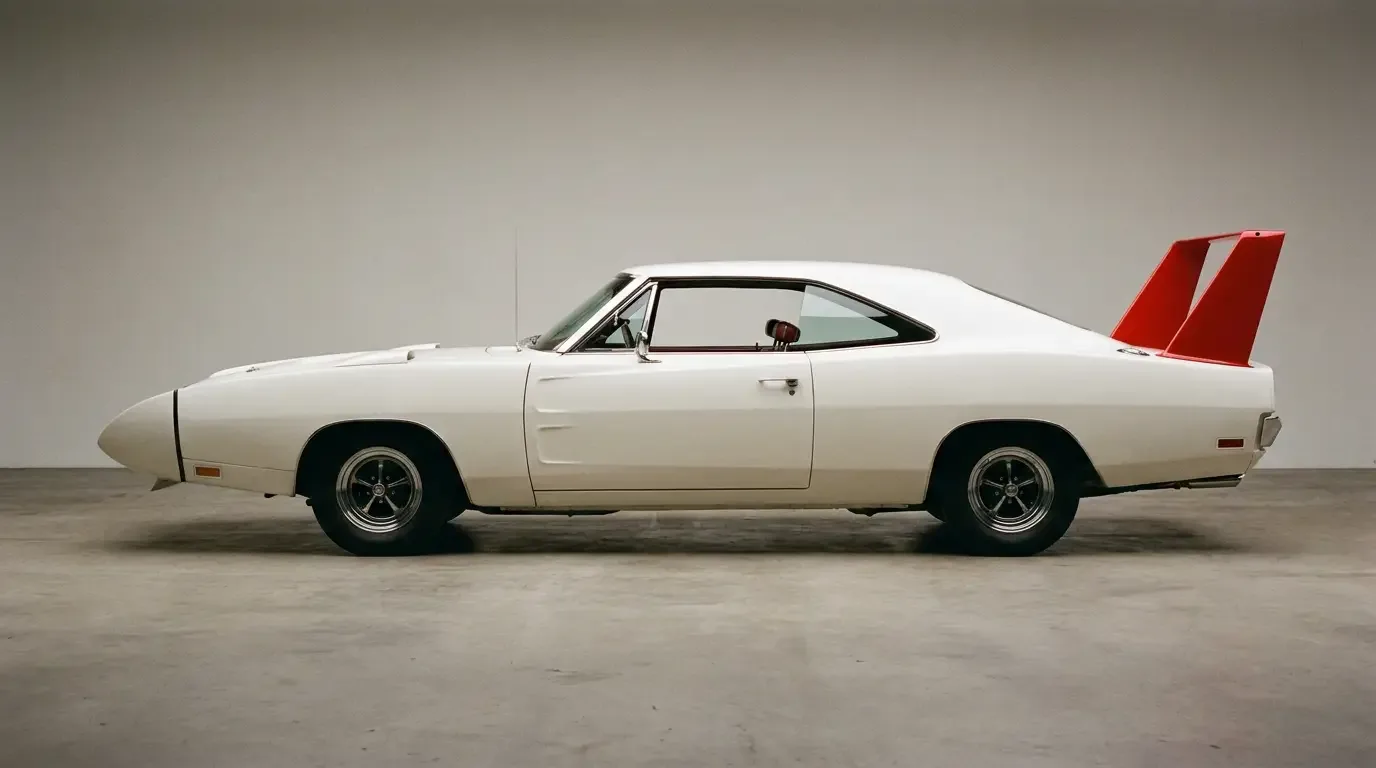
Ask most people to describe the aerodynamic Charger and they picture the Daytona: the pointed nose cone, the towering wing, the car that ran 200 mph at Talladega. Fewer people remember the car that came before it, the Charger 500, and fewer still understand why Dodge built two aero specials within the span of a single year. The build records and NASCAR rulebooks tell a clearer story than most magazine retrospectives do, and it's worth going back to the primary sources to see exactly what changed between the two cars, and why.
The short version is that the 500 was a fix for a problem Dodge didn't fully solve, and the Daytona was the fix for the fix. Understanding the gap between them says a lot about how quickly engineering priorities moved once NASCAR racing became a genuine aerodynamics contest between manufacturers.
Why the Charger 500 existed in the first place
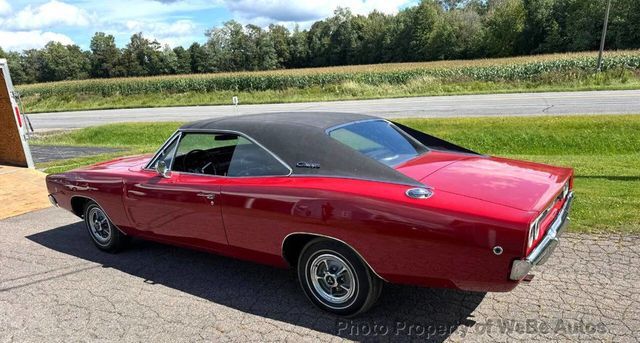
The 1968 and 1969 Charger's recessed grille and tunneled rear window looked sharp on the street, but they created lift and drag at NASCAR speeds that put the car at a disadvantage against the notchback Ford Torino Talladega and Mercury Cyclone Spoiler II. Dodge's answer for 1969 was the Charger 500: a flush grille borrowed conceptually from the Coronet, and a flush-mounted rear window replacing the tunneled backlight. Dodge built 392 Charger 500s to satisfy NASCAR's homologation rule requiring 500 production units of any body modification raced in competition, hence the name.
On paper, the changes should have closed the gap. In practice, they weren't enough. The Charger 500 still generated more drag than the Ford products at superspeedway velocities, and Dodge's engineers, working with Chrysler's aerodynamics group, concluded the problem wasn't the grille or the backlight at all. It was the whole front end shape and the low pressure zone forming behind the car at high speed. That's a different problem, and it required a different solution than the 500 had offered.
What the Daytona actually changed underneath the bodywork
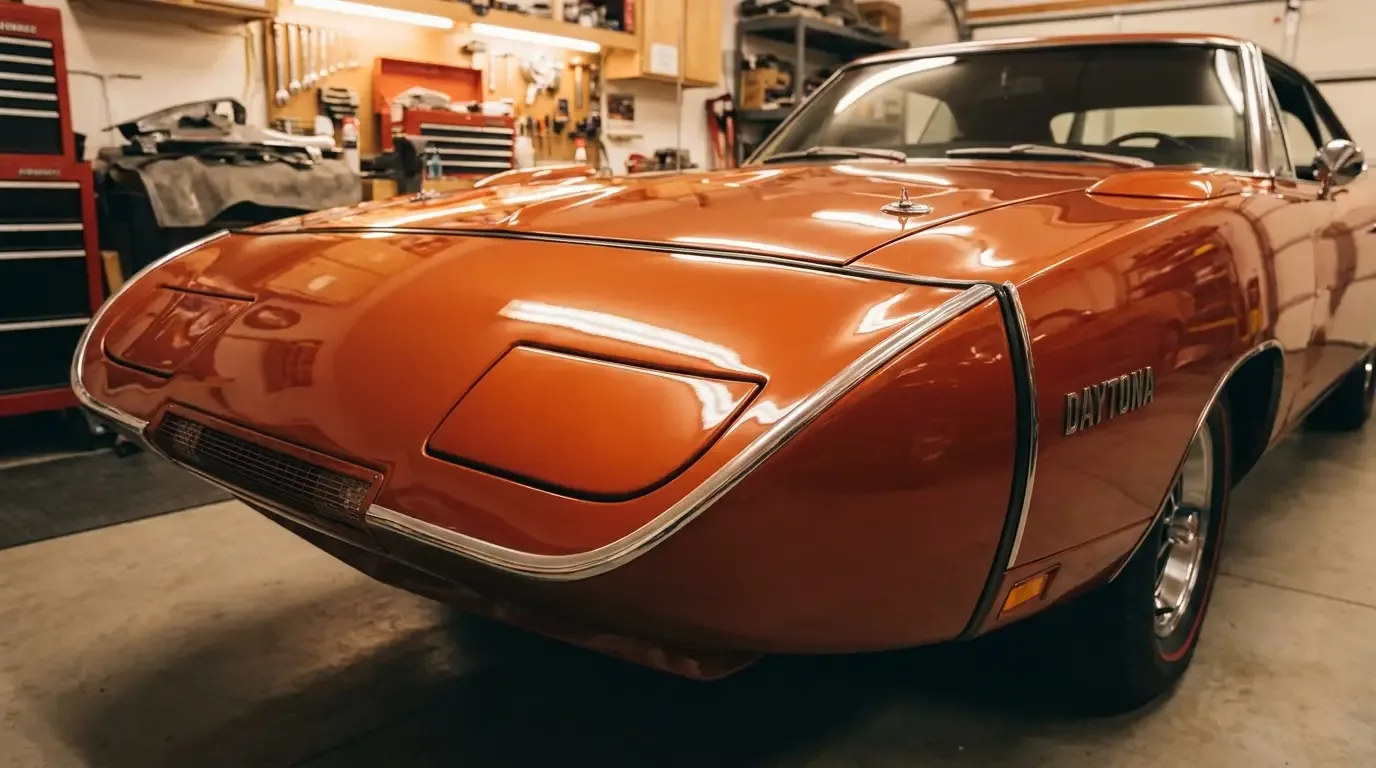
The Daytona, introduced mid-1969, kept the Charger 500's flush backlight but replaced the entire front clip with an 18-inch steel nose cone that tapered to a point, along with a raised rear wing mounted on struts tall enough to clear turbulent air coming off the trunk lid. Neither change was cosmetic. The nose cone reduced frontal lift measurably in testing, and the wing height was set by testing at multiple positions until the airflow stopped separating over the trunk at racing speed. Dodge built 503 Daytonas for 1969, again pegged to NASCAR's homologation minimum, and again a number that reflects a rulebook requirement rather than a sales projection.
The production differences extend past the sheet metal. Daytonas received a specific fender-mounted brake cooling scoop not found on the Charger 500, and the rear wing's height was tall enough that trunk lid clearance became a documented engineering constraint, not an afterthought. Option codes on build sheets separate the two cars cleanly for anyone doing verification work: a Daytona's fender tag and broadcast sheet reference the aero package in a way a standard 500's paperwork does not, which matters enormously to buyers trying to confirm authenticity today.
| Feature | Charger 500 (1969) | Charger Daytona (1969) |
|---|---|---|
| Front end | Flush grille, standard nose | 18-inch pointed nose cone |
| Rear window | Flush backlight | Flush backlight, carried over |
| Rear aero | None | Raised strut-mounted wing |
| Production | 392 | 503 |
| Purpose | NASCAR homologation, incremental fix | NASCAR homologation, full aero redesign |
"The build record matters. Not because it tells you everything, but because it's the factory's own account of what left the line. With the 500 and the Daytona, the paper trail is really the only reliable way to tell an honest example from a car with parts added later to look the part."
— Tom Ramirez
Why the distinction matters for buyers today
The Charger 500 and Daytona get conflated constantly in casual conversation, partly because both are rare, both are aero specific, and both trace back to the same 1969 NASCAR season. But a Charger 500 with an aftermarket nose cone bolted on is not a Daytona, and no amount of enthusiasm changes what the broadcast sheet says. Verification against Chrysler's build records, matching the fender tag's option codes against known Daytona-specific parts, remains the only reliable method, since visual inspection alone can be fooled by a well executed clone.
Engine availability adds another layer buyers should check rather than assume. Both cars could be ordered with the 440 Magnum or the 426 Hemi, and neither the 500 nor the Daytona was exclusively a Hemi car, contrary to what some sale listings imply. A Daytona with the 440 is not a lesser example of a Hemi car with the option deleted, it's simply a different, equally legitimate build combination, and the broadcast sheet will confirm which engine actually left the factory installed. Buyers who assume every surviving Daytona was built with the 426 are working from folklore rather than Chrysler's own records, and that assumption has cost people real money on cars that don't match their paperwork.
For the full account of how the Daytona's aero package performed once it reached NASCAR ovals, there's more on the Charger Daytona covering the racing side of this story in detail. The car's origin story, including how Dodge moved from concept to homologated production in a matter of months, is covered separately as well, and you can read more here for that timeline.
Placing both cars in the wider Charger record
Neither the 500 nor the Daytona makes complete sense outside the context of the standard Charger line they were built from. Both cars used the same basic B-body platform, the same engine options up through the 426 Hemi, and the same production facilities, with the aero packages layered on as homologation specific modifications rather than ground-up redesigns. Anyone researching either car benefits from understanding the full dodge charger history first, since the 500 and Daytona are best understood as two rapid iterations within a single, closely documented model year rather than standalone projects.
The paperwork, in the end, tells a more interesting story than the shop-floor rumors do. Two cars, one rulebook, and roughly six months separating a car that almost worked from one that genuinely did.
Sources and notes
- Barn Finds - confirmed 392 Charger 500s were built and that the flush grille came from the 1968 Dodge Coronet parts bin.
- Dodge Charger Daytona - Wikipedia - confirmed 503 Daytonas built for 1969, with only 70 fitted with the 426 Hemi.
- HowStuffWorks - confirmed the 500 preceded the Daytona and that the flush backlight and grille addressed superspeedway drag against the Ford Torino Talladega.
- autoevolution - confirmed the Charger 500's flush grille and rear-window changes and its homologation role.
- autoevolution - confirmed the Daytona's 1-of-503 figure and the role of build-sheet verification for authenticity.