
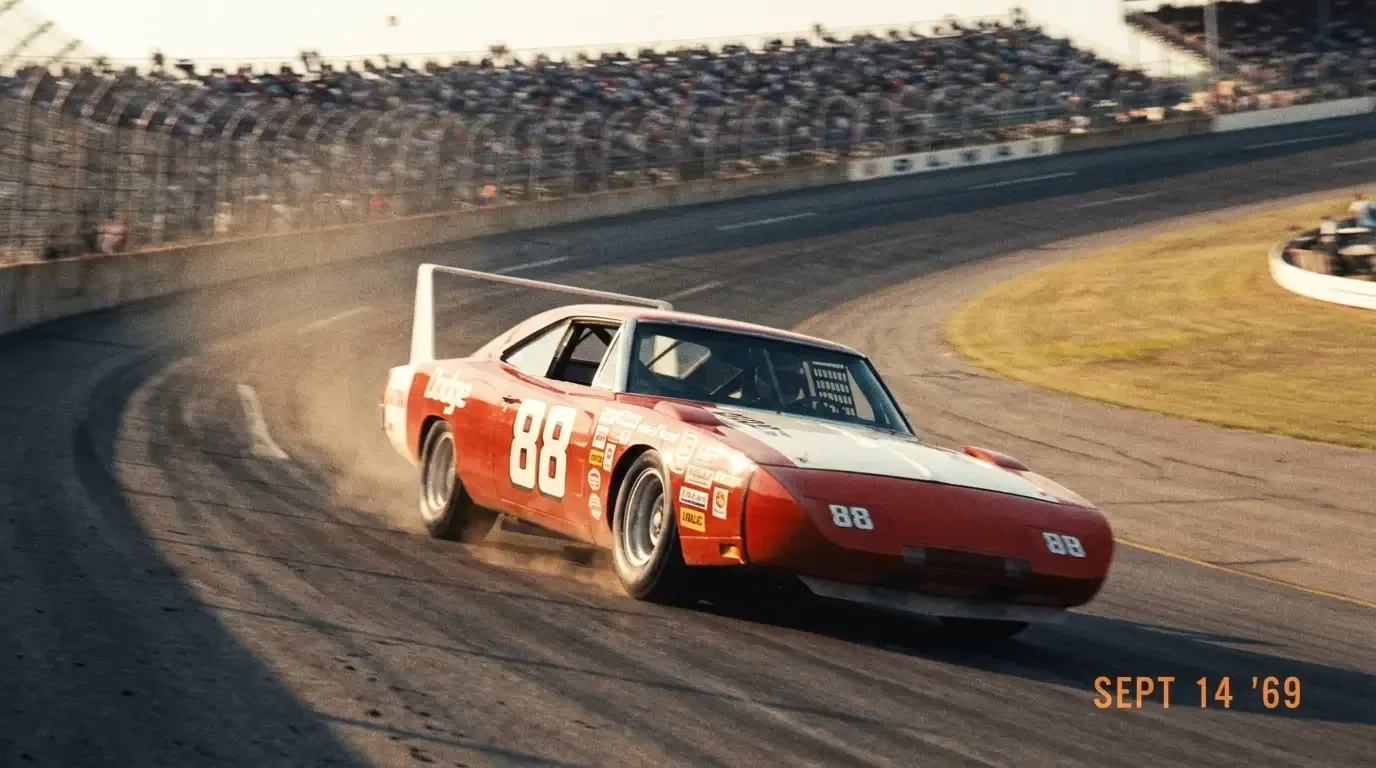
A man in Talladega, Alabama once told me he still remembers the sound before he remembers the shape. It was 1969, he was eleven years old, and his father had driven him out past the fairgrounds to watch practice laps at the new superspeedway. What came around the banking wasn't quite a stock car and wasn't quite anything else on the road. It had a nose like a shark and a wing rising two feet off the deck lid, and it was doing something no Dodge had done before: it was going faster than the wind could slow it down.
Car Features
7 min read
The Winged Charger's Cultural Afterlife
Built to win a rules war on NASCAR's biggest tracks, the Charger Daytona spent decades as an unwanted showroom oddity before becoming one of the most sought-after shapes in American car culture.
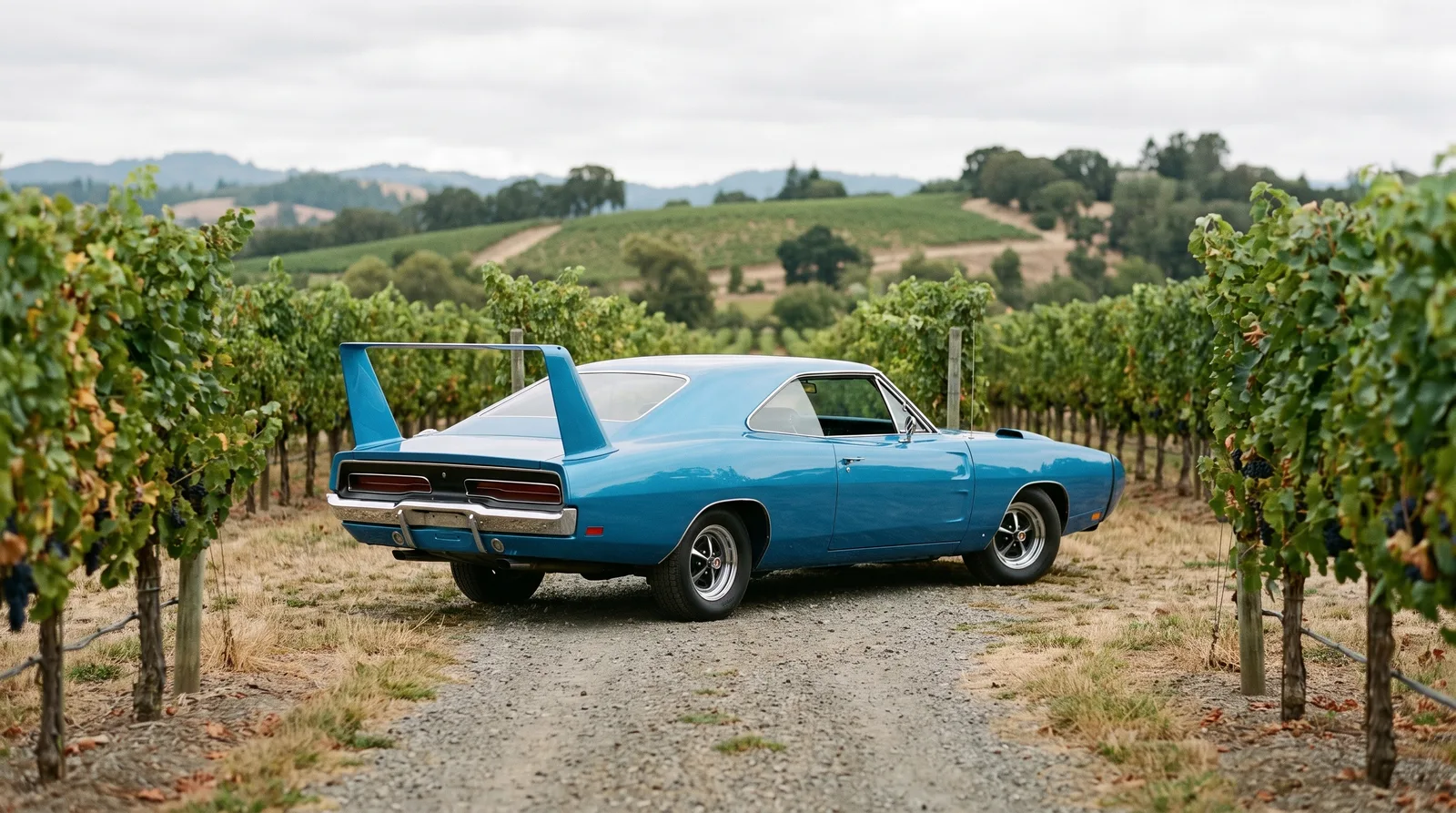
That car was the Charger Daytona, and more than fifty years later its cultural footprint is bigger than its production run ever suggested it would be. Dodge built the Daytona to solve a narrow, specific problem, aerodynamic drag at 200 mph on NASCAR's biggest tracks, and in doing so it accidentally built one of the most recognized silhouettes in American car culture. You can read the Daytona aero-wars feature for the full account of how that aero war unfolded lap by lap. This piece is about what happened after the checkered flag, when the wing stopped being a NASCAR homologation requirement and started being a symbol.
A homologation special that outgrew its own rulebook
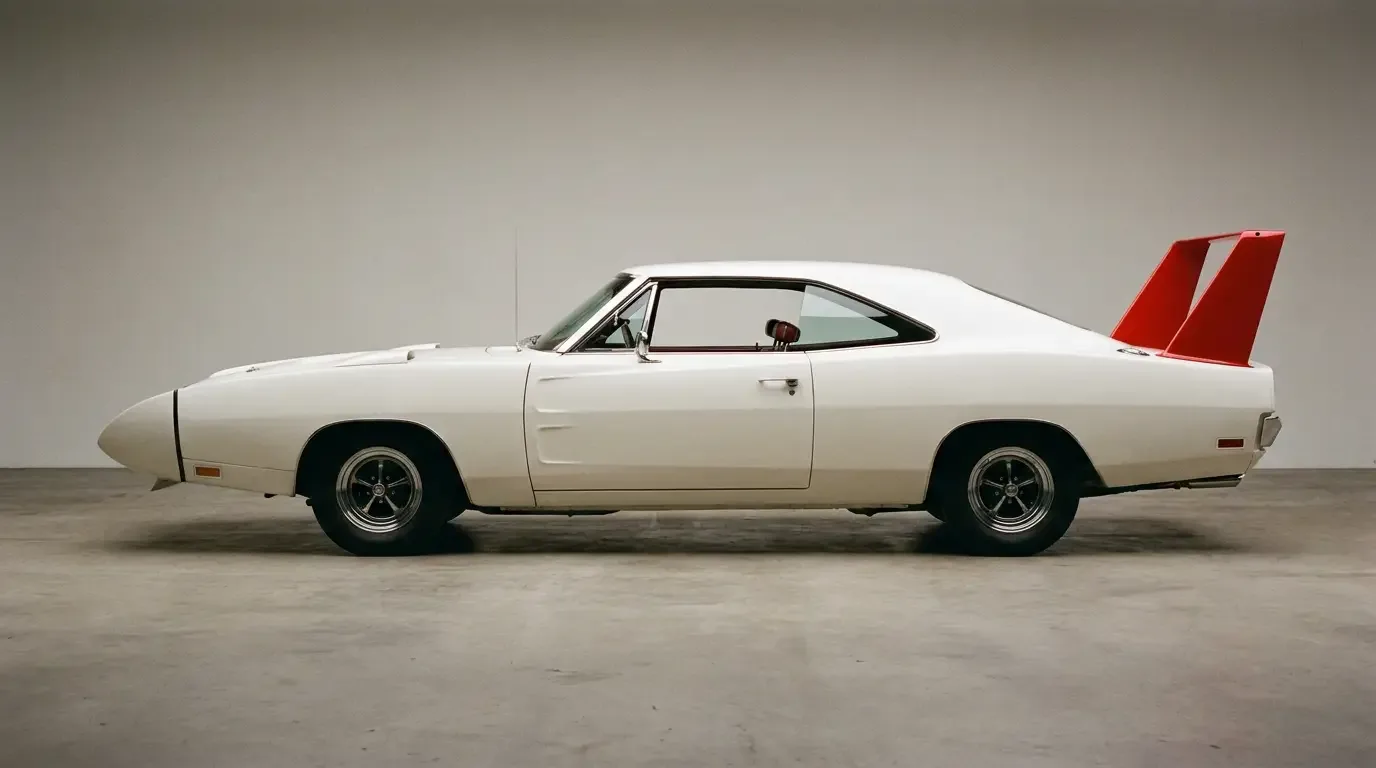
The Daytona existed because NASCAR required manufacturers to sell a minimum number of street cars matching whatever aerodynamic package they raced. Dodge built 503 Daytonas for 1969, most of them ordered by buyers who had no interest in the wing and plenty of interest in getting a Charger with a 440 Magnum or a 426 Hemi under the nose plug. Dealers reportedly struggled to move the cars. The pointed nose cone made them look strange next to a standard Charger R/T sitting on the same lot, and strange didn't sell in 1969 the way it does in 2026.
That mismatch between how the car looked in the showroom and how it performed on the track is the seed of everything that came after. NASCAR changed the rules within two seasons specifically to push winged cars off the track, which is a rare thing: a production car effectively legislated out of the sport it was built to win. Once a car gets banned instead of simply retired, people start paying attention to it differently. The story became bigger than the lap times.
From orphaned oddity to auction-block headline
For most of the 1970s and into the 1980s, a Daytona was a hard car to sell and an even harder one to insure. Parts specific to the nose cone and wing were scarce almost from the factory floor, since Dodge built them in numbers meant to satisfy a rulebook, not a customer base. Plenty went through drag strips or sat in fields, unwanted precisely because they were unusual. That neglect is part of why so few survive in original, numbers-matching condition today, and why the survivors carry a premium that would have baffled the original dealers trying to unload them at a discount.
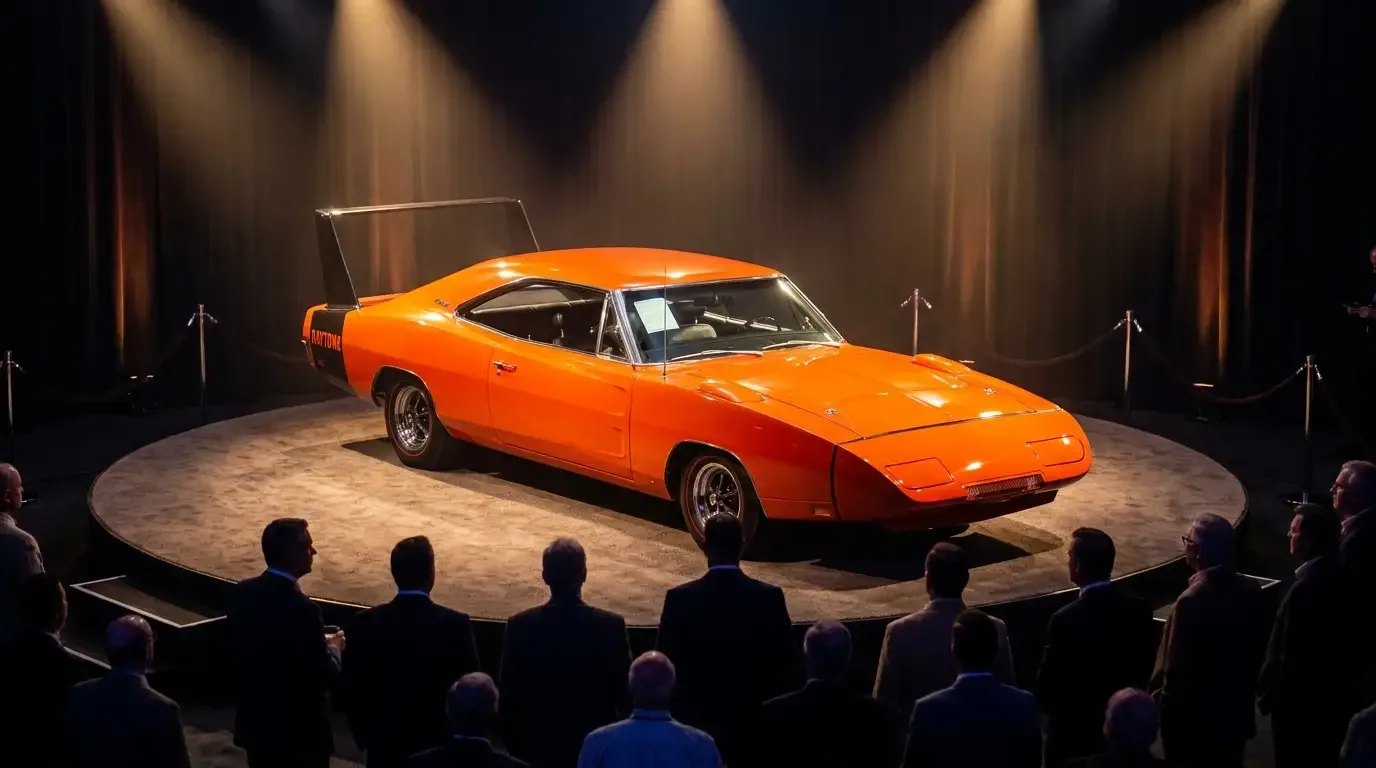
The reversal happened gradually through the 1990s and 2000s as muscle car collecting matured into a serious market with real scholarship behind it. Auction houses started separating winged cars into their own category. A documented, Hemi-powered Daytona now routinely brings seven figures at major sales, a number that would have covered an entire dealership's inventory when the car was new. The shift says less about the car changing and more about the audience changing, buyers who understand the racing context now outnumber the ones who just want a fast Charger.
"The guy I talked to at Carlisle had owned his car since 1974. Drove it there every single year, even the time the water pump let go outside Harrisburg. He told me people used to ask him why he didn't paint over the wing to make it look normal. Nobody asks him that anymore."
Patrick Walsh
Screens, songs, and the Charger's second career
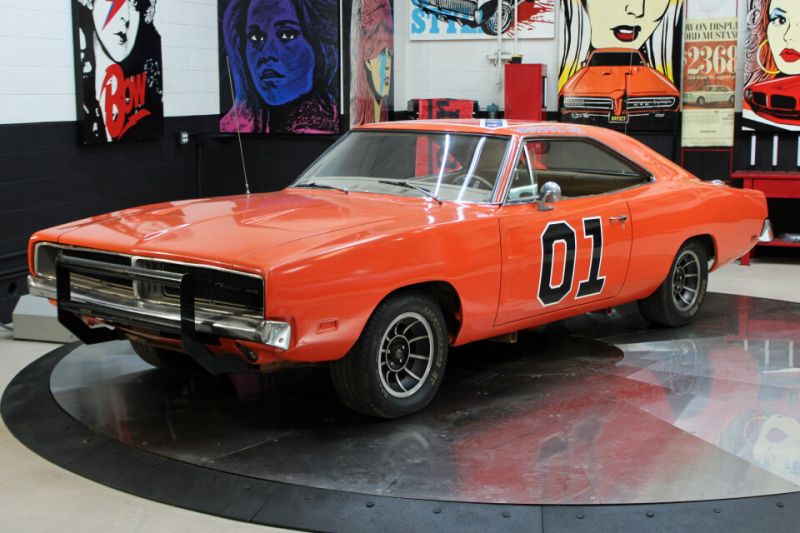
The standard 1968 to 1970 Charger did the heavy lifting in American pop culture, the Bullitt car, the General Lee, the countless background cameos in film and television that cemented the shape in the public imagination. The Daytona occupied a narrower lane, but it earned its own place through model kits, magazine covers, and a steady stream of appearances in racing documentaries that treated the aero wars as a genuine chapter of motorsport history rather than a footnote. For a broader look at how the Charger nameplate moved through film, television, and toy shelves, there's a companion piece covering the Charger in pop culture era that traces that thread in full.
What's notable is how the Daytona's cultural weight grew almost entirely through word of mouth among enthusiasts rather than through a single famous screen appearance. There was no Daytona equivalent of a hit television show carrying the car into millions of living rooms every week. Instead, its reputation was built car show by car show, magazine article by magazine article, until the wing itself became shorthand for an entire era of unrestrained factory experimentation.
Why the legacy still holds in 2026
Collectors and casual fans alike still gravitate toward the Daytona because it represents something increasingly rare in classic car culture: a factory product built without much concern for whether ordinary buyers would like it. Dodge wasn't chasing showroom appeal with the nose cone and wing, it was chasing a rulebook and a stopwatch, and that single-mindedness reads as authentic in a way that's hard to manufacture after the fact.
| Milestone | Year | Significance |
|---|---|---|
| Daytona introduced | 1969 | Aero package built for NASCAR homologation |
| First 200 mph qualifying lap by a stock-bodied car | 1970 | Buddy Baker at Talladega in a Hemi Charger Daytona |
| NASCAR rules effectively ban winged cars | 1971 | Engine displacement capped for low-volume aero cars |
| Values separate from standard Charger R/T | 1990s onward | Winged cars recognized as a distinct collector category |
If you want the mechanical and regulatory detail behind how the Daytona differed from the car it was based on, the piece on charger 500 vs daytona walks through exactly what Dodge changed between the two aero cars and why the second attempt succeeded where the first fell short on the banking. That comparison matters here because the Daytona's legacy was never really about one car, it was about a company willing to try, fail, revise, and try again in full public view, on a track where everyone could see the results.
Fifty-seven years on, the man from Talladega still tells people about the sound before the shape. That's the kind of legacy a spec sheet alone never earns.
Sources and notes
- Dodge Charger Daytona - Wikipedia - confirmed 503 Daytonas built for 1969, of which only 70 carried the 426 Hemi.
- Hagerty Media - confirmed the first 200 mph closed-course car was a Charger Daytona, not a Superbird.
- This Day In Automotive History - confirmed Buddy Baker's 200.447 mph lap at Talladega on March 24, 1970 in a Hemi Charger Daytona.
- Barn Finds - confirmed the Daytona's rarity relative to the 392-unit Charger 500 and 1,920 Superbirds.
- autoevolution - confirmed the 1-of-503 production figure and collector values for numbers-matching examples.
Related Reading
Have a
Dodge Charger
for Sale?
Reach thousands of serious classic car collectors across the US.
Sell It Here →
Selling a classic? Here's how: sell my classic car
Are You a Classic Car Dealer?
List your full inventory and connect with targeted classic car buyers.
Join as a Dealer →
#muscle car culture
#charger daytona
#dodge charger history
#nascar homologation
#winged cars
#aero warriors
#classic mopar
#1969 daytona

About the author
Patrick Walsh
Automotive journalist covering classic car shows, events, and the enthusiast community across North America.
Related Listings - Dodge Charger

Comments
Be the first to comment on this article.