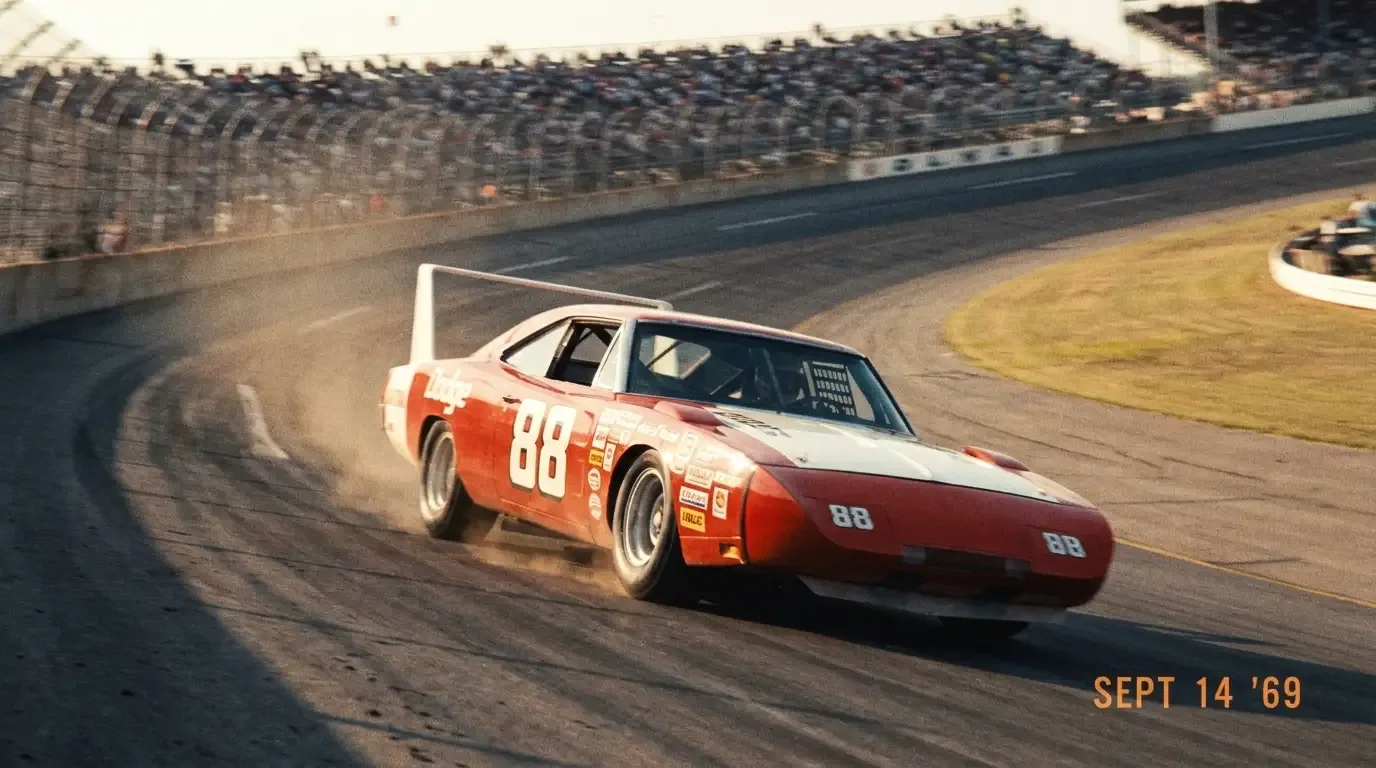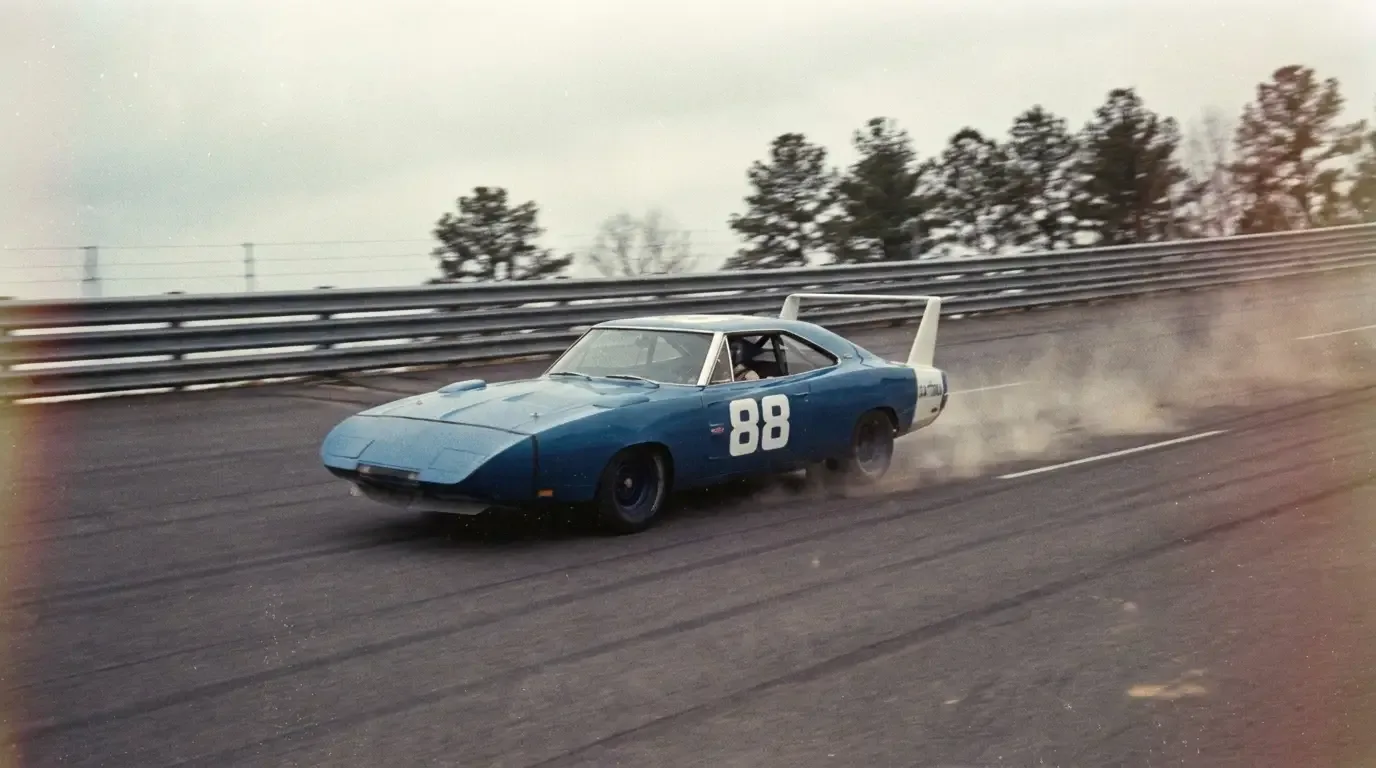
Buddy Baker did not know he was about to make history when he strapped into a Charger Daytona at Talladega in March of 1970. He knew Chrysler wanted to see what the car could do on a track built specifically to punish anything that was not aerodynamically honest. What happened that day turned into the number every account of the Daytona leads with, and for good reason. Nobody had done it before in a stock bodied car.
The track that made the number possible
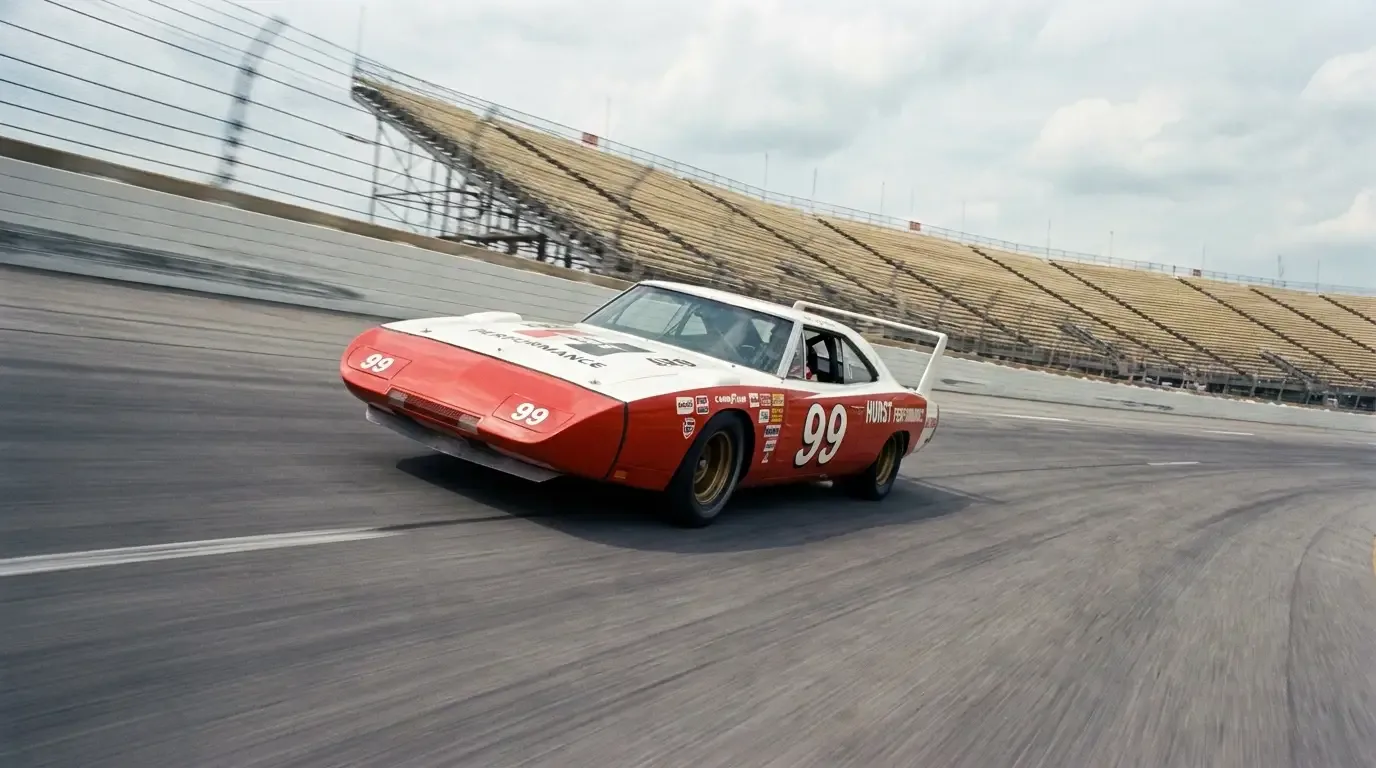
Talladega Superspeedway opened in 1969 as the fastest track NASCAR had ever built, its banking steep enough and its straights long enough to expose every weakness in a car's shape at speeds nobody had sustained on an oval before. It was not a coincidence that the Daytona's most famous test happened there rather than at the shorter Daytona International Speedway. Talladega's geometry rewarded exactly the kind of aerodynamic work Chrysler had put into the nose cone and wing, and punished anything less. A car with even modest drag issues would show it immediately at those speeds, no hiding behind a good engine.
Baker's closed course run at Talladega on March 24, 1970 is generally cited as the moment a stock bodied car broke 200 mph, with the figure most often reported as 200.447 mph. The run was not a race, it was a closed test session, Chrysler and Goodyear working together to validate both the car's aerodynamics and tire technology at speeds the sport had not previously reached in this kind of car. That distinction matters. It was not won on a Sunday against a field of competitors, it was engineered and confirmed under controlled conditions, which is exactly the kind of result a manufacturer wants when trying to prove a specific point about what its car can do.
"The guy I talked to at Carlisle had owned his car since 1974. Drove it there every single year, even the time the water pump let go outside Harrisburg."
— Patrick Walsh
What actually made 200 mph possible
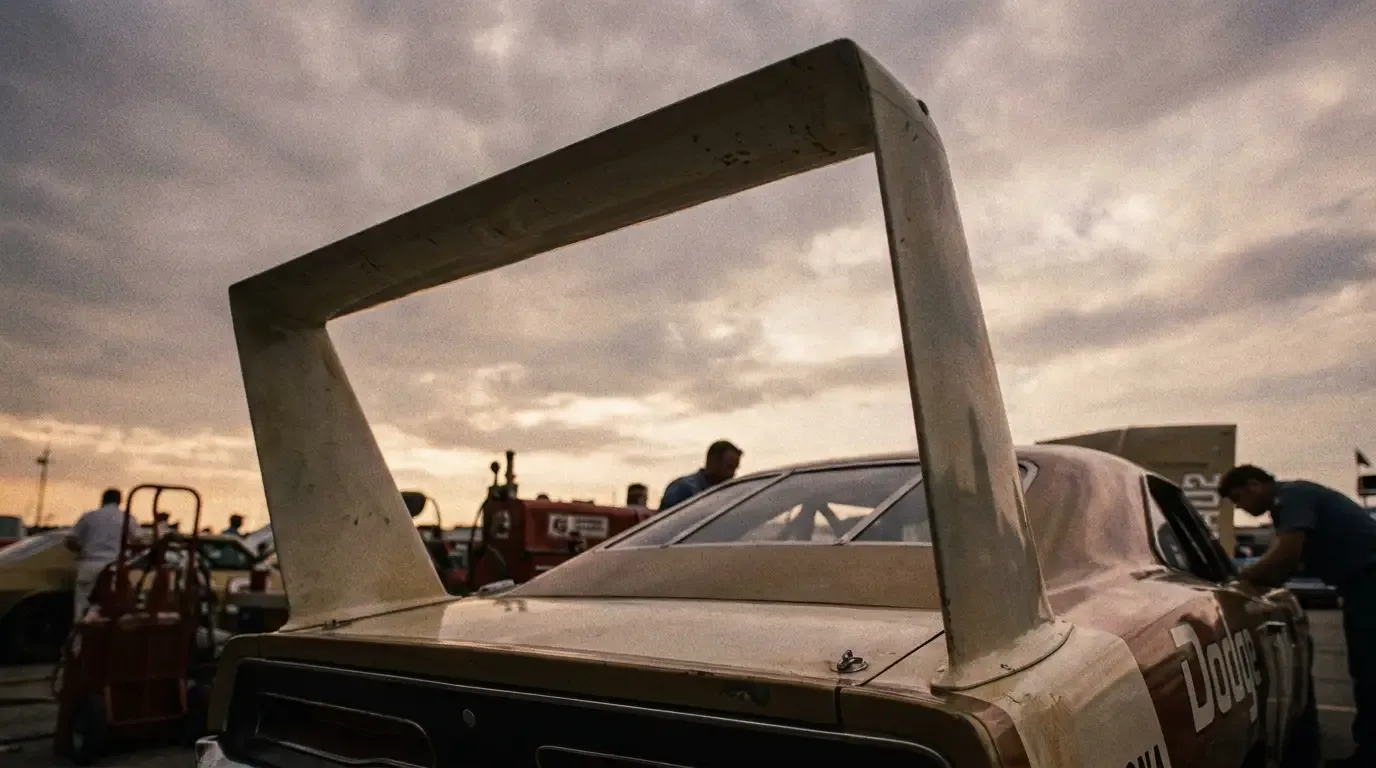
Every piece of the aero package did its part. The nose cone reduced front-end drag and lift, the wing kept the rear planted in clean air instead of turbulence, and the flush headlights and smooth bodywork removed drag sources a standard Charger simply carried around unnecessarily. None of it was a single breakthrough moment, it was the accumulation of a season and a half of wind tunnel work, starting with the Charger 500's flush grille fix and ending with the Daytona's full nose-to-tail package. The 200 mph figure is best understood as the payoff of that whole process rather than a standalone achievement, see the details for how each piece contributed.
The engine underneath, a 426 Hemi in most of the serious test and race cars, was not fundamentally different from what Dodge sold in a standard R/T. That is worth repeating because it is the part people get backwards. The speed did not come from Chrysler building a secret engine nobody else had access to. It came from removing enough drag that the same horsepower could be carried to a higher top speed than any other stock bodied car on the grid.
How the record shaped what came next
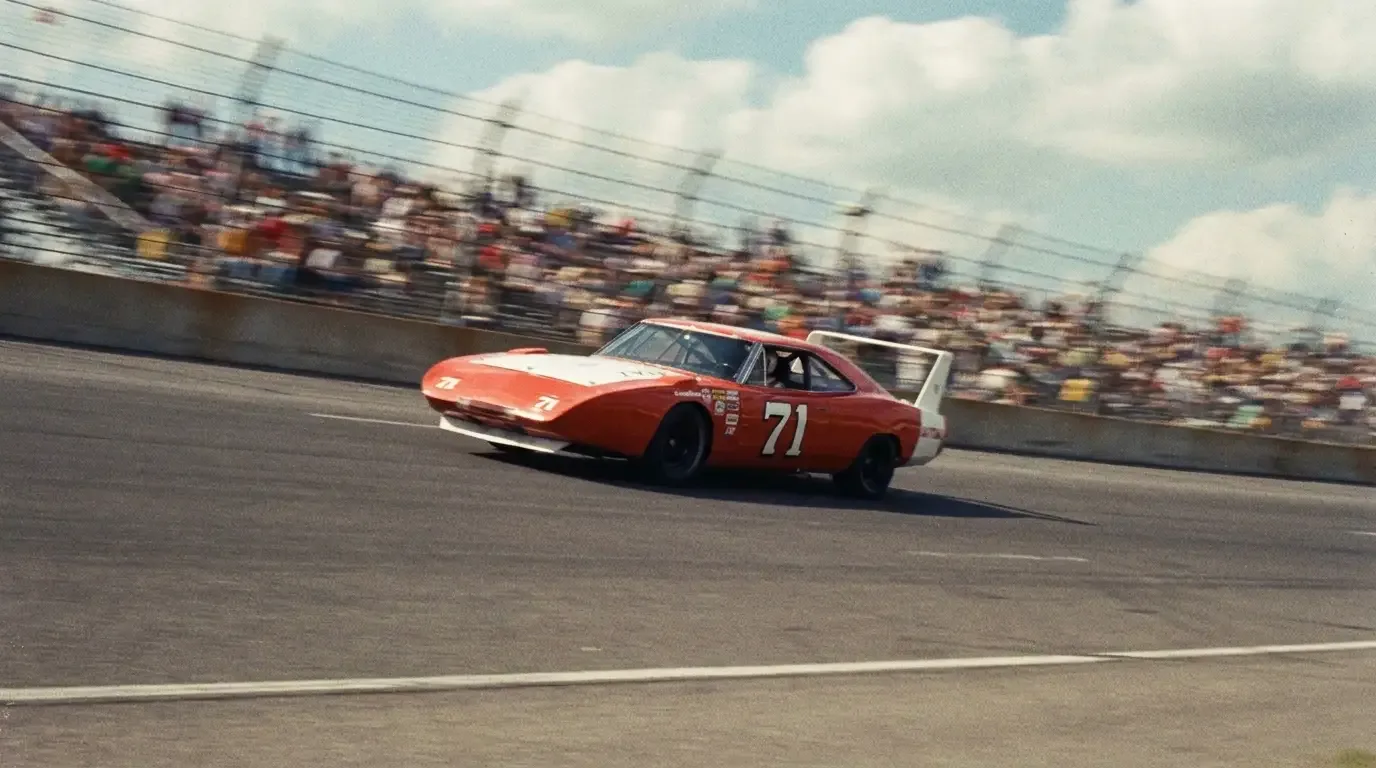
Once a manufacturer proves its car can do something nobody else's can, competitors respond, and NASCAR's rule makers respond too. The 200 mph figure became a marker other teams and manufacturers had to chase, and it accelerated the arms race between Chrysler's winged cars and Ford's aero Torinos and Cyclones that had already been building through 1969. It also gave NASCAR officials a concrete number to point to when arguing that speeds on the superspeedways were climbing faster than the sport's safety infrastructure, particularly tire technology, could comfortably support.
That tension, a manufacturer proving what its engineering could do versus a sanctioning body worried about where the speeds were heading, did not resolve quietly. It played out over the following two seasons in a series of rule changes aimed directly at cars like the Daytona, and the drivers who set these records at Talladega and Daytona became part of the sport's history precisely because the numbers they posted forced everyone else to react. Bobby Isaac and Buddy Baker both put up marks in this stretch that are still cited today, and the fuller rundown of those runs lives in the Charger feature on Classic Cars Arena.
| Detail | Figure |
|---|---|
| Driver | Buddy Baker |
| Track | Talladega Superspeedway |
| Date | March 24, 1970 |
| Reported speed | 200.447 mph |
| Engine | 426 Hemi |
| Session type | Closed course test, not race conditions |
Why this run still matters to buyers and historians today
Cars connected to this era of testing and racing carry a different weight in the collector market than a standard street Daytona, even though most surviving Daytonas were never within a hundred miles of an actual test session. The record established the car's reputation, and that reputation is a large part of why the Daytona commands the prices it does today, well above a comparable R/T fastback from the same years. Anyone digging into the full arc of the classic Charger, from its 1966 debut through the winged cars and beyond, should look at the story of the classic Charger to see how this single test session fits into a much longer run of a car that never stopped changing.
What it was like to be there
Accounts from people who worked the Talladega test sessions describe a garage area that was quieter than a race day but somehow more tense. Engineers clustered around timing equipment instead of pit boards, and the car came around the banking at a speed that reportedly made even veteran crew members go silent the first time they saw the numbers on the stopwatch. There was no crowd cheering the way there would have been on a Sunday. Just a small group of people who understood exactly what they were watching and knew it would change how the next two seasons of racing got argued about.
Baker himself downplayed the drama of it in later interviews, treating the run as a job rather than a personal milestone, which fits the era. Drivers of that generation were paid to get in the car and do what the team needed, and the mythology around a run like this tends to get built up afterward by writers and fans more than by the men who were actually behind the wheel that day.
Sources and notes
- Wikipedia - Talladega Superspeedway - confirmed the track opened September 1969, the 33-degree banking, and Baker's 200.449 mph closed-course run in March 1970.
- Wikipedia - Buddy Baker - confirmed the March 24, 1970 first-over-200 mph run in the Chrysler Engineering No. 88 Dodge Daytona.
- Wikipedia - Dodge Charger Daytona - confirmed the 426 Hemi race power and the aero package behind the record.
- Wikipedia - Bobby Isaac - confirmed the parallel K&K Insurance Daytona record program at Talladega.
- Wikipedia - Dodge Charger (B-body) - confirmed the nose-and-wing aerodynamics that carried the same horsepower to a higher top speed.