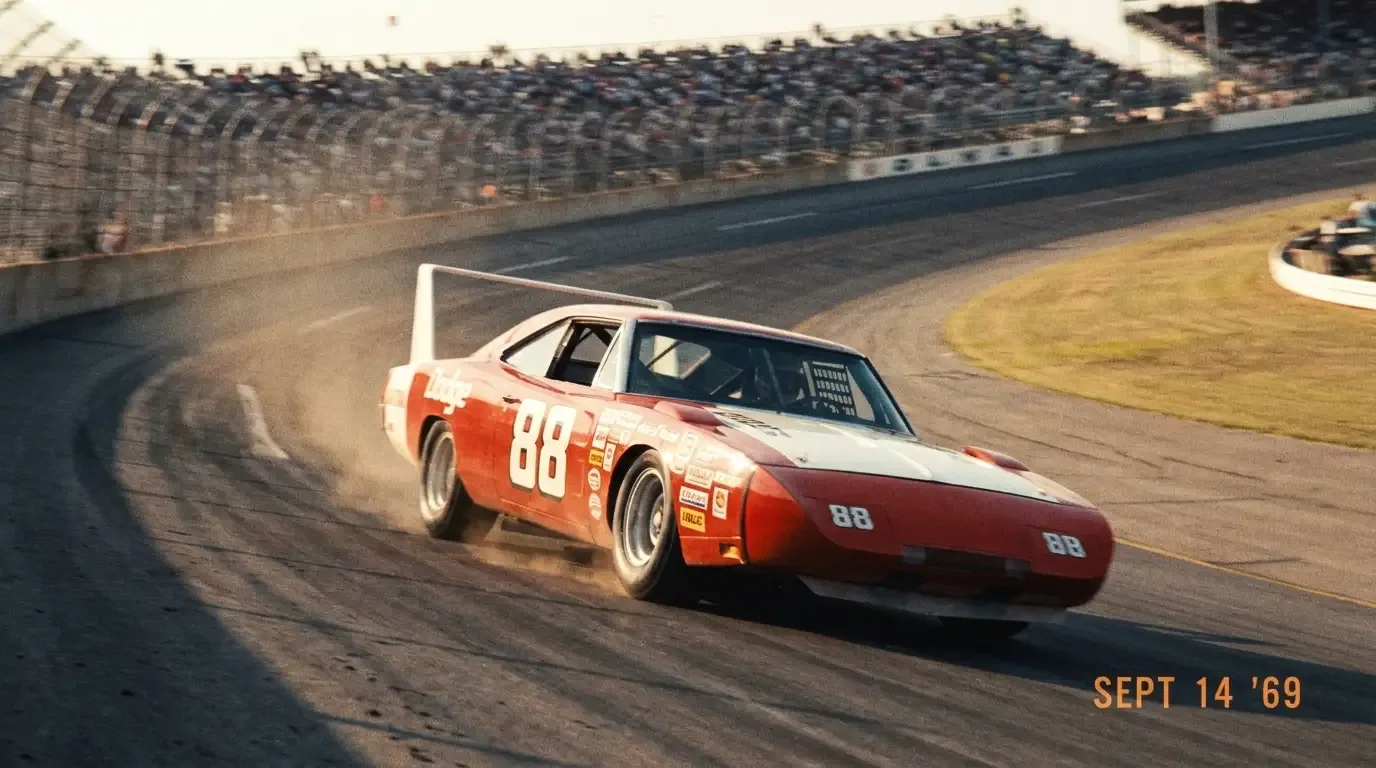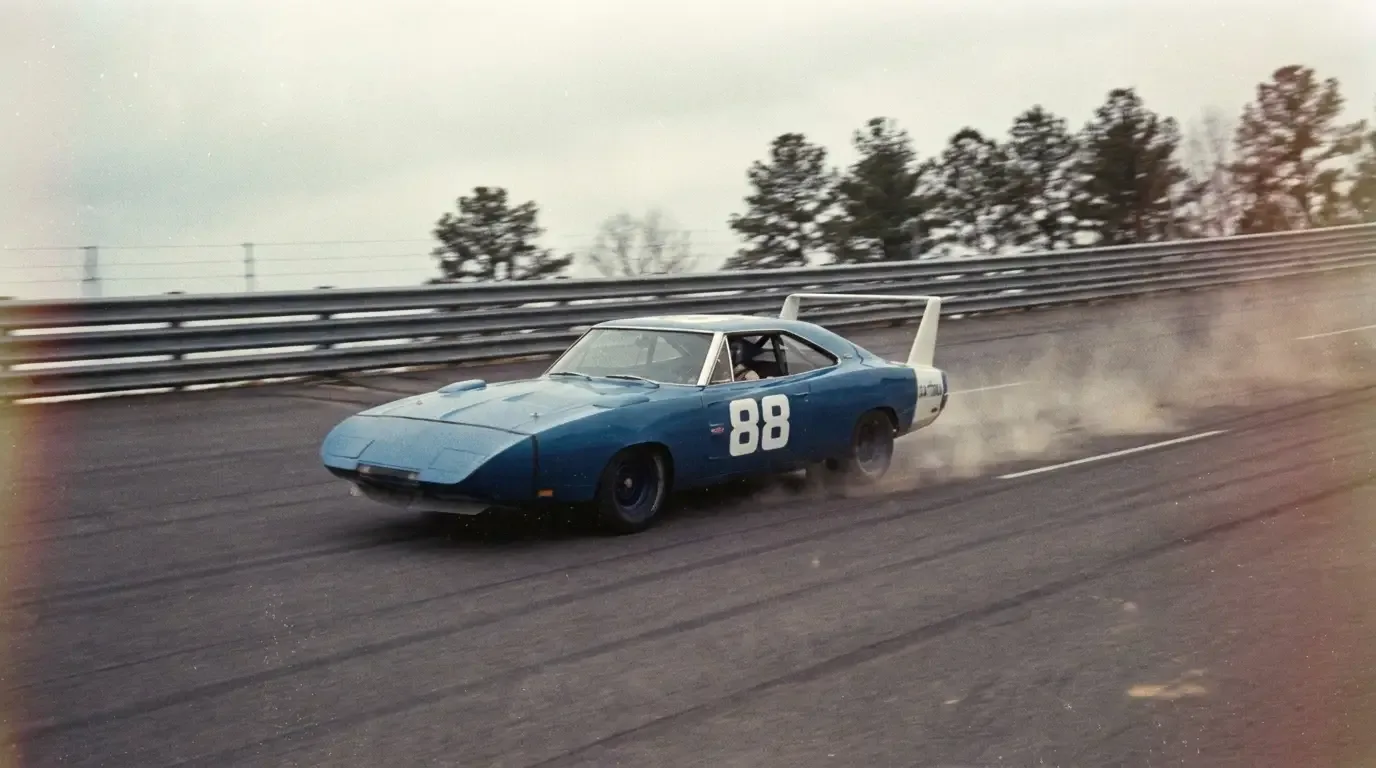
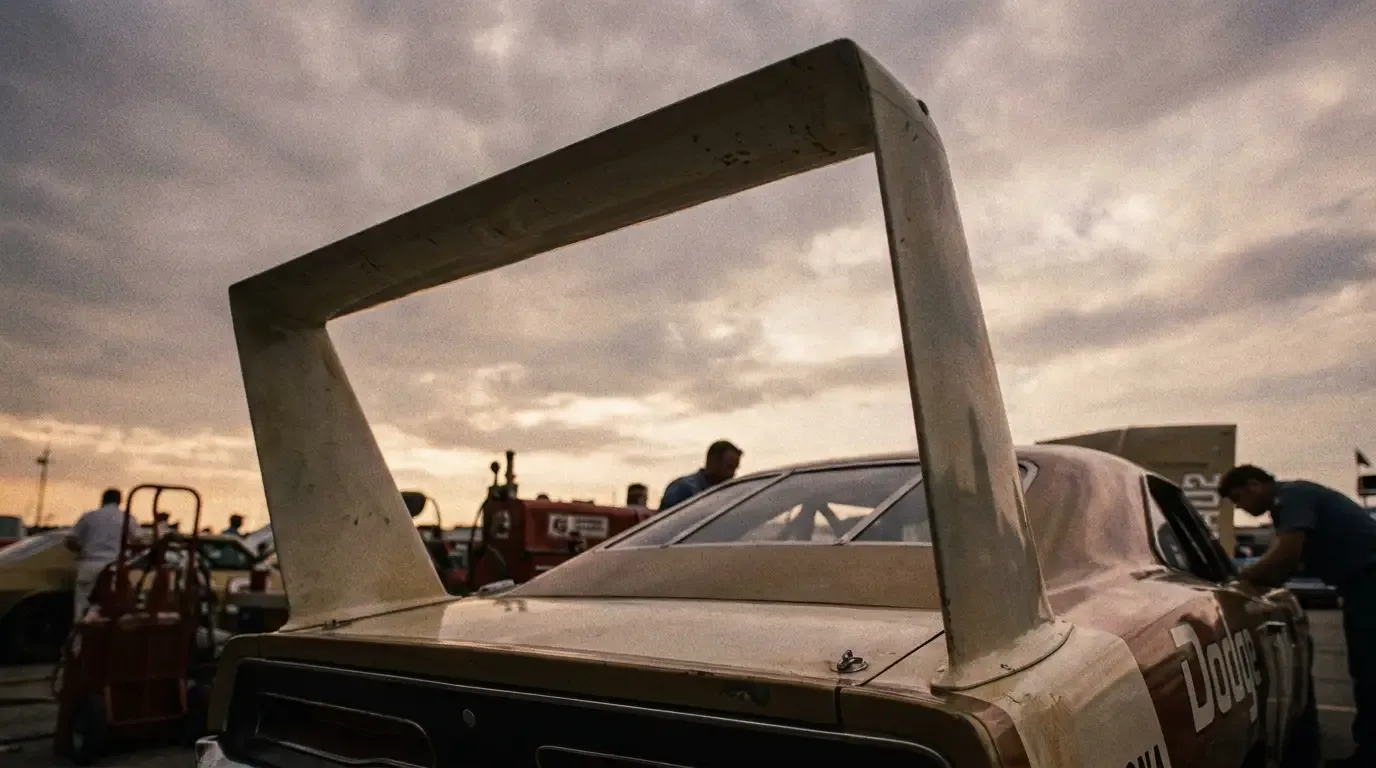
Twenty three inches. That is roughly how tall the struts hold the Charger Daytona's rear wing above the deck lid, and it is the number people get wrong the most. They assume it is tall because it looks aggressive. It is tall because a lower wing would have been useless, sitting inside dead air instead of doing any actual work. Here is the number that mattered and why it looks the way it does.
The problem with a low-mounted spoiler
A standard trunk-mounted spoiler sits close to the bodywork, which is fine at street speeds but a real limitation at 190 mph plus. Air coming off a fastback roofline does not stay smooth as it flows over the rear glass and down toward the trunk, it separates and tumbles, creating a turbulent, low pressure pocket directly behind the car. A wing mounted low, right where a conventional spoiler would sit, is mounted inside that turbulence. It cannot generate consistent downforce because the air hitting it is not moving in a predictable direction. Chrysler's engineers understood this from wind tunnel testing before they ever bolted a wing to a Daytona prototype.
The fix was to get the wing's surfaces up out of that turbulent zone entirely. Mounting it on tall struts put the wing into cleaner airflow above the wake coming off the roof and rear window, where it could actually do the job a wing is supposed to do, push the rear of the car down onto the track surface at speed. It looks dramatic. It is also just correct engineering for the specific airflow problem the fastback body created.
"The blower looks great on the invoice. On the dyno it made twelve more horsepower than the combo that cost a third as much. That's the number that matters."
— Dan Reeves
Why the height was tuned, not maximized
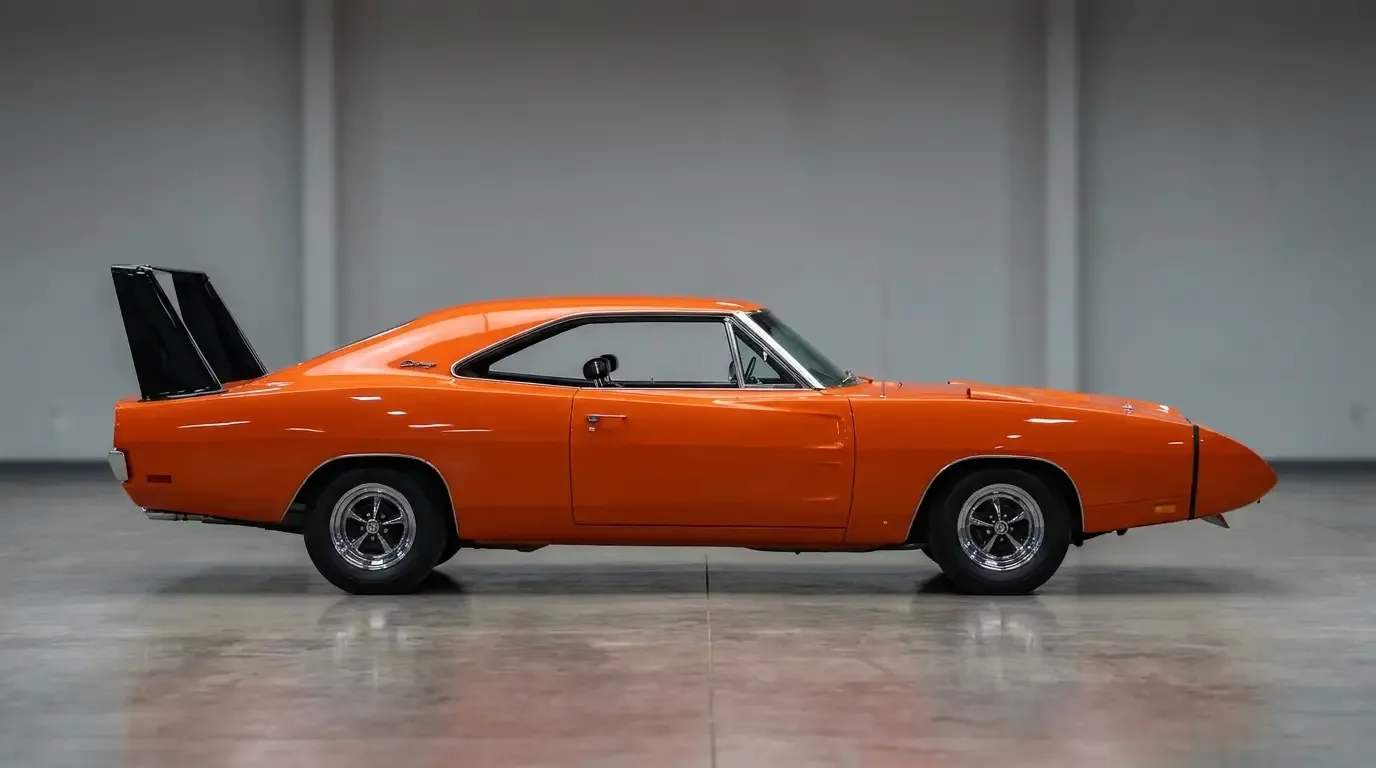
More height is not automatically better. Chrysler engineers tested multiple wing heights and angle settings in the tunnel, chasing the point where downforce gained outweighed the additional drag a taller structure created. Twenty three inches is the height that came out of that process for the production street car, and it represents a specific tradeoff rather than the tallest wing they could physically bolt on. Race versions running at Talladega and Daytona used adjustable angle settings that crews could tune for a given track's characteristics, more angle for more downforce on tighter corners, less for lower drag on the long straights.
What the wing actually cost the car
Nothing is free in aerodynamics. The wing added drag along with the downforce it generated, and it added weight at the rear of the car, changing the Daytona's front to rear balance compared to a standard Charger. Engineers accepted that tradeoff because the alternative, no meaningful rear downforce at speeds well over 150 mph, made the car unpredictable on the banking. A car that generates lift at the rear at speed becomes genuinely dangerous, and the wing's job was as much about keeping the rear tires planted and the car controllable as it was about outright lap time.
Function first, but the look sold the car too
It would be dishonest to say the Daytona's wing was purely functional and nobody at Dodge cared how it looked. The visual drama of a street car wearing what was obviously a race part helped move units, and the wing became the single most recognizable feature of the whole aero car program, more identifiable at a glance than the nose cone even though the nose did comparable engineering work. That said, every dimension of the wing traces back to a wind tunnel session, not a stylist's sketch. The look and the function arrived at the same shape because on this car, for once, they were not in conflict.
| Spec | Detail |
|---|---|
| Wing height above deck lid | Approximately 23 inches |
| Mounting | Tall struts positioned to clear trunk opening |
| Purpose | Move wing surfaces out of turbulent wake air |
| Race use | Adjustable angle for track-specific tuning |
| Companion part | Extended nose cone at the front |
Nothing about the wing works without the nose doing its half of the job, and the two parts were engineered as a system rather than as separate additions. Anyone wanting the front-end half of that story should look at how the dodge charger daytona nose cone managed airflow before it ever reached the wing, and once you understand both halves, the number that really matters comes into focus, over 200 mph on the banking at Talladega. That result and the records that came with it are covered in the piece on the Charger Daytona 200 mph story.
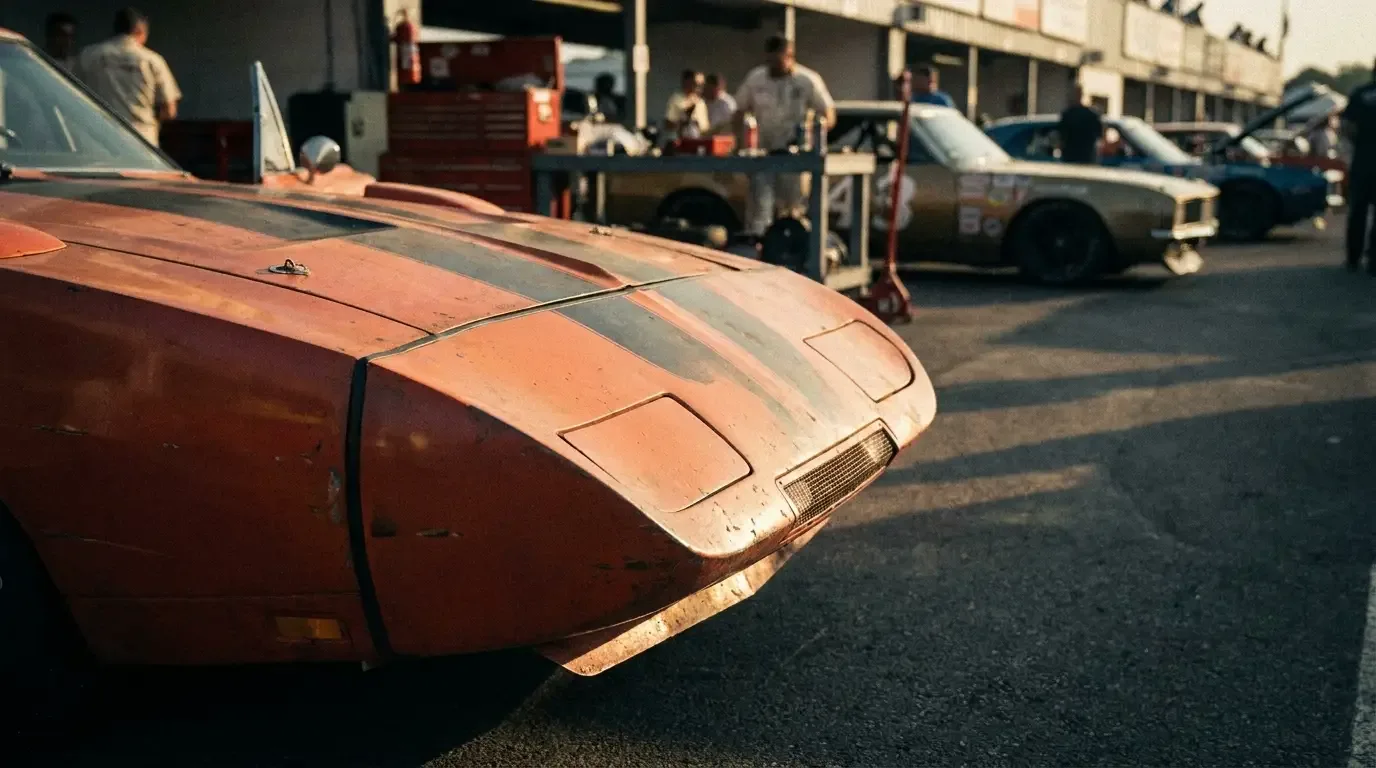
Buying a Daytona today, the wing is one of the first things to inspect closely. Strut mounting points take real stress at speed and on rough roads over the decades, and cracked or repaired mounting brackets are common on cars that saw hard use. A wing that sits slightly crooked or shows filler around the strut bases is worth a harder look before anyone signs a check, because that stress point tells you more about how a car was actually used than the paint ever will.
Reproduction wings versus original units
Because the wing is the single most photographed part of the car, it is also the part most commonly replaced with reproduction hardware, sometimes because the original was damaged, sometimes because a seller simply could not source the real thing. Reproduction wings vary widely in quality. Some match factory dimensions closely, others are visibly off in curvature or strut angle to a trained eye. A serious buyer should ask directly whether the wing and struts are original to the car, request any documentation of replacement, and compare strut mounting hardware against known factory photos rather than accepting a seller's word.
Weight is worth checking too. Original wing assemblies used specific gauge aluminum and steel combinations that reproduction parts do not always replicate exactly, and a wing that feels noticeably lighter or heavier than factory spec is a signal worth chasing down before it becomes a bigger problem during a sale.
Sources and notes
- Wikipedia - Dodge Charger Daytona - confirmed the 23-inch rear-wing height and its aerodynamic purpose.
- Wikipedia - Dodge Charger (B-body) - confirmed the nose-and-wing downforce split (roughly 1,200 lb front, 600 lb rear) and the Creative Industries assembly.
- Wikipedia - Talladega Superspeedway - confirmed the high-speed banking where rear downforce was critical to stability.
- Wikipedia - Buddy Baker - confirmed the over-200 mph run the full aero package, wing included, made possible.
- Wikipedia - Plymouth Superbird - context on the sibling car whose wing geometry was tuned differently for the Road Runner body.