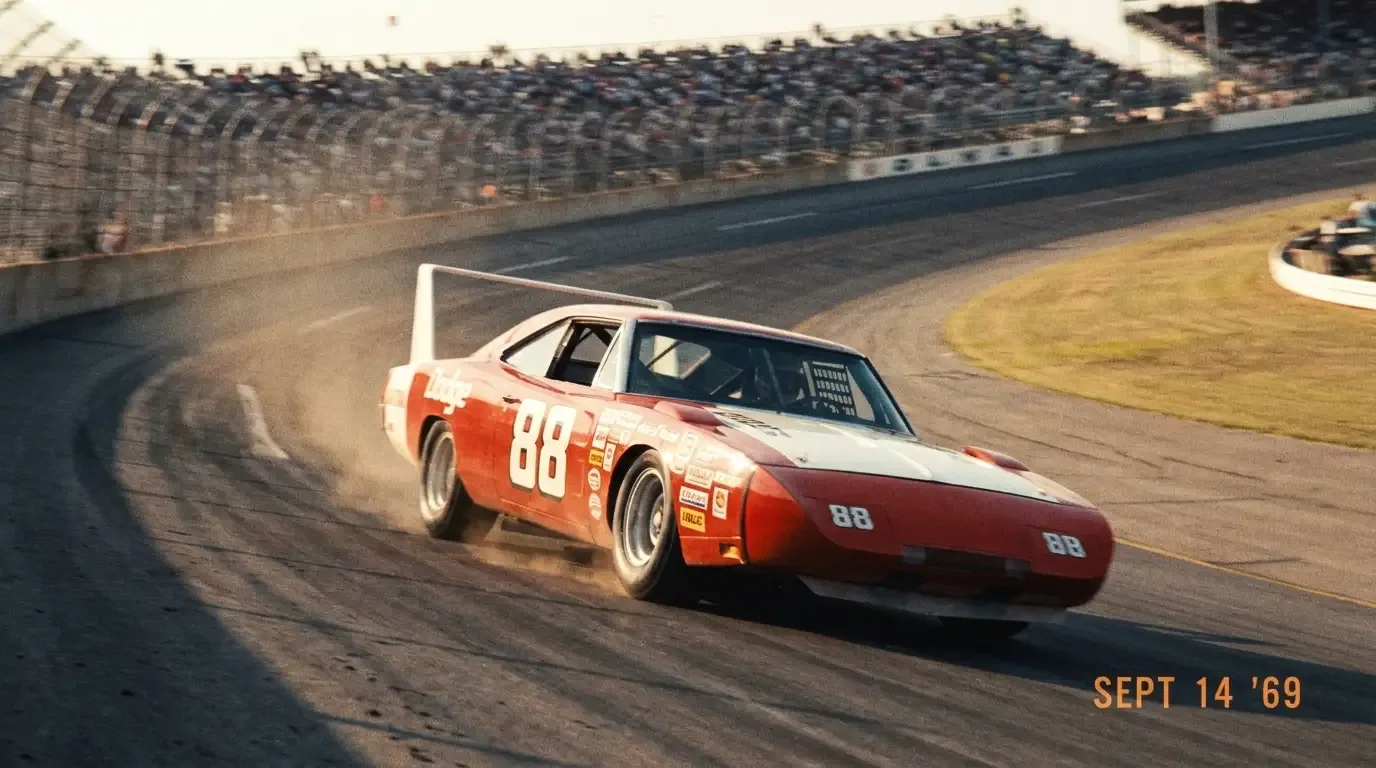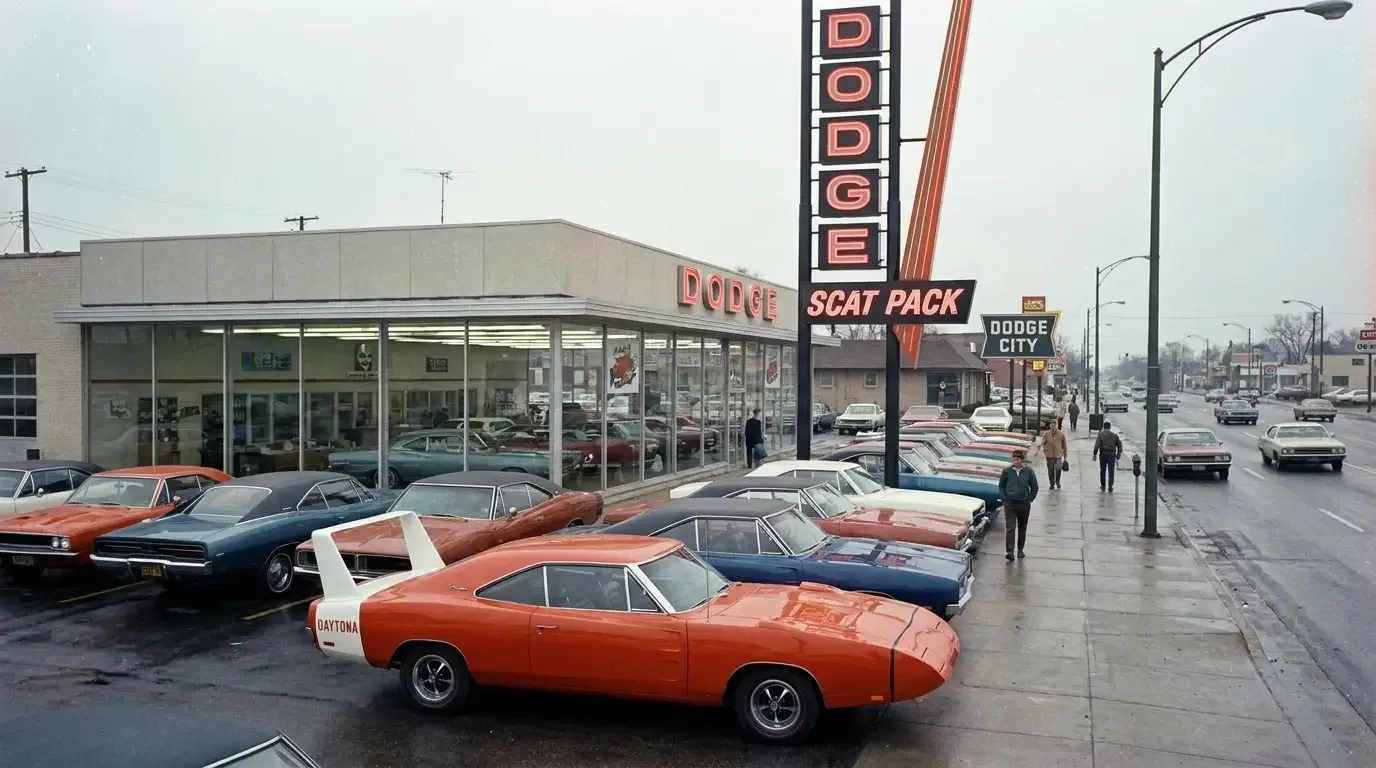
The build record matters. Not because it tells you everything, but because it's the factory's own account of what left the line. For the 1969 dodge charger daytona, that record points to a detail most owners never think to ask about: Dodge did not build the nose cone and wing assembly entirely in-house. A significant part of that work went to an outside contractor, a detail that gets lost in most retellings that focus purely on the finished car.
Chrysler's engineering group set the specification, not the whole build
Chrysler's own engineers, working closely with the racing program, determined the aerodynamic requirements the nose cone and wing needed to satisfy. Wind tunnel data drove the wing's height above the trunk lid and the nose cone's exact profile. That much is well documented in Chrysler's internal engineering records from the period.
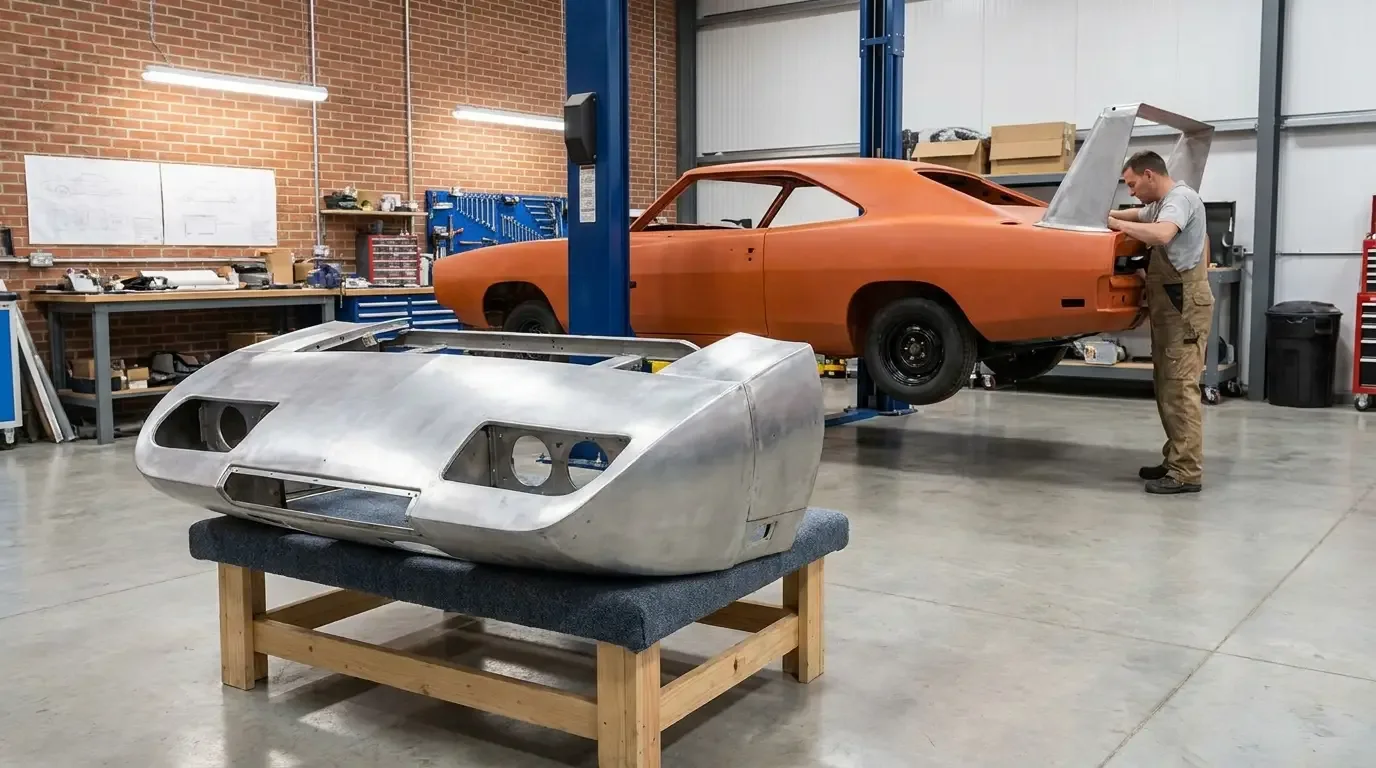
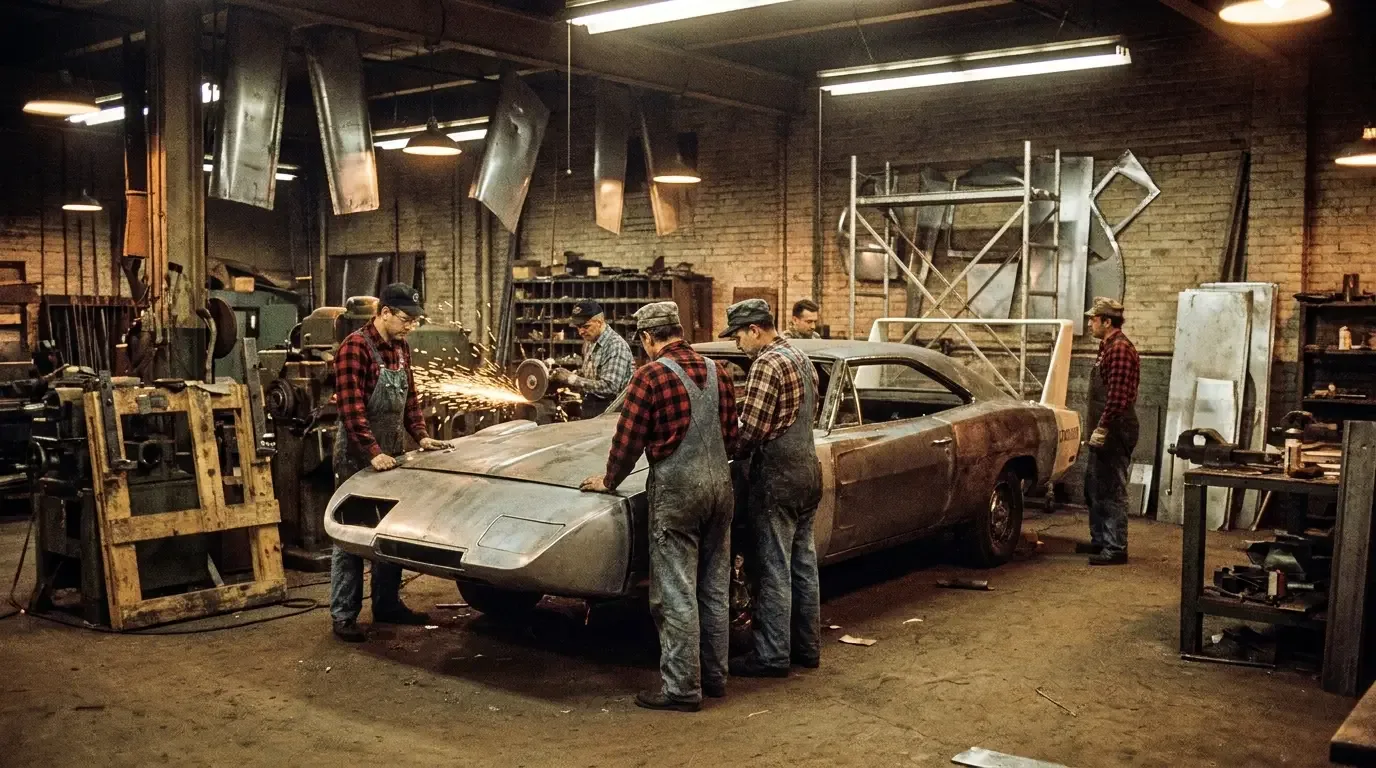
What's less commonly discussed is that the actual fabrication and installation of these components was handled by an outside contractor rather than on Chrysler's standard assembly lines. Creative Industries of Detroit, a specialty vehicle builder that did modification and low-volume production work for multiple manufacturers during this era, is documented as the shop that carried out the Daytona conversion, taking Charger 500-based bodies and installing the extended nose cone, the wing and its supports to create the configuration required for homologation.
Why a manufacturer would outsource a homologation special at all
Standard assembly lines were built around high-volume, standardized processes. A car requiring an 18-inch nose extension, a completely different front fascia, and a rear wing bolted through the trunk structure did not fit that model efficiently. Rather than retool a mainstream assembly line for a run of roughly 500 units, it made more sense for Chrysler to send partially built Charger bodies to a specialty contractor equipped to handle low-volume, labor-intensive conversion work.
This was not an unusual arrangement for the era. Specialty shops handled conversion work, low-volume trim packages, and homologation specials for multiple manufacturers throughout the 1960s, since building dedicated tooling for a run this small rarely made financial sense compared to contracting the work out.
| Stage | Responsible party | Work performed |
|---|---|---|
| Aerodynamic design | Chrysler engineering | Wind tunnel testing, wing height, nose profile specification |
| Base body production | Chrysler assembly plant | Standard Charger unibody construction |
| Nose cone / wing fabrication and install | Outside contractor (Creative Industries of Detroit) | Conversion to Daytona configuration |
| Final assembly and finishing | Chrysler / contractor, arrangement varies by source | Paint, trim, final quality checks |
Other manufacturers leaned on the same kind of shop
Chrysler was not unusual in reaching outside its own walls for this kind of work. Ford and General Motors both used specialty contractors for low-volume conversions, prototype work, and homologation specials throughout the 1960s, since the economics of building dedicated in-house tooling for a run of a few hundred cars rarely made sense next to paying an established shop to handle it. What made the Daytona program notable was the scale of modification required, an 18-inch nose extension and a structural wing mount are a bigger ask than a trim package or a stripe kit, and that scope is part of why Creative Industries' involvement gets cited as significant rather than routine.
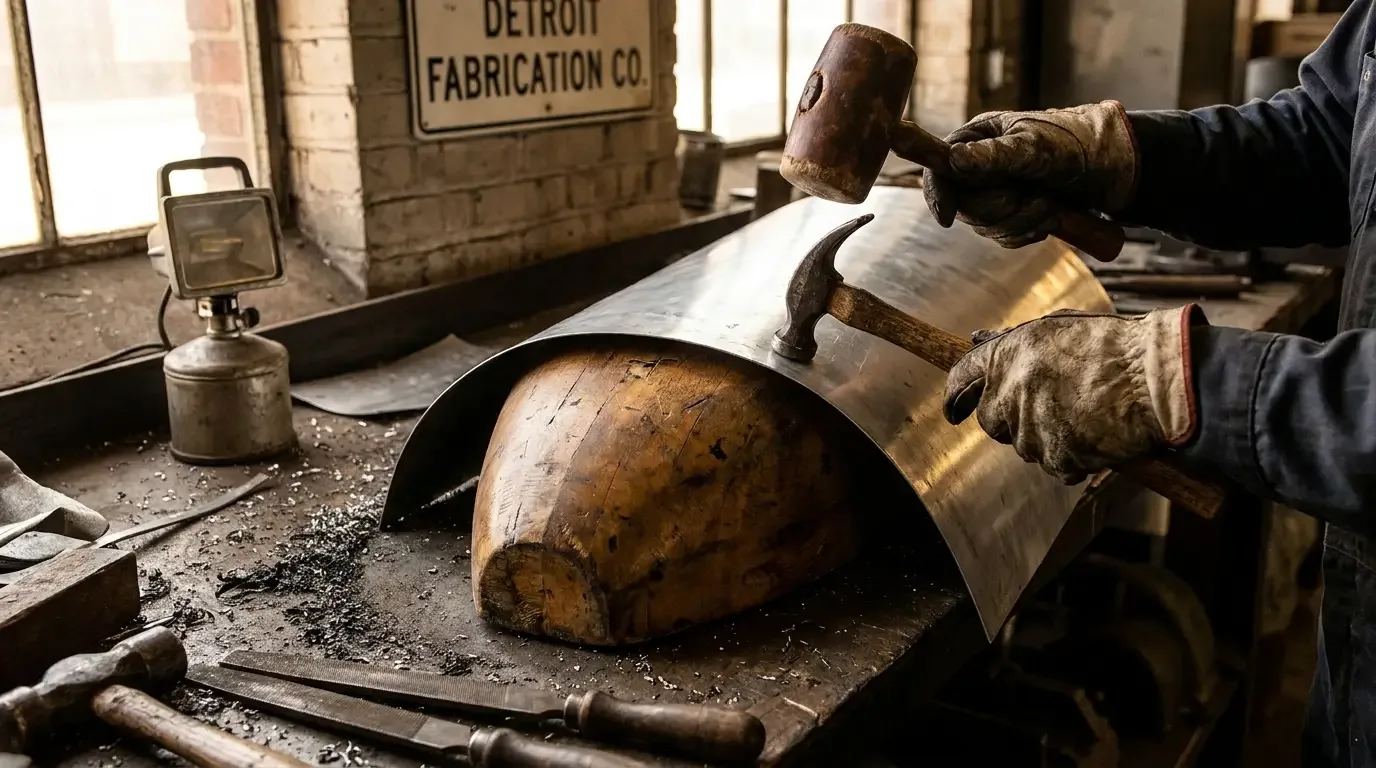
This arrangement also explains some of the small inconsistencies researchers find between individual cars. The Daytona's nose cone was formed from sheet steel and hand-fitted to each body, and a contractor doing that kind of low-volume work is never going to produce the exact same tolerances a mainstream stamped-steel assembly line delivers on a high-volume model. Those minor variations between individual Daytonas are not defects in the traditional sense. They are the fingerprint of a build process that leaned more on skilled labor than on repeatable tooling.
Documentation on this part of the story is thinner than buyers expect
Chrysler's own paperwork from the period was built for internal production tracking, not for future historians, and detailed records of exactly which shop performed which specific task on which VIN range have not survived in complete form. Researchers piecing this together rely on a combination of period trade publications, surviving Chrysler engineering documents, and interviews conducted with people who worked in Detroit's specialty vehicle industry decades after the fact.
That's a weaker evidentiary base than most collectors assume exists for a car this well documented in other respects. Production numbers, engine codes, and VIN decoding are comparatively well established. The exact division of labor between Chrysler and its contractors is a case where "I don't know for certain" is often the honest answer, even from people who've studied this car for decades.
"I don't know is a legitimate answer in this business, and it's the right one for parts of the Daytona's build history. The engineering specification is documented. The exact contractor arrangement on every unit is not, and anyone who tells you otherwise is guessing with confidence they haven't earned."
— Tom Ramirez
Why this matters for how the car gets appraised and preserved
Understanding that the Daytona's most distinctive components came through a specialty contractor, not Chrysler's standard production process, changes how restorers think about sourcing correct parts and verifying originality. Reproduction nose cones exist in wide variety today, and knowing that the original parts came from a specific low-volume supplier, rather than Chrysler's mainstream parts bin, helps explain why some restoration shops treat original nose cone and wing hardware as its own distinct authentication category, separate from the rest of the car's Chrysler-sourced components.
That distinction feeds directly into the restoration and preservation work covered in a companion piece on this site, since read more here gets into exactly how shops handle sourcing and authenticating these specialty components on cars being restored today. The people who actually bent the metal on these cars rarely got their names attached to the finished product, but the choices they made in that Detroit shop are still shaping how a Daytona gets valued and verified more than fifty years later.
Sources and notes
- Classic Industries - The Mopar Wing Cars - confirmed Charger 500 bodies were sent to Creative Industries for the nose cone, supports and wing.
- Old Cars Weekly - 1969 Daytona number one - confirmed all the conversion work was completed for Dodge by Creative Industries of Detroit.
- Dodge Charger Daytona - Wikipedia - confirmed the sheet-metal nose cone and the 503-car homologation run.
- RPM Productions - Daytona nose cone reproduction - confirmed original nose cones were formed from 18-gauge sheet steel, hand-fitted per car.
- Hagerty - Dodge Daytona vs. Plymouth Superbird - background on the specialty-build nature of the wing cars.