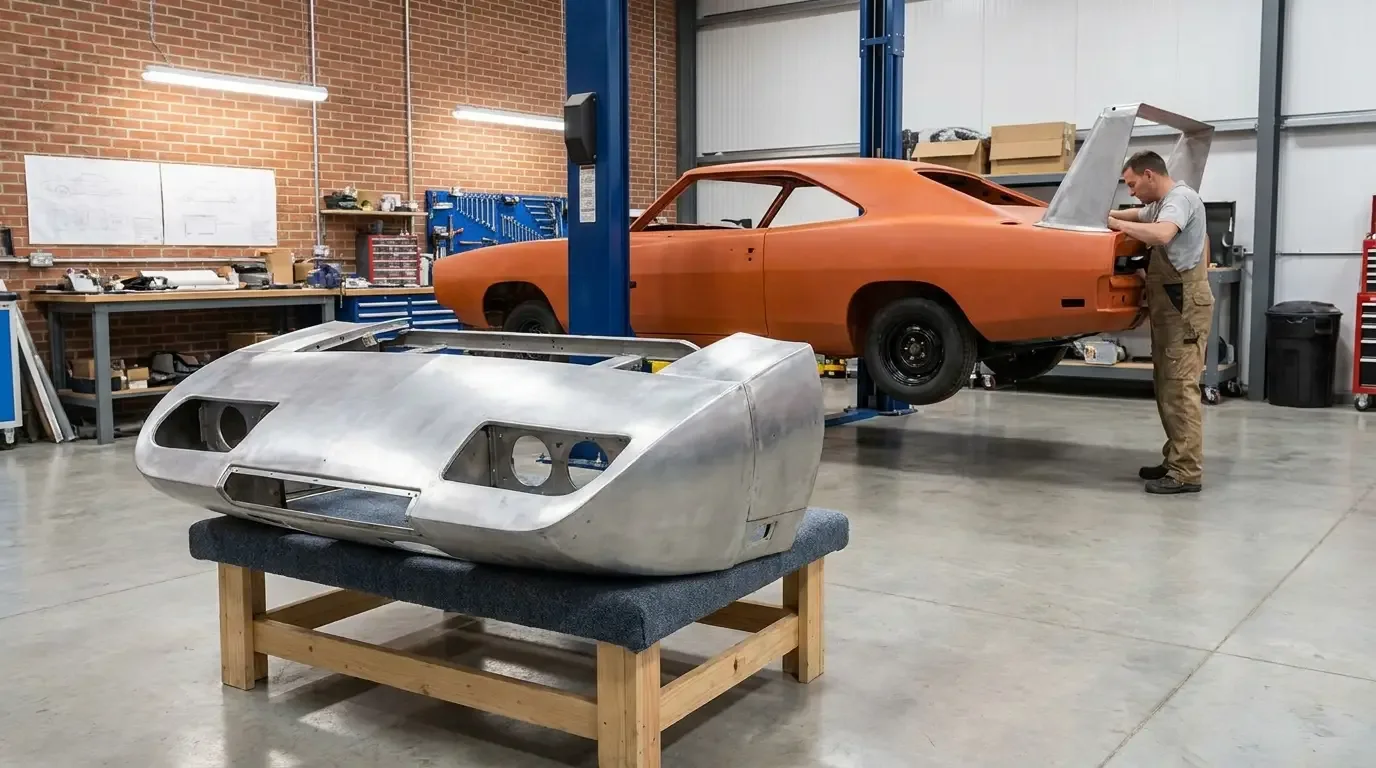
I've pulled apart enough of these to know the nose cone is where a restoration either earns its money or blows the budget. Everything else on a Daytona is, underneath the aero package, still a Charger, and a competent shop can handle a Charger. The nose cone, the wing mounts, and the trunk structure they bolt through are where things get specialized, and that's where I've watched good restorers and bad ones separate fast.
Nose cone condition is the first thing to actually check, not assume
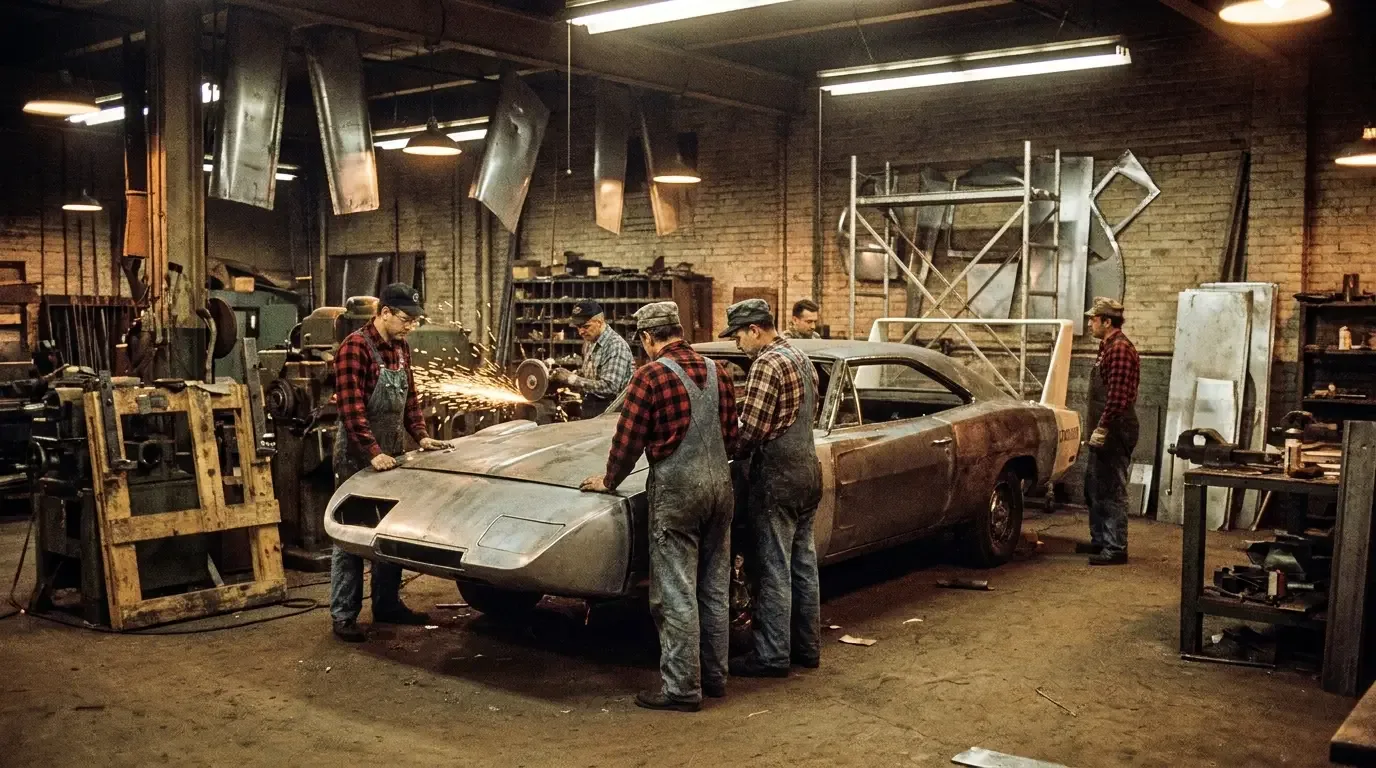
The nose cone on a genuine Charger Daytona era car is hand-formed sheet steel, not fiberglass, which surprises people who assume anything that exotic-looking must be plastic. That matters because the enemies are different: fifty-plus years of moisture means rust, and decades of handling and parking mean dents and old bodywork, none of which paint alone will hide. I look around the mounting points first, because that's where the cone takes the most stress and where rust and worked-loose hardware tend to show up together. A problem there isn't cosmetic. It's a structural conversation, not a paint conversation.
Previous repair work is the next thing I check for, and it's usually visible if you know where to look. Body filler used to hide a dent or a rusted-through section shows up under a flashlight at a low angle even through fresh paint, and a magnet that doesn't stick where steel should be is a dead giveaway. A repaired cone isn't automatically a dealbreaker, but it needs to be evaluated honestly, not painted over and sold as original condition.
The wing mounting hardware takes more abuse than people expect
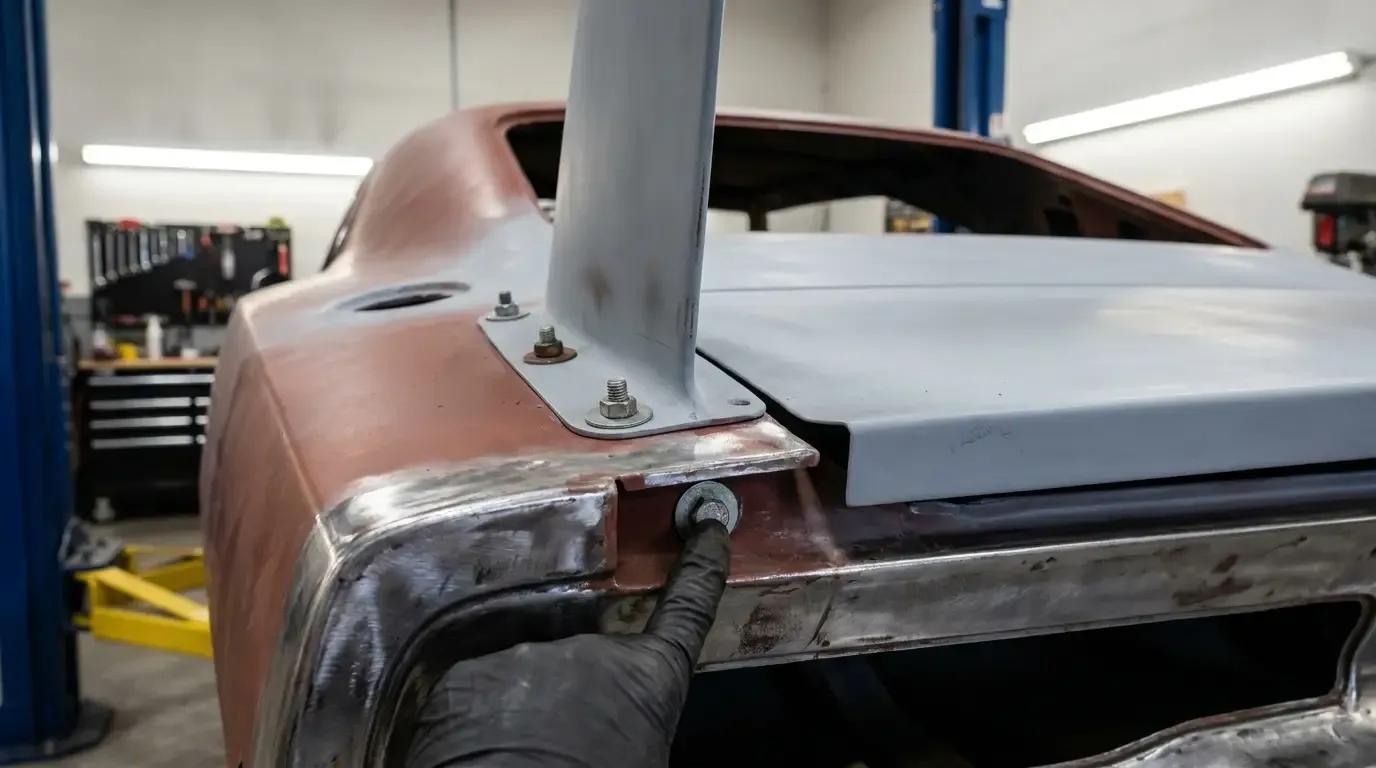
The rear wing bolts through the trunk lid and into the body structure at specific points, and those mounting points see real stress every time the car hits a bump or a pothole at speed, since the wing itself is generating aerodynamic load even at street speeds. I check for elongated bolt holes, cracked paint around the mounting brackets, and any sign that a previous owner reinforced the mounting points with aftermarket hardware that isn't correct for a restoration aiming at originality.
Rust is the other enemy here, and it's sneakier on a Daytona than on a standard Charger because water can collect in and around the wing mounting structure in ways a standard trunk lid never has to deal with. I've found rust starting from the inside out on more than one of these cars, invisible from a normal inspection until you get underneath with a light and a pick.
| Component | Common issue | Inspection method |
|---|---|---|
| Nose cone sheet steel | Rust, dents, prior filler repairs | Flashlight at low angle, magnet check for hidden filler |
| Wing mounting bolts | Elongated holes, incorrect aftermarket hardware | Physical inspection with wing removed if possible |
| Trunk structure under wing | Hidden rust from water intrusion | Underside inspection with light and pick |
| Nose cone mounting brackets | Cracked paint, loosened fasteners | Visual and physical check under the front clip |
🔧 Inspection Priorities
- Nose cone mounting points. Check for rust and prior filler repair before anything else. A rusted or badly repaired mounting area can run into thousands of dollars to correct properly with period-correct sheet-metal work.
- Wing bolt holes. Elongated or repaired bolt holes signal a wing that's taken real stress over the decades. Correcting this properly means addressing the underlying trunk structure, not just replacing hardware.
- Hidden rust under the wing mounts. This is the area I find surprises most often. Water collects here in ways owners don't expect, and rust repair in this specific area is more labor-intensive than a standard trunk floor patch.
- Reproduction part fitment. If a nose cone has already been replaced, verify it's a correctly fitting reproduction. Poor fitment at the fender seams is common and expensive to correct after the fact.
"The paint looks right at fifteen feet. Under the nose cone there's a repair that's been there since the Carter administration and nobody's touched it since. Here's what to actually look at before you write a check on one of these."
— Mike Sullivan
Parts availability has gotten better, but correctness still matters
Reproduction nose cones and wings are more available today than they were even fifteen years ago, which has made restoration more achievable for owners of damaged or incomplete cars. That said, fitment and material quality vary significantly between suppliers, and a restoration aiming for accuracy needs a shop that's worked with these specific reproduction parts before, not a general body shop learning on your car.
I'd rather see an owner spend more upfront on a supplier with a proven track record on Daytona-specific parts than save money on a generic reproduction that fights the rest of the car at every seam. The labor cost to correct a poorly fitting nose cone after the fact usually exceeds what the better part would have cost in the first place.
What this means for value when the work is done right
A well-preserved or correctly restored nose cone and wing assembly is one of the components buyers scrutinize hardest, precisely because it's the part most vulnerable to age, damage, and prior amateur repair. Getting this right, whether through careful preservation of original material or a properly executed reproduction, directly affects what a car brings when it eventually changes hands, a subject covered in detail in read more here, which walks through how condition and documentation translate into actual auction results.
For owners deciding whether to preserve the original sheet metal or replace it with a correct reproduction, my honest advice hasn't changed in twenty years of doing this work. Preserve what's original and structurally sound. Replace what's actually failed. Don't touch what doesn't need touching just because it's old, and if you're shopping instead of restoring, browse classic Chargers with this specific inspection list in hand before you make an offer.
Sources and notes
- RPM Productions - Daytona nose cone reproduction - confirmed the original nose cone was 18-gauge sheet steel and correct reproductions are hand-formed in steel.
- Dodge Charger Daytona - Wikipedia - confirmed the sheet-metal (not fiberglass) nose cone construction.
- Classic Industries - The Mopar Wing Cars - confirmed Creative Industries built the nose cones, supports and wings.
- Precision Metal Company - 1969 Daytona nose cone - corroborated steel reproduction nose cones copied from original parts.
- Old Cars Weekly - 1969 Daytona number one - background on original construction and preservation of surviving cars.