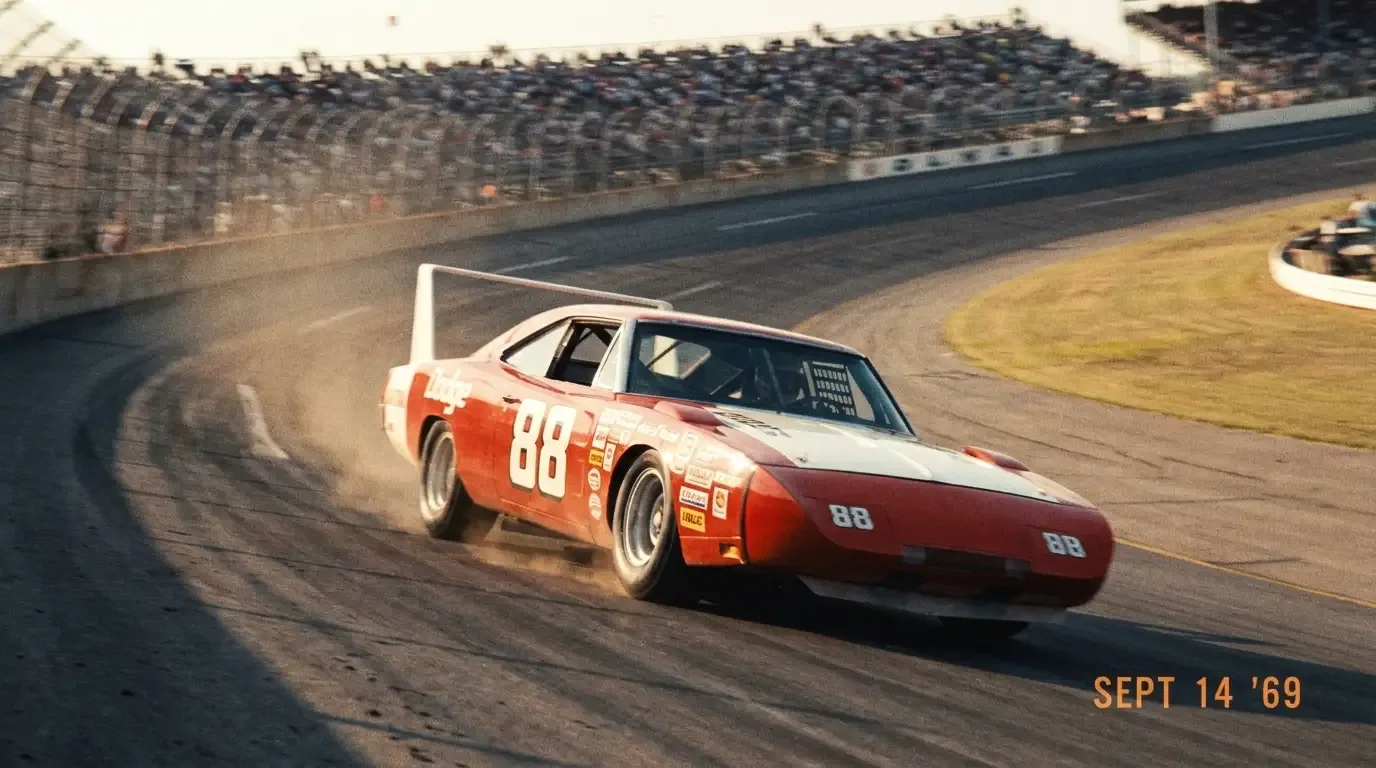
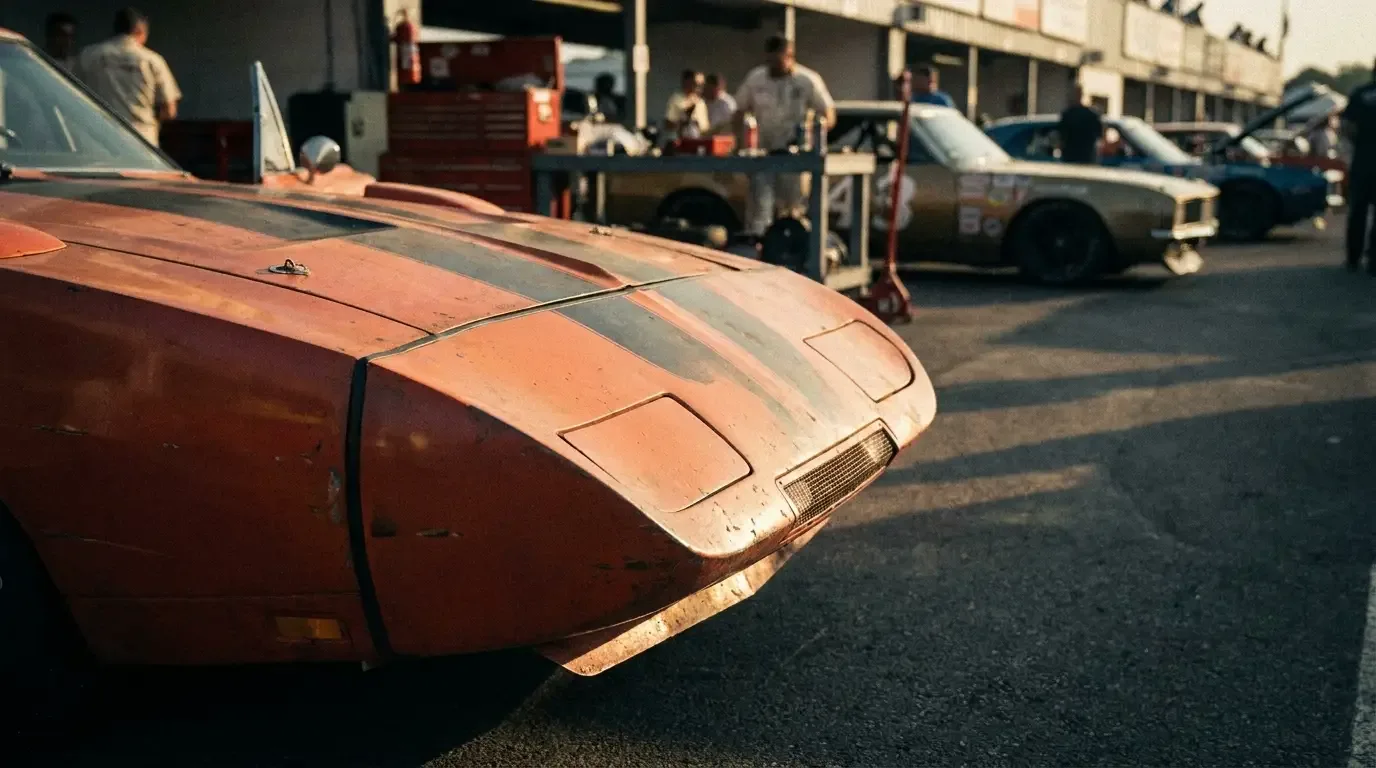
Eighteen inches. That is roughly how much longer the 1969 Charger Daytona's nose is than a standard Charger's, and that single number is the reason the car exists. Not the engine. Not the paint. A steel and fiberglass cone that changed how air moved over the front of the body, and turned a car that struggled to hold 180 mph into one that broke 200. Here is what that nose actually did and why the shape mattered more than anything under the hood.
Why a standard Charger's front end fought the air
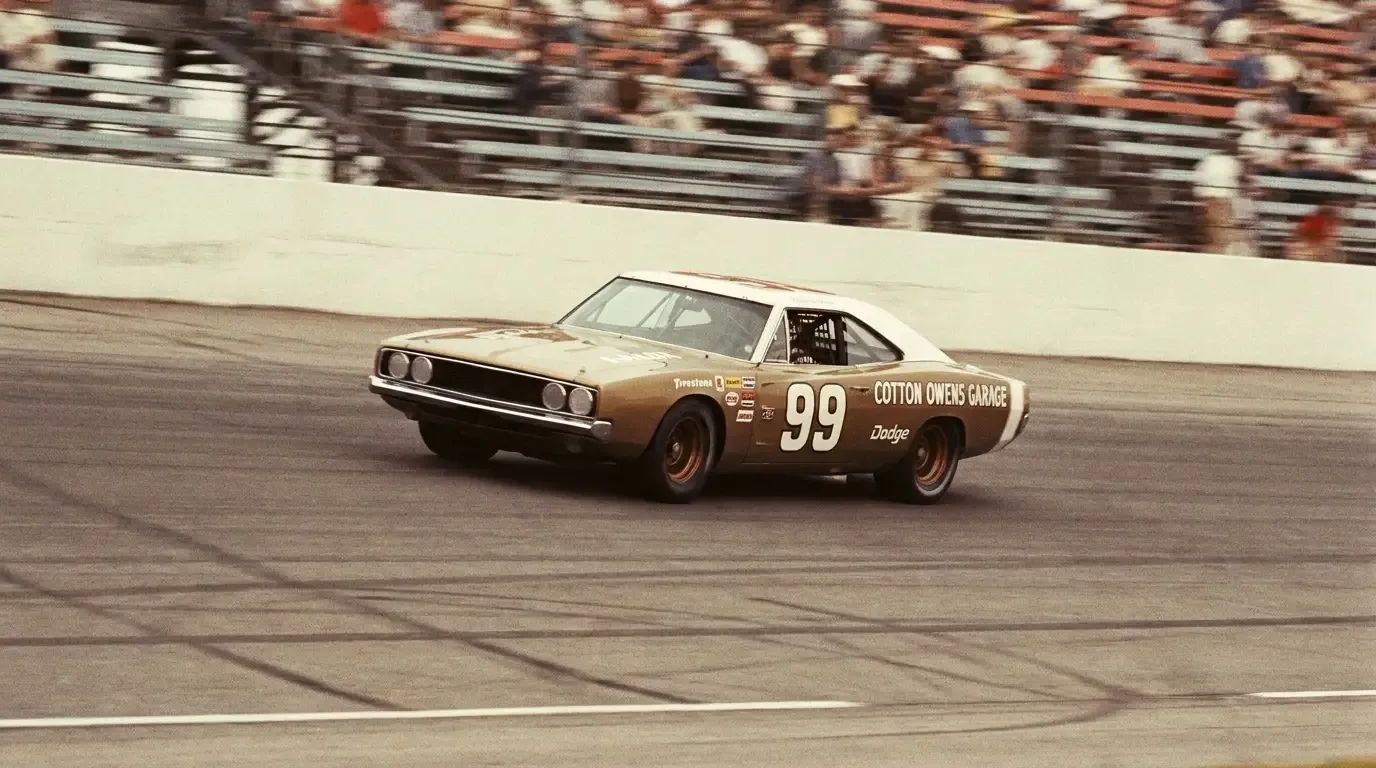
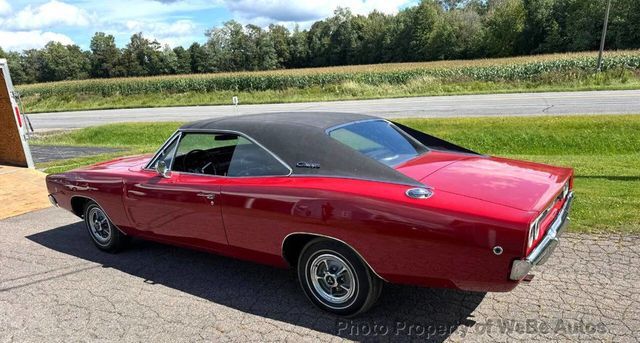
The base Charger's grille sat recessed behind the leading edge of the fenders, which looked sharp at a stoplight and terrible at speed. Air hitting that recessed opening did not flow smoothly across the nose, it piled up and separated, creating drag that grew fast as speed climbed. At 60 mph that drag is background noise. At 190 mph on the Talladega banking it is the difference between a car that stays planted and one that starts feeling light at the front axle. Dodge's engineers already knew this by the time they built the Charger 500, and the 500's flush grille fix helped but did not fully solve it.
The Daytona's answer was to stop trying to fix the existing nose and replace it entirely. Instead of a recessed opening, the new front end was a smooth, elongated cone that let air flow around the car with almost no separation. The shape was not guessed at. It came out of wind tunnel sessions where Chrysler engineers tested different nose lengths and profiles, chasing a specific number: the point where drag stopped costing them speed on the straights.
"The blower looks great on the invoice. On the dyno it made twelve more horsepower than the combo that cost a third as much. That's the number that matters."
— Dan Reeves
The hidden headlights were not a styling flourish
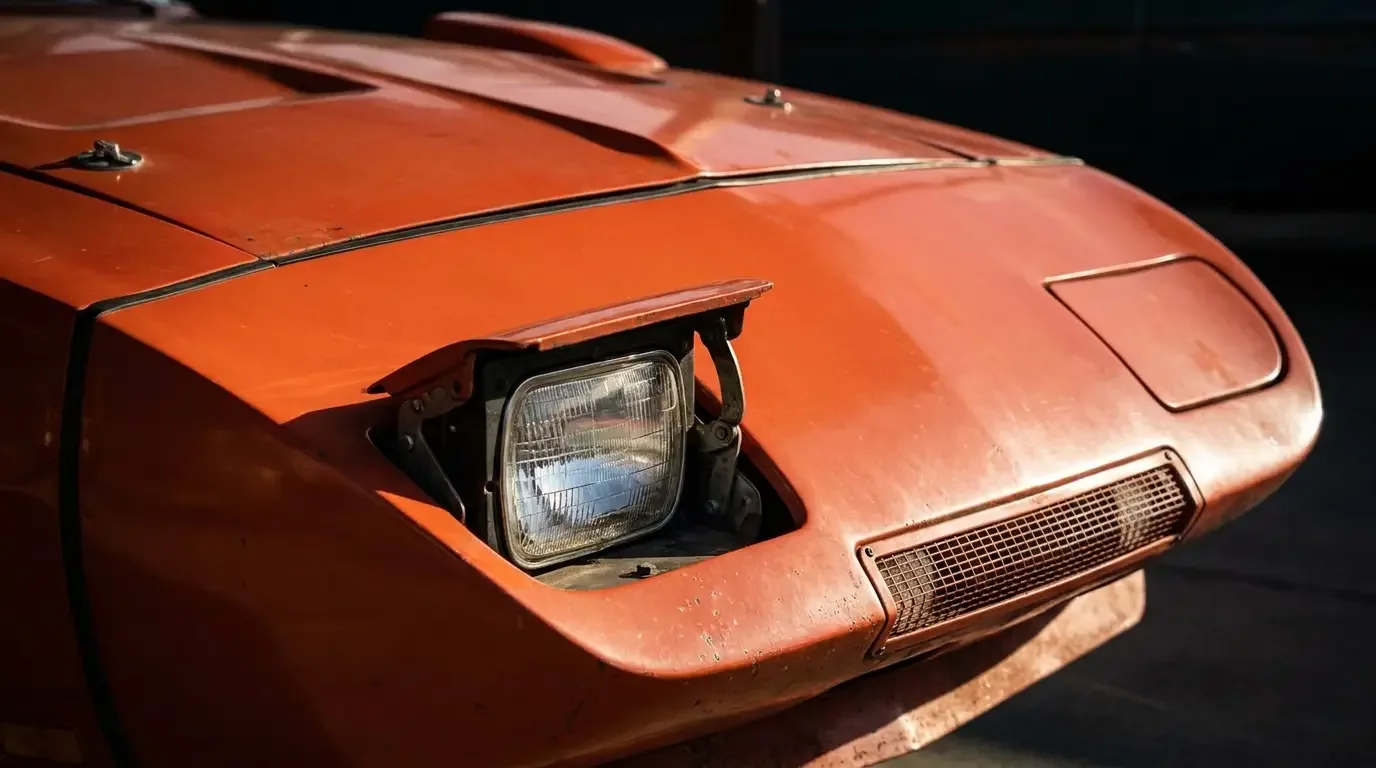
A fixed grille opening that long would have needed headlights mounted somewhere, and putting them in the usual spot would have broken the nose's smooth profile right where airflow mattered most. Dodge's solution was to hide the headlights inside the nose cone itself, flipping up out of the bodywork only when needed and dropping flush for driving during the day or at speed on the track. It is a detail that looks dramatic from ten feet away and reads as pure function once you understand what it was solving. Every opening and seam in that nose cost the engineers something in the wind tunnel, and they closed every one they could.
What the numbers actually say about the gain
Reported drag coefficient improvements from the extended nose put the Daytona meaningfully ahead of the standard Charger fastback, though exact figures vary depending on which test run and which source you trust. What is not in dispute is the outcome on track: Daytonas ran consistently faster at Talladega and Daytona than the fastback Charger had managed a season earlier, and the nose is the single biggest contributor to that gain, more than any change made to the engines, which stayed largely the same 440 Magnum and 426 Hemi options already available in an R/T. That is the part worth sitting with. The powertrain barely changed. The speed came from a piece of bodywork.
Buying and inspecting an original nose today
If you are looking at a Daytona for sale, the nose cone is the single most important thing to verify and the easiest thing to get wrong. Original cones were built from a combination of steel structure and fiberglass panels, and decades of reproduction parts have flooded the market, some of them quite good, some of them noticeably off in profile and mounting points compared to factory tooling. A car wearing a reproduction nose is not a fake Daytona, plenty of legitimate cars have had noses replaced after accident damage, but it changes the value conversation and it should be disclosed, not discovered later.
| Spec | Detail |
|---|---|
| Nose extension | Approximately 18 inches over standard Charger |
| Construction | Steel structure with fiberglass panels |
| Headlights | Hidden, flip-up design integrated into nose |
| Front downforce | Roughly 1,200 lb at superspeedway speed |
| Primary benefit | Reduced front-end drag and lift at speed |
Check the seams where the nose meets the fenders, factory fit was tight and consistent, and reproduction cones sometimes show gaps or slightly mismatched contours that a trained eye catches quickly. Ask for documentation on any nose replacement history and treat a car with a fully original, undamaged nose as the baseline for top-tier valuation, everything else gets compared against that. For the full context of what this piece of bodywork was built to answer, the Charger Daytona era covers the racing results the nose made possible, and anyone wanting the companion piece on the rear of the car should read more here for how the wing worked alongside the nose rather than against it.
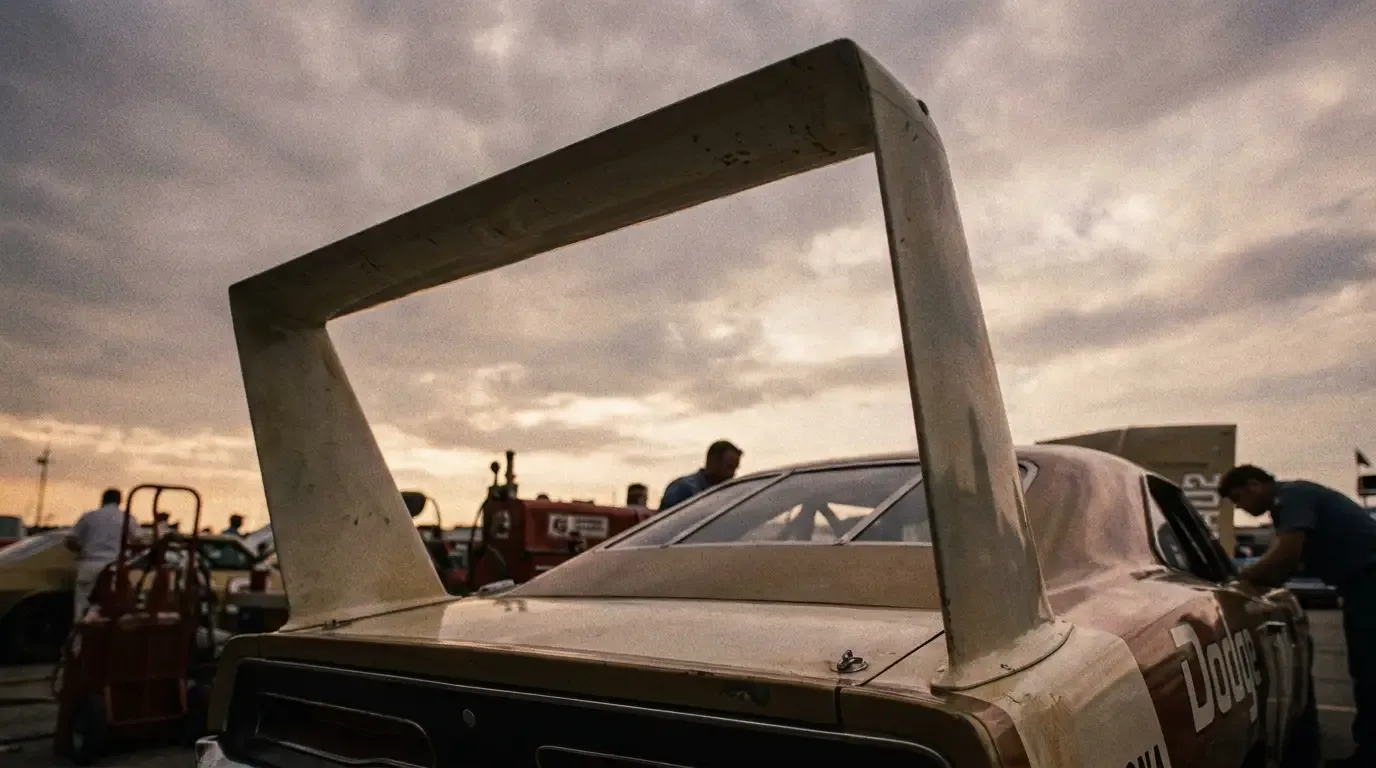
None of this works in isolation. The nose managed the front half of the airflow problem, the wing at the back managed the rest, and neither one would have gotten the car to 200 mph on its own. That is the number that matters here, not horsepower, not torque, just how much drag a piece of sheet metal could remove from a car that was already fast enough everywhere else.
What the nose cost Chrysler to build
None of this came cheap. Tooling a completely new front clip for a limited run of roughly 500 street cars was an expensive proposition for a homologation program that existed purely to satisfy a racing rulebook. Chrysler did not amortize that tooling cost across a mainstream model, it built the nose specifically for a low volume run, then had the finished shells trucked to Creative Industries in Detroit for hand assembly rather than installed on a standard line. That is not how a car company builds a part it expects to sell in volume. It is how a company builds a part it needs exactly once, in exactly the quantity the rulebook demands, and no more.
That cost structure is part of why the nose is hard to reproduce accurately today. Modern reproduction panels are made by smaller specialty manufacturers working from measurements taken off surviving originals, not from factory tooling, and small variances creep in. A restorer chasing a numbers-matching, factory-correct nose profile is often working from original parts wherever possible and treating reproductions as a last resort rather than a first choice, which keeps demand for genuine used cones high and prices for them climbing every year.
Sources and notes
- Wikipedia - Dodge Charger (B-body) - confirmed the 18-inch nose, the Creative Industries hand-assembly, and the nose/wing downforce figures (roughly 1,200 lb front, 600 lb rear).
- Wikipedia - Dodge Charger Daytona - confirmed the hidden flip-up headlights, the 426 Hemi/440 Magnum carryover engines, and the 200 mph result the nose made possible.
- Wikipedia - Talladega Superspeedway - confirmed the high-banked venue where the nose's drag reduction paid off.
- Wikipedia - Buddy Baker - confirmed the over-200 mph run in the Chrysler Engineering Daytona that validated the aero package.
- Wikipedia - Ford Torino Talladega - context on Ford's rival flush-nose approach that the Daytona's cone was built to beat.