Most of what gets written about the Dodge Charger's aero era jumps straight to the Daytona and its wing. That skips a step. Before Chrysler built anything with a nose cone, it built the Charger 500, and the reasons behind that car explain why the Daytona had to exist at all. The build record for the 500 tells a story of a company solving one problem, discovering it was not enough, and going back to the drawing board within a single season.
The problem the fastback caused on the high banks
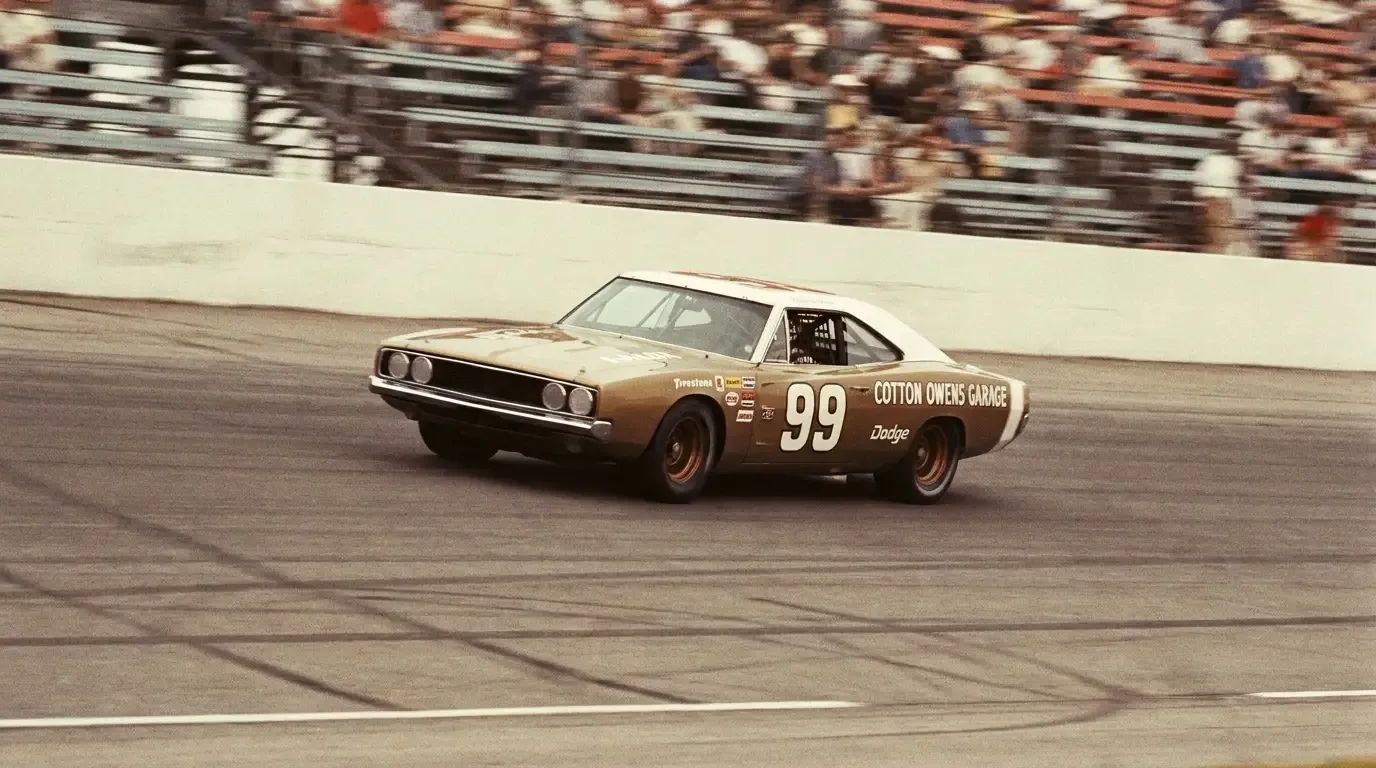
The 1968 and early 1969 Charger's recessed grille and tunneled backlight looked terrific in a showroom and on a boulevard. On a superspeedway at 180 mph, that same shape acted like an air brake. The recessed grille trapped air instead of letting it flow smoothly across the nose, and the tunneled rear window created turbulence that dragged the car down on the straights. Chrysler's stock car teams were losing to Ford's fastback Torinos and Mercury Cyclones for reasons that had nothing to do with horsepower and everything to do with shape.
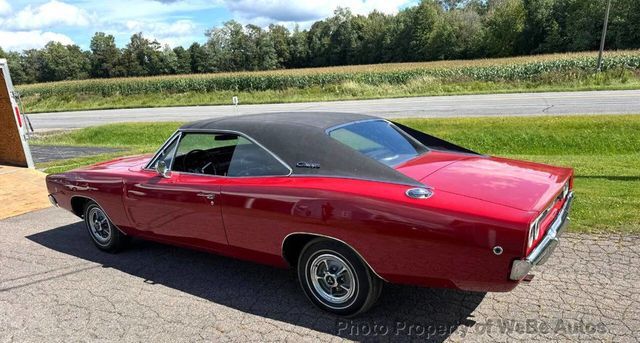
The fix that came out of Highland Park was, by the standards of what followed, a modest one. Take the standard Charger body, pull the grille forward flush with the leading edge of the fenders, and replace the tunneled backlight with a flush-mounted rear window borrowed conceptually from the Coronet. No wing, no extended nose. Just enough surgery to stop the car from fighting the air the way the base Charger did.
"The build record matters. Not because it tells you everything, but because it's the factory's own account of what left the line."
— Tom Ramirez
Homologation numbers and what the paperwork actually shows
NASCAR's rule at the time required a minimum production run before a body configuration could race, and Dodge built the Charger 500 specifically to clear that bar. Factory records put production at 392 units for the 1969 model year, of which only 67 carried the 426 Hemi, a number that sits well below what most muscle car buyers would recognize as a mainstream trim level. This was not a car built to move volume. It was built to satisfy a rulebook, and the build sheets from that era reflect a run that was tracked and counted with unusual care because every unit mattered toward the homologation total.
Engine and drivetrain options largely mirrored the rest of the Charger R/T lineup, with the 440 Magnum and 426 Hemi both available. The mechanical package was not the innovation here. Chrysler was not trying to make the car faster in a straight line, it was trying to make the existing power usable at speed by cleaning up what the body did to the air around it. That distinction gets lost sometimes when people talk about muscle era Chargers purely in terms of horsepower.
Why the fix did not go far enough
The Charger 500 ran at Daytona and Talladega in 1969 and it was faster than the fastback Charger it replaced. It was not fast enough. Ford's aero cars still had an edge on the superspeedways, and Chrysler engineers who had gone to the trouble of wind tunnel testing the 500's shape came away with data suggesting the flush grille and backlight were correct in principle but insufficient in degree. The air still separated from the body at the nose, still tumbled off the roofline at the back. Incremental surgery had produced an incremental result against a competitor that was not standing still.
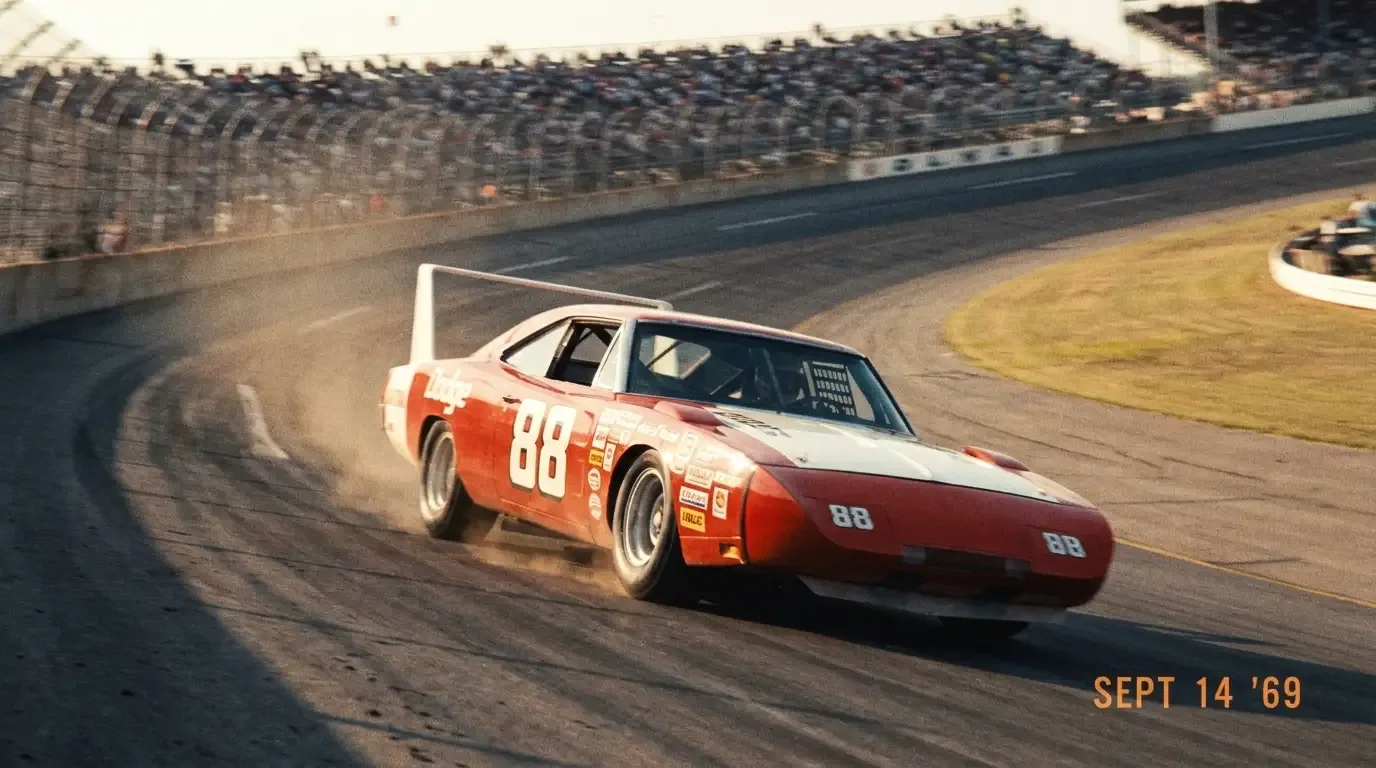
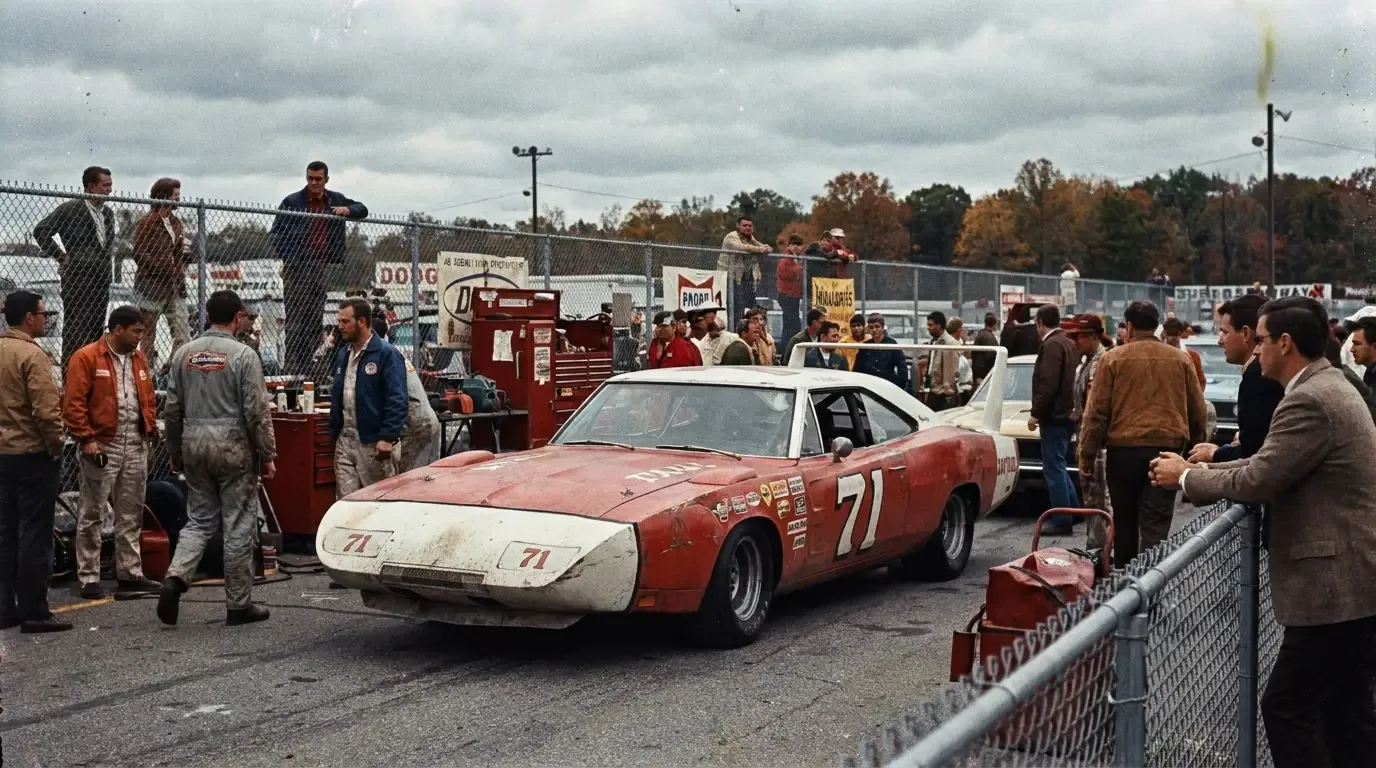
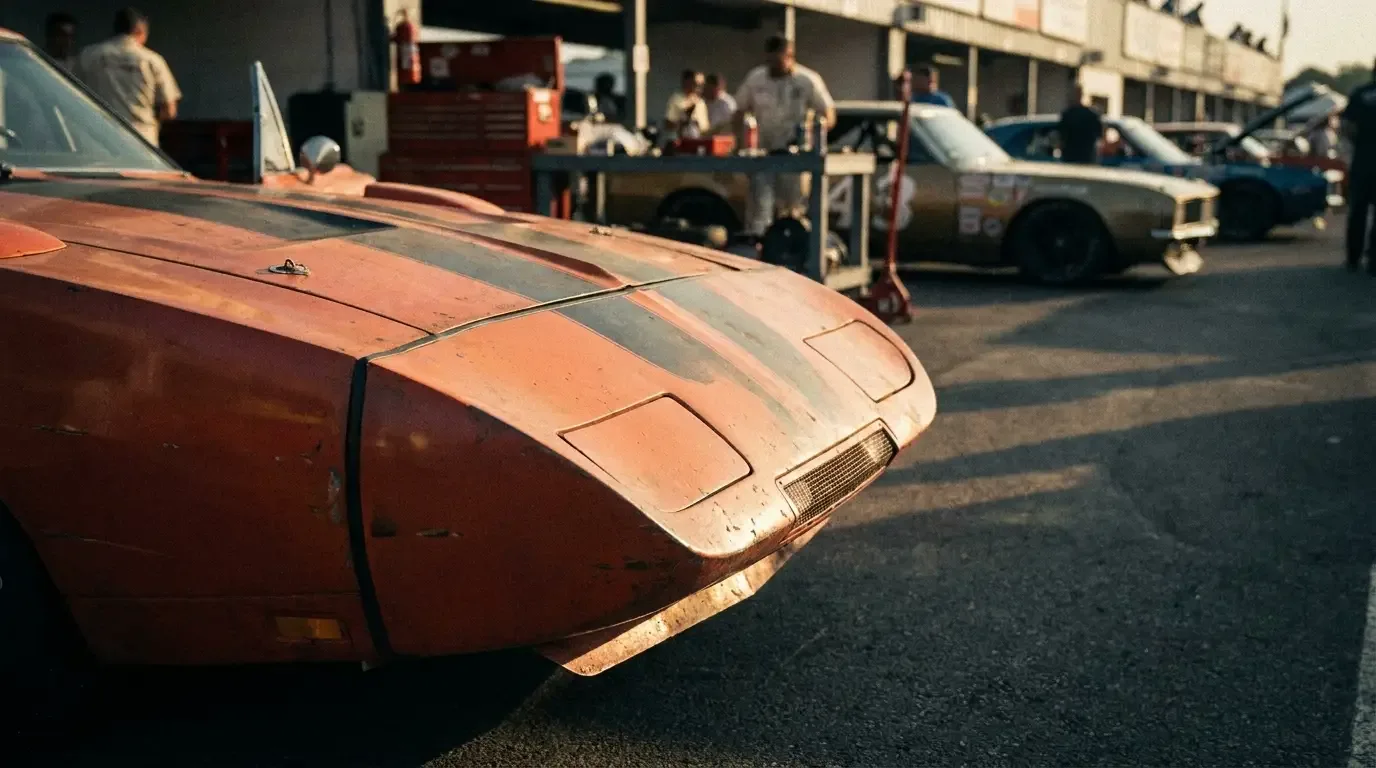
That is the part of the story that gets Dodge to the Daytona. Rather than run another season chasing Ford with a car that was close but not ahead, Chrysler committed to the extreme version, the 18-inch nose cone and the towering wing, engineered from wind tunnel data rather than adapted from an existing body. Anyone who wants the full account of that decision and what came out of it should read on, because the Daytona only makes sense once you understand that the 500 came first and was not enough.
What separates a genuine 500 from a tribute
Because the run was so small and because the changes involved swapped-in body panels rather than an entirely different shell, the Charger 500 is one of the easier muscle era Dodges to misrepresent. A flush backlight kit and a modified grille surround can be fitted to a standard Charger by a determined builder, and there are cars on the market wearing the look without the factory documentation to back it up. The build sheet, the fender tag, and any surviving Chrysler production records for the specific VIN are what separate a real 500 from a well executed clone. The aerodynamic principles the 500 got partway right would be pushed to their extreme on the car that followed it, covered in detail in the piece on the 1970 charger daytona nose cone.
| Spec | 1969 Dodge Charger 500 |
|---|---|
| Key body changes | Flush grille, flush rear backlight (no tunnel) |
| Production | 392 units (67 with 426 Hemi) |
| Engines offered | 440 Magnum, 426 Hemi |
| Purpose | NASCAR homologation, superspeedway aero |
| Superseded by | 1969 Charger Daytona |
The 500's place in the story is easy to overlook because it did not win the way the Daytona did. But it is the reason the Daytona exists in the form it does, a documented step in a company's real-time engineering process rather than a footnote. Anyone building out a full picture of the aero era owes the 500 its due credit before moving on to the car that gets all the attention.
Where values sit relative to the Daytona
Because the Charger 500 lacks the visual drama of the nose cone and wing, it has historically traded for less than a Daytona in comparable condition, sometimes by a wide margin. That gap has closed somewhat as buyers have come to understand the car's role in the story rather than treating it as a lesser Charger R/T with a different grille. A documented 500 with matching numbers and a clear Hemi or 440 build sheet still sells for real money, and the smaller production run relative to a standard R/T means fewer cars exist to satisfy demand as that understanding spreads.
Restoration is where the 500 gets harder than a standard Charger. The flush grille surround and the rear backlight assembly are not interchangeable with common Charger parts, and reproduction pieces vary in fit and quality. A shop unfamiliar with the car can end up fighting panel gaps that a Charger R/T restoration would never present. Buyers should expect to pay a premium for a restorer who has actually handled a 500 before, not just a generic Charger.
Sources and notes
- Wikipedia - Dodge Charger (B-body) - confirmed the 392-unit Charger 500 run (67 with the Hemi), the 1968 Coronet flush grille, the flush rear window, and the 440 Magnum/426 Hemi options.
- Wikipedia - Dodge Charger Daytona - confirmed the 500 as the predecessor that led to the Daytona's more extreme nose and wing.
- Wikipedia - Ford Torino Talladega - confirmed the Ford and Mercury aero cars the 500 was built to counter on the superspeedways.
- Wikipedia - Talladega Superspeedway - confirmed the high-speed venue where the 500's aero shortfall showed up in 1969.
- Wikipedia - Bobby Isaac - confirmed the K&K Insurance Dodge program that campaigned Chrysler's aero cars.