Twenty-plus years and eleven films into the Fast & Furious franchise, the classic Dodge Charger has become something closer to a recurring cast member than a prop. Different years, different builds, different roles inside the story, but the car keeps showing up, and each appearance seems to lean harder into the same idea: this is the one car in a franchise obsessed with imports and modern muscle that still feels like it belongs to a family, not a garage full of aftermarket catalogs.
The car that started it, 2001
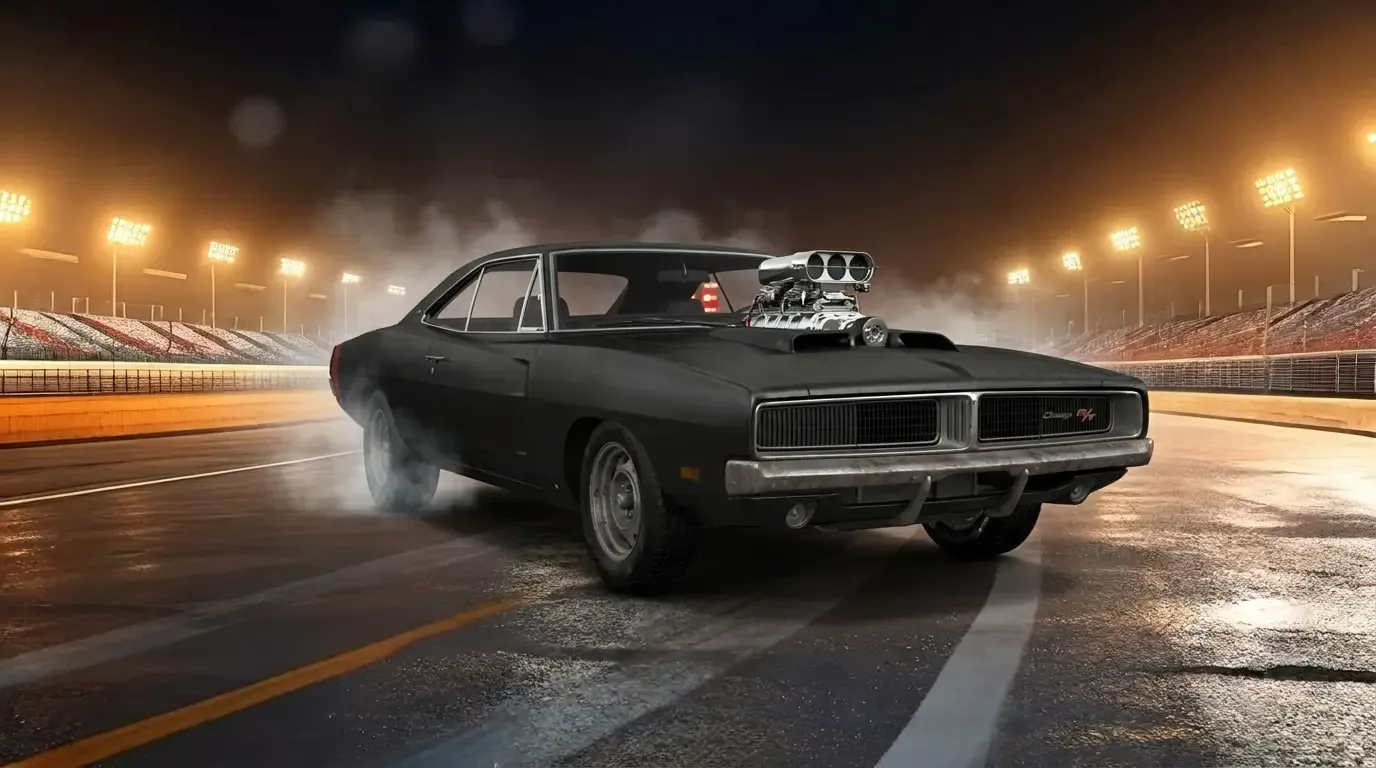
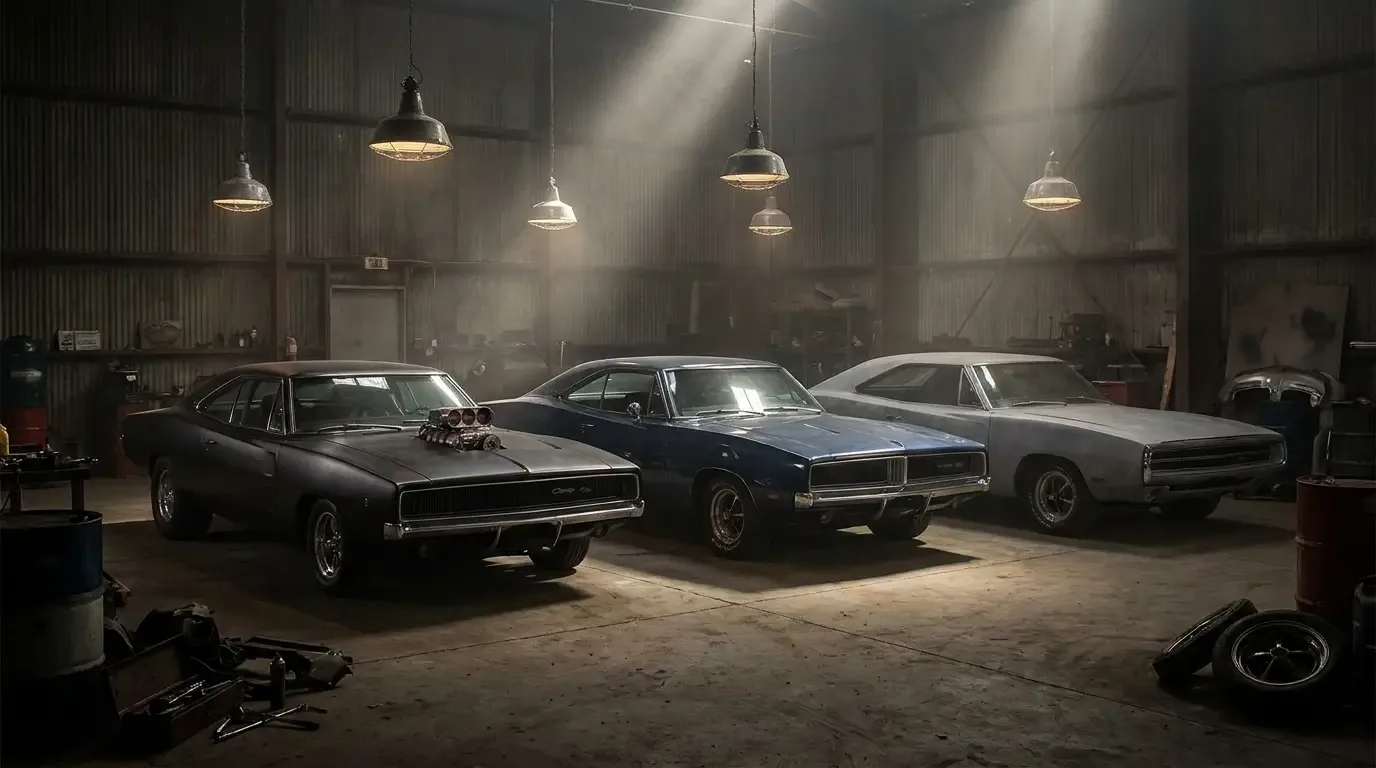
Dom Toretto's black 1970 Charger R/T, built with a supercharger visible through the hood and finished in a deliberately unpolished matte black, is the car most people picture first. It closes out the original film in a quarter-mile race against Brian O'Conner's Supra, ending with a crash that destroys the car on screen. That single scene did more to cement the Charger's modern reputation than any single year of Dodge's own factory advertising, a story covered in full in the Dom Charger Fast Furious story, since the specific build details behind that car deserve their own dedicated look.
The Chargers that followed
The franchise did not stop at one car. Later films brought back Chargers in different years and configurations, sometimes as background muscle in a heist sequence, sometimes handed a starring role of their own. A second-generation Charger returned in later installments modified for specific stunts, including sequences built around towing, ramming, or dragging a bank vault down a city street, gags that required purpose-built stunt cars well beyond anything a factory second-generation Charger was ever engineered to survive.
The exact count of distinct Charger builds used across the full franchise is difficult to pin to a single number, since the production has reused, rebuilt, and re-liveried cars across multiple films rather than treating each as a one-off unit, and no official studio tally has ever been published. What is consistent is the choice of era. The franchise has stayed loyal almost exclusively to the second-generation body built from 1968 through 1970, rather than reaching for the earlier fastback or the later fuselage-bodied cars from 1971 onward.
| Appearance | Charger year | Notable role |
|---|---|---|
| 2001, original film | 1970 | Dom's supercharged R/T, final quarter-mile race |
| Later franchise installments | Second-generation 1968-1970 years | Heist and stunt vehicles, background muscle |
| Recurring motif | 1968 to 1970 body style | Consistent visual shorthand for Dom's family and heritage |
Not every Charger in the franchise is a hero car
It's worth separating the cars that got genuine character moments from the ones that simply appeared as set dressing in a garage scene or a background street shot. The franchise has used second-generation Chargers liberally as texture, parked in the margins of a scene to signal that a location is steeped in car culture, without ever calling attention to a specific example the way it did with Dom's own car. That distinction matters for anyone trying to track down "the" Fast & Furious Charger, because depending on which film and which scene, the honest answer is that there isn't just one.
The films have also occasionally leaned on later Chargers, outside the classic 1966 to 1978 window this site covers, for modern-era stunts. Those newer cars borrow the classic model's name and general silhouette but share none of the mechanical or historical substance that makes the original body style worth collecting.
Why the franchise keeps returning to this body style
The second-generation Charger offers filmmakers something the earlier and later cars don't quite manage in the same way. Its wide stance, low roofline, and aggressive front clip give it a visual weight that reads as menacing and powerful even parked and silent, which matters enormously for a franchise built around static hero shots as much as moving action. A first-generation fastback, elegant as it is, reads more like a personal luxury coupe than a bruiser, and the fuselage-era cars from 1971 onward trade some of that hard-edged presence for a softer, more rounded look.
There's also a practical dimension. Second-generation Chargers were common enough by the early 2000s to be sourced in reasonable numbers for stunt builds, without the production having to hunt down increasingly rare early cars or seriously risk destroying genuinely scarce Hemi-equipped examples.
What it means for real Charger values
The franchise's decades-long relationship with the Charger has done something measurable to the real-world market. Clean, driver-quality second-generation cars, and especially 1970 R/T models finished in dark colors, have seen buyer interest from a demographic that came to the model through a movie screen rather than a childhood memory of the car new. That's a genuinely different collector base than the one that grew up wrenching on these cars in the 1970s, and it has kept demand steady for a body style that might otherwise have cooled off the way some other muscle-era Mopars have.
"I've had younger buyers tell me flat out they want a Charger because of the movies, not because their dad had one. That's not a bad reason to love a car. It's just a different door into the same hobby."
— Nora Beckett
For the car's other, earlier screen turns, before it played anyone's hero, its history as Hollywood's preferred villain vehicle is worth its own read in more on Charger Villain Car, and the full arc of its pop-culture footprint is laid out in dodge charger general lee.
What ties all of it together, the villain roles, the hero turns, the background cameos, is that the car never had to be reinvented to fit any of them. A body designed in the mid-1960s to sell showroom customers on a fastback commuter still reads, six decades later, as exactly the kind of car a filmmaker reaches for when the scene calls for something that looks like trouble.
Sources and notes
- The Fast and the Furious Wiki - 1970 Charger R/T - confirmed Dom's 1970 R/T, the supercharger prop, and the closing quarter-mile race against Brian's Supra.
- Edmunds - Fast and Furious Cars: 1970 Charger - corroborated the franchise's repeated return to the Charger and multiple purpose-built stunt cars.
- TopSpeed - 10 Things About Toretto's Charger - verified that cars were reused and rebuilt rather than counted as one-off units.
- Wikipedia - Dodge Charger (B-body) - confirmed the 1968-1970 second-generation body the franchise favors over the fastback and fuselage cars.
- HotCars - What Fans Don't Know About Dom's Charger - cross-checked the collector-market effect on clean second-generation cars.