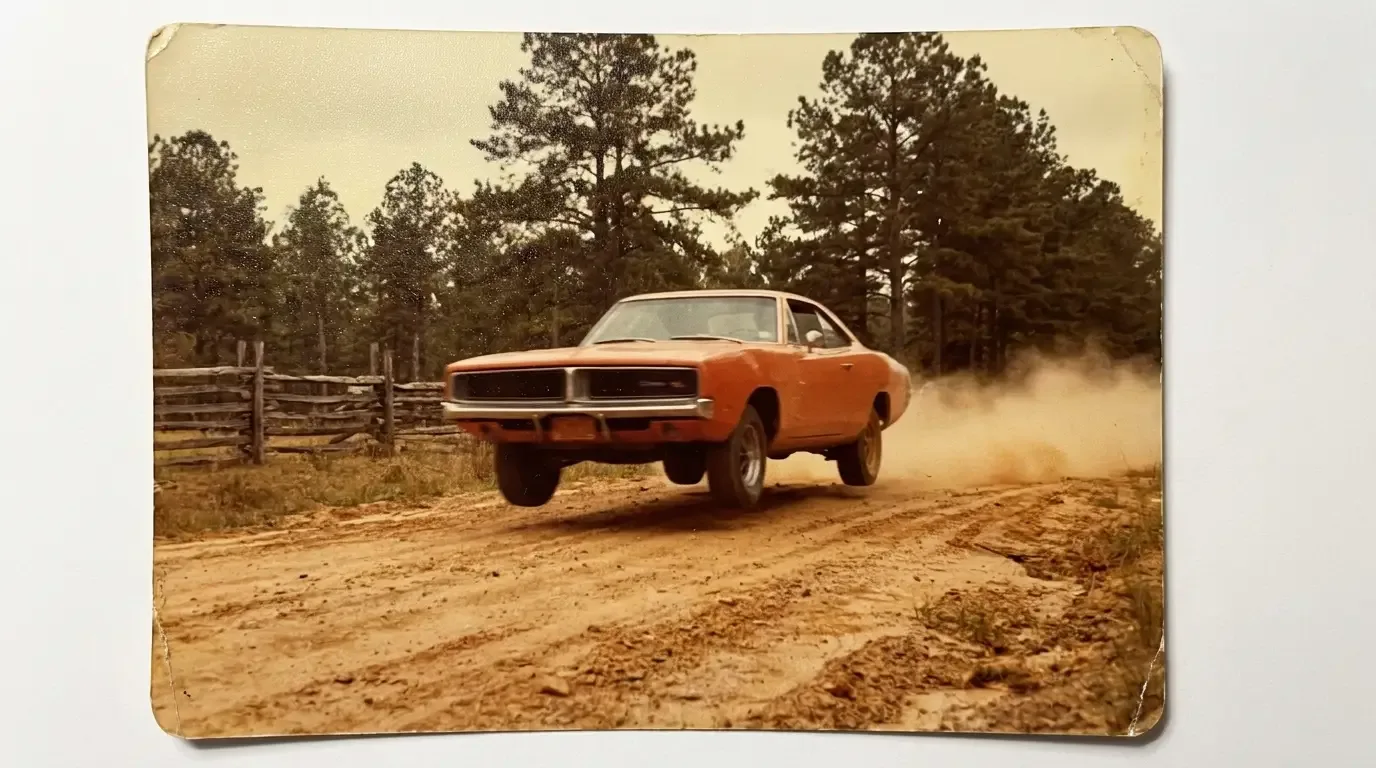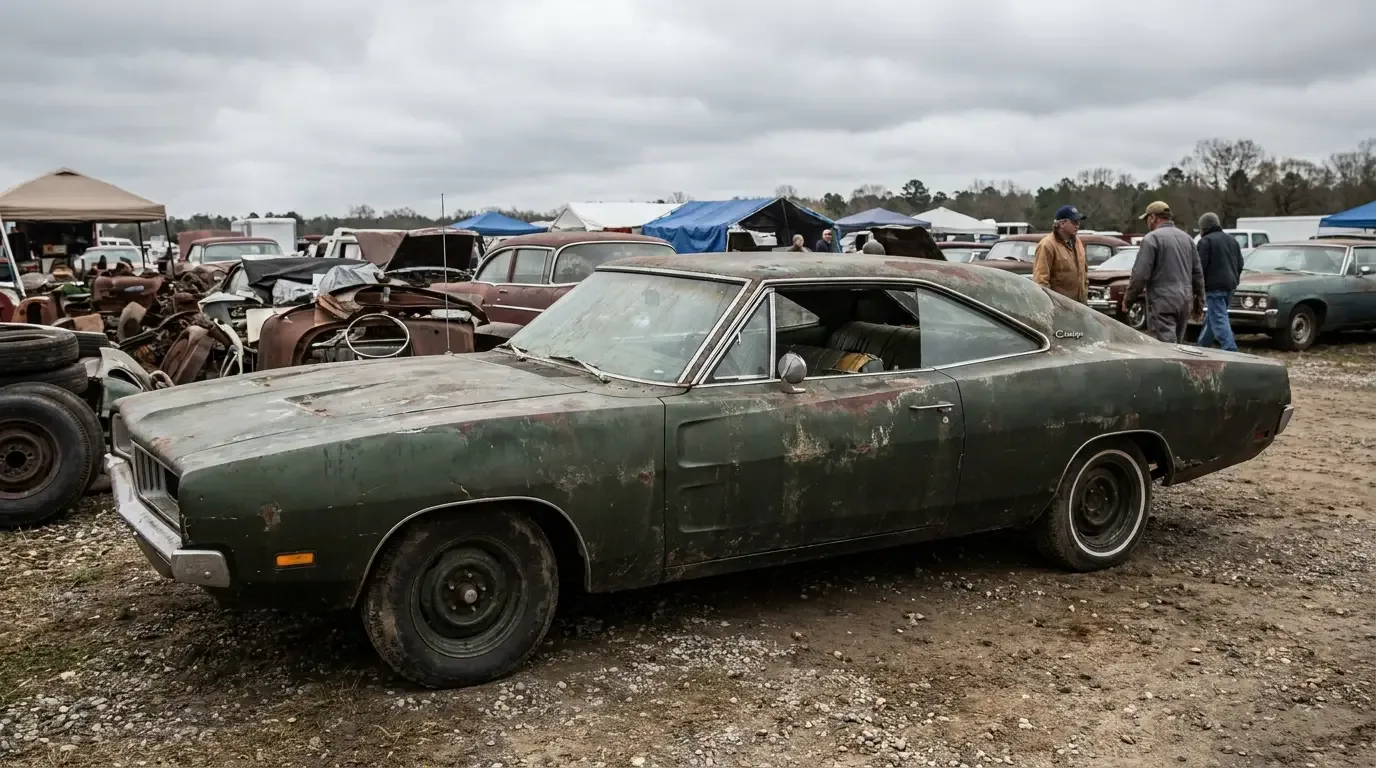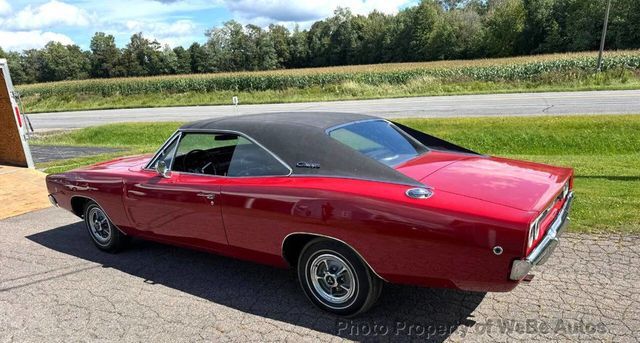
Ask a Camaro guy and a Charger guy the same question at a cruise-in, "what does muscle car culture actually mean to you," and you'll get two different answers built from two different founding myths. The Camaro crowd tends to talk about the track, lap times, the SCCA Trans-Am pedigree. The Charger crowd talks about the street. That's not an accident of marketing. It's baked into how Dodge built and sold this car from the very first fastback in 1966, and it's why the Charger occupies a slightly different room in muscle car culture than its rivals, even fifty-some years later.
A car built for the strip, not just the showroom
Dodge positioned the Charger from the start as a performance flagship rather than a personal luxury coupe wearing a performance option, and that distinction shaped the culture that grew up around it. The 1966 and 1967 fastback cars, the 1968 to 1970 coke-bottle redesign, and the 1971 to 1974 fuselage-body generation all leaned into big-block availability as a central selling point rather than an afterthought. A buyer walking into a Dodge dealer in 1969 could order a Charger with a 440 Magnum or a 426 Hemi, engines built for straight-line brutality, and that ordering sheet is a big part of why the car's early culture formed around drag strips and street racing rather than road courses.
That orientation toward raw power over cornering finesse gave the Charger community a personality that's stayed remarkably consistent. Owners talk about torque and quarter-mile times more readily than they talk about skid pad numbers, and that's a direct inheritance from how the factory built and marketed the car in the first place.
The street racing scene that adopted it
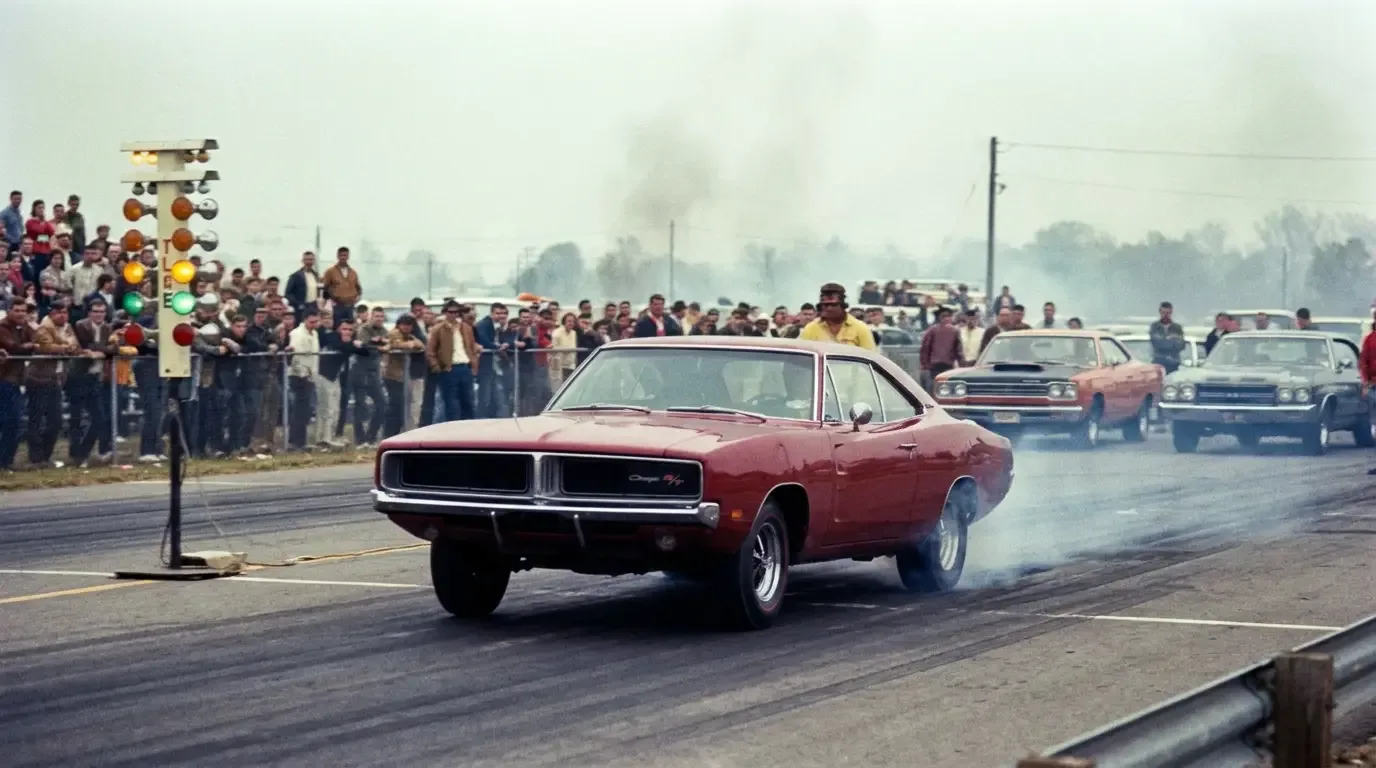
Through the late 1960s and into the early 1970s, urban street racing scenes across the country, from Detroit's own neighborhoods outward, embraced the Charger as a serious contender specifically because the big-block options made it competitive against anything else parked at the same stoplight. This wasn't a marketing narrative invented later. Period magazine coverage and drag strip timeslips from the era back up the car's reputation as a genuine performer, not just a good-looking one. That credibility, earned on real pavement against real competition, gave the Charger a kind of street cred that pure styling exercises from other manufacturers never managed to claim.
"A guy at a cruise-in once told me his father raced a 440 Charger against a small-block Camaro every Friday for two summers straight and never lost, not because the Charger handled better, but because it just had more to give when the light turned green. That's the whole culture in one story."
— Patrick Walsh
How the aero program shifted the conversation
By 1969, Dodge's NASCAR ambitions pushed the Charger's culture in a new direction entirely, producing the Charger 500 and then the wing-and-nose-cone Daytona specifically to solve an aerodynamic problem on superspeedways. That racing pedigree added a technical, almost engineering-nerd layer to Charger culture that coexisted with the street racing identity rather than replacing it. Suddenly the same car community that talked about quarter-mile times was also talking about drag coefficients and NASCAR homologation rules, a combination that's fairly unusual in muscle car circles, where most fan communities pick one lane and stay in it.
Why the culture survived the horsepower wars ending
When emissions regulations and insurance surcharges gutted big-block performance across the industry in the early 1970s, plenty of muscle car communities shrank along with their engine options, their culture tied too tightly to raw output to survive its disappearance. The Charger's culture proved more durable than that, partly because the car's styling, particularly the fuselage-era third generation, kept it visually compelling even as horsepower figures dropped, and partly because the car's growing presence in film and eventually television gave it a second cultural life that didn't depend on quarter-mile bragging rights at all.
That's an important distinction. Plenty of muscle cars from this era are appreciated today purely as artifacts of a horsepower race that ended. The Charger built a broader identity that outlasted the numbers, which helps explain why interest in even the softer, later-model Chargers has held up better than some contemporaries with objectively lesser performance pedigrees to begin with.
What this culture looks like today
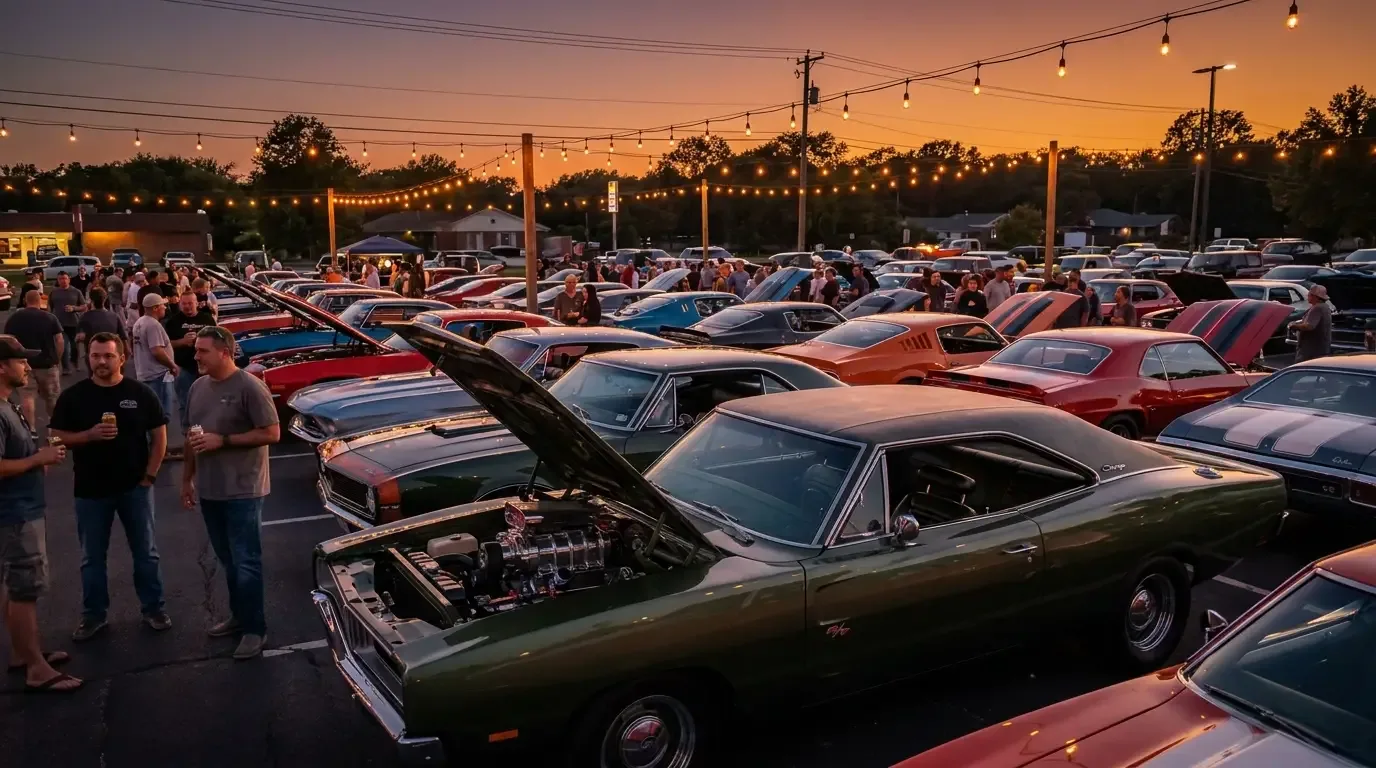
Modern Charger culture at car shows and online forums blends several distinct threads that don't always coexist peacefully elsewhere in the hobby: numbers-matching purists chasing documented Hemi and 440 cars, street-racing nostalgists who care more about a car's driveability than its originality, and a newer wave of collectors drawn in purely through pop culture association rather than any performance background at all. read on for how that last group's fandom took shape, since it's reshaped who's actually buying these cars at auction today.
That mix creates friction sometimes, the purists occasionally rolling their eyes at buyers who want a car painted like a television character rather than restored to factory spec. But it also means the Charger's culture is bigger and more varied than most of its muscle car contemporaries, which is arguably why demand for the car has proven more resilient than the horsepower-only story would predict. For a deeper look at exactly why this car crossed from performance icon into charger pop culture icon territory, that's worth its own read entirely.
Regional identity within a national reputation
What's easy to miss from outside the hobby is how differently Charger culture actually behaves depending on where you're standing. In the industrial Midwest, the conversation still leans hard on the car's factory racing pedigree and its place in a broader story about American manufacturing muscle, a car built by the same hands and in the same plants as the trucks and family sedans that kept a region working. In the South, the culture carries a heavier overlay of the car's screen presence, shaped by decades of syndicated television reruns that found their most devoted audience in exactly the region the fictional stories were set in. Out west, particularly in Southern California, the Charger gets folded into a broader custom and restomod scene where originality matters less than execution, and a period-correct big-block sometimes takes a back seat to a modern drivetrain swap done well.
None of those regional flavors are wrong, and none of them fully define the car on their own. They coexist, sometimes uneasily, at the same national events, where a numbers-matching Michigan car might sit two rows down from a heavily modified California build and a television tribute from Georgia, each owner convinced their version represents what the Charger is really about. That tension, more than any single defining trait, is probably the truest description of muscle car culture around this platform today.
Sources and notes
- Dodge Charger (B-body), Wikipedia - confirmed the 440 Magnum and 426 Hemi options, the Coronet-based Super Bee, and the 1969 Charger 500/Daytona aero program.
- Bullitt, Wikipedia - confirmed the 1968 Charger R/T 440 Magnum's role in cementing the car's street-performance screen image.
- The Dukes of Hazzard, Wikipedia - confirmed the television exposure that gave the Charger a second cultural life after the horsepower era.
- General Lee (car), Wikipedia - confirmed the pop-culture pull that broadened the Charger's collector base beyond performance purists.
- Mental Floss, "What Happened to All Those Chargers?" - confirmed the tribute-versus-original distinction that shapes the modern collector conversation.